In northern Japan, winter is not scenery at the edge of the trip. It is the main event: you cruise past drift ice on the Sea of Okhotsk, then spend a full day among Sapporo’s towering snow sculptures and glowing ice displays. The route finishes in Kyoto, where temple gardens and a tea ceremony offer a quieter counterpoint.
I like that this trip puts the Snow and Ice Festival at its center, rather than squeezing it into a quick evening stop. I also like the mix of local transport, regional food and time to explore at your own pace, especially in Kyoto.
The trade-off is the amount of travel. You have a six-hour bus ride from Abashiri to Sapporo and a train journey of eight to nine hours from Hakodate to Kyoto. Winter conditions can also affect the drift-ice cruise, so that highlight depends on nature cooperating.
- The trip’s best details
- Tokyo’s temples, river and neon
- Abashiri and the chance of drift ice
- Sapporo’s snow sculptures and Otaru’s canal
- Hakodate’s port streets and the long ride south
- Kyoto’s gardens, tea and free day
- What the price includes, and what it asks of you
- Should you book this February tour?
- FAQ
- When does the tour run?
- Where does the tour start and end?
- How large is the group?
- Is the drift-ice cruise guaranteed?
- How much travel is involved?
- Which meals are included?
- What should I know about luggage forwarding?
- The Best Of Tokyo!
- More Winter Activities in Tokyo
- More Tours in Tokyo
- More Tour Reviews in Tokyo
- Not for you? Here's more nearby things to do in Tokyo we have reviewed
The trip’s best details
- Abashiri’s drift ice: Take a roughly one-hour shared cruise on the Sea of Okhotsk, with possible seals and sea eagles among the ice.
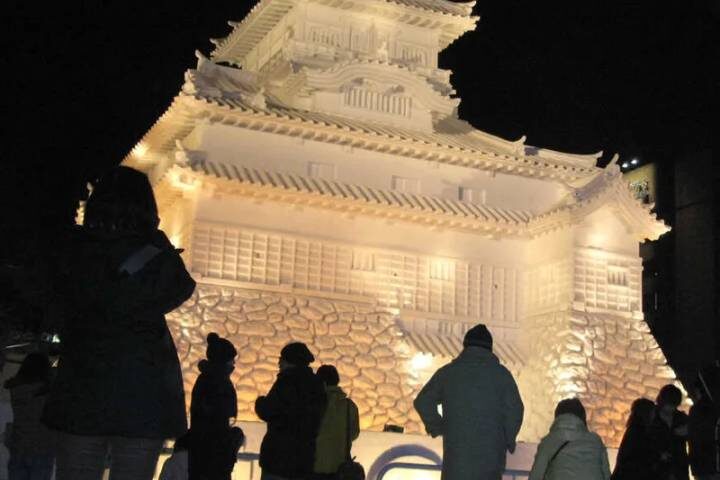
- Sapporo’s festival in full: Visit Odori Park, Tsudome and Susukino, then stop at one of the temporary ice bars.
- Tokyo by public transport: See Senso-ji, Meiji Jingu, Harajuku and Shibuya, with a boat ride along the Sumida River.
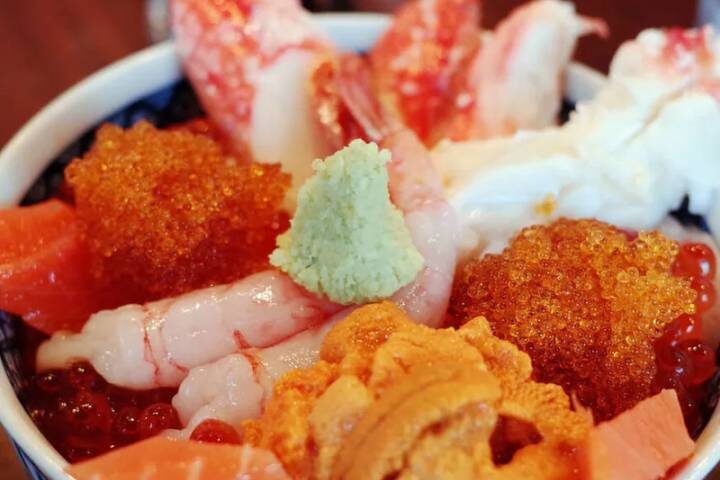
- Otaru beyond the postcard: Walk by the canal and try kaisendon, a seafood rice bowl, even if you arrive before its Snow Light Path festival.
- Kyoto with room to roam: Visit Kinkaku-ji and Ryoan-ji with the group, take part in a private tea ceremony, then use a free day for Kyoto or Nara.
- A small group, not a private tour: The group has 7 to 16 people, with an English-speaking tour leader throughout.

👉 See our pick of the 25 Best Guided Tours In Tokyo
Tokyo’s temples, river and neon
Your first day is mostly for arrival. A tour leader plans to meet the group at the hotel at 6:30 p.m., though the main briefing may shift to the next morning if people arrive late. An airport transfer can be arranged from Haneda or Narita, and the hotel is in Asakusa. You can join an optional group dinner or find your own meal.
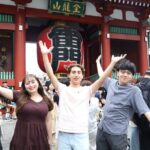
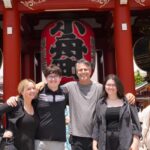
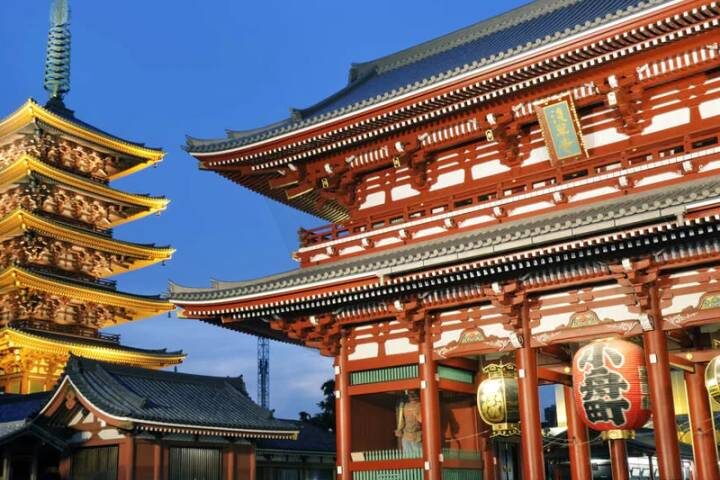
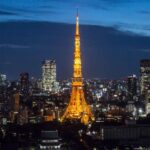
Day two gives you a useful first look at Tokyo without pretending that one day can cover the whole city. You start at Senso-ji, Tokyo’s oldest temple, passing through the imposing Thunder Gate and its large statues. The setting in Asakusa is a good contrast to the city’s newer districts, and the temple gives you a taste of how old traditions remain part of daily urban life.
A short boat trip along the Sumida River takes you to Odaiba. There is free time for lunch and an optional museum visit. teamLab Planets and the National Museum of Emerging Science and Innovation are among the choices, but teamLab requires advance booking. If you would rather keep the day simple, Odaiba is still a welcome pause between neighborhoods.
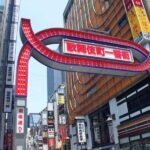
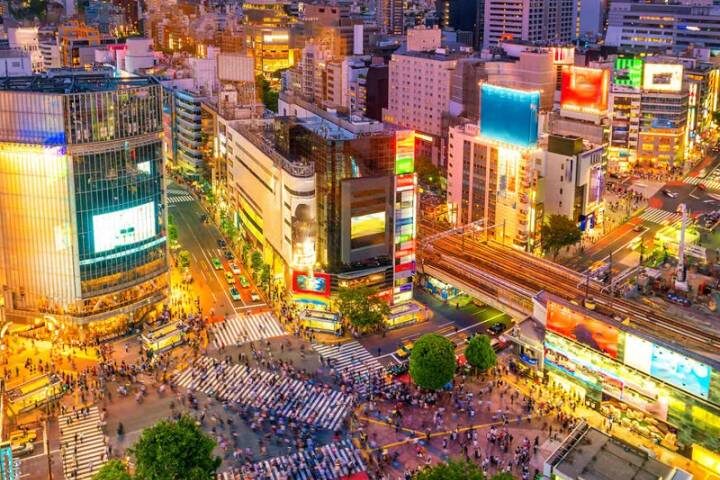
Later, the group visits Meiji Jingu, a Shinto shrine set among wooded grounds, then passes through Harajuku before ending in Shibuya. The famous crossing is a lively finish, but the afternoon is not fully guided: you can stay in the area, visit shops or galleries, or take the metro back to Asakusa. That mix of a planned introduction and free time is useful if this is your first visit to Tokyo.
You can also read our reviews of more tours and experiences in Tokyo



Abashiri and the chance of drift ice
On day three, you leave Tokyo by air for Abashiri, on Hokkaido’s Okhotsk coast. The visit to the Museum of Northern Peoples introduces Ainu culture and the lives of other peoples from northern, subarctic regions. It adds important context to a trip that might otherwise treat Hokkaido simply as a snowy backdrop.
Your main luggage is sent ahead to Sapporo and is due to arrive on day five. Pack what you need for two nights in a day bag. This is a practical detail, but it matters in winter: keep warm layers and anything you need overnight with you rather than assuming your large bag will be close at hand.
The next morning brings the trip’s most weather-dependent activity. From mid-January to late March, drift ice can cover these waters, and a shared boat takes you out toward the ice. The cruise lasts about an hour, depending on conditions. Seals and sea eagles may be seen resting on the ice, while foxes or deer are sometimes visible along the coast. Wildlife is never guaranteed, and the cruise itself depends on ice and operating conditions, so treat the outing as a chance rather than a promise.
After the boat trip, local transport takes you to the bus station for the roughly six-hour ride to Sapporo. It is a long afternoon on a public bus, but it also shows the scale of Hokkaido. Dinner is included this evening, and the group stays in Sapporo for three nights.
Sapporo’s snow sculptures and Otaru’s canal
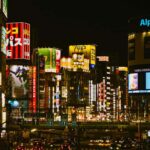
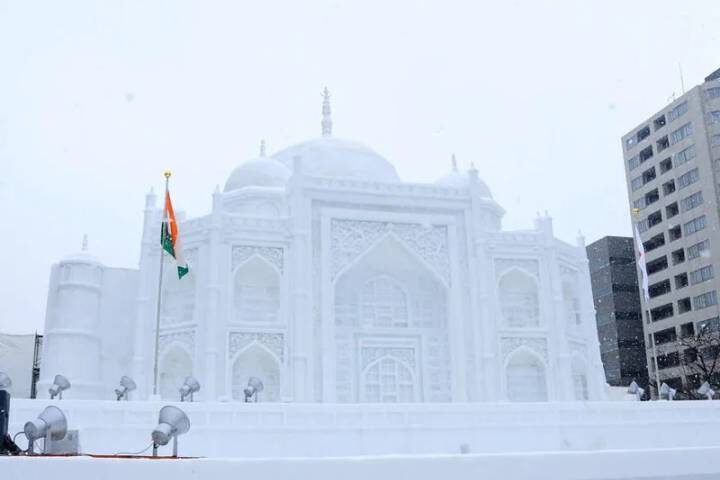
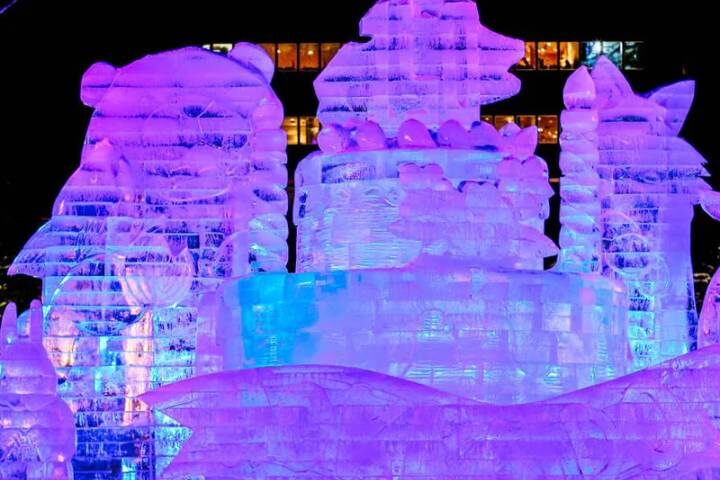
The festival gets a full day, which is the right amount of time for its three main areas: Odori Park, Tsudome and Susukino. You can compare large snow figures in the park with ice sculptures along the entertainment district and enjoy the festival atmosphere without rushing from one display to the next. The group also stops at one of the temporary ice bars. If you still have energy later, the Sapporo Beer Museum is an optional evening outing.
Sapporo’s festival is the tour’s clear centerpiece, and it earns that position. The snow sculptures and ice carvings are the most consistently praised features of the trip, so this day is likely to be a high point if you are choosing the tour for winter spectacle. Dress for a long day outdoors and expect cold underfoot as well as in the air.
The following morning is free. One possible outing is the Hill of the Buddha, where a 13.5-metre statue sits within an artificial hill planted with lavender. It is an unusual sight, but you will need to arrange the bus trip and make sure the timing works for the afternoon train.
That train takes you to Otaru, a small port town known for its canal, seafood and old streets. The tour normally reaches town before the Snow Light Path festival, so do not book on the assumption that you will see its full illuminated event. Otaru is still worth a walk. Try kaisendon if you want a local seafood meal, or visit a beer hall before returning to Sapporo by train in the late evening.
Hakodate’s port streets and the long ride south
Day seven is another rail day, about four hours from Sapporo to Hakodate. The city opened to foreign trade in 1854, and the Motomachi district reflects that history in its mix of Japanese and Western buildings. A guided walk helps make sense of the neighborhood, while the evening trip to Mount Hakodate gives you a broad view of the city lights.
The main luggage is forwarded to Kyoto, so you again carry a day bag for two nights. This is also your chance to visit Hakodate’s morning market before leaving, if the departure time allows. The schedule varies, with a train departure around 6 a.m. or 9 a.m., so the market stop is not something to count on without checking the day’s timing.
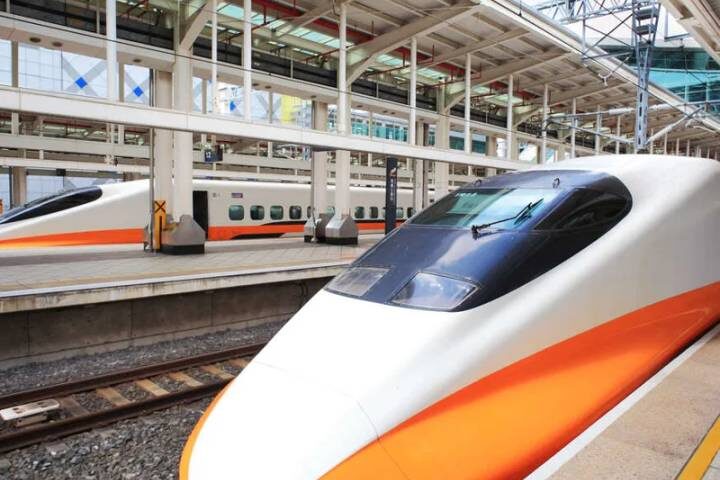
The journey to Kyoto takes eight to nine hours, with a change in Tokyo. It is the longest travel day, but Japan’s rail network makes the distance manageable: you travel by train across the country, including through an undersea tunnel linking Hokkaido with the main island. Think of this as a day for settling into your seat and watching the scenery change, not as a day with much time for sightseeing.
The timing matters. An early departure means a very early start; a later one may leave room for the market. Once you reach Kyoto, the focus shifts from winter coast and city lights to temples, gardens and traditional shops.
Kyoto’s gardens, tea and free day
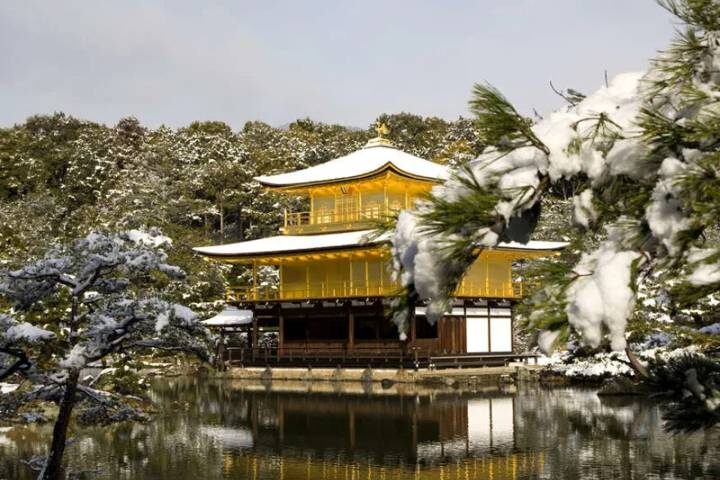
Day nine visits Kinkaku-ji, the Golden Pavilion, and Ryoan-ji, known for its Zen garden. Both are major sights, and seeing them with a leader gives you a structure for the day. A private tea ceremony offers a change of pace and a closer look at the customs around tea. It is a thoughtful break from outdoor sightseeing, especially in February.
The group uses public transport around Kyoto, a city with more than 2,000 temples and shrines. That number is a reminder to be selective: two temple visits in one day are enough to make a meaningful start without turning the trip into a checklist. The free day that follows lets you return to places that caught your interest or choose a different part of the city.
Nara is an option for day ten. You can visit Todaiji, home to the Big Buddha, and Kasuga Shrine, or stay in Kyoto. The tour leader can offer suggestions, but the day is yours to shape. That flexibility is a real strength after several scheduled days and long train rides.
The tour ends after breakfast on day eleven. You can leave at any time, and the hotel can store your luggage if you have a later flight and want to fit in more shopping or sightseeing. Transfers can be arranged to Kansai International Airport, about one and a half to two hours away, or Osaka International Airport, about an hour away.


What the price includes, and what it asks of you
The tour starts at $5,810 for the cheapest room basis. It includes 10 breakfasts, five dinners, the Tokyo to Abashiri flight, the drift-ice cruise, planned transport and sightseeing, luggage forwarding on two stretches, and three-star hotel accommodation. The balance of meals is left open, which suits a trip where local restaurants are part of the experience. It also means you should budget for lunches, several dinners and optional outings.
Value here is not just the hotel room or the number of included meals. You are paying for a guided route that joins Tokyo, remote Hokkaido, Hakodate and Kyoto without having to arrange flights, trains, buses and the festival logistics yourself. The group size of 7 to 16 is small enough to feel more personal than a large coach tour, but it is still a group trip, with shared schedules and transport.
The accommodation is rated three stars, and the overall category scores are strongest for itinerary and guide. Food is rated lower than those categories, which fits the open-meal approach: you get choice and local dining, rather than every meal being planned for you. One small but memorable comfort noted by a participant was the heated toilet seats. In February, you may appreciate that detail more than you expect.
This is not a slow, single-city winter break. It is for someone who is happy to change hotels, pack light twice and spend time on public transport in exchange for seeing several very different parts of Japan. The route’s best moments are specific: the sculptures in Sapporo, a possible encounter with drift ice, the train journey south and Kyoto’s Golden Pavilion.
Should you book this February tour?
Book it if the Sapporo Snow and Ice Festival is a priority and you also want a guided introduction to Tokyo, Hokkaido and Kyoto. The full festival day, small group and flexible Kyoto day give the itinerary a good balance of structure and choice.
Think twice if you dislike cold weather, long transfers or early starts. The drift-ice cruise depends on conditions, and the Hakodate-to-Kyoto journey takes most of a day. If you are comfortable with those trade-offs, this is a practical way to combine northern Japan’s winter sights with the country’s best-known cultural stops.
Japan Sapporo Snow Festival by Explore! – 11-Day Tour
“Sapporo Snow and Ice Festival; some of the local restaurant meals, bullet train journeys, the golden temple in Kyoto, the fantastic view from the b…”
FAQ
When does the tour run?
The tour departs in February. The drift-ice cruise is described as operating from mid-January through late March, subject to ice conditions.
Where does the tour start and end?
It starts in Tokyo and finishes in Kyoto after breakfast on day eleven.
How large is the group?
The group size is 7 to 16 people. The tour is fully guided in English and is for ages 16 and older.
Is the drift-ice cruise guaranteed?
No. The cruise depends on ice conditions. When it runs, it lasts about an hour, with wildlife sightings possible but not assured.
How much travel is involved?
There is a roughly six-hour public bus journey from Abashiri to Sapporo, a four-hour train ride to Hakodate, and an eight-to-nine-hour train journey from Hakodate to Kyoto.
Which meals are included?
The tour includes 10 breakfasts and five dinners. Other meals are not included, giving you the chance to choose local restaurants.
What should I know about luggage forwarding?
Your main bag is sent from Abashiri to Sapporo and later from Hakodate to Kyoto. Pack a day bag for two nights on each stretch, since your main luggage will not be with you.