Shibuya’s matcha workshop turns a familiar green drink into a hands-on lesson: you compare sweetened powder with 100% pure matcha, then whisk your own and make a latte. It’s a compact way to learn what changes in the cup when the tea itself is better quality.
I like two things in particular: the side-by-side tasting makes the difference between blended and pure matcha easier to grasp, and the practical whisking lesson gives you a skill to take home. English-speaking hosts, including Kody, guide the session and welcome questions.
The main caveat is the setting. The workshop takes place in a small space inside a karaoke bar building, not in a formal tea room, and one participant found the latte milk-heavy. If you want a traditional ceremony with kimono and sweets, this is a different kind of matcha experience.
- A focused 45-minute session fits between Shibuya shopping and sightseeing.
- Compare sweetened powder with pure matcha by color, aroma, sweetness, and taste.
- Taste matcha sourced from Shizuoka through a 10th-generation tea merchant.
- Whisk with traditional tools, then adjust the strength of your own latte.
- Ask questions in English about matcha, its background, and how to prepare it.
- Look for optional drinks such as matcha tonic and seasonal creations, which may cost extra.
- A quick matcha lesson in the middle of Shibuya
- First, learn what is in the cup
- Compare sweetened powder with pure matcha
- Whisk, then make a latte your way
- Creative drinks add a modern twist
- A small, relaxed room rather than a formal tea house
- Is .09 good value for a Shibuya activity?
- Make the most of your 45 minutes
- Who should book this matcha workshop?
- FAQ
- How long does the workshop last?
- Where is the meeting point?
- Is the workshop taught in English?
- Do I need experience making matcha?
- What will I taste?
- Do I get to make my own drink?
- Are matcha tonics and seasonal drinks included?
- Is there an age limit?
- Can I cancel or change my booking?
- The Best Of Tokyo!
- More Food & Drink Experiences in Tokyo
- More Tours in Tokyo
- More Tour Reviews in Tokyo
- Not for you? Here's more nearby things to do in Tokyo we have reviewed
A quick matcha lesson in the middle of Shibuya
 1 / 9
 2 / 9
 3 / 9
 4 / 9
 5 / 9
 6 / 9
 7 / 9
 8 / 9
 9 / 9
This workshop is less about ceremony and more about understanding what is in your cup. In roughly 45 minutes, you hear how matcha was used in the past, how people drink it today, and how quality and preparation affect flavor. Then you put the lesson to work at the whisk.
That distinction matters. Matcha has become a common flavor in lattes and sweets, but a green drink is not automatically a good example of the tea. Here, the comparison between sweetened powder and pure matcha gives you a simple way to notice what sugar can mask and what the tea itself contributes.
The workshop is in central Shibuya, at 3F Torimasu Building, 2-6-11 Dogenzaka. The listed venue name is Karaoke Bar Shibuya On The Lash. That is useful to know before setting out: you are heading to a building with a bar, not a tea shop with a large street-facing classroom. Check the supplied map and venue photos as you approach. Clear directions matter in this part of the city, and one participant specifically found the photos helpful for locating the entrance.

👉 See our pick of the 25 Best Guided Tours In Tokyo
First, learn what is in the cup
The session begins with background on matcha and how its role has changed over time. The host explains the difference between authentic, 100% pure matcha and a sweetened or blended powder. You do not need prior tea knowledge to follow along. The instructor explains the subject in English, and the class is designed to welcome beginners.
The details are useful because they give you a way to judge matcha beyond its bright color or familiar name. You are encouraged to notice aroma, balance, sweetness, and aftertaste. That makes the tasting more than a quick sip: it gives you a set of clues you can use later when choosing a drink or powder.
The pure matcha used in the workshop comes directly from a historic 10th-generation tea merchant in Shizuoka and is not sold in regular stores, according to the experience description. That source is part of the appeal: you get to taste a tea that is not simply the same powder you might find in a standard café drink. The class also covers matcha-growing regions, a helpful bit of context when tea labels start to blur together.
Hosts named by participants include Kody, Kota, Kato, and Younes. The host on your session may differ, but English instruction is part of the offering. The style appears conversational, with time for questions rather than a lecture delivered at arm’s length. If you are curious about Japanese tea culture or want to ask how to make a better latte at home, this format gives you room to do so.
You can also read our reviews of more food & drink experiences in Tokyo



Compare sweetened powder with pure matcha
The tasting is the most revealing part for anyone who has mostly encountered matcha in sweet drinks. You compare a sweetened matcha powder with the pure version, paying attention to how the color, aroma, sweetness, and flavor shift. The point is not to declare that one preparation suits everyone. It is to help you recognize what you prefer and why.
Pure matcha tends to make the tea itself more apparent, while added sweetness can soften or cover some of its character. The workshop gives you the chance to judge that contrast directly instead of relying on a menu description. If you already enjoy matcha, this can sharpen your sense of what you like. If you are new to it, the comparison is a friendly introduction without requiring you to know any tea vocabulary in advance.
The tasting also helps explain why matcha is more than a flavoring. You can think about its aroma and finish as well as its sweetness, and see how those qualities carry into a latte. This is practical knowledge, not just a fact to file away: once you know what you enjoy, you can ask more specific questions when ordering matcha elsewhere.
Whisk, then make a latte your way
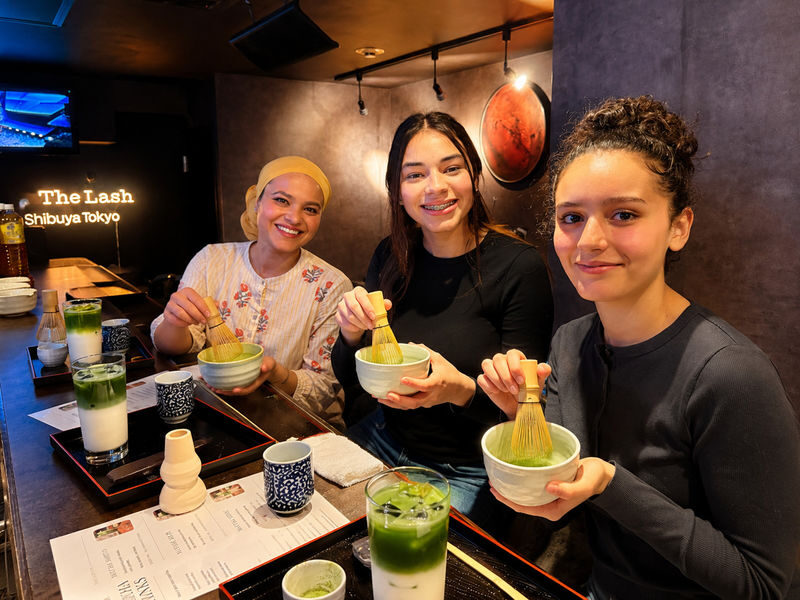
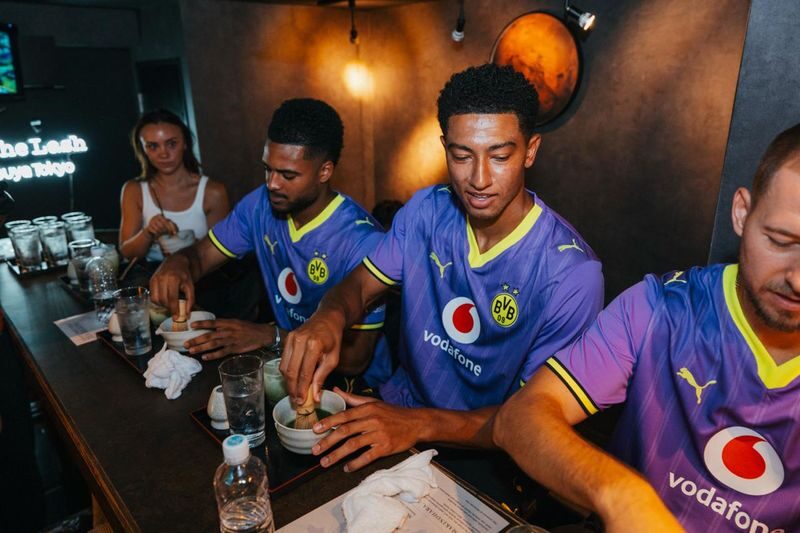
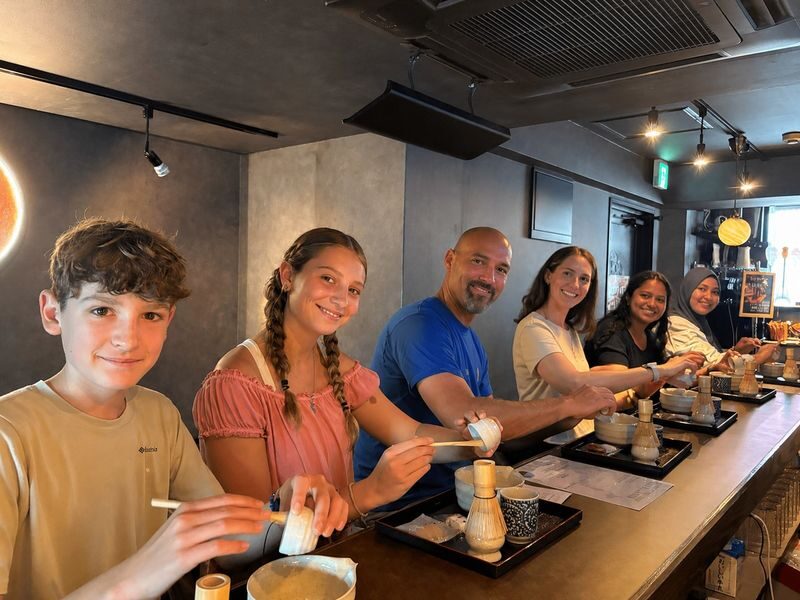
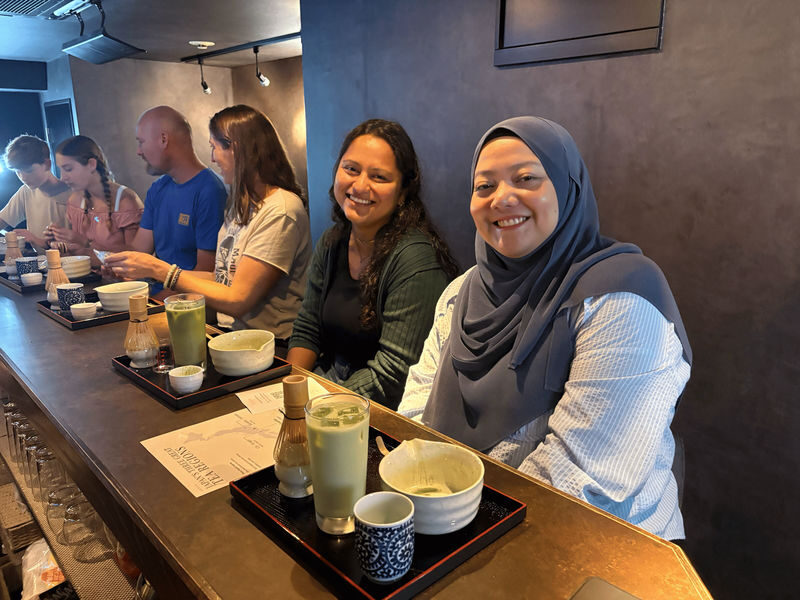
After the tasting, you use traditional tea tools to prepare pure matcha. The host shows you the technique step by step, so you do not have to arrive knowing how to whisk it. The hands-on part is a good reason to choose this workshop over simply ordering a matcha drink at a café. You learn how the powder is prepared before milk enters the picture.
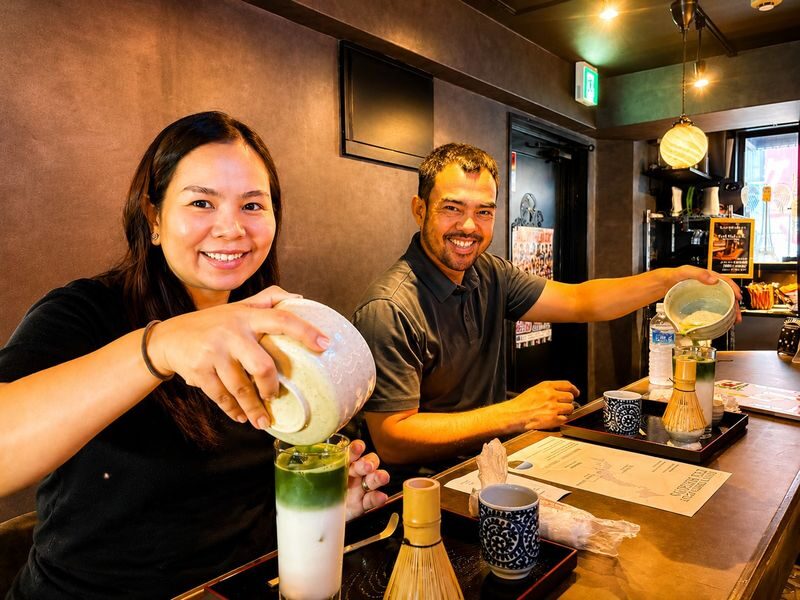
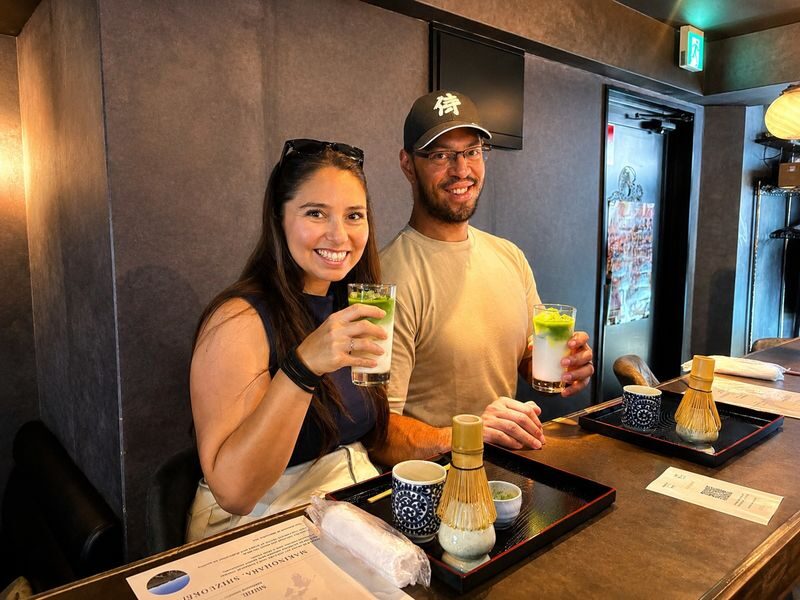
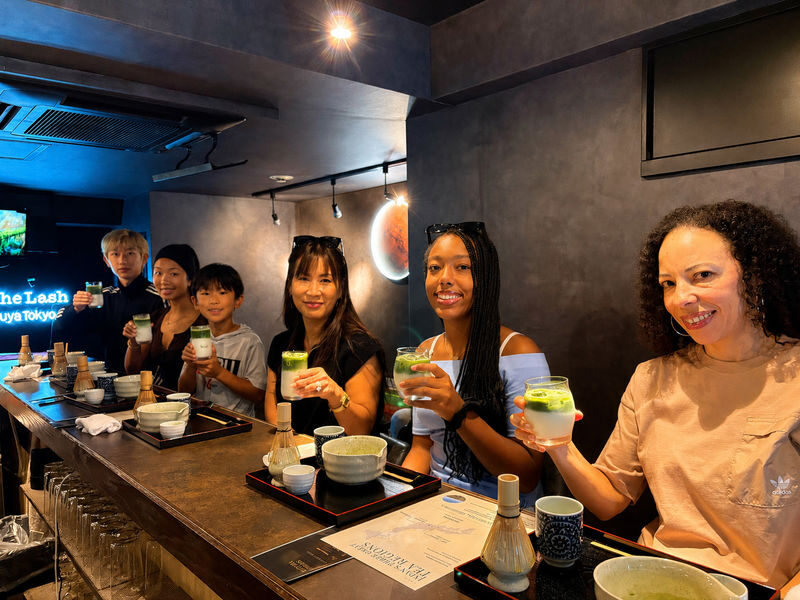
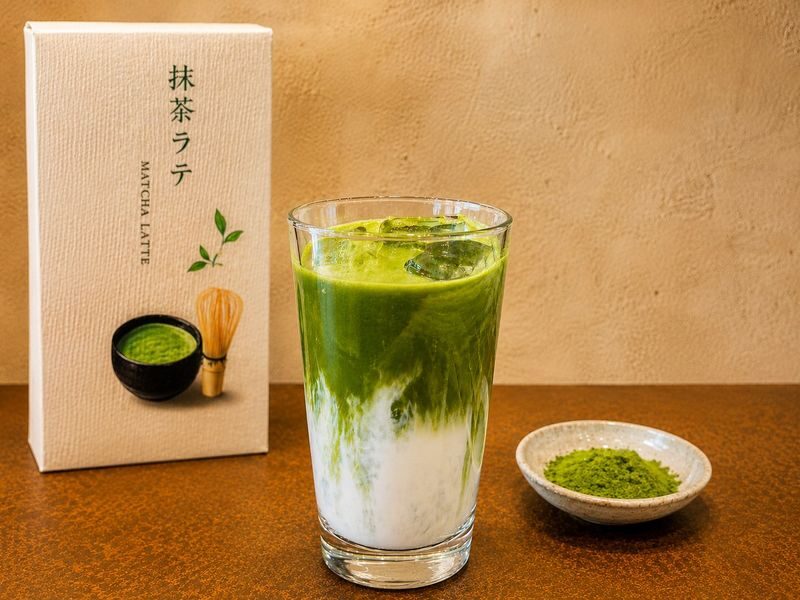
Then you make a personalized matcha latte, adjusting the strength to suit your taste. That freedom is important. One participant felt the finished latte had too much milk and not enough matcha, so if you prefer a stronger tea flavor, say so and ask how to increase the matcha ratio. A latte is personal, and the workshop gives you more control than a standard café order.
The practical payoff is simple: you leave with a method you can try at home, rather than only a memory of a drink. Several participants found the instructions clear enough to feel confident preparing matcha afterward. You may not recreate the exact Shizuoka tea or the workshop setting in your kitchen, but you will understand the basic steps and have a better sense of the balance you like.
Creative drinks add a modern twist
The core session focuses on tasting and making a matcha latte, but other matcha-based drinks may also be available. Matcha tonic and seasonal drinks are mentioned as optional choices, and participants have also tried matcha soda and a matcha gin and tonic. These can be a fun way to see how the flavor works outside a traditional tea preparation.
Check what is included in your selected package before ordering extras. The experience information lists refreshments, meals and beverages, and cocktails among inclusions, while also noting that optional tonics and seasonal drinks may cost extra. The safest reading is that some refreshments are part of the session, but special drinks can add to the bill.
These modern combinations are not a substitute for a formal tea ceremony. They are a lively extension of the tasting, especially if you enjoy trying unusual drinks. If your main interest is learning to prepare pure matcha, you can focus on the traditional whisking and latte-making portion instead.
A small, relaxed room rather than a formal tea house
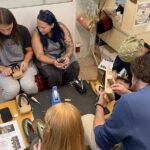
The class takes place in a cozy, intimate space. That can work in your favor: you are close to the host, can ask questions directly, and can talk with others in the session. The small setting suits a short, interactive workshop better than a large room where the demonstration might feel distant.
There is a trade-off. Space is limited, and the venue is not presented as a traditional tea room. If you are expecting a quiet ceremony, formal etiquette, kimono, or traditional sweets, choose a dedicated tea ceremony experience instead. This class is about matcha knowledge and modern drink-making, with an informal bar setting.
The host’s personality can shape the session. Kody and other named instructors have been described as warm, outgoing, and clear in their explanations. That friendly approach helps beginners feel comfortable asking basic questions. If you prefer a quiet, strictly formal lesson, the conversational style may feel more lively than you want.
You can also read our reviews of more tours and experiences in Tokyo






Is $7.09 good value for a Shibuya activity?
Prices start at $7.09, which is low for a guided activity in central Tokyo. At that starting price, the value comes from three things: a guided tasting, access to pure Shizuoka matcha, and the chance to practice making a latte yourself. You are paying for more than a single drink, though the total depends on the package you select and whether you add optional drinks.
The short duration is part of the value. At around 45 minutes, the class can fit into a day already filled with Shibuya’s shops and sights without taking over your schedule. It is also a good choice if you want a structured activity but do not want to commit to a longer cooking class or tea ceremony.
All ages pay the same price, and there is no age limit. That makes it straightforward to plan for a family, though the experience is most rewarding for anyone who is curious about tea or enjoys making drinks. The listed package is the Matcha Drink Making Workshop in Tokyo; check the package details before booking so you know which refreshments and extras are covered.
Make the most of your 45 minutes
Arrive with a few questions in mind. You might ask how pure matcha differs from sweetened blends, what gives a tea its aroma, or how much matcha to use for a stronger latte. The hosts are there to explain the technique and answer questions, and having a point of curiosity helps you get more from a compact session.
Use the tasting to decide what you like, rather than aiming to identify a single correct flavor. Notice whether you prefer more sweetness, a stronger tea taste, or a lighter latte. When you make your drink, tell the host what you want and adjust the ratio accordingly.
Allow a little time to find the venue. The address is on the third floor of the Torimasu Building, and the business name can be easy to miss if you expect a dedicated tea shop. Use the map and photos provided with your booking. The voucher is mobile and valid only on the date and time specified, so keep it handy.
Bookings can be changed until one day before the activity, subject to the stated exceptions. Cancelling at least 24 hours before the activity date, in local time, qualifies for a full refund. Late arrivals and no-shows are not eligible for a refund or amendment, so plan your route with enough margin.
Who should book this matcha workshop?
I would choose this for a first matcha class, a short break between Shibuya plans, or a family activity that combines a little culture with something hands-on. It suits curious beginners especially well, and it has enough practical instruction to appeal to people who already order matcha but want to understand how to prepare it.
Choose a different experience if you want a formal tea ceremony, traditional sweets, or a large, quiet setting. And if you are particular about a strong tea-to-milk balance, be ready to ask for a more concentrated latte. For a low-cost introduction that blends tasting, background, and a skill you can use at home, this workshop is an easy fit.
Pure Matcha Tasting & Latte-Making Workshop in Shibuya, Tokyo
“Thank you Kody, my family had a great time! it was lovely to meet yoj!”
FAQ
How long does the workshop last?
The workshop lasts about 45 minutes.
Where is the meeting point?
The meeting point is Matcha Tasting & Creative Drink Making Experience at Karaoke Bar Shibuya On The Lash, 3F Torimasu Building, 2-6-11 Dogenzaka, Shibuya, Tokyo 150-0043.
Is the workshop taught in English?
Yes. An English-speaking host guides you through the session.
Do I need experience making matcha?
No. Beginners are welcome, and the host explains the preparation step by step.
What will I taste?
You compare sweetened matcha powder with 100% pure matcha, noting differences in color, aroma, sweetness, and flavor.
Do I get to make my own drink?
Yes. You use traditional tools to whisk matcha and make a latte, adjusting its strength to your preference.
Are matcha tonics and seasonal drinks included?
Optional matcha tonics and seasonal drinks may cost extra. Check the package details for what is included.
Is there an age limit?
There is no age limit, and the same price applies to all ages.
Can I cancel or change my booking?
A full refund is available if you cancel at least 24 hours before the activity date, based on local time. Changes are allowed until one day before, subject to the stated exceptions. Late arrivals and no-shows are not eligible for refunds or amendments.