At Uogashi Meicha Chanomi Club, a tea shop in Tsukiji, you’ll learn Suiboku-ga, a traditional ink-painting style that uses no layers of paint. The lesson moves from an artist’s demonstration to your own brushwork, with a goal that is simple to describe and harder to do well: making an expressive image with a single stroke.
I like two things about this class: you leave with your own finished artwork, not just a new skill, and the one-hour format fits neatly into a Tokyo day. The included green tea from a Tsukiji brand adds a thoughtful local touch to the souvenir.
One consideration: the class is short, and everyone in your group chooses one subject from a set list. If you want a long, open-ended art session or a chance to paint different subjects, this may feel more like an introduction than a full course.
- What to know before you book
- A tea-shop setting for a brush-and-ink lesson
- The art is spare, but the brushwork takes attention
- What happens during the 60-minute class
- Choose a subject, then choose what to take home
- The price: a short lesson with a lasting souvenir
- Getting there and planning your session
- Who will enjoy this Tsukiji workshop
- Should you book it?
- FAQ
- How long is the Japanese ink-painting class?
- Where does the activity take place?
- What start times can I choose?
- What will I paint?
- What is included in the shikishi board package?
- Is the class suitable for children?
- What is the cancellation policy?
- The Best Of Tokyo!
- More Tours in Tokyo
- More Tour Reviews in Tokyo
- Not for you? Here's more nearby things to do in Tokyo we have reviewed
What to know before you book
 1 / 9
 2 / 9
 3 / 9
 4 / 9
 5 / 9
 6 / 9
 7 / 9
 8 / 9
 9 / 9
- One brushstroke is the aim: Learn simple Suiboku-ga techniques and practise expressing a subject with a single, deliberate stroke.
- Choose one subject as a group: Options include pine, bamboo, plum, orchid, chrysanthemum, or kanji characters.
- The instructor demonstrates first: The hour includes a 10-minute introduction and demonstration, 40 minutes of painting, and 10 minutes to finish and receive guidance.
- Your keepsake depends on your package: Options include a shikishi board, a lampshade with LED light, ornamental coasters, or a hanging scroll.
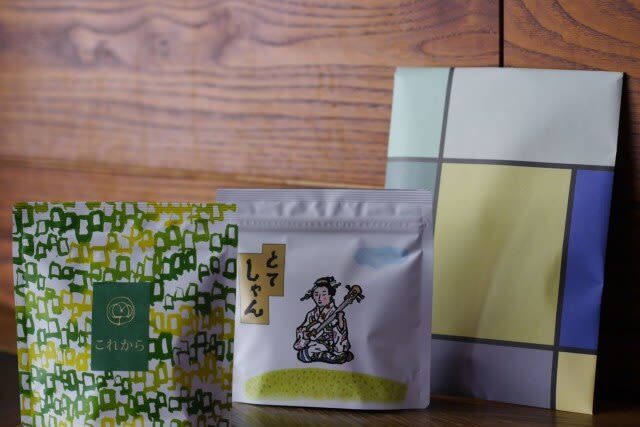
- A Tsukiji tea gift is included: You receive a pack of green tea from Uogashi Meicha.
- Arrive early and dress for ink: Get to the shop 10 minutes before your chosen session, and wear clothes that can handle a stray mark.

👉 See our pick of the 25 Best Guided Tours In Tokyo
A tea-shop setting for a brush-and-ink lesson
This is a compact workshop, not a sightseeing tour around Tsukiji. You meet at Uogashi Meicha Chanomi Club, at 2 Chome-11-12 Tsukiji, and spend the hour there learning and painting. That makes it easy to pair with other plans in the neighbourhood, but you’ll need to arrange your own way to and from the shop.
The location is about a three-minute walk from Tsukiji Station’s Exit 1. Follow the directions carefully and allow a little extra time to find the entrance. The activity asks you to arrive 10 minutes before your booked start; late arrivals and no-shows are not refundable, so this is not the moment to squeeze in one last market stop.
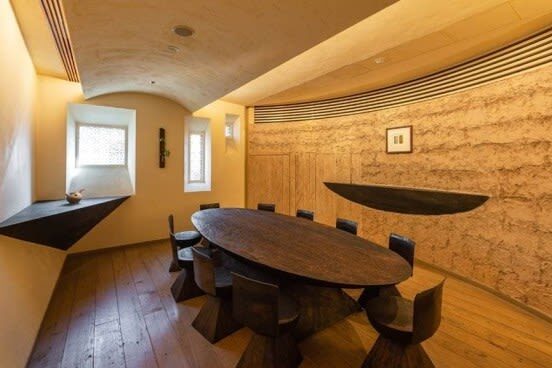
Tsukiji is known for its food culture, but this class offers a quieter way to spend time in the area. The setting connects the activity with a local tea brand, and the green tea pack gives you a small taste of that connection to take away. Meals and drinks are not included, so plan separately if you want lunch or a full tea break.
You can also read our reviews of more tours and experiences in Tokyo.



The art is spare, but the brushwork takes attention
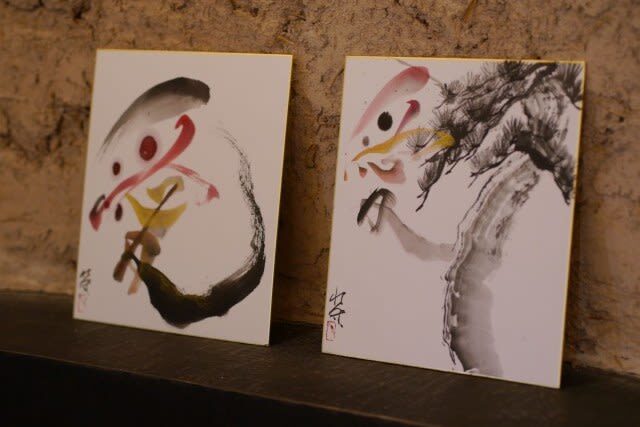
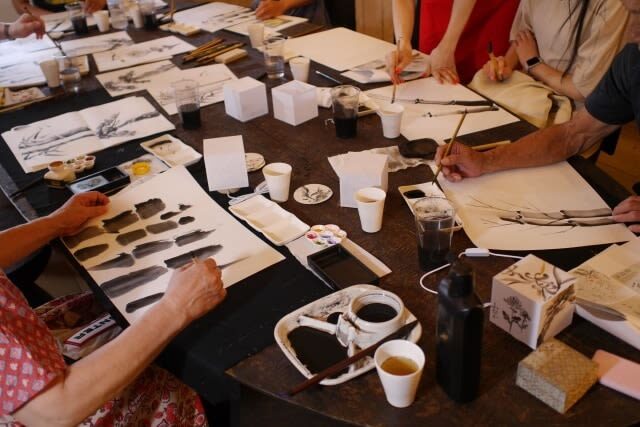
Suiboku-ga, also called Japanese ink painting, relies on ink and brush rather than layers of coloured paint. The appeal is in the restraint: a small number of strokes can suggest a branch, flower, or character, and each stroke remains visible. There’s little room to hide a hesitant mark under another coat.
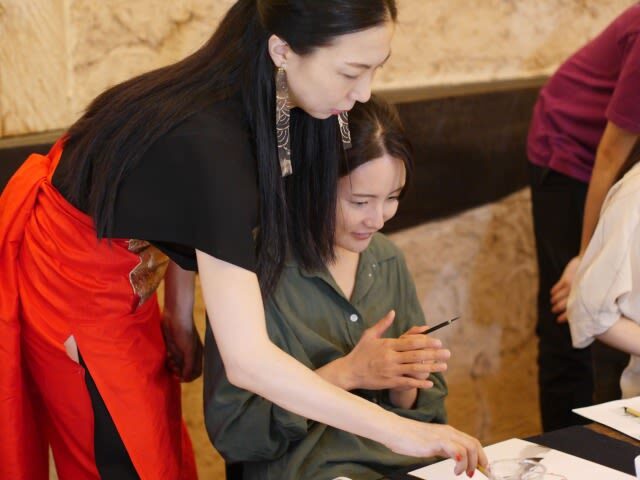
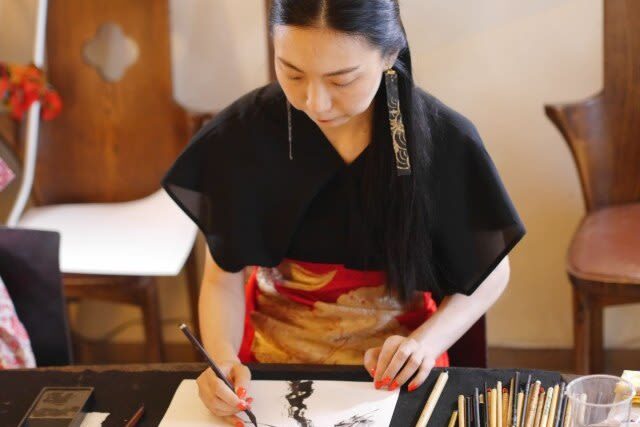
That makes the lesson appealing even if you don’t think of yourself as an artist. You are not expected to arrive with painting skills. The instructor introduces basic techniques, demonstrates the process, and keeps the method simple enough for a first attempt. The focus is not on making a perfect copy, but on learning how pressure and movement shape the mark.
The description of the class also connects the art with Zen ideas and Japanese aesthetics. You can treat that as a practical prompt: slow down, pay attention to the brush, and make each movement count. In a one-hour session, you won’t become a master of ink painting, but you can leave with a clearer sense of why simplicity is central to the form.
Award-winning artist Rensui is associated with the course and has worked on media projects, including the game Ghost of Yotei. Shigen-san is also named as an instructor for sessions. Since the teaching name may vary, you can check who will lead your date when arranging your booking.
What happens during the 60-minute class
The session is divided into three parts. First comes a 10-minute introduction and demonstration. This gives you a chance to see how the artist handles the brush before you try it yourself, and to get a feel for the pace and the basic shapes.
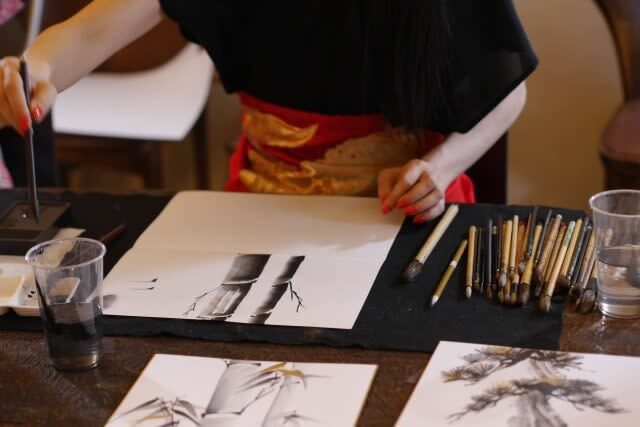
The main 40-minute painting period is the heart of the class. You’ll learn basic techniques and work toward a painting built around a single brushstroke. That time includes practice and the making of your chosen keepsake, so don’t expect an unhurried, multi-hour studio session. It is a focused introduction, designed to get you from watching to doing without a long wait.
The final 10 minutes are for finishing your work and receiving instruction from the artist. That brief wrap-up matters: a little guidance can help you understand what went well and how to think about the finished piece. The pace is brisk, though, so this is a good fit if you like a clear plan and a tangible result.
Choose a subject, then choose what to take home
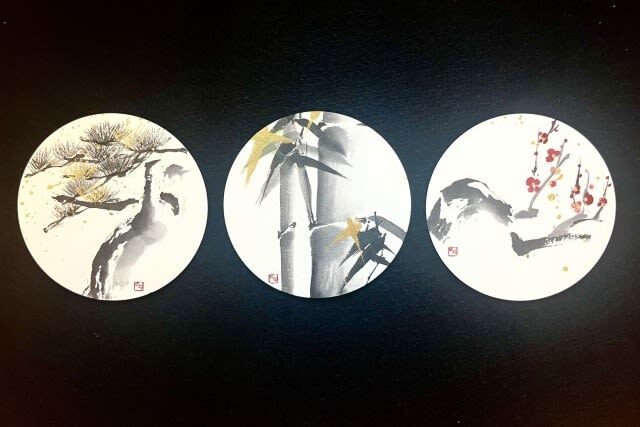
Your group chooses one subject from pine, bamboo, plum, orchid, chrysanthemum, or kanji characters. These choices give you a range of familiar motifs, from plants to writing, while keeping the lesson manageable for beginners. Since the subject is selected by the group, ask about the options if you’re booking with others who have strong preferences.
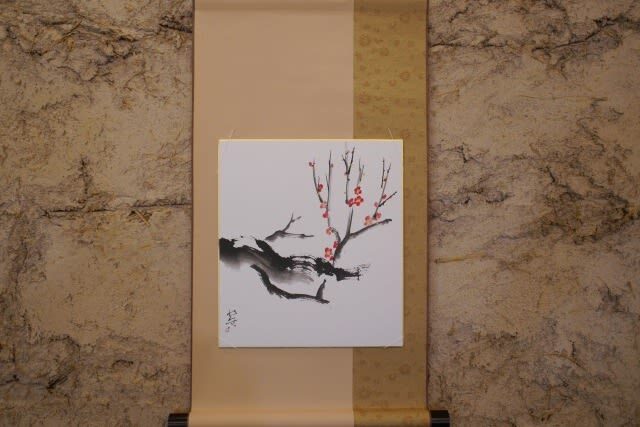
The standard package includes a shikishi board, a stiff Japanese art board suited to displaying or gifting your work. Other formats are available at different prices: a set of three ornamental coasters starts at $86.25, a lampshade with LED light starts at $141.89, and a hanging scroll starts at $151.19. The shikishi board package also starts at $86.25.
These alternatives change the feel of the souvenir. A board is a straightforward keepsake; coasters give the image a practical use; a lampshade turns it into a decorative object; and a scroll offers a more traditional presentation. Check which package you are booking, since the materials and final item depend on that choice.
There’s a useful personal touch here: the work is made by you, so it can be a memento of the trip or a gift with a story behind it. If you’re buying for someone else, think about whether they’d prefer something to display or something functional before choosing the package.
The price: a short lesson with a lasting souvenir
At $86.25 for the shikishi board package, this is not a bargain-basement activity. You’re paying for an instructor-led introduction, art materials, the finished board, and a pack of green tea. For someone who wants to try a traditional art form and bring home a personal object, that combination can make the price worthwhile.
The price makes more sense if you value the instruction as much as the souvenir. You get an artist’s demonstration and individual guidance during the work period, rather than simply being handed materials and left to figure out the brush. Still, the class lasts only one hour. If your main goal is extended practice or a deep course in painting, the cost may feel high for the amount of studio time.
The other packages give you a choice of format, but cost more in some cases. The lampshade starts at $141.89 and the hanging scroll at $151.19, while the coasters begin at the same $86.25 price as the board. Compare the object you’ll take home with the extra cost, not just the name of the package.
A pack of green tea is included as a welcome gift. Meals and beverages are not included, so don’t assume the price covers a full tea service or lunch. The value is strongest for people who want a guided, hands-on activity and a finished keepsake, rather than a tasting or a longer art class.






Getting there and planning your session
You can choose from start times at 11:00, 12:30, or 14:00, with the available return times varying according to the session you select. Check the exact time shown for your booking, and arrive 10 minutes early at the shop. The voucher is valid only on the date and time specified, and you present it on your phone.
The location is in Tsukiji, a short walk from Tsukiji Station’s Exit 1. The address is Uogashi Meicha Chanomi Club, 2 Chome-11-12 Tsukiji, Chuo City, Tokyo 104-0045. The activity has no transport included, so make your own way there and leave time to reach the meeting point.
Wear clothes that can get ink on them. That is a small bit of practical advice with a big payoff: you can focus on the brush rather than guarding your sleeves. Participants must be at least five years old, making this possible for families with children who are ready to follow a short, hands-on lesson.
You’ll receive booking confirmation within 24 hours. If it doesn’t arrive, contact customer support. Cancellations made at least 48 hours before the activity date, in Tokyo local time, receive a full refund.
Who will enjoy this Tsukiji workshop
This class suits curious beginners, couples looking for a shared activity, and families with children aged five or older. It also works well for anyone who wants a quieter break between Tokyo’s larger attractions. The short format is easy to fit into a day, and the finished artwork gives the hour a clear purpose.
It is a particularly good choice if you like learning by doing. You’ll see a demonstration, try the technique, and take home the result. The instructor’s patience and helpful guidance have been noted in class accounts, including support for first-timers learning both brushwork and kanji. That matters if you’re nervous about having little or no painting experience.
This is less suited to someone who wants a highly flexible art session. The class follows a set structure, and the group selects one subject together. If you’d rather spend hours working at your own pace, or want to explore several painting styles in one visit, look for a longer workshop.
Should you book it?
Book this class if you want a compact, hands-on introduction to Japanese ink painting, and like the idea of taking home something you made yourself. The artist’s demonstration, simple brushwork, choice of keepsake, and green tea gift give the hour a distinct Tsukiji flavour.
Skip it if you want a long lesson, a broad choice of subjects for each participant, or a meal-and-tea outing. For most curious beginners, though, the one-hour format is a sensible way to try Suiboku-ga without giving up half a day in Tokyo.
Japanese Sumi-e Ink Painting Experience at a Tea Shop in Tsukiji
“I can highly recommend this workshop. I created a lovely lampshade under the warm and expert guidance of the artist.”
FAQ
How long is the Japanese ink-painting class?
The class lasts one hour: about 10 minutes for the introduction and demonstration, 40 minutes for painting, and 10 minutes for finishing and instruction.
Where does the activity take place?
It takes place at Uogashi Meicha Chanomi Club, 2 Chome-11-12 Tsukiji, Chuo City, Tokyo. From Tsukiji Station, take Exit 1 and walk straight for about three minutes.
What start times can I choose?
Available start times are 11:00, 12:30, and 14:00. The return time options vary depending on the start time you book, so check the confirmed schedule.
What will I paint?
Your group chooses one subject from pine, bamboo, plum, orchid, chrysanthemum, or kanji characters.
What is included in the shikishi board package?
The package includes admission, a welcome gift, and a shikishi board for your artwork. A pack of green tea from Uogashi Meicha is included as the gift.
Is the class suitable for children?
Participants must be at least five years old. The activity also advises wearing clothes that can get ink on them.
What is the cancellation policy?
You can receive a full refund if you cancel at least 48 hours before the activity date, using Tokyo local time.