Hitachi Seaside Park’s spring nemophila can turn Miharashi Hill blue, while Ashikaga Flower Park is known for its grand wisteria. This day trip links both gardens from Tokyo, so you can see two very different spring displays without arranging the long transfers yourself.
I like two things about this outing: round-trip transport from Tokyo takes the guesswork out of a distant day trip, and the schedule gives you time to wander independently instead of keeping you with a guide at every turn. Guides such as Zoe, Dana, and Lynn have been praised for clear instructions and careful timekeeping.
The trade-off is a lot of road time for a short visit at each park. Bloom dates can shift with the weather, and even a well-run schedule cannot guarantee the flowers will be at their peak.
- The details worth knowing
- Two famous flower parks, linked from Tokyo
- The morning pickup and long ride north
- Hitachi Seaside Park: blue flowers and broad views
- Ashikaga Flower Park: wisteria is the seasonal gamble
- Free time, not a guided garden walk
- What the price includes, and what it does not
- Traffic, timing, and the return to Tokyo
- Who should book this flower day trip?
- FAQ
- What time does the tour leave Tokyo?
- Where are the pickup and return points?
- Are park admission tickets included?
- How long do you spend at each park?
- When is the 2027 wisteria festival expected?
- Is lunch included?
- Is the tour fully guided inside the parks?
- What happens if I arrive late?
- Can traffic delay the return to Tokyo?
- More Tours in Hitachinaka
- More Tour Reviews in Hitachinaka
- Not for you? Here's more nearby things to do in Hitachinaka we have reviewed
The details worth knowing
 1 / 4
 2 / 4
 3 / 4
 4 / 4
- Two parks, one long day: Visit Hitachi Seaside Park and Ashikaga Flower Park on a single outing from Tokyo.
- About three hours at the parks: The planned stops are 1 hour 50 minutes at Hitachi and 1 hour 30 minutes at Ashikaga, though delays can cut into that time.
- Nemophila and wisteria are seasonal: The estimated 2027 wisteria festival period is April 20 to May 15, but flowering depends on temperature and rain.
- Tickets may cost extra: The base option excludes admission. The stated fees are 800 yen for Hitachi and 2,300 yen for Ashikaga.
- You explore on your own: The guide handles coordination and may explain the stops, but park time is generally free time rather than a fully guided tour.
- Traffic can change the day: The tour warns that holiday delays may add two to five hours, so leave your evening plans open.
Two famous flower parks, linked from Tokyo
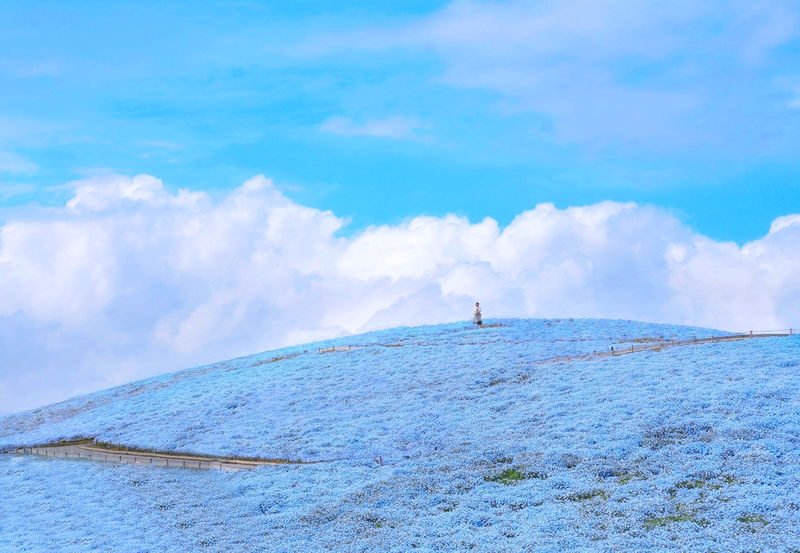
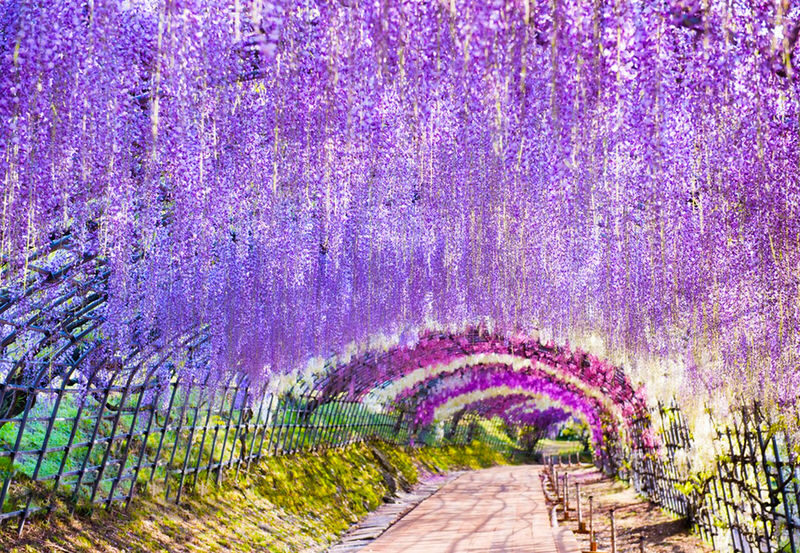
This is a practical way to see two of Japan’s best-known spring flower displays in one day. Hitachi Seaside Park, in Ibaraki Prefecture, is famous for the nemophila that cover Miharashi Hill in blue. Ashikaga Flower Park, in Tochigi Prefecture, draws visitors for its great wisteria, including a celebrated old specimen, as well as seasonal flowers throughout the grounds.
The contrast is part of the appeal. At Hitachi, the view opens wide across a hill toward the sky and coast. At Ashikaga, the focus is on garden paths, flowering structures, and the close-up spectacle of wisteria. If you have only one free day in Tokyo and want a spring outing beyond the city, the pairing makes sense.
But the parks are not next door to each other. Expect a full day built around driving, with only a few hours in total to explore. Think of this as a convenient sampler, not a slow garden visit.
You can also read our reviews of more tours and experiences in Hitachinaka.

The morning pickup and long ride north
The tour has two Tokyo pickup points. At Tokyo Station, meet at the Marunouchi North Exit at 7:50 a.m. for an 8:00 departure. At Shinjuku, meet by MODE Gakuen at 8:20 a.m. for an 8:30 departure. Arrive 10 minutes early, and do not count on a late-arrival exception: latecomers and no-shows are not refunded.
The operator sends the next day’s meeting details, vehicle information, and guide contact in an email the afternoon or evening before departure. Check your inbox and spam folder, keep your phone on, and join the LINE group if one is sent and you use LINE. The supplied information gives slightly different email windows, so check for the message throughout the afternoon and evening.
Travel time is a significant part of the experience. The ride from Tokyo to Hitachi can take around two and a half hours, followed by roughly two hours between the parks and another long return drive. A clean, comfortable bus makes the journey easier, but it does not make it short. If you are prone to motion sickness, the operator recommends taking precautions before setting out.
Vehicle size depends on the group. With fewer than 12 people, a smaller vehicle may be used and there may be a driver but no tour guide. Larger groups are scheduled with a driver and guide. This is a shared ride, so you will follow the group’s fixed departure and return times.
Hitachi Seaside Park: blue flowers and broad views
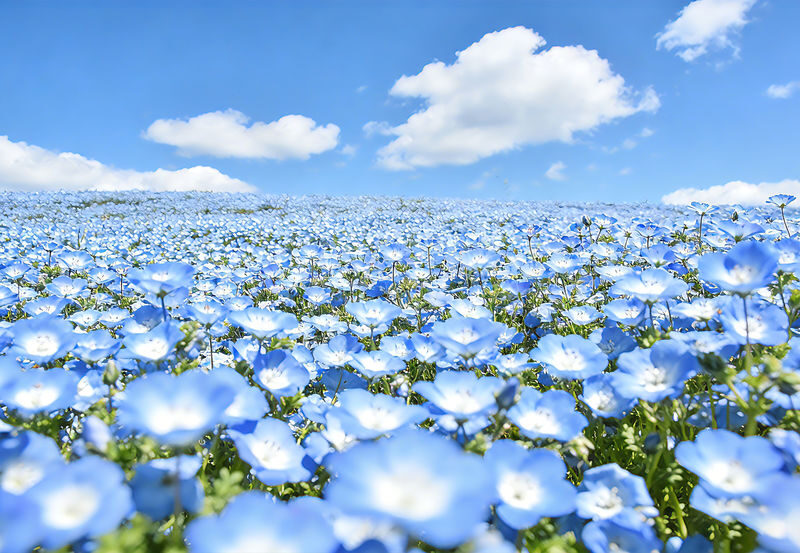
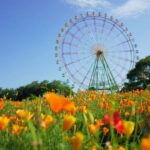
The first stop is scheduled for around 10:30 a.m., with about 1 hour 50 minutes at the park. In peak season, millions of nemophila flowers cover Miharashi Hill, creating the blue-on-blue view that makes this garden so popular. On a clear day, the hill, flowers, sky, and distant coastline form the main scene.
The word millions is no exaggeration in the tour description: the park’s signature display is often counted at about 4.5 million flowers. Still, the exact look depends on the date and weather. A dry spell, cold snap, or heavy rain can affect bloom timing, and spring flowers do not follow a booking calendar.
Hitachi is also a large park. You may be tempted to spend the whole stop photographing the famous hill, but other seasonal beds and park areas can take time to reach. A circuit on the park’s sightseeing bus has been described as taking about 50 minutes without getting off. That makes the allotted stop feel shorter than it first appears, especially if you want to ride, eat, shop, and take photos.
Have a simple plan before you leave the bus. Decide whether the nemophila hill is your priority, or whether you want to see more of the park at a quicker pace. The tour does not include lunch, and the schedule is tight enough that a leisurely restaurant meal may not fit. Bring food or be prepared to buy something at the attraction; sealed light snacks and unopened drinks are allowed on the bus, but eating inside the vehicle is prohibited.
Admission to Hitachi Seaside Park is listed at 800 yen per person for the ticket-excluded option. If you want to move at a gentle pace, browse the shops, and eat without watching the clock, consider whether this short stop will satisfy you.
Ashikaga Flower Park: wisteria is the seasonal gamble
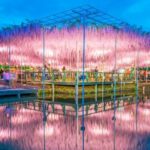
The second park is scheduled for about 2:00 p.m., with a planned 1 hour 30 minutes. Ashikaga is celebrated for its great wisteria and its flowering tunnels, which can feel especially theatrical when the blooms hang overhead. The park also has other plantings, so a visit can still be pleasant when the wisteria has passed its peak. But if the giant wisteria is the reason you booked, timing matters more here than almost anywhere else on the route.
For 2027, the estimated Grand Wisteria Festival period is April 20 through May 15. Treat those dates as a rough guide, not a promise. Temperature and precipitation affect the blooms, and the best viewing window can shift from year to year. Some early-May visits have found the main wisteria largely finished, even as roses, cosmos, canola flowers, and other plants offered color elsewhere in the grounds.
That uncertainty is the tour’s biggest booking risk. A flowering display can change markedly over a few days, and admission is not refunded if the flowers do not match your expectations. If the wisteria is your must-see, check current bloom information close to your travel date and be ready to adjust your expectations. If you would still enjoy a botanical garden and a range of spring flowers, the visit is less of an all-or-nothing bet.
Ashikaga admission is listed at 2,300 yen for the ticket-excluded package. The park’s entry fee is substantial compared with Hitachi’s, so make sure you choose the right ticket option when booking. The tour offers a version with both attraction tickets included, but the package price can differ. The stated starting price of $49.29 should not be mistaken for a guaranteed all-in price.
Free time, not a guided garden walk
At each stop, the guide generally gives instructions and a meeting time, then you explore independently. This arrangement suits you if you like to set your own pace within a clear deadline. You can linger over photos or choose your own route, rather than staying with a group for a continuous guided walk.
The guide’s main value is often logistical: explaining where to meet, keeping the group on schedule, and helping everyone understand the day’s plan. Past named guides include Zoe, Dana, Lynn, and Ariel. Guides have been praised for clear communication, patient group management, local recommendations, and help taking photos. The exact guide varies, and a smaller departure may have no guide at all.
Keep close track of the meeting time. The operator allows a maximum five-minute wait before the group moves on, after which you may have to make your own way to the next stop. This is a fixed carpool itinerary, not a private driver you can ask to hold the bus while you finish one more lap.

What the price includes, and what it does not
The starting fare is from $49.29. It includes round-trip transfers from the Tokyo meeting point, tolls, parking, and fuel. Those transfers are the main value: reaching both parks independently would mean arranging intercity transport and connections, then coordinating the return to Tokyo. The day trip turns that planning into one pickup and one drop-off.
The base price does not include meals, drinks, admission, tips, or personal expenses. With the stated park fees, admission adds 3,100 yen per person if you choose the ticket-excluded option. Compare that total with the ticket-included package before you book, and confirm which package is selected in your checkout details.
There is no lunch included. Bring a meal or budget time and money for food at the parks, but do not assume you will have a generous lunch break. The guide may recommend local dishes and snacks, including ice cream, but purchases are optional and there is no forced spending.
Traffic, timing, and the return to Tokyo
The advertised day runs roughly from 7:50 a.m. to 5:50 p.m., with the return time an estimate rather than a firm promise. The route is long, and traffic, weather, holidays, and crowds can alter the order of the parks, shorten visits, or delay arrival. Weekend and public holiday delays of two to five hours are possible, according to the operator’s warning.
That makes this a poor day to schedule a show, dinner reservation, or other fixed evening activity in Tokyo. Keep your plans flexible. If traffic is smooth, the day can run neatly; if it is not, the parks may get less time and the return may be much later.
The operator may cancel in extreme weather or unforeseen circumstances, in which case you can reschedule or request a full refund. Standard cancellation allows a full refund with at least 24 hours’ notice. Once you have used a ticket or visited an attraction, refunds are not available, and lateness or missing the departure is not refundable.
Who should book this flower day trip?
I’d consider this tour if you want to see both parks in one day, value direct transport over independent route planning, and are happy with a brisk visit. It can also suit photographers who want time for the signature views and are willing to choose their priorities rather than cover every corner.
It is less suitable if you want a slow garden day, have mobility or health concerns that make a long group outing difficult, or are traveling with young children who need their own seat and more flexible breaks. Children aged 2 and older pay the adult rate. Children under 2 may ride free only if they do not occupy a separate seat, but participation is not recommended; contact the operator in advance if bringing an infant. Seniors aged 65 and older must be fit for the trip and accompanied by someone aged 22 or older. The operator excludes people with certain conditions, including high blood pressure, heart disease, asthma, epilepsy, acrophobia, and pregnancy.
Book it for convenience and two seasonal highlights, not for a leisurely, fully guided garden day. If wisteria is your main reason to go, check the bloom status as close to your date as possible. If you want ample time at both parks, a separate day for each would be the calmer choice.
2027 Spring Flower Sea Limited: Ashikaga Flower Park Wisteria & Hitachi Seaside Park Nemophila One-Day Tour (Departing from Tokyo)
“Plenty of time, well-arranged. Seki is wonderful.”
FAQ
What time does the tour leave Tokyo?
The Tokyo Station meeting time is 7:50 a.m., with departure at 8:00. The Shinjuku meeting time is 8:20 a.m., with departure at 8:30. Arrive 10 minutes before your selected departure.
Where are the pickup and return points?
You can meet at Tokyo Station’s Marunouchi North Exit or at Shinjuku MODE Gakuen. The tour returns to the corresponding Tokyo Station or Shinjuku drop-off point.
Are park admission tickets included?
Not in the ticket-excluded package. The stated fees are 800 yen for Hitachi Seaside Park and 2,300 yen for Ashikaga Flower Park. A package with both tickets is also offered.
How long do you spend at each park?
The planned visit is 1 hour 50 minutes at Hitachi Seaside Park and 1 hour 30 minutes at Ashikaga Flower Park. Traffic or weather may shorten the time or change the order.
When is the 2027 wisteria festival expected?
The estimated Grand Wisteria Festival period is April 20 to May 15, 2027. Flowering depends on natural conditions, so those dates do not guarantee peak blooms.
Is lunch included?
No. Bring food, buy lunch at an attraction, or eat at a restaurant recommended by the guide. The schedule may not allow much time for a leisurely meal.
Is the tour fully guided inside the parks?
No. The guide provides instructions and may introduce the attractions, but you generally explore each park on your own during the scheduled free time.
What happens if I arrive late?
Late arrivals and no-shows are not refunded. The group waits no more than five minutes at an attraction before moving on.
Can traffic delay the return to Tokyo?
Yes. The stated 5:50 p.m. return is an estimate. Traffic and weather can cause delays, and holiday or weekend congestion may add two to five hours, so keep evening plans flexible.