The day’s big draw is the contrast: millions of small blue-and-white nemophila flowers at Hitachi Seaside Park, a sacred torii gate set against Pacific surf, then old wisteria glowing under evening lights at Ashikaga Flower Park. You cover three very different sights without arranging the long drives yourself.
I like the mix of open-air flower viewing and coastal scenery, and the fact that park admissions, transport, tolls and parking are included. A guide can also make a sprawling day easier to manage: guides on this route have included Liu, Leo and Matt, with clear directions and explanations noted as particular strengths.
The trade-off is time. You get about two hours at Hitachi, 30 minutes at the shrine and 90 minutes at Ashikaga, and traffic can squeeze those visits further. The tour title mentions Adachi, but the night-wisteria stop described here is Ashikaga Flower Park.
- Hitachi’s spring hills are known for roughly 4.5 million nemophila, with the main bloom usually expected from late April to late May.
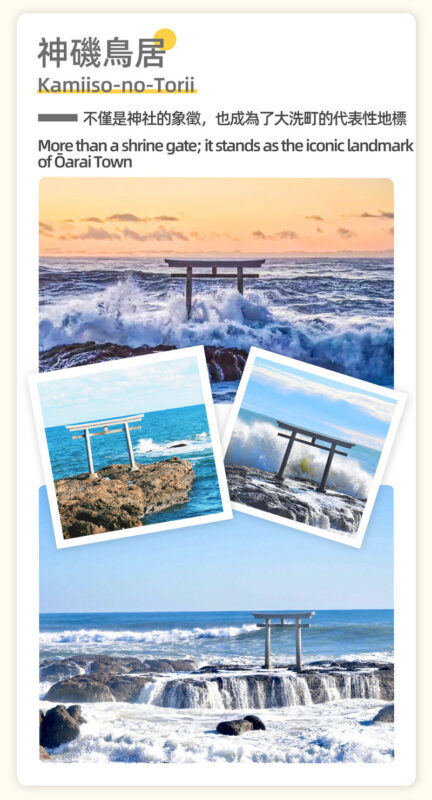
- Kamiiso Torii gives you a brief but memorable stop beside the Pacific, where waves crash against the rocks below the gate.
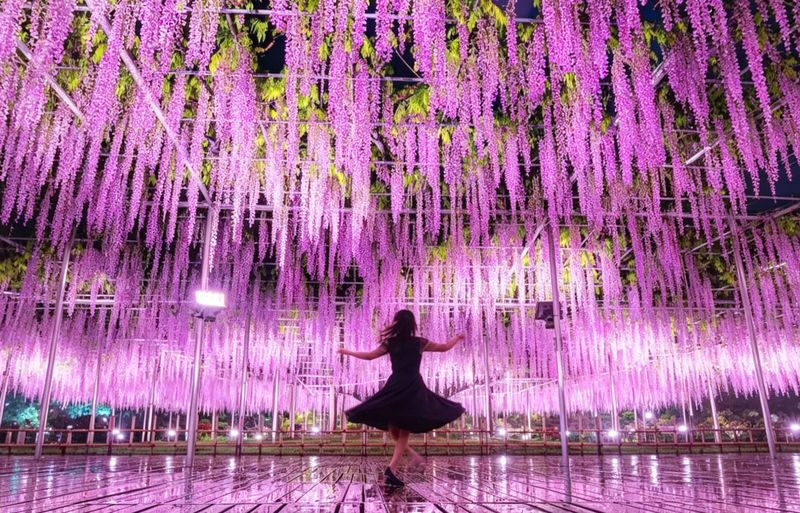
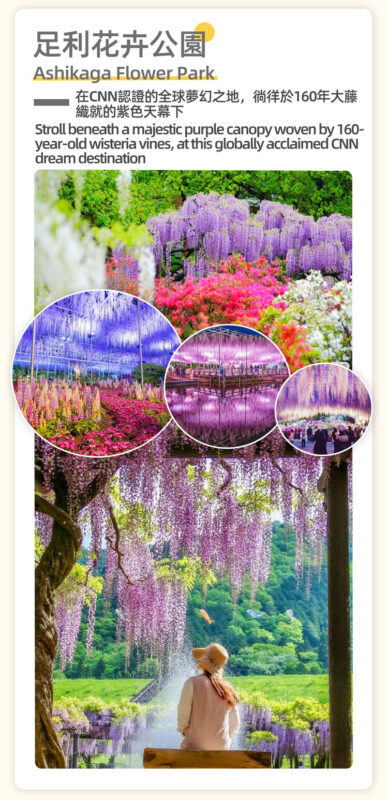
- Ashikaga after dark is the finale, with illuminated wisteria, including a great wisteria tree described as more than 160 years old.
- Three stops mean a brisk pace. Bring snacks and plan your route through each large flower park before you start wandering.
- The price buys convenience as much as sightseeing. Admission and transport are included, but meals, drinks and personal purchases are extra.
- Three spring sights, one long day from Tokyo
- Hitachi Seaside Park: two hours among the nemophila
- Kamiiso Torii: a short stop with a big view
- Ashikaga Flower Park: wisteria under night lights
- The pace, the bus and the guide
- What the price covers, and what it does not
- Who should book this flower day trip?
- FAQ
- Where does the tour depart from and return to?
- Which places does the tour visit?
- Are park admissions included?
- How long do you spend at each stop?
- When can I see the nemophila and illuminated wisteria?
- Can I bring luggage, and what does it cost?
- More Tours in Hitachinaka
- More Tour Reviews in Hitachinaka
- Not for you? Here's more nearby things to do in Hitachinaka we have reviewed
Three spring sights, one long day from Tokyo

This is a seasonal day trip for anyone who wants to see a lot of northern Kanto without stitching together trains, local buses and park admissions. The route links Hitachi Seaside Park in Ibaraki, Oarai Isosaki Shrine on the coast, and Ashikaga Flower Park in Tochigi. You leave Tokyo at 11:00 and are scheduled back at the Shin-Marunouchi Building around 21:30.
The route has a pleasing change of mood. At Hitachi, you walk through a broad park known for its spring flowers and other seasonal displays. At Oarai, the focus shifts to a single torii gate framed by surf and rocks. Ashikaga brings a more theatrical finish: wisteria illuminated after sunset.
There is one naming detail worth sorting out before you book. Although the tour title refers to Adachi Flower Garden, the listed night-flower stop is Ashikaga Flower Park, home of the wisteria event. Check the exact package name and route on your chosen date so you know which garden you are paying to visit.
Hitachi Seaside Park: two hours among the nemophila
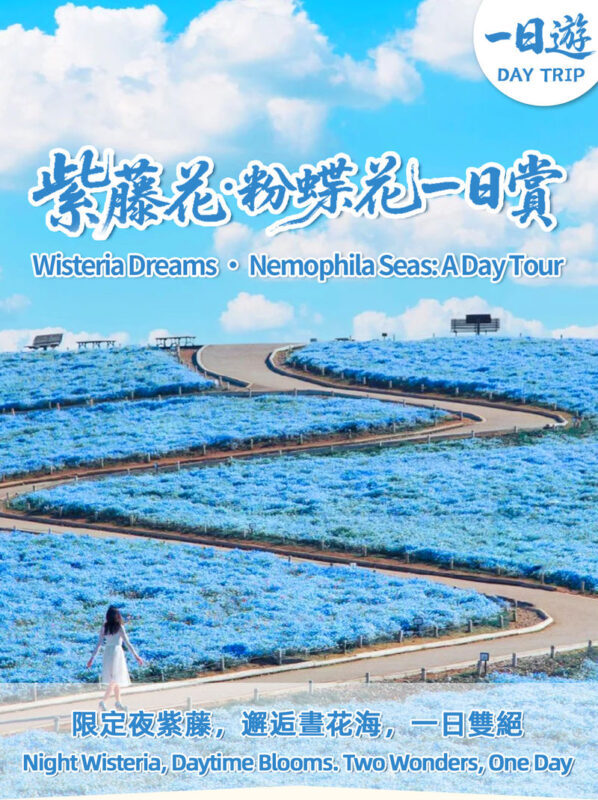
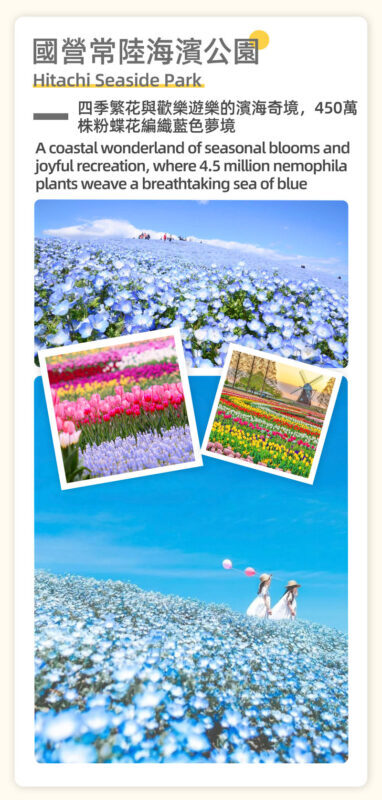
The first stop is Hitachi Seaside Park, scheduled for 13:00, with about two hours to explore. In spring, the headline sight is a reported 4.5 million nemophila, also called baby blue-eyes, covering the hills in a sweep of small flowers. Their blue-and-white color can make the view feel almost unreal, especially when seen across the open slopes.
The park is more than one flower field. The grounds have seasonal flowers, and one spring visit included tulips as well as nemophila. There are also amusement facilities, including a large Ferris wheel with views from around 100 meters up. If you want a change from walking, the park offers bicycle riding along flower paths. These options are appealing, but in a two-hour visit you probably will not have time to do everything.
Treat the time limit as a reason to choose your priorities before you set off. If the nemophila is your main goal, head there first rather than stopping for a long meal or browsing every side path. The park is large, and the walk between areas can eat into a short visit. A bicycle may help you cover more ground, but it also takes time to arrange and use.
There is no meal included. The tour description suggests an outdoor lunch at the park, but the schedule gives you only two hours, including finding the flower area and getting back to the bus. Bring a snack or a packed lunch if you want to avoid spending precious time looking for food. Visitors have found the day too full for a proper meal, and stopping to buy food can cut into time for the flowers.
Bloom timing is the main uncertainty. The expected nemophila season is late April to late May, but weather can move flowering earlier or later. If the flowers are past their best, the tour does not offer a refund for that reason. This is a good trip for a spring date chosen with the season in mind, not a guarantee of a particular bloom on a particular day.
You can also read our reviews of more tours and experiences in Hitachinaka.


Kamiiso Torii: a short stop with a big view
Around 15:30, the bus is scheduled to reach Kamiiso-no-Torii at Oarai Isosaki Shrine. The self-guided stop lasts about 30 minutes. The torii is set among rocks in the Pacific, where waves break around its base. It is a striking contrast to the carefully tended gardens: here, the draw is the meeting of a religious landmark and rough sea.
The gate is associated with sacred ground and is a local symbol of Oarai. You can take in the view, photograph the torii and listen to the surf, but this is not a long shrine visit. Half an hour is enough for a look from the area, not a slow exploration. If you value the coastal stop, use the time for the view rather than expecting an extended guided tour.
This is also the stop most vulnerable to the day’s timing. One account of the route described reaching only the two gardens and missing the shrine, while another departure did include it. The published plan includes the torii, but traffic, delays or other changes can affect what the group reaches. Because the day is a shared vehicle tour, the guide may adjust or reduce stops, and the operator says no refund is due for itinerary changes caused by traffic, weather, crowds or other force majeure.
That uncertainty matters if the shrine is a must-see for you. If your priority is a guaranteed visit to Kamiiso Torii, a day trip built around that site alone may be a safer choice. If you see it as a bonus between the flower parks, this tour’s broader mix may suit you.
Ashikaga Flower Park: wisteria under night lights
The final main stop is Ashikaga Flower Park, scheduled for 18:00, with about 90 minutes on site. The 2026 Wisteria Story Great Wisteria Festival is listed for April 19 to May 17, 2026. The central attraction is a great wisteria tree said to be more than 160 years old, along with illuminated wisteria displays and a flower tunnel. After a day of spring colors, the lighting gives the garden a different character.
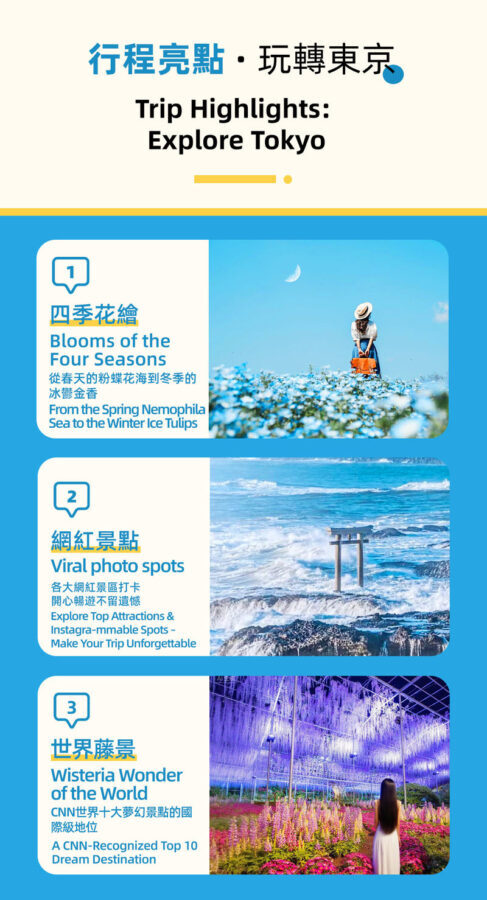
The park has an international reputation, including selection by CNN as one of its World’s Top 10 Dream Travel Destinations. That recognition helps explain why this is a popular stop, but the practical point is simpler: the evening illumination is the reason to stay late and make the long return drive. If the wisteria is flowering well, the lit blooms can be a memorable finale.
Ninety minutes is not a leisurely visit. The grounds are large, and the route through the displays takes walking time. Decide whether you care most about seeing the main wisteria, photographing the illuminated tunnel, or finding a snack such as wisteria ice cream, which is sold inside the park. Trying to do all three at a slow pace may leave you watching the clock.
Flowering is never certain. The season can shift with the year’s weather, and the wisteria may already be past full bloom by a late-May date. One May visit, for example, found the nemophila but missed peak wisteria. The night lighting can still make a garden visit worthwhile, but book this trip for the overall route, not on the assumption that every flower will be at its peak.
The pace, the bus and the guide
The schedule is ambitious: departure at 11:00, two hours at Hitachi, half an hour at the torii, 90 minutes at Ashikaga, then a scheduled two-hour bus ride back to Tokyo. The stated return is 21:30, though the drive can run longer with traffic or weather. Do not schedule a timed evening activity after the tour. A late return is a real possibility on a long day that crosses busy roads and depends on three stops.
Transport is part of the value. Round-trip transfers, fuel, tolls and parking are included, along with admission to both flower parks. Group size determines the vehicle: smaller departures may use a Toyota Alphard or Hiace, while larger groups may travel by minibus or full-size bus. The actual vehicle can vary, and you should not count on features such as charging outlets. Bring a power bank, and check your seat belt as you board.
Guide service also depends on group size. Small groups of four to 13 may have a driver-guide, whose main job is driving, with explanations as a secondary role. Larger groups may have a separate driver and guide. Guide style varies. Liu, Leo and Matt are among the guides who have led departures on this route; clear instructions and useful explanations have been strengths on some outings. Do not assume every guide will provide the same depth of commentary.
Listen carefully to meeting-point instructions at each stop. Hitachi Seaside Park is extensive, so save the location your guide provides and return with time to spare. The vehicle will not wait for late arrivals, either at the Tokyo departure point or at an attraction. Arrive ten minutes early for the morning departure, and keep the tour guide’s contact details handy.
What the price covers, and what it does not
The experience is advertised from US$65.29, while the named one-day flower-viewing package is shown from US$93.25. Prices can vary by package and date, so confirm the amount for your selected option before booking. For the package described here, the price includes entry to Hitachi Seaside Park and Ashikaga Flower Park, round-trip transport, an English- or Chinese-speaking guide, tolls, parking and fuel.
That is a useful bundle for a route linking three distant stops. Arranging the same day independently would mean coordinating multiple transport legs and paying park admission separately. The tour’s strongest value is not extra time at each sight; it is the chance to reach all three without planning the connections yourself.
Meals, drinks and personal expenses are not included. You may want money for food, bicycle rental or amusement rides at Hitachi, and snacks or souvenirs at Ashikaga. Keep spending in check if you are trying to protect your limited time in the parks.
Each person may bring one piece of luggage free. An additional piece costs ¥2,000, payable to the driver or guide, and must be declared when booking. The supplier may refuse boarding if extra luggage was not arranged in advance. Children aged three and older pay the adult rate; children aged zero to two travel free only if they do not need a separate seat.
Who should book this flower day trip?
I would choose this tour if you want a broad spring sampler and are comfortable moving at a brisk pace. It suits flower fans, photographers who can work quickly, and visitors who would rather pay for one organized transfer than manage a complicated route from Tokyo. The variety is its strength: flower hills, a sea shrine and night illumination all in one day.
I would think twice if you want long, unhurried walks, a proper sit-down meal, or guaranteed time at the torii. The route is not recommended for people with impaired mobility, pregnant women, or people with certain medical conditions such as high blood pressure or epilepsy. It is also a poor fit if a late return would disrupt plans that evening.
Book for the combination, not for a perfect bloom forecast. Confirm that your chosen package includes the Ashikaga stop, check the season carefully, and keep the day free after the scheduled return. If you can accept a tight timetable and some uncertainty, the three-stop route offers a lot of spring scenery for one day’s effort.
Adachi Flower Garden Night Wisteria & Ibaraki Nemophila Flower Sea Day Trip
“The overall itinerary was well-arranged, with comfortable tour bus transfers provided throughout. Tour guide Liu meticulously looked after the grou…”
FAQ
Where does the tour depart from and return to?
The tour departs from Tokyo at 11:00. The scheduled return is around 21:30 at the Shin-Marunouchi Building.
Which places does the tour visit?
The planned stops are Hitachi Seaside Park, Kamiiso-no-Torii at Oarai Isosaki Shrine, and Ashikaga Flower Park. The tour title mentions Adachi, but the described night-wisteria stop is Ashikaga Flower Park.
Are park admissions included?
Yes. Admission to Hitachi Seaside Park and Ashikaga Flower Park is included. Meals, drinks and personal expenses are not.
How long do you spend at each stop?
The schedule allows about two hours at Hitachi Seaside Park, 30 minutes at Kamiiso-no-Torii and 90 minutes at Ashikaga Flower Park. Traffic, weather and crowds may lead to changes.
When can I see the nemophila and illuminated wisteria?
The nemophila is a spring flower, usually expected from late April to late May, though timing varies by weather. The 2026 Wisteria Story Great Wisteria Festival is listed for April 19 to May 17, 2026. Flowering conditions are not guaranteed.
Can I bring luggage, and what does it cost?
One piece of luggage per person is free. Each additional piece costs ¥2,000 and should be declared when booking.