The day’s big draw is the contrast: first, millions of blue nemophila spread across a coastal hill; later, old wisteria trees trail purple, pink, and white blooms overhead. It is a two-park spring sampler that would take more planning by public transport.
I like that you get round-trip transport from Tokyo and a guide to help with directions and timing. I also like that both parks offer more than one flower display, so a late bloom at one stop need not spoil the whole day.
The trade-off is time on the bus and a tight schedule at each park. Traffic, weather, and bloom timing can all change the day, and you may have only about 90 minutes to explore each garden.
- Hitachi’s blue hill: Miharashi Hill is planted with about 4.5 million nemophila, creating the tour’s signature spring view.
- Wisteria after lunch: Ashikaga Flower Park has more than 350 century-old wisteria trees, with purple, white, and pink clusters in season.
- A full day out of Tokyo: The tour runs roughly 7:50 a.m. to 5:50 p.m., with two long drives between the capital and the parks.
- Admission may cost extra: The lowest listed price is for transport without park tickets. The stated admissions are ¥800 and ¥2,300 per person.
- Good guides make a difference: Guides named Zoe, Dana, and Ariel have been praised for clear directions, organization, and help taking photos, though your guide is not guaranteed to be one of them.
- Plan for spring’s uncertainty: Flower timing depends on the weather, and the best displays may be past their peak by the time you arrive.
- Two famous spring displays, one long day
- Hitachi Seaside Park and its blue spring hill
- Ashikaga Flower Park and the wisteria canopy
- What the bus day feels like
- The real cost, including park admission
- Weather, crowds, and bloom timing
- Who should book this day trip
- Should you book it?
- FAQ
- Where does the tour depart from?
- When does the tour return to Tokyo?
- Are park admission tickets included?
- How much are the stated admission fees?
- How long do you spend at each park?
- Is a guide included?
- Are meals included?
- Can children join the tour?
- Can I cancel or change my booking?
- More Tours in Hitachinaka
- More Tour Reviews in Hitachinaka
- Not for you? Here's more nearby things to do in Hitachinaka we have reviewed
Two famous spring displays, one long day
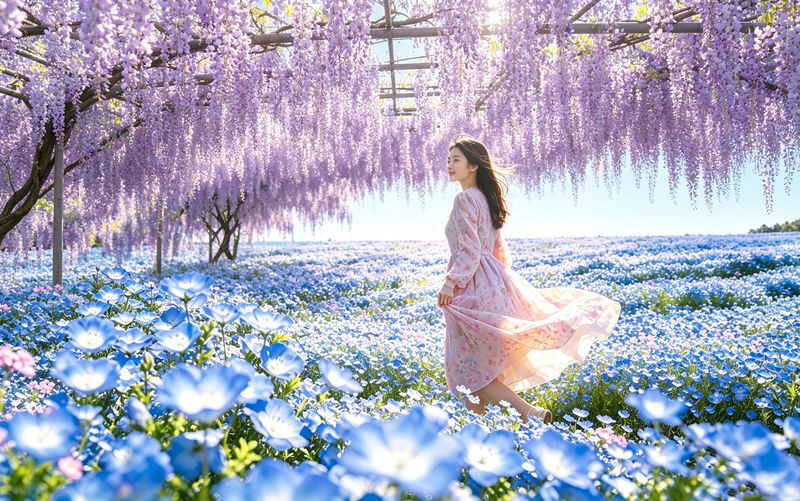
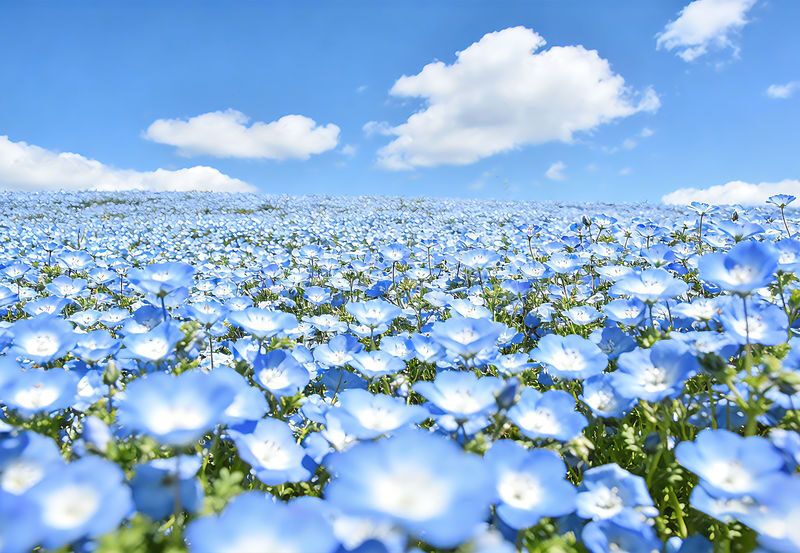
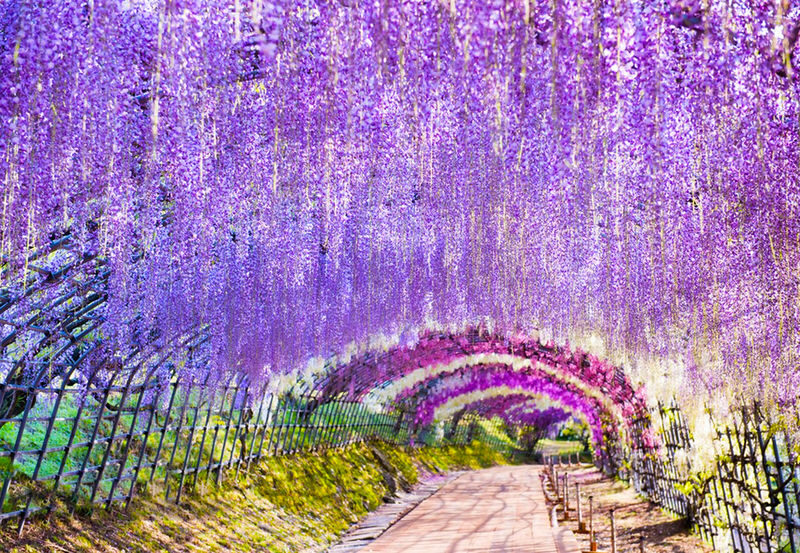
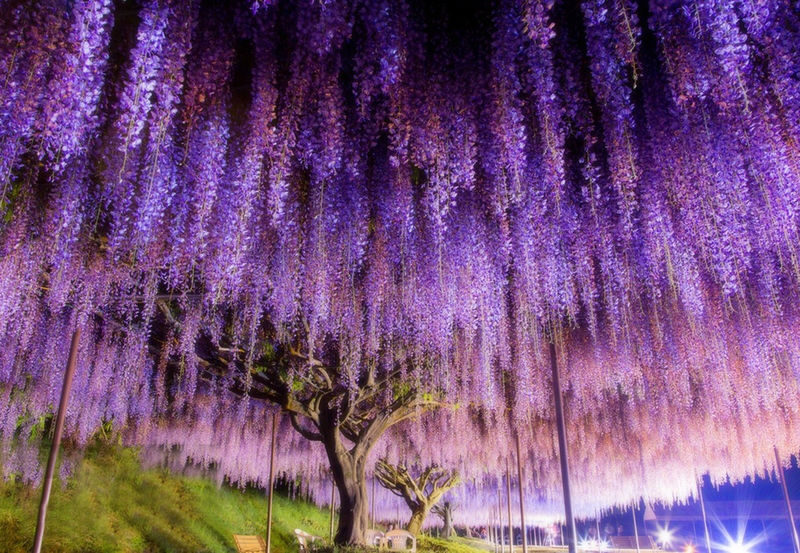
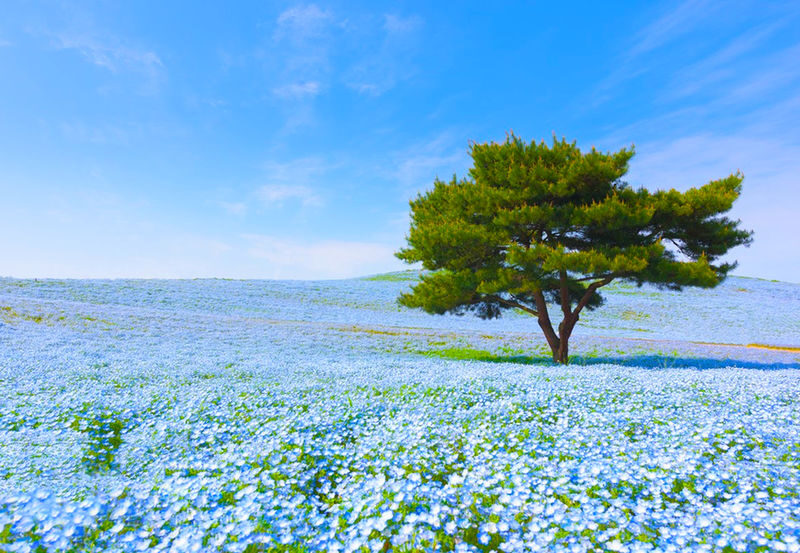
This is a practical way to see two of Japan’s best-known spring flower parks without arranging separate train journeys and local connections yourself. The payoff is variety: Hitachi Seaside Park is known for its broad, blue nemophila display, while Ashikaga Flower Park is famous for its cascading wisteria.
The parks are far enough apart that this is not a leisurely garden day. You are trading a long bus ride and fixed stop times for the convenience of having transport, parking, and park visits bundled into one outing. If you want to see both places in a single day from Tokyo, that trade can make good sense.
The schedule begins with a morning meet-up in Tokyo and ends back at the same general area in the early evening. You can choose a Tokyo Station or Shinjuku departure, but check your booking details carefully: the stated meeting times are 7:50 a.m. at Tokyo Station and 8:20 a.m. at Shinjuku MODE Gakuen, with departures shortly afterward.
Hitachi Seaside Park and its blue spring hill
Hitachi Seaside Park is the first major stop, scheduled for around 10:30 a.m. The headline view is Miharashi Hill, where about 4.5 million nemophila bloom into a sea of pale blue. From the hill, the flowers, sky, and coast meet in a wide view that makes this stop feel different from a compact, formal garden.
The park is not only a flower field. It has flowers through the seasons, along with a Ferris wheel and an observation deck. That gives you other ways to spend your time, but with a short visit, you will probably want to make the nemophila hill your first priority.
The listed stop is 1 hour and 50 minutes, though some accounts of the day describe closer to 90 minutes on the ground. Treat the longer figure as a schedule target, not a promise. Crowds, traffic, parking, or weather can eat into time, and holiday traffic is a real concern.
A practical move is to use the restroom before boarding in Tokyo. One account described no restroom opportunity until the first park, and a long drive is less comfortable when you have not planned ahead. Keep your phone charged, too. Some buses may not have charging outlets, so a power bank is a sensible companion.
You can also read our reviews of more tours and experiences in Hitachinaka.


Ashikaga Flower Park and the wisteria canopy
The second stop is Ashikaga Flower Park, scheduled for around 2 p.m. Its star attraction is a collection of more than 350 century-old wisteria trees. At peak bloom, long clusters in purple, white, and pink hang overhead like floral curtains. The park has been selected by CNN among the world’s top ten dream travel destinations, a distinction tied to the scale and beauty of its wisteria displays.
The visit is listed as 1 hour and 30 minutes. That is enough to see the best-known areas and take photos if you keep moving, but it leaves little room to linger. If you like to read every sign, sit in the garden, or browse shops at length, you may feel hurried.
Flower timing is the key uncertainty. The nemophila and wisteria do not follow a fixed calendar, and their bloom can shift with the weather. By early May, for example, some displays may be fading, while roses, yellow wisteria, camellias, and other flowers can still make the park worthwhile. If the main flowers are your sole reason for going, check recent bloom conditions close to your date and be ready for nature to set the terms.
The schedule may also swap the order of the parks. The operator says timing and sequence can change with traffic, weather, and crowd conditions. Keep that flexibility in mind before building a tight dinner reservation or evening plan around the return time.
What the bus day feels like
The day is designed to reduce the work of getting between Tokyo and two distant parks. Round-trip transport, tolls, parking, and fuel are included, and the service is shared with other passengers. In exchange, you follow a fixed timetable and need to be back at the bus promptly.
The operator says that groups of fewer than 12 may travel in a vehicle with a driver but no separate tour guide. Larger groups are assigned a driver and guide. The tour describes English- and Chinese-speaking guide service, but the exact language mix and amount of commentary can vary. If language support is central to your decision, confirm what is included for your departure rather than assuming a particular guide or language arrangement.
Guides have been named Zoe, Dana, and Ariel in accounts of recent trips. The names are not a guarantee for your date, but the qualities to value are clear: firm meeting instructions, a map or parking-point photo, and a reminder of the return time. A few guides have also helped with photos and pointed out key spots, which can be especially useful if you are on your own.
There is a strict late-arrival rule. Reach your meeting point at least 10 minutes early, and read the message sent the day before with the vehicle, plate number, and guide details. If you miss the bus or return late from a stop, the group waits for only five minutes; you may then need to make your own way onward. Keep your mobile phone accessible and check your spam folder for the message.
The real cost, including park admission
The advertised starting price is from $49.29, but the lowest-price package does not include park tickets. The stated admission fees are ¥800 for Hitachi Seaside Park and ¥2,300 for Ashikaga Flower Park, or ¥3,100 total per person at those listed rates.
There is also a package option with admission included. Compare the final price of that choice with the transport-only option plus ¥3,100 before booking. The ticket-included choice can be simpler, while the ticket-excluded option makes more sense if its total remains cheaper or you prefer to handle admission yourself.
Meals, drinks, personal expenses, and tips are not included. The guide may recommend local food and specialties, but you should not assume that a particular food stall will be open. Rain and poor conditions can affect what is available, so plan to eat at the parks when you can and carry sealed snacks or unopened drinks for the bus. Eating on board is not allowed.
For two major parks in one day, the value is mainly in saved planning and transport effort. It is less compelling if you have time to visit one park at a slower pace or want to stay until evening at Ashikaga. You are paying for a convenient sampler, not a private or flexible garden visit.
Weather, crowds, and bloom timing
Spring is the right season for this outing, but not every spring day looks like the promotional photos. Nemophila and wisteria bloom in stages, and the timing changes with the climate. A rainy, windy day can also make the open hill at Hitachi uncomfortable and reduce the pleasure of taking photos.
The tour may continue in poor weather. Bring an umbrella and clothing suited to a full day outdoors; strong wind can make an umbrella awkward, so a rain jacket is worth considering. The operator reserves the right to cancel for extreme weather, but ordinary rain should not be taken as a reason to expect cancellation or a refund.
Weekends, public holidays, and Golden Week can bring heavy traffic. Delays of two to five hours are possible, and the operator says the schedule may be shortened or altered when necessary. Do not book a nonrefundable evening show or a tight onward connection for the same night. The nominal return is 5:50 p.m., but the road can have the final word.
The flower parks themselves are worth seeing even when the headline bloom has passed, but your expectations matter. If you need a perfect blue hillside and a full wisteria canopy, choose your date carefully. If you are happy to enjoy whatever is flowering and treat the day as a broad spring outing, the experience is more forgiving.
Who should book this day trip
I would consider this tour if you want to see both parks from Tokyo without taking on the train planning, transfers, and parking yourself. It suits first-time visitors, solo travelers, and anyone who values straightforward transport and a guide who can explain where to meet and what to see first.
It is less suited to anyone who wants a slow garden visit, dislikes long drives, or needs a guaranteed return time. Families should note that children aged two and over pay the adult rate. Children under two may ride free only if they do not need their own seat, but participation is not recommended and the operator asks parents to notify them in advance.
The activity also comes with health restrictions. People with high blood pressure, heart disease, acrophobia, asthma, epilepsy, and pregnant women are listed as ineligible. Seniors aged 65 and over need to be healthy enough for the trip and accompanied by a family member or friend aged 22 or older. Travel insurance is not included, so arrange your own cover if needed.
You can cancel for a full refund up to 24 hours before the activity, according to the stated policy. Late arrivals, no-shows, or leaving partway through do not qualify for a refund. Check the exact terms for your selected package before paying.
Should you book it?
Book this if your spring goal is to see Hitachi’s nemophila and Ashikaga’s wisteria in one day, and you accept that the bus and timetable will shape the visit. The tour’s strongest points are convenience, two very different flower displays, and guides who can make a crowded day easier to manage.
Skip it if you want hours in each park, need a dependable evening return, or would rather wait for perfect bloom conditions. Before booking, compare ticket-included pricing, check current flower updates, choose the departure point that suits you, and leave your evening free. With those expectations, this is a useful way to fit two distant spring sights into one Tokyo-based trip.
Spring Flower Viewing Limited: Ashikaga Flower Park Wisteria & Hitachi Seaside Park Nemophila (Departing from Tokyo)
“This was a great value trip. Although there were delays due to Golden Week and traffic accidents, the itinerary wasn't cut short, and we saw everyt…”
FAQ
Where does the tour depart from?
You can meet at Tokyo Station Marunouchi North Exit or Shinjuku MODE Gakuen. The stated meeting times are 7:50 a.m. at Tokyo Station and 8:20 a.m. at Shinjuku.
When does the tour return to Tokyo?
The stated return time is 5:50 p.m. Traffic, weather, holidays, and crowds may delay the return, so leave your evening plans flexible.
Are park admission tickets included?
There are two package options, one without admission tickets and one with them. The starting price is for the option without tickets.
How much are the stated admission fees?
The stated fees are ¥800 per person for Hitachi Seaside Park and ¥2,300 per person for Ashikaga Flower Park.
How long do you spend at each park?
The schedule lists 1 hour and 50 minutes at Hitachi Seaside Park and 1 hour and 30 minutes at Ashikaga Flower Park. Actual stop times can change because of traffic, weather, and crowds.
Is a guide included?
English- and Chinese-speaking guide service is listed. For groups of fewer than 12, the operator says the vehicle may have a driver but no separate guide.
Are meals included?
No. Meals and drinks are not included. Sealed light snacks and unopened beverages may be brought on the bus, but eating on board is prohibited.
Can children join the tour?
Children aged two and older pay the adult rate. Children under two may ride free if they do not occupy a separate seat, but the operator does not recommend their participation and asks parents to notify the company in advance.
Can I cancel or change my booking?
A full refund is available if you cancel at least 24 hours before the activity date. Changes are allowed until 24 hours before the activity starts, subject to the stated booking exceptions. Late arrivals and no-shows are not refundable.