Tokyo’s central districts make more sense when you see how they fit together. On this three-hour guided ride, you pedal from the Shiba Park area toward Yoyogi, passing major landmarks and changing city scenes along the way. A bicycle lets you notice the gaps between destinations, not just the stations where you get off.
I like two things in particular: a small stated group size of one to seven and the choice of a regular cross bike or an e-bike. Guides such as Ken, Atsu and Kei have been praised for friendly explanations and steady support on the road. One caveat: this is a real city ride, not a traffic-free park circuit, and you need to be able to ride confidently.
At a glance
- Start near Shiba Park: Meet the guide near the statue of Commodore Perry, with the exact meeting details confirmed after booking.
- Finish near Yoyogi Park: The tour ends in Jinnan, a short walk from Yoyogi Park and Shibuya Station.
- Pick your effort level: Choose a cross bike or an e-bike; the electric option is recommended if you do not cycle often or have limited stamina.
- Expect varied city scenery: The route can include temples, palace-area sights, business streets, Harajuku and Shibuya.
- Plan for changing conditions: Traffic and weather can alter the schedule, and some sights may be skipped.
- Check your riding comfort: Participants must be at least 14 and able to ride safely. The fitness requirement is intermediate.

👉 See our pick of the 25 Best Guided Tours In Tokyo
- At a glance
- A three-hour ride that connects Tokyo’s districts
- From Shiba Park and Zojo-ji toward the palace district
- The middle stretch: city streets, stadium and Harajuku
- Arriving in Shibuya and finishing near Yoyogi Park
- Cross bike or e-bike: choose the ride you can enjoy
- What the guide adds, and where the ride has limits
- Is .25 a fair price?
- Practical details before you book
- Should you book this Tokyo bike tour?
- FAQ
- How long is the Tokyo bike tour?
- What time can I depart?
- Where does the tour start?
- Where does the tour end?
- Can I choose an e-bike?
- What is the minimum age?
- Do I need to know how to ride a bike?
- Is the tour suitable for wheelchair or stroller users?
- Are meals and drinks included?
- Can I cancel and get a refund?
- The Best Of Tokyo!
- More Cycling Tours in Tokyo
- More Tours in Tokyo
- More Tour Reviews in Tokyo
- Not for you? Here's more nearby things to do in Tokyo we have reviewed
A three-hour ride that connects Tokyo’s districts
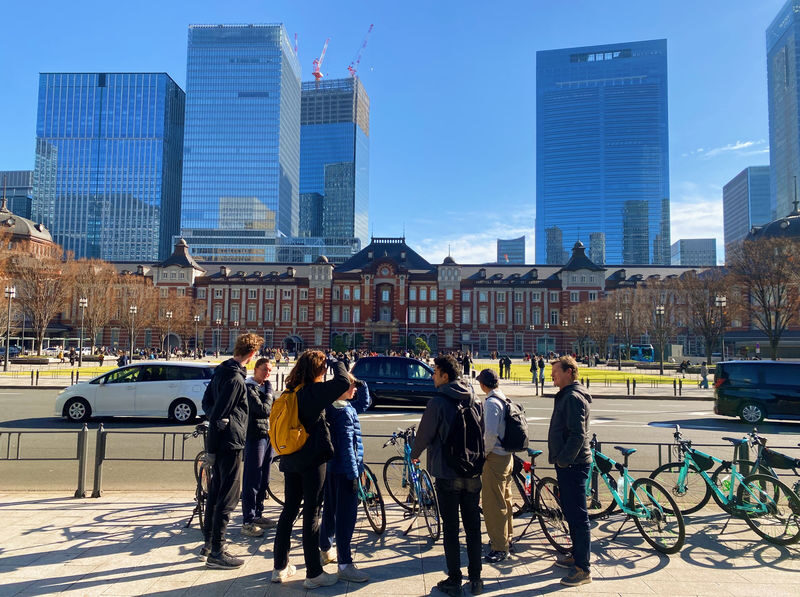
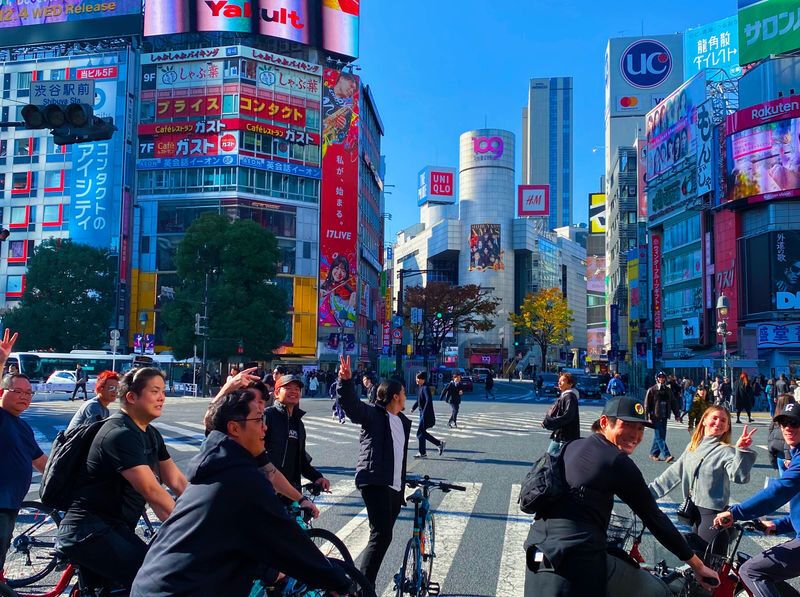
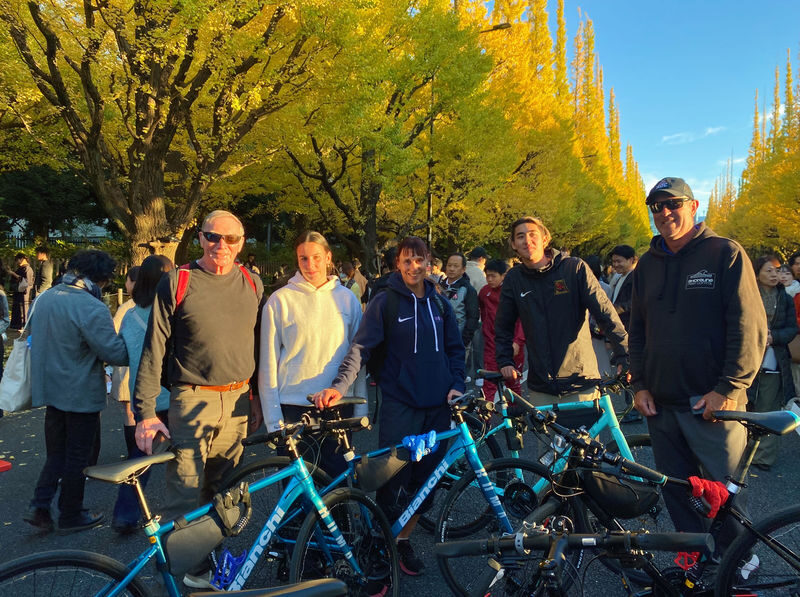
Tokyo can feel like a collection of separate worlds when you move between them by subway. This ride offers a more continuous view: you leave the Shiba Park area, pass through central districts, and finish around Jinnan between Yoyogi Park and Shibuya. The route makes the city’s geography part of the outing.
The listed sights include Zojo-ji, the Imperial Palace, Tokyo Station, Akasaka Palace, Japan National Stadium, Harajuku and Shibuya. That is a broad spread for three hours, so think of the names as a guide to the areas and landmarks the tour may cover, not a promise of a long visit at every place. Weather, traffic and capacity can change the plan.
A previous participant described a route of just under 20 kilometers. That gives you a rough sense of the distance, but the operator can alter the route, so it should not be treated as a guaranteed mileage. You are here to see and hear about the city while riding, not to spend half a day exploring each stop on foot.
You can also read our reviews of more cycling tours in Tokyo



From Shiba Park and Zojo-ji toward the palace district
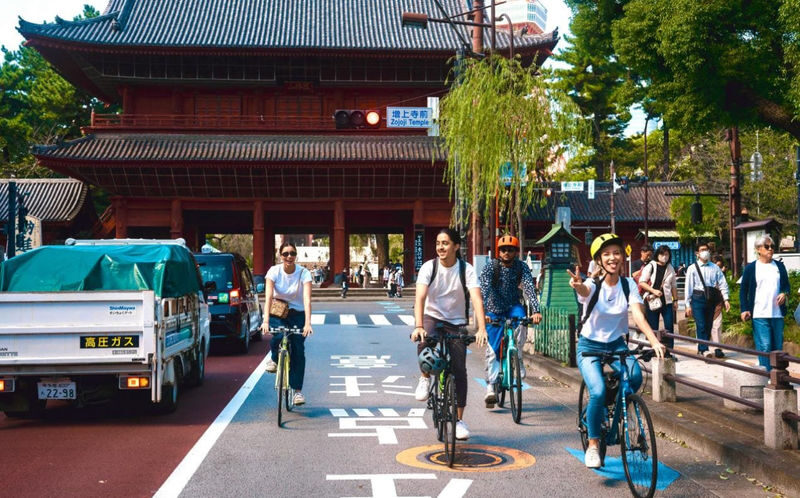
The meeting area is near Shiba Park, where the guide waits around the statue of Commodore Perry. Zojo-ji, one of the tour’s named sights, gives the ride a cultural start. A temple visit or view of its grounds offers a different mood from the office districts and major roads that shape much of central Tokyo.
The palace area brings another contrast. The Imperial Palace is among the listed sights, and cycling through this part of town can help you grasp the scale and layout of the center. The tour is a moving overview, though, not a palace visit with time to explore every site at length. Some stops may be brief, and the day’s conditions can affect which ones are included.
You may also pass Tokyo Station or the Akasaka Palace area. These places mark a shift from temple grounds and historic settings to grand civic and commercial architecture. Your guide’s commentary is important here: the value is not simply ticking off landmarks, but hearing enough context to notice what you might otherwise ride past.
Guides have been praised for sharing historical details and answering questions. Tam, for example, was singled out for explaining the sights and helping riders stay oriented; other named guides, including Rinto and Kei, have also been commended for their local explanations. The depth of commentary can vary by guide, so ask questions when something catches your attention.
The middle stretch: city streets, stadium and Harajuku
The ride links landmark areas with ordinary streets, which is part of its appeal. You see how business districts, quieter lanes and busy shopping zones sit close together. A bike also gives you a more direct sense of distance than the subway does: the city is not just a series of station names, but a sequence of streets and neighborhoods.
Japan National Stadium and Harajuku are among the sights named for the route. The stadium area offers a change of scale, while Harajuku brings you closer to the city’s retail and street scene. Do not expect a dedicated shopping stop unless your guide’s plan allows one. The tour keeps moving, and the three-hour limit means that the experience is about orientation and observation rather than browsing.
Several riders have described the route as varied, with business areas, quieter passages and the streets of Shibuya all in the same outing. That variety is useful early in a Tokyo stay. You can get a broad sense of the center, then decide which neighborhoods deserve a slower return visit.
The ride can include busy or narrow sections. One participant found the hills and crowded areas harder than expected, while others described the pace as comfortable. Both can be true: your experience depends on traffic, your fitness, the group’s rhythm and your comfort on a bike. Keep your attention on the road and follow the guide’s directions.
Arriving in Shibuya and finishing near Yoyogi Park
The tour ends in Jinnan, between Yoyogi Park and Shibuya. The stated endpoint is near the Bell of Peace, about a five-minute walk from Yoyogi Park and a ten-minute walk from Shibuya Station. This is a practical finish: you can continue on foot in either direction, find a meal, or take the train onward.
Shibuya is a useful place to end because the shift from central landmarks to shopping and dining areas is easy to see. The ride does not replace a visit to the district, but it gives you a first look at how it connects with the areas to the north and west. Some guides may also add a detail that is not on the headline list. One rider, for instance, remembered a stop at Hachiko’s grave, but do not count on that as a standard part of the route.
If you are taking the 10:00 departure, the listed return time is 13:00. The 14:00 departure is listed with a 17:00 return. Available return times can depend on the option you select and the day’s route, so use the time confirmed for your booking.
Cross bike or e-bike: choose the ride you can enjoy
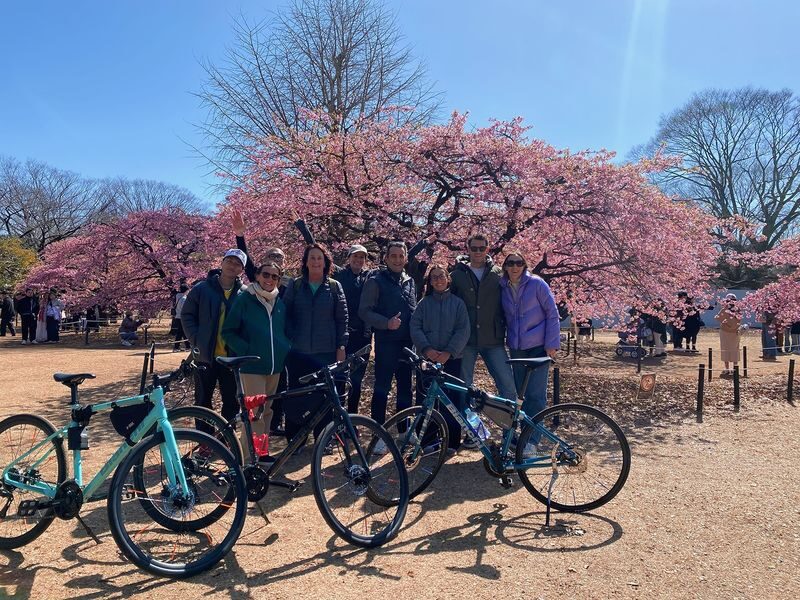
The cross bike is the standard package described. It is a good fit if you cycle regularly and are comfortable keeping up with a group in city traffic. The bikes have been described as well-maintained, with working gears and strong brakes, and some riders noted that the operator fitted bikes to different heights.
Choose the e-bike if you cycle infrequently, worry about stamina, or want help on hills. Riders have found the assistance useful, and one active 78-year-old joined with an e-bike while a companion rode a cross bike. That is a helpful example of how the two options can let people with different fitness levels take part together. It does not remove the need to ride safely or pay attention.
The tour requires intermediate fitness, and you must be able to ride comfortably. The operator may refuse participation if you cannot ride safely at the start, with no refund in that situation. The activity is not recommended for pregnant women, and it is not accessible by wheelchair or stroller. Sunglasses are listed as something to bring.
You can also read our reviews of more city tours in Tokyo




What the guide adds, and where the ride has limits
A good guide can turn a route into a useful introduction to Tokyo. The strongest praise has gone to guides who explain local history, keep the group together, help riders through traffic and make room for questions. Ken, Atsu, Kei, Tam, Rinto and Show are among the guides named by people who took the tour. The operator includes English- and Japanese-speaking guides, and English-speaking staff are also available.
The guide’s role matters because you are cycling, not standing in front of a display panel. Explanations need to fit the stops and the pace of the group. Some riders have found the commentary detailed; one person felt there was too little information at the sights. If learning about each landmark is your main priority, ask questions and let the guide know what interests you. The tour is not a substitute for a specialist history walk.
There are also ordinary limits to group cycling. You need to stay alert, follow instructions and keep up with the group. One rider advised being mindful of pedestrians in busy sections, while another found the guide’s pace fast at times. If you prefer to stop often, take photographs at length or wander at your own speed, an independent visit may suit you better.
Is $55.25 a fair price?
At a starting price of $55.25 for three hours, the tour offers a guide, a bike and a cross-city route that would take effort to plan and navigate on your own. The value is strongest if you want both an overview and a bit of exercise. You also get the benefit of a local guide who can answer questions and suggest places to eat; some guides have shared nearby restaurant recommendations.
It is less compelling if your goal is to spend long stretches inside individual attractions. The ride moves between places, and its stops are subject to weather, traffic and capacity. Meals, drinks, an audio guide and personal expenses are not included. Compare the price with what you want from the morning or afternoon: a broad view of central Tokyo, or a slower visit to one or two sites.
The small stated group size can make it easier to hear the guide and get help than on a large bus tour. Still, group arrangements can vary, and the most important value is the route and guide, not a guarantee of private attention at every stop.
Practical details before you book
The tour runs for three hours, with departures listed at 10:00 and 14:00. Arrive 15 minutes early. The meeting information refers to the guide waiting near the statue of Commodore Perry and also gives Shiba Park as the meeting area. It lists access from both Daimon Station and Shiba Koen Station, so check the confirmed meeting instructions and map before setting out.
You must join at the time selected when booking. Late arrivals and no-shows are not refundable, and the conditions state that a delay of five minutes or more can make you ineligible for a refund. The voucher is mobile and valid only for the booked date and time. Changes are allowed up to 24 hours before the activity, subject to the stated booking restrictions.
Free cancellation is available with at least 24 hours’ notice. In extreme weather or other unforeseen events, the operator may cancel and offer a reschedule or full refund. Take sunglasses, and arrive ready to ride rather than treating this as a sightseeing bus with a short cycle tacked on.
Tokyo 3-Hour Bike/E-bike Tour of the Central City Areas
“If you need something to do try this educational experiment experience. Writing will never be the same!”
Should you book this Tokyo bike tour?
Book it if you can ride confidently, want a broad first look at central Tokyo, and like the idea of seeing temples, civic landmarks and city neighborhoods in one outing. The e-bike is the sensible choice if your stamina is uncertain. If you prefer an unhurried visit with long stops, or are uncomfortable riding near traffic, choose a walking tour or explore by train instead.
FAQ
How long is the Tokyo bike tour?
The guided tour lasts three hours. The route and schedule can change with traffic and weather.
What time can I depart?
Departure times listed are 10:00 and 14:00. Choose your time when booking and follow the time confirmed for your activity.
Where does the tour start?
The meeting area is in Shiba Park, near the statue of Commodore Perry. Check the confirmed meeting instructions and map for the exact spot.
Where does the tour end?
It ends in Jinnan near the Bell of Peace, between Yoyogi Park and Shibuya. Yoyogi Park is about a five-minute walk away, and Shibuya Station is about a ten-minute walk away.
Can I choose an e-bike?
Yes. An e-bike option is available and is recommended if you do not cycle often or have limited stamina.
What is the minimum age?
Participants must be at least 14 years old.
Do I need to know how to ride a bike?
Yes. You must be able to ride comfortably and safely. The operator may refuse participation if you cannot ride safely.
Is the tour suitable for wheelchair or stroller users?
No. The activity is not wheelchair-accessible or stroller-accessible.
Are meals and drinks included?
No. Meals, beverages, an audio guide, personal expenses and tips are not included.
Can I cancel and get a refund?
A full refund is available if you cancel at least 24 hours before the activity date, in destination local time. Late arrivals and no-shows are not refundable.