Japan’s Golden Route packs city icons, mountain views and centuries-old temples into one 12-day trip. You’ll ride the Shinkansen, visit Shirakawa-go’s thatched-roof village and finish with Hiroshima and Miyajima, without having to plan every intercity connection yourself.
I like the Tokyo and Fuji combination: you get a guided introduction to the capital, time to explore on your own, and a full excursion to Lake Kawaguchi and Mount Fuji. I also like that the route reaches Kanazawa and the mountain villages, not just the familiar Tokyo-Kyoto-Osaka circuit.
The main caution is coordination. Daily guides and meeting points change, hotel-to-meeting-point transport is your responsibility, and recent bookings have encountered missed or poorly communicated outings. Treat this as a partly guided package, not a single guide shepherding you from hotel to hotel.
- What to know before you book
- A strong route, with a partly guided format
- Tokyo: temples, crossings and a free day
- Kanazawa and the mountain villages
- Kyoto: Gion by evening, famous sights by day
- Osaka, Hiroshima and Miyajima
- Hotels, meals and the real price
- The organization question
- Who should choose this Golden Route?
- Should you book it?
- FAQ
- Does the tour include flights?
- Are airport transfers included?
- Are meals included?
- What transport is included between cities?
- Are entrance fees included?
- What types of hotels are offered?
- Can vegetarians or vegans join the Tsukiji food tour?
- The Best Of Tokyo!
- More Tours in Tokyo
- More Tour Reviews in Tokyo
- Not for you? Here's more nearby things to do in Tokyo we have reviewed
What to know before you book
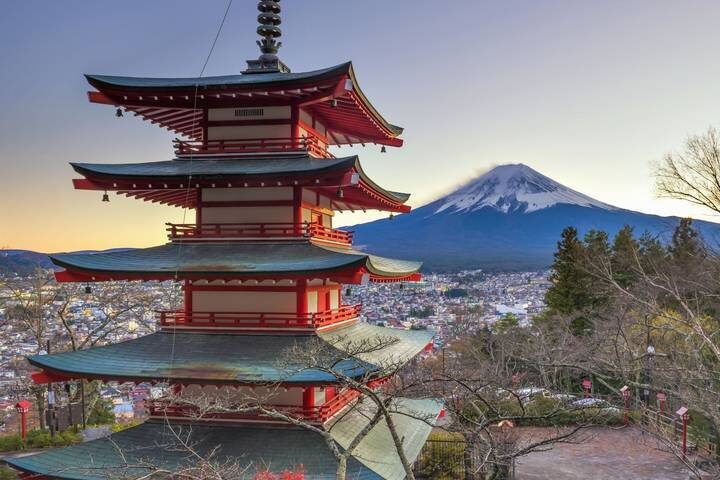
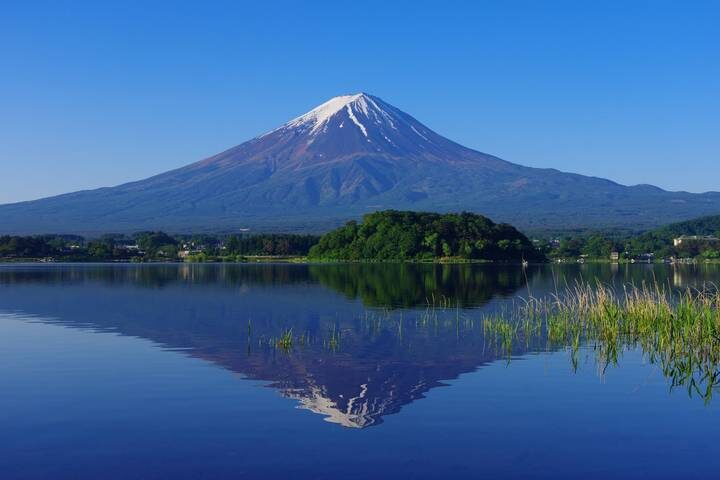
- Mount Fuji gets a full day trip with Oishi Park, Arakura-Fuji Sengen Shrine, the 5th Station and Oshino Hakkai. Weather and traffic can change the plan.
- The route adds Kanazawa and two mountain villages between Tokyo and Kyoto, including UNESCO-listed Shirakawa-go and Ainokura in Gokayama.
- Guides rotate by day. Guided excursions are mixed with independent time, so check each day’s meeting point and included activity details.
- You choose among hotel standards at booking. Listed options range from 3-star to 5-star in Tokyo, with 3-star and 4-star choices in other cities.
- Some costs sit outside the package. Flights, insurance, most meals, certain entrance fees, local transfers and gratuities are not included.
- Organization deserves close attention. The tour has a group-size range of 1 to 50, while the two recent overall ratings average 1.5 out of 5. Accommodation scored better than transport and guiding.

👉 See our pick of the 25 Best Guided Tours In Tokyo
A strong route, with a partly guided format
The tour’s appeal is its sweep: Tokyo, Mount Fuji, Kanazawa, Shirakawa-go, Kyoto, Nara, Osaka, Hiroshima and Miyajima in less than two weeks. That’s a lot of Japan in one booking, and the included intercity rail travel takes some of the strain out of arranging long-distance tickets.
But the label partially guided matters. You have scheduled guided excursions, train travel and independent stretches, rather than one guide accompanying you at every moment. The operator describes a different local guide for each day, bringing varied local perspectives, but that arrangement also means you need clear, current instructions for where to meet and when.
The advertised group-size range is 1 to 50. Small groups are described for most days, but the maximum means you should not assume every excursion will feel intimate. Ask what group size applies to your departure and which outings are guided before you commit.
You can also read our reviews of more tours and experiences in Tokyo.



Tokyo: temples, crossings and a free day
Day 1 is for arrival and settling in. An airport transfer is optional, not part of the basic package. Confirm exactly how it works before paying: the transfer information can involve taking the Skyliner and subway independently, rather than being met curbside and driven to the hotel.
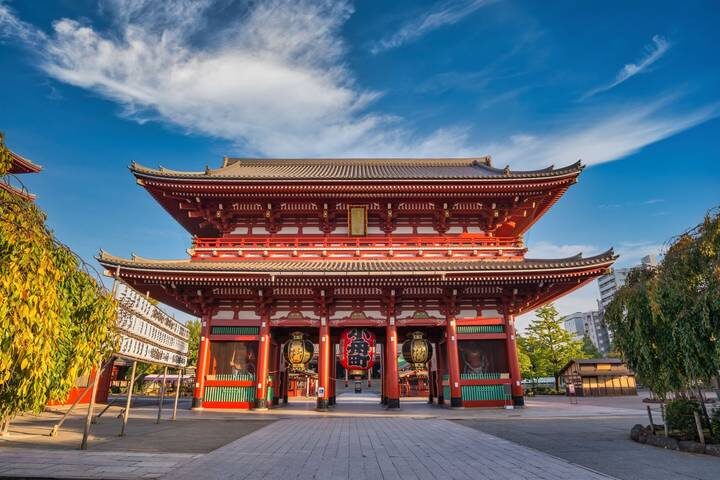
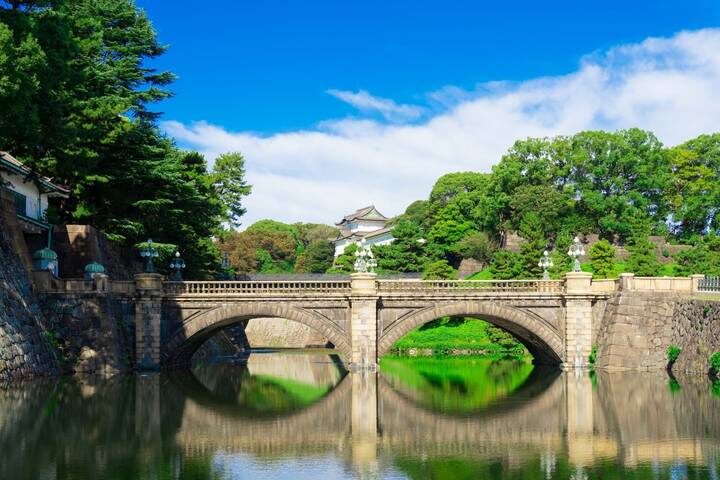
On Day 2, a walking tour begins near Tokyo Station with the Imperial Palace Gardens and a view of Nijubashi Bridge. From there, the route heads to Asakusa, where Senso-ji and Nakamise-dori offer a first look at Tokyo’s older temple district and its busy shopping street.
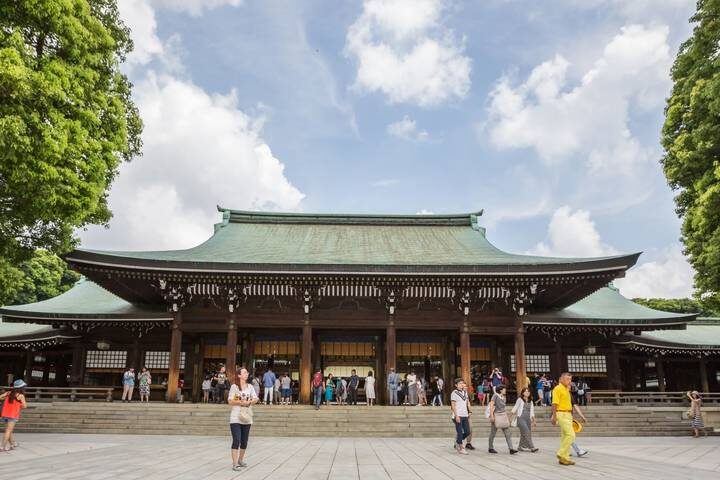
After lunch on your own, you visit Meiji Jingu Shrine, then Harajuku and Shibuya Crossing. The day brings together very different sides of the city, but it is a full itinerary with several neighbourhood changes. A Tokyo Metro pass is recommended, and you’ll want comfortable shoes and a little patience when moving through crowded areas.
Day 3 leaves the city for Lake Kawaguchi and Mount Fuji. Oishi Park is the lakeside stop for views, followed by Arakura-Fuji Sengen Shrine, the 5th Station and Oshino Hakkai, where you can taste water from the natural ponds. The route gives you several chances to see Fuji from different angles, though no view is guaranteed: weather, traffic and seasonal conditions can lead to substitutions or cancellations.
Day 4 is free. This is useful breathing room after two busy days, and a chance to choose a museum, park or seasonal event that suits you. It is also genuinely independent time, so have a plan or a short list ready rather than expecting a guide to fill the day.
On Day 5, a guided Tsukiji visit starts at Hongwan-ji Temple, where you observe a purification ritual, then moves through the Outer Market. Four or five tastings are included, with examples such as seafood and savoury meat dishes, before the walk ends at Namiyoke Shrine. This is a good way to connect food with the working market and its merchant traditions. Vegetarian and vegan diets cannot be accommodated on this tour, and other dietary requests are not guaranteed.
Kanazawa and the mountain villages
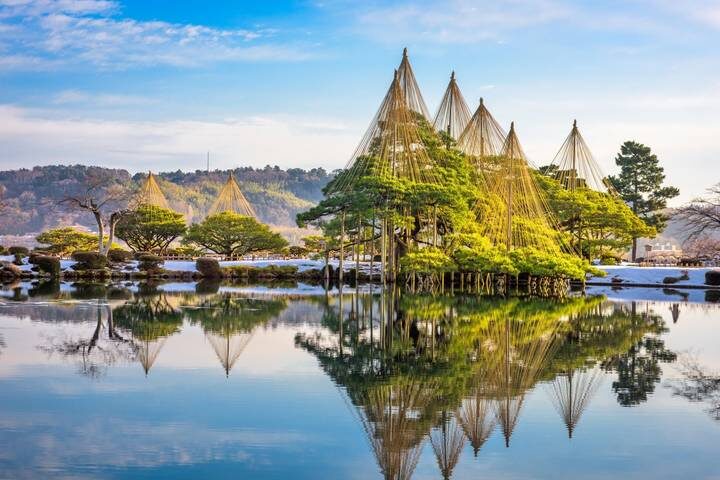
Day 6 is a Shinkansen journey from Tokyo to Kanazawa. The rest of the day is yours. Kenrokuen Garden is the suggested visit, known for its seasonal features and carefully arranged grounds, but admission and the rest of your time in the city are not part of a guided sightseeing schedule here.
The next day is one of the route’s more distinctive sections. You start in Inami, known for detailed wood carving, and visit Zuisenji Temple, linked to the local carving tradition. Then you travel into the mountains to Ainokura in Gokayama, before continuing to Shirakawa-go.
These villages are a welcome change from the big-city stops. Their traditional thatched-roof houses and mountain setting show a different side of Japan, and you have time to explore and eat lunch independently. The trade-off is a long day on the road, with several stops to fit in. Lunch is not included, and the tour’s exact pace will depend on the day’s transport and timing.
Kyoto: Gion by evening, famous sights by day
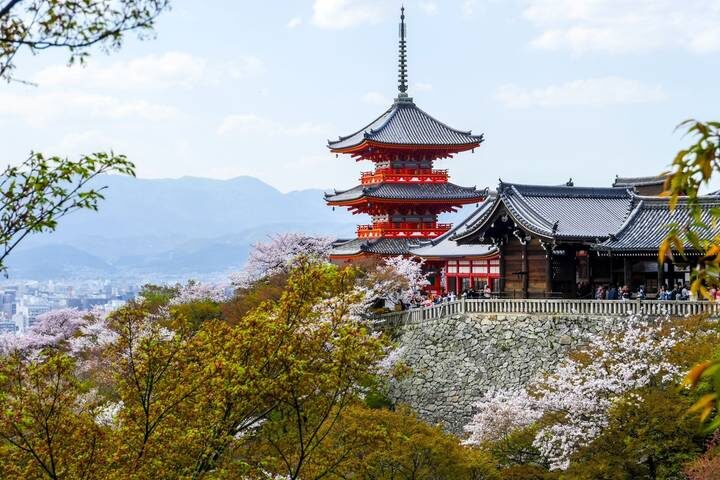
On Day 8, you take the Thunderbird express train from Kanazawa to Kyoto. The evening walk covers Pontocho Alley, the statue of Izumo-no-Okuni, Gion, Gion Corner, Yasaka Shrine and Hanamikoji Street. It is a compact orientation to central Kyoto, with a focus on traditional streets and performance culture.
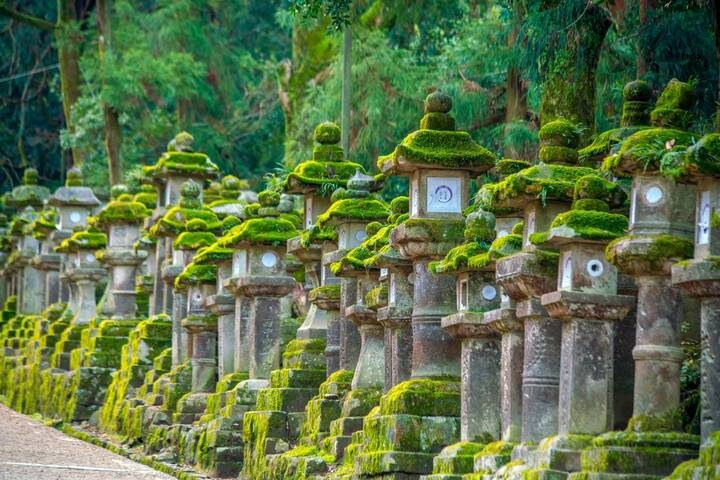
Day 9 is an ambitious circuit: Kinkaku-ji, the Golden Pavilion; Arashiyama Bamboo Forest; and Fushimi Inari, known for its long runs of red torii gates. After lunch on your own, you continue to Nara to see Todai-ji Temple and its Great Buddha, then spend time in Nara Park among the Sika deer. A guided train journey takes the group on to Osaka.
The range is impressive, but the day is tightly packed. You’ll see major landmarks rather than spend a slow morning at any one of them. Around Nara’s deer, keep food and belongings secure and follow posted instructions; the animals are accustomed to people, but they remain animals.
Entrance fees for Kyoto and Nara are not included, with an estimated total of about 1,300 yen per person. Confirm which sites that estimate covers and carry some spending money for admissions and meals.
Osaka, Hiroshima and Miyajima
Day 10 begins at Osaka Castle, followed by free time for lunch and your own exploring. Later, the tour takes you to Dotonbori, the canal-side district known for its large signs, including the Glico Man, and to Hozenji Temple. Osaka brings a different mood from Kyoto: more food, neon and city energy. You may want an Osaka Metro pass, which is recommended for getting around.
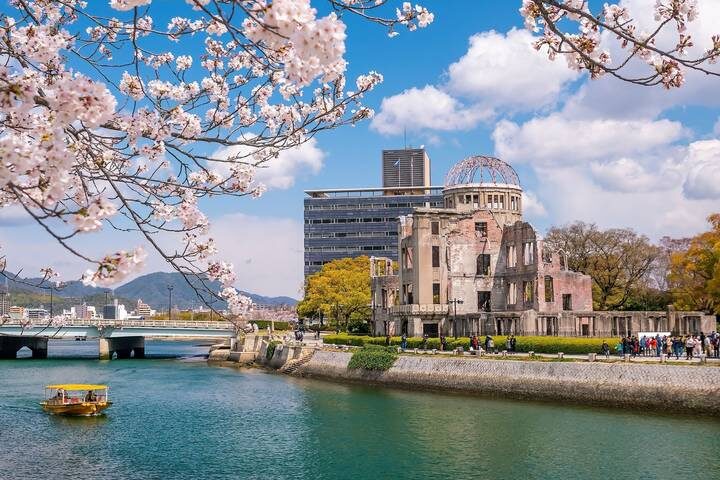
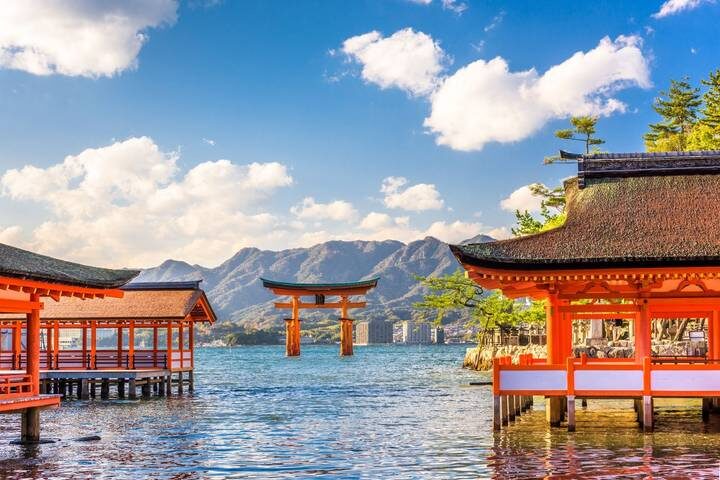
The final full day travels by Shinkansen from Osaka to Hiroshima, then by ferry to Miyajima. There you visit Itsukushima Shrine, a UNESCO World Heritage Site, before returning to the mainland for Hiroshima Peace Memorial Park and the A-Bomb Dome. The juxtaposition is powerful: a sacred island shrine followed by a place of remembrance and reflection.
It is a long excursion, and the order and pace of stops matter. One recent complaint described an eight-hour drive and a rushed visit, while the stated plan is based on train and ferry travel. Confirm the transport mode and expected time at each stop for your departure, rather than assuming every date will follow an identical schedule.
Day 12 ends in Osaka. Optional transfers are listed for Kansai Airport or Tokyo city centre, but they are not included in the tour price. If you need to catch a flight, allow enough time and confirm the transfer arrangement in advance.


Hotels, meals and the real price
The starting price is from $2,508, based on the cheapest room. Hotel choices vary by city and selected standard: Tokyo options span 3-star to 5-star, while Kanazawa, Kyoto and Osaka have listed 3-star and 4-star properties. The accommodation category score of 3.5 out of 5 is the strongest among the tour’s listed category scores, though it is not a guarantee of a particular hotel or room.
Breakfast is not clearly included in the package details. The hotels can offer continental breakfast, and breakfast may be added, so confirm its status and cost for your booking. Most lunches and dinners are also your responsibility; the Tsukiji tastings are the main included food experience.
The headline fare does not cover flights, travel insurance, gratuities, most entrance fees, optional airport transfers or transport between hotels and meeting points. Those local connections are especially important: a centrally located hotel does not mean your daily tour starts at its door. Add up these extras before deciding whether the price is good value.
For a 12-day trip with hotels, selected guided sightseeing and major rail journeys included, the price may work well if you want the route organized but still value independent time. It is less compelling if you expect all meals, admissions, door-to-door transfers or one guide throughout.
The organization question
This tour’s main risk is not the destination list. It is how reliably each day is communicated and delivered. Recent complaints include a guide not appearing for a scheduled day, missed excursions, late updates and difficulty finding meeting points. One person also found the hotel-to-meeting-point distances inconvenient.
The overall tour score is 1.5 out of 5 from two ratings, with transport and guiding each rated 2 out of 5. The operator’s broader profile is rated 4.1 out of 5 from 64 reviews, but that wider score should not erase the specific concerns attached to this Japan itinerary.
Before booking, ask for a written day-by-day schedule showing meeting times, exact locations, which activities are guided, and the transport used for the Fuji, village and Hiroshima days. Ask how you will be notified if plans change, and keep the operator’s contact details accessible. The tour operator’s response time is listed as within one day, but that may not be fast enough to solve a same-morning meeting-point problem.
Who should choose this Golden Route?
This package suits first-time visitors who want to cover Japan’s headline cities and several worthwhile side trips without arranging every train ticket and hotel independently. It also helps if you like a mix of guided sightseeing and free time, and can manage local transit between hotels and meeting points.
It is a weaker fit if you want a small group guaranteed every day, a single guide throughout, leisurely time at each attraction or firm door-to-door logistics. The itinerary is low intensity by its rating, but it still includes frequent transfers, walking tours and several long sightseeing days. Families are welcome, and the stated age range includes all ages; travellers under 18 need parental permission to travel to Japan.
Should you book it?
I would consider this tour for its route: Tokyo, Fuji, Kanazawa, Shirakawa-go, Kyoto, Nara, Osaka, Hiroshima and Miyajima make a rewarding first pass through Japan. The best reasons to book are the mountain villages, the Fuji excursion, the included intercity rail and the choice of hotel standards.
I would book only after getting clear written answers about guides, meeting points, daily transport and what happens if an outing is missed or changed. If those details remain vague, consider a more consistently escorted tour or arrange the route yourself. Japan’s trains are manageable, and the extra planning may be worth it if reliable coordination matters more to you than having the whole route packaged.
12 Day Best of Japan the Golden Route by Tourist Journey – Tokyo to Osaka Tour
FAQ
Does the tour include flights?
No. Flights before and after the tour are not included, and you arrange them separately.
Are airport transfers included?
No. Airport transfers are optional extras. Confirm the pickup details and whether you need to make part of the journey by public transport.
Are meals included?
Most meals are not included. The Tsukiji outing includes four to five traditional food tastings. Breakfast may be available at the hotels, but confirm whether it is included or costs extra.
What transport is included between cities?
The package includes Shinkansen travel from Tokyo to Kanazawa and between Osaka and Hiroshima, plus train travel from Kanazawa to Kyoto and Kyoto to Osaka. The Hiroshima excursion also includes a ferry to Miyajima.
Are entrance fees included?
Not all are. Kyoto and Nara entrance fees are excluded, with an estimated cost of about 1,300 yen per person.
What types of hotels are offered?
Hotel choices vary by city and selected standard. The listed options range from 3-star to 5-star in Tokyo, and from 3-star to 4-star in Kanazawa, Kyoto and Osaka.
Can vegetarians or vegans join the Tsukiji food tour?
The Tsukiji tastings cannot accommodate vegan or vegetarian diets. Other dietary needs, including gluten-free or pescatarian requests, may not be guaranteed.