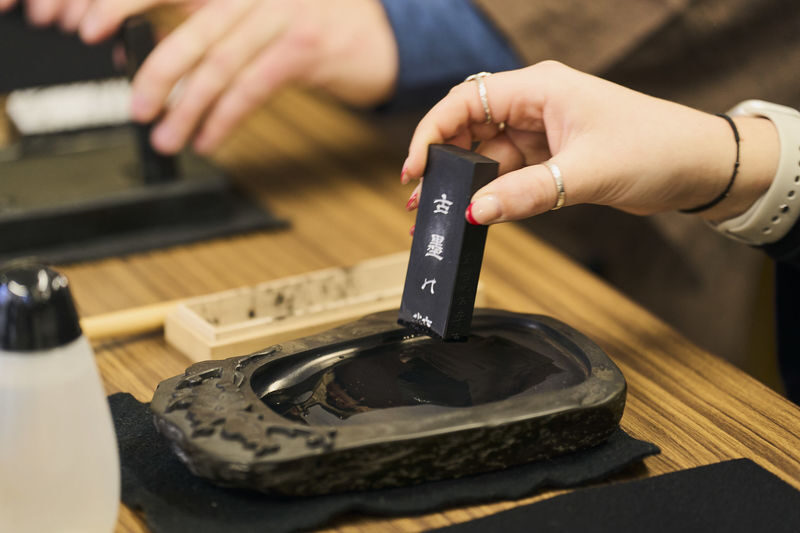
A calligraphy lesson begins with a small, satisfying task: grinding an inkstick until water turns into ink. At Chopsticks Studio in Shinjuku, you learn brush basics from a professional calligrapher, then work toward a piece of your own, often built around your name rendered in Japanese characters.
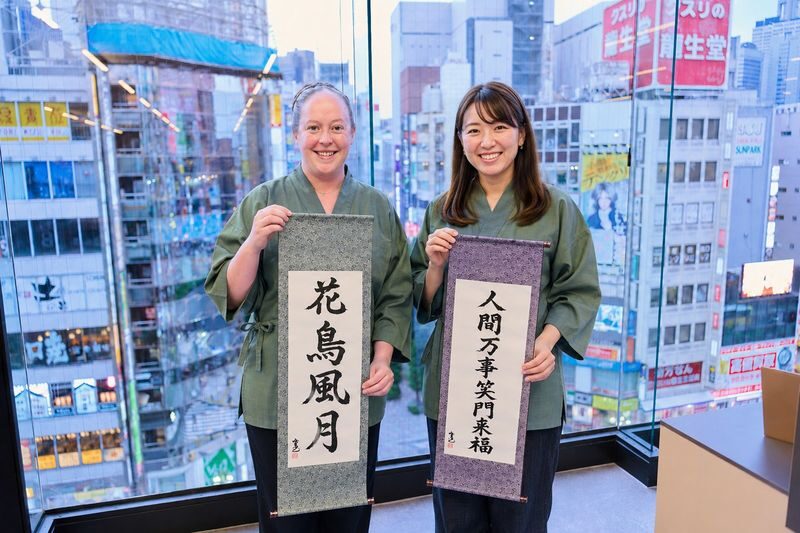
I like two things in particular: you use traditional tools rather than simply watching a demonstration, and the instructor helps connect the writing to the meaning and shape of the characters. You can also turn a favorite piece into a Japanese scroll, or ask about making a calligraphy T-shirt.
One thing to plan around: the advertised duration is one hour, but the schedule pairs start times with returns 90 minutes later, and some sessions may take longer. I’d leave room for at least 90 minutes, especially if you want time to practice or choose an optional souvenir.
- What makes this Shinjuku calligraphy class worthwhile
- A quiet hour in the middle of Shinjuku
- From traditional workwear to ink and brush
- Turning your name into Japanese characters
- Making a piece to bring home
- How much time to set aside
- Who will get the most from the class
- Booking details that matter
- Should you book the Shinjuku calligraphy workshop?
- FAQ
- How long does the calligraphy workshop last?
- Where is Chopsticks Studio Shinjuku?
- What time can I book?
- How early should I arrive?
- Is the workshop taught in English?
- Do I need previous calligraphy experience?
- Are children allowed?
- Is a Japanese scroll included in the price?
- What is included, and can I cancel?
- The Best Of Tokyo!
- More Workshops & Classes in Tokyo
- More Tours in Tokyo
- More Tour Reviews in Tokyo
- Not for you? Here's more nearby things to do in Tokyo we have reviewed
What makes this Shinjuku calligraphy class worthwhile
 1 / 9
 2 / 9
 3 / 9
 4 / 9
 5 / 9
 6 / 9
 7 / 9
 8 / 9
 9 / 9
- Grind your own ink: Prepare ink with an inkstick and water, a quiet, hands-on introduction to the tools of calligraphy.
- Make your name personal: Your instructor helps transform your name into Japanese characters, with explanations of the writing and possible meanings.
- Learn by doing: Try brush techniques on paper with guidance from a professional calligrapher, even if you have never held a calligraphy brush.
- Take home your work: Your own calligraphy artwork is part of the experience. A scroll is an optional extra, available on-site.
- Get English guidance: An English-speaking host or translator helps you follow the lesson and ask questions.
- Convenient Shinjuku setting: The studio is in Kabukicho, on the eighth floor above a liquor shop. You’ll need to take the elevator up.

👉 See our pick of the 25 Best Guided Tours In Tokyo
A quiet hour in the middle of Shinjuku
Shinjuku is best known for neon, crowds and late nights. This class offers a different kind of stop: a chance to sit down, slow your hand and pay attention to each brushstroke. The contrast is part of the appeal. You can spend the morning or afternoon amid city noise, then step into a focused activity that asks you to do just one thing at a time.
The workshop takes place at Chopsticks Studio Shinjuku, at 1-chome-5-4 Kabukicho, Shinjuku City. It is not at street level. Look for the liquor shop on the first floor, then take the elevator to the eighth floor. If you are unsure where to go, don’t assume the studio has a street-facing entrance.
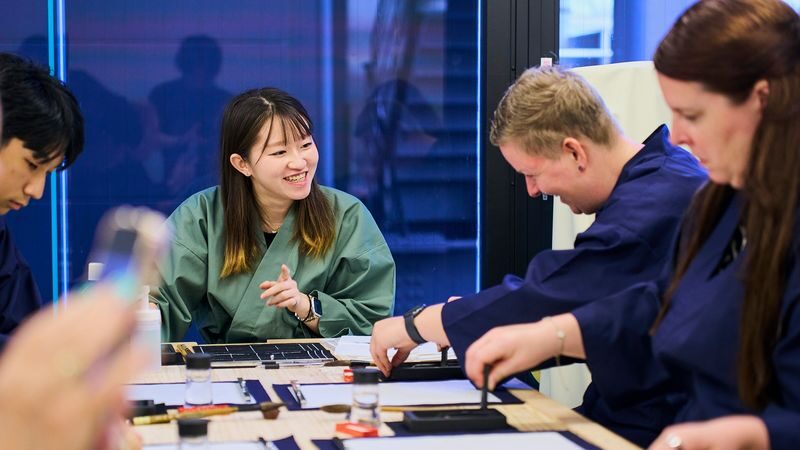
The experience is guided in English, with a professional calligrapher leading the practical lesson. Instructors and translators vary. Names connected with the classes include Sosen-sensei, Hiromi, Ai, Yui, Airi and Nono, among others. The format pairs teaching with translation, so you can ask about both technique and the writing system without needing to know Japanese.
You can also read our reviews of more tours and experiences in Tokyo


From traditional workwear to ink and brush
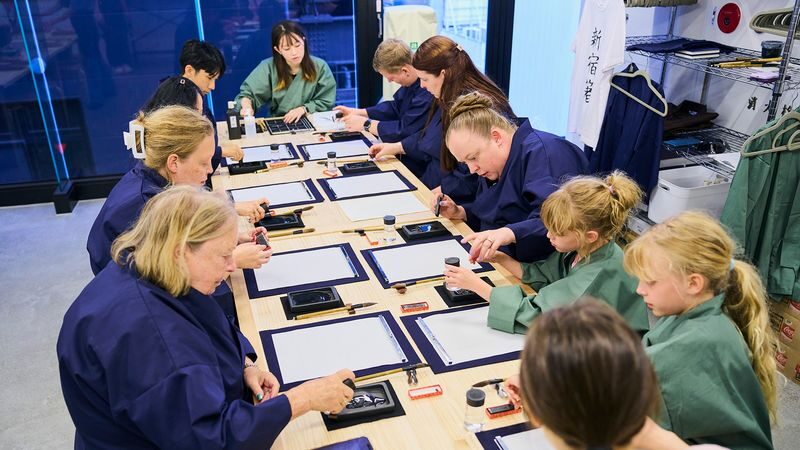
The session starts with a welcome and a short introduction to the activity. You can change into traditional Japanese workwear before beginning. That adds a playful touch, but the more meaningful part is getting acquainted with the tools and learning how the ink is made.
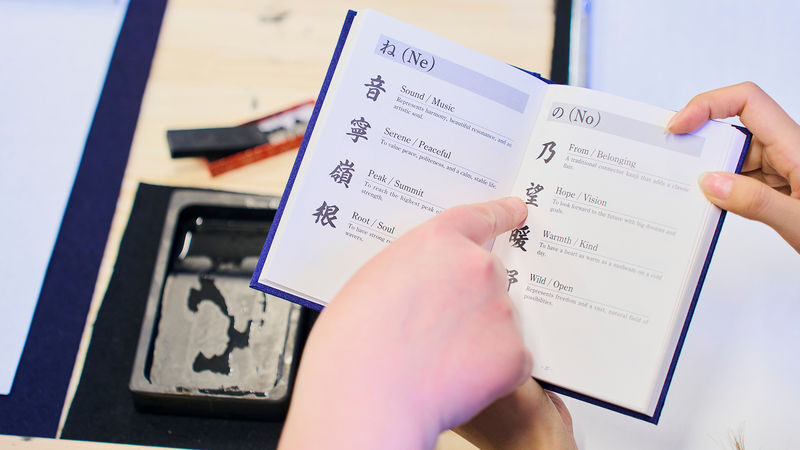
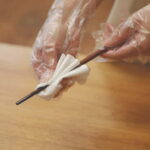
Rather than starting with a pot of ready-made ink, you grind an inkstick with water. It’s a simple process, but it gives the lesson a deliberate pace. You feel the texture and see the ink gather, which makes the first brush marks feel less like a craft project and more like an introduction to a working art form.
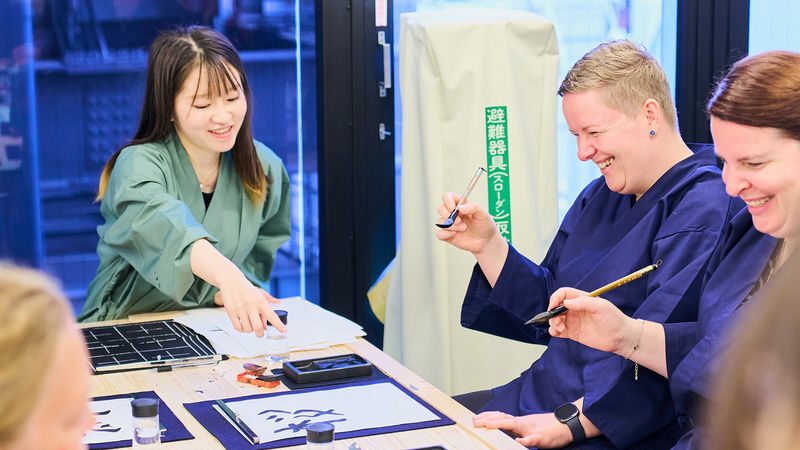
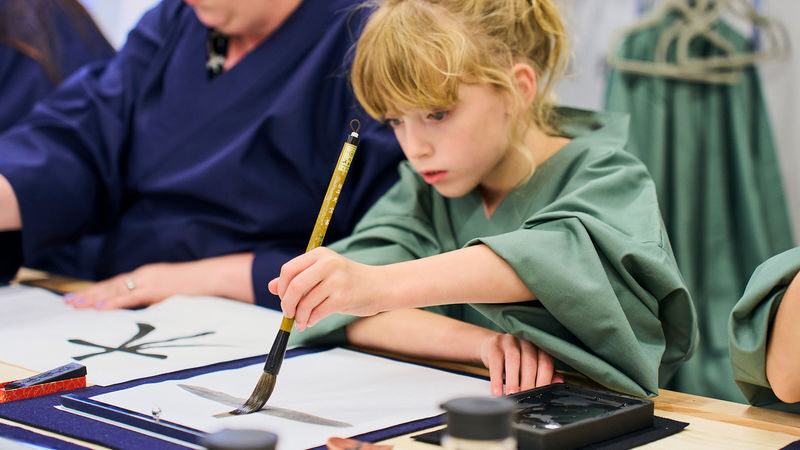
Your instructor then demonstrates basic brush techniques and explains how to guide the brush across the paper. Don’t expect to master calligraphy in one sitting. The aim is to understand the fundamentals, try them for yourself and improve with guidance. You can practice more than once, and the instructor can show you how to adjust a stroke or approach a difficult character.
This hands-on format is particularly useful for beginners. You are not left to copy a finished example and hope for the best. Instructors can give individual help, including drawing a guide for a character you find tricky. The class is also described as suitable for children, and children must be counted when you book.
Turning your name into Japanese characters
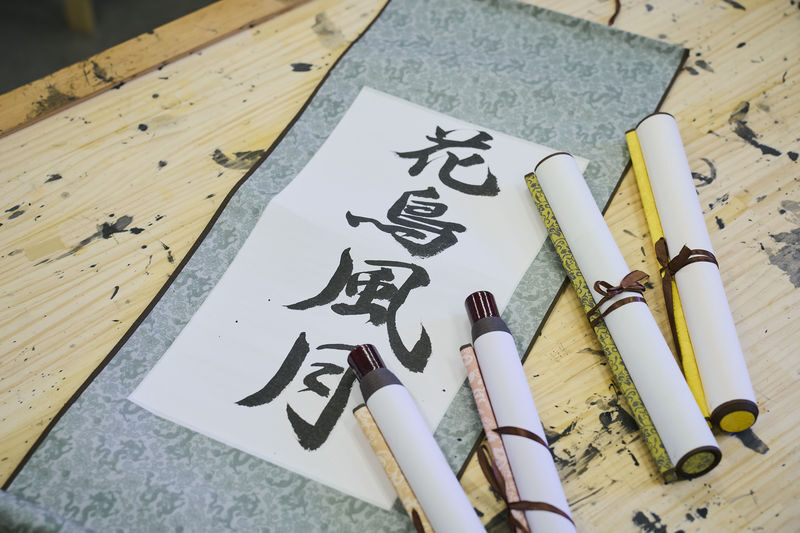
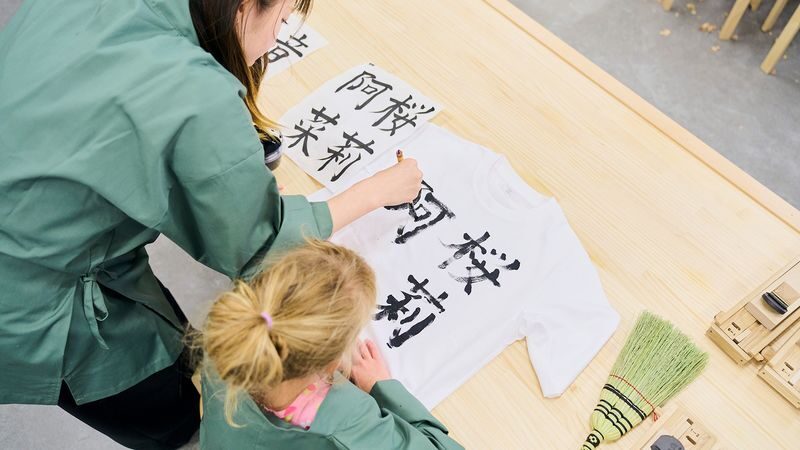
One of the most memorable parts is working out how your name can be written in Japanese. Your instructor helps you explore a rendering in kanji, with attention to how the characters look and what they can mean. The process offers more than a personalized souvenir: it shows how writing can carry sound, visual form and meaning at the same time.
Japanese writing uses different scripts, including kanji, hiragana and katakana. The lesson may introduce these distinctions as you work, giving you a useful bit of context for the characters you see around Japan. You won’t leave fluent in Japanese, of course, but you’ll have a clearer sense of why a name can take thought and interpretation rather than a simple letter-for-letter swap.
After you settle on a version, you practice writing it. This is where the class becomes personal. The instructor can help you refine the strokes, and you can decide how you want your final piece to look. If your first attempt feels wobbly, that is normal. The point is to learn through the movement of the brush, not to arrive with an artist’s hand.
Making a piece to bring home
The workshop is designed to leave you with original calligraphy artwork. You can take your work with you, giving you a more personal keepsake than a shop-bought souvenir. If you want to display a favorite piece, ask about having it made into a Japanese scroll. The scroll is available on-site, but it is not part of the stated Workshop Only package, so check the extra cost before deciding.
Some participants also make a calligraphy T-shirt. It can be a fun way to carry your design home, but it is not included in the workshop price. Treat it as an optional purchase, and ask the studio about the current price and what is available on the day.
The studio also sells Japanese souvenirs and offers other traditional activities, including Kintsugi and chopstick making. Those are separate experiences, not part of this calligraphy class. Still, the setting makes it easy to ask about them if you are looking for another hands-on activity in Shinjuku.
How much time to set aside
There is a small but important timing wrinkle. The experience is described as lasting one hour, while the available return times are 90 minutes after the listed starts: 10:00 to 11:30, 12:00 to 13:30, 14:00 to 15:30, and 16:00 to 17:30. Some people have also described spending around two hours in class.
For planning, I would allow at least 90 minutes and avoid booking a tight connection or meal reservation immediately afterward. If you are especially interested in practicing, asking questions or choosing an extra souvenir, give yourself more breathing room. The exact experience can depend on the class and how much time you spend on your work.
Arrive 15 minutes before your selected start time. The meeting and return point are both the studio, and the booking is for a specific date and time. The listed price starts at $17.70, making this a relatively low-cost cultural activity by Tokyo standards, particularly because it includes instruction and a piece of work to take home. Optional scroll and T-shirt costs can raise the final spend.





Who will get the most from the class
This workshop is a good fit if you want to do something cultural rather than spend another hour shopping or sightseeing. It works well for first-timers, solo participants, couples and families with children. You don’t need drawing experience, and the instructor’s demonstrations and individual help make the activity approachable even if your brushwork is rough at first.
It also suits anyone curious about Japanese writing. You can ask how your name is represented, learn a little about the scripts and leave with a tangible reminder of the lesson. The emphasis is on trying the art, not sitting through a long lecture, though you should have time to ask questions.
If you are traveling with children, include every child in the passenger headcount when booking. The activity is presented as suitable for children, and families can work through the same basic process together. For a solo visitor, the guided format makes it easy to take part without bringing a companion.
The main limitation is depth. A short workshop can introduce materials, basic technique and some cultural context, but it cannot replace sustained study. If you already practice calligraphy, you may want a longer or more advanced class. If you are looking for a relaxed introduction and a personal souvenir, the format makes sense.
Booking details that matter
Choose among the available start times of 10:00, 12:00, 14:00 or 16:00, and attend the time you selected. Show your mobile voucher at the studio. Confirmation is usually sent within minutes, and the voucher is valid only for the date and time specified.
The activity allows free cancellation for a full refund if you cancel at least 24 hours before the activity date, based on Japan local time. If you have not received a confirmation within a few minutes, contact customer support.
At $17.70 and up, the workshop offers good value if you want instruction, a cultural introduction and your own calligraphy to keep. Just remember that the scroll and T-shirt are potential add-ons, not guaranteed inclusions in the Workshop Only package.
Should you book the Shinjuku calligraphy workshop?
Book it if you want a calm, hands-on break in central Tokyo and like the idea of learning a skill while making a personal souvenir. The strongest reasons to go are the chance to prepare traditional ink, get patient guidance and explore how your name can be written in Japanese characters. It’s a particularly appealing choice for families and curious beginners.
Skip it if your schedule has no room for a session that may run longer than an hour, or if you want advanced calligraphy instruction. Otherwise, leave a little extra time, arrive early enough to find the eighth-floor studio, and decide on the scroll or T-shirt only after you see the options and price.
Tokyo: Shinjuku Calligraphy Workshop & Scroll
“wonderful fun experience in Tokyo. instructors are very kind and helpful. definitely a workshop worth doing on Tokyo.”
FAQ
How long does the calligraphy workshop last?
The activity is described as one hour, but the listed return times are 90 minutes after each start time. Allow at least 90 minutes, and more if you want time for extra practice or an optional souvenir.
Where is Chopsticks Studio Shinjuku?
It is at 1-chome-5-4 Kabukicho, Shinjuku City, Tokyo, on the eighth floor of the building. A liquor shop is on the first floor, and you should take the elevator up.
What time can I book?
Available start times are 10:00, 12:00, 14:00 and 16:00. Attend the time selected when booking.
How early should I arrive?
Arrive 15 minutes before your selected departure time.
Is the workshop taught in English?
The experience includes English guidance from an expert host or guide, alongside instruction from a professional calligrapher.
Do I need previous calligraphy experience?
No previous experience is specified as necessary. The instructor teaches basic brush techniques, and the workshop is described as suitable for beginners and children.
Are children allowed?
The workshop is described as suitable for children. Infants and children must be included in the passenger headcount when booking.
Is a Japanese scroll included in the price?
The Workshop Only package lists a scroll as available on-site, not as included. Ask the studio about the additional cost if you want to turn your work into a scroll.
What is included, and can I cancel?
Admission to the attraction is included, and you can take home your original calligraphy artwork. The workshop price starts at $17.70; optional items such as a scroll or T-shirt may cost extra. You can receive a full refund if you cancel at least 24 hours before the activity date, using Japan local time.