Kintsugi gives a broken object another chapter, tracing its damage instead of pretending it never happened. In this one-hour Osaka workshop, you learn the idea behind the Japanese craft and make a small pottery piece with an instructor guiding you through the process.
I like two things in particular: the hands-on work gives you something more personal than a shop-bought souvenir, and the patient English-speaking instructors make the class approachable for beginners. Instructors named in recent sessions include Rachel, Phil, Kai, Haru, and Yurin.
One consideration: the $9 price includes a small plate, while other pieces cost extra. The hour can also feel short if you work slowly, though some instructors have allowed people more time when the class ran long.
- What makes this Osaka workshop worth an hour
- Kintsugi turns a repair into part of the design
- A simple introduction, then time at the worktable
- The instructors make it easy to begin
- Your included plate is a practical souvenir
- A good change of pace from Osaka sightseeing
- The price is strong value, with one small caveat
- Is this the right workshop for you?
- FAQ
- How long does the Kintsugi workshop last?
- How much does it cost?
- Is the workshop suitable for beginners?
- Is the instruction in English?
- How large is the group?
- What do I make during the class?
- Can I take my finished piece home?
- Can I cancel for a refund?
- The Best Of Osaka!
- More Workshops & Classes in Osaka
- More Tours in Osaka
- More Tour Reviews in Osaka
- Not for you? Here's more nearby things to do in Osaka we have reviewed
What makes this Osaka workshop worth an hour
- Kintsugi’s meaning is part of the lesson: You hear about a craft that treats damage as part of an object’s story, not something to hide.
- You make a piece yourself: Step-by-step instruction takes you from a blank small plate to a finished souvenir.
- Beginners are welcome: No previous craft experience is needed, and the guidance is designed to make the process easy to follow.
- The group stays small: With a limit of 10 participants, there is room for individual help and conversation.
- You can choose a different plate: The included plate is small; other options may cost extra, so check the price before upgrading.
- It suits a pause in a busy itinerary: At one hour, the class offers a seated, creative change of pace from sightseeing on foot.
👉 See our pick of the 24 Best Workshops And Classes In Osaka
Kintsugi turns a repair into part of the design
Kintsugi is the Japanese art of repairing pottery while drawing attention to the repaired areas. The workshop’s appeal is not only that you get to make something with your hands. It also gives you a simple way to think about the object you are making: a crack can become part of its character rather than a reason to discard it.
That idea gives the activity a little more weight than a standard craft class. You are not just decorating a plate. You are learning why a repair can be worth showing, and why an object’s history may add to its value.
The workshop is described as inspired by traditional Kintsugi. The information provided does not specify the materials or exact repair method used, so do not assume you will be using traditional lacquer or working on a broken family heirloom. What you can expect is a guided, beginner-friendly activity that introduces the art and its philosophy while you create your own piece.
You can also read our reviews of more tours and experiences in Osaka



A simple introduction, then time at the worktable
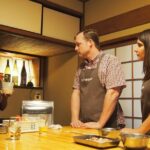
The class lasts about an hour. It begins with an instructor explaining Kintsugi and its focus on accepting imperfections. You then work on your own pottery piece, following the instructor’s steps and asking for help as you go.
There is no need to arrive with craft skills or a plan. The workshop is built for first-timers, and the instruction is practical as well as cultural. You learn enough about the technique and its meaning to understand what you are doing, then put that into practice on a small plate.
The exact sequence of steps is not specified, so I would not book expecting a detailed technical course in traditional restoration. Think of it as a short introduction and a chance to try the craft, with a finished creation to take home.
The instructors make it easy to begin
A craft class is only as relaxing as its instruction. Here, English-speaking teachers guide the work step by step, and the small group size gives you a better chance of getting help when you need it. Participants have praised instructors including Rachel, Phil, Kai, Haru, Yurin, and others for being friendly, clear, patient, and encouraging.
That matters most if you are unsure of your hands or worried about holding up the class. You can work at your own pace, and the activity does not require previous experience. Some participants have needed longer than an hour; in at least one case, the instructors allowed extra time rather than rushing the group. That is a welcome approach, but I would still leave a little breathing room in your schedule in case your session runs over.
The teaching also goes beyond the mechanics. Instructors explain the background of Kintsugi, giving you context for the finished piece. This is a good fit if you like learning a little about Japanese craft culture while making something, rather than simply following a set of instructions.
Your included plate is a practical souvenir
The workshop includes a small plate for your project. You take your finished creation home, which makes it a more personal keepsake than a mass-produced trinket. It can also serve as a reminder of a slower hour in Osaka, spent making something rather than rushing from one sight to the next.
If you want a different plate, other options are available for an extra charge. One participant reported paying ¥3,000 for a larger plate featuring The Great Wave off Kanagawa. That is a specific example, not a universal price list, so ask about the cost before choosing an upgrade. If the included small plate suits you, the base price keeps the experience notably affordable.
The finished piece is described as packaged for the journey home. Still, pottery is breakable, so take care with it as you travel. The workshop provides a meaningful object, but it is not a substitute for checking how you will carry it safely in your luggage.
More Great Tours NearbyA good change of pace from Osaka sightseeing
Osaka can fill a day quickly with food, shops, and major sights. This class offers a quieter counterpoint: you sit down, concentrate on a small task, and spend time with the craft rather than only looking at it. It can work well on a rainy afternoon or as a planned pause between more active parts of your trip.
The workshop is especially suited to couples, families, friends, and solo visitors. Families can share the table and make separate pieces; one family brought a six-year-old who enjoyed the activity. That is encouraging, but no minimum age is stated, so check directly if you are booking for a young child.
Solo visitors need not worry about the format. The group is limited to 10, and the shared activity gives you an easy reason to talk with other participants if you feel like it. You can also focus quietly on your own plate. Either way, the craft itself gives the hour a clear purpose.






The $9 price is strong value, with one small caveat
At about $9 per person, the workshop is an inexpensive way to try a Japanese craft, learn its central idea, and leave with a handmade souvenir. The included small plate is important to the value: you are not paying only to watch a demonstration or hear a short talk.
The main price caveat is the optional plate upgrade. If you have your eye on a particular design or larger piece, ask what it costs before you begin. The extra charge may be worth it if the plate makes the souvenir more meaningful to you, but the small included piece is enough to take part in the activity.
You can reserve without paying immediately, and cancellation up to 24 hours in advance allows a full refund. Those terms help if your Osaka plans are still shifting, but the main reason to book is simpler: it is a low-cost activity with both a cultural idea and a finished object to show for your time.
Is this the right workshop for you?
Book it if you want a short, beginner-friendly activity that combines Japanese craft, a thoughtful idea, and a take-home piece. It is particularly appealing if your trip could use a calm hour away from walking, or if you prefer souvenirs with a story attached.
Skip it if you are looking for a long, technical course in traditional pottery restoration, or if you do not enjoy hands-on crafts. The workshop is brief, and the exact materials and repair method are not specified. For most curious first-timers, though, the low starting price, small group, English instruction, and included plate make this a worthwhile addition to an Osaka visit.
Osaka: Kintsugi (Gold Repair) Pottery Workshop
FAQ
How long does the Kintsugi workshop last?
The workshop lasts one hour. Some participants have taken longer to finish, so leave a little room in your schedule if you do not want to rush.
How much does it cost?
The listed price is $9 per person. A small plate is included, while other plates cost extra.
Is the workshop suitable for beginners?
Yes. No previous craft experience is needed, and the instructor provides step-by-step guidance.
Is the instruction in English?
Yes. English is listed as the language of instruction.
How large is the group?
The workshop is limited to 10 participants.
What do I make during the class?
You work on your own Kintsugi piece using a small plate included in the price. Other plates are available for an additional charge.
Can I take my finished piece home?
Yes. You can take your finished creation home as a souvenir.
Can I cancel for a refund?
Yes. You can cancel up to 24 hours in advance for a full refund.
You can check availability for your dates here: