
The curious part of Zanzibar Sea Walk is that you can stroll along the seabed without swimming, wearing a helmet that lets you breathe underwater. I like two things in particular: the guide-led setup is designed for people without swimming skills, and the underwater area has fish, coral formations, and even a table and chairs where you can sit and watch.
There is one important catch: no swimming skills are needed, but you still need to be comfortable in water. The advertised outing lasts two hours, while one account of the timing put the full trip closer to three and a half or four hours. Ask about the schedule before you book, especially if you have plans afterward.
- A seabed walk, not a swim: A special helmet supplies air, so you can walk and look around rather than float or paddle.
- A short underwater session: Expect about 15 to 20 minutes beneath the surface, even though the full outing takes longer.
- A speedboat ride from Nungwi: The trip to the ocean base takes about 20 minutes.
- A calm place to pause: There may be a table and chairs underwater, giving you a chance to sit and watch the fish.
- Photos cost extra: The team can take pictures and videos, but they are not included in the $60 price.
- Age 10 and up: You must also be comfortable in water; the activity is not recommended for people with claustrophobia or severe back problems.
- The seabed walk begins at Nungwi Beach
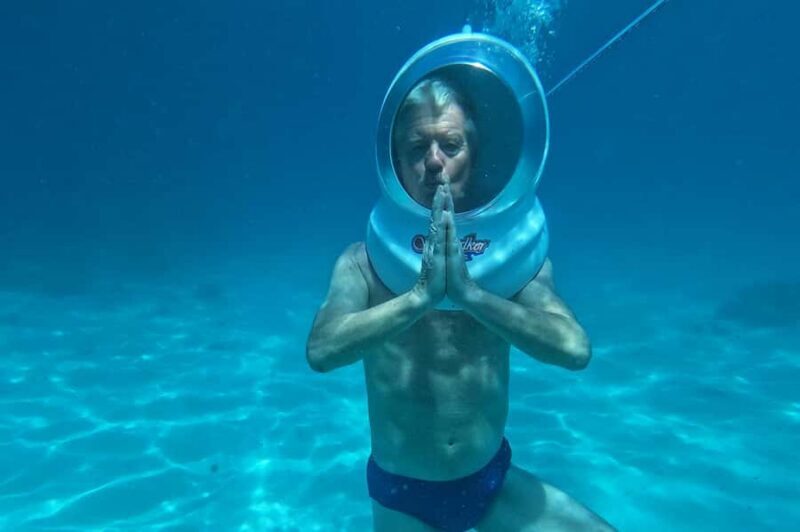
- What the breathing helmet makes possible
- Fish, coral, and a rule worth following
- The boat ride and the real time commitment
- Is good value?
- Who should book the sea walk
- Should you book it?
- FAQ
- Do I need to know how to swim?
- How long does the underwater walk last?
- How long should I allow for the full outing?
- Where is the meeting point?
- Are photos and videos included in the price?
- What are the age and health restrictions?
- More Tours in Nungwi
- More Tour Reviews in Nungwi
- Not for you? Here's more nearby things to do in Nungwi we have reviewed
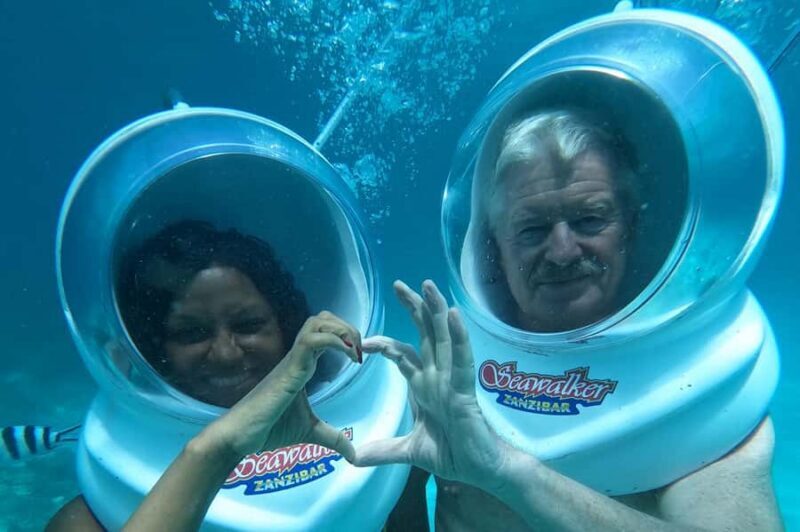
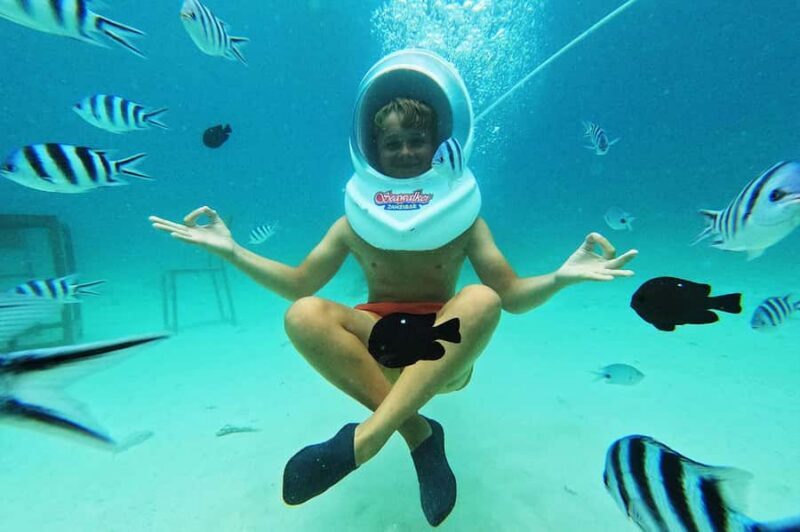
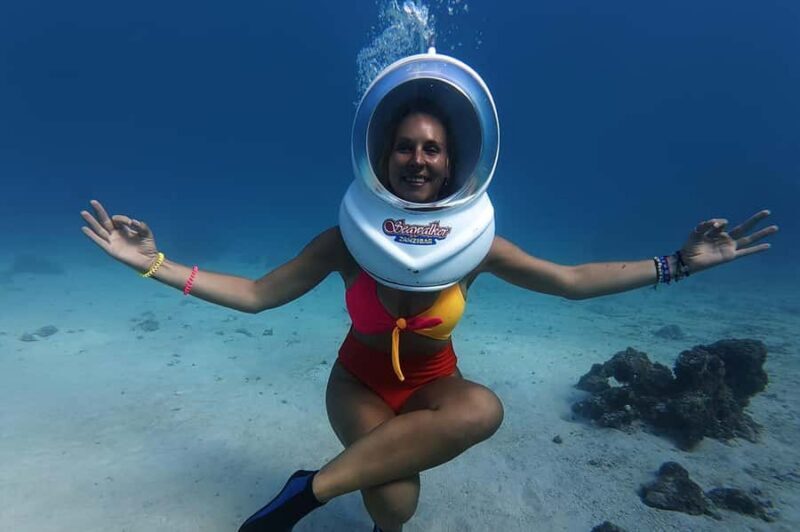
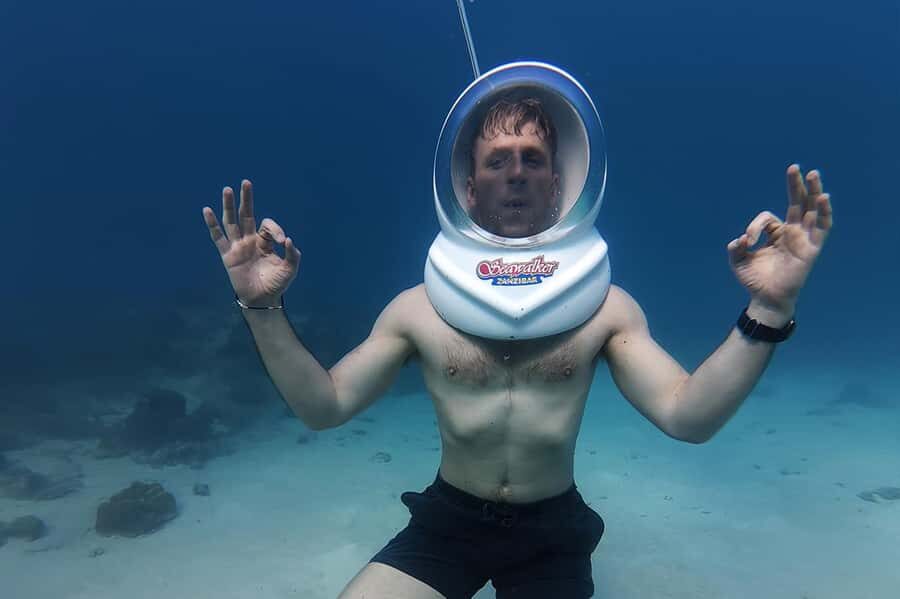
The seabed walk begins at Nungwi Beach
 1 / 7
 2 / 7
 3 / 7
 4 / 7
 5 / 7
 6 / 7
 7 / 7
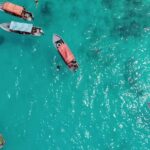
You meet near Double A Hotel on Nungwi Beach, then board a speedboat for the ride to the ocean base. That short crossing is part of the outing, not just a transfer. It gives you a little time to enjoy the Indian Ocean and get used to the idea of going below the surface.
At the base, the team explains how the helmet works and walks you through the safety rules. Take this briefing seriously, and ask questions if anything feels unclear. The helmet is the key to the activity, so you want to understand how it sits and what to do before you descend.
The staff’s patience is one of the strongest points here. People who arrive nervous have been given time to settle in, and instructors have been described as attentive rather than pushy. That matters: the experience is unusual, and a calm explanation can make the difference between enjoying it and spending the whole time thinking about the equipment.
The trip is described as suitable for children aged 10 and older, but that is not the same as being right for every child. A young participant should be comfortable in water, able to follow the guide’s instructions, and willing to wear the helmet. If you or your child feels uneasy in enclosed equipment, consider that carefully before booking.
What the breathing helmet makes possible
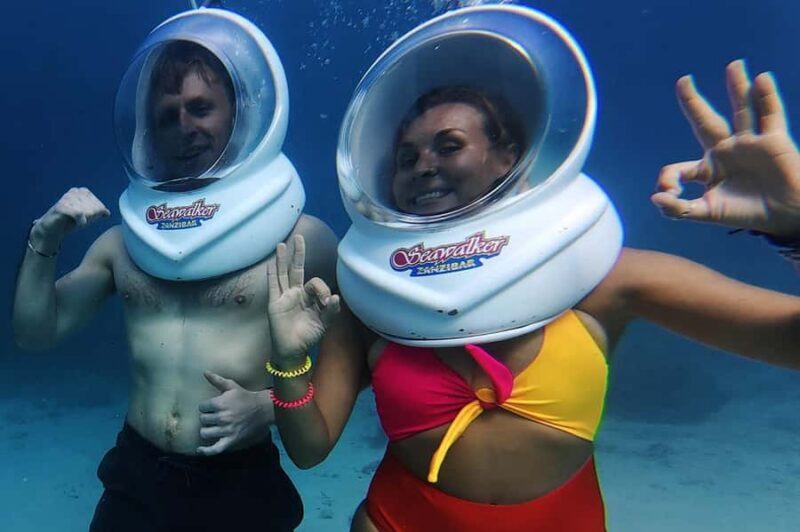
Once the helmet is on, you descend to the seabed with a guide. The appeal is simple and specific: you can stand and walk underwater without needing to swim or float. The helmet is designed to let you breathe, and people who wear glasses can keep them on, according to the activity information.
This is not a substitute for a full scuba course or a long underwater expedition. The walk lasts around 20 minutes according to the description, though some participants have spent about 15 minutes below. Treat that as a short, guided look at the marine life, not a lengthy exploration. The exact time may depend on the group and conditions, which are not specified.
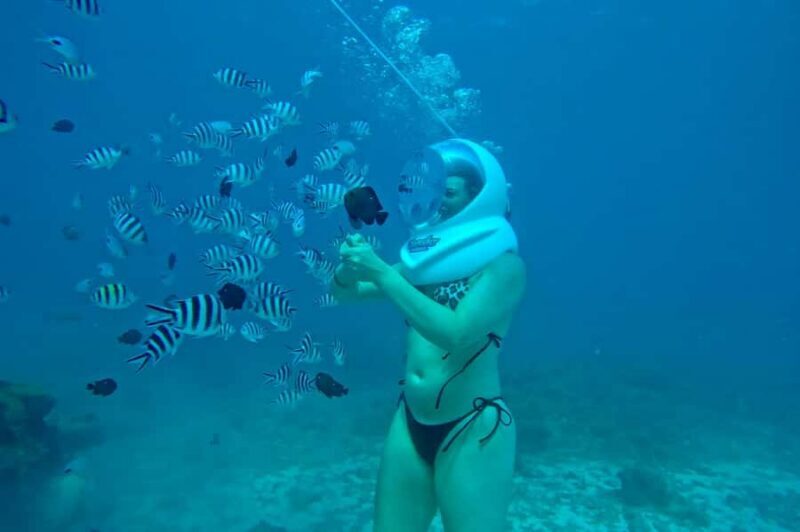
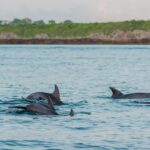
You may see colorful fish moving close by and coral formations around the underwater area. The arrangement can include a table and chairs, so you can sit for a moment rather than keep walking. That small detail changes the pace. You are not simply passing through; you can pause, look around, and let the scene come to you.
The guides stay with you and focus on keeping you comfortable and safe. Some people describe feeling nervous at first, then settling in once the instructions and equipment are familiar. If you are unsure, tell the instructor before going down. The staff are described as patient, and you should never feel pressured to continue if you do not feel ready.
You can also read our reviews of more tours and experiences in Nungwi.

Fish, coral, and a rule worth following
The marine life is the main event, but your role is to observe rather than handle it. Do not touch fish, coral, or underwater plants. The rule is clear, and it also helps keep the experience focused on watching the natural setting instead of treating it like a prop.
You may find fish swimming close enough to make the underwater setting feel immediate. One participant likened the feeling to being in another world, while another described sitting near the seabed and watching fish pass in front of them. Those are useful clues to the experience’s character: less athletic challenge, more close-up observation.
The water can also feel busy in a different way when the team is taking pictures. Underwater photography is available for an extra charge, and it can be a useful souvenir if you want proof of your helmeted seabed walk. But you do not have to buy a photo package to take part. One visitor reported feeling that the photo offer was not clear at the start, so I would ask about the cost and options before you board.
You may bring your own underwater camera, but it must be secured. That final point is practical: you want to keep hold of your equipment without letting it interfere with the helmet or the guide’s instructions. If you prefer to focus on the fish, leave the picture taking to the team and decide afterward whether their photos are worth the extra expense.
The boat ride and the real time commitment
The stated duration is two hours, including the trip from Nungwi Beach and the return. The ride to the ocean base is listed as about 20 minutes, followed by the briefing, equipment setup, underwater walk, and return trip. In practice, the total may run longer: one participant said the outing took three and a half to four hours.
That difference is large enough to affect your day. If you have a taxi, restaurant booking, or another excursion arranged, leave a generous gap and confirm the current schedule with the operator. The start time may also change if groups are reorganized, so do not build a tight connection around the advertised two-hour estimate.
The actual walk is short, but the outing involves more than those minutes beneath the surface. You need time to reach the base, hear the instructions, get ready, and return to shore. That is part of the value of having a guide-led activity, but it is also why the headline duration may not tell the whole story.
Bring water and comfortable shoes, and consider water shoes for the beach and boat access. Meals and drinks are not included. You also need to arrange your own transport to the meeting point near Double A Hotel on Nungwi Beach.
Is $60 good value?
At $60 per person, this is a specialized activity rather than a cheap add-on. You are paying for the speedboat trip, the breathing helmet, a guide, and access to a type of underwater encounter that does not depend on swimming ability. For someone who wants to see marine life but is not ready for snorkeling or scuba, that combination may be worth the price.
The underwater session itself is brief, so value depends on what you want. If you are looking for a long day on the water or extensive time among coral, you may find the 15 to 20 minutes below too short. If your priority is the novelty of walking on the seabed and seeing fish at close range, the unusual format is the point.
Remember to budget separately for photos and videos if you want them. They are not part of the listed price, and no meal, drink, or transport to the meeting point is included. Ask the team what photo options cost before you commit to a package. The activity can still be worthwhile without the photos, especially if you bring a secured underwater camera.
The strongest value is for a person who would otherwise miss an underwater activity because swimming is a barrier. The helmet changes what is possible, while the guide and briefing make it feel more approachable. It is less compelling if you already snorkel comfortably and would rather spend longer in the water at your own pace.
More Great Tours NearbyWho should book the sea walk
I would consider this for families with children aged 10 or older who are comfortable in water, couples looking for an unusual shared activity, and non-swimmers curious about marine life. The guided structure and patient instruction are useful if you feel a little nervous, though they cannot make the activity right for someone with claustrophobia or severe back problems.
You should be able to listen to instructions, wear the helmet, and remain comfortable while underwater. Being a weak swimmer is not an automatic barrier, but the requirement to be comfortable in water is real. If you have a medical concern beyond the exclusions listed, ask the provider before booking rather than relying on a general description.
The operator’s instructors work in English, Arabic, and Swahili. You will need to sign a waiver before taking part. Cancellation is free up to 24 hours in advance, and a reserve-now, pay-later option is available, which can help if your plans are still taking shape.


Should you book it?
Book the Zanzibar Sea Walk if the idea of walking rather than swimming beneath the surface appeals to you, and you are comfortable wearing a breathing helmet. Its best features are the unusual seabed perspective, close views of fish and coral, and guides who take time to help nervous participants feel at ease.
Skip it if you are uncomfortable in water, dislike enclosed equipment, or need a tightly timed activity. Before paying, confirm how long the outing is expected to take and ask what the photo package costs. With those details settled, this is a memorable way to see the underwater world off Nungwi without needing swimming skills.
Underwater Walking Experience in Zanzibar,No Swimming Needed
FAQ
Do I need to know how to swim?
No swimming skills are required. You must still be comfortable in water and able to follow the guide’s instructions.
How long does the underwater walk last?
The underwater portion is about 20 minutes in the activity description. Some participants have spent approximately 15 minutes below the surface.
How long should I allow for the full outing?
The stated duration is two hours, but one participant reported that the outing took three and a half to four hours. Confirm the expected timing with the provider and leave a buffer in your schedule.
Where is the meeting point?
Meet near Double A Hotel on Nungwi Beach, Zanzibar. Transport to the activity meeting point is not included.
Are photos and videos included in the price?
No. The team can take underwater photos and videos, but they cost extra. You may also bring your own underwater camera if it is secured.
What are the age and health restrictions?
The activity is for participants aged 10 and older. It is not recommended for people with claustrophobia or severe back problems, and all participants must be comfortable in water.
You can check availability for your dates here: