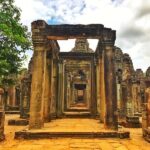
Angkor Wat at sunrise is the heart of this early start: you arrive before the day’s temple visits and watch dawn come up over a monument built in the 12th century. I like that the tour pairs this quiet moment with Bayon’s remarkable stone faces and Ta Prohm’s roots and vines, rather than stopping at Angkor Wat alone.
The private vehicle, hotel pickup, and guide make a long morning easier to manage, and guides such as Thinh have been praised for strong history and thoughtful routes. The trade-off is simple: a 5:00 AM departure is a real alarm-clock commitment, and the $140 price does not include the $37 temple pass per person.
- What makes this tour worth considering
- A 5:00 AM start for Angkor Wat at dawn
- Angkor Wat’s scale, design, and sense of place
- Bayon and its 216 carved faces
- Ta Prohm’s vines and stonework
- What a private guide adds to the morning
- Price, temple pass, and what to wear
- Who will get the most from this tour
- Should you book the sunrise tour?
- FAQ
- What is included in the tour price?
- How much does the Angkor Temple Pass cost?
- What time does the tour start?
- How long is the tour?
- Which temples does the tour visit?
- Is the tour private?
- Which languages are available for the guide?
- What should I wear to the temples?
- The Best Of Siem Reap!
- More Private Tours in Siem Reap
- More Tours in Siem Reap
- More Tour Reviews in Siem Reap
- Not for you? Here's more nearby things to do in Siem Reap we have reviewed
What makes this tour worth considering
 1 / 9
 2 / 9
 3 / 9
 4 / 9
 5 / 9
 6 / 9
 7 / 9
 8 / 9
 9 / 9
- Sunrise at Angkor Wat gives you a memorable start at Cambodia’s most respected temple complex.
- Bayon’s 216 carved faces offer a striking contrast to Angkor Wat’s balanced design.
- Ta Prohm’s jungle-covered stonework is the temple setting made famous by Tomb Raider.
- A private group and hotel pickup keep the morning focused on your own party, with no shared group to wait for.
- Guides such as Thinh and Sothy bring history and practical help, including tips on photo angles and routes that may avoid some crowds.
- The temple pass is extra: budget $37 per person for a one-day pass, on top of the $140 group price for up to two.
👉 See our pick of the 25 Best Guided Tours In Siem Reap
A 5:00 AM start for Angkor Wat at dawn
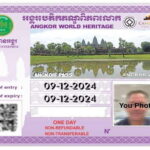
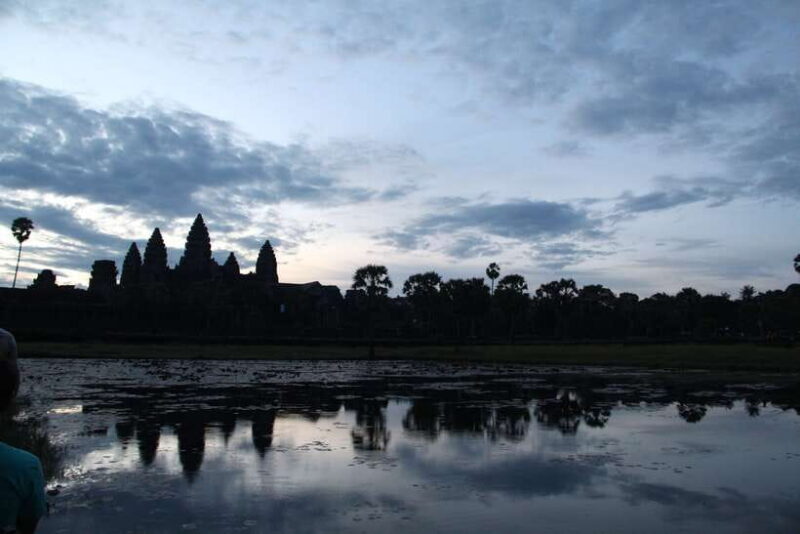
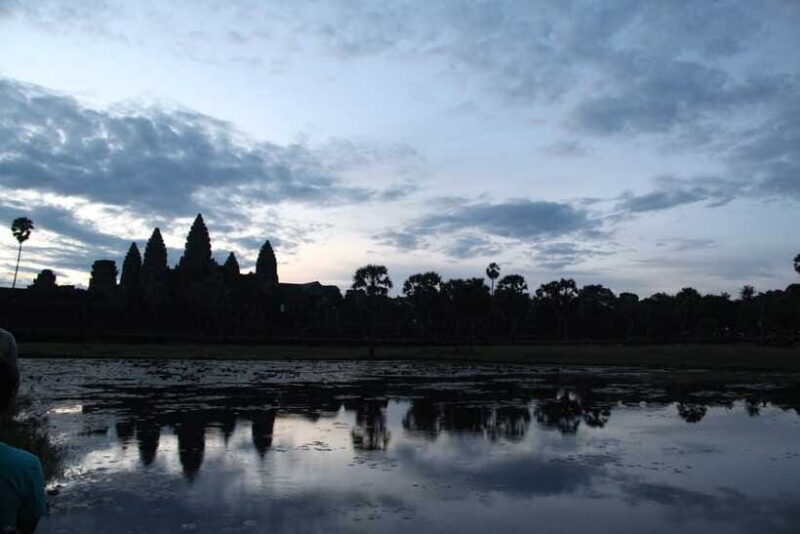
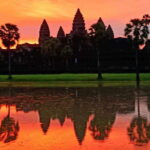
The day begins with pickup from your hotel lobby at 5:00 AM, followed by private transport to the Angkor Wat Temple Complex. You’ll buy your temple pass and enter with your guide. The early departure is part of the deal, not a small scheduling detail: this tour is built around seeing sunrise at Angkor Wat, then using the cooler morning hours to visit more of the park.
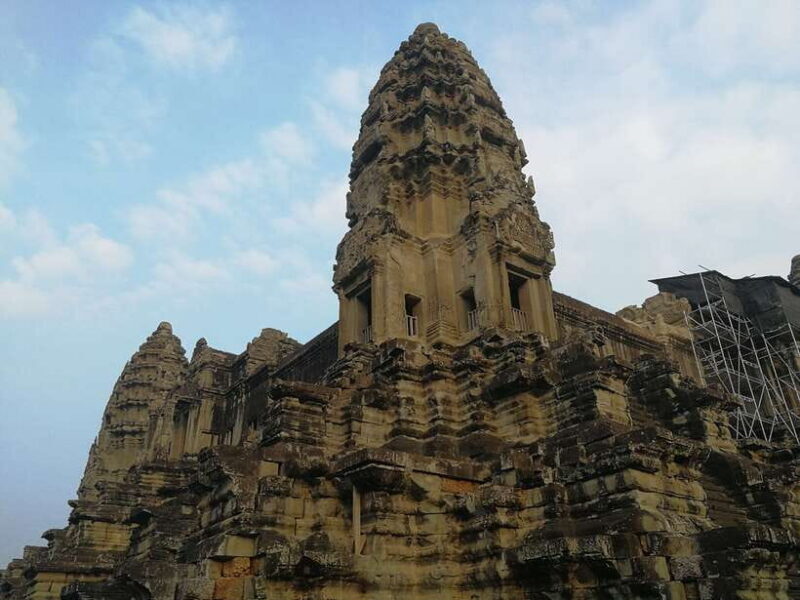
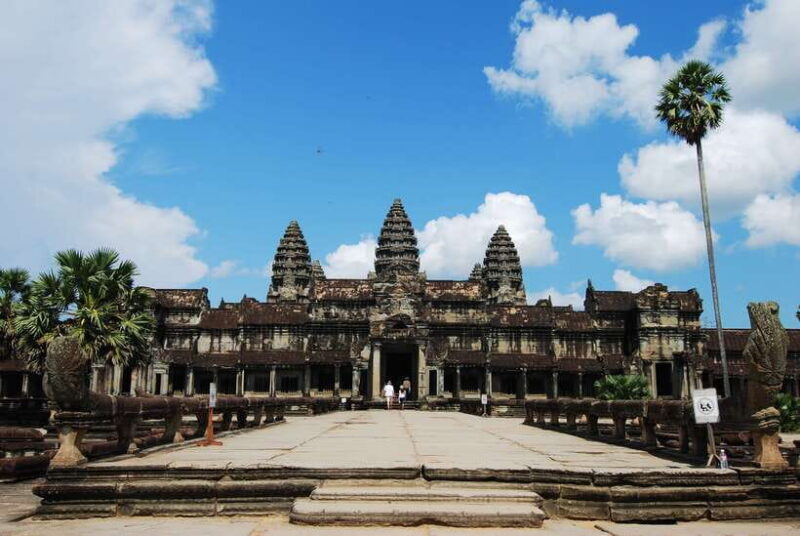
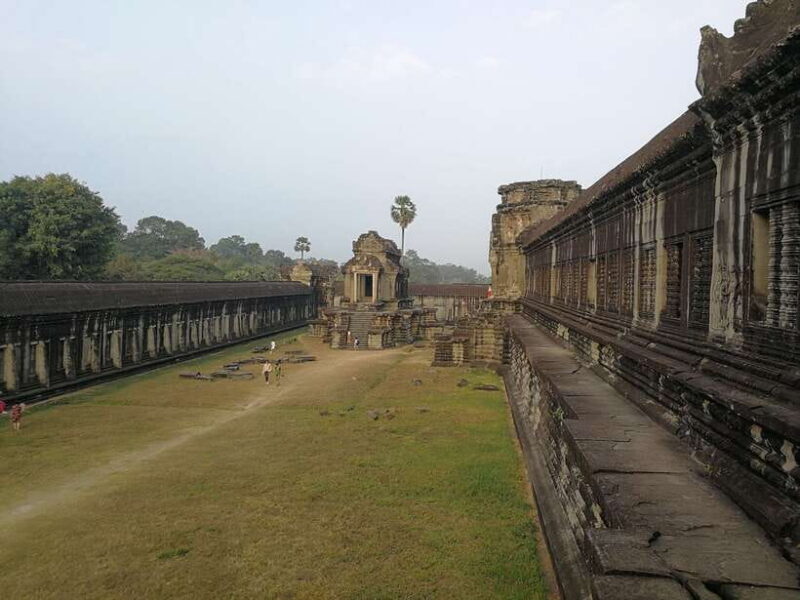
Angkor Wat was built in the first half of the 12th century by King Suryavarman II. Its scale, balance, and composition are the points to watch as you approach and explore. The monument rises above its surroundings, and that size can feel overwhelming at first. A guide helps give shape to the visit, explaining what you are looking at instead of leaving you to take in a vast complex without context.
Sunrise is the emotional hook, but it is also worth keeping expectations practical. The exact starting time for this activity can vary, so check availability when booking. The tour information promises a sunrise visit, but it does not specify where you’ll stand, how long you’ll stay, or the day’s weather. Go for the chance to see the temple at dawn, not a guarantee of a particular sky or photograph.
I also like that the morning does not end after sunrise. You continue to other major temples with a guide, so the early alarm pays off in a fuller look at the Angkor Archaeological Park. The private vehicle is useful here: you have transportation between stops and a return transfer to your hotel at the end.
You can also read our reviews of more private tours in Siem Reap
Angkor Wat’s scale, design, and sense of place
Angkor Wat is not simply a backdrop for sunrise photos. Its design and size are central to the experience. The temple’s balanced composition is one of the reasons it is considered among the world’s finest monuments, while its height and broad presence make it difficult to grasp in a single glance. Give yourself time to look beyond the first dramatic view.
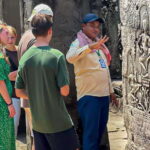
The guide can add helpful context to what you see, including the temple’s connection to Suryavarman II and its place in the history of the complex. Feedback about guides Thinh and Sothy highlights friendly, informative commentary. Thinh, in particular, has been noted for explaining Angkor and Khmer history while keeping the visit organized. That kind of interpretation matters at a site this large: details can blur together when you are moving from one structure to another without a story to connect them.
There is a practical benefit to having a guide who knows where to position you for photographs, too. Thinh and another guide were praised for pointing out good viewing spots and camera angles. These are useful touches, especially at a famous site where you may want a clear picture without spending the whole morning trying to frame one.
Bayon and its 216 carved faces
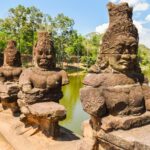
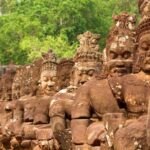
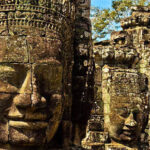
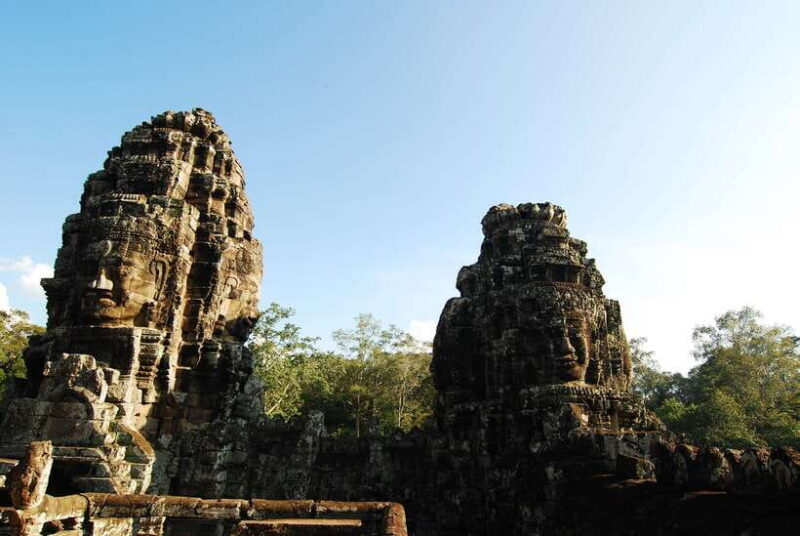
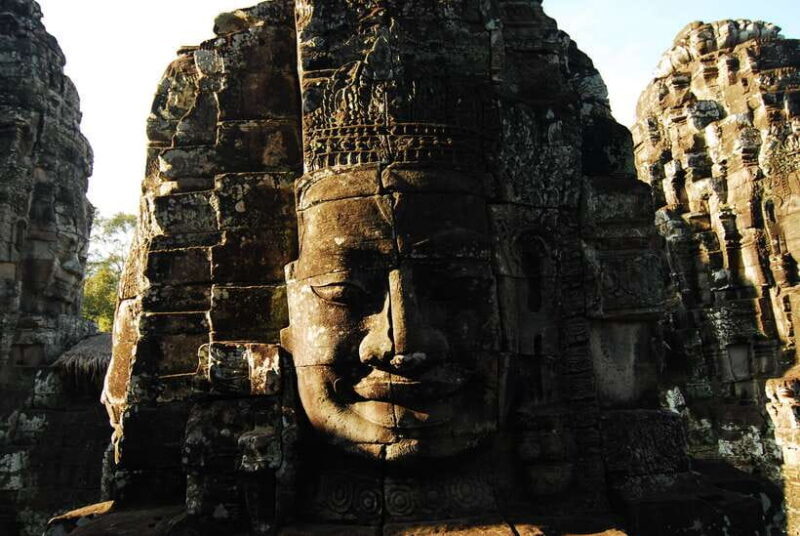
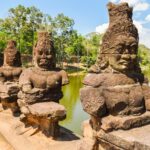
After Angkor Wat, the tour continues to the Angkor Thom complex and Bayon Temple. Built in the late 12th century by King Jayavarman VII, Bayon is known for the giant stone faces on its towers. The stated count is 54 towers with four faces on each, making 216 faces in total.
The effect is very different from Angkor Wat. Instead of one immense temple shape, Bayon draws your attention to repeated faces looking out from the towers. You can spend your time noticing how the faces appear from different angles and how many are visible at once. Your guide can explain the temple’s place in the wider complex and help you take in the details without turning the stop into a list of numbers.
The face count is a memorable fact, but the value of the stop is also in seeing the scale and repetition for yourself. This is a temple that rewards looking up and around, not just walking through. The tour’s sequence gives you a useful change of mood after Angkor Wat’s grand design.
Ta Prohm’s vines and stonework
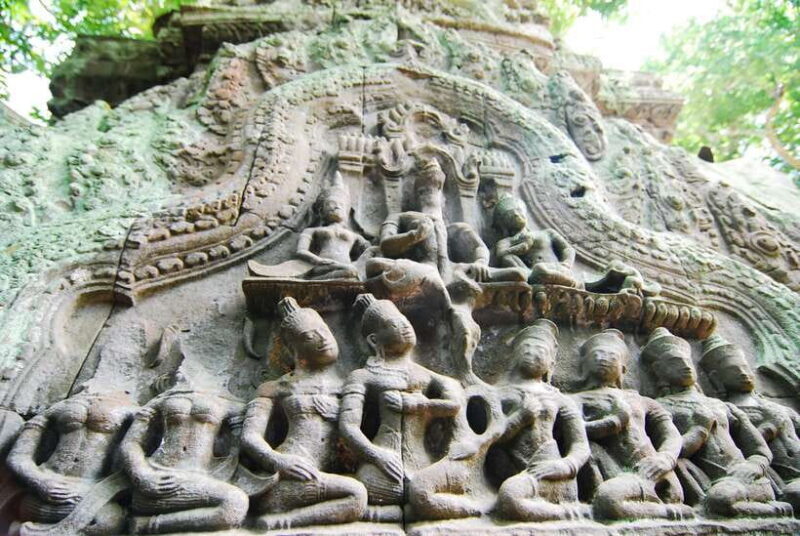
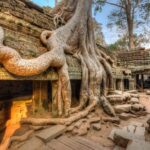
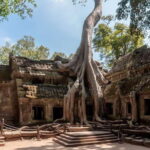
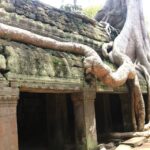
Ta Prohm closes the temple visits. It is known for the way jungle vines intertwine with the stonework, creating a more tangled, overgrown setting than the other stops. If the name feels familiar, it was featured in Angelina Jolie’s Tomb Raider.
The film connection may draw you in, but the temple is worth seeing for the meeting of stone and plant life. Its appearance gives you a different sense of the Angkor site, and it makes a strong final stop after Angkor Wat and Bayon. The tour description does not set out a fixed amount of time at each temple, so expect your guide to manage the morning across the three visits.
This is also a good place to slow down and notice the contrasts: carefully built stone forms, roots and vines crossing them, and the sense of a temple closely wrapped by its surroundings. The setting is memorable, though it can be a popular stop. A guide who tries a less crowded route when possible can help, but no route can promise an empty temple.
More Great Tours NearbyWhat a private guide adds to the morning
The private format is one of the tour’s strongest practical features. You travel as a private group rather than joining a larger shared party, and hotel pickup is included. That means your morning is arranged around your own group, with a driver and guide to take you between the sites and back to your hotel.
The reviews of specific guides offer a useful picture of the service, without guaranteeing who will lead your tour. Thinh has been praised for his knowledge of Angkor and Khmer history, kind manner, and effort to find less crowded routes where possible. Sothy has been described as informative and friendly. One tour also received praise for punctual pickup, careful organization, and help with photo viewpoints.
A driver is included as well as an English-speaking guide. The listed guide languages are English, French, German, and Spanish, so check availability for your preferred language rather than assuming every option is offered at every time. A refreshment drink and cold towel are included, a welcome practical touch after walking around temple grounds in the morning.
You can also read our reviews of more tours and experiences in Siem Reap


Price, temple pass, and what to wear
The tour costs $140 per group for up to two people. For two, that works out to $70 each for private transport, a guide, hotel pickup, a drink, and a cold towel. For one person, the same group price makes the cost per person higher. The key value is having a private guide and driver for the morning, rather than paying only for transport or joining a group with a fixed pace.
The Angkor Temple Pass is not included. A one-day pass costs $37 per person, so two people should allow another $74 for entry. That makes the basic total $214 for two before any other personal expenses. Keep this distinction in mind when comparing the tour price with other options.
Dress rules are important: wear long pants that cover your knees and a shirt that covers your shoulders. These requirements apply because you are visiting temples. Choose clothing you can comfortably walk in, since the itinerary involves several temple stops during a seven-hour outing.
The tour runs for seven hours and is described as ending at noon, with a return transfer to your hotel. The morning starts early, so plan the rest of your day with some breathing room rather than assuming you will be ready for another full activity immediately afterward.
Who will get the most from this tour
This is a good fit if you want sunrise at Angkor Wat but also want a guide to explain the temples and manage transport. It suits couples, friends, or solo visitors who prefer a private group and value a focused itinerary. The mix of Angkor Wat, Bayon, and Ta Prohm gives you three distinct sights in one morning.
It is especially appealing if you want history and practical help alongside the views. Guides praised for explaining Khmer history, finding photo angles, and taking less crowded routes can make the experience more than a sequence of stops. Still, guide quality can vary, and the names Thinh and Sothy are examples of guides who have led tours, not a promise that either will be assigned.
Think twice if you dislike early starts, want an unhurried full-day visit at each temple, or are looking for an all-inclusive price. This tour begins at 5:00 AM, lasts seven hours, and covers three major temple stops. The temple pass is an extra cost, and the schedule is designed to fit sunrise and a morning circuit, not an extended exploration of every part of the park.
Should you book the sunrise tour?
Book it if you want the iconic dawn visit and appreciate having a private guide connect Angkor Wat, Bayon, and Ta Prohm in one well-organized morning. The combination of a private vehicle, hotel pickup, historical commentary, and three very different temples makes the $140 group rate a reasonable choice for two, provided you include the pass cost in your budget.
Skip it if the 5:00 AM start sounds miserable or you would rather set your own pace across a longer visit. For many people, though, the early alarm is a fair exchange for sunrise at Angkor Wat and a guided introduction to the temples. Wear the required clothing, bring the extra pass money, and leave the rest of the day flexible.
Angkor Wat Full-Day Private Tour with Sunrise
FAQ
What is included in the tour price?
The tour includes private transportation, an English-speaking guide, hotel lobby pickup, a refreshment drink, and a cold towel. The Angkor Temple Pass is not included.
How much does the Angkor Temple Pass cost?
A one-day Angkor Temple Pass costs $37 per person. You need to budget for it separately from the tour price.
What time does the tour start?
The stated departure is 5:00 AM from your hotel. Starting times can vary, so check availability for your date.
How long is the tour?
The tour lasts seven hours and is described as ending around noon, with a transfer back to your hotel.
Which temples does the tour visit?
The itinerary includes Angkor Wat, Bayon in the Angkor Thom complex, and Ta Prohm.
Is the tour private?
Yes. It is a private group tour, priced at $140 for a group of up to two people.
Which languages are available for the guide?
The listed guide languages are English, French, German, and Spanish. Check availability for your preferred language.
What should I wear to the temples?
Wear long pants that cover your knees and a shirt that covers your shoulders.
You can check availability for your dates here: