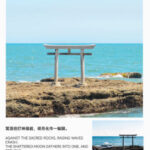
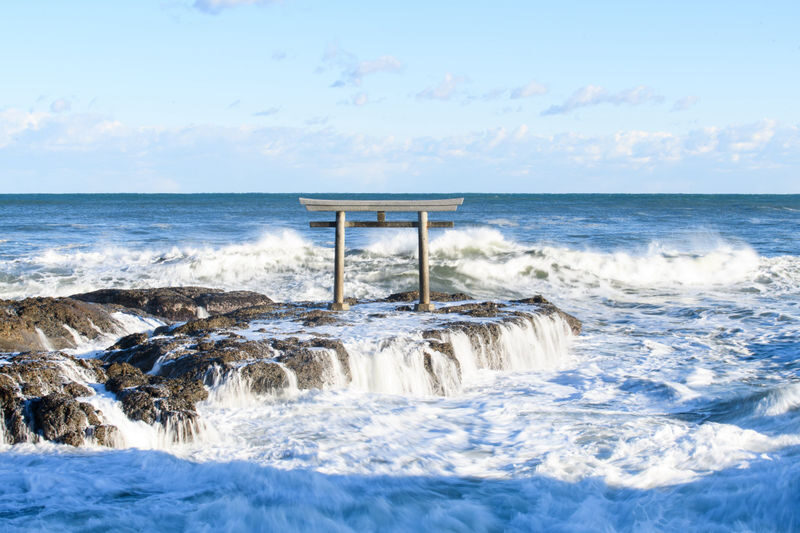
The day’s most striking image is a red torii gate set on rocks in the Pacific, with waves breaking around its base. I like the way this trip pairs that open-sea view with a quiet mountain temple, then gives you time for seafood and Hitachi Seaside Park’s seasonal flowers.
I also like the practical value: reaching four far-flung Ibaraki stops by bus would be awkward to arrange on your own, and admission to Hitachi Seaside Park is included. The trade-off is a packed schedule. Traffic, crowds, or a flower season that misses its peak can leave the park visit feeling short.
- A torii on the Pacific: Oarai Isosaki Shrine’s Kamiiso gate is especially striking when waves wash over the rocks beneath it.
- Hydrangeas and peacocks: Amabiki Kannon’s temple grounds are known for early-summer blooms, koi, and peacocks.
- Lunch at a working fish market: Nakaminato is your chance to choose seafood for yourself, with the meal paid separately.
- A short visit to a very large park: Hitachi Seaside Park gets about 1 hour 50 minutes, enough for a focused walk, not a full day.
- A bilingual group tour: Chinese and English guidance is offered, but the guide and vehicle can vary by departure.
- Four Ibaraki stops, one long day from Tokyo
- Amabiki Kannon: temple quiet and early-summer hydrangeas
- Oarai Isosaki Shrine: a torii above the Pacific
- Nakaminato Fish Market: choose lunch as you go
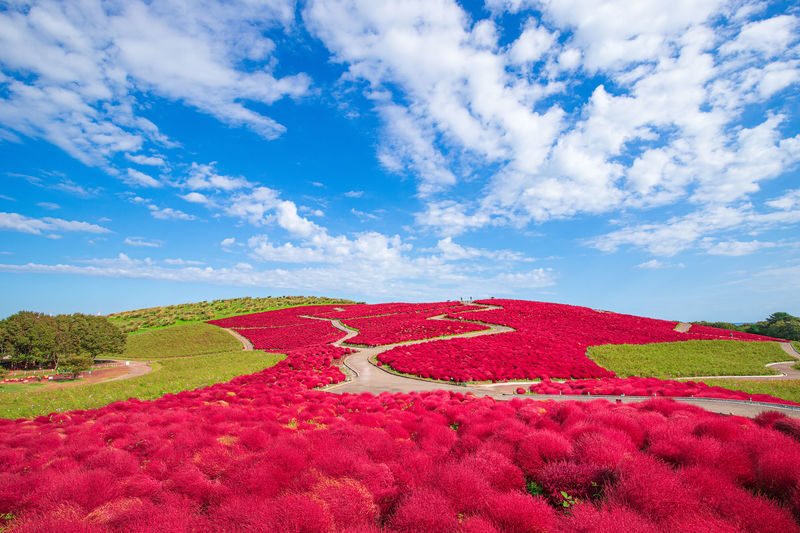
- Hitachi Seaside Park: seasonal flowers, short walking time
- Bus travel and timing: convenience with a traffic risk
- Who will get the most from this day trip?
- Should you book the Ibaraki day tour?
- FAQ
- Where does the tour depart from?
- How long is the tour?
- Which attractions are included?
- Is Hitachi Seaside Park admission included?
- Is lunch included?
- What languages does the guide use?
- Is there an extra fee at Amabiki Kannon?
- Can I cancel for a refund?
- The Best Of Tokyo!
- More Shopping Tours in Tokyo
- More Tours in Tokyo
- More Tour Reviews in Tokyo
- Not for you? Here's more nearby things to do in Tokyo we have reviewed
Four Ibaraki stops, one long day from Tokyo
 1 / 8
 2 / 8
 3 / 8
 4 / 8
 5 / 8
 6 / 8
 7 / 8
 8 / 8
This is a sampler of coastal and garden sights in Ibaraki, north of Tokyo. You leave from Tokyo Station in the morning, travel between stops by bus, and are due back around 6 p.m. The route takes in a temple, a shrine, a seafood market, and a large seaside park, giving you several different reasons to make the trip.
That range is the tour’s main appeal. You get a taste of Ibaraki beyond the capital’s usual sights, without planning train connections or arranging a car. The compromise is that each stop has a time limit, and the schedule is vulnerable to traffic. Arrival times are estimates, so leave the evening open rather than booking a tight connection or dinner reservation.
The tour is self-guided at the four attractions. Your guide handles the group and helps with directions and timing, but you have freedom to choose what to see within each stop. Past guides have included Arpan, Ashley, and Jeffery; names and staffing vary. Guidance is offered in Chinese and English, and a group may include people using different languages.

👉 See our pick of the 25 Best Guided Tours In Tokyo
Amabiki Kannon: temple quiet and early-summer hydrangeas
The first stop is Amabikisan Rakuhoji, commonly called Amabiki Kannon, a mountain temple set among trees. In June and July, hydrangeas in shades of blue, purple, and pink make the grounds a major draw. The bloom period is usually around June 10 to July 20, though weather and the year can shift the show.
This is not just a flower photo stop. The grounds also have a pond with koi, and peacocks may stroll through the temple area. You can take a quiet walk, look around the older temple buildings, and enjoy a break from the bus. Cherry blossoms are associated with spring, while autumn brings foliage; even outside the main hydrangea period, the wooded setting can make the visit worthwhile.
You have about an hour here, which is enough to see the main areas but not to linger at every viewpoint. During the Hydrangea Festival, a 500-yen admission fee applies and is not included. If the flowers are your main reason for booking, check the expected bloom timing close to your travel date rather than treating the calendar as a guarantee.
You can also read our reviews of more shopping tours in Tokyo


Oarai Isosaki Shrine: a torii above the Pacific
At Oarai Isosaki Shrine, the Kamiiso Torii stands on rocks at the water’s edge. Waves move around its base, changing the scene with the tide and weather. The gate is smaller than some photographs might suggest, but its position against the open Pacific gives it presence. It is a striking place to pause, take pictures, and watch the sea.
The shrine stop lasts about an hour and is self-guided. The gate has become a popular photography spot and is also associated with the anime Girls und Panzer. Sunrise and sunset can bring dramatic light, but this tour’s timing does not promise either. Expect to see the place in the conditions of the day, not a carefully timed photo session.
The shrine’s mix of sacred setting and strong natural view makes a useful contrast with the sheltered temple gardens. Still, if you hope to explore the wider shrine grounds in depth, an hour may feel brief. The main draw on this itinerary is the sea-facing torii.
Nakaminato Fish Market: choose lunch as you go
The bus then stops at Nakaminato Fish Market for about an hour. This is your lunch break, and food is not included. You can browse for seafood such as oysters, scallops, squid, shrimp, and sea urchin, or look for a rice bowl or other prepared meal. The exact selection and prices depend on the stalls and the day.
I like this arrangement because you can choose what appeals to you rather than being tied to a set menu. It also means you should keep an eye on the clock. The market is not enormous, but queues at popular places can eat into a one-hour lunch quickly, especially on weekends and holidays. If you have a particular meal in mind, make your choice early rather than touring every aisle first.
Bring cash as a practical precaution, since it is listed among the recommended items. There may also be fruit for sale, including seasonal produce such as cantaloupe and cherries. The market is a lively, local-feeling pause in a day otherwise centered on scenery, but it works best if you are comfortable making a quick lunch decision.
Hitachi Seaside Park: seasonal flowers, short walking time
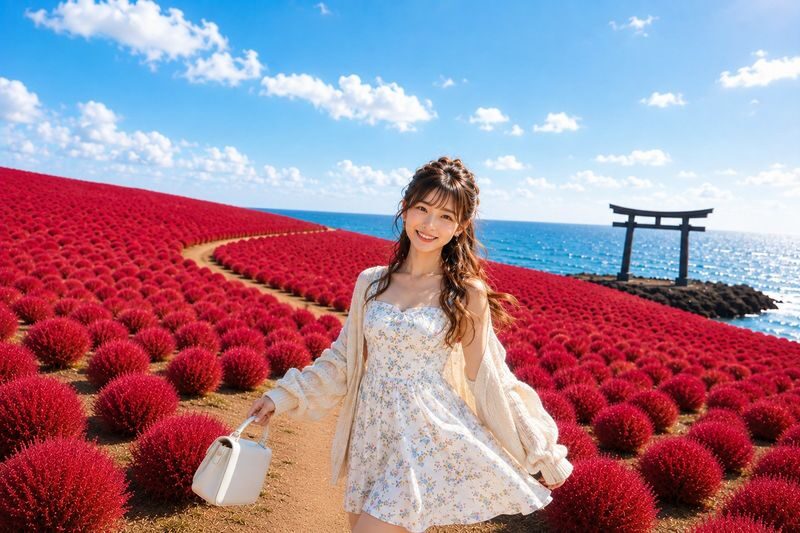
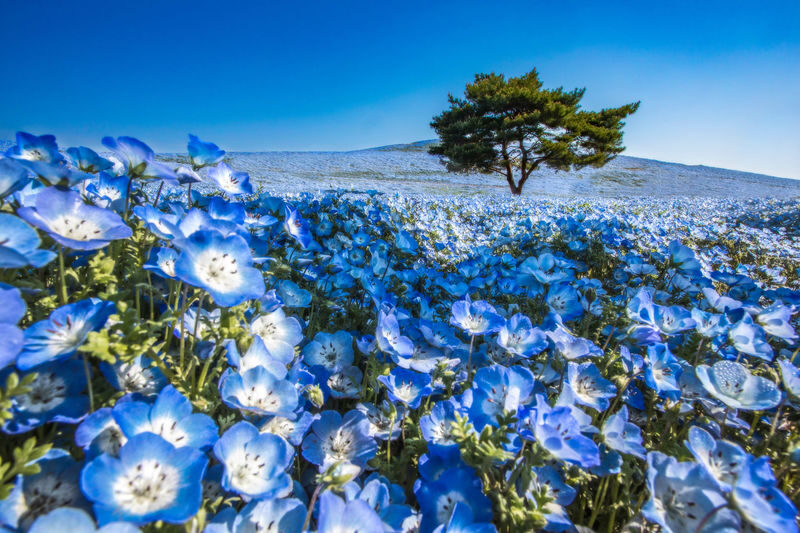
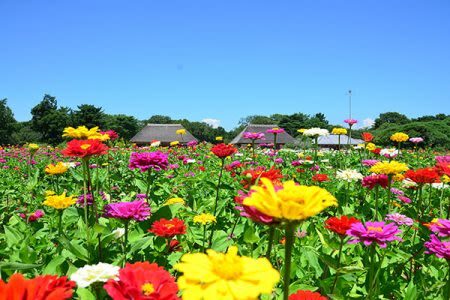
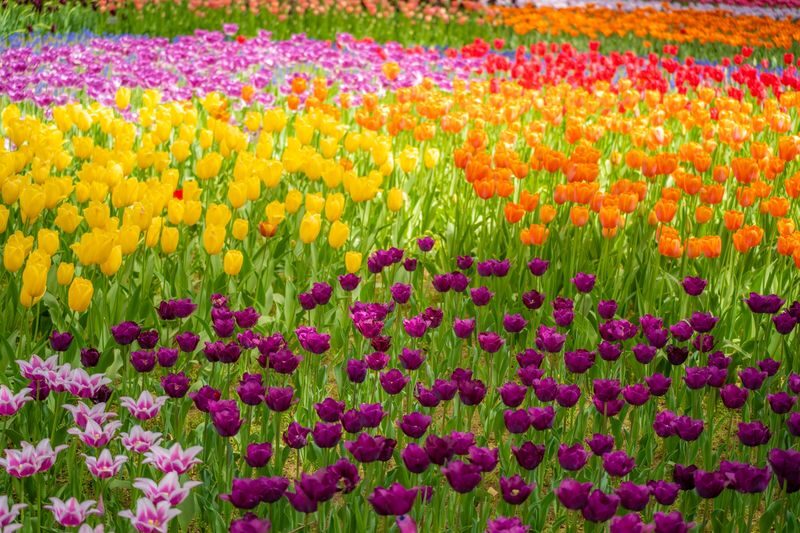
Hitachi Seaside Park is the longest stop, at roughly 1 hour 50 minutes, and the one most likely to shape your choice of travel date. The park covers a large area, with flower displays that change through the year. In spring, millions of nemophila and tulips are expected around mid-April to early May. Daffodils begin the season in March, sunflowers appear in July and August, and kochia color Miharashi Hill red from late September into early October. Cosmos and chrysanthemums add to the autumn display; winter brings daffodils, plum blossoms, and zodiac-themed flower displays.
The famous spring blue flowers and autumn kochia draw the biggest attention, but the park can still be pleasant outside peak bloom. You may find green woods, open paths, play areas, and other seasonal plantings. A July visit, for instance, may have hydrangeas at the temple but fewer headline flowers at the park. That trade-off is worth considering before you choose a date.
Admission to the park is included, but the short visit is a real limit. The grounds are large, and walking to a preferred area takes time. Some visitors have found the park shuttle confusing because it makes stops around the grounds; others have rented a bike to cover more distance. If you want a relaxed full-park visit, this tour is not the best way to do it. Pick one area or flower display, check the map as soon as you arrive, and avoid cycling far from the meeting point.
The park can also be affected by closures or itinerary changes. On June 30, the planned visit is changed to Hinuma Nature Park because Hitachi Seaside Park is closed. Flower conditions vary with the year and weather, so even the right month does not ensure a full display.
Bus travel and timing: convenience with a traffic risk
A day covering these four stops is difficult to manage by public transport in the same amount of time. The bus makes the route simple: meet at Tokyo Station, ride between attractions, and return to the same general area. Round-trip transfers and park admission are included in the price, which starts at $37.49. Meals, personal purchases, and the temple festival admission are extra.
The low starting price makes the tour good value if you want to see several places in a single day and do not mind a quick pace. You are paying for the transport and the chance to visit attractions that are spread out, not for long guided walks or a private vehicle. The market meal can be inexpensive or more of a treat, depending on what you order.
Plan for time on the road. The first temple is scheduled for about 10 a.m. after an 8 a.m. departure, but holiday traffic can stretch the drive and reduce time at later stops. Some departures have run close to schedule, while severe congestion has caused major delays. The guide may adjust the order or shorten a stop if conditions require it. That is sensible on a long route, though it can be disappointing if one attraction was your main reason for booking.
Meet at Tokyo Station’s Marunouchi South Exit by 7:50 a.m. for the 8 a.m. departure. The group does not wait for late arrivals, and missed departures are not refunded. The return time of 6 p.m. is an estimate, not a firm promise. Bring sun protection, sunglasses, a hat, and cash; the operator assigns the vehicle based on the group size, so you cannot select a particular bus or van.
You can also read our reviews of more tours and experiences in Tokyo






Who will get the most from this day trip?
This tour suits you if you want a broad introduction to Ibaraki, value having transport arranged, and are happy to explore each stop independently. It is especially appealing if you can match your dates to the hydrangeas, spring nemophila, or autumn kochia. Families may appreciate the range of scenery, but note that child seats are not available and there is limited time for park play areas.
It is less suited to you if you want a slow temple visit, a long seafood lunch, or hours to explore Hitachi Seaside Park. Independent travel may offer more freedom at each stop, but it requires more planning and transport time. The group tour trades that freedom for convenience.
The strongest parts of the day are its variety, the sea-facing torii, and the chance to combine flowers with a seafood lunch. Its weak point is the tight timetable, especially when crowds and road delays coincide. Go in with one or two priorities at each stop, and you are more likely to enjoy the day than if you expect four leisurely visits.
Should you book the Ibaraki day tour?
Book it if you want to see several Ibaraki highlights without renting a car or piecing together a complicated route. For the starting price, round-trip transport and park admission make a persuasive package, particularly during a peak flower season.
Skip it if you want to spend most of the day at Hitachi Seaside Park or dislike fixed group schedules. Before booking, check the expected blooms, note the June 30 park substitution, and keep your evening free in case traffic pushes the return later.
Ibaraki Day Trip: Oarai Isosaki Shrine’s Torii Gate in the Sea & Nakaminato Fish Market & Amabiki Kannon & Hitachi Seaside Park (Departing from Tokyo)
“Due to traffic today, we discussed and skipped the last stop on the itinerary. However, the tour guide was extremely responsible throughout the tri…”
FAQ
Where does the tour depart from?
It meets at Tokyo Station’s Marunouchi South Exit. Be there by 7:50 a.m. for the scheduled 8 a.m. departure.
How long is the tour?
The planned day runs from 8 a.m. to about 6 p.m. The return time is an estimate and can change with traffic or weather.
Which attractions are included?
The stops are Amabiki Kannon, Oarai Isosaki Shrine, Nakaminato Fish Market, and Hitachi Seaside Park. On June 30, the park visit is changed to Hinuma Nature Park because Hitachi Seaside Park is closed.
Is Hitachi Seaside Park admission included?
Yes. Admission to Hitachi Seaside Park is included in the tour price.
Is lunch included?
No. You have time to buy lunch at Nakaminato Fish Market, but meals are at your own expense.
What languages does the guide use?
The tour offers Chinese and English guidance. A group may include people using different languages in the same vehicle.
Is there an extra fee at Amabiki Kannon?
During the Hydrangea Festival, admission costs 500 yen and is not included. The hydrangea season is usually around June 10 to July 20, but dates and flower conditions can vary.
Can I cancel for a refund?
A full refund is available if you cancel at least 24 hours before the activity date, based on local time. If the operator cancels because of extreme weather or an unforeseen event, you can choose to reschedule or request a full refund.