The idea here is simple and appealing: make a miniature Japanese garden inside a temple, using moss that needs no upkeep. Instead of buying a ready-made souvenir, you shape one yourself from moss, stones, and traditional Japanese materials.
I like two things in particular: you get to make your own design, and the small garden is presented as an easy-to-carry, packing-friendly keepsake. The temple setting gives the activity a more thoughtful feel than a standard craft table, and instructor Takeda-san has helped participants with useful advice.
One consideration: the Small plan starts at $44.15, and the Large and Masu options cost more. The activity also asks for quiet inside the temple, so it suits you best if you are happy to slow down and follow the house rules rather than treat the visit as a noisy family workshop.
- Key points to know before you book
- A miniature garden made by hand
- Jusen-in adds a quiet pause to Asakusa
- What happens during the activity
- Choosing a plan and judging the price
- A souvenir that travels better than a live plant
- Who will enjoy this temple craft
- Practical arrival details
- Should you book the Asakusa moss art experience?
- FAQ
- Where does the moss art experience take place?
- What plans can I choose?
- How much does each plan cost?
- What is included in the Small plan?
- What is the minimum age to participate?
- What should I do when I arrive at the temple?
- Is transport included, and when is the voucher valid?
- The Best Of Tokyo!
- More Tours in Tokyo
- More Tour Reviews in Tokyo
- Not for you? Here's more nearby things to do in Tokyo we have reviewed
Key points to know before you book
 1 / 9
 2 / 9
 3 / 9
 4 / 9
 5 / 9
 6 / 9
 7 / 9
 8 / 9
 9 / 9
- Make the garden yourself: Arrange everlasting moss and stones into a miniature landscape of your own design.
- Choose from three formats: Small Mini Garden, Large Premium Garden, or Masu, a Japanese wooden box.
- The temple is part of the experience: Jusen-in provides a quiet setting, with shoes removed before you go upstairs.
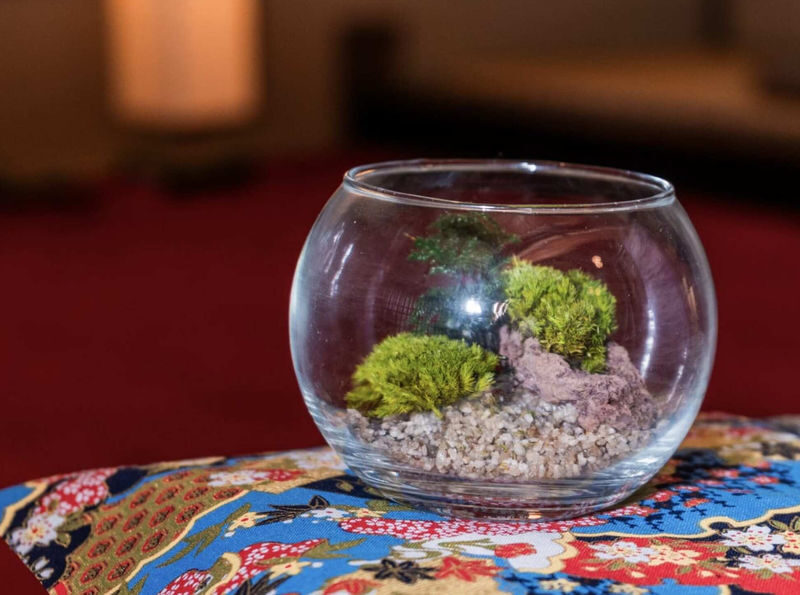
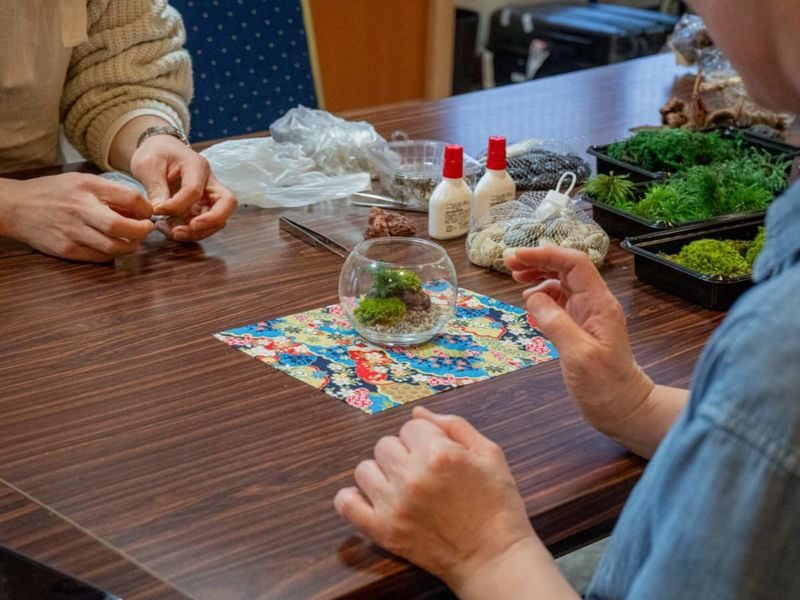
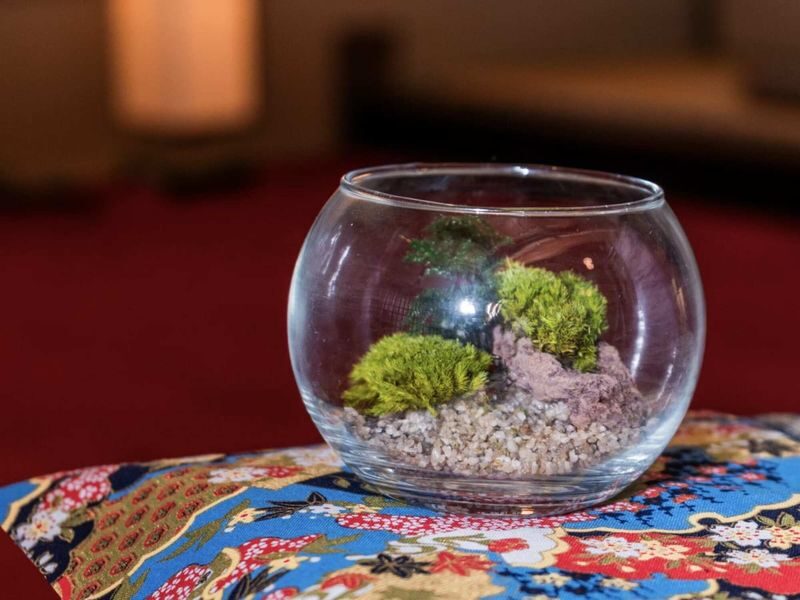
- The Small plan has a clear materials list: It includes a small glass bowl, stones, moss, Japanese-pattern fabric, and rubber gloves.
- Plan for the price difference: The Small starts at $44.15, the Masu at $64.35, and the Large at $75.69.

👉 See our pick of the 25 Best Guided Tours In Tokyo
A miniature garden made by hand
This is a small-scale art activity with a distinctly Japanese frame: you build a garden from moss, stones, and decorative materials rather than simply picking up a finished object. The moss is called MOSSTURE and is described as everlasting and maintenance-free. That makes the finished piece a keepsake rather than a living plant that needs regular care.
The open-ended arrangement is the main attraction. You decide how to place the moss and stones, then add the Japanese-pattern fabric included with the Small plan. There is room to make the result feel like your own, while the materials keep the project connected to traditional garden design.
A participant described freely arranging the elements and letting imagination guide the process. That is a useful way to think about the activity: you are not being asked to copy a single model or produce an exact replica. If you enjoy hands-on projects, the creative freedom is likely to be a big part of the appeal.
At the same time, this is not a class in the technical history of Japanese gardens. The information provided focuses on making a small garden in a temple setting, with an instructor available to help. If you want a craft activity that is peaceful, personal, and easy to fit into a Tokyo day, that is a better match than expecting a long formal lesson.
You can also read our reviews of more tours and experiences in Tokyo.


Jusen-in adds a quiet pause to Asakusa
The workshop takes place at 寿仙院, or Jusen-in, at 3-28-1 Nishi-Asakusa in Taito-ku. Asakusa is a popular Tokyo district, but this activity asks you to step into a quieter indoor setting and give your attention to a small creative task.
That change of pace is part of the value. A miniature garden is made by noticing small details: where a stone sits, how moss fills the bowl, and how the separate pieces work together. The temple setting supports that slower focus, and the rules are straightforward: remove your shoes, use the shoe rack, and continue upstairs to the second floor.
Please keep your voice low inside the building. The request is not a minor detail to brush aside; it is part of being a considerate visitor in a place of worship. If you are traveling with children, explain the quiet rule before arrival so they know this is a calm activity, not a free-for-all craft session.
The setting also makes the experience feel less like a generic souvenir workshop. You are making something with your hands in a temple, rather than buying a garden-themed object in a shop. That contrast may appeal if you want a cultural activity that is participatory without requiring specialist knowledge.
What happens during the activity
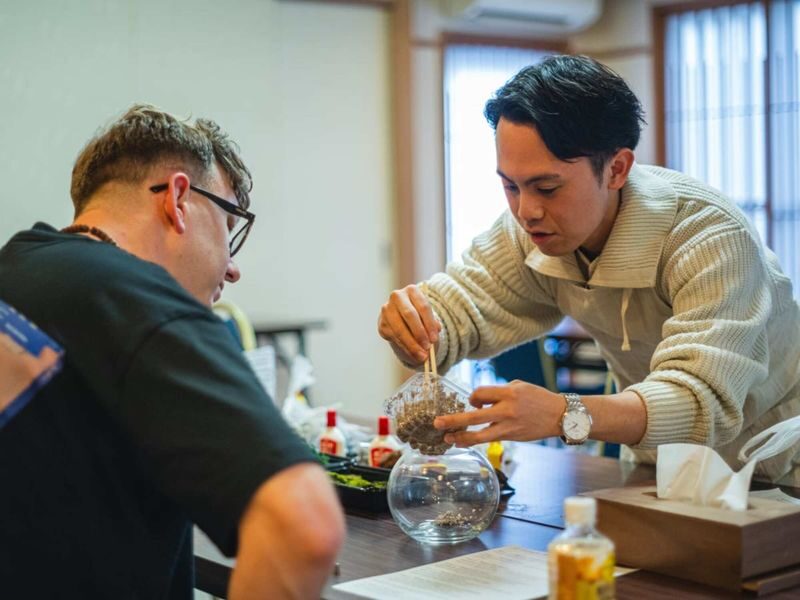
The central task is to arrange the moss and stones into a miniature garden. With the Small plan, the work takes place in a small glass bowl, and the kit also includes Japanese-pattern fabric and rubber gloves. Those materials give you a defined starting point, but the design itself is yours to shape.
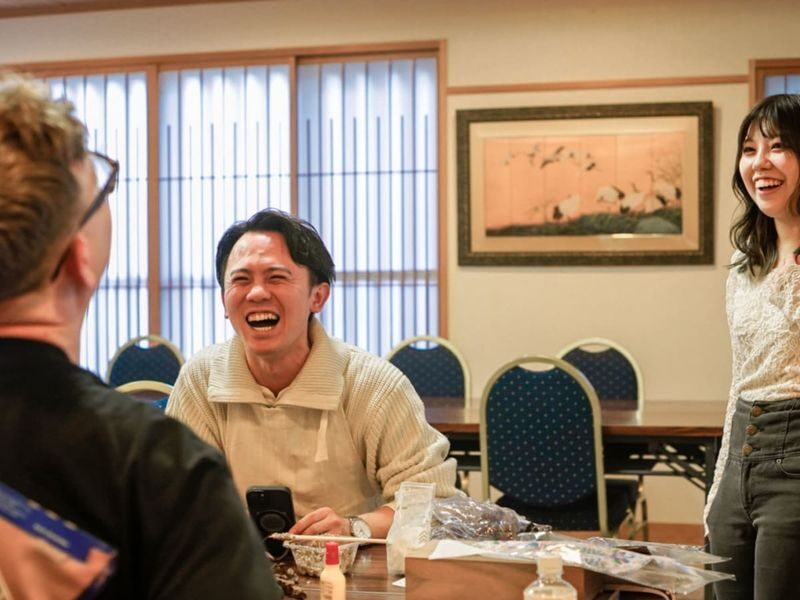
Instructor Takeda-san is named as a guide who offered kind help and useful advice. That matters if you are unsure how to begin or want a second opinion as you arrange the elements. The comments about the teaching emphasize patient support, rather than a rigid process that leaves little room for your own ideas.
The provided details do not specify how long the activity lasts, how many people take part at once, or whether every plan uses the same materials. I would not build a tightly timed sightseeing connection around it without checking those details before booking. The known structure is simple: arrive at the temple, follow the entry instructions, and make your chosen garden with the materials for your plan.
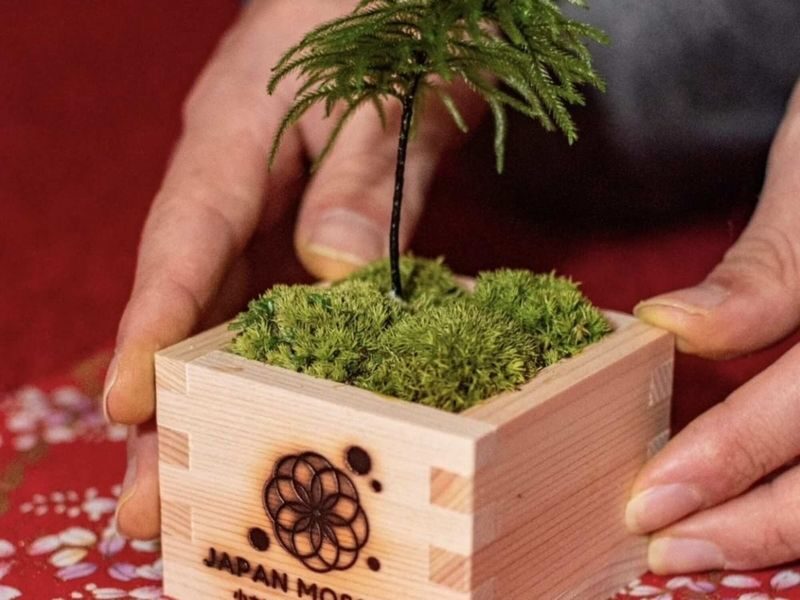
You can choose among three formats. The Small option is called the Mini Garden, the Large is the Premium Garden, and the Masu option uses a Japanese wooden box. The Small-plan materials are listed in detail, but the exact contents of the Large and Masu plans are not specified, so check the plan details before paying if the container or included materials will affect your choice.
Choosing a plan and judging the price
The Small Mini Garden starts at $44.15. It is the lowest-cost option and has the clearest description: a small glass bowl, stones, moss, Japanese-pattern fabric, and rubber gloves. If your priority is to try the craft and bring home a compact keepsake, this is the most straightforward place to start.
The Masu Japanese Wooden Box plan starts at $64.35. Its wooden-box format may be the draw if you prefer that traditional container, but the supplied details do not spell out its size or full material list. Compare the plan description carefully rather than assuming it contains everything listed for the Small option.
The Large Premium Garden starts at $75.69, the highest price of the three. The name signals a larger or more premium format, but the exact differences are not provided here. If you are choosing it for a particular size or set of materials, verify those specifics before booking.
The price is best judged against what you want from the outing. You are paying for a guided, hands-on activity in a temple setting and a made-by-you souvenir, not simply a container of moss. The Small plan gives you a clear sense of what the fee covers; with the two higher-priced plans, the extra cost may be worthwhile if their format appeals to you, but the available details do not justify assuming what upgrades they include.
Transport and personal expenses are not included. Factor in getting to Nishi-Asakusa, and remember that the voucher is valid only on the date and time specified for your booking. The experience is not described as including a Tokyo transfer or other sightseeing stops.
A souvenir that travels better than a live plant
The finished garden is presented as travel-friendly and easy to take home. That is a practical advantage over a living plant, which may need ongoing care and can be awkward to transport. Because the Small plan uses a glass bowl, however, treat the piece as a fragile object when packing. The activity does not provide specific packing instructions, so bring your own protective materials if you are concerned about the journey home.
The moss itself is described as everlasting and maintenance-free. That makes the project suitable for someone who likes the look of a miniature garden but does not want another plant to water after returning home. It also means the souvenir has a clear purpose: it can serve as a lasting reminder of a hands-on moment in Tokyo.
The three plan formats give you some choice in how the finished work is presented. The Small bowl, Large Premium Garden, and wooden Masu option are distinct enough to compare, even though the supplied details do not give measurements or a full breakdown of each package. If packing space matters, ask or check the plan specifications before choosing one of the larger formats.





Who will enjoy this temple craft
This activity is a good fit if you like making things, appreciate quiet cultural settings, or want a break from a day of walking around Tokyo. It is also a thoughtful option for a small souvenir that carries your own design rather than a shop label. You do not need to arrive with a particular artistic skill; the process is based on arranging a few elements and receiving help if needed.
Children aged seven and older may participate. The quiet indoor setting is worth considering when deciding if it suits a child. A child who enjoys patient, hands-on activities may find the moss and stone arrangement appealing, while a child who needs to move around freely may not enjoy the temple’s quiet expectations.
This is not the best pick if you are looking for a fast, high-energy activity, a broad history lesson, or a tour that takes you around several sights. No transport is included, and the experience centers on making the garden at Jusen-in. Its strength is focus, not variety.
Practical arrival details
The meeting point is Jusen-in at 3-28-1 Nishi-Asakusa, Taito-ku, Tokyo. On entering the temple grounds, use the entrance on your right. Remove your shoes, place them in the shoe rack, and go straight up the stairs to the second floor.
You must be at least seven years old to participate. Keep your mobile voucher ready to present, and check that your booking is for the correct date and time, since the voucher is valid only then. Confirmation is expected within minutes; if it does not appear, contact customer support.
If plans change, the stated cancellation terms allow a full refund when you cancel at least 24 hours before the activity date, using the destination’s local time. Transport and personal expenses are separate from the activity price.
Should you book the Asakusa moss art experience?
Book it if you want a calm, hands-on activity with a finished object to take home, and if the idea of making a miniature garden sounds more appealing than buying another standard souvenir. The temple setting, open-ended design, and maintenance-free moss give it a clear identity, while the patient guidance described from Takeda-san should help if you need a nudge.
Pause before booking if you need a precise schedule, expect a detailed garden-design lesson, or want to know exactly what comes with the Large or Masu plan. The Small option is easiest to assess because its materials are specified. For a relaxed creative hour in Asakusa, this is a distinctive choice; just confirm the package details that matter to you and arrive ready to keep the temple quiet.
Asakusa Jusen-in Moss art experience
“This was a wonderful experience where I could create my own original art! The process of freely arranging stones, moss, and other elements, and let…”
FAQ
Where does the moss art experience take place?
It takes place at Jusen-in, 3-28-1 Nishi-Asakusa, Taito-ku, Tokyo.
What plans can I choose?
You can choose Small Mini Garden, Large Premium Garden, or Masu Japanese Wooden Box.
How much does each plan cost?
The Small plan starts at $44.15, the Masu plan at $64.35, and the Large plan at $75.69.
What is included in the Small plan?
The Small plan includes a small glass bowl container, stones, moss, Japanese-pattern fabric, and rubber gloves.
What is the minimum age to participate?
Participants must be at least seven years old.
What should I do when I arrive at the temple?
Enter through the entrance on your right, remove your shoes and place them in the shoe rack, then go straight up the stairs to the second floor. Please remain quiet inside the building.
Is transport included, and when is the voucher valid?
Transport is not included. The mobile voucher is valid only on the specified date and time.