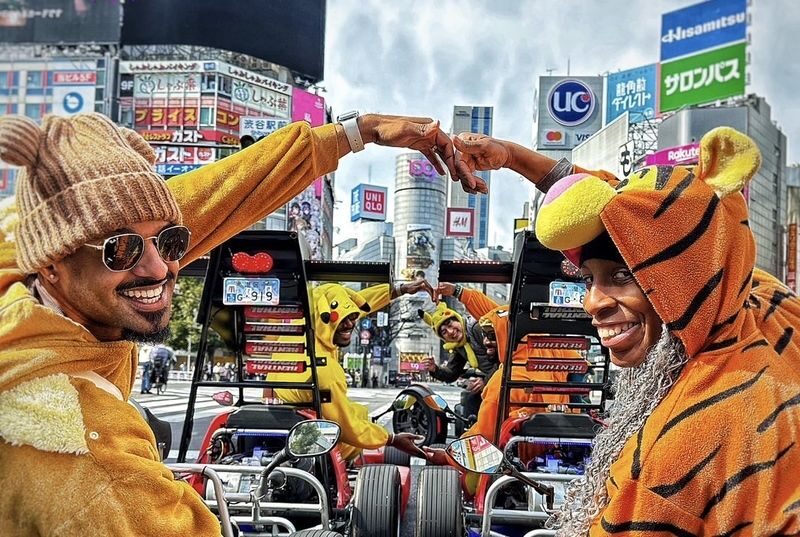
Tokyo’s famous scramble crossing feels different from a go-kart seat, just above the road with city traffic all around you. ALOHA GO-KART takes you from near Tokyo Tower through Roppongi and Harajuku to Shibuya Crossing, following a guide rather than plotting the route yourself.
I like two things in particular: the unusual road-level view of Tokyo’s landmarks and the guides’ practical attention to safety and photos. Guides such as Singh, Nao, Izzy and Blake are singled out for clear instructions, patience and keeping the group together.
The trade-off is important: this is a motor-traffic activity, not a relaxed sightseeing ride, and you need the right physical driving documents to join. If public-road driving makes you uneasy, or your permit is not valid in Japan, this is not the outing to wing.
- What to know before you book
- A city tour with your hands on the wheel
- From Tokyo Tower to Shibuya Crossing
- Guides, safety and the feel of the ride
- Photos, costumes and keepsakes
- Is the price worth it?
- Permits and arrival: get these right
- Choosing a time and preparing for weather
- Who should book this Tokyo kart tour?
- Should you book ALOHA GO-KART?
- FAQ
- Does the main tour go through Shibuya Crossing?
- Is there a shorter option?
- How long does the main ride take?
- What departure times are available?
- What documents do I need?
- Is a 1968 Vienna Convention permit valid in Japan?
- Do some drivers need a Japanese license translation?
- How early should I arrive?
- Can the route change?
- What is the cancellation policy?
- The Best Of Tokyo!
- More Tours in Tokyo
- More Tour Reviews in Tokyo
- Not for you? Here's more nearby things to do in Tokyo we have reviewed
What to know before you book
 1 / 10
 2 / 10
 3 / 10
 4 / 10
 5 / 10
 6 / 10
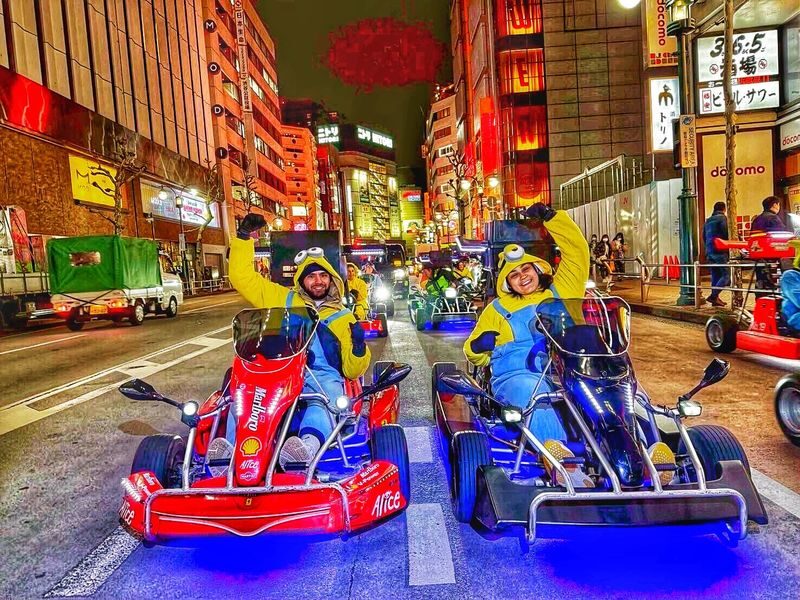 7 / 10
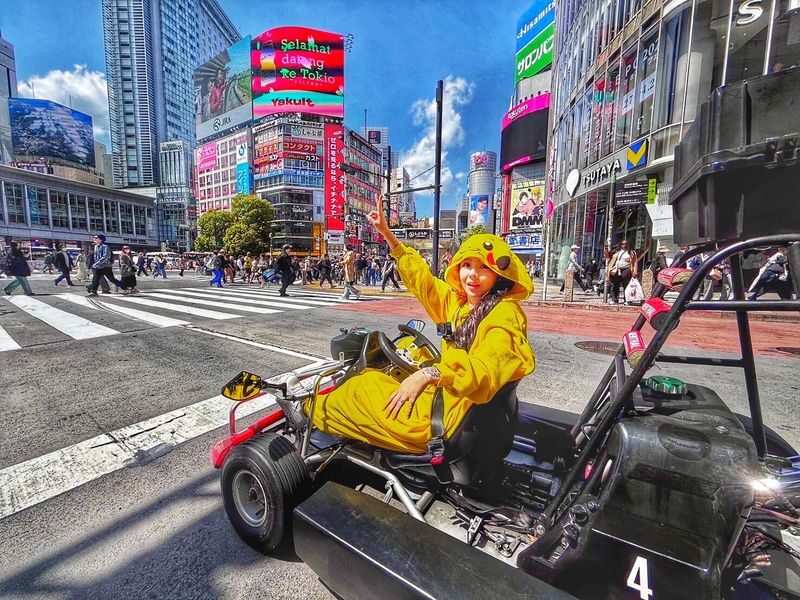 8 / 10
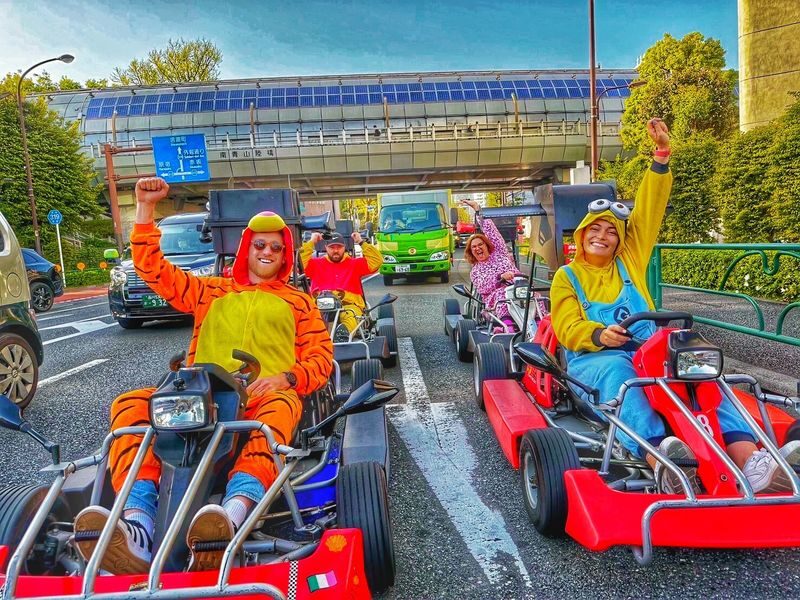 9 / 10
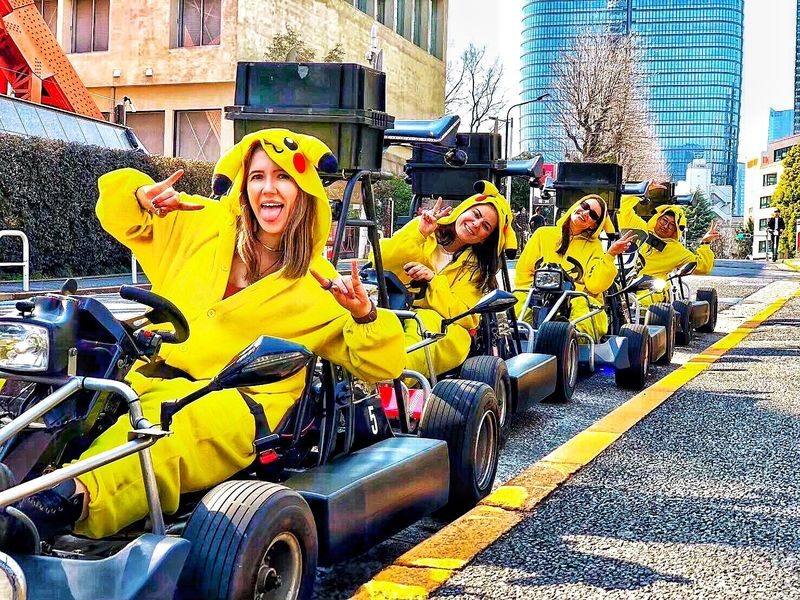 10 / 10
- The main route links Tokyo Tower and Shibuya Crossing. You also pass Roppongi 7-chome, Japan National Stadium and Harajuku.
- You follow a lead guide. The guide gives instructions and hand signals, so you do not have to navigate Tokyo’s route on your own.
- Night rides bring a different mood. Tokyo Tower is illuminated after dark, and the later departure slots let you see the city in evening light.
- The main outing is about an hour. A separate 30-minute trial stays around Tokyo Tower and does not go to Shibuya.
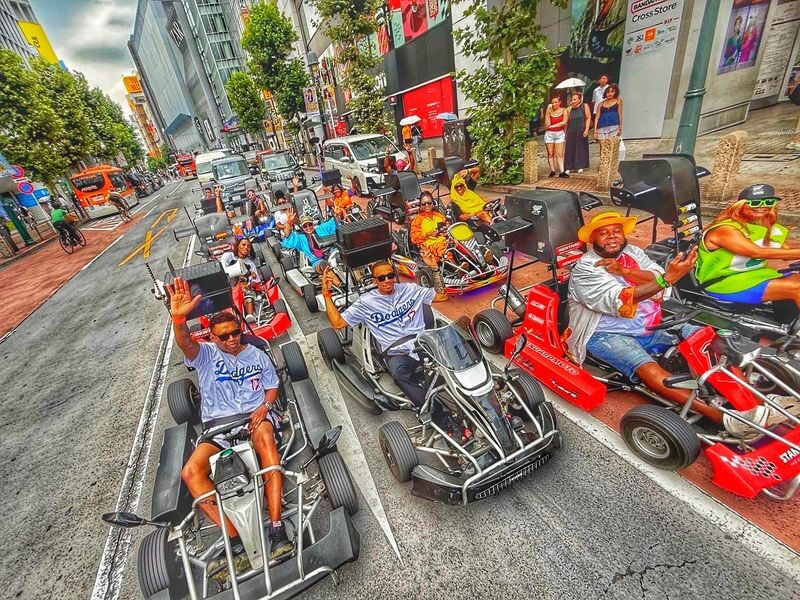
- Photos are a regular part of the ride. Guides commonly take pictures, and some riders receive a printed souvenir photo.
- Your permit matters more than your booking confirmation. Japan requires a valid International Driving Permit booklet under the 1949 Geneva Convention, plus your passport.

👉 See our pick of the 25 Best Guided Tours In Tokyo
A city tour with your hands on the wheel
ALOHA GO-KART’s main experience is a guided drive through central Tokyo, starting and ending at its shop in Minato City’s Shiba district, near Tokyo Tower. It is not a conventional bus tour with a guide explaining every building, nor a walking tour with time to browse. You sit low in a go-kart and travel through the city as part of a group led by an instructor.
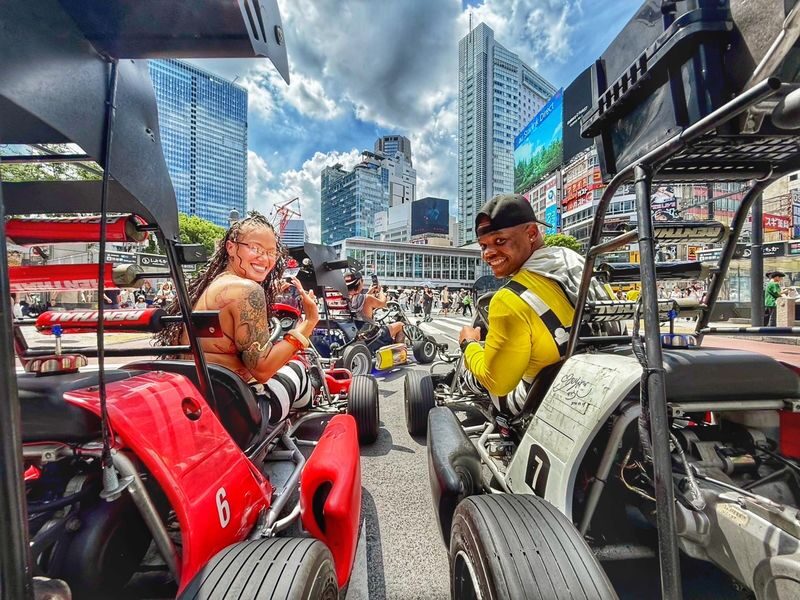
That change in perspective is the point. The city’s streets, lights and traffic feel close, and the route itself becomes part of the attraction. Several riders describe the first few minutes as nerve-racking, especially when stopped near much larger vehicles, but say the guide’s instructions help them settle in. If you are nervous, tell the team before setting out. Guides have been praised for checking on less-confident drivers and explaining the signals.
Keep expectations grounded: you are there to drive through these districts, not to stop for a full visit at each one. The route can also change with traffic and weather. Treat the named sights as the intended circuit, not a promise of a photo stop or a fixed timetable at every landmark.
You can also read our reviews of more tours and experiences in Tokyo.


From Tokyo Tower to Shibuya Crossing
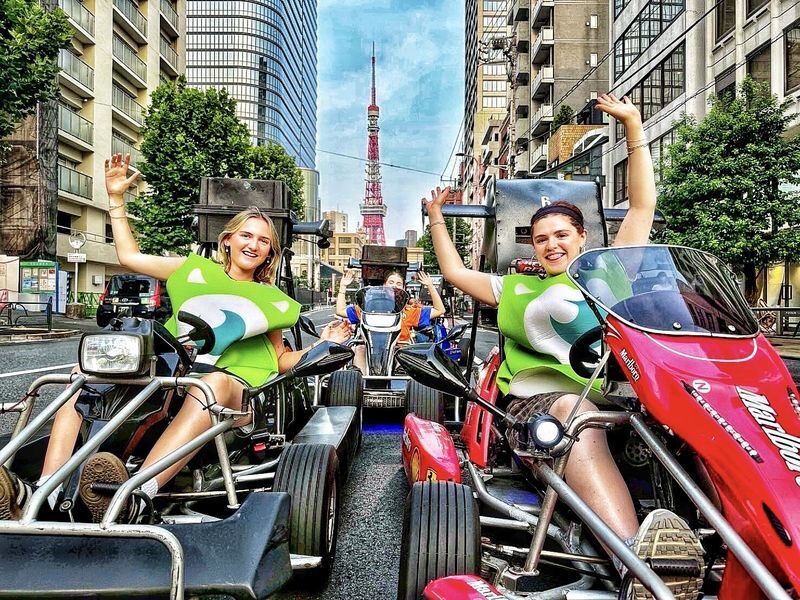
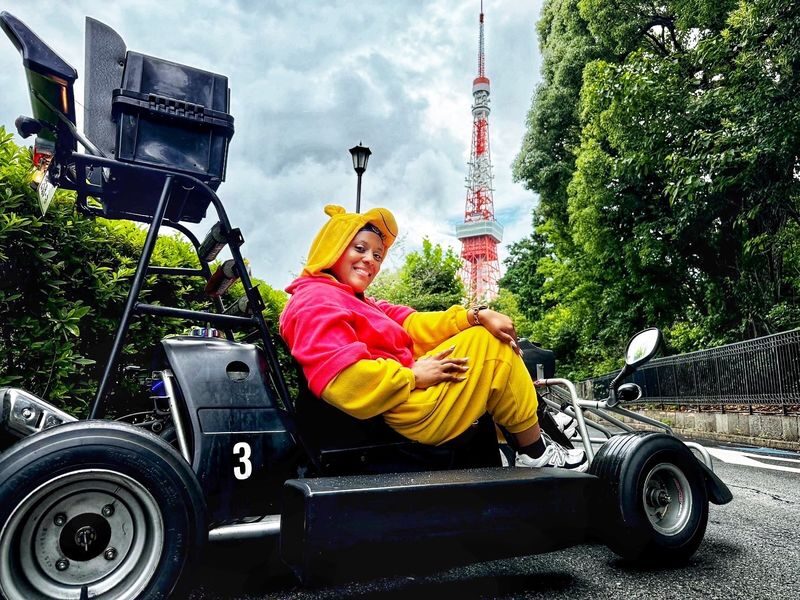
The shop is close to Tokyo Tower, making the tower a natural starting point and a striking landmark for the opening stretch. At night, its illumination adds a memorable backdrop. The tower is also a practical reference point as you set off and return to the same shop.
Next comes Roppongi 7-chome, followed by Japan National Stadium. The route gives you a moving view of central Tokyo rather than time inside either place. That works well if you want to cover several districts in one compact outing; it is less suited to anyone hoping for detailed historical commentary or time to explore on foot.
Harajuku brings a shift in feel as the route continues toward Shibuya. The main payoff is reaching Shibuya Scramble Intersection by go-kart, a perspective most people know from the pavement or a nearby building. It is a busy, attention-grabbing part of the city, and the ride can feel intense when you are surrounded by traffic and spectators. Your guide leads the group through, so you can focus on driving and following instructions rather than figuring out the route.
The return journey brings you back to the Shiba shop. The full ride is often described as roughly an hour, sometimes a little longer. The 30-minute trial is a different product: it stays around Tokyo Tower and does not include the Shibuya Crossing section. Check the package name carefully when booking, since the shorter option is not simply the same tour with a quicker finish.
Guides, safety and the feel of the ride
The guide is central to this experience. You follow the lead driver, use the signals explained before departure and stay with the group. That structure makes the route more manageable than navigating Tokyo independently, but it does not remove your responsibility to drive carefully and follow the rules.
The pre-ride briefing is a useful part of the hour, not paperwork to rush through. Riders describe clear explanations of road safety and hand signals, and say the staff are patient with beginners. You will still be driving among city traffic, so a calm response to instructions matters more than confidence behind the wheel. This is a guided road ride, not a closed-track kart session.
The guides also help make the experience social. Several are praised for keeping the mood light, playing music and taking pictures while the group is together. Names that come up include Singh, Nao, Izzy, Blake and Kazu. The guide you meet will depend on your departure, of course, but the recurring praise is for friendly communication and attention to the group.
Expect the ride to feel more exposed than a standard tour. You are close to the road, and other vehicles can make the surroundings feel imposing at first. That sensation is part of the thrill for some people and a reason to skip it for others. If you want the landmarks without the traffic and driving responsibility, choose a conventional city tour instead.
Photos, costumes and keepsakes
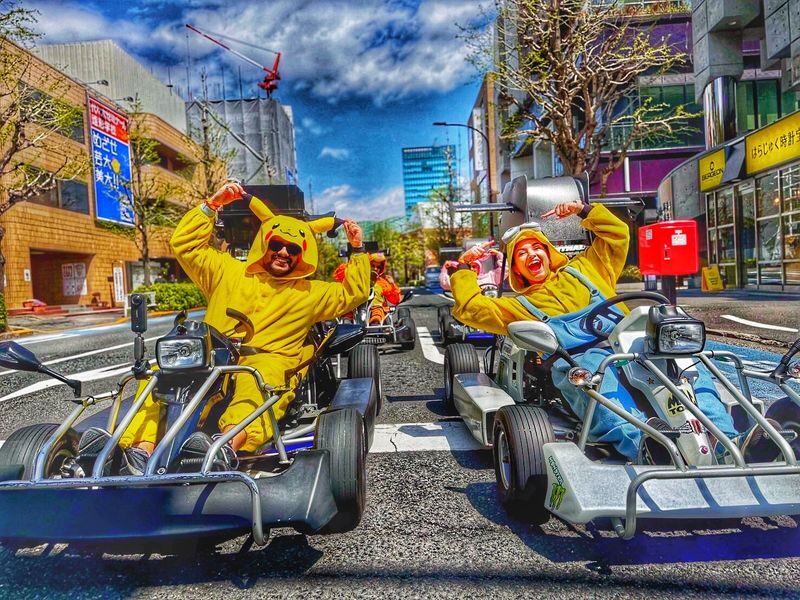
Photo-taking is one of the tour’s strongest extras. Guides often capture pictures throughout the route, and some riders report receiving a large batch digitally, sometimes by AirDrop. A printed photo has also been offered as a souvenir. These details make it easier to enjoy the ride without trying to take your own pictures while driving.
The exact photo delivery method and keepsake should not be treated as guaranteed unless ALOHA confirms them for your booking. But the guide’s camera work is a meaningful part of the experience: the best images show you in the kart against the city, rather than another landmark photo you could take from a sidewalk.
Costume options are mentioned as part of the experience, adding a playful touch and making the karts more noticeable. If dressing up is not your style, the main draw remains the route and the drive itself.
Is the price worth it?
The advertised starting price is $61.95. For a ride of about an hour that covers several well-known districts, includes a guide and often comes with photos, that can be good value if you want an active, novelty-driven way to see Tokyo. It is also a distinctive choice for a date, a family outing with eligible drivers, or a group of friends who enjoy trying something a little odd and memorable.
The value depends on what you want from sightseeing. You are paying for the driving experience, the unusual view and the guided route, not for long stops, detailed talks or admission to attractions. If you mainly want to see Tokyo Tower or Shibuya Crossing, you can visit them without booking a kart. If the idea of driving through the city is the appeal, the price buys more than a transfer between sights.
There is also a shorter 30-minute package around Tokyo Tower. It may suit you if you want a brief introduction to the kart experience, but it omits Shibuya. Compare the package names and route details before paying, since the main Shibuya tour and the trial are not interchangeable.






Permits and arrival: get these right
Japan’s driving-permit rules are the biggest booking hurdle. You must bring a physical International Driving Permit booklet issued under the 1949 Geneva Convention and your passport. The 1968 Vienna Convention permit is not accepted, and neither are A4 printouts, photographs, PDFs, online records or cards in place of the required booklet.
Permits must be issued by an authorized association in the country where your national driving license was issued. The information provided says that licenses from Switzerland, Germany, France, Taiwan, Belgium and Monaco require a Japanese translation from the Japan Automobile Federation. Licenses from countries not covered by the 1949 Geneva Convention, including Mexico, Kuwait, China, Colombia and Saudi Arabia, cannot be used for this activity in Japan.
Check your eligibility before booking and contact the operator if your documents do not fit these rules. If your permit is invalid or missing, you cannot take part, and the stated terms do not allow a refund for that reason. Do not assume a permit bought online while travelling will be accepted.
The meeting instructions conflict slightly on arrival time: one note says 15 minutes early, while the departure details say 20 minutes. I would aim for 20 minutes before departure to leave room for check-in and the briefing. Departure slots are listed at 9:30, 11:30, 13:30, 15:30, 17:30 and 19:30, with return times depending on the chosen slot. Late arrivals can lose their booking, and the terms say there is no refund for lateness of five minutes or more.
Choosing a time and preparing for weather
The evening departures are especially appealing if you want to see Tokyo Tower lit up and the city in its nighttime mode. A 19:30 start is one option, though the available return time depends on the departure and the day’s schedule. Daytime rides offer a clearer look at the districts; at night, the illuminated tower and city lights become part of the show.
Weather can affect both comfort and the route. The schedule may change with weather and traffic, and the operator may cancel in extreme conditions. Rain does not automatically mean a ride will be cancelled, but you should be prepared for the possibility of wet conditions. If the operator cancels because of extreme weather or an unforeseen event, the stated options are rescheduling or a full refund.
You can cancel for a full refund if you do so at least 24 hours before the activity date, in destination local time. If your schedule is uncertain, that deadline is worth keeping in mind.
Who should book this Tokyo kart tour?
Book it if you enjoy driving, want an energetic activity and like the idea of seeing Tokyo from just above the pavement. It works especially well for people who have already planned the usual temple, museum and observation-deck visits and want one activity that feels very different. The main route also makes sense if Shibuya Crossing is high on your list and you want to approach it in an unusual way.
Think twice if you dislike road traffic, feel uneasy driving in a group or want a slow, informative sightseeing tour. You must also be legally eligible and arrive with the exact physical documents required. The paperwork is not a minor detail; it decides whether you can take part.
Should you book ALOHA GO-KART?
I would book the main Shibuya and Tokyo Tower route if the driving is the attraction, not just a way to tick off landmarks. The combination of a guided route, an hour or so behind the wheel and frequent photo opportunities gives the experience a clear purpose beyond simply passing through town.
Choose the 30-minute Tokyo Tower trial if you want a shorter kart outing and are happy to miss Shibuya. Either way, check your permit well before the day, arrive 20 minutes early and be honest with yourself about how comfortable you feel in city traffic. Get those basics right and this can be one of Tokyo’s most memorable ways to see the streets.
SHIBUYA CROSSING GO-KART BEST TOUR PROVIDER by ALOHA GO-KART
“thanks for accommodating us, we had a great time”
FAQ
Does the main tour go through Shibuya Crossing?
Yes. The main package, called GOAT Shibuya Crossing and Tokyo Tower, includes Shibuya Crossing along with Tokyo Tower, Roppongi 7-chome, Japan National Stadium and Harajuku.
Is there a shorter option?
Yes. The 30-minute trial stays around Tokyo Tower and does not go to Shibuya Crossing.
How long does the main ride take?
The main ride is commonly described as about an hour, sometimes a little longer. The exact duration can vary with traffic and weather.
What departure times are available?
The listed departure times are 9:30, 11:30, 13:30, 15:30, 17:30 and 19:30. Availability can depend on the package and booking.
What documents do I need?
You need a valid physical International Driving Permit booklet issued under the 1949 Geneva Convention and your passport. A4 printouts, photos, PDFs, online data and cards are not accepted as substitutes.
Is a 1968 Vienna Convention permit valid in Japan?
No. The activity information says that a 1968 Vienna Convention International Driving Permit is not accepted in Japan.
Do some drivers need a Japanese license translation?
Yes. Drivers with licenses issued in Switzerland, Germany, France, Taiwan, Belgium or Monaco must obtain a Japanese translation from the Japan Automobile Federation.
How early should I arrive?
The meeting details say to arrive 20 minutes before departure, while another instruction says 15 minutes. Aim for 20 minutes early to be safe.
Can the route change?
Yes. The schedule may change depending on traffic and weather conditions.
What is the cancellation policy?
A full refund is available if you cancel at least 24 hours before the activity date, using destination local time. If the operator cancels because of extreme weather or an unforeseen event, you can reschedule or request a full refund.