Japanese home cooking is the point here, not a restaurant-style show. In a kitchen studio near Shinjuku, you learn to make familiar dishes such as gyoza, miso soup, and rolled eggs, then sit down to eat what you have cooked.
I like two things in particular: the lesson links food with everyday Japanese customs, and the menu gives you a chance to make several dishes rather than just one. Instructors named in past classes include Chieko, Miyuki, Kanako, and Kana, though your teacher may differ.
One thing to plan around: the exact kitchen address is confirmed after booking, and the venue can be tricky to locate. The advertised duration is also given as both two hours and about two and a half hours, so check your confirmation before arranging the rest of your day.
- At a glance
- A cooking class built around everyday Japanese food
- From meeting point to the first chopping board
- Choosing among the menu sets
- What the cooking time feels like
- The value of learning the food behind the food
- Price, portions, and what is included
- The details worth confirming before you go
- Who will enjoy this class most
- Should you book it?
- FAQ
- How long does the cooking class take?
- What dishes can I learn to make?
- Can I choose the menu?
- Where does the class meet?
- What time can I book?
- Is the class taught in English?
- Is a meal included?
- What is the cancellation policy?
- The Best Of Tokyo!
- More Cooking Classes in Tokyo
- More Tours in Tokyo
- More Tour Reviews in Tokyo
- Not for you? Here's more nearby things to do in Tokyo we have reviewed
At a glance
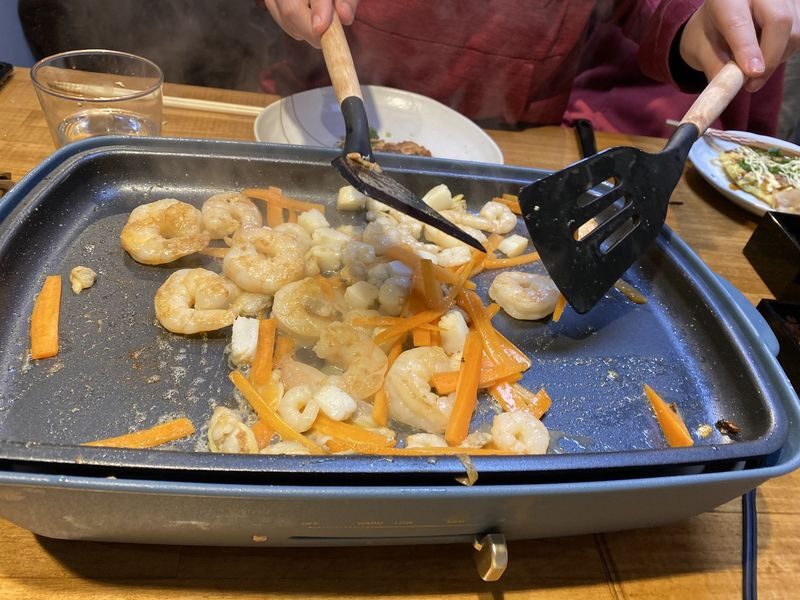
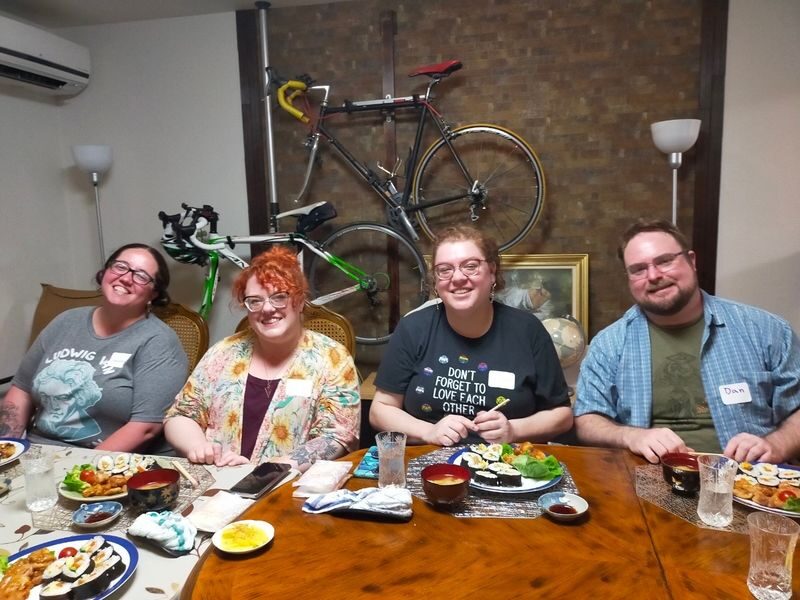
- Make a small Japanese meal: The class generally covers three or four dishes, with sample sets including gyoza and takoyaki, okonomiyaki and yakisoba, rolled sushi, or a gozen-style meal.
- Learn everyday cooking: The focus is on popular home dishes, ingredients, food customs, and recipes you can try again at home.
- Get an English-language lesson: English-speaking staff and a certified professional instructor are included.
- Eat what you make: Lunch or dinner is part of the experience, and past classes have served generous portions.
- Choose a session time: The stated departure times are 11:00 and 17:00, with return times of 13:30 and 19:30.
- Check the menu and address: The menu may vary, and the venue is in or around Shinjuku, with the exact meeting address confirmed after booking.

👉 See our pick of the 25 Best Guided Tours In Tokyo
A cooking class built around everyday Japanese food
Tokyo offers plenty of chances to eat well, but a cooking class gives you a different kind of meal: you learn how several familiar dishes fit together and what goes into making them. This one aims for home cooking rather than elaborate restaurant techniques. You are there to work with ingredients, follow an instructor’s guidance, and share a meal at the end.
The class is set in or around Shinjuku, a useful central area for fitting an activity into a Tokyo itinerary. But this is not a walking tour or a restaurant visit. You meet at a kitchen studio, cook there, and eat the dishes you have made. The location is described as near Shinjuku Station, though the actual studio address is confirmed after booking.
The lesson is especially appealing if you like food but want more than a tasting. You can ask questions as you cook, hear about the ingredients and food culture, and take home practical recipes. Several past participants have said that their instructors sent recipes or extra information afterward, but treat that as a possibility rather than a guaranteed part of every session.
You can also read our reviews of more cooking classes in Tokyo

From meeting point to the first chopping board
The activity starts at the agreed meeting point, with departure times offered at 11:00 or 17:00. Arrive five minutes early. Late arrivals and no-shows are not refundable, so do not cut it close, especially if you are still learning the station exits or navigating to the studio.
There is a small but important location wrinkle. The class is described as taking place in or around Shinjuku, while the supplied address is in Yoyogi, Shibuya City: 2 Chome-5-1, Haneda Building 203. The exact address is to be sent after confirmation. One past class was described as about a ten-minute walk from a train station, while other participants found the studio hard to locate. Check the final address and map pin carefully, and allow extra time to find the entrance.
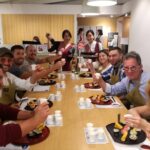
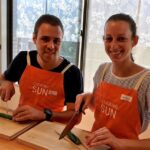
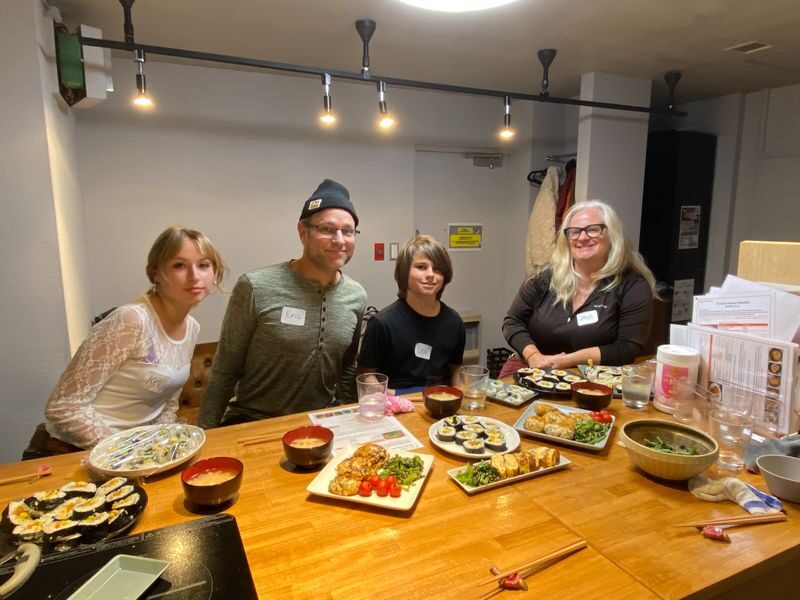
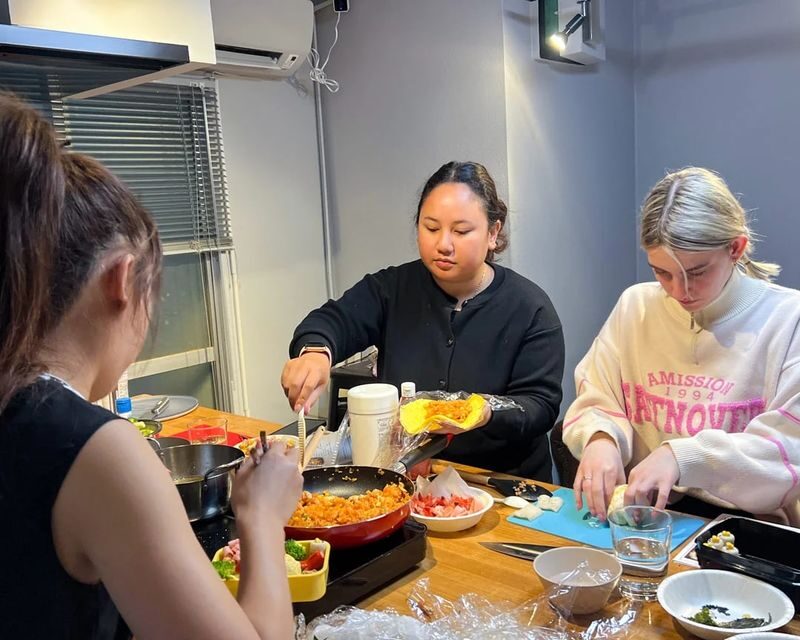
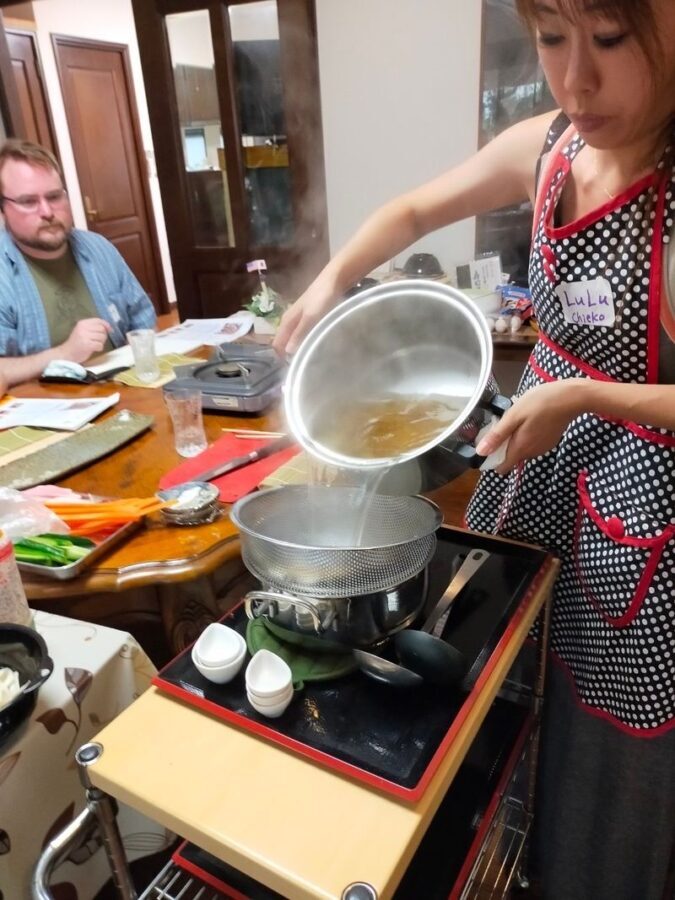
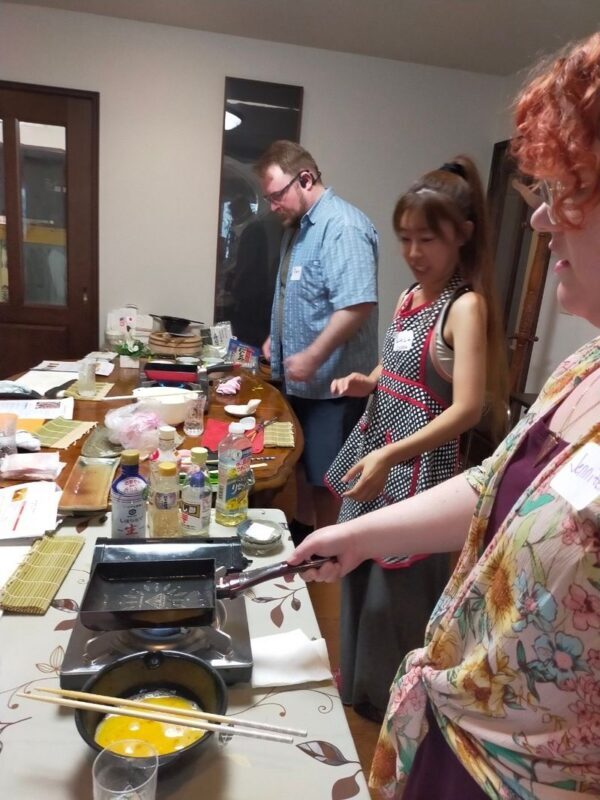
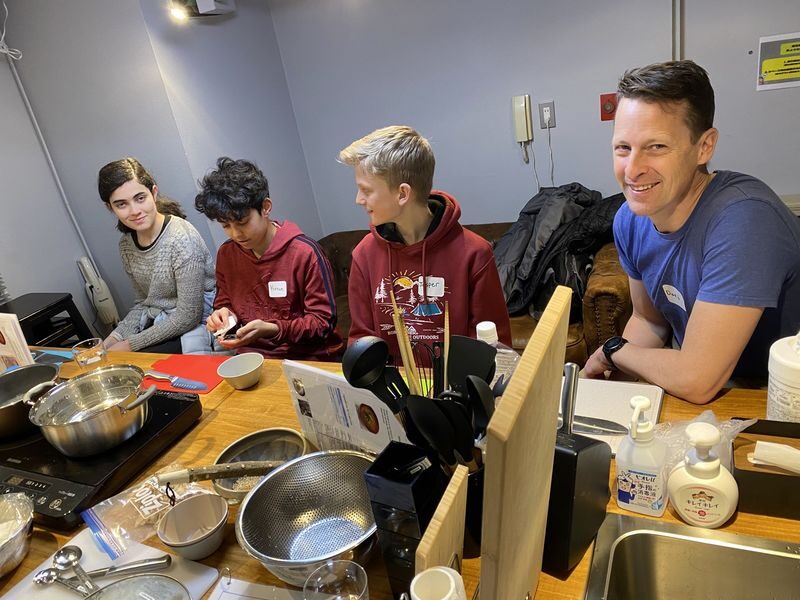
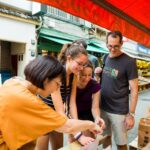
Once you arrive, expect to cook in a kitchen studio rather than a restaurant dining room. One participant described using equipment in a large commercial kitchen, while another found the studio cozy and suited to a small group. The room and group size may vary, but the essential point is the same: this is a working class, with a place to prepare food together.
Choosing among the menu sets
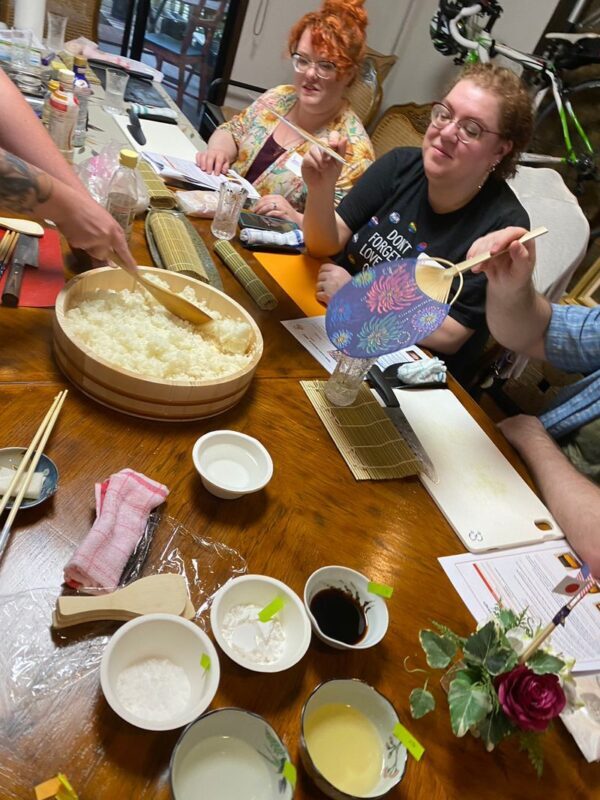
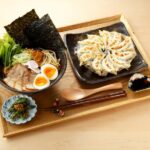
The sample menus cover different sides of Japanese home cooking. The okonomiyaki set pairs the savory pancake with yakisoba, rolled eggs, salad, and miso soup. The gyoza and takoyaki set includes pickles and miso soup. The rolled sushi set adds teriyaki, spinach salad, and miso soup. A gozen-style set may include rolled beef, salmon, rolled egg, onigiri, and miso soup.
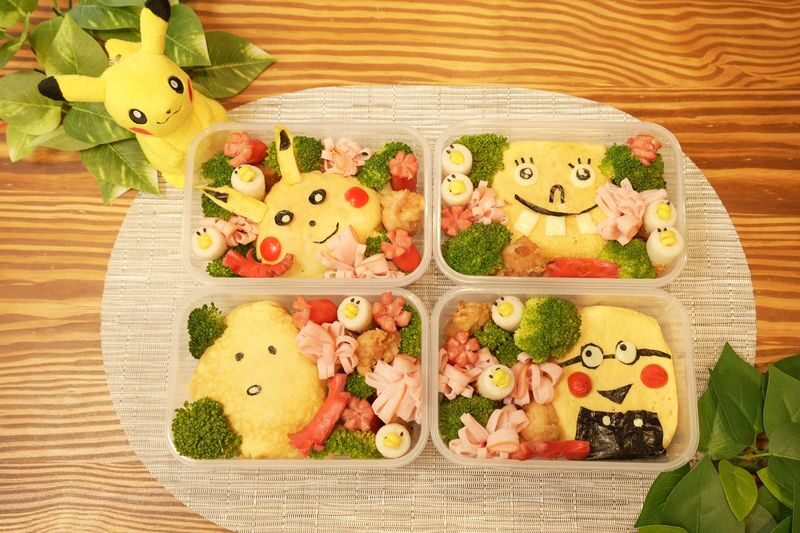
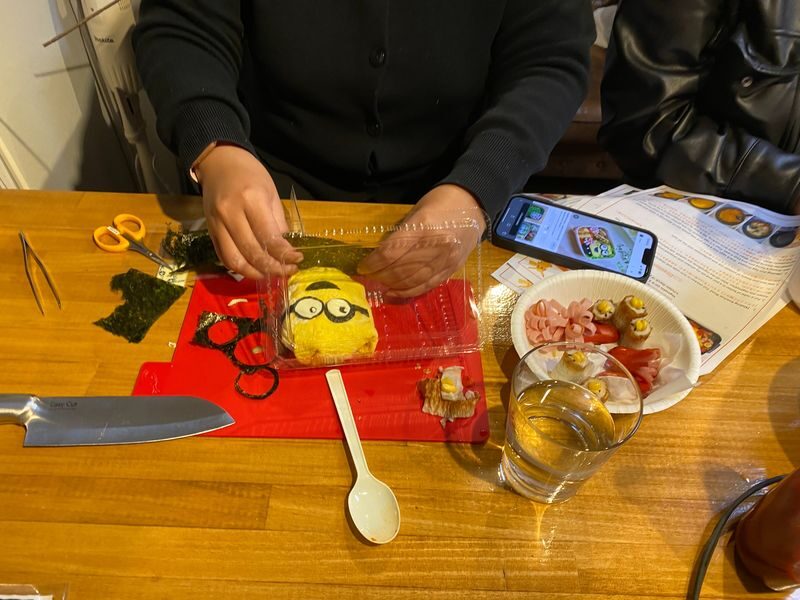
A menu can also be discussed on request. The package choices shown are Teishoku Class and Kyaraben, or character bento, class. The sample menu information includes several different sets, so do not assume the package name alone tells you exactly what you will cook. Ask which menu applies to your chosen package and date, especially if there is one dish you are keen to learn.
Menu selection has a further caveat: if another group books first, you may not be able to choose your preferred set. Ingredients and seasons can also affect what is available. For a specific dietary need or a dish you particularly want to make, contact the provider before you book and get the plan confirmed. Past classes have accommodated vegetarian, gluten-free, and sugar-free requests, but that does not guarantee every request can be met every time.
What the cooking time feels like
The activity description says the class takes about two and a half hours to cook and enjoy the meal. Elsewhere, the duration is listed as two hours. The offered schedule, 11:00 to 13:30 or 17:00 to 19:30, also points to a two-and-a-half-hour window. Use your confirmed time as the practical guide and leave a little space afterward rather than booking a tight connection or dinner reservation.
The rhythm is straightforward: meet the instructor, learn about the dishes and ingredients, cook several items with guidance, then sit down to eat. You are not just watching a chef work. Participants have described hands-on preparation, clear demonstrations, and time for conversation while cooking. That makes the class useful for beginners who want instructions they can follow without needing specialist equipment or advanced skills.
The menu is generous enough to function as a proper lunch or dinner. Some past participants specifically advised arriving hungry. That is sensible: several dishes, plus soup and sides, can add up to a full meal. If you are taking the 11:00 session, it can work neatly as lunch. The 17:00 session gives you an early dinner.
The value of learning the food behind the food
The best part is not simply leaving with a full stomach. The instructor explains ingredients and the thinking behind Japanese food traditions, giving everyday dishes a context you may miss when ordering from a menu. Dashi, miso, pickles, and the balance of sides in a set meal become less mysterious when you have handled them yourself.
The class is led by a certified professional instructor, with English-speaking staff included. Past instructors have included Chieko, Kayo, Kana, Miyuki, Kanako, and Yuriko. Their names are not a promise about who will teach your session, but the teaching style described across past classes is warm, clear, and interactive. Several participants singled out patient demonstrations and easy-to-follow explanations, which matter more than fancy culinary vocabulary when you are learning a new recipe.
The practical value continues after the class. These are familiar dishes, not one-off showpieces, so the techniques can make sense in a home kitchen. Participants have described receiving recipes, and some instructors have shared extra information or photos afterward. Ask whether recipes will be sent for your session if that matters to you.
You can also read our reviews of more tours and experiences in Tokyo




Price, portions, and what is included
Prices begin at US$86.95 for the Kyaraben class; the Teishoku class is listed from US$90.89. Both include an English-speaking staff member, a certified instructor, and lunch or dinner. Other personal expenses are not included.
That price buys more than the meal itself. You get a guided cooking session, several dishes, instruction about ingredients and food culture, and the chance to eat what you prepare. Compared with paying for dinner alone, the class makes most sense if you value the learning and the shared activity. If you only want a quick meal, a restaurant will be simpler and likely take less planning.
Group size can shape the experience. Some classes have been just two people with an instructor, while a large party of ten was also accommodated alongside another group. A smaller group can mean more direct attention; a larger one can feel more social, but may mean less time at each cooking station. If you are booking for a large party or want a private class, ask what the provider can arrange rather than assuming the class will be private.
The details worth confirming before you go
The venue is the main practical concern. The final address comes after booking, and the meeting information gives both Shinjuku as the general area and a Yoyogi address. Confirm the exact location, how to reach the entrance, and the time you should arrive. The voucher is mobile, but it is valid only for the date and time specified.
You should receive booking confirmation within 48 hours. If it does not arrive, contact customer support. The cancellation terms allow a full refund when you cancel at least 48 hours before the activity date, using local destination time. Children aged two to four are free; the supplied information does not specify other child pricing.
If you have food restrictions, bring them up before the class rather than waiting until you arrive. Past instructors have adapted recipes for some dietary needs, which is encouraging, but ingredient availability and the chosen menu may limit what can be changed. The class is about cooking and eating the selected dishes, so clear communication matters.
Who will enjoy this class most
I would put this near the top of the list for food-minded visitors who want a relaxed, hands-on activity and a meal with a story behind it. It also suits couples, families with older children, and small groups who enjoy doing something together. Past classes have engaged teenagers, and young children aged two to four can attend free, though the class is still a cooking activity that calls for attention and participation.
It is a good fit if you are curious about Japanese home food and would like recipes to try again. It may be less suitable if you need a fully fixed menu, dislike group activities, or have a strict schedule that cannot absorb a possible two-and-a-half-hour session and a little extra time to find the studio. The class is centered on cooking, not sightseeing, so treat the Shinjuku location as a convenient base rather than a tour of the neighborhood.
Should you book it?
Book this class if you want to cook several familiar dishes, learn how ingredients and food customs fit together, and enjoy a meal you helped make. The strongest reasons are the practical, home-friendly menu and the chance to learn directly from an English-speaking instructor. Before paying, confirm the exact menu, dietary options, duration, and meeting address. Those few checks can turn a good food activity into a smooth part of your Tokyo day.
Authentic Homestyle Japanese Cooking Class in Tokyo
“Fabulous host!!! So much fun and tasty food in the end 😎”
FAQ
How long does the cooking class take?
The activity is described as about two and a half hours, though the summary also lists two hours. The available schedules run from 11:00 to 13:30 and from 17:00 to 19:30. Check your booking confirmation for the time that applies to your session.
What dishes can I learn to make?
Sample menus include okonomiyaki, yakisoba, rolled eggs, gyoza, takoyaki, rolled sushi, teriyaki, onigiri, miso soup, and side dishes. The menu may change with the season and ingredient availability.
Can I choose the menu?
You or your group can select from the offered menu sets, but another group’s earlier booking may affect which menu is available. Ask the provider to confirm your selection.
Where does the class meet?
The kitchen studio is in or around Shinjuku, Tokyo. The supplied address is 2 Chome-5-1, Haneda Building 203, Yoyogi, Shibuya City, and the exact meeting address is confirmed after booking.
What time can I book?
The stated departure times are 11:00 and 17:00. Return times are listed as 13:30 and 19:30, depending on the departure time and session duration.
Is the class taught in English?
English-speaking staff are included, and the class is led by a certified professional instructor.
Is a meal included?
Yes. Lunch or dinner is included, and you eat the dishes prepared during the class.
What is the cancellation policy?
You can receive a full refund if you cancel at least 48 hours before the activity date, using Tokyo local time.