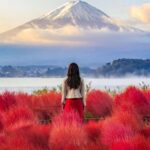
Mount Fuji can be a clear-cut peak one minute and a cloud-shaped rumor the next. This 10-hour trip from Tokyo gives you a chance to see it from several nearby stops without planning rural transport yourself. I like the choice of three tour styles and the balance of guided introductions with time to explore on your own.
I also like that the classic route pairs headline views with Oshino Hakkai’s spring-fed ponds, then lets you choose between outlet shopping and a hot spring. That final choice gives the day a useful personal touch: browse for bargains, or soak after hours on the road.
The trade-off is a full schedule in a region where weather and traffic can change the plan. Fuji may stay hidden, and stops can be shortened or skipped. This works best if you value easy transport and several sights in one day more than a guaranteed view or a slow, flexible visit.
- At a glance
- Choose the route that fits your day
- The 5th Station: a close look at the mountain
- Oshino Hakkai: eight ponds, one unhurried hour
- Lunch and the final choice: outlet or onsen
- What the guides add, and what they do not
- The ride from Tokyo: convenient, but not free of uncertainty
- Is the starting price good value?
- Small practical details before you book
- Should you book this Mount Fuji day trip?
- FAQ
- How long is the tour?
- Is Mount Fuji’s 5th Station included on every date?
- What is included in the price?
- Do I have to visit both the outlet and the hot spring?
- What languages are offered?
- Can I bring luggage or a young child?
- The Best Of Fujikawaguchiko!
- More 1-Day Tours in Fujikawaguchiko
- More Tours in Fujikawaguchiko
- More Tour Reviews in Fujikawaguchiko
- Not for you? Here's more nearby things to do in Fujikawaguchiko we have reviewed
At a glance
 1 / 10
 2 / 10
 3 / 10
 4 / 10
 5 / 10
 6 / 10
 7 / 10
 8 / 10
 9 / 10
 10 / 10
- Three routes, three moods: Pick the classic Fuji circuit, a photo-focused Japanese-style outing, or the Kawaguchiko matcha and ropeway trip.
- The 5th Station is seasonal: The classic route visits it from April 26 to November 30, for about 40 minutes, subject to access and conditions.
- Oshino Hakkai means clear spring water: Allow about an hour to walk among its eight ponds and look closely at their colors and reflections.
- The classic tour ends with a choice: Spend about two hours at an outlet or take an optional hot spring visit. The onsen fee is extra.
- You explore independently at stops: Your guide gives a brief introduction, then you have free time. Commentary in the vehicle may be limited.
- The return is traffic-dependent: The day is scheduled from around 7:30 or 8:00 until an estimated 17:30 to 20:00 return window.

👉 See our pick of the 4 Best Private Car With Driver Services in Fujikawaguchiko
Choose the route that fits your day
This is not one fixed Mount Fuji itinerary with a few minor variations. You choose among three packages, each aimed at a different kind of day out.
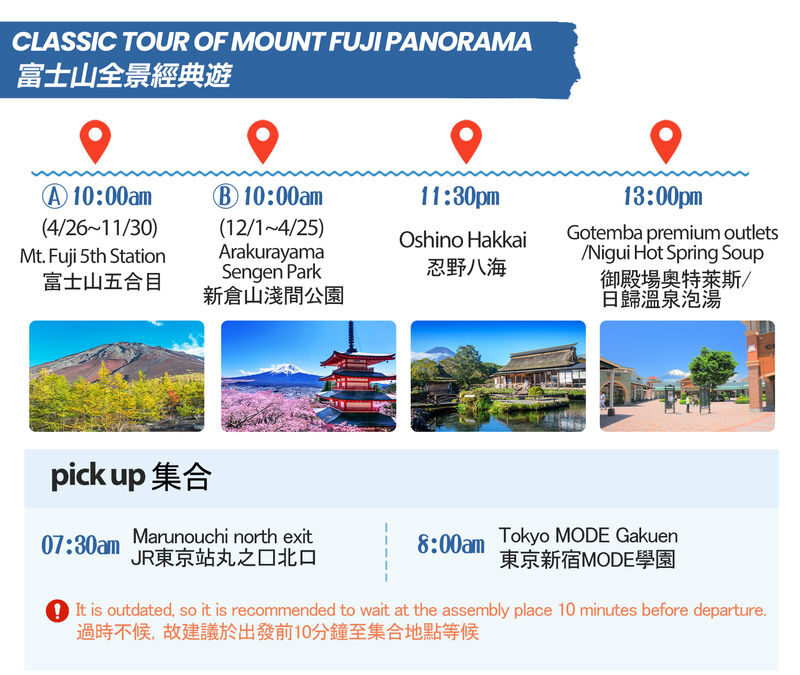
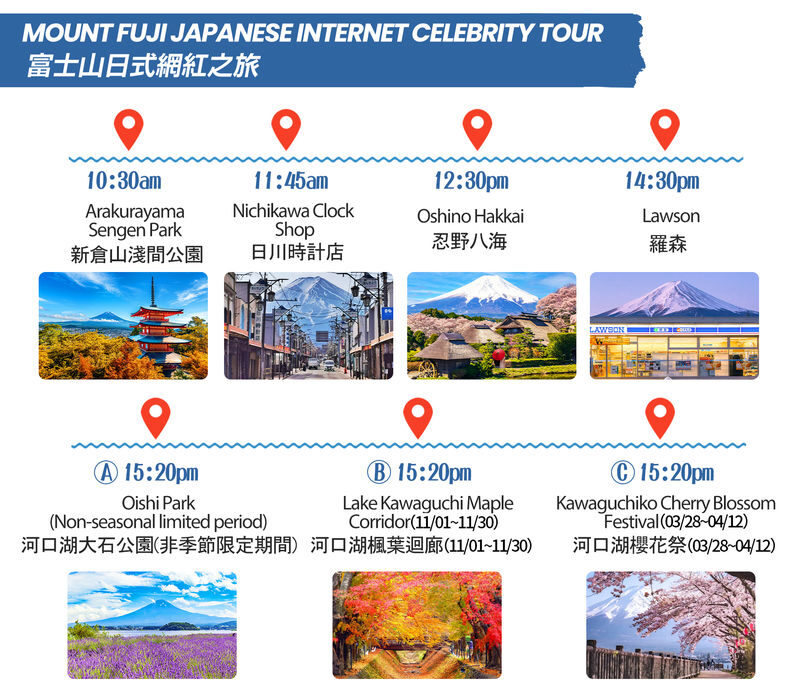
The Panoramic classic tour is the broadest sampler. Its plan includes Mount Fuji’s 5th Station during the season, Oshino Hakkai, lunch time, and a choice between outlet shopping and a hot spring. The package description also names Arakurayama Sengen Park, but the day’s route can change, and the detailed schedule may omit or adjust stops. Treat it as a highlights tour, not a promise that every named place will fit.
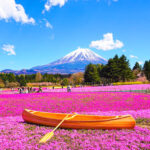
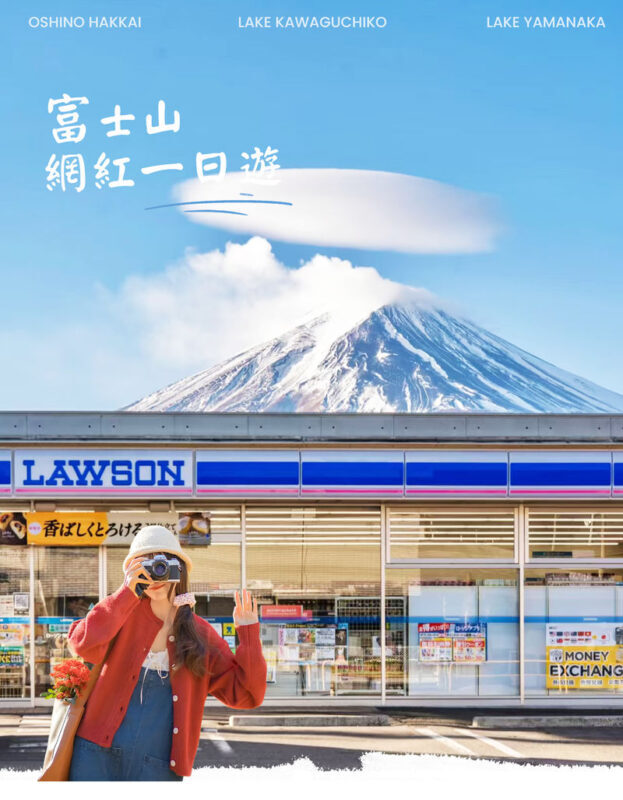
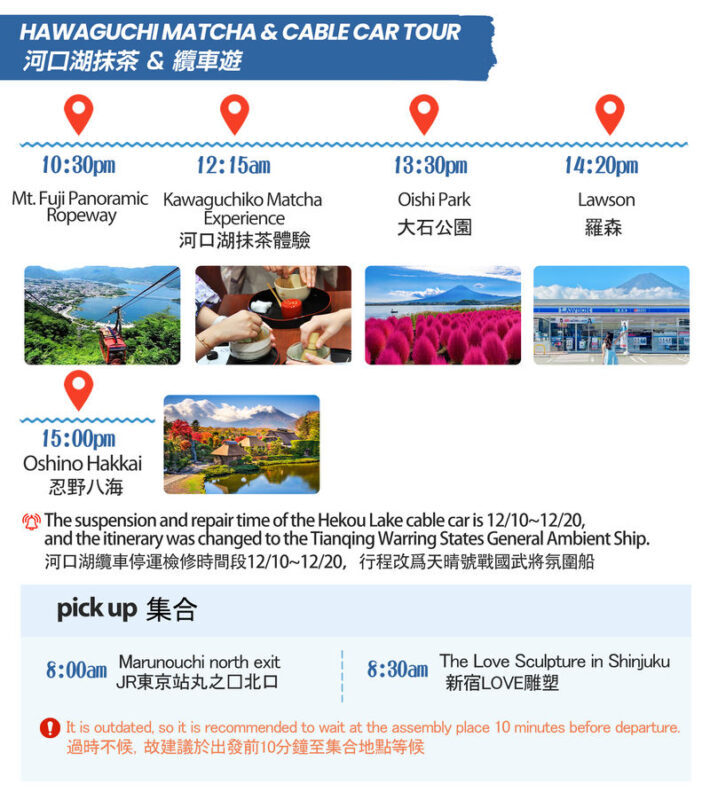
The Lake Kawaguchiko Matcha and Ropeway trip centers on the lake area. It is described as starting at a Lawson convenience store, with matcha, a cable car ride for lake views, and a visit to Oshino Hakkai. The ropeway is subject to weather and scheduled maintenance. From June 25 to July 15, it is due to close for regular maintenance, with a Warlord Ship trip offered instead. If weather prevents the ride, the plan may switch to the boat or refund the ropeway fee.
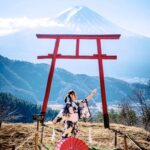
The Japanese-style Influencer tour is for travelers who want a photo-minded outing at a gentler pace. Its description emphasizes Japanese-style scenery and pictures, but does not provide a full stop-by-stop schedule. If you need to know exactly which locations are included, check the selected package details before booking.
You can also read our reviews of more tours and experiences in Fujikawaguchiko


The 5th Station: a close look at the mountain
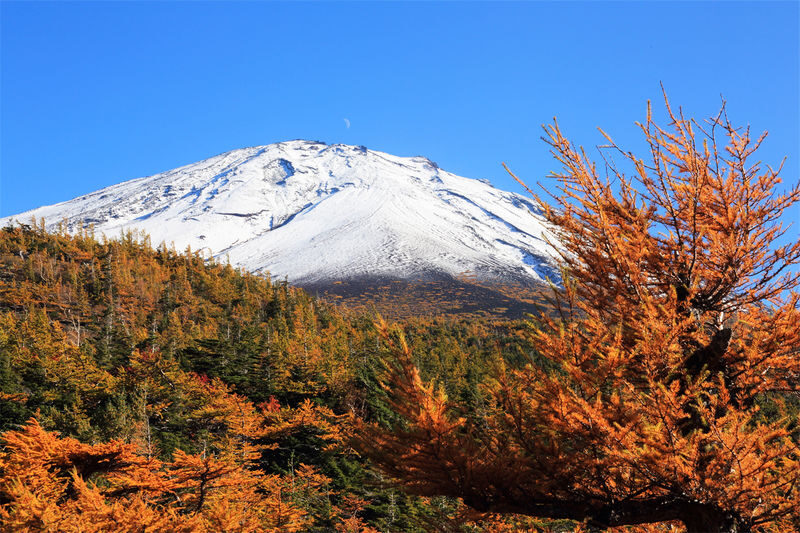
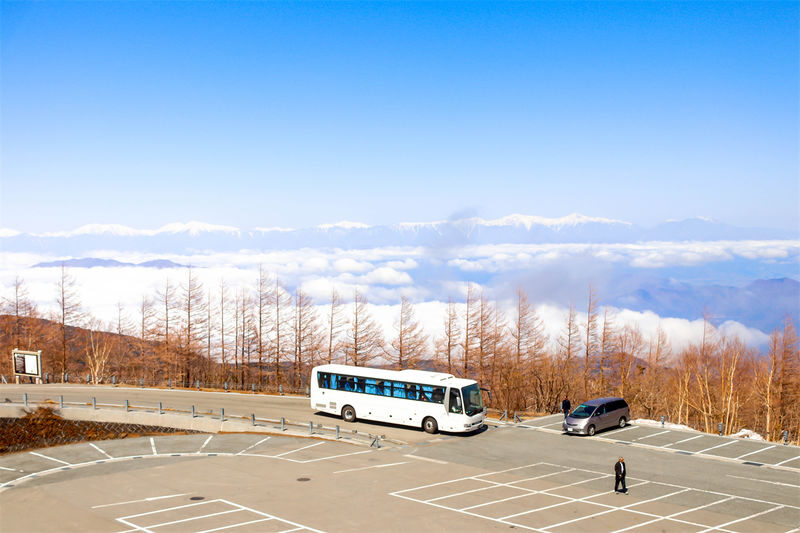
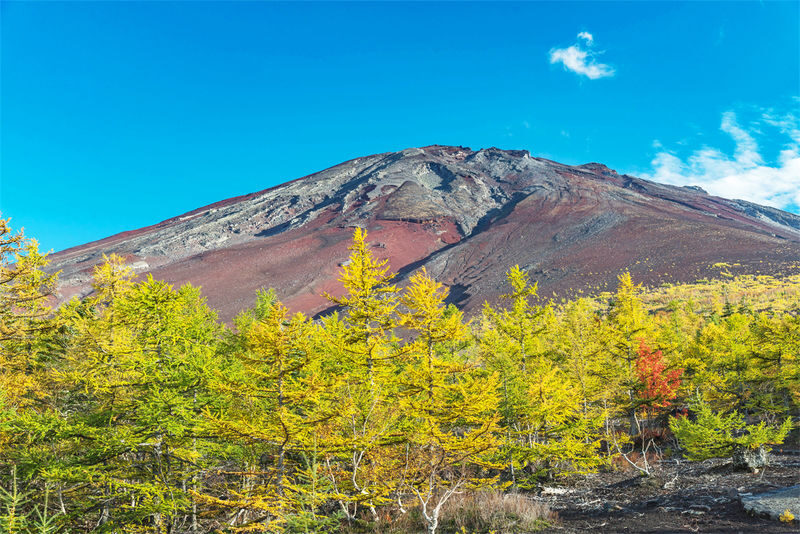
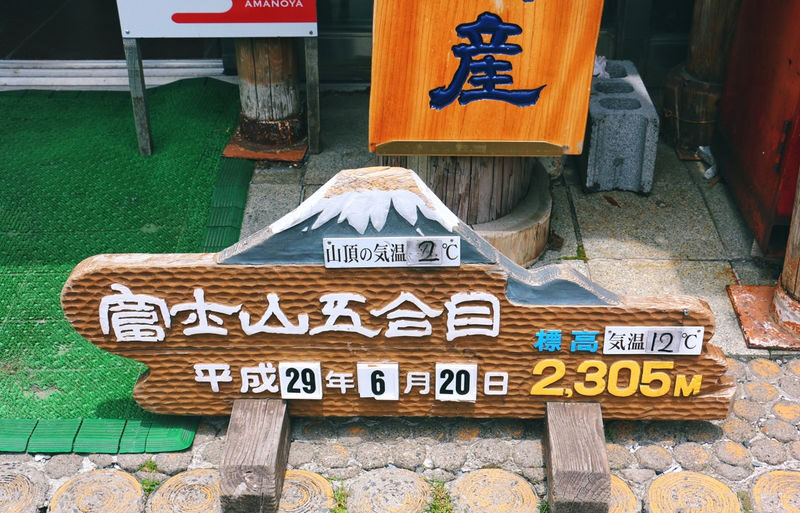
For many people, the 5th Station is the day’s main event. Set partway up Mount Fuji, it offers a close view of the mountain and a sense of its scale that can be hard to get from Tokyo. The classic package allows about 40 minutes there, enough to look around, take pictures, and enjoy the altitude and mountain air without turning the stop into a hike.
This is a viewpoint visit, not a climb to the summit. Access is seasonal, listed from April 26 through November 30, and weather or capacity can affect whether the stop goes ahead. If the sky is closed in, the peak may disappear altogether. Keep that in mind when deciding how much of your trip should depend on a single view.
The practical advantage is that the bus gets you up the mountain without the effort of arranging transport yourself. The disadvantage is the short visit: you will not have much time to wander. Bring a warm layer, even if Tokyo feels mild, and keep an eye on the guide’s return time.
Oshino Hakkai: eight ponds, one unhurried hour
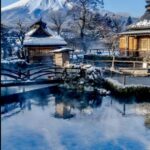
Oshino Hakkai offers a different kind of Fuji-area stop. Its eight ponds are fed by spring water, and the clear water is the main attraction. Take a little time to look at the ponds from more than one angle; reflections and water color can change with the light.
You have about an hour here to walk around independently. That is enough for a look at the springs and a few photographs, but it is not a long visit. Stay alert to the meeting time, especially if you stop to browse or eat. The tour does not set a required meal here, and lunch is arranged flexibly according to traffic and the day’s route.
This stop is especially worthwhile if you like places where the details reward a slower look. It also gives the day a welcome change of pace after the mountain viewpoint. But it can be busy, and the schedule asks you to fit the visit into a limited window.
Lunch and the final choice: outlet or onsen
Lunch gets about 30 minutes, though the timing can shift with road conditions. The guide may suggest places to eat, but buying a meal is optional and the cost is not included. Keep your expectations practical: this is a quick break in a packed day, not a long meal.
After lunch, the classic route sets aside about two hours for either outlet shopping or a hot spring. You choose one, so decide in advance which matters more to you. The outlet option suits anyone hoping to browse brands and shops. One useful tip from the trip’s guides is to get an outlet map on the bus and plan where to go before you arrive. Two hours can pass quickly if you arrive without a plan.
The onsen offers a quieter way to finish. Admission is extra, listed at ¥1,700 on weekdays and ¥2,100 on weekends and holidays. Bring the time and cost into your decision, and check the tattoo policy for the particular facility: Konohana-no-Yu allows tattooed bathers from April 2025, but a replacement facility used during some closures does not. If the outlet or hot spring is closed for a regular holiday, the plan may switch to Lake Yamanaka sightseeing or a Lake Yamanaka hot spring. The alternative hot spring remains an extra expense.
What the guides add, and what they do not
The strongest part of this outing may be the person leading it. Guides named in trip accounts include Anna Hayashida, Kim Myung-chul, Olivia, Hou Jing, and Kanazawa Seiga. Their reported strengths include practical directions, history and culture during the drive, help with photos, and tips on where to shop. That kind of help can make a tightly timed day feel less like a shuttle service.
Still, do not book on the assumption that you can request a particular guide. The guide depends on the departure, and the arrangement changes with the group size. Smaller groups may travel with a driver-guide, while larger parties may have a separate guide and bus. The driver’s first job is the road, so explanations are secondary and may be brief.
Language service is described as Chinese, English, and Japanese, with multilingual communication depending on the group. The package menu also includes Korean-guided options. If detailed commentary in a particular language is important to you, confirm the language attached to the exact package you select.


The ride from Tokyo: convenient, but not free of uncertainty
A round-trip transfer is the tour’s central convenience. You meet in Tokyo, ride to the Fuji area, and do not have to work out a chain of trains and local connections. The listed group size ranges from one to 48, and the vehicle may be a minivan or a bus, depending on the number of people booked. A small vehicle can feel more personal; a full bus is a different, more organized group outing.
The drive also takes up a large part of a 10-hour day. Traffic, holidays, crowds, and weather can change the order of stops, shorten visits, or lead to some places being dropped. The estimated return is between 17:30 and 20:00, with arrival time dependent on road conditions. Do not schedule a flight, dinner reservation, or other fixed plan for that evening.
Guide and vehicle details are sent by email between 16:00 and 22:00 Japan time on the day before departure. Check your inbox and spam folder, and use the latest message if more than one arrives. Arrive at the meeting point 10 minutes early. The tour does not wait for late arrivals, and missed departures are not refundable.
Is the starting price good value?
At a starting price of $49.29, this can be good value if you want transport and several well-known stops bundled into one day. You also avoid arranging your own route around the Fuji area, where the timing and connections can take effort. Toll, parking, and fuel costs are included.
The headline price does not cover everything. Meals, drinks, personal purchases, and the hot spring fee are extra. The exact value also depends on the package you choose and what runs on the day. If the mountain is hidden, or a stop is cut short by traffic, the price still buys the transport and planned outing, not a guaranteed Fuji view.
I would judge the value by convenience rather than by the number of attractions you can tick off. For a first visit, a day with a guide, transfers, and several stops is a straightforward way to get out of Tokyo. If you want hours at one place, full control of the schedule, or a definite view of the peak, a shared day trip is less suitable.
Small practical details before you book
One piece of luggage per person is included. Extra luggage costs ¥2,000 per piece, paid to the driver-guide, and should be declared when booking. Children aged three and older pay the adult rate; children aged zero to two can join free if they do not need their own seat. Child seats are not available.
People aged 70 or older need a medical certificate, and older participants or pregnant women must submit a waiver form by the day before departure. The activity is not recommended for people with certain medical conditions, including high blood pressure or epilepsy. Pets are not allowed, and food and drink are prohibited inside the vehicle.
Should you book this Mount Fuji day trip?
Book it if you want an efficient way to see several Fuji-area sights from Tokyo, appreciate a guide who can handle the route, and are comfortable with a fixed group schedule. The classic package is the clearest choice for a first visit; the Kawaguchiko option fits matcha and lake-view fans; the influencer package suits a photo-focused day.
Skip it if you need a guaranteed view, dislike early starts and long drives, or want to spend the day at your own pace. Fuji’s weather has the final say. If you can accept that uncertainty, this tour offers a sensible mix of mountain scenery, clear-water ponds, and one chosen afternoon activity.
Mount Fuji Day Trip from Tokyo
“Guide Anna, thank you very much for everything. The hot springs are very nice and thank you for all your kindness, Alondra. The trip was 😆😅😆”
FAQ
How long is the tour?
The day is scheduled for about 10 hours, with departures listed at 7:30 or 8:00. Return timing is estimated between 17:30 and 20:00 and can vary with traffic and weather.
Is Mount Fuji’s 5th Station included on every date?
The 5th Station is listed for visits from April 26 to November 30. Access and weather can affect the stop, and some attractions may be skipped.
What is included in the price?
Round-trip transfers from the meeting point, tolls, parking, and fuel are included. Meals, drinks, personal expenses, and hot spring admission are not.
Do I have to visit both the outlet and the hot spring?
No. On the classic route, you choose either the outlet or the hot spring for the allotted stop. The hot spring fee is paid separately.
What languages are offered?
The tour is described as multilingual, with Chinese, English, and Japanese guide options. Korean-guided package options are also listed. The actual arrangement depends on the package and group.
Can I bring luggage or a young child?
Each person may bring one piece of luggage free. Additional pieces cost ¥2,000 each and should be declared in advance. Children aged zero to two may join without charge if they do not occupy a separate seat; child seats are not available.