A 14-day trip that moves from Tokyo’s crowded crossings to a Buddhist monastery on Mount Koya, then through mountain hot-spring towns, gives you a broad look at Japan in one go. You’ll ride the bullet train, take ferries between islands, and visit temples, castles and gardens without having to plan each transfer yourself.
I like two things in particular: the range of places, from Hiroshima and Miyajima to Shikoku and the Japanese Alps, and the chance to sleep at Mount Koya and in a ryokan. The trade-off is a busy schedule, with long coach journeys and some days packed with several stops. Guides and fellow group members may also change along the way.
- What matters most on this Japan tour
- Tokyo: temples, crossings and a city from above
- Kyoto, Nara and Osaka: a concentrated run of classics
- Himeji, Okayama and Hiroshima: castles, gardens and remembrance
- Shikoku and Naruto: island travel, a castle and a long day
- Kobe and Mount Koya: earthquake history and a temple night
- Tsumago, Matsumoto and Nagano: old streets and a famous castle
- Monkeys, hot springs and Nikko on the way back
- Guides, hotels and meals: what the price covers
- Who should book this trip?
- FAQ
- Does the tour start and finish in Tokyo?
- Are flights included in the price?
- How many meals are included?
- Is the Mount Koya monastery stay guaranteed?
- Do I need to be fit for the tour?
- Are guides always English-speaking?
- What is the maximum group size?
- Are all hotel names guaranteed?
- The Best Of Tokyo!
- More Tours in Tokyo
- More Tour Reviews in Tokyo
- Not for you? Here's more nearby things to do in Tokyo we have reviewed
What matters most on this Japan tour
 1 / 10
 2 / 10
 3 / 10
 4 / 10
 5 / 10
 6 / 10
 7 / 10
 8 / 10
 9 / 10
 10 / 10
- A country-spanning route: Tokyo, Kyoto, Nara, Osaka, Hiroshima, Shikoku, Mount Koya, the Japanese Alps and Nikko all appear in two weeks.
- A bullet train plus ferries and coaches: You get a fast Tokyo-to-Kyoto rail journey, then see more remote regions by road and sea.
- Two traditional overnight stays: Mount Koya includes a monastery stay, meditation and vegetarian dinner; Ikaho includes a ryokan stay and Japanese dinner.
- Major sights are bundled in: Admission is included for many key temples, gardens, castles and museums, along with Tokyo Skytree’s Tembo Deck.
- Expect a brisk pace: The tour can include several visits and a long transfer on the same day. A 72-person maximum and changing guides may affect the feel of the group.
- The starting price is $4,992: Flights are extra. Hotel breakfasts, five lunches and four dinners are included, but many other meals are yours to arrange.

👉 See our pick of the 25 Best Guided Tours In Tokyo
Tokyo: temples, crossings and a city from above
Your first day is deliberately light. A shared shuttle takes you from the airport to the hotel, with the afternoon free to rest and get oriented. Tour details arrive later that day, so keep your plans flexible until you know the meeting time.
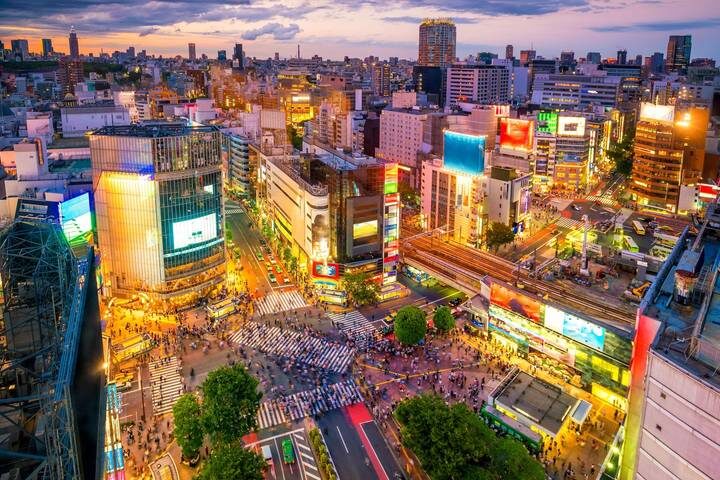
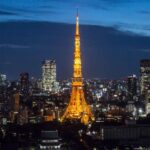
Day two is a full introduction to Tokyo, with about seven hours of sightseeing. Zojoji Temple gives you a striking view toward Tokyo Tower, with rows of Jizo figures nearby. Shibuya Crossing is viewed from the bus, so don’t expect to stand in the middle of the famous intersection. Meiji Shrine offers a quieter contrast, set among trees, before the tour takes you up Tokyo Skytree to the Tembo Deck at 350 meters.
The day finishes in Asakusa, where Nakamise Street runs toward Sensoji Temple, followed by a drive past Akihabara and Ginza. In the evening, you take the subway with your guide to Shinjuku for a walk and included dinner. This is a useful first outing in a city where a simple dinner plan can become a small expedition. The order of the day may shift to fit Skytree admission times, and bad weather can affect access to the viewing deck.
You can also read our reviews of more tours and experiences in Tokyo.



Kyoto, Nara and Osaka: a concentrated run of classics
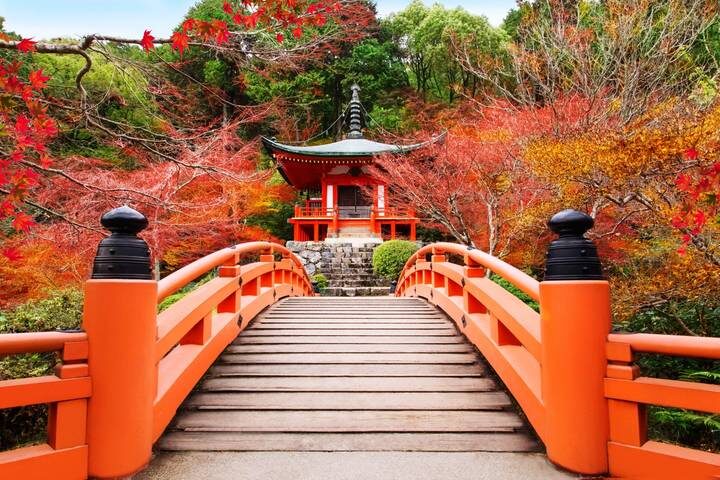
On day three, the bullet train covers nearly 500 kilometers between Tokyo and Kyoto in just over two hours. The train ride is an attraction in its own right, and it saves you a long day on the road. Kyoto’s visits include Fushimi Inari Shrine, the Imperial Palace and Kinkakuji, the Golden Pavilion, followed by time in Gion. It is an ambitious list for one day. You’ll see celebrated places, but may have less time to linger than you would on an independent visit.
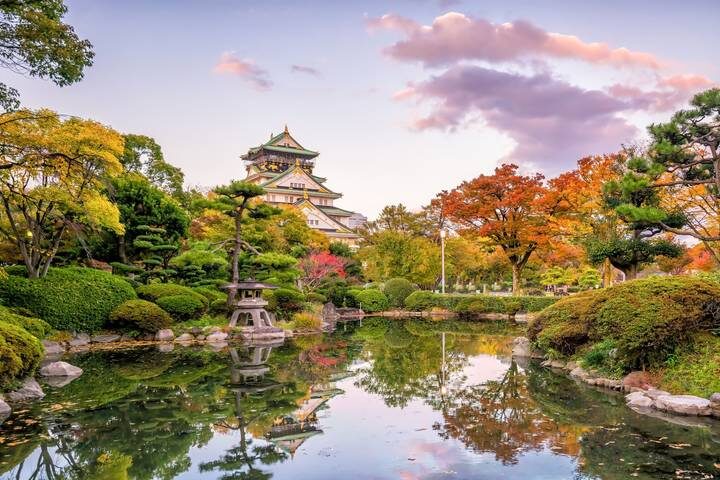
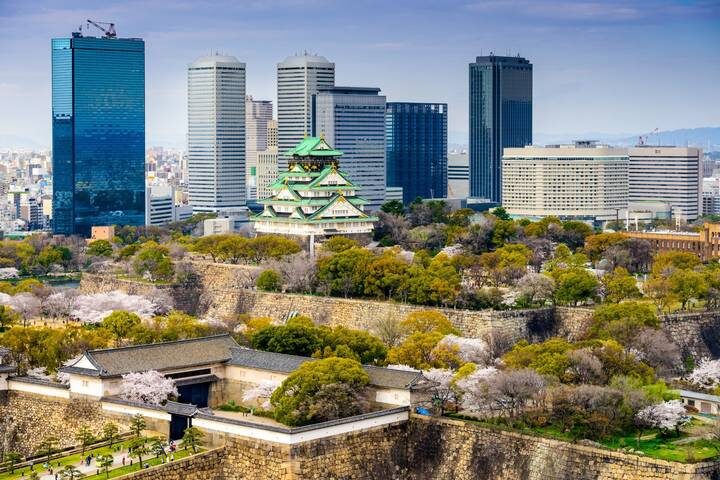
The next day brings Nara and Osaka. At Todaiji, you see the Great Buddha, then walk through Nara Park among free-roaming deer. The route continues to Osaka for a panoramic look at Dotonbori, free time for lunch, Osaka Castle and the Umeda area. You get a useful contrast between Nara’s temple setting and Osaka’s city energy, though the lunch is not listed as included.
Kyoto gets a second day later in the tour, on day ten, but that day is free rather than guided. It gives you a chance to revisit a favorite district or add a sight that the first busy day could not fit. Your guide can offer recommendations, but the choices and any related costs are yours.
Himeji, Okayama and Hiroshima: castles, gardens and remembrance
Day five heads to Himeji Castle, one of the tour’s major architectural visits, with admission to the castle complex included. Lunch at a local restaurant is included before you continue to Okayama and Korakuen Garden, known for its ponds, waterfalls and teahouses. You can cross a pedestrian bridge for views of Okayama Castle, but entry inside that castle is not included.
The following day begins in Kurashiki, where preserved streets and older buildings make a welcome change from large-city sightseeing. In Hiroshima, the Peace Memorial Park, Atomic Bomb Dome and Peace Memorial Museum offer a sobering account of the 1945 bombing and its aftermath. Give the museum the attention it deserves; this is not just a quick photo stop.
Later, a ferry takes you to Miyajima, also called Itsukushima. You’ll see the famous Great Torii Gate and have free time for the shrine and island. The timing of the visit and the appearance of the gate can depend on conditions, and lunch on the island is not included. Dinner back at the Hiroshima hotel is included.
Shikoku and Naruto: island travel, a castle and a long day
A two-and-a-half-hour ferry carries you from Hiroshima to Matsuyama on Shikoku. There, a cable car helps with the climb to Matsuyama Castle, followed by Ishiteji Temple and Dogo Onsen, a 19th-century bathhouse. Lunch is included. This day gives you a different feel from the big-city stops, with time devoted to a historic bathhouse and a major pilgrimage temple.
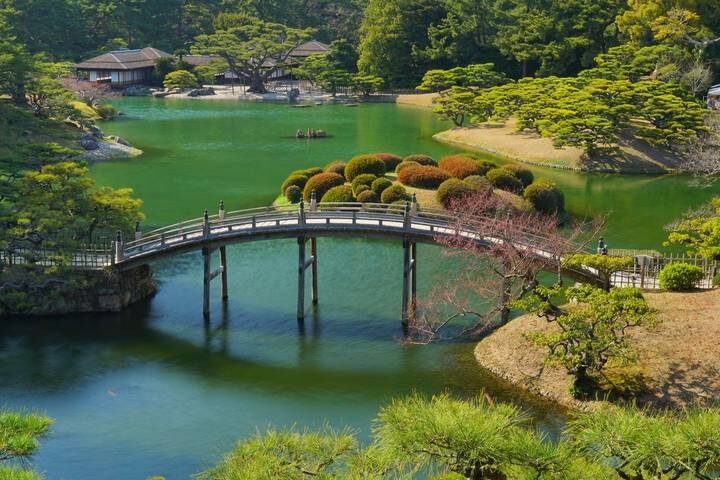
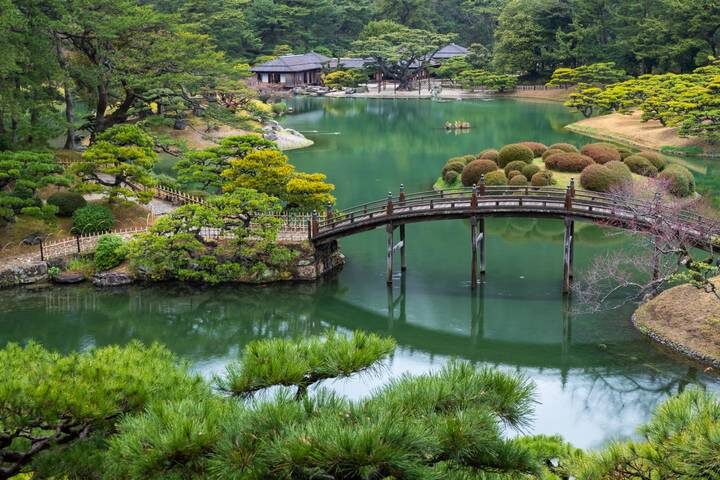
Day eight is one of the longest and most varied days. In Kotohira, the shrine sits up Mount Zosu, reached by climbing 785 steps. That is a real physical effort, even though the tour’s overall activity rating is low intensity. In Takamatsu, you visit Ritsurin Garden and have an included lunch. Then comes Naruto Bridge, where you can walk on a glass floor and look toward the sea whirlpools from 45 meters above, before crossing bridges between islands on the way to Kobe.
This is a day for comfortable shoes and a little patience. The stops are appealing, but the sequence from Matsuyama through Kotohira, Takamatsu and Naruto to Kobe means plenty of time on the coach.
Kobe and Mount Koya: earthquake history and a temple night
In Kobe, the group visits the Earthquake Memorial Museum, which explains the 1995 earthquake and the city’s rebuilding. On some dates, the museum visit may be replaced by a sake museum or a trip up Kobe Tower, so this stop is not guaranteed in its exact form.
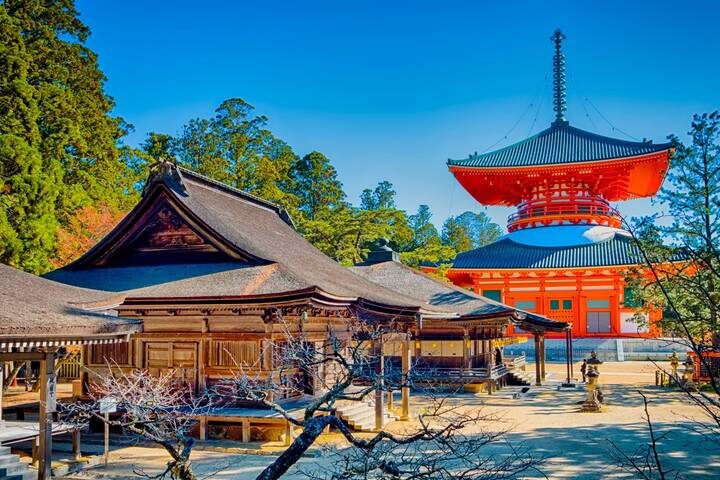
The day’s most distinctive experience comes on Mount Koya, the center of Shingon Buddhism. You visit Okuno Mausoleum, a large forest cemetery, and Kongobuji Temple before spending the night at a Buddhist monastery. The package includes a meditation practice led by monks and a vegetarian dinner. You may also attend a religious ceremony before breakfast.
Go in expecting simple accommodation, not a standard hotel room. Rooms use tatami mats, bathrooms are shared, and the meditation practice cannot be guaranteed on peak dates. Because temple capacity is limited, a nearby hotel may be used instead, with half board included. If the monastery stay is important to you, confirm what applies to your departure before booking.




Tsumago, Matsumoto and Nagano: old streets and a famous castle
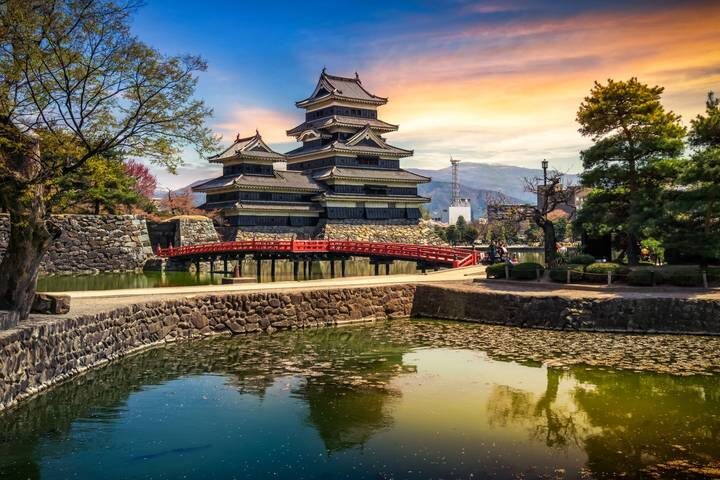
After a traditional Japanese breakfast at Mount Koya, the coach heads to Kyoto for a full free day. The next morning, you leave for Tsumago, a small village known for its wooden houses and old-town character. Lunch is included there, followed by Matsumoto Castle, often called the Crow for its dark exterior. You get free time in Matsumoto before continuing to Nagano for the night.
These stops offer a welcome shift from major cities and headline temples. Tsumago is best approached as a slow walk, while Matsumoto Castle brings the history into sharper focus. The trade-off is another substantial transfer day, so don’t count on a long, unhurried visit in every place.
Monkeys, hot springs and Nikko on the way back
Day twelve starts at Zenkoji Temple in Nagano, where you take part in the Gomakuyo ceremony, a traditional ritual for good fortune. Then you walk forest trails at Jigokudani Monkey Park, where Japanese macaques live in the hot-spring area. The monkeys’ movements can vary with food availability, especially in autumn, so a sighting is not assured.
The route continues through high mountain scenery, reaching 2,172 meters and passing semi-active volcanoes. In Kusatsu, you have time to walk through the town park and see its open-air hot-spring features, with free time for lunch. Weather can cancel the Kusatsu visit from November through April. The day ends in Ikaho, where stone stairways lead through the old town. You stay in a ryokan, with hot-spring baths and a traditional Japanese dinner included.
On day thirteen, Nikko brings another cluster of major sights: Nikko-Toshogu Temple, Taiyuinbyo Mausoleum and the Kanmangafuchi Abyss, where Jizo statues line the river. You have free time in the town center before the coach returns to Tokyo, expected around 6:30 p.m. Your final night is in Tokyo, but the tour ends after breakfast the next morning. Do not assume airport transport or a final-day hotel night is included beyond the stated schedule. If you need a room after the tour, arrange it separately.
Guides, hotels and meals: what the price covers
The tour is advertised from $4,992, based on the cheapest room option. Flights before and after the trip are not included. For the price, you get 13 nights of accommodation, breakfast buffets, transport between stops, an arrival transfer, many admissions and a substantial share of the day-to-day planning.
Hotels are generally described as four-star, with private bathrooms, but the operator notes that location, room size and standards vary. Listed stays include Shinagawa Prince in Tokyo, New Miyako in Kyoto, Hilton Hiroshima, and a ryokan in Ikaho. The Mount Koya monastery is the important exception to ordinary hotel comfort: expect shared bathrooms and simple tatami rooms. Hotel substitutions are possible, so treat named properties as examples rather than a firm promise.
Five lunches and four dinners are included, in addition to hotel breakfasts. Included meals cover places such as Himeji, Matsuyama, Takamatsu and Tsumago, plus dinners in Tokyo, Hiroshima, Mount Koya and Ikaho. Many other lunches and dinners remain open for you to choose, which lets you try local food but adds to your total spend.
The group size can range from 2 to 72. English is offered, though some departures may be bilingual in English and Spanish, and the guide may change during the trip. Guides on past departures have included Rei Getsu, Jose and David Muñoz. David was singled out for clear English, detailed explanations and an ability to help the group feel at ease. That is useful context, but no specific guide is guaranteed.
The strongest praise for the experience centers on its route, the guides’ help with a demanding schedule, and the variety of places visited. Ratings are strongest for the itinerary and transport, while accommodation, food and the operator score somewhat lower. That fits the practical picture: the route is a major strength, but meals and hotel comfort can vary, and the pace leaves limited room for spontaneous detours.
Who should book this trip?
I’d consider this tour if you want to see many regions of Japan in two weeks and prefer having transport, admissions and a guide arranged for you. It is especially appealing if the monastery night, the ryokan, the Shikoku crossings and the mountain stops matter as much as Tokyo and Kyoto.
Think twice if you want slow mornings, long independent visits, or a fixed guide and stable group throughout. The schedule is full, some days involve long drives, and a few stops depend on weather or other conditions. If you can accept that pace, this is a practical way to connect Japan’s major sights with places that are harder to link on a first trip.
Japan’s Landscapes 14-Day Tour by Europamundo
“The places we visited were very beautiful. All the guides are knowledgeable and very helpful. They had to juggle the schedules of so many people an…”
FAQ
Does the tour start and finish in Tokyo?
Yes. The tour starts in Tokyo, includes an arrival transfer to the hotel, and returns to Tokyo on day thirteen. It ends after breakfast on day fourteen.
Are flights included in the price?
No. Flights before and after the tour are not included and must be arranged separately.
How many meals are included?
Hotel breakfast buffets are included. The package also includes five lunches and four dinners; other meals are not listed as included.
Is the Mount Koya monastery stay guaranteed?
No. Temple accommodation is limited, so a nearby hotel may be used on some departures. Meditation may also be unavailable on peak dates.
Do I need to be fit for the tour?
The tour is rated low intensity, but some visits involve walking and stairs. The Kotohira shrine climb includes 785 steps, and the monkey park visit follows forest trails.
Are guides always English-speaking?
The tour is offered in English, but some departures may operate bilingually in English and Spanish. The guide may change during the trip.
What is the maximum group size?
The stated group size ranges from 2 to 72 people.
Are all hotel names guaranteed?
No. The operator may use substitute hotels. The listed hotels are examples, and accommodation standards and room sizes can vary.