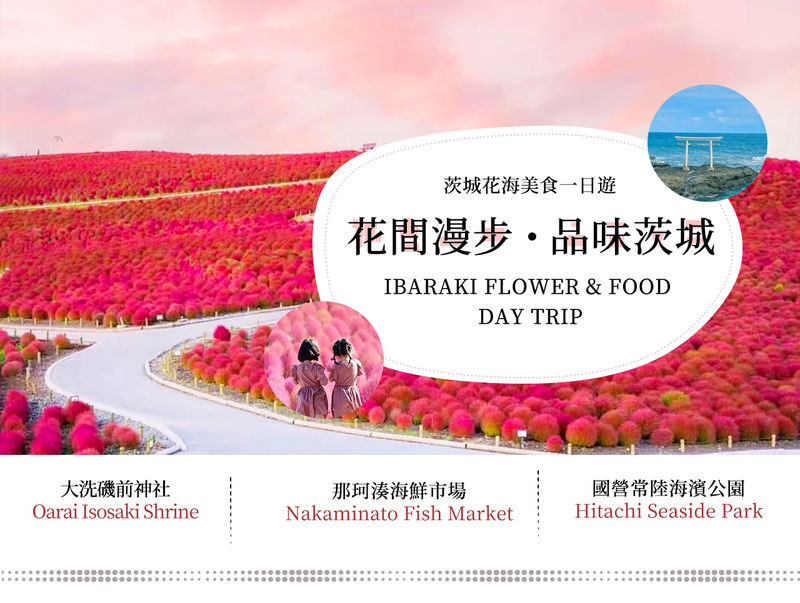
A sea shrine, a working-port seafood market, and hillsides of seasonal flowers make this an appealing way to see a different side of Ibaraki in one day. The Kamiiso Torii faces the Pacific, while Hitachi Seaside Park changes its show with the seasons, from spring nemophila to other flowers later in the year.
I like two things about this outing: it combines three very different stops, and the coach ride saves you the hassle of arranging transport between them. The seafood market also makes lunch part of the day’s experience, not just a pit stop.
The trade-off is time. You get about an hour at the shrine, 90 minutes at the market, and a little over two hours in the park, but traffic and queues can eat into those windows. Check what is flowering before you book, and keep the evening clear in case the return to Tokyo runs late.
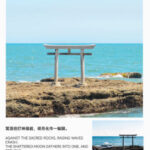
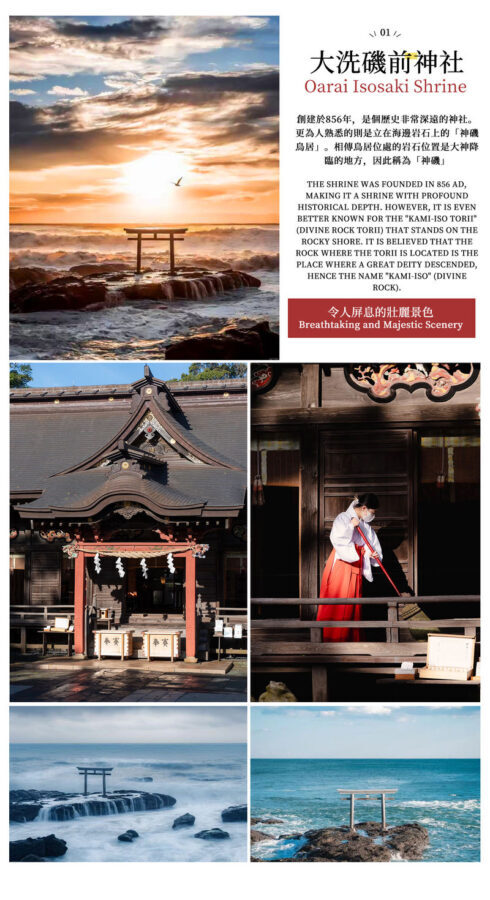
- The shrine’s sea torii is the signature view: Kamiiso Torii stands on the rocky shore, facing east toward the Pacific.
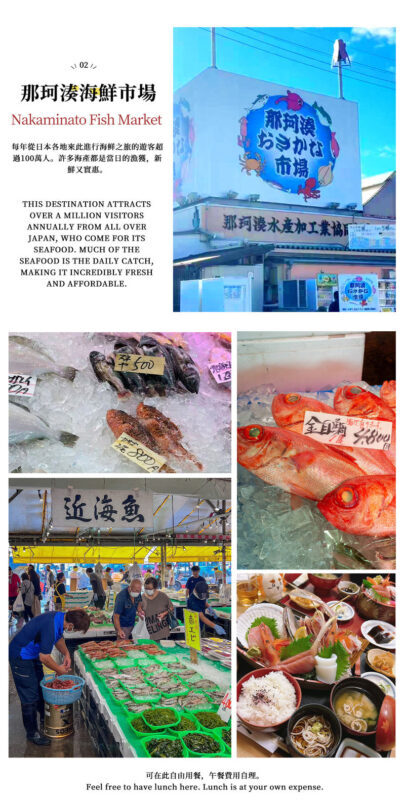
- Lunch is a market outing: Nakaminato has seafood stalls and places to eat, but queues can make a sit-down meal difficult.
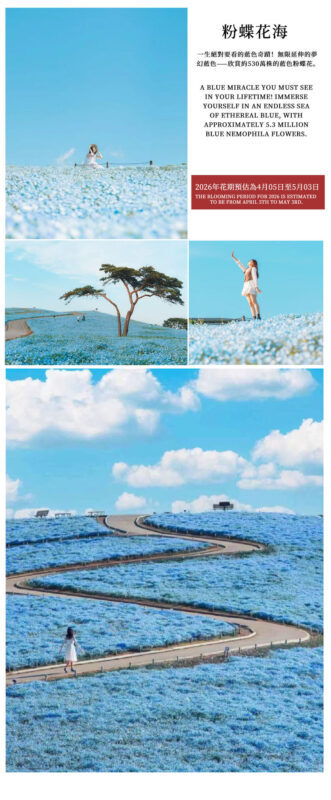
- Flower timing matters: Nemophila usually bloom from late April to late May, while other displays change through the year.
- Park time is self-guided: You can set your own pace, but the park is large and a tram ride may help you reach the flower fields.
- The drive is part of the bargain: Round-trip transport, fuel, tolls, and parking are included in the starting price.
- Plan for a flexible return: The day is listed as 08:00 to 18:00, but the Tokyo drop-off may be as late as 20:00.
- A full day from Tokyo, with three distinct stops
- Oarai Isosaki Shrine and the Pacific-facing torii
- Nakaminato Seafood Market: lunch with a queue risk
- Hitachi Seaside Park and flowers that change by season
- The guide, group size, and what the schedule means
- Packing, costs, and small details worth knowing
- Who should book this Ibaraki day trip?
- FAQ
- How long is the tour?
- Which places does the tour visit?
- When do the nemophila flowers usually bloom?
- Is admission to Hitachi Seaside Park included?
- Are meals included?
- What is included in the tour price?
- How much luggage can I bring?
- What happens if I arrive late at the meeting point?
- The Best Of Tokyo!
- More Food & Drink Experiences in Tokyo
- More Tours in Tokyo
- More Tour Reviews in Tokyo
- Not for you? Here's more nearby things to do in Tokyo we have reviewed
A full day from Tokyo, with three distinct stops
 1 / 6
 2 / 6
 3 / 6
 4 / 6
 5 / 6
 6 / 6
This Ibaraki outing works because it is not a single-sight excursion. You move from a coastal shrine to a local seafood market, then finish among the gardens and open spaces of Hitachi Seaside Park. Each stop has a different mood, and the variety helps justify the long ride from Tokyo.
The tour lasts about 10 hours, with a listed departure around 08:00 and a return scheduled for 18:00. Drop-off information gives a broader 18:00 to 20:00 range, though, so I would not book dinner, a show, or a train connection for that evening. Traffic and weather can change the schedule, and the return trip can take longer than expected.
The price starts at $51.79 and includes round-trip transfers from the designated Tokyo meeting point, a guide who may speak Chinese, English, or Japanese, plus fuel, tolls, and parking. You still pay separately for park entry, meals, drinks, and personal purchases. For a full day that covers three places outside Tokyo, the price can be good value, especially if you would otherwise need to coordinate several transport legs yourself.
This is a fixed-route group tour, not a private car. Group size can range from four to 48 people, and the vehicle may be smaller depending on the day’s bookings. The operator says that in a smaller vehicle the driver may also guide, with shorter explanations. That is worth knowing if you are booking mainly for detailed commentary rather than convenient transport.

👉 See our pick of the 25 Best Guided Tours In Tokyo
Oarai Isosaki Shrine and the Pacific-facing torii
The first stop is Oarai Isosaki Shrine, scheduled for about 10:30, with roughly an hour to explore on your own. It sits beside a rugged stretch of Pacific coastline, and its best-known feature is the Kamiiso Torii, a gate on the shore that faces east. The setting is the point: a sacred marker against open sea, with waves and weather shaping the view.
The shrine grounds offer a quieter start than the market and park. The approach and coastal setting give you a little space to slow down after the drive. If you enjoy Japanese shrines, look beyond the famous photo angle and take time to notice the grounds and the relationship between the shrine and the water.
The torii is also a popular place to photograph, particularly around sunrise, but this tour arrives later in the morning. You should not expect a sunrise visit. Instead, use the hour to see the gate and shrine area at an unhurried pace, while keeping an eye on the meeting time.
Weather matters here. Strong wind or rain can make the exposed shore uncomfortable, and one wet-day schedule had the group turn back before reaching the sea gate. Bring a light rain layer if the forecast calls for showers. Since the stop is self-guided and the schedule is fixed, there may not be time for a replacement attraction if conditions spoil the visit.
You can also read our reviews of more food & drink experiences in Tokyo
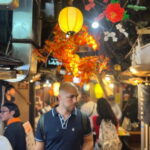


Nakaminato Seafood Market: lunch with a queue risk
Around 11:40, the coach heads to Nakaminato Seafood Market, next to the fishing port in Hitachinaka. You have about 90 minutes here, which sounds generous until you factor in walking, choosing food, waiting for a table, and returning to the vehicle. The market is known for its range of seafood, with stalls selling fresh fish and shellfish as well as prepared food.
This is the day’s most practical stop and, for seafood fans, potentially its tastiest. You might find freshly shucked oysters, grilled prawns, scallops, tempura bowls, and other seafood options. The appeal is not fine dining; it is the chance to eat near the port and see what the market has on offer. Bring some flexibility. On busy days, a stand-up snack may be a better plan than waiting for a restaurant table.
The time window can feel tight during lunch rushes, holidays, or peak flower season. Queues of 20 minutes or more have been reported, and access to the market parking area can be affected by traffic. If you do want a sit-down meal, look at the options as soon as you arrive and keep your return time firmly in mind. A quick walk around first can leave you with too little time to eat.
The market is also where the day’s schedule is most vulnerable to small delays. A late start, a long line, or a walk from an alternative drop-off point can cut into your meal and browsing time. I would treat the 90 minutes as a useful but not lavish break, and avoid getting separated from the group. The vehicle cannot stop wherever you like, and missing the departure can mean losing the next stop.
Hitachi Seaside Park and flowers that change by season
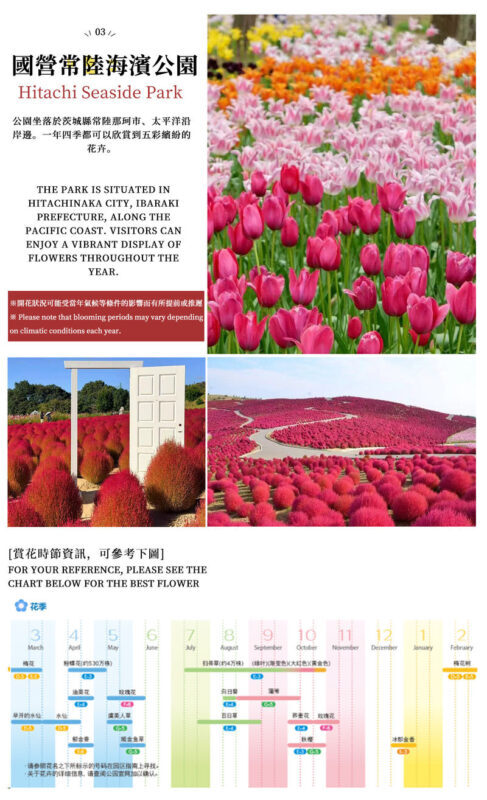
The final main stop is Hitachi Seaside Park, reached at about 13:40. You have roughly two hours and 20 minutes to explore independently. The park sits on the Pacific coast and is known for seasonal flowers, but it is not a year-round carpet of blooms. What you see depends on the month and on that year’s weather and growing conditions.
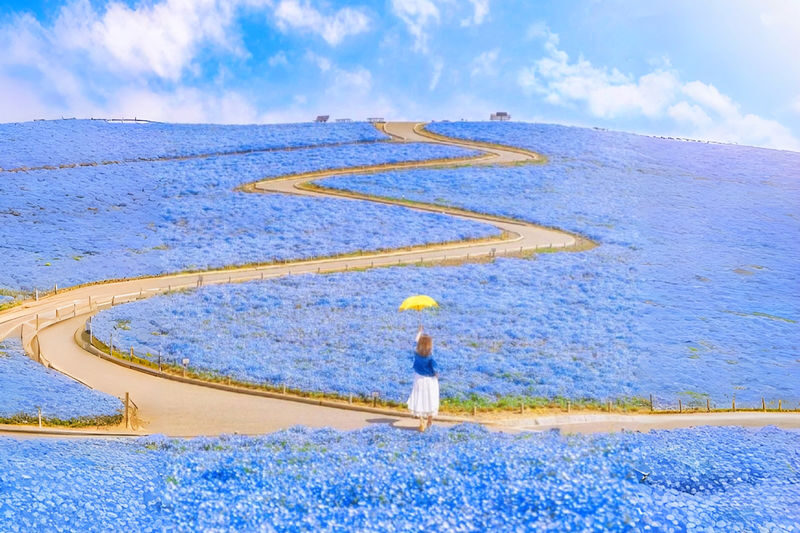
The headline season is nemophila, the small blue flowers that cover Miharashi Hill in spring. The usual viewing window is late April to late May, but flowering dates shift from year to year. During the seasonal admission period, the adult ticket costs ¥800; at other times, the reference price is ¥450 for adults aged 15 and older. The park entrance fee is not included in the tour price.
Other seasons bring different displays. Flowering conditions vary, and the park can still be pleasant to walk through when the main fields are not in bloom. But if you are booking specifically for a particular flower, check the park’s current bloom information close to your date. A tour fee is not refunded simply because the flowers have finished, started late, or been affected by the weather.
The park is large, so make a simple plan before setting off. If the nemophila fields are your priority, head there first rather than spending the early part of your visit browsing elsewhere. One visitor found the park tram useful for reaching the flower area, and it may save walking time. Food stalls and drinks are also available in the park, which can be handy if the market lunch was rushed.
The allotted time gives you room to stroll and take photographs, but it is not enough to see every corner at leisure. Some people wish they had longer, particularly when the flowers are at their best. I would treat the park as the day’s main event if you are visiting in peak bloom, and as a pleasant coastal walk with seasonal interest outside that window.
The guide, group size, and what the schedule means
The guide’s role is to keep the day moving, explain the stops, and help with practical questions. The tour offers Chinese-, English-, and Japanese-speaking guides, but the exact guide depends on the departure. Past guide names have included Elsa, Cora, Shun, Vivian, Demi, and Nicklaus. Do not book expecting a particular person; treat those names as examples, not a guarantee.
The group format is efficient but requires cooperation. You share the ride with other participants, follow the same route, and need to return promptly at each meeting time. The operator warns that late arrivals and no-shows are not refundable. Arrive at the meeting point 10 minutes early, and check the email sent between 16:00 and 22:00 Japan time the day before for the vehicle plate and guide details. The guide may not contact you beforehand.
There are two departure times shown, 08:00 and 08:30, so confirm the time and meeting point on your own booking details. The listed meeting points include Tokyo Station’s Marunouchi North Exit and the Shinjuku LOVE Object. The designated pickup option also identifies Nakanosato Fish Market, so do not assume every booking uses the same location. Follow the latest message you receive.
The schedule may shift with traffic, weather, and crowds. The written plan sets out an 08:00 departure and 18:00 return, while the drop-off information allows until 20:00. The return leg is also described as starting at 16:00, so the exact sequence may vary. Keep your evening open and use the guide’s timing on the day rather than relying on a fixed arrival minute.
Packing, costs, and small details worth knowing
Admission to Hitachi Seaside Park is extra, as are meals and drinks. Carry some spending money for the market and park, and remember that the market is not a guaranteed leisurely restaurant lunch. The tour includes fuel, tolls, parking, and round-trip transfers, so there are no separate transport costs to arrange along the route.
You may bring one piece of luggage per person at no extra charge. Additional pieces cost ¥2,000 each, paid to the driver or guide, and should be declared when booking. The operator may refuse boarding if luggage or group size exceeds vehicle capacity, so this is not a trip for turning up with extra bags without warning.
Infants aged zero to two can ride free if they do not need a separate seat; children aged three and older pay the adult rate, and infants and children must be included in the passenger count. Child seats are not available. The activity is not recommended for people with epilepsy, heart disease, asthma, or other serious medical conditions. People aged over 70 and pregnant participants must submit a signed liability waiver in advance; seniors over 70 are also asked to present a medical certificate.
Weather-appropriate shoes and a light rain layer are sensible, especially for the exposed shrine stop and the park’s open paths. Pets are not allowed. Eating and drinking in the vehicle are prohibited, so finish snacks before boarding and keep the bus clean.
You can also read our reviews of more tours and experiences in Tokyo




Who should book this Ibaraki day trip?
This tour suits you if you want to get beyond Tokyo without planning a full day of trains, transfers, and local transport. It is especially appealing in spring, when Hitachi Seaside Park’s nemophila fields are in season, and to anyone who likes pairing a coastal shrine with a proper seafood-market stop.
It is less suitable if you want complete control over timing, a long sit-down lunch, or a guarantee of a particular flower display. The drive is long, the group must keep to the schedule, and the market may be crowded. If you are flexible and view the day as a sampler of Ibaraki rather than a slow visit to any single place, the mix offers solid value.
I would book it for the combination of the sea-facing torii, local seafood, and seasonal park scenery, after checking the bloom calendar and confirming the departure details. If flowers are the main reason for going, choose your date carefully. If your visit falls outside a major bloom period, consider whether the shrine and market alone make the long day worthwhile for you.
A Perfect Day Trip: Ibaraki Flower Park & Gourmet Food: Oarai Isosaki Shrine, Nakaminato Seafood Market, Hitachi Seaside Park | Departs from Tokyo
“The itinerary wasn't too rushed and the arrangements were very comfortable. Thank you, Sherry.”
FAQ
How long is the tour?
The day trip is listed as about 10 hours, with a departure around 08:00 and a planned return around 18:00. The Tokyo drop-off may be as late as 20:00 depending on traffic and the day’s schedule.
Which places does the tour visit?
It visits Oarai Isosaki Shrine, Nakaminato Seafood Market, and Hitachi Seaside Park.
When do the nemophila flowers usually bloom?
The usual viewing period is from late April to late May. The exact timing can change with the weather and growing conditions.
Is admission to Hitachi Seaside Park included?
No. The reference adult price is ¥450, or ¥800 during seasonal ticket periods in spring and autumn. Dates for seasonal pricing depend on plant growth.
Are meals included?
No. Meals and beverages are not included. You can buy food at Nakaminato Seafood Market and at Hitachi Seaside Park.
What is included in the tour price?
The price includes round-trip transfers from the designated meeting point, a Chinese-, English-, or Japanese-speaking guide, fuel, tolls, and parking fees.
How much luggage can I bring?
One piece of luggage per person is included. Additional pieces cost ¥2,000 each and should be declared when booking.
What happens if I arrive late at the meeting point?
You should arrive 10 minutes before departure. The operator says late arrivals and no-shows are not refundable, so allow time to find the correct meeting point.