Tsukiji is a feast for the senses, but a first visit can also feel like a maze of food stalls, unfamiliar ingredients, and tempting menus. This guided walk gives you a way in: learn about the market’s role in Tokyo food culture, then follow a local guide to selected stalls for seafood, wagyu, and other Japanese specialties.
I like two things here: the guide can help you choose and order in a crowded market, and the food stops come with context about ingredients, cooking, and preservation. Guides including Kenny, George, and Kawa have been praised for clear explanations and friendly help. One consideration: food and drinks are not included in the Street Food Walking Tour, so the advertised starting price is not the full cost of eating.
- Key points to know
- Tsukiji is easier with a guide at your side
- Start at Tsukiji Hongan-ji Temple
- Find your footing in Tsukiji Outer Market
- Try a wasabi set, then choose what to eat
- Visit Tsukiji Uogashi’s Odawarabashi Building
- A short walk with a lot of context
- Why the guide can make the difference
- Price, practical details, and who should book
- FAQ
- Where does the tour meet?
- What departure times can I choose?
- Are meals and drinks included?
- What foods might I try?
- Does the guide provide a wasabi tasting?
- How long does the tour take?
- Is the tour suitable for children and wheelchair users?
- The Best Of Tokyo!
- More Food & Drink Experiences in Tokyo
- More Tours in Tokyo
- More Tour Reviews in Tokyo
- Not for you? Here's more nearby things to do in Tokyo we have reviewed
Key points to know
 1 / 9
 2 / 9
 3 / 9
 4 / 9
 5 / 9
 6 / 9
 7 / 9
 8 / 9
 9 / 9
- Meet beside Tsukiji Hongan-ji Temple, a few steps from Exit 1 of Tsukiji Station.
- Explore Tsukiji Outer Market with an English-speaking guide, then visit Tsukiji Uogashi’s Odawarabashi Building.
- Expect food recommendations, not an all-inclusive meal on the Street Food Walking Tour. Bring cash for anything you buy.
- A guide’s wasabi set adds a practical tasting note, showing how the condiment can change the flavor of food.
- Choose an 8:00, 10:00, or 12:00 departure when booking. The listed return times suggest a tour of about 90 minutes, though schedules can change.
- The experience suits first-time market visitors, families, and curious eaters who want help finding their bearings.

👉 See our pick of the 25 Best Guided Tours In Tokyo
Tsukiji is easier with a guide at your side
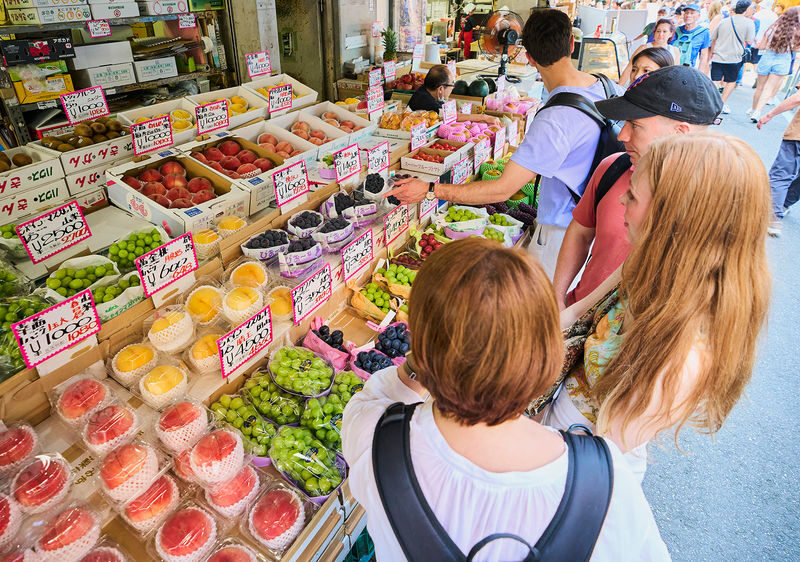
Tsukiji Outer Market is a place to browse, taste, and watch the work behind Japanese food. The stalls sell seafood and traditional ingredients, while the close-set lanes can make it hard to know which way to turn or what is worth trying. A guide gives the visit a shape: you get a route, a local voice, and a chance to ask questions as you go.
That help matters most if you are new to Japanese food or uneasy about ordering. Guides such as George and Jack have helped visitors choose items and communicate at stalls. A few hours of guidance can save you from spending your whole visit comparing menus, or from walking past a specialty you might not recognize.
The tour is also about more than eating. Your guide introduces the market’s place in Tokyo’s food culture and explains the craft behind Japanese cooking, from ingredient selection to methods that bring out umami. The subject is broad, but the market gives you an immediate, useful setting for learning.
You can also read our reviews of more food & drink experiences in Tokyo



Start at Tsukiji Hongan-ji Temple
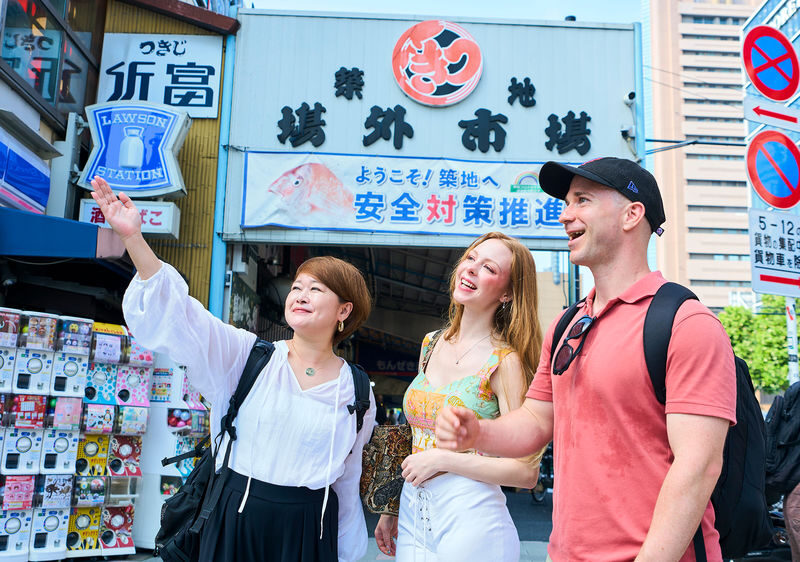
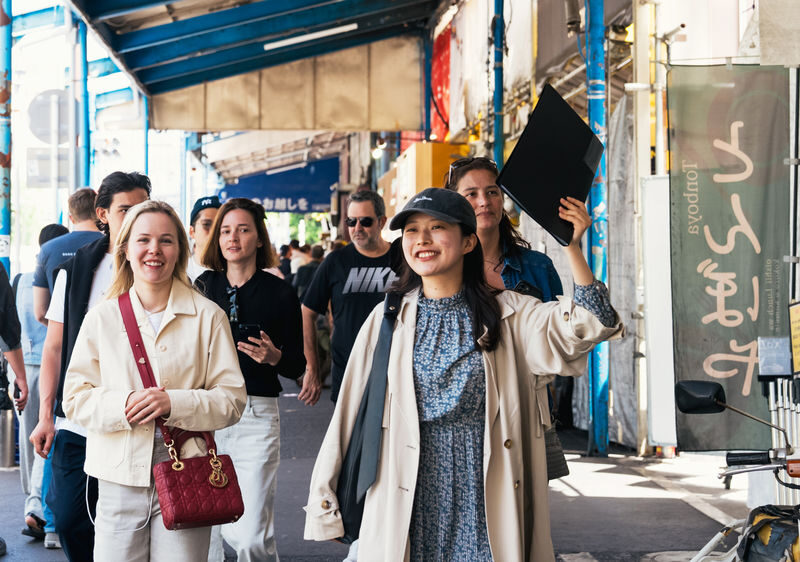
The meeting point is beside the stairs on the right side of the main hall at Tsukiji Hongan-ji Temple, near Exit 1 of Tsukiji Station. Look for the guide holding a Local Guide Stars sign. The booking offers departure choices at 8:00, 10:00, and 12:00; arrive 15 minutes before the time you selected.
The temple is a clear landmark in an area where a busy market can make a vague meeting point frustrating. One guide, Maya, has included a temple visit and an introduction to its Jodo Buddhist background and architecture as part of a seven-bite tour. But do not assume every Street Food Walking Tour includes a formal temple visit. It is first of all the meeting place, and what happens next can vary by package and guide.
The early departure is a sensible choice if you want to start before the day feels too crowded, though the activity information does not promise a particular crowd level. Later times give you more flexibility in your morning. Whichever slot you choose, being on time matters: the group leaves at a set hour.
Find your footing in Tsukiji Outer Market
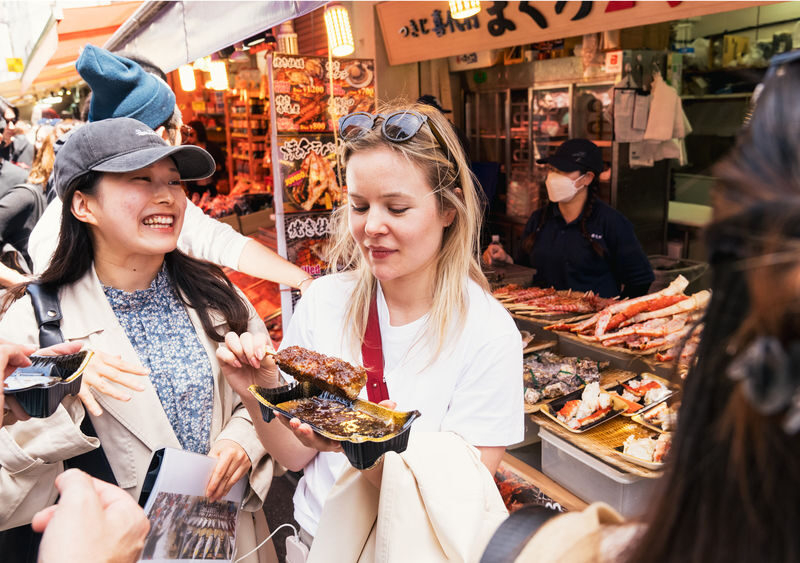
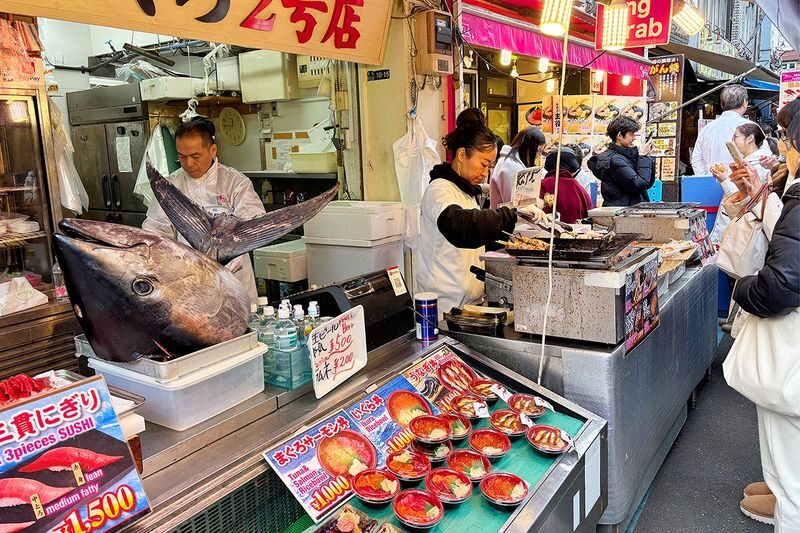
From the temple area, the walk heads into Tsukiji Outer Market. This is the main event: a network of food shops and stalls selling seafood and Japanese ingredients, with plenty to look at and plenty of decisions to make. Your guide helps turn that abundance into a manageable route, choosing stops and explaining what you are seeing.
The guide’s value is not just knowing where a stall is. A guide can point out the difference between unfamiliar foods, explain how an ingredient is used, and help you make sense of a menu. Guests have found it useful to have someone help with ordering, especially on busy days. One guide, Jack, was praised for speaking clearly in the market, a small but important detail when there is a lot going on around you.
The experience focuses on Japanese food culture and the skill behind the dishes. You may hear about artisan techniques, flavor-enhancing methods, and traditional preservation practices that help develop umami. Those explanations give a food stop more meaning than simply tasting a bite and moving on.
The route is not a promise to visit every famous stall. It is a guided introduction to selected places, and the actual stops can depend on conditions and the guide’s choices. That trade-off works well if you want a first orientation; it may feel limited if you already know the market and have a long personal list of shops to visit.
Try a wasabi set, then choose what to eat
A special wasabi set is one of the tour’s more distinctive touches. A guide may bring fresh wasabi to try alongside food, showing how it can sharpen or change a flavor. It is a small demonstration, but it connects the tasting to the tour’s wider aim: paying attention to how Japanese ingredients work together.
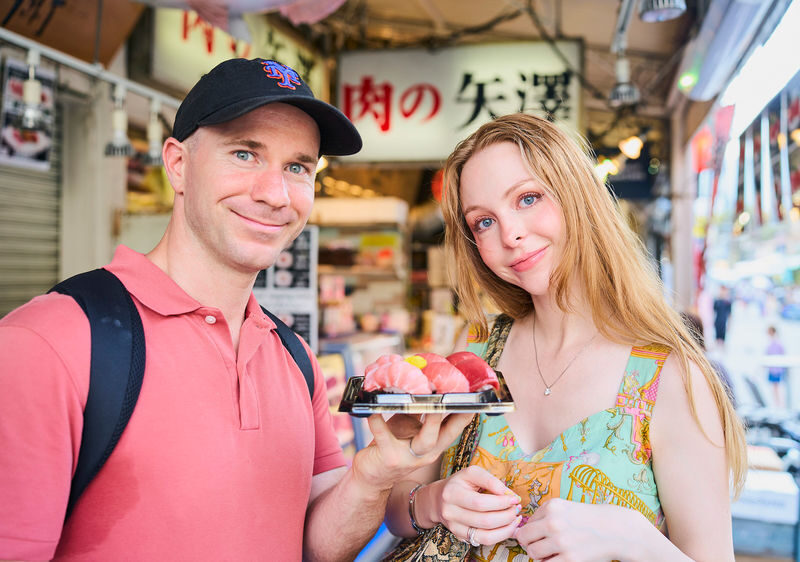
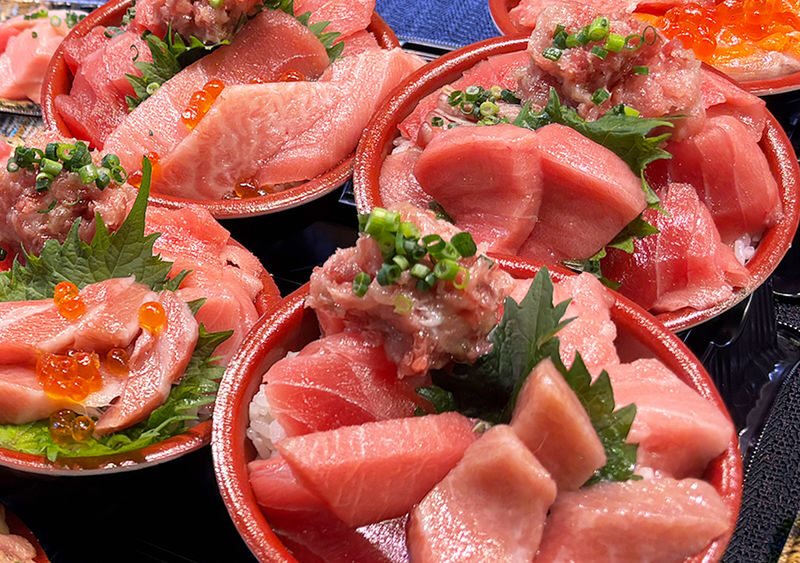
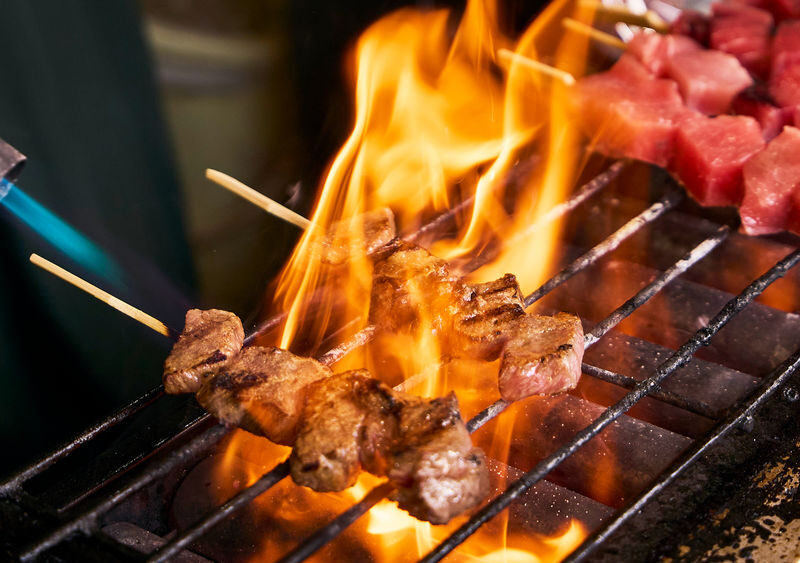
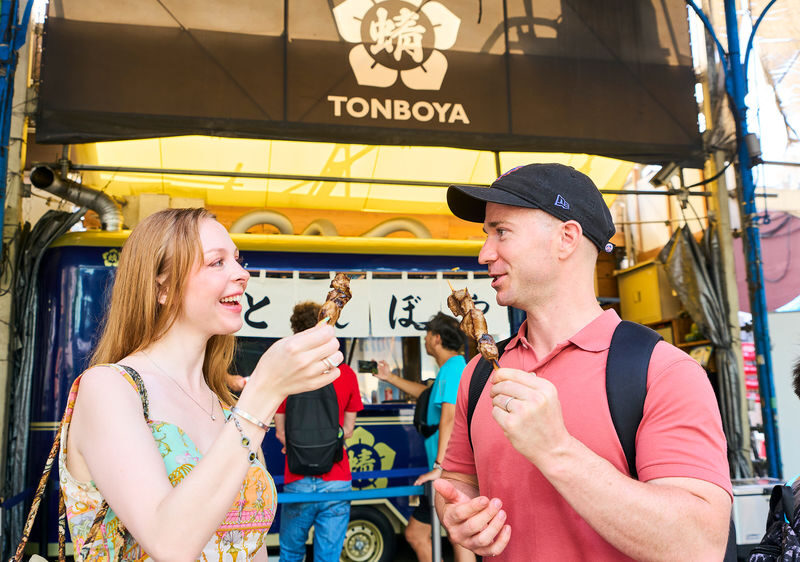
The advertised food themes include fresh tuna, wagyu, and traditional street food. You might also encounter items such as skewers or sweets, depending on the package and route. For the Tsukiji Market Food & Walking Tour: 7 Gourmet Bites, a past route included tuna sushi, yakitori, beef and conger eel skewers, tamago, dumplings, and a sesame daifuku with strawberry. That gives you a sense of the range, not a guarantee that the same seven items will appear every time.
Check the package name before you book. The Street Food Walking Tour does not include meals and beverages, so budget separately for anything you want to buy. The seven-bite option is presented as a separate package, and the precise inclusions should be confirmed on the booking page before you pay. Either way, bring cash: it is specifically recommended, and it gives you a practical way to pay at market stalls.
This is not the right outing if you expect a full meal at a fixed price and want every tasting covered. It suits you better if you enjoy choosing as you go, are open to trying unfamiliar foods, and do not mind adding the cost of purchases to the tour price. The starting rate of $15.79 can be appealing for a guided introduction, but it should not be mistaken for the total cost of a food crawl.
Visit Tsukiji Uogashi’s Odawarabashi Building
The route also includes Tsukiji Uogashi’s Odawarabashi Building. It provides another point of view on the market and its food businesses, beyond the street-facing stalls. Your guide can help link the products and shops you see to the larger picture of how Tsukiji serves Tokyo’s food culture.
The listed stop is useful as a structured pause in the walk, though the available details do not promise a specific demonstration, tasting, or shop visit inside the building. Keep expectations flexible: the guide’s explanations and the day’s route shape the experience.
The tour returns to the Tsukiji Station area. Listed return options are 9:30, 11:30, or 13:30, depending on your chosen departure and the itinerary’s duration. The activity schedule may change with traffic or weather, so avoid making a tight connection immediately afterward.
You can also read our reviews of more tours and experiences in Tokyo




A short walk with a lot of context
The departure and return times point to a tour of roughly 90 minutes. Some people have described the experience as close to two hours, while one person felt rushed and finished earlier than expected. Treat the posted time as a guide rather than a guarantee, and ask your guide at the start how the route is likely to run.
That short format is a strength if you want an introduction before exploring on your own. You can learn the basic layout, try a few foods, and come away with ideas for where to return. It also fits neatly into a Tokyo morning, especially if you have other plans later in the day.
The trade-off is pace. A market walk involves moving between stalls, listening, and possibly buying and eating food, all within a limited window. If you prefer long meals or want to linger at every shop, the tour may feel brisk. Tell your guide what matters most to you, and use the remaining time after the walk to revisit a favorite stop if your schedule allows.
Why the guide can make the difference
The strongest reason to book is the guide’s role as interpreter and navigator. Kenny, George, Kawa, Jack, and other named guides have been praised for explaining food and local history, suggesting good stops, and helping people feel more at ease. Several have also been described as welcoming with children. One family found Kenny attentive to their child, while another parent appreciated her accommodating approach.
A guide can also help you avoid decision fatigue. At a market with many choices, knowing where to start is half the battle. The tour’s recommendations are personal, not a promise of the cheapest or best stall for every taste, but they give you a reasoned starting point and the confidence to ask questions.
There is a caveat: the experience depends on who leads it and how the group moves. One person found their walk rushed and felt there was little time to eat or ask questions. If you want a slow, highly customized food tour, this may not be the best fit. For a short orientation with local explanations, it makes more sense.
Price, practical details, and who should book
At a starting price of $15.79, the Street Food Walking Tour is priced as a relatively low-cost way to get guidance in an area that can be confusing on a first visit. Its value is strongest if you use the guide’s help to discover foods, understand what you are ordering, and get a feel for the market. Add the cost of your own food and drinks when working out your budget.
There is no age limit, and the activity is listed as stroller- and wheelchair-accessible. If accessibility is important to your plans, it is still sensible to confirm any specific needs with the operator, since the market itself has many stalls and an active pedestrian setting. The tour is a meet-up activity, not a package with transport included.
Booking is available for the same day, with instant confirmation stated. Free cancellation is available if you cancel at least 24 hours before the activity date, in destination local time. The operator may cancel for extreme weather or unforeseen events, with the option to reschedule or request a refund.
I would choose this tour if it is your first time at Tsukiji, you want a short introduction to Japanese food culture, or you would rather not figure out the stalls alone. It is also a good fit for families seeking a guided morning and for eaters keen to sample seafood, wagyu, and market snacks. If you already know the area, want a long, leisurely meal, or need all food included in one fixed price, you may prefer to explore independently or choose the separate seven-bite package after checking exactly what it covers.
Tokyo: Tsukiji Fish Market Street Food & Culture Exploration Tour
“We had a wonderful tour with Kei as our guide. He was so informative, helpful and showed us some great spots to eat. Would highly recommend :)”
FAQ
Where does the tour meet?
Meet beside the stairs on the right side of the main hall at Tsukiji Hongan-ji Temple, at 3-chome-15-1 Tsukiji. It is a few steps from Exit 1 of Tsukiji Station. Look for the Local Guide Stars sign.
What departure times can I choose?
The listed departure times are 8:00, 10:00, and 12:00. Choose your time when booking and arrive 15 minutes early.
Are meals and drinks included?
Meals and beverages are not included in the Street Food Walking Tour. Bring cash to pay for food you choose to buy.
What foods might I try?
The tour highlights fresh tuna, wagyu, and traditional street food. Stops and dishes can vary. The separate seven-bite package has included items such as tuna sushi, skewers, tamago, dumplings, and sweets.
Does the guide provide a wasabi tasting?
The experience describes a special wasabi set provided by the guide to show how wasabi can enhance flavor. Specific foods and stops may vary.
How long does the tour take?
The listed departure and return times suggest about 90 minutes, though the schedule can change with traffic, weather, or itinerary conditions.
Is the tour suitable for children and wheelchair users?
There is no age limit, and the activity is listed as stroller- and wheelchair-accessible. Guides have also been described as accommodating with children.