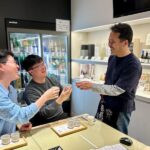
Ginza’s sumo experience gives you two very different ways to meet Japan’s national sport: watch retired wrestlers turn the dohyo into a lively show, or work through training drills yourself. The first is made for learning and laughs; the second asks you to move, sweat, and try the basics.
I like the choice between a relaxed, interactive show and a hands-on training session. I also like that the show explains rituals such as salt throwing and shiko, so the spectacle has context, not just big bodies colliding.
One caution: the food details are inconsistent. Some experience information describes all-you-can-eat chanko-nabe, while other practical notes say meals are extra and food is unavailable during Plan B. Check the current package details before counting on dinner.
- What to know before you choose
- Two plans, two very different sumo days
- Plan A: close seats, demonstrations and a chance to wrestle
- Plan B: 60 minutes of sumo drills
- Sumo culture, explained without a rulebook
- Chanko-nabe and the food question
- Is the price worth it?
- Practical details for a smoother visit
- Who should book this Ginza sumo experience?
- FAQ
- Is the Plan A show an official sumo tournament?
- Can I wrestle against a sumo wrestler?
- What do you do during Plan B?
- Is Plan B suitable for children?
- Is food included in the ticket?
- Are vegetarian and vegan meals available?
- Can I pay cash at the venue?
- The Best Of Tokyo!
- More Tours in Tokyo
- More Tour Reviews in Tokyo
- Not for you? Here's more nearby things to do in Tokyo we have reviewed
What to know before you choose
 1 / 9
 2 / 9
 3 / 9
 4 / 9
 5 / 9
 6 / 9
 7 / 9
 8 / 9
 9 / 9
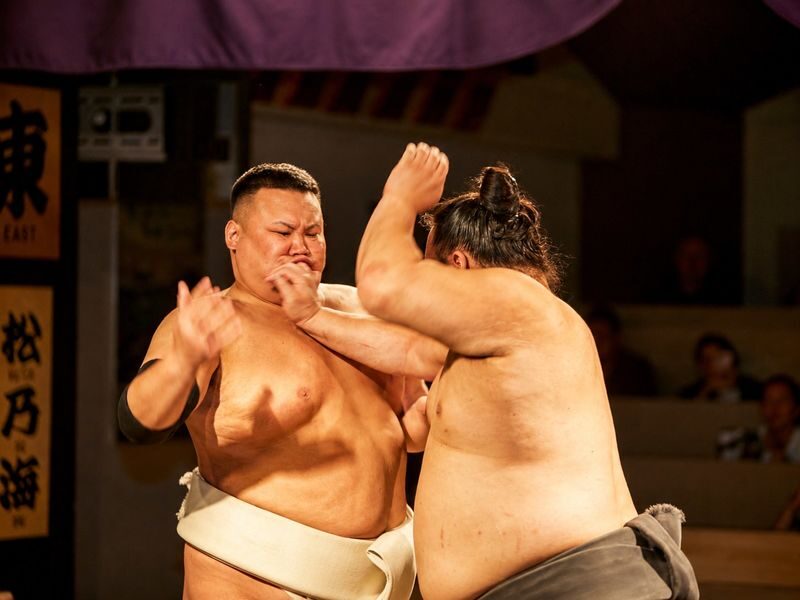
- Plan A is entertainment, not a tournament. Retired wrestlers demonstrate sumo and face off in staged bouts, with audience participation built in.
- Plan B is a 60-minute workout. Learn shiko, suri-ashi and butsukari-geiko with former wrestlers, at a pace suited to your ability.
- The audience challenge is by lottery. You can try to face a wrestler, but selection is not guaranteed.
- English support is available. English-speaking staff help explain the show and training, alongside Japanese-speaking staff.
- Book one plan per group. The experience information says each group can book either Plan A or Plan B, not both.
- It is in central Ginza. The venue is in the basement of Ginza Inz 1, at 3-3-1 Ginza-nishi, Chuo-ku.

👉 See our pick of the 25 Best Guided Tours In Tokyo
Two plans, two very different sumo days
The Tokyo Sumo Festival takes place in Ginza, but the central choice is less about location than about how close you want to get to the sport. Plan A is a staged, audience-friendly introduction. Plan B turns you into a trainee for an hour.
That distinction matters. Plan A is not a professional tournament or a window onto a regular stable’s morning practice. It is designed to make sumo easy to follow, with demonstrations, explanations and comic moments. If you want a straightforward way to see the rituals and force of a bout, this is the better fit.
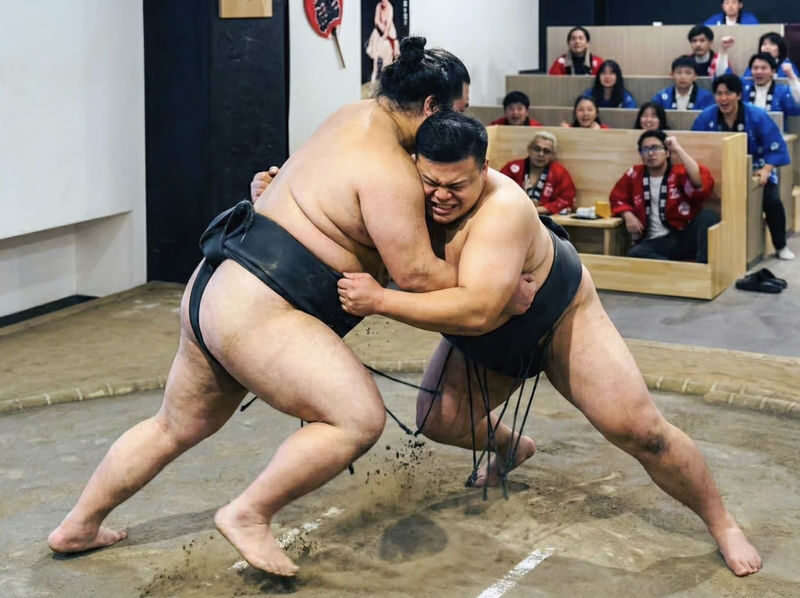
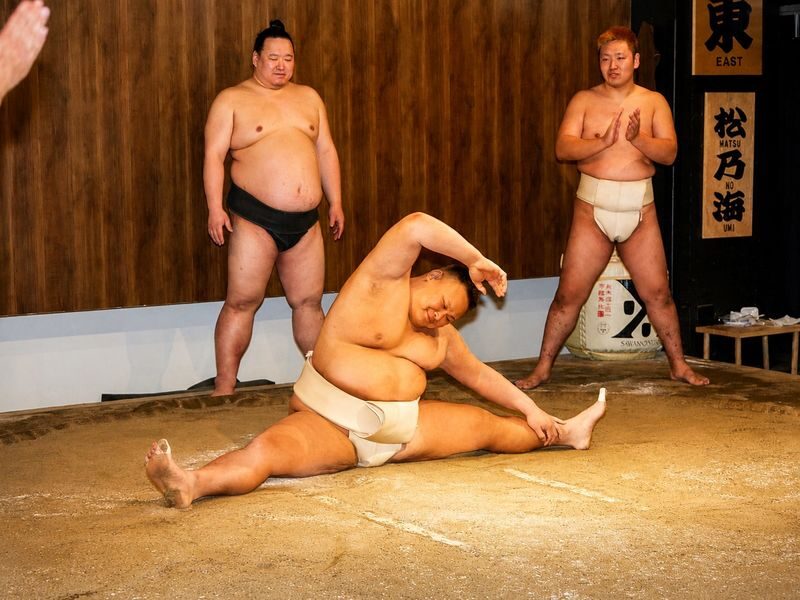
Plan B is the more physical option. A former wrestler leads you through basic movements and training drills, including shiko, the broad-legged stamping exercise, suri-ashi, the sliding step, and butsukari-geiko, a pushing practice. You can wear a kesho-mawashi, the decorative belt used for ceremonial appearances, for a photo.
For visitors deciding between them, ask yourself a simple question: do you want to sit close to the ring and watch, or do you want to try the movements yourself? The two formats are not interchangeable, and the booking information says a group can book only one plan.
You can also read our reviews of more tours and experiences in Tokyo.



Plan A: close seats, demonstrations and a chance to wrestle
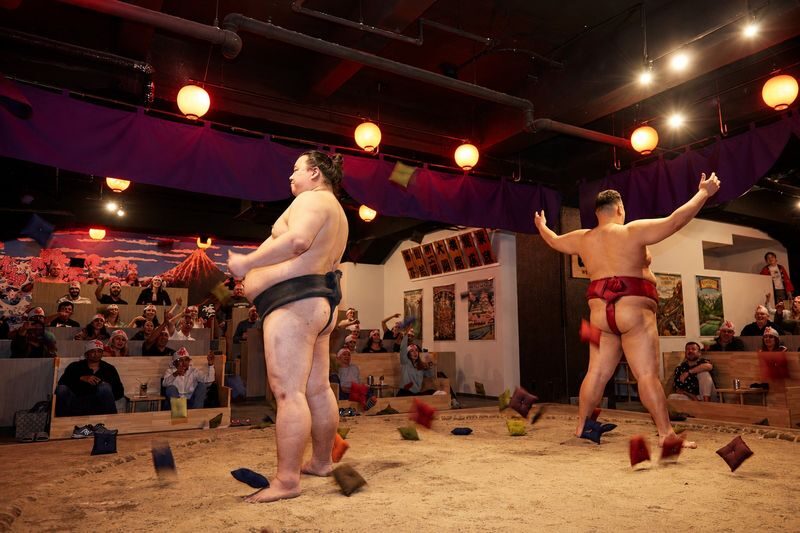
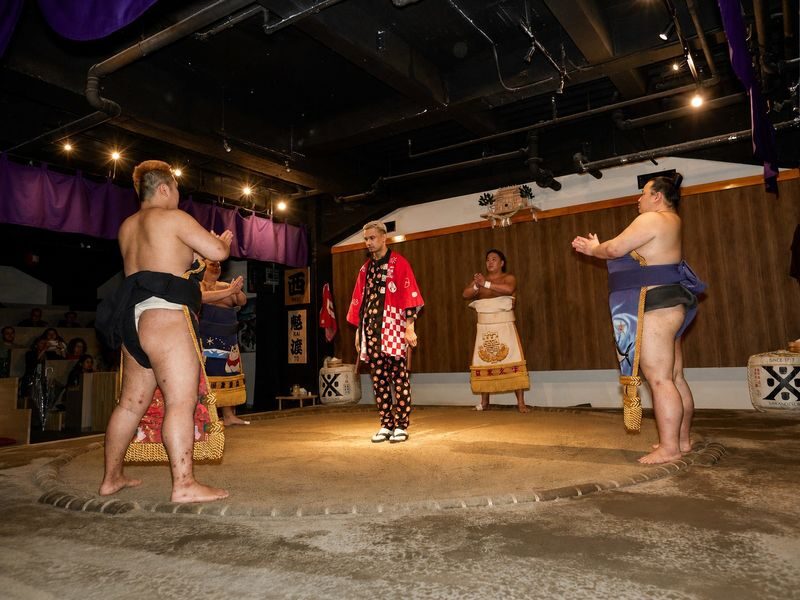
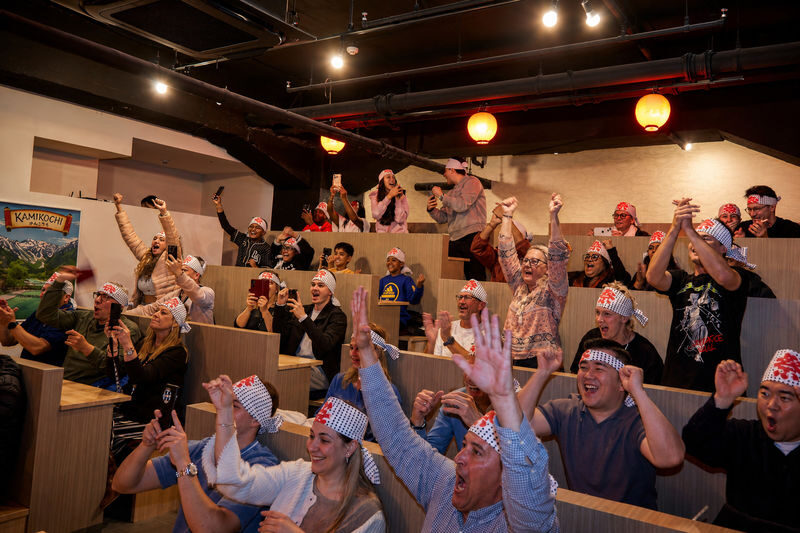
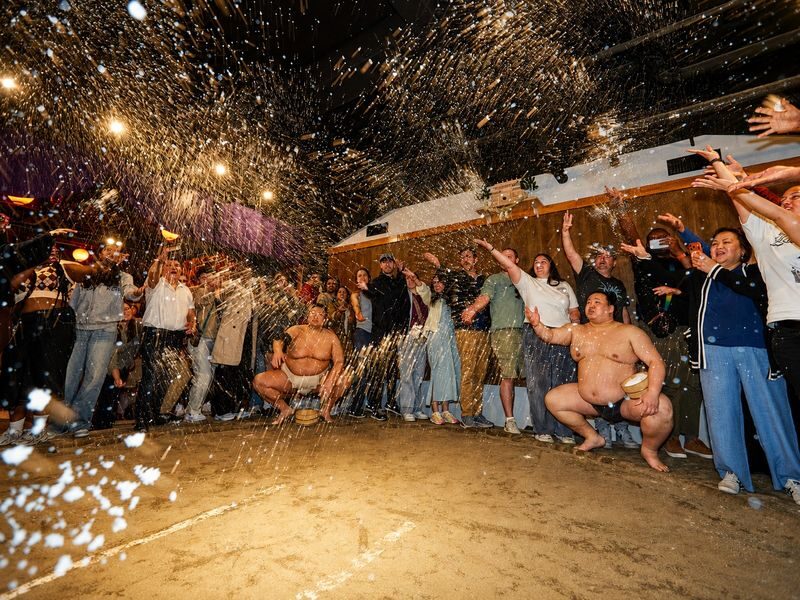
The show’s main draw is the mix of sumo action and explanation. You sit near the dohyo, the ring, and watch wrestlers demonstrate bouts and the rituals that frame them. The show introduces gestures and customs, including shiko and throwing salt, so you can better understand what is happening before the action starts.
A host and staff help keep the explanations accessible, with English-speaking support available. Names such as Nick, Hillary and Hiro have been part of the hosting or translation team at different sessions, while wrestlers have included Maru, Shido, Bun Go and Matsu. Staffing can change, so treat these as examples, not a promise of who will lead your show.
The entertainment is deliberately light. The wrestlers play to the audience, and the host helps keep the energy moving. That makes the show a good choice for families and for anyone who would find a formal sporting event hard to follow. It also means you should not expect the quiet focus or competitive tension of an official tournament.
One of the most memorable possibilities is the audience challenge. A lottery selects someone to face a wrestler, which means you might get the chance, but you should not book on the assumption that you will. Children have been selected, too, and that can make a family outing especially lively. If you are chosen, follow the staff’s instructions and keep in mind that this is a staged experience, not a test of strength.
Plan A offers general and premium seating. The available details do not spell out the precise differences between the two, so check the booking options if seat position is important to you. For a group, buy all tickets together in one transaction. Seating is limited, and separate bookings may leave your party apart.
Plan B: 60 minutes of sumo drills
Plan B is for people who want more than a ringside view. In a one-hour session, a former wrestler teaches basic sumo movements and training exercises. You can expect to work through shiko, suri-ashi and butsukari-geiko, with the session paced to your ability.
The drills have a purpose beyond a fun photo. Shiko trains balance and leg strength; suri-ashi teaches the low, sliding footwork that helps a wrestler stay grounded. Butsukari-geiko gives you a taste of the effort involved in pushing and resisting. The activity is physical, and participants have found it more demanding than they expected, so wear clothes you can move in and be ready to sweat.
The training is described as being led by former pros, with the package named for Makuuchi wrestlers. You also receive a signed tegata, a handprint board, as a keepsake. Wearing a kesho-mawashi for a photo adds a ceremonial touch, but the real value is in trying the movements under guidance rather than merely posing beside the ring.
There are firm limits: Plan B is not suitable for children under five, pregnant participants, or anyone with health issues. Children must be accompanied by a guardian. If you have a concern about physical effort, it is sensible to choose the show instead, or contact the operator before booking.
Food service is currently unavailable for Plan B. This is worth planning around, especially because some descriptions of the overall experience mention chanko-nabe. Do not assume that meal is part of the training package.
Sumo culture, explained without a rulebook
Sumo can look simple from the seats: two wrestlers, one ring, and a quick finish. The rituals are part of what gives the sport its character, though, and this experience makes them visible. The salt, stomping and formal gestures are not incidental stage business. They help explain why sumo is both a physical contest and a tradition with its own rules and symbols.
That accessible framing is useful if you have never watched sumo before. You can ask questions, see the techniques up close and learn how wrestlers train. The show compresses an introduction into a visit that can fit into a Tokyo itinerary, while Plan B offers a more direct lesson through movement.
There is a trade-off. Plan A simplifies sumo for an audience, and its playful tone is not the same as watching a serious match. If your priority is an unfiltered view of professional competition or morning practice, this is not that. If your priority is understanding the basics and having a chance to participate, the format makes more sense.
Chanko-nabe and the food question
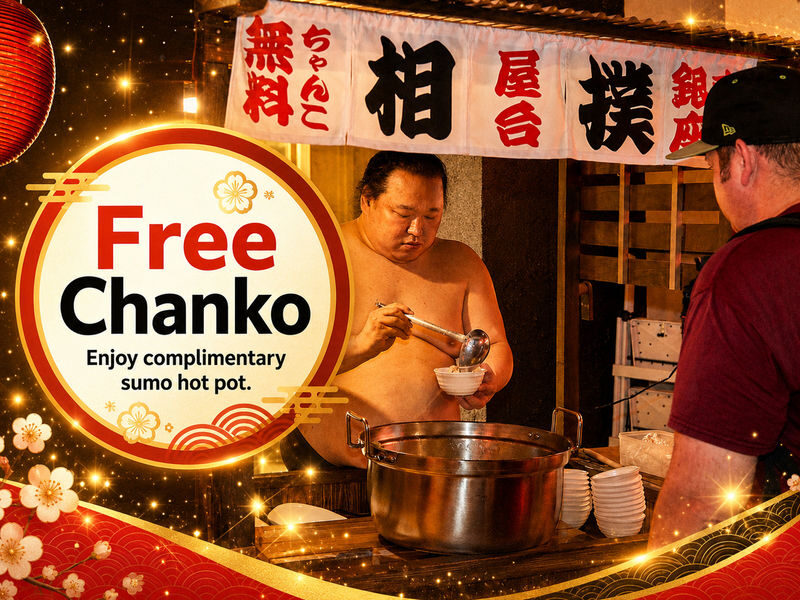
Chanko-nabe is the hot pot closely associated with sumo stables, and it is often part of the appeal of a sumo-themed evening. The information for this experience is not consistent: one description says Plan A includes bottomless chanko-nabe and drinks, while the practical notes say both plans exclude meals and that Plan A guests can order from an on-site menu. Other details say food service is unavailable during Plan B.
Because of that mismatch, verify what your selected ticket includes before you book. If food is available separately, the venue is cashless, so bring a credit card for food, drinks and other on-site purchases. One family particularly enjoyed the soup, while another visitor found drinks and other food expensive and suggested eating before or after the show. That is sensible advice if the meal inclusion is unclear.
Vegetarian and vegan meals are available on request for Plan A, and you should tell staff when you arrive. The venue cannot provide halal-certified, gluten-free, lactose-free or allergy-safe meals, though outside food is allowed for guests with halal requirements or severe food allergies. If dietary needs are central to your plans, contact the venue before booking rather than relying on an on-site solution.






Is the price worth it?
Prices start at $60.65 per person, with the final cost depending on the plan and, for Plan A, the seating choice. The value comes from the combination of access to the ring, demonstrations, explanation and participation, rather than from watching a long competitive event.
For a family, the show can make sense as a shared activity. Adults get the cultural context, children can try the gestures, and the lottery challenge creates a chance for someone in the group to step into the ring. Still, because the challenge is not guaranteed, do not treat it as a promised feature for one specific person.
Plan B may be the better value if you actively want to train and are comfortable with physical effort. The hour includes instruction in several techniques and a signed handprint board. If you mainly want to see sumo and learn its basic customs, Plan A is likely the more comfortable choice.
Premium seating may be worth considering if being close to the action matters to you, but the available details do not explain exactly what the upgrade changes. Compare the package descriptions before paying more. Also remember that drinks and any food not included in your ticket are extra, and all on-site payments are by card.
Practical details for a smoother visit
The venue is at Ginza Inz 1, B1, 3-3-1 Ginza-nishi, Chuo-ku, Tokyo 104-0061. If taking a taxi, the operator advises asking to be dropped near the entrance to Ginza Inz 1 on Sotobori-dori, since the venue itself is underground.
Children and infants must be included in the passenger headcount, and children need a guardian. Wheelchair users should contact staff in advance. There are only limited wheelchair spaces, so early notice is important.
The venue allows photography and video recording. That is useful for capturing the rituals and any training moments, but do follow staff directions around the ring. Group seating is limited, so book everyone in the same transaction if sitting together matters.
Who should book this Ginza sumo experience?
Choose Plan A if you want an upbeat introduction, clear explanations and the chance to join in without committing to a workout. It suits families, first-time sumo watchers and visitors who missed the timing or tickets for a tournament but still want to see the sport up close.
Choose Plan B if you are eager to try sumo footwork and pushing drills, and you are fit to take part. It is the more physical and hands-on choice, but not suitable for everyone. The signed tegata and ceremonial photo are nice extras, while the training itself is the main reason to go.
I would skip this experience if you want a serious tournament atmosphere or a guaranteed chance to wrestle. For everyone else, Plan A offers an easy, sociable way into sumo, and Plan B gives you a rare chance to feel some of the effort behind it. Just confirm the food arrangements and choose the format that fits your energy.
Tokyo Ginza Sumo Experience: Performance vs Pure Practice
“Lovely experience and very informative on sumo wrestling history,good sumo wrestling also”
FAQ
Is the Plan A show an official sumo tournament?
No. It is an entertaining show designed to make sumo accessible to adults and children, not an official competition or Honbasho.
Can I wrestle against a sumo wrestler?
Plan A includes a lottery-based challenge, so you may be selected to face a wrestler, but participation is not guaranteed.
What do you do during Plan B?
The 60-minute training session covers shiko, suri-ashi and butsukari-geiko, led by a former wrestler. Participants can also wear a kesho-mawashi for a photo.
Is Plan B suitable for children?
It is not suitable for children under five. Children also need to be accompanied by a guardian.
Is food included in the ticket?
The food information is inconsistent. Some details describe all-you-can-eat chanko-nabe, while practical notes say meals are extra and food is unavailable for Plan B. Confirm the current terms for your exact package before booking.
Are vegetarian and vegan meals available?
Vegetarian and vegan meals are available on request for Plan A. Tell staff when you arrive.
Can I pay cash at the venue?
No. The venue is cashless, and on-site payments for food, drinks and other services must be made by credit card.