Mount Fuji is the headline, but this day gives you much more than a chance to point a camera at Japan’s best-known peak. You’ll move from Hakone’s volcanic steam and Lake Ashi to the Fuji foothills, where swans gather at Lake Yamanaka and clear spring ponds dot Oshino Hakkai. The change of scenery is the real draw.
I like that the Owakudani Ropeway ticket is included and that a guide handles the long bus route between stops. I also like the mix of a shrine, a lake cruise option, a volcanic valley, and rural spring ponds. The catch is the pace: this is a full day with short visits, and Fuji can disappear behind clouds just when you reach the best viewpoints.
- See two distinct regions in one day: Start in Hakone, then continue to Lake Yamanaka and Oshino Hakkai near Mount Fuji.
- Ride over Owakudani: The ropeway ticket is included, with views of the volcanic valley from glass-sided cabins.
- Choose your pirate ship package: The Lake Ashi cruise costs ¥1,700 one way if bought separately; another package includes a ticket.
- Make room for short stops: Hakone Shrine, the lakes, and Oshino Hakkai each get limited time, so plan to keep moving.
- Expect an early start and a long ride: Round-trip transport from Tokyo saves transfers, but traffic can push the return later.
- Treat Fuji views as a bonus: Visibility changes with weather, and the tour runs even if the mountain is hidden.
- One Day, Two Sides of Mount Fuji
- Hakone Shrine and the Heiwa no Torii
- Lake Ashi by Pirate Ship or Shore
- Owakudani’s Steam and Ropeway Views
- Lake Yamanaka and Its Swans
- Oshino Hakkai’s Spring Ponds
- The Price, What’s Included, and What It Buys You
- Timing, Weather, and Small Details That Matter
- Who Should Book This Day Tour?
- FAQ
- Is the Owakudani Ropeway ticket included?
- Is the Lake Ashi pirate ship ticket included?
- What is included in the tour price?
- How long is the tour?
- Where does the tour return to?
- Will I definitely see Mount Fuji?
- What happens if the ropeway or pirate ship is suspended?
- Can I bring luggage, and are children allowed?
- The Best Of Fujiyoshida!
- More Tickets in Fujiyoshida
- More Tours in Fujiyoshida
- More Tour Reviews in Fujiyoshida
- Not for you? Here's more nearby things to do in Fujiyoshida we have reviewed
One Day, Two Sides of Mount Fuji
This tour makes a useful trade: you trade the freedom of a self-planned route for the chance to see several far-flung places without arranging each transfer. Hakone and the Fuji Five Lakes area do not sit next door to one another, and fitting both into one day by public transport takes planning. Here, a bus carries you between them while an English- or Chinese-speaking guide manages the group and explains the stops.
The route pairs different kinds of scenery. Hakone brings a shrine beside Lake Ashi and the steaming volcanic terrain of Owakudani. Farther east, Lake Yamanaka offers open water and Fuji views when the weather cooperates, while Oshino Hakkai is a village setting known for its spring-fed ponds.
That variety explains the tour’s appeal, and its limitation. You get a sampler, not a slow visit. Stops are generally self-guided, and the schedule gives you enough time for a look and photos rather than a long wander. If one place captures you, the bus still has a departure time.
The group can range from one to 49 people, and the vehicle depends on the number booked. Seat requests may be noted but are not guaranteed. Guides including Yaya, Will, Sakuragi, and Ohashi have been praised for helpful explanations, clear reminders, and keeping people together at busy transition points. The guide’s delivery matters on a day when you are moving often.

👉 See our pick of the 3 Best Tours In Fujiyoshida
Hakone Shrine and the Heiwa no Torii
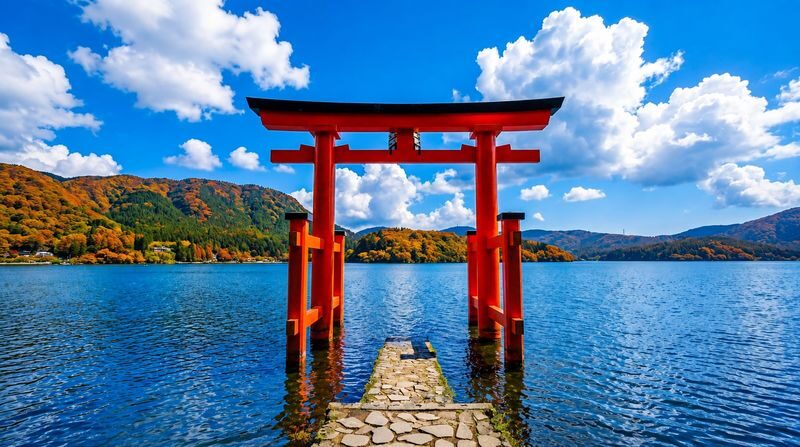
The morning begins at Hakone Shrine, founded in 757 and set among the mountains by Lake Ashi. Its most famous photo spot is the Heiwa no Torii, the red gate standing in the water. It is a striking meeting of shrine, lake, and mountain, and a popular place to stop for pictures.
You have about 40 minutes at the shrine, followed by 20 minutes at the torii. That is enough for a focused visit, but not a leisurely exploration of every path or a guarantee of an unhurried photo. The torii is a well-known sight, so expect other people around it, especially during peak periods.
I’d use the time with a simple plan: see the shrine, walk to the lakeside gate, take your photos, and return promptly. The tour description connects the gate with Mount Fuji views, but Fuji visibility depends on weather. The gate itself remains a worthwhile sight even when the mountain is covered.
You can also read our reviews of more tours and experiences in Fujiyoshida

Lake Ashi by Pirate Ship or Shore
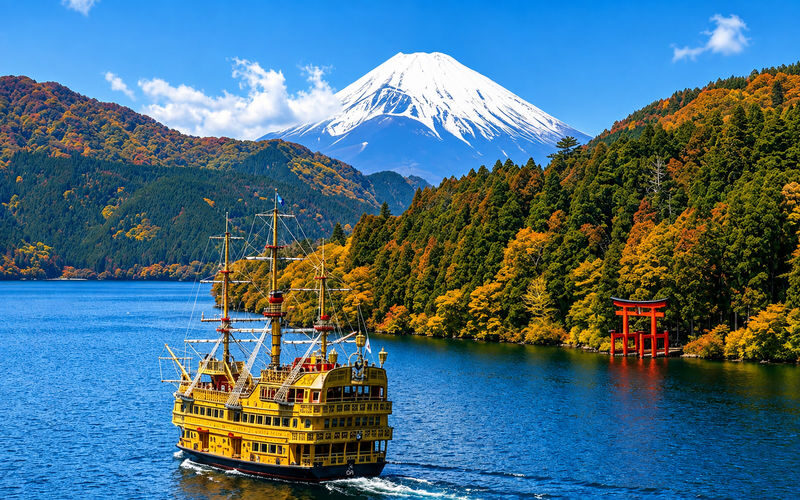
At Togendai Port, you have a 30-minute stop associated with the Hakone pirate ship. The vessel is styled after an old European warship, and a cruise across Lake Ashi offers a different view of the water, surrounding mountains, and, on clear days, Mount Fuji.
Here is the practical choice: the standard package does not include the boat ticket. A one-way ride is listed at ¥1,700, while a separate package includes the pirate ship ticket as well as the ropeway. If you want to ride, compare the package prices before booking and check what is included in your selected option.
The short port stop means you should not assume there is time for a long cruise and a relaxed visit to the surrounding area. The boat is a memorable extra, but the tour continues whether or not you board. If you want the simplest day, choosing the package with the ticket can spare you a ticket purchase on site. It does not remove the need to follow the group’s meeting time.
Owakudani’s Steam and Ropeway Views
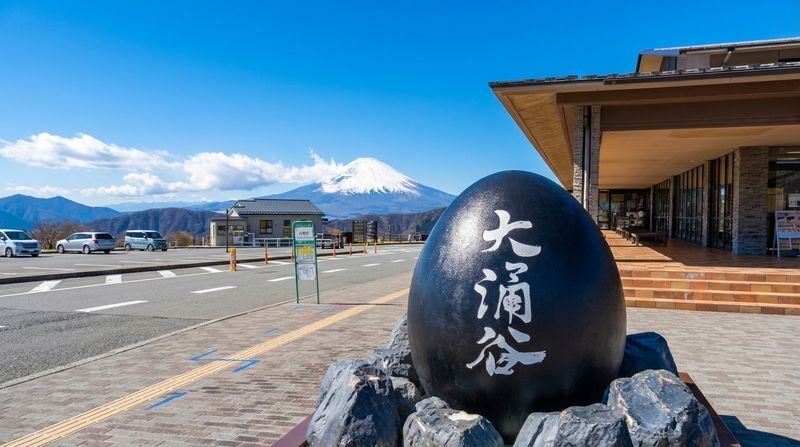
Owakudani is the day’s most unusual stop. The valley was formed by volcanic activity around 3,000 years ago, and geothermal steam rises from the exposed ground. Sulfur is part of the experience, so you may notice its smell in the air. The setting feels stark and active, a sharp contrast with the shrine and lake.
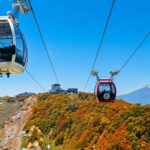
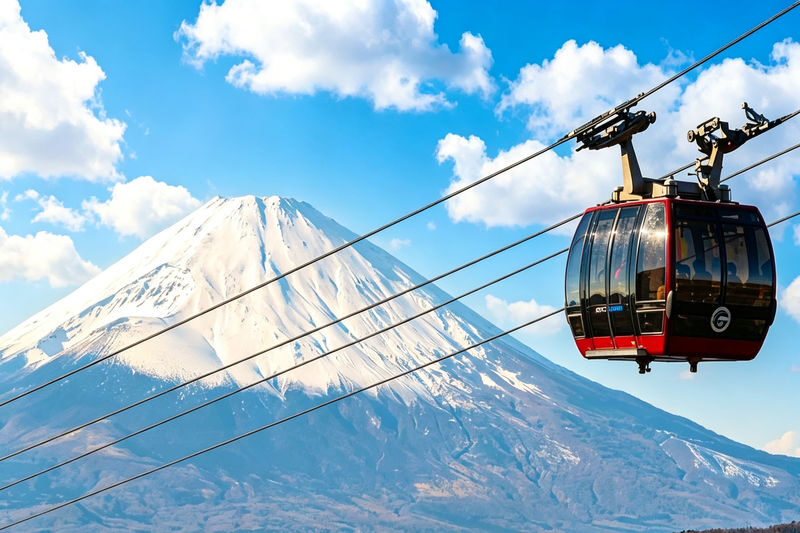
The Hakone Ropeway gives you a view from above as the cabins cross the volcanic area. Its glass design helps open up the view, and on clear days you may see Lake Ashi and Mount Fuji in the distance. The ropeway ticket is included in the tour price, but it is a complimentary ticket with no refund or change if you cannot use it.
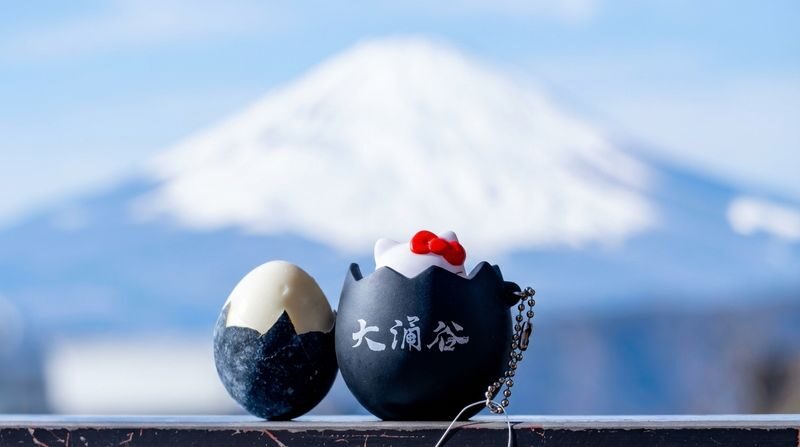
The schedule gives Owakudani two blocks, about 30 minutes for the ropeway and 40 minutes to explore. That is enough to look around and, if available, try the famous black eggs. Keep an eye on the time and follow any local instructions: ropeway operations and access can change with weather or other conditions. If the service stops, the operator may adjust the route or time at the attractions.
Lake Yamanaka and Its Swans
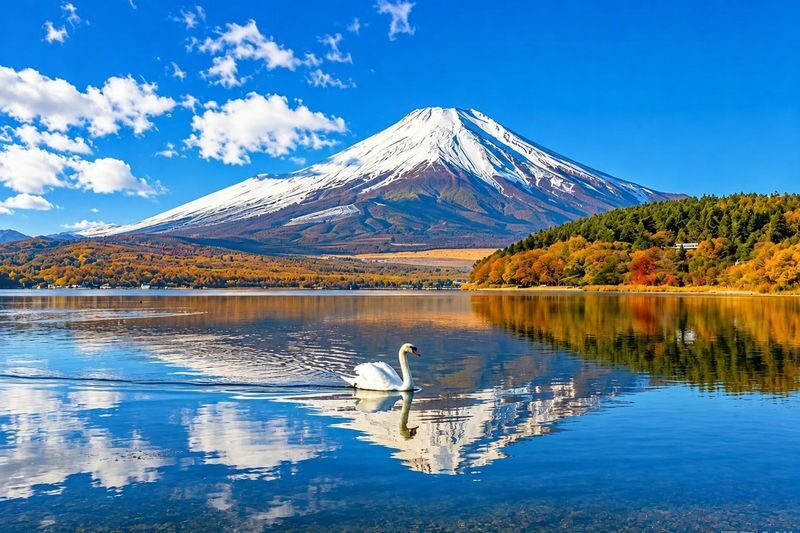
After Hakone, the bus heads toward the Fuji foothills and Lake Yamanaka, the largest and highest-altitude of the Fuji Five Lakes. Its broad water and open views offer a change of pace after the volcanic valley. On a clear day, the lake is a strong place to look for Mount Fuji’s reflection, sometimes called Upside-Down Fuji.
Swans are another draw. The tour includes a special arrangement for feeding them, offering a close look at the birds along the shore. It is a small, hands-on moment that can be especially appealing if you are travelling with children. The time allocated at the lake is not stated, so treat it as a brief stop rather than a chance to plan a separate boat outing.
The mountain may not appear. Fuji visibility varies with weather, and summer is noted as a season when views can be less reliable. I would think of the lake, swans, and surrounding foothills as the visit itself, with a clear Fuji view as an extra rather than a promise.
Oshino Hakkai’s Spring Ponds
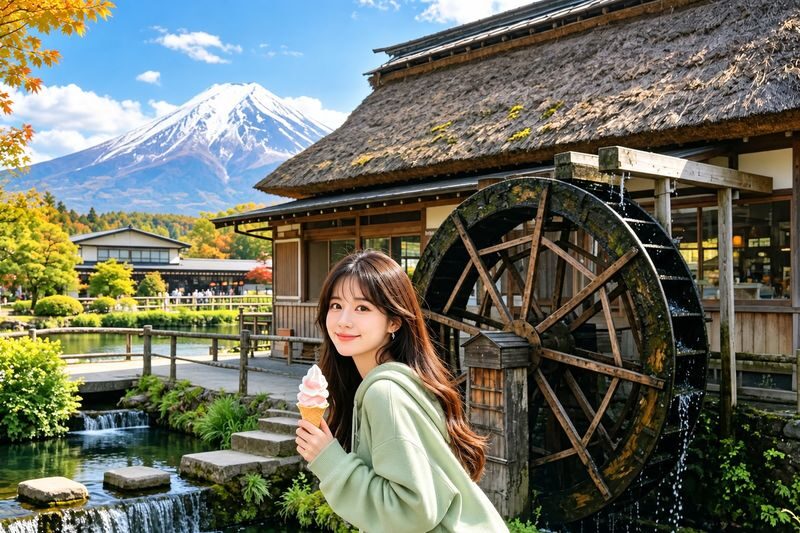
Oshino Hakkai is a village of eight natural spring ponds, fed by meltwater from Mount Fuji that has filtered through the ground over many years. The water stays around 13°C year-round, and the clear pools are the main attraction. You can also taste the spring water, which is described as safe to drink directly.
You get about 50 minutes here, the longest clearly stated stop outside Owakudani. That gives you time to walk among the ponds, take in the village setting, and look for the differences from one pool to another. It is a compact place, not a wilderness walk, and it can be busy. Keep your visit respectful and stay aware of the group’s return time.
Oshino Hakkai makes a good final stop because it is quieter in mood than Owakudani. You move from steam and bare volcanic ground to water, village paths, and a slower pace. If you buy food or drinks, remember that meals and beverages are not included in the tour price.


The Price, What’s Included, and What It Buys You
Prices start at $49.29, though the final cost depends on the date and package. For that starting price, the main value is the round-trip bus from Tokyo, the guide, and the Owakudani Ropeway ticket. You are paying to connect several destinations in one day without managing mountain-area transport yourself.
The pirate ship is the main extra to check. The basic package excludes it, while a separate option includes the ticket. Meals, drinks, personal purchases, and insurance are also not included. If you choose the basic option, budget for the cruise only if you want to ride, and bring a little extra for snacks or anything you buy at the stops.
For a first visit to the region, the price can make sense because it combines Hakone and Fuji-area sights in one outing. The trade-off is limited time at each place and a fixed route. If you want to spend several hours at the shrine, take a longer lake cruise, or explore the village at your own pace, an independent trip or overnight stay gives you more control.
Timing, Weather, and Small Details That Matter
The tour lasts about 9.5 hours, with departures listed at 07:30 or 08:00 depending on the meeting arrangement. Return points include Shinjuku West Exit Mitsui Sumitomo Bank and JR Tokyo Station Marunouchi North Exit, with listed arrival times of 17:10 and 17:40. Road conditions can change those times, so do not book a same-evening flight, Shinkansen, or dinner that depends on a tight arrival.
Arrive at the meeting point 10 minutes early. Late arrivals and no-shows are not refundable, and the group does not wait for latecomers. Guide and vehicle details are sent by email the day before, so check your inbox and spam folder. During Obon season, from August 8 to 16, traffic and crowds can be heavier; bring a power bank and a light snack.
Wear comfortable walking shoes and bring clothing suited to the season. Mountain weather can differ from Tokyo’s, and winter visitors are advised to bring warm layers. The schedule may change because of weather, traffic, maintenance, or suspended transport. Fuji’s visibility is never guaranteed, and seasonal flowers or autumn color may not coincide with your visit.
Luggage storage and delivery are not provided, and you should tell the operator in advance if you need to bring luggage. Children and infants must be included in the passenger count, and participants must be under 70. The tour does not include travel or accident insurance.
Who Should Book This Day Tour?
Book it if you want a convenient overview of Hakone and the Fuji foothills without piecing together bus, boat, and ropeway connections. It suits first-time visitors, families who like a varied day, and anyone who would rather let a guide handle the schedule. The strong points are the number of distinct sights, the included ropeway ticket, and the guides’ reported knack for keeping the group organized and explaining what you are seeing.
Think twice if your priority is unhurried time, a guaranteed Fuji photo, or a late return to Tokyo. The schedule is full, and traffic can stretch the day. If that trade-off sounds fair, this is a practical way to see shrine, lake, volcano, and spring ponds in one outing. Choose the pirate ship package if the cruise is part of your plan, and keep your evening open.
(Includes Owakudani Ropeway Ticket) Mount Fuji & Hakone Panoramic Photo Spot Day Tour: Owakudani, Lake Ashi Pirate Ship, Lake Yamanaka, Oshino Hakkai (Departing from Tokyo)
“A great day filled with a variety of amazing sights and experiences even though Mt Fuji was a little shy. Will, our tour guide, was amazing: knowle…”
FAQ
Is the Owakudani Ropeway ticket included?
Yes. The tour includes a complimentary Owakudani Ropeway ticket. It is non-refundable and non-changeable if you are unable to use it.
Is the Lake Ashi pirate ship ticket included?
Not in the basic package. A separate package option includes the pirate ship ticket, while the listed one-way fare when bought separately is ¥1,700.
What is included in the tour price?
The price includes round-trip transfers from the meeting point, an English- or Chinese-speaking guide, and the Owakudani Ropeway ticket. Meals, drinks, the basic-package pirate ship ticket, personal expenses, and insurance are excluded.
How long is the tour?
The tour is listed as approximately 9.5 hours. The planned return time can change because of road conditions, weather, or other disruptions.
Where does the tour return to?
Return points include Shinjuku West Exit Mitsui Sumitomo Bank and JR Tokyo Station Marunouchi North Exit. Listed arrival times are 17:10 and 17:40 respectively, but actual arrival depends on road conditions.
Will I definitely see Mount Fuji?
No. Fuji visibility depends on the weather, and the tour runs even when the mountain is hidden by clouds.
What happens if the ropeway or pirate ship is suspended?
If a ropeway, cruise, or other facility is suspended because of weather or force majeure, the itinerary may be changed or time at other stops adjusted. Complimentary tickets are not refundable or changeable if you cannot ride.
Can I bring luggage, and are children allowed?
Luggage storage and delivery are not provided, and you should inform the operator in advance if you need to bring luggage. Infants and children must be included in the passenger count, and participants must be under 70.