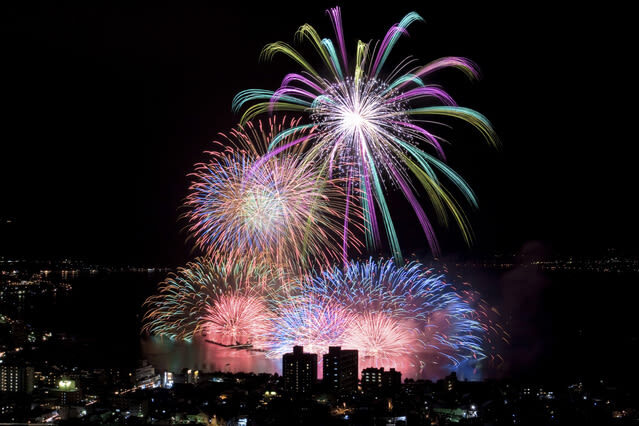
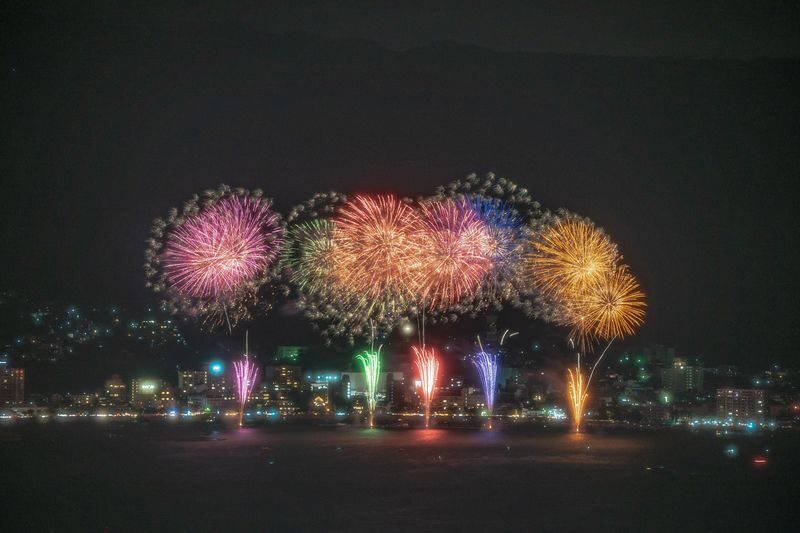
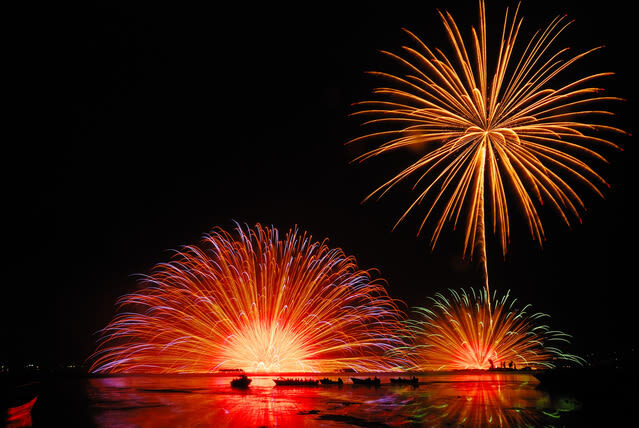
Lake Suwa’s fireworks rise from the water, not a distant field. For one night each year, more than 40,000 shots light the lake, and the signature Kiss of Fire spreads in half-circles above the surface, with reflections completing the image. I like the close reserved viewing and the way the surrounding mountains send the sound back across the water.
I also like that this package includes dinner, tea, and Japanese sweets, so you can eat in your seat instead of hunting for food in a crowded festival area. The main trade-off is the long, lightly structured afternoon: you have free time before the fireworks, and you should clarify the guide’s meeting arrangements and your return train plan before booking.
- The details that matter
- Why Lake Suwa makes the fireworks feel different
- What the afternoon actually looks like
- Reserved seats make a crowded festival manageable
- Dinner is more useful than it sounds
- The guide helps, but keep your own plan
- Getting to Kami-Suwa and getting home
- Weather, crowds, and what to bring
- Who should book this Suwa fireworks tour?
- FAQ
- Where is the meeting point?
- What is included in the package?
- How long is the fireworks viewing period?
- Is the Lake Suwa visit guided?
- Can I bring an infant?
- Can I cancel for a refund?
- The Best Of Japan!
- More Tours in Japan
- More Tour Reviews in Japan
- Not for you? Here's more nearby things to do in Japan we have reviewed
The details that matter
 1 / 9
 2 / 9
 3 / 9
 4 / 9
 5 / 9
 6 / 9
 7 / 9
 8 / 9
 9 / 9
- Fireworks launch from the lake: Kiss of Fire blooms just above the water, where its reflection helps form a full circle.
- The mountains add to the show: Suwa’s surrounding slopes bounce the sound back, giving the display a powerful, on-site feel.
- Reserved seats change the evening: You avoid searching for a viewing spot in the crowd and can eat your included bento from your seat.
- Your Name fans get an extra reason to come: Lake Suwa is a model location for the anime film.
- The afternoon has a long free-time stretch: The lake visit is self-guided, so make a plan rather than expecting a tightly led sightseeing tour.
- Check the train timing carefully: The stated 20:45 return time conflicts with a note about a 20:23 train to Tokyo.

👉 See our pick of the 4 Best Snorkeling Experiences In Japan
Why Lake Suwa makes the fireworks feel different
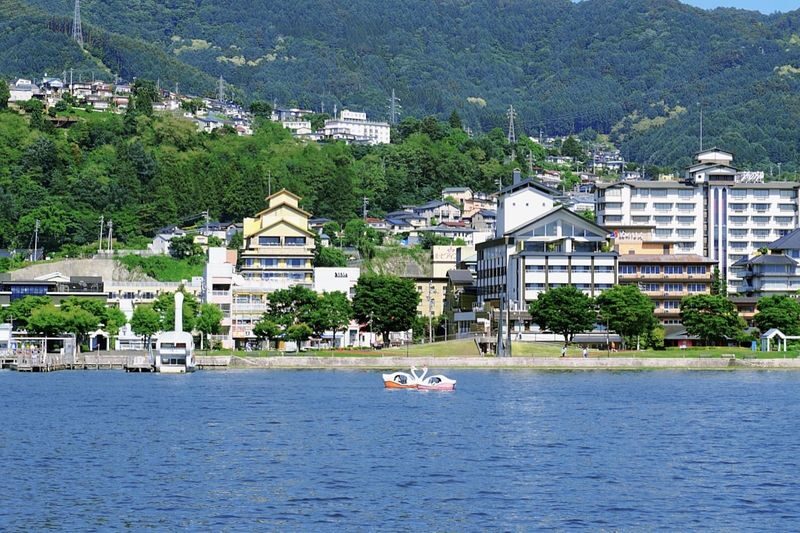
This is not simply a fireworks show with a lake in the background. The launch platforms sit on the water, so the display plays across both sky and surface. When Kiss of Fire opens into semi-circular bursts, the reflection supplies the other half of the shape. It is an effect that depends on being there beside the lake, not watching a distant show through a phone screen.
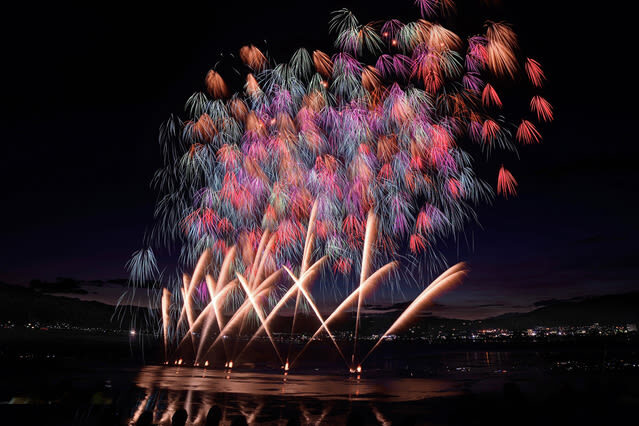
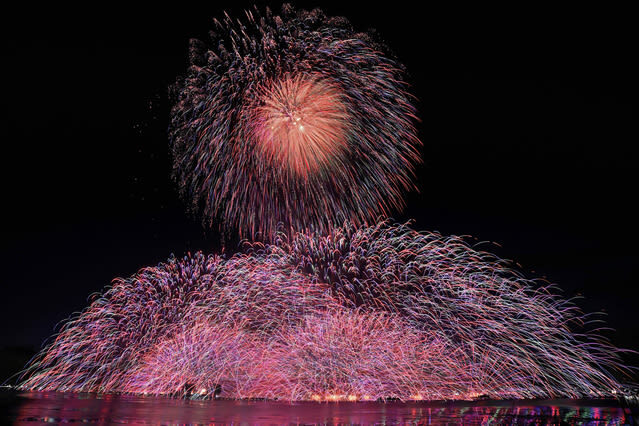
The setting adds another layer. Mountains surround Lake Suwa, and the sound reverberates across them. That does not mean every burst will sound identical from every seat, but it does explain why the festival’s setting matters as much as its scale. The organizers launch an estimated 40,000 fireworks in a single annual event, and the close lakefront viewpoint lets you take in the bright flashes, their reflections, and the echo together.
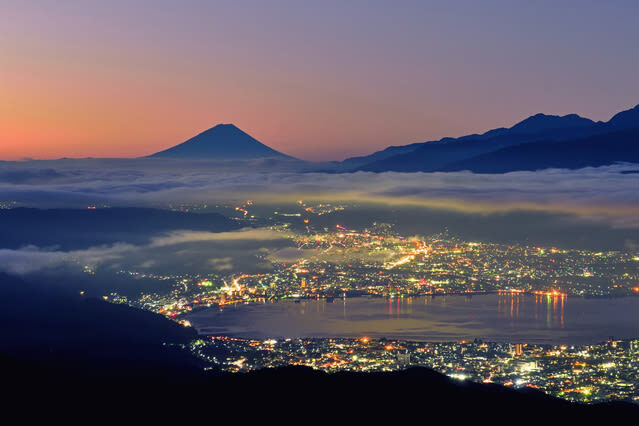
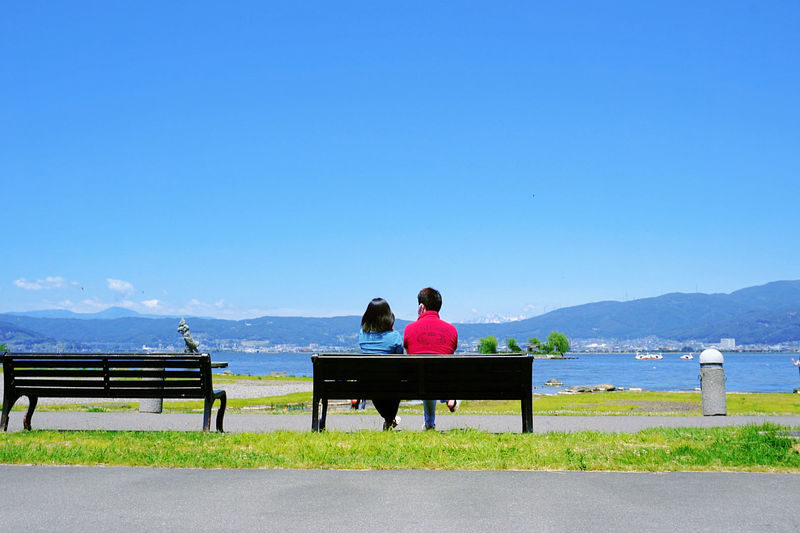
Suwa also has an appeal beyond fireworks. Lake Suwa served as a model location for Makoto Shinkai’s Your Name, making it a worthwhile stop for fans who want to see the scenery associated with the film. The tour does not promise a full film-location circuit, though. Think of the lake visit as time to enjoy the area and make your own way around, rather than a guided anime-themed walking tour.
You can also read our reviews of more tours and experiences in Japan.



What the afternoon actually looks like
The meeting is at 2:00 pm at Exit 2 of JR Kami-Suwa Station. Arrive at least 10 minutes early. The tour information says latecomers and no-shows cannot receive a refund, so this is not a day to cut your station connection close.
The schedule allows two hours at Lake Suwa from about 2:30 pm, marked as self-guided. That gives you time to see the lakeside area or choose an activity independently, but no specific route or attraction is guaranteed. One suggested point of interest from the event-day arrangements is Tateishi Park, which offers a different view over the lake. Getting there may involve a taxi, and any group outing to the park depends on coordination with the guide.
After the lake stop, there is a substantial wait before the fireworks. One account of the event described a gathering for entry around 4:50 or 5:00 pm, although the precise timing can change. The listed fireworks viewing period is 7:00 to 8:45 pm. Weather and traffic can affect the schedule, and the show may run later than the planned return time.
That gap between the lake visit and entry is the tour’s main weakness. In hot weather, shade and air-conditioned places can be scarce; nearby shops may close or switch to takeout service for the festival. A museum near Katakuranokan has been suggested as a cooler place to pause, but check its opening status and hours on your date rather than counting on it. Bring water, sun protection, and a simple plan for where to spend the wait.
Reserved seats make a crowded festival manageable
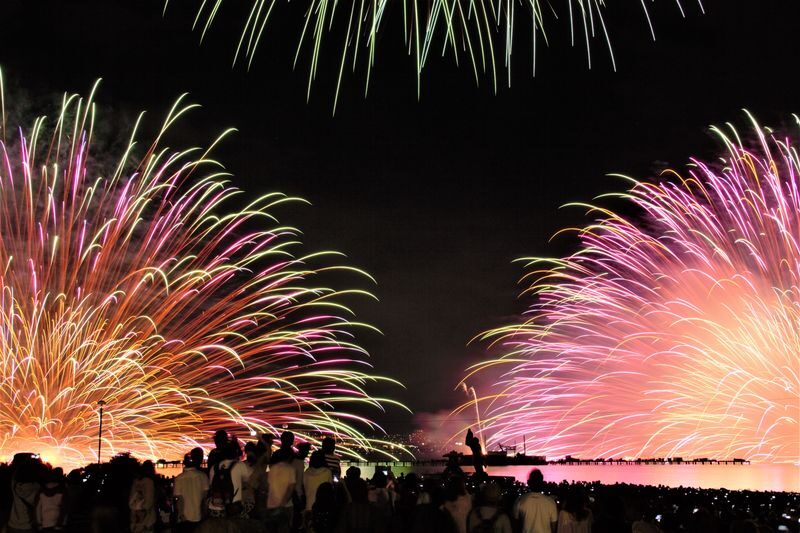
The strongest practical reason to book is the reserved seating. Suwa’s event draws a very large crowd, and the viewing area can feel packed. Instead of spending the late afternoon trying to claim a patch of ground, you have a designated seat for the display. That is worth real money on a festival night, especially if you want to focus on the show rather than keep checking whether someone has taken your spot.
The seats are close together, so expect a compact seating arrangement, not elbow room. The advantage is proximity: one account described watching from the fifth row, a close vantage point for the lake bursts. Your exact row is not specified, so do not assume you will be in the front section. The package guarantees a reserved seat, not a particular location within that area.
Dedicated toilets have been available for people in the reserved section. That can be a meaningful comfort during a long wait, when public facilities around a major event are under pressure. Still, plan ahead and use facilities when convenient rather than waiting until the show is about to begin.
Cell service may become unreliable in the crowd, and calling a taxi can be difficult. Set a clear meeting point and time with your group before anyone heads off. Save the tour contact details and any directions while you still have a good connection.
Dinner is more useful than it sounds
The package option priced from US$208.09 includes reserved seating, a bento box, tea, and Japanese sweets. The wider tour information also lists dinner and a Chinese, English, or Japanese-speaking guide. The meal is not just a nice extra: it helps solve the problem of finding food during a crowded festival, when nearby shops may be closed or operating only for takeaway.
You can eat at your seat and then stay put for the show. That keeps the evening simple, particularly if you have already spent several hours outdoors. The food is described as a bento with tea and sweets, but the exact menu is not specified, so do not book expecting a particular dish or dietary accommodation.
At this price, the value rests mainly on the reserved view and the ease of having a meal included. You are not paying for a full-day coach tour with continuous commentary or a packed sightseeing program. You are paying to secure a seat at a major one-night event, with food and some guide support built around it. If you are comfortable arranging your own afternoon, that can be a sensible trade.
The guide helps, but keep your own plan
The tour includes a guide who speaks Chinese, English, and Japanese. Guide support can be useful for collecting tickets, explaining how the day is arranged, and helping you understand local logistics. A guide has also shared information about Nagano and advised on rain protection when the forecast looked uncertain.
Still, the experience depends in part on clear coordination. The afternoon has free time, and arrangements can involve optional outings and set meeting times. Past event-day coordination has not always been smooth, so I would confirm exactly where to meet, when to return, and how the guide will contact you before splitting from the group. Do not assume someone will spot you in a crowd or wait indefinitely if you miss a meetup.
The tour is not a continuous guided tour of Suwa. You have a self-guided lake period, followed by the fireworks. If you want detailed commentary at every stop, this may feel thin. If you mainly want help with the reserved seats and event logistics, the guide’s presence is more useful.

Getting to Kami-Suwa and getting home
From Tokyo, the meeting point is reachable from Shinjuku by JR Chuo Main Line in about two and a half hours, or by highway bus in about three hours. From Nagoya, the stated rail route goes via Shiojiri and takes about two hours and 15 minutes. These are journey estimates, not a promise that every connection will line up with the 2:00 pm start. Check the timetable for your date and leave room for delays.
The return details deserve special attention. The tour gives 8:45 pm as the return time at the Lake Suwa Festival venue, and says the guide can accompany participants to the station. It also mentions a 20:23 last train to Tokyo. Those times conflict: a 20:45 return is later than a 20:23 departure. Confirm the actual end time and your train options directly before booking, especially if you need to return to Tokyo that night.
Staying near Lake Suwa is the simpler choice if you want to avoid a rushed departure after a large event. The tour information suggests booking a nearby hotel in advance. If you plan to travel onward the same evening, verify the current timetable and station transfer plan rather than relying on the conflicting note.
Weather, crowds, and what to bring
The event takes place outdoors, and the schedule may shift because of weather or traffic. Rain is a possibility, and a guide has advised bringing raincoats when conditions looked unsettled. A compact rain layer is more practical than an umbrella in a tight seating area, though the tour details do not state a formal rule about umbrellas.
Heat can be the bigger challenge during the afternoon. There may be few air-conditioned places nearby, and you could spend a long stretch waiting outdoors. Carry water, sun protection, and anything you need to stay comfortable while sitting. The package includes tea with dinner, but that should not be treated as your only hydration for the day.
The event is held once a year for one day, so it is worth planning the basics in advance. The voucher is valid only for the date and time specified, and the package cannot accommodate infants in arms. Infants and children must still be included in the passenger headcount. Participants who appear intoxicated may be refused service without a refund.
Who should book this Suwa fireworks tour?
I would consider this package if the fireworks are the main reason for your visit, you value a reserved seat, and you want dinner handled before the show. It is especially appealing if you are a Your Name fan or want to experience how a lake and mountain setting can shape a fireworks display. The reflected Kiss of Fire and the sound echoing around the basin are the details that make this event distinct.
I would hesitate if you expect a tightly managed sightseeing day, dislike crowds, or need a guaranteed early return to Tokyo. The lake visit is self-guided, the afternoon can involve a long wait, and the train timing needs direct confirmation. At US$208.09 and up, the tour makes most sense when reserved seating and reduced festival-night hassle are worth more to you than a full itinerary.
If you book, arrive early, confirm the guide’s exact meetup plan, bring supplies for a hot or rainy wait, and settle your return transport before the day. Those small preparations help preserve the best part: watching the fireworks bloom over the water from a seat you do not have to fight to keep.
Suwa Lake, Japan’s premier fireworks production site, hosts a spectacular 40,000-shot aquatic fireworks display.
“After meeting at Kami-Suwa Station to collect your tickets, the tour leader will suggest several routes you can take. You also have the option not…”
FAQ
Where is the meeting point?
Meet at Exit 2 of JR Kami-Suwa Station in Suwa. The scheduled departure is 2:00 pm, and you should arrive 10 minutes early.
What is included in the package?
The package listed from US$208.09 includes reserved fireworks seating, a bento dinner, tea, and Japanese sweets. A Chinese, English, or Japanese-speaking guide is also included.
How long is the fireworks viewing period?
The schedule allows 1 hour and 45 minutes at the Lake Suwa Fireworks Festival, from about 7:00 to 8:45 pm. The schedule may change because of weather or traffic.
Is the Lake Suwa visit guided?
The two-hour Lake Suwa stop is self-guided. The tour does not specify a fixed sightseeing route for that portion.
Can I bring an infant?
Infants in arms cannot be accommodated. Infants and children must be included in the passenger headcount.
Can I cancel for a refund?
A full refund is available if you cancel at least 14 days before the activity date, based on local time at the destination.