Hakone’s steaming vents and Mount Fuji’s famous photo spots make an unusual pair for one day out of Tokyo. I like the contrast between Owakudani’s sulfur-streaked volcanic ground and the quiet cedar setting of Hakone Shrine, then the shift to Fuji’s red pagoda and street-level views.
I also like that transport connects these widely spread stops, and the Owakudani ropeway ticket is included. The trade-off is a packed schedule: your time at each place is fixed, the pirate ship costs extra, and clouds or traffic can change the plan.
- Key points at a glance
- One day, two very different sides of the Fuji region
- Hakone Shrine and Lake Ashi set a calm opening
- The pirate ship is scenic, but costs extra
- Owakudani is the day’s most unusual stop
- Lunch is flexible, but not included
- Fuji’s convenience-store stop is brief and weather-sensitive
- Hikawa Clock Shop gives you a street-level Fuji view
- Arakurayama Sengen Park rewards the uphill walk
- What the fare covers, and what it does not
- Timing, weather and practical details
- Who should book this day trip?
- FAQ
- Where does the tour depart from?
- Is the Owakudani ropeway ticket included?
- Is the Lake Ashi pirate ship included?
- Is lunch included?
- Will the tour visit both Hakone Shrine and the Water Torii?
- Does the convenience-store stop always go to Lawson?
- What happens if Mount Fuji is hidden by clouds?
- Is the vehicle private?
- Can I cancel the tour?
- The Best Of Hakone!
- More 1-Day Tours in Hakone
- More Tours in Hakone
- More Tour Reviews in Hakone
- Not for you? Here's more nearby things to do in Hakone we have reviewed
Key points at a glance
 1 / 8
 2 / 8
 3 / 8
 4 / 8
 5 / 8
 6 / 8
 7 / 8
 8 / 8
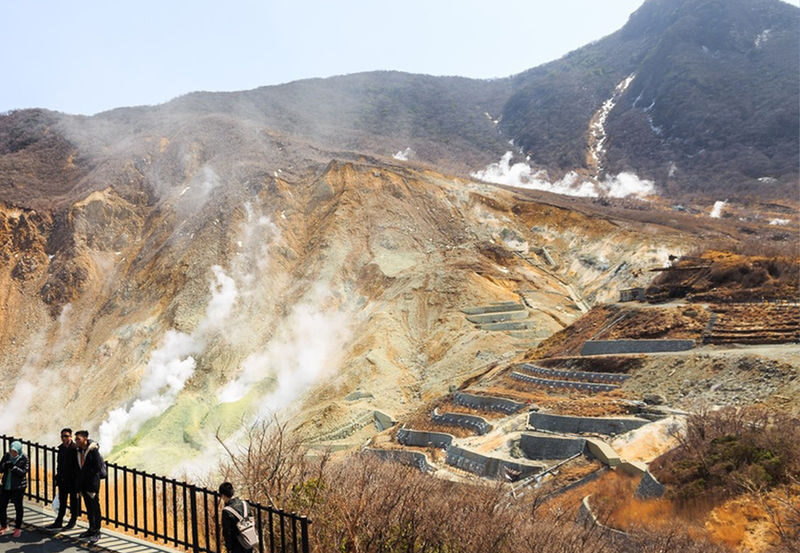
- Owakudani brings the volcanic drama: fumaroles, rising steam and the local black eggs make this more than a viewpoint stop.
- The Lake Ashi boat is optional: the pirate ship takes about 25 minutes from Motohakone to Togendai and costs ¥1,700 if you choose to ride.
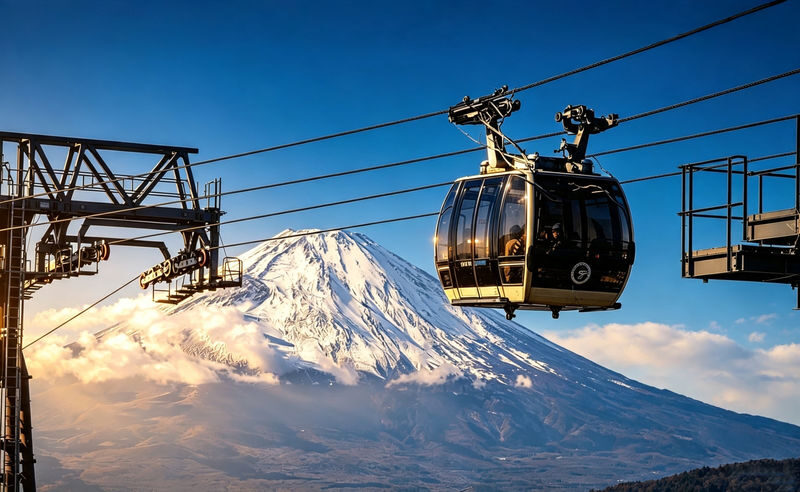
- Fuji views depend on the weather: the clock shop, convenience-store stop and Arakurayama Park are photogenic, but clouds can hide the mountain.
- The ropeway ticket is included: if service is suspended, the tour provides a black egg instead.
- Transport is shared, not private: the vehicle and guide arrangements depend on group size, and you must keep to the stop times.
- Bring lunch or budget time and money for it: meals are not included, and the lunch stop may be shortened or dropped.

👉 See our pick of the 3 Best Spa And Hot Springs Experiences In Hakone
One day, two very different sides of the Fuji region
This is a broad sampler, not a slow visit to either Hakone or the Fuji Five Lakes area. The route first takes in Lake Ashi and Hakone’s volcanic features, then heads toward Fujiyoshida for the familiar Mount Fuji photo locations.
That variety is the tour’s main appeal. If you were arranging the same route yourself, you would need to coordinate transport across a large area and keep an eye on the clock. Here, the bus takes care of the long transfers, while the guide handles meeting points and the day’s order.
The convenience comes with compromises. You’ll be moving on a group schedule, and the itinerary can be adjusted for weather, traffic, capacity or transport service. Some stops are also alternatives rather than guaranteed additions: at Lake Ashi, you choose Hakone Shrine or the Water Torii; near Fuji, the guide chooses a Lawson or 7-Eleven stop based on traffic.
You can also read our reviews of more tours and experiences in Hakone

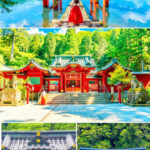

Hakone Shrine and Lake Ashi set a calm opening
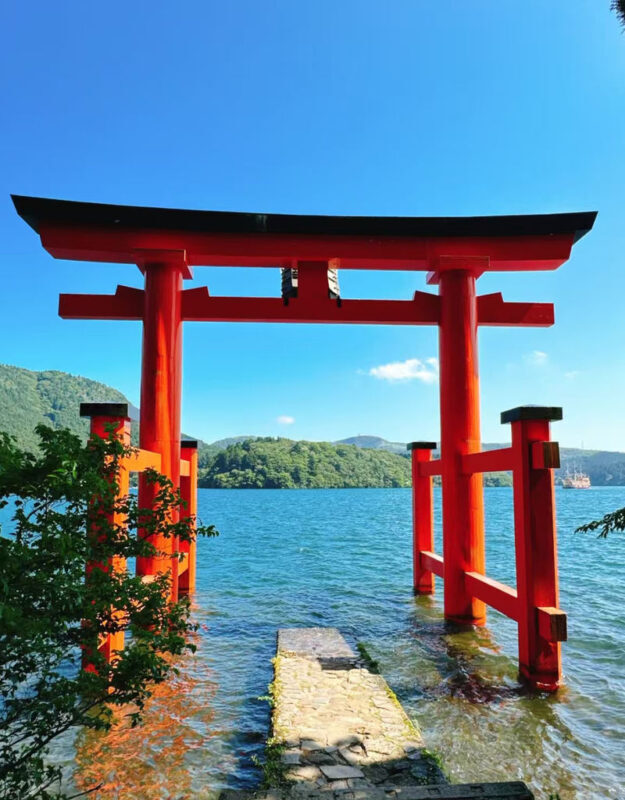
The first major stop is around 10:30, with about 30 minutes for Hakone Shrine or the Hakone Water Torii. Founded in 757, Hakone Shrine sits among cedar trees beside Lake Ashi. It is associated with good luck, protection from misfortune, safe travel and relationships.
The setting is a welcome contrast to the road journey. If your stop is the shrine, expect a wooded approach and a place of prayer, not an open-air Fuji viewpoint. If the group visits the lakeside torii instead, the draw is the gate against the lake, a popular spot for photos. The tour lets the guide choose between these options, so don’t plan on seeing both.
The shrine stop is short. You’ll have time to take in the atmosphere and get photos, but this is not a long, independent visit. Keep track of the meeting time; the group schedule gives the guide little room to wait.
The pirate ship is scenic, but costs extra
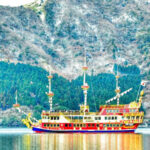
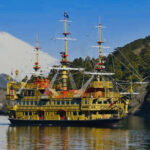
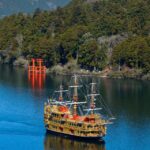
The planned Lake Ashi crossing runs from Motohakone Port to Togendai Port and takes about 25 minutes. The boat is optional and costs ¥1,700 per person, paid separately. If it is full, not operating, or simply not for you, the alternative is a bus to Togendai Station.
The boat adds a change of pace after the shrine and gives you time on the lake. Still, it is not part of the included price, and it is not essential to the day. If keeping costs down matters, take the bus option; if the ship appeals, allow for the extra fare and follow the guide’s instructions.
Owakudani is the day’s most unusual stop
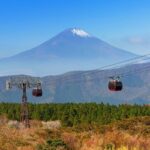
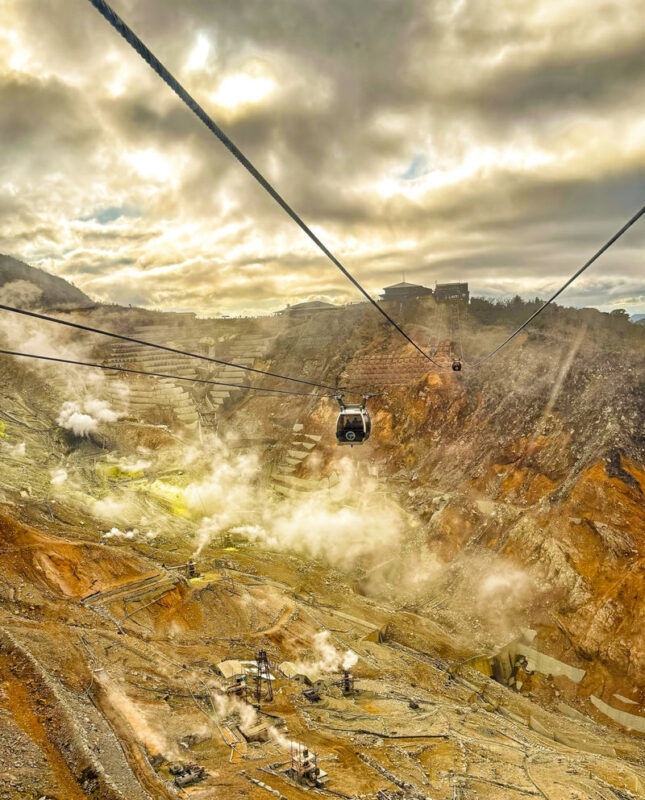
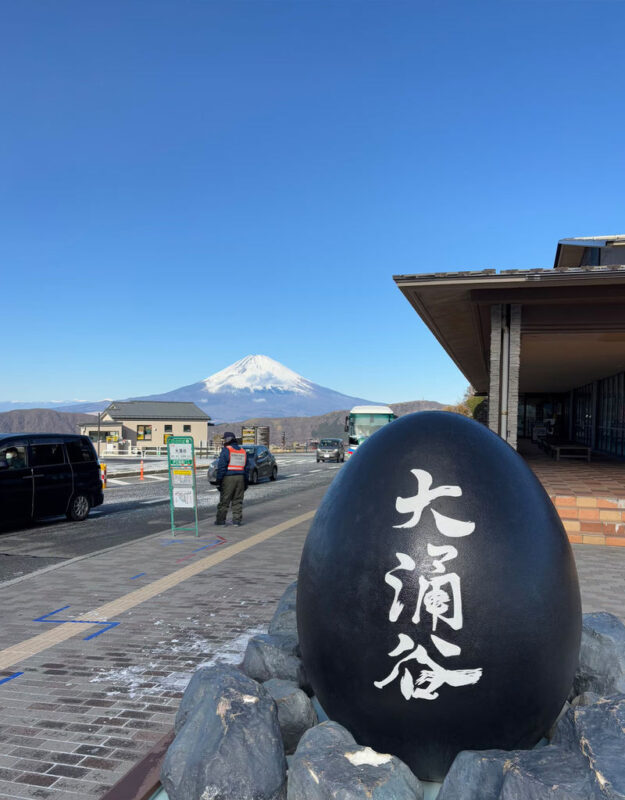
At Owakudani, volcanic activity has left fumaroles and sulfur hot springs across the area. Steam rises from the ground, and the sulfur smell is part of the experience. It is a striking place to see the earth at work, rather than just another scenic overlook.
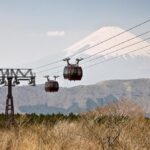
The ropeway ticket is included, with about 25 minutes scheduled for the ride and roughly 40 minutes to explore Owakudani on your own. The views from the cable car can be a highlight, but service is not guaranteed in difficult conditions. If the ropeway is out of service, the tour provides each person with a black egg.
Black eggs are cooked in the sulfur hot springs, and the reaction turns their shells black. They’re a local specialty and an easy snack to try while you look around. Bring a light jacket or rain layer if the forecast calls for it; conditions can make a volcanic stop feel less inviting, and the tour does not promise clear weather.
Lunch is flexible, but not included
Lunch is not covered by the tour price. The guide may suggest restaurants, but you can also bring food or buy a convenience-store bento. The timing and available options may change with traffic and the group’s needs; if most people do not want a meal stop, or the road is slow, lunch time may be removed.
I’d bring a small meal or snack rather than assume there will be a relaxed restaurant break. Sealed snacks and unopened drinks may be carried on the vehicle, but eating is not permitted on the bus. Keep your food handy for the stop, and don’t count on a long sit-down meal.


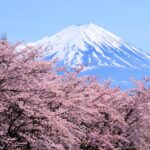

Fuji’s convenience-store stop is brief and weather-sensitive
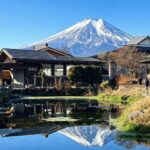
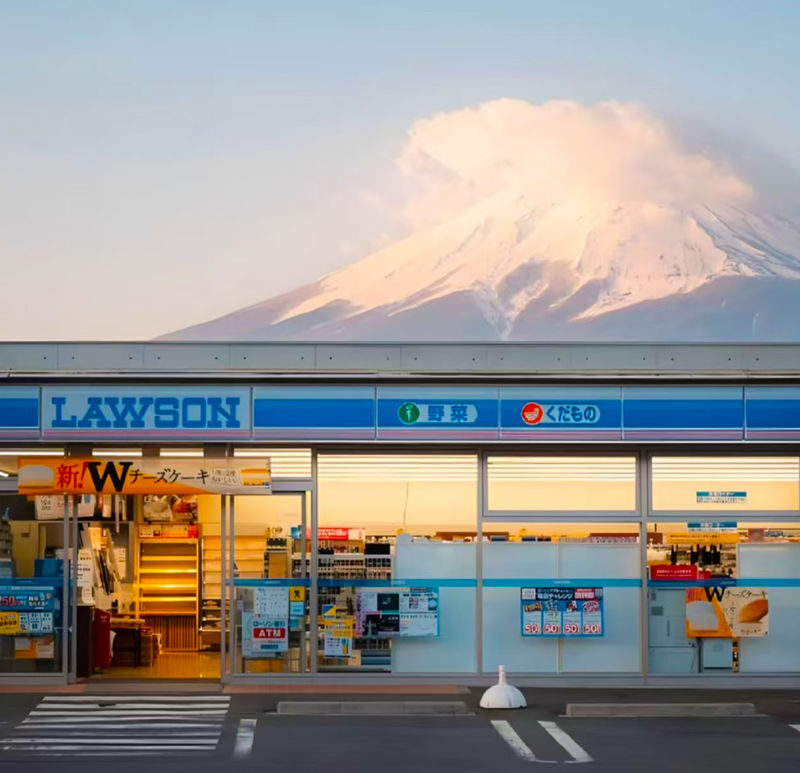
In the afternoon, the group stops at either a Lawson or a 7-Eleven near Mount Fuji, chosen by the guide according to traffic. These stores have become familiar photo settings because the mountain can appear behind the everyday shopfront and street scene.
The stop lasts about 20 minutes, and the mountain view is never a sure thing. Clouds may cover Fuji, and traffic or crowd levels can affect whether the stop goes ahead. Treat it as a quick photo opportunity, not a chance to shop at leisure.
Hikawa Clock Shop gives you a street-level Fuji view
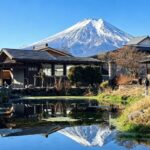
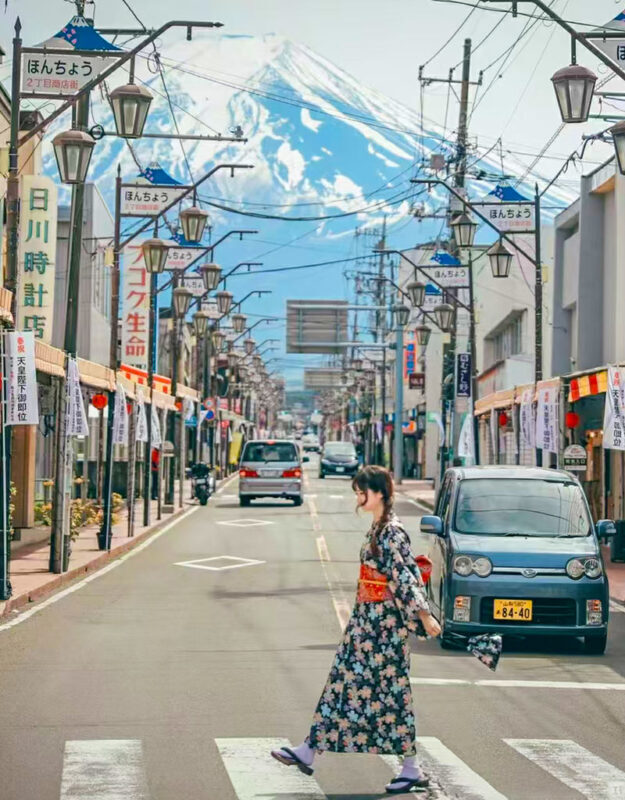
At the Hikawa Clock Shop in Fujiyoshida, the appeal is the straight street that appears to lead toward Mount Fuji. It is a different composition from the lake and pagoda views: everyday Japanese streetscape in the foreground, with the mountain beyond when visibility allows.
You’ll have about 20 minutes here. That is enough for photos and a short look around, but the stop is popular and the group cannot linger. Follow the guide’s directions and be mindful of traffic and other people while taking pictures.
Arakurayama Sengen Park rewards the uphill walk
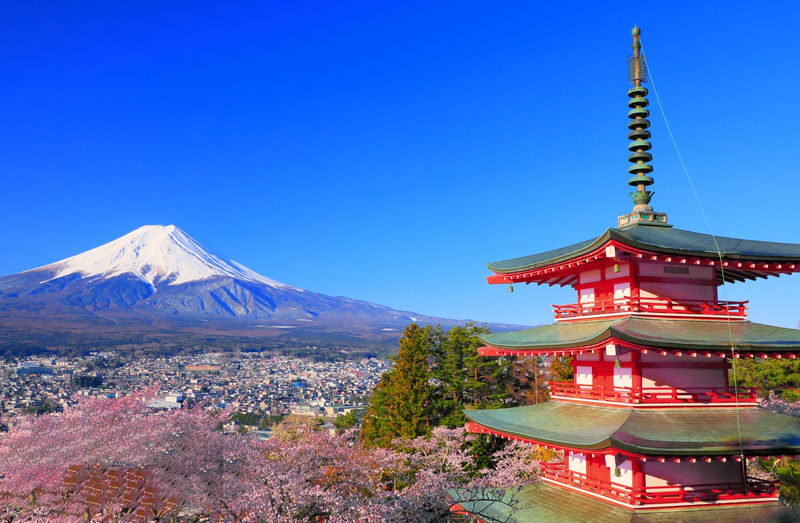
The final major stop is Arakurayama Sengen Park, with about an hour scheduled. The park’s Chureito Pagoda is a familiar Fuji image: a red five-story structure, Mount Fuji and, in spring or autumn, seasonal flowers or foliage. The view changes through the year, and the timing of blossoms and leaves depends on natural conditions.
The pagoda is reached by climbing steps, so this stop asks more of you than the brief roadside photo points. The time allows for the climb, photos and a look around, but it is still a fixed group stop. If you want the classic view, pace yourself and leave time to get back to the meeting point.
Weather can make or break the Fuji portion. Some days bring a clear view; other days the mountain disappears behind clouds, even when the rest of the visit is pleasant. Guides such as Serina and Andy have helped with photo spots and group coordination, while Tommy has also been praised for keeping communication clear. Guide assignments vary, so book for the route, not a particular person.
What the fare covers, and what it does not
Prices start from $49.29. For a full day connecting Hakone and several Fujiyoshida photo stops, that can be good value if you want to avoid arranging long-distance transport yourself. The fare includes round-trip transfers from the selected Tokyo meeting point, tolls, parking, fuel, and the Owakudani ropeway ticket.
It does not include meals, personal expenses, tips or the ¥1,700 pirate ship ride. The headline price is therefore not the entire day’s cost if you want the boat and a restaurant lunch. Check which package you are booking: the available options have different names, but the supplied package details include the ropeway ticket.
The tour’s transport is shared. If fewer than 12 people are booked, the operator says the vehicle may have a driver but no separate tour guide; with larger groups, a driver and guide are arranged. English and Chinese guiding is listed, but the precise arrangement can vary, so do not assume you will have a dedicated guide in every vehicle.
Timing, weather and practical details
The advertised day runs from about 07:20 to 18:00, with a Tokyo Station departure at 07:30 or a Shinjuku departure at 08:00. Arrive at the chosen meeting point at least 10 minutes early. The vehicle information and guide contact details are sent the day before, so check your email and spam folder.
Traffic is the biggest practical risk, especially on weekends and holidays. The operator warns that delays of two to five hours can happen, and the stop order or length may change. Keep your evening plans flexible rather than booking a tight dinner reservation or a timed activity after the return.
The tour is not a free-roaming day out. Stops have set durations, and the guide may wait only five minutes if someone is late. No refund is given for a missed departure or for leaving the group. The operator also lists health restrictions, including heart disease, high blood pressure, asthma, epilepsy, acrophobia and pregnancy; check the conditions before booking if any apply.
Free cancellation is available up to 24 hours before the activity date, subject to the stated booking conditions. The tour does not include travel or accident insurance. Children over two pay the adult rate; children aged zero to two may travel free only if they do not need a seat, and the operator asks you to notify them in advance.
Who should book this day trip?
I’d choose this tour if you have one open day in Tokyo and want to combine Hakone’s volcanic sights with the Fuji-area photo stops without piecing together several transport legs. It suits first-time visitors, solo visitors who prefer organized transport, and families who can manage a full day with early starts and short stops.
It is less suitable if you want a quiet, flexible visit, a long meal, or guaranteed Mount Fuji views. The most dependable reason to go is the range of places covered; the least dependable is the weather-dependent mountain view. Book it for the combination of Hakone, Owakudani and Fuji-area stops, and treat a clear Fuji as a bonus.
Hakone & Mount Fuji Area Day Trip: Owakudani Ropeway & Hakone Shrine & Nichikawa Clock Shop & Arakurayama Sengen Park, Departing from Tokyo
“We hit a Japanese long weekend and the traffic was terrible, but both the driver and the tour guide were very professional in leading us through th…”
FAQ
Where does the tour depart from?
You can meet at Tokyo Station Marunouchi North Exit for a 07:20 meeting and 07:30 departure, or at Shinjuku MODE Gakuen for a 07:50 meeting and 08:00 departure. The return is scheduled for around 18:00.
Is the Owakudani ropeway ticket included?
Yes. The tour includes the Owakudani ropeway ticket. If the ropeway is out of service, each person receives a black egg instead.
Is the Lake Ashi pirate ship included?
No. The 25-minute boat from Motohakone Port to Togendai Port is optional and costs ¥1,700 per person. If it is full or not operating, you can take a bus to Togendai Station.
Is lunch included?
No. You pay for your own meals and drinks. You can bring food, buy a convenience-store bento or eat at a restaurant suggested by the guide.
Will the tour visit both Hakone Shrine and the Water Torii?
Not necessarily. The tour chooses one of the two stops, with the guide’s decision affected by conditions and capacity.
Does the convenience-store stop always go to Lawson?
No. The guide chooses either Lawson or 7-Eleven based on traffic conditions.
What happens if Mount Fuji is hidden by clouds?
The tour continues, but clear views are not guaranteed. Weather may also lead to changes in the order or number of stops.
Is the vehicle private?
No. This is a shared ride service. Vehicle and guide arrangements depend on the number of people booked.
Can I cancel the tour?
A full refund is available if you cancel at least 24 hours before the activity date, subject to the booking conditions. Late arrivals and no-shows are not refundable.