Mount Fuji is the star, but this day trip gives you more than a quick roadside photo. You’ll cycle beside Lake Yamanaka when conditions allow, see the spring-fed ponds at Oshino Hakkai, and finish with a choice of a famous Fuji panorama or a walk through Shimoyoshida. Clear weather can make the lakeside ride the day’s best hour.
I like two things in particular: the small group of four to nine, which keeps the day more personal than a large coach tour, and the weather-based alternative of a swan-shaped boat when heavy rain makes cycling unsuitable. The main trade-off is time. Stops are short, seasonal sights can be unpredictable, and traffic may delay your return to Tokyo.
- At a glance
- A small-group day out of Tokyo
- Lake Yamanaka: ride the Olympic route
- Oshino Hakkai: clear water from Fuji
- Kawaguchiko in the season you get
- Choose a Fuji panorama or a town stroll
- Timing, pickup, and the ride back
- Who should book this day trip?
- FAQ
- How many people are in the group?
- Is cycling included?
- How long is the Lake Yamanaka stop?
- What happens at Oshino Hakkai?
- Will the tour visit Oishi Park or the Maple Corridor?
- Does the tour visit both Arakurayama Sengen Park and Shimoyoshida?
- What is included in the price?
- When will I know the pickup time?
- The Best Of Fujiyoshida!
- More Boat Tours & Cruises in Fujiyoshida
- More Tours in Fujiyoshida
- More Tour Reviews in Fujiyoshida
- Not for you? Here's more nearby things to do in Fujiyoshida we have reviewed
At a glance
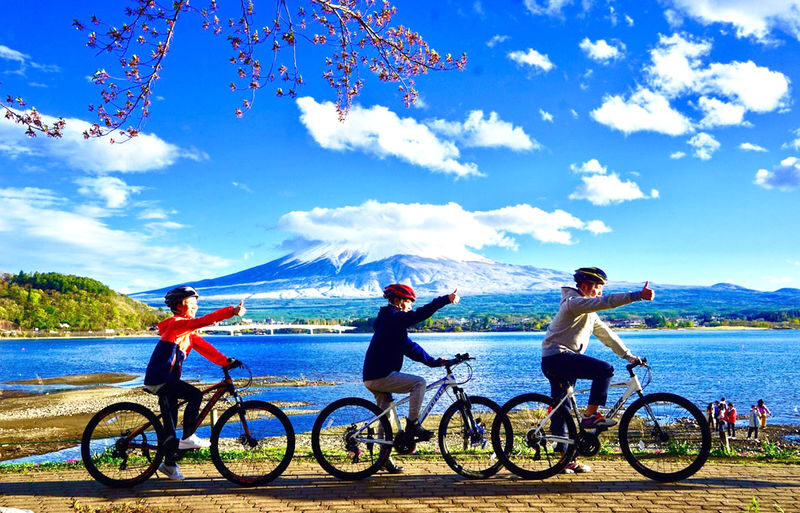
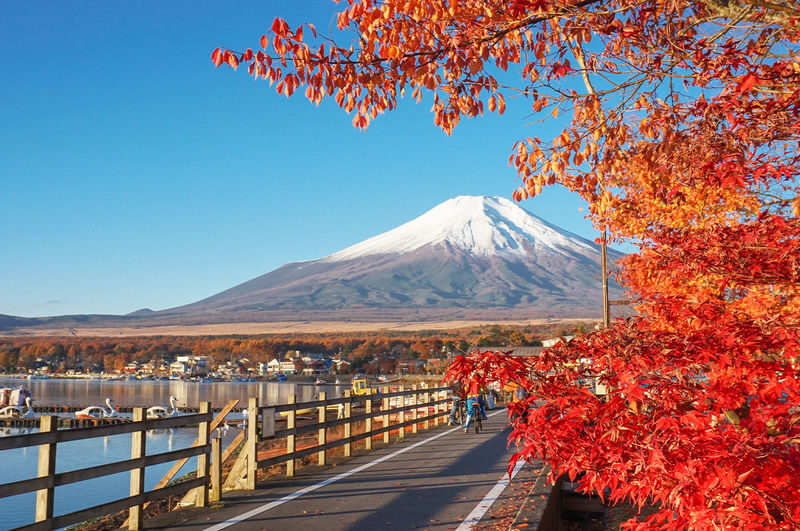
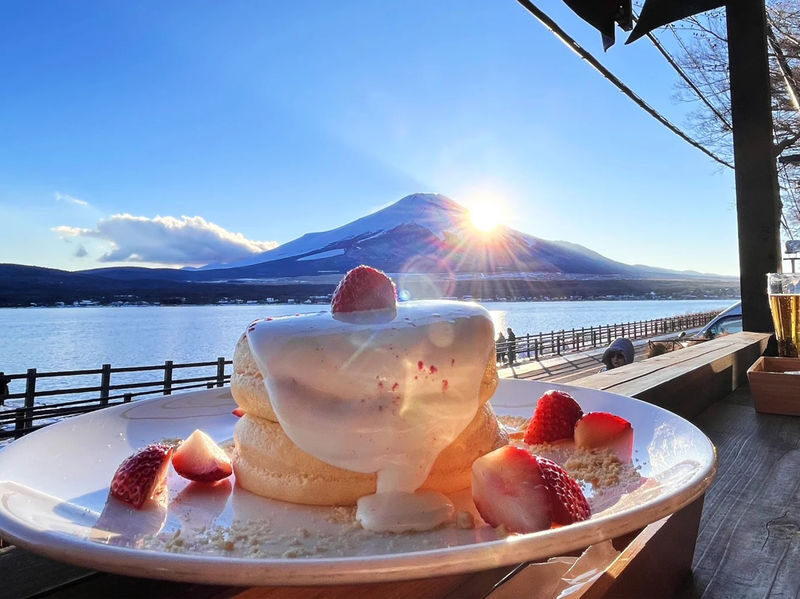
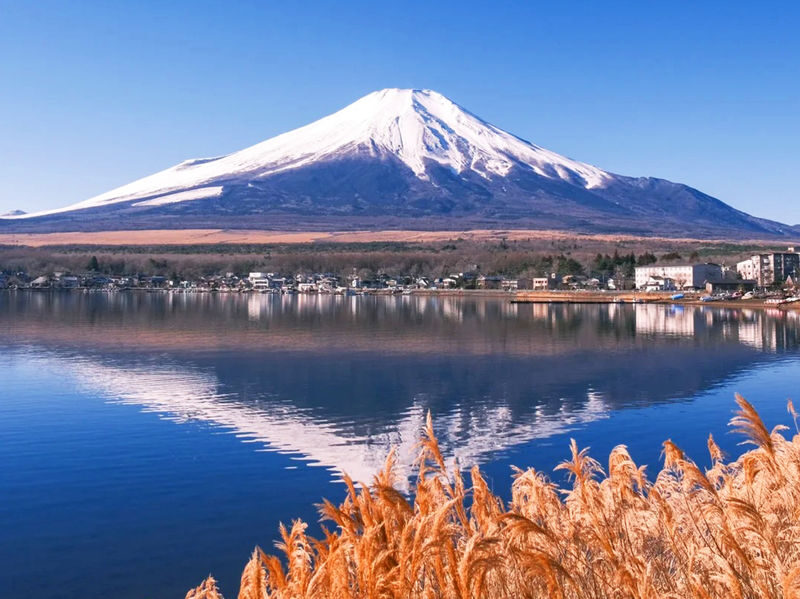
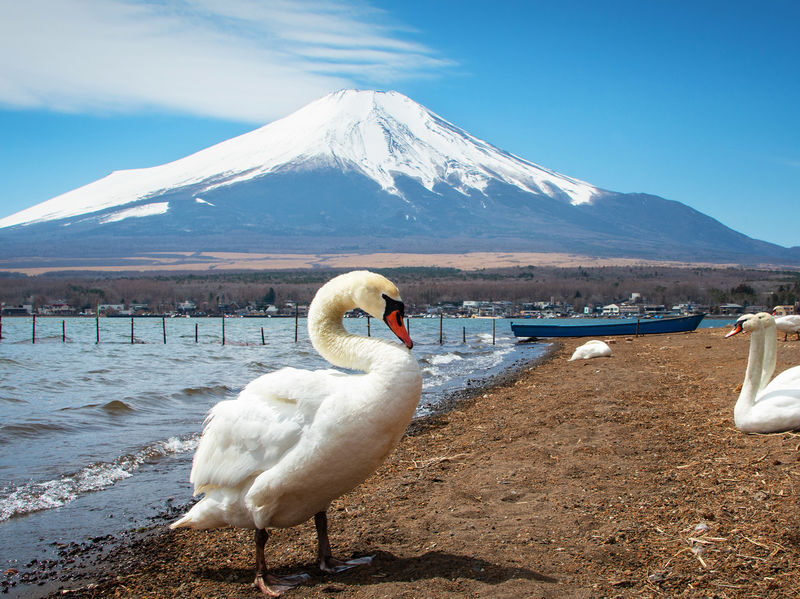
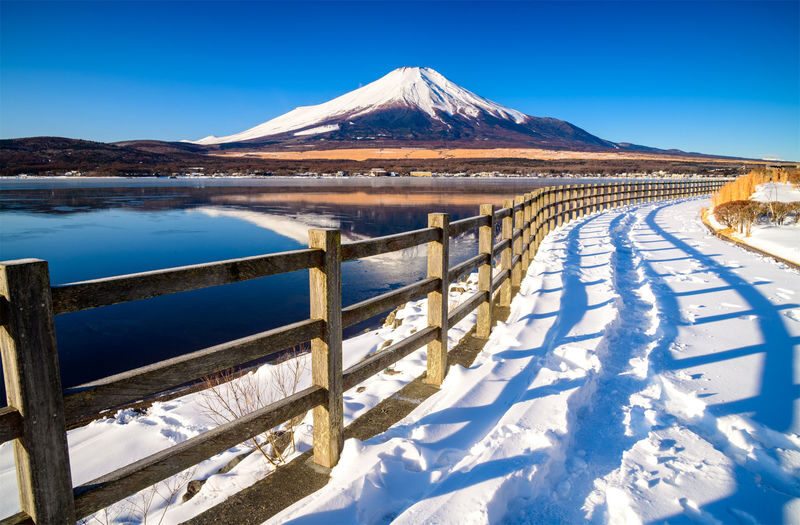
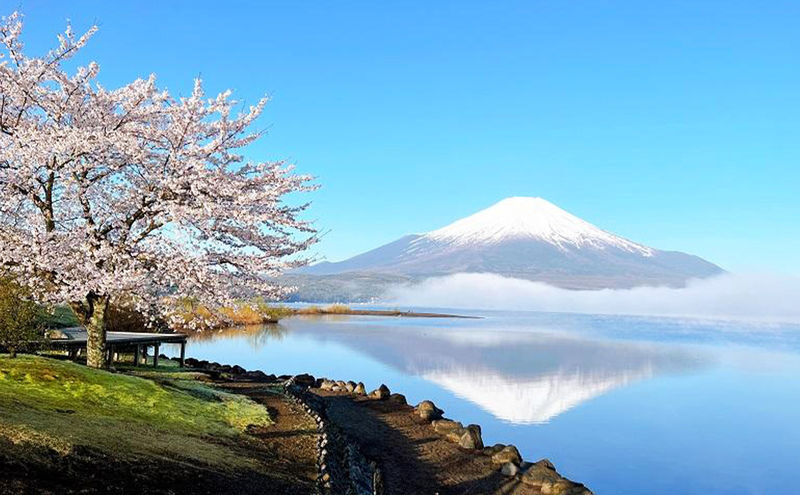
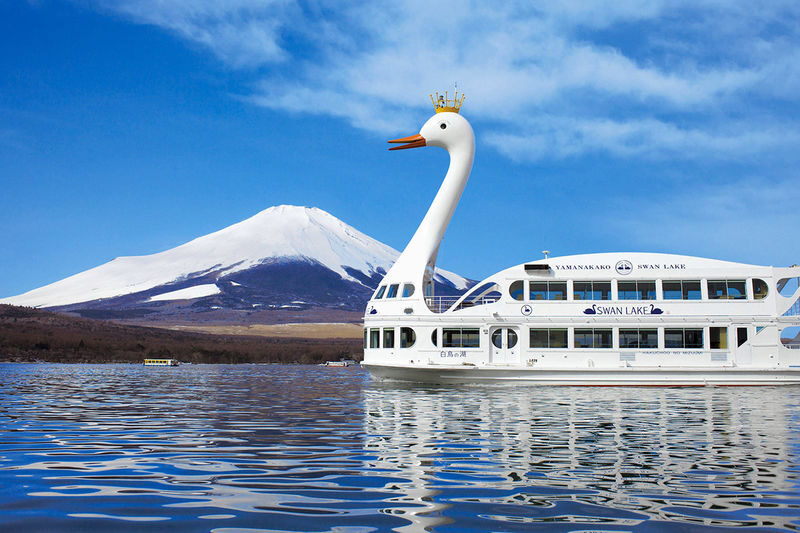
- Lake Yamanaka by bike or boat: In suitable weather, ride part of the 2020 Tokyo Olympics cycling route, with stops including Shiratori Hama and Nagaiike Shinsui Park. Heavy rain can prompt a switch to the Hakucho-go swan boat.
- Oshino Hakkai’s eight springs: See clear ponds fed by Mount Fuji’s underground snowmelt, at a site recognized as part of the Mount Fuji World Heritage property.
- Kawaguchiko through the seasons: Oishi Park is the usual stop outside the Maple Corridor period. Flowers, autumn leaves, and Fuji’s visibility all depend on the date and weather.
- A final choice near Fuji: The plan lists Arakurayama Sengen Park or Shimoyoshida’s Ladder Town, so confirm which stop is planned rather than assuming you will see both.
- A compact, long day: Departures start early, and the estimated return to Tokyo ranges from about 5:30 to 7 pm. Leave your evening free.
- A small-vehicle format: Expect a van or similar vehicle sized to the group, not the legroom of a large coach. One piece of luggage may be allowed if arranged in advance.

👉 See our pick of the 3 Best Tours In Fujiyoshida
A small-group day out of Tokyo
This tour is built around a useful balance: a bit of activity, a cultural stop, seasonal scenery, and a choice of famous Fuji viewpoints. You do not need to plan separate rail connections between lakes and towns, which can be a real advantage when your priority is seeing several places in one day. The drive is long, though, and a small group does not mean a leisurely schedule. Each stop is generally around an hour or less.
The group size is advertised as four to nine people, with the exact vehicle depending on the number booked. That can make boarding and moving between stops feel less like a procession than a big bus tour. In return, the vehicle has limited room, and commentary may be concise. The driver-guide speaks Chinese or English, but you may share the vehicle with people using another language.
At a starting price of $74.89, the appeal is the transport and the range of stops, with cycling or the boat ride included. Meals, drinks, and personal purchases are extra. The price is strongest for someone who values a straightforward way to connect several Fuji-area sights in a day. If you want long, unhurried visits or a specialist guide at every attraction, this format may feel too brisk.
You can also read our reviews of more boat tours in Fujiyoshida


Lake Yamanaka: ride the Olympic route
The day’s first major stop is Lake Yamanaka, scheduled for about 10:40 after an early departure from Tokyo. On a clear, suitable day, you rent a bicycle at SANSUI Bicycle Rental and follow part of the road used for the 2020 Tokyo Olympics cycling road race. The planned ride lasts about 70 minutes, including time to pause at lakeside spots.
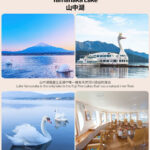
Shiratori Hama is a good place to look for the pairing that makes this lake memorable: swans on the water with Mount Fuji behind them. You may also pass THE PARK, a popular cafe known for pancakes and Fuji views, and Nagaiike Shinsui Park, where the mountain can feel close across the water. The cafe is a suggested stop, not a meal included in the tour, so keep your appetite and budget in mind.
That 70-minute window is both a draw and a limit. It is enough for a scenic taste of cycling, but not a full circuit of the lake or a slow cafe visit and extended ride. If cycling is your main reason for booking, treat it as a brief guided outing rather than a dedicated bike tour.
When heavy rain makes cycling unsuitable, the plan switches to the Hakucho-go sightseeing boat, a swan-shaped vessel designed by Eiji Mitooka. The boat offers a sheltered way to see the lake, and the activity information says feed is provided for swans, ducks, and small fish. This is a practical alternative, but it is not the same experience as riding at water level on the road. Other weather or capacity issues can also change which stops are possible.
Oshino Hakkai: clear water from Fuji
Oshino Hakkai is scheduled for a 40-minute self-guided visit. Its eight spring ponds are fed by snowmelt from Mount Fuji that filters underground before emerging. The water’s clarity is the point: look for the reflections, watch how the ponds catch the mountain and sky, and take time to notice the water itself rather than treating the stop as only a photo break.
The springs are part of the Mount Fuji World Heritage property, a National Natural Monument of Japan, and one of the country’s 100 Famous Waters. That context helps explain why this small village stop matters on a day otherwise built around mountain views. It connects the scenery to the natural process behind it.
Forty minutes is short for lingering, especially if the area is busy. You can still get a sense of the place, but this is not a long village visit. Keep your expectations in proportion: the tour gives you a quick look at the ponds, not an afternoon to explore every corner.
Kawaguchiko in the season you get
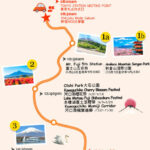
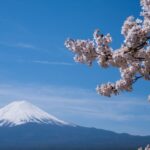
The Kawaguchiko stop is scheduled for about 70 minutes, with the location changing by season. Oishi Park is the usual choice outside the Maple Corridor period. In spring, cherry blossoms may frame Fuji; summer brings lavender; and the wider area offers autumn colors. These seasonal effects depend on timing and weather, so a date on the calendar cannot promise the exact scene.
In autumn, the tour may visit the Maple Corridor instead. Its appeal is the contrast of red foliage with Fuji, sometimes snow-capped. The route is described as a seasonal, limited-time arrangement, and the schedule may be updated. If this particular autumn scene is your main reason for booking, check the operator’s current plan before paying.
A short park stop works well for wide views and photographs, but it leaves little room for a long lakeside walk or a relaxed cafe break. Seasonal flowers and leaves can also be early, late, or muted in a given year. The operator does not promise a refund if the bloom or foliage is not as expected, so book for the overall day rather than a single seasonal image.
Choose a Fuji panorama or a town stroll
The final stop, scheduled for about an hour, is described as a choice between Arakurayama Sengen Park and Shimoyoshida’s Ladder Town. These are different kinds of visits, and it is worth confirming which one is planned for your date.
At Arakurayama Sengen Park, the famous view comes after a climb of 397 steps. From above, you can look across the town toward Mount Fuji. The uphill stairway is the key practical detail: allow energy for it, and do not expect to step from the vehicle straight into the viewpoint. The park is known for its panorama in all seasons, but Fuji itself can disappear behind cloud.
The alternative is Shimoyoshida, where traditional town streets and Fuji share the frame. You may pass Kin Torii, associated with the sacred area of Fuji worship and counted among the Eight Views of Fuji. FabCafe Fuji is noted as a popular cafe combining food and textile culture, though the one-hour stop means you may need to choose between a proper wander and sitting down.
The schedule also describes Arakurayama and Hikawa Clock Shop as optional, which makes the final arrangement less certain than the earlier stops. Some attractions may be skipped due to weather, capacity, traffic, or the legal limit on vehicle operating time. If one of these places is a must-see, confirm the day’s plan and understand that it may change.
You can also read our reviews of more cycling tours in Fujiyoshida
Timing, pickup, and the ride back
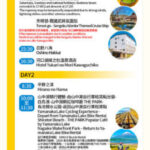
The tour starts early. Pickup is set between 7 and 8:30 am, while the meeting-point details also give Tokyo Station’s Marunouchi South Exit Police Box at 8 am. These arrangements can vary by package, so use the exact instructions sent the night before rather than relying on a general time. The operator says it emails the pickup time, vehicle, and driver information between 8 and 9 pm; check your spam folder as well as your inbox.
This is shared transport, so be ready at the stated place ten minutes early. A late arrival can mean missing the vehicle, with no refund. The return is estimated between 5:30 and 7 pm, but traffic and weather can push it later. Do not plan a timed dinner, show, or train connection for the evening.
The vehicle is assigned according to the day’s group size. A clean, comfortable van and smooth driving have been part of some people’s experience, while one account raised a serious concern about unsafe driving. That is a limited data point, not a reliable forecast of your own trip, but safety matters. If you feel uncomfortable, speak up to the driver or operator promptly. The small-group format itself cannot guarantee a particular vehicle or driving experience.
The advertised minimum is four participants. If the group does not reach that number, the tour may be cancelled and a new time or refund offered. That possibility matters if your Tokyo stay is short, so keep some flexibility around your chosen date.
Who should book this day trip?
I would consider this tour if you want several Fuji-area highlights without arranging local transport yourself, and you are happy to trade depth at each stop for variety. It suits first-time visitors, families comfortable with a full day in a vehicle, and anyone keen on the short lakeside bike ride. The weather alternative also gives the day a plan B, though it cannot guarantee clear mountain views.
It is less suited to someone who wants a long cycling route, a slow visit to Oshino Hakkai, or certainty about seeing both Arakurayama and Shimoyoshida. If the 397-step climb is a concern, ask which final stop is planned and consider whether the town option would suit you better. Older participants over 70 and pregnant participants must request and return a liability waiver before the trip.
Book it for the range of sights and the convenience, not for a guaranteed Fuji view or a deep visit at every stop. Confirm pickup details, ask about the seasonal stop and final-stop choice, and travel light. With those expectations, it is a practical way to see several sides of the Fuji area in one busy day.
Mount Fuji Yamanakako Cycling/Cruise, Oshino Hakkai, Lake Kawaguchiko Oishi Park/Maple Corridor, Arakurayama Sengen Park/Ladder Town Day Trip | From Tokyo | Small Group (4-9 People)
“The tour it's self was great ! Mt fuji on a clear day what could be better But the guide himself needs to learn how to drive before returning to ta…”
FAQ
How many people are in the group?
The tour is described as a small group of four to nine people. The exact vehicle depends on the number of participants.
Is cycling included?
Yes. In suitable weather, the Lake Yamanaka cycling experience is included. If heavy rain makes cycling unsuitable, the plan switches to a swan-shaped sightseeing boat.
How long is the Lake Yamanaka stop?
The scheduled stop is about 70 minutes. That is enough for a short ride and pauses, but not a full circuit of the lake.
What happens at Oshino Hakkai?
You have about 40 minutes to explore its eight spring ponds, fed by Mount Fuji snowmelt. The visit is self-guided.
Will the tour visit Oishi Park or the Maple Corridor?
Oishi Park is the usual stop except during the Maple Corridor period. The seasonal plan can change, and weather or other conditions may affect the visit.
Does the tour visit both Arakurayama Sengen Park and Shimoyoshida?
Not necessarily. The final stop is described as a choice between Arakurayama Sengen Park and Shimoyoshida’s Ladder Town. Confirm the plan for your date.
What is included in the price?
The listed package includes round-trip transfers and either the Lake Yamanaka cycling experience or the swan boat, depending on weather. Meals, drinks, and personal expenses are not included.
When will I know the pickup time?
The operator says it will email the exact pickup time, vehicle, and driver details between 8 and 9 pm the night before. Check your spam folder, arrive ten minutes early, and follow the latest message if you receive more than one.