Tokyo’s department-store food halls, Mount Fuji’s lakeside views and Osaka’s market stalls give this week a useful focus: Japan is not just a string of famous sights, but a place to eat well between them. I like the mix of major landmarks and everyday food stops, and the small group size of 2 to 10 should make moving between them easier than with a large coach party.
I also like that the route ends in Osaka rather than circling back to Tokyo, and that hotels, breakfasts, local transport and the bullet train are covered. The main caution is the pace: seven days include three Tokyo days, a Fuji-area outing, a long day across Kyoto and Nara, and Osaka. You will see a lot, but you will not see all of Japan.
- Key points to know before you book
- The route trades depth for a strong first look
- Tokyo begins with room to find your own rhythm
- Kawaguchiko brings Fuji views, if the weather cooperates
- A packed Tokyo day ends on the Shinkansen
- Kyoto and Nara deliver temples, deer and mochi
- Osaka mixes market bites with castle history
- What the price covers, and what to check
- Who should book this Japan week?
- FAQ
- How long is the tour, and where does it start and end?
- What is the group size?
- Is the tour guided in English?
- Are international flights included?
- Which meals are included?
- Which hotels are listed?
- Is the Mount Fuji Panoramic Ropeway included?
- Does the tour include the train from Tokyo to Osaka?
- The Best Of Tokyo!
- More Food & Drink Experiences in Tokyo
- More Tours in Tokyo
- More Tour Reviews in Tokyo
- Not for you? Here's more nearby things to do in Tokyo we have reviewed
Key points to know before you book
- Tokyo to Osaka in one direction: The route saves you a return trip to Tokyo and includes a Shinkansen journey of about 2.5 hours.
- A food-minded itinerary: Tsukiji and Kuromon markets, sushi, and a live mochi-pounding demonstration add edible stops to the temple and city visits.
- Mount Fuji is weather dependent: The Kawaguchiko area offers lakeside views and a cable car ride, but Fuji may not be visible in cloudy conditions.
- Meals are limited: Breakfast is included on the listed hotel days; most lunches and dinners are not specified as included.
- Hotels are practical, not the main event: The planned stays are four-star properties in Tokyo and Osaka, with a lower accommodation score than the other tour categories.
- A small group with a guide: The tour is in English, for 2 to 10 people, and rated low intensity, though expect plenty of time on your feet.

👉 See our pick of the 25 Best Guided Tours In Tokyo
The route trades depth for a strong first look
This tour links five major stops: Tokyo, the Mount Fuji area, Kyoto, Nara and Osaka. Its value is in the variety and logistics: you have an English-speaking local guide, private air-conditioned transport where indicated, hotel stays, and the train between Tokyo and Osaka arranged as part of the trip.
The seven-day length makes this a sampler, not a slow study of Japan. You will have time to see key shrines, temples, market streets and viewpoints, but not to linger everywhere or add many side trips. The most consistently praised feature is the organization: one guest described a clear schedule and a good balance of sightseeing and downtime. That matters on a route with several cities, where poor coordination can turn a short trip into a string of stressful transfers.
The tour is described as a group experience, with a size of 2 to 10. The product name also refers to a private guide and driver, and the company says the tour can be customized. Confirm exactly how guiding and transport work for your departure, especially on arrival day: the included airport pickup is with a local driver whose English is basic, while an English-speaking guide and driver can be arranged for an extra cost.
You can also read our reviews of more food & drink experiences in Tokyo


Tokyo begins with room to find your own rhythm
On arrival, a private driver takes you from the airport to Hotel East 21 Tokyo or a similar four-star hotel. The first day is otherwise free, which is welcome after a long flight. You can keep it simple, get a meal nearby and rest, or try Tokyo’s department-store food basements, known as depachika, or a standing sushi bar. The tour’s own practical advice is to avoid pricey tourist-oriented meals at the start and look for these everyday options instead.
Breakfast is included on the following Tokyo days, but the listed plan does not include lunch or dinner. That gives you freedom to follow your appetite, though you should budget for meals beyond breakfast. Mobile data or portable Wi-Fi is also worth arranging: Google Maps is useful for trains and walking, and some smaller station signs may be in Japanese.
Day 2 brings together three very different parts of the city. Meiji Jingu’s wooded grounds offer a quiet start and an introduction to Shinto practice. Then the Imperial Palace East Gardens give you a chance to walk through formal grounds in central Tokyo; access and views should not be confused with entering the Emperor’s residence.
Senso-ji, Tokyo’s best-known old temple, changes the mood. You approach through Kaminarimon Gate and Nakamise-dori, a busy shopping street lined with snacks, souvenirs and handicrafts. It is a lively public place, so the temple experience comes with crowds and commerce. The main hall and five-story pagoda are worth taking time over, rather than treating the approach as just a shopping stop.
Kawaguchiko brings Fuji views, if the weather cooperates
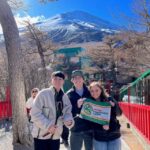
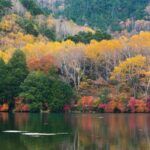
Day 3 heads to Lake Kawaguchi and Oshino Hakkai, a village known for eight clear springs fed by water filtered through layers of volcanic lava. The setting offers a change from Tokyo’s streets, with lakeside scenery, hot springs and museums in the wider area.
At Kawaguchiko Tenjozan Park, a cable car carries you partway up the mountain to viewpoints over the lake and town. The itinerary also lists the Mt. Fuji Panoramic Ropeway as optional, as well as an excursion boat on Lake Kawaguchi. Check what is included in your final plan: the cable car access to Tenjozan Park is listed as included, while the panoramic ropeway and boat cruise are extras.
Mount Fuji is the headline, but it is not a guaranteed view. Cloud cover can hide the mountain, so it is wise to appreciate the lakeside and village stops on their own merits. Oshino Hakkai’s springs offer a more grounded reason to stop: the water’s clarity and volcanic source make the village distinct from a standard viewpoint visit.
The return to Hotel East 21 Tokyo means you keep the same Tokyo base for three nights. That avoids repacking each morning, though it also means a substantial excursion day to the Fuji area before the next day’s city stops and train ride.
A packed Tokyo day ends on the Shinkansen
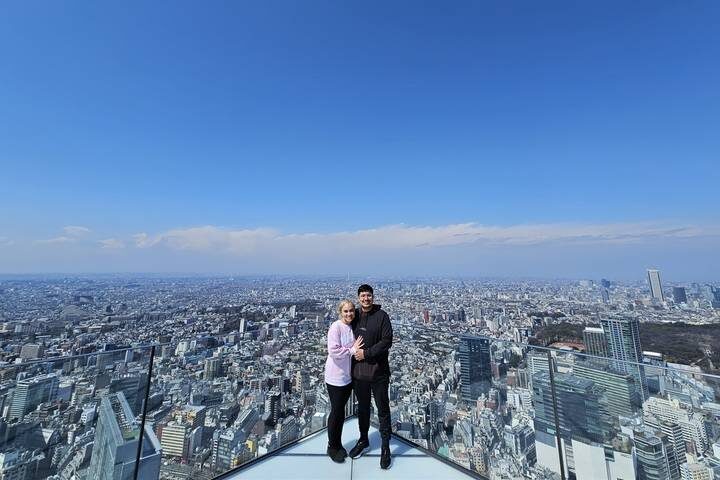
Day 4 has Tsukiji Fish Market, Odaiba Seaside Park, Shibuya Sky and Hachiko’s statue, followed by the train to Osaka. It is a lot to fit in before a 2.5-hour Shinkansen journey, so ask how the day’s timing is arranged and how much time is allowed at each stop.
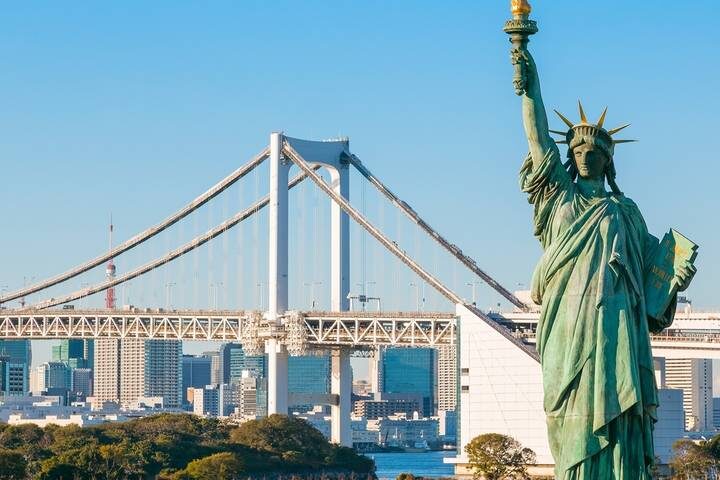
Tsukiji is now best approached as a lively market district and a place to sample seafood, rather than as the site of Tokyo’s former wholesale fish market. The tour highlights fresh sushi for breakfast or a snack. Odaiba offers views across Tokyo Bay, including Rainbow Bridge and a Statue of Liberty replica. At Shibuya Sky, you get a high city view, then head down to see the Hachiko statue near the station.
The train ride itself is a welcome breather after the morning’s sightseeing. The high-speed connection makes the Tokyo-to-Osaka move efficient, and the tour includes the one-way Shinkansen ticket. You stay at Moxy Osaka Honmachi or a similar four-star hotel for the next three nights, giving you a settled base for the Kansai portion.
Kyoto and Nara deliver temples, deer and mochi
Day 5 is the tour’s most concentrated cultural day. Fushimi Inari Taisha is the head shrine for roughly 30,000 Inari shrines in Japan, with a history reaching back to the eighth century. Its famous sequence of shrine gates is compelling, but this is a popular stop. Time and crowd levels will shape how far you walk and how quiet the visit feels.
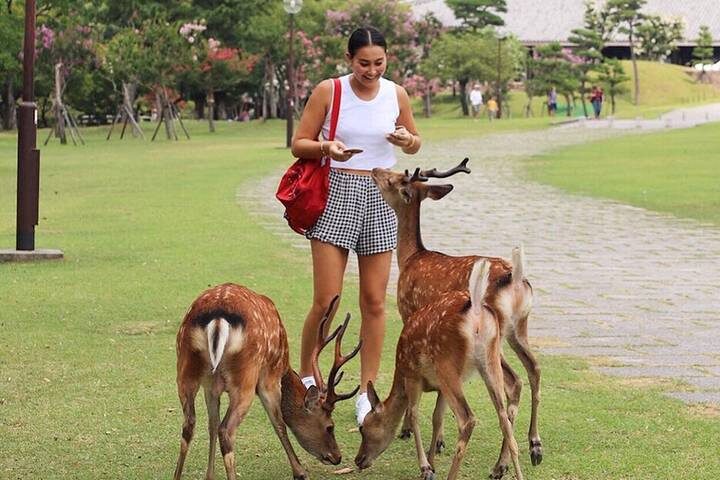
From Kyoto, the route continues to Nara Park, where more than 1,200 deer roam. They are a memorable part of the visit, but remember they are animals, not props. Follow your guide’s advice around them, particularly if you are traveling with children.
Todai-ji is a UNESCO World Heritage site and one of Japan’s great temple complexes. Its scale makes it a fitting counterpoint to the outdoor park. The day ends at Nakatanidou, where you can watch mochi being pounded by hand. The demonstration gives you a quick look at how the chewy rice treat is made, and the shop is an easy place to try some. It is one of the tour’s most distinctive food stops, even if the visit is brief.
You can also read our reviews of more tours and experiences in Tokyo


Osaka mixes market bites with castle history
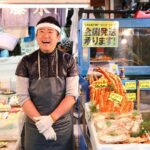
Kuromon Ichiba is the first stop on Day 6. The Minami market sells seafood, sweets and other Japanese foods, making it a good place to graze rather than plan a formal lunch. Food purchases are not listed as included, so bring money for anything you want to sample.
Osaka Castle Park gives you room to walk around the castle grounds and see one of the city’s defining landmarks. The itinerary includes the castle and Osaka Museum of History, which covers the city from its early role as a capital to modern times. These visits help put the market’s busy present into context, though you should check how much time the schedule leaves for each.
The final viewpoint is the Umeda Sky Building, a modern landmark with an observation deck overlooking the city. It offers a fitting last look at Osaka from above. The day moves between food, older political history and contemporary architecture, giving you a broad introduction without pretending to cover every neighborhood.
On Day 7, a transfer takes you to Kansai International Airport. The tour ends in Osaka, so plan your international flights accordingly. International airfare is not included.
What the price covers, and what to check
The tour starts at $3,180. Its value depends on how much you want handled for you: accommodation, breakfast, the Tokyo-to-Osaka bullet train, listed admissions, local transport, an English-speaking guide and airport transfers are included. Private, air-conditioned transport is part of the package where specified. International flights, most meals and optional activities are not included.
The listed hotels are Hotel East 21 Tokyo and Moxy Osaka Honmachi, or similar four-star properties. The operator describes them as well located for transport and nearby restaurants, with room sharing based on two people. A single supplement applies if you want a room alone. The accommodation category has a lower score than the guide, itinerary, transport, food and operator categories, so if hotel comfort matters most, ask about room details and paid upgrades before booking.
Two written guest accounts point to a useful balance. One praised the schedule, coordination and approachable guide, while another wanted more local suggestions from the guide and felt six nights were too short to explore Japan fully. Both points are fair: a clear plan is valuable when moving between cities, but a guide’s area-specific tips can make free time more rewarding. If dining advice and spontaneous recommendations matter to you, ask how much guidance you can expect outside scheduled visits.
Vegetarian, vegan and halal food options can be requested. Since most lunches and dinners are not included, make your dietary needs clear in advance and ask what support the guide can provide when choosing meals.
Who should book this Japan week?
I would consider this tour if you want a first-time overview, prefer having the major transport and hotels arranged, and enjoy a mix of food stops and well-known sights. Families may appreciate the small group size, low physical rating and variety of places, though the long sightseeing days still call for patience and comfortable walking shoes.
It is less suited to anyone who wants several unplanned days, long visits at each temple, or a deep exploration of one city. The schedule is ambitious, and the accommodation is practical rather than a centerpiece. Before paying, confirm the day-by-day timing, which optional Fuji activities you want, and how the private-guide wording applies to your group. If those details fit your expectations, the route offers a convenient and varied introduction from Tokyo to Osaka.
7 Days Japan Culture & Food Family Tour by UME Travel – Tokyo to Osaka
“This was a really enjoyable tour and a great way to explore the area without having to worry about planning everything myself. The entire experienc…”
FAQ
How long is the tour, and where does it start and end?
It lasts seven days, starting in Tokyo and ending in Osaka.
What is the group size?
The stated group size is 2 to 10 people.
Is the tour guided in English?
Yes. An English-speaking local guide is included. The arrival-day airport pickup uses a local driver with basic English; an English-speaking guide and driver can be arranged for an extra cost.
Are international flights included?
No. International flights are not included.
Which meals are included?
Breakfast is included on the listed hotel days. Other meals are included only where specified in the final itinerary. Vegetarian, vegan and halal options can be requested.
Which hotels are listed?
The planned hotels are Hotel East 21 Tokyo for the Tokyo stay and Moxy Osaka Honmachi for the Osaka stay, or similar four-star hotels.
Is the Mount Fuji Panoramic Ropeway included?
It is listed as an optional activity. The cable car access to Kawaguchiko Tenjozan Park is listed as included.
Does the tour include the train from Tokyo to Osaka?
Yes. The one-way Shinkansen journey is included and takes about 2.5 hours.