Kyoto’s Skyhop bus gives you a broad first look at a city whose temples, shrines, and imperial landmarks are spread across several neighborhoods. From the open upper deck, you can watch the streets pass by, then hop off near sights such as Nijo Castle and Heian Shrine without planning every transfer yourself.
I like the freedom to build a day around the places that interest you, and the bus can help you get your bearings before you explore further by train or local bus. The main caution is the timetable: services are listed every 35 or 45 minutes, and a missed bus can leave you waiting much longer, sometimes in the heat or rain.
- At a glance
- Kyoto from the upper deck
- What the routes can help you see
- A flexible pass, with a fixed rhythm
- Commentary and the human touch
- Is the fare worth it?
- Practical details before you board
- Should you book the Skyhop bus?
- FAQ
- How long is the Kyoto Skyhop bus experience?
- Can I choose a one-day or two-day pass?
- How often do the buses run?
- Is the bus air-conditioned?
- Which languages are available for the audio commentary?
- Are children under six charged?
- Can I bring a stroller or wheelchair?
- Can I bring luggage, food, or drinks?
- What should I do if it rains?
- The Best Of Kyoto!
- More Tickets in Kyoto
- More Tours in Kyoto
- More Tour Reviews in Kyoto
- Not for you? Here's more nearby things to do in Kyoto we have reviewed
At a glance
 1 / 7
 2 / 7
 3 / 7
 4 / 7
 5 / 7
 6 / 7
 7 / 7
- Open-top views: The double-decker offers a clear view of Kyoto, but many seats are exposed to sun, rain, and cold.
- Two pass choices: Choose a one-day or two-day ticket, depending on how many sights you want to cover.
- Major landmarks: Stops include access to places such as Nijo Castle and Heian Shrine. Check the current route map for the full stop list.
- Plan around the timetable: Buses are listed every 35 or 45 minutes. Real waits can feel longer if traffic or a connection disrupts your plan.
- Seven audio languages: Prerecorded commentary is available in Chinese, English, Spanish, Japanese, German, Korean, and French.
- From $27.19: The fare can make sense if you value simple transport between sights, but it is less compelling if you expect frequent buses or detailed live narration.

👉 See our pick of the 25 Best Workshops And Classes In Kyoto
Kyoto from the upper deck
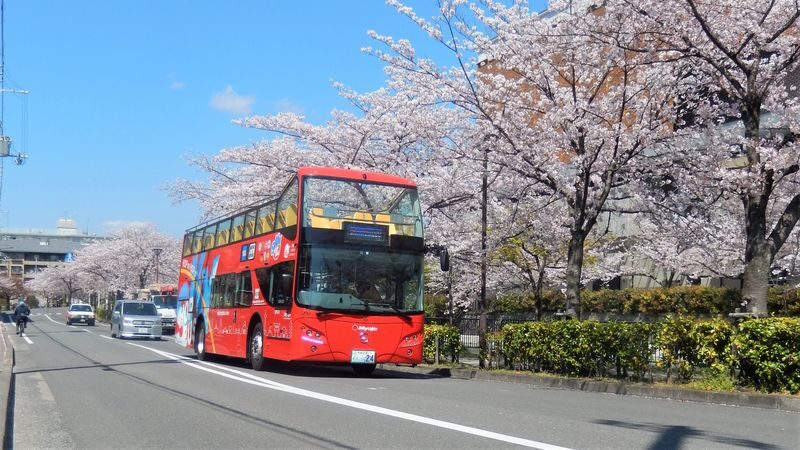
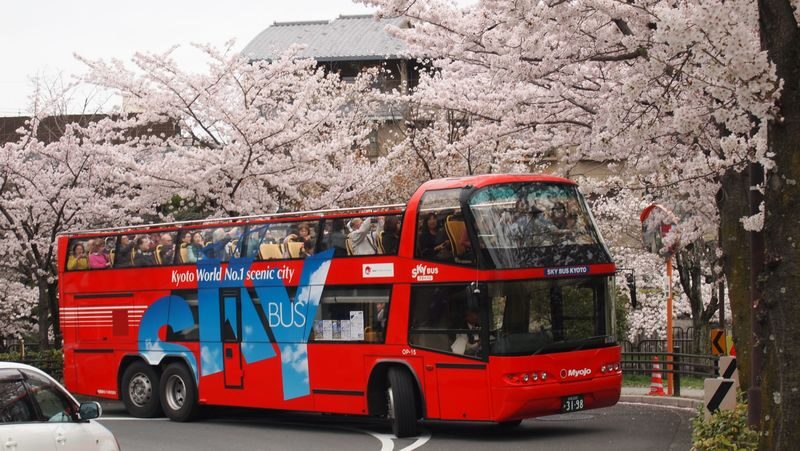
The bus is best thought of as both a sightseeing ride and a transport option. It lets you see parts of Kyoto between stops, which is useful when you are new to the city and want to understand how its major sights fit together.
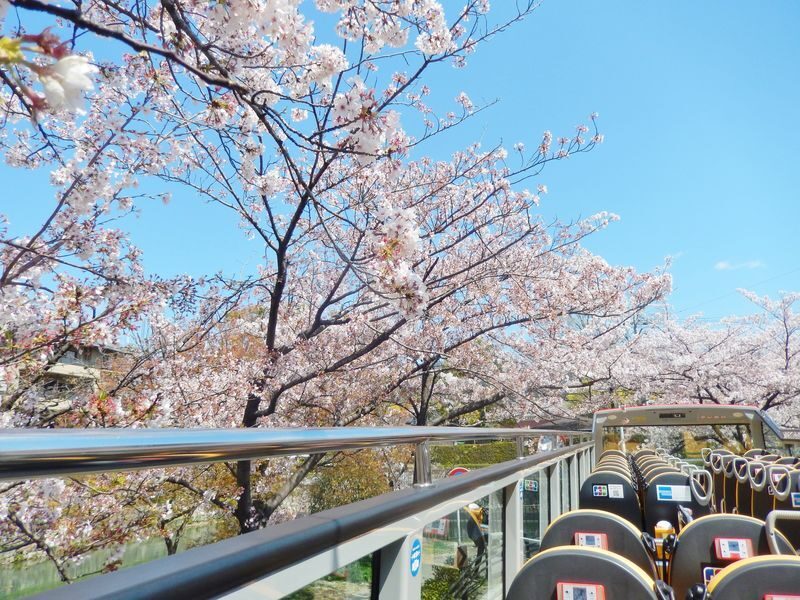
The open top is a real part of the experience, not a small design detail. You get an unobstructed view, but the same exposure means summer sun can be punishing, rain can make the ride uncomfortable, and cold weather calls for an extra layer. Some buses do not have air conditioning, and the operator warns that the seating setup can vary with weather and vehicle.
There may be a mix of open and covered seating, but do not count on an air-conditioned seat being available. Some departures have very few seats under cover, and access to lower-deck seating can vary. If shade and cooling are important to you, especially when travelling with children or older family members, check the day’s conditions and be prepared to use another form of transport if the bus feels too hot.
In wet weather, the operator provides raincoats. Open umbrellas are not allowed on board, so a poncho is more practical than an umbrella anyway. Keep water with you for the heat, but note that drinks must have a cap or lid, and eating and drinking on the bus are prohibited.
You can also read our reviews of more tours and experiences in Kyoto


What the routes can help you see
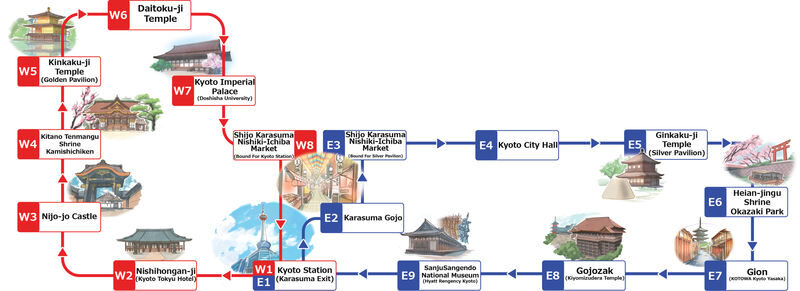
The bus has red and blue routes, according to the route information and passenger accounts, though you should check the current map before setting out. Stops and schedules can change. The named highlights include Nijo Castle and Heian Shrine, and the service is intended to connect you with Kyoto’s main sightseeing areas.
Nijo Castle is one of the useful landmarks to build a day around. It gives you a reason to get off and spend time at a major historic site rather than treating the bus as a continuous ride. Look at the route map and timetable before you go, so you know how long you can stay before the next suitable bus.
Heian Shrine is another named stop and a good anchor for a sightseeing plan. The bus can save you from working out every connection in advance, but it does not remove the need to plan: a long visit followed by a long wait can consume a large part of the day.
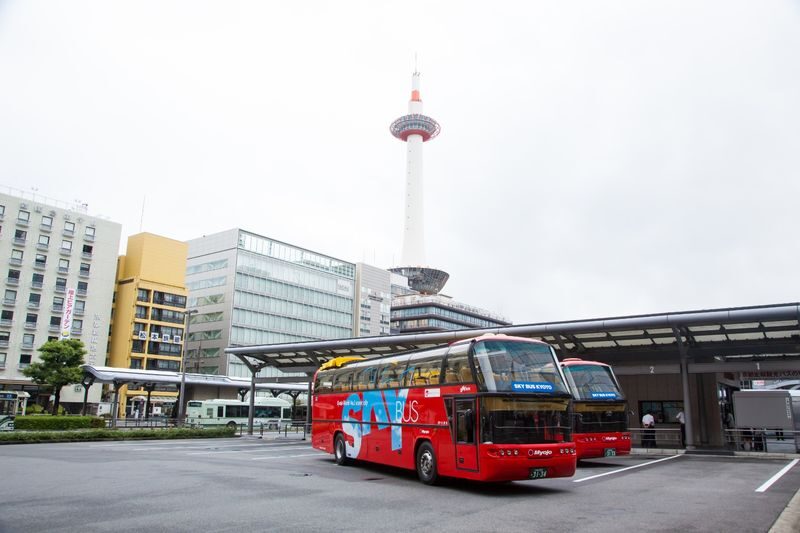
Ginkakuji is listed as the meeting point in the activity details, while the ticket redemption information also gives the Sky Hop Bus Kyoto Station address. Those details can be confusing, so check the current digital map and instructions before travelling to a starting point. You can present your mobile voucher to a bus attendant to exchange it for a ticket.
Lake Biwa is also named among the highlights, but the specific stops and route can change. Do not assume every named attraction is a direct stop. The official route map is the best guide to what you can reach on the day you ride.
Some visitors use the red route for temple visits and a market stop, and the blue route for older districts and geisha-related sights. Treat that as a planning clue, not a fixed itinerary. Check which route serves the place you want, and confirm that both routes are available to your ticket before you board.
The bus is useful for seeing the city’s broad outline, but it may not take you right to a temple entrance or the exact spot you want to visit. You may still need to walk, use a local bus, or take a taxi for the final stretch. That is normal for a city sightseeing route, but it matters if mobility or walking distance is a concern.
A flexible pass, with a fixed rhythm
The one-day pass suits a compact plan: choose a few priority sights, use the bus to link them, and leave room to explore on foot. The two-day pass gives you more time to spread out your visits and reduces the pressure to fit everything into one day. It is the better choice if you want to linger, though a longer pass does not make buses arrive more often.
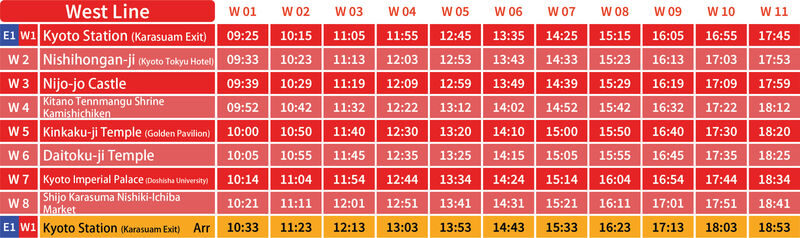
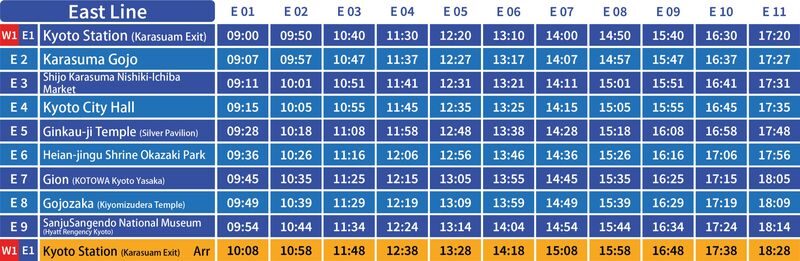
The stated bus frequency is every 35 or 45 minutes. In practice, you should allow for longer waits, especially when making a connection between routes or travelling in traffic. Some reported waits have been closer to an hour, and isolated delays have been much longer. That can turn a short stop into a timetable puzzle.
I would not plan a tightly packed day around the bus alone. Decide which sights matter most, check the timetable, and keep a backup option such as Kyoto’s local buses, trains, or a taxi. If you reach a stop and the next bus is far off, a local connection may be the better use of your time.
The service is listed as running for roughly four to six hours of sightseeing, but your actual day depends on how often you get off and how long you stay. The first and last bus times should be checked on the current timetable. The route’s final departure matters: a pass that looks generous on paper is less useful if you have planned one last long visit just before service ends.
Commentary and the human touch
The audio guide is prerecorded and comes in seven languages: Chinese, English, Spanish, Japanese, German, Korean, and French. It can give you basic context as you ride, but the commentary may be brief, and some riders have found it repetitive or limited. Do not book this as a deep guided history tour.
Some passengers have also had trouble with headphone audio. Bring your own expectations down to a simple level: the commentary is an added extra, not the main reason to buy the pass. You will get more out of the ride if you use it to look around and save detailed explanations for the sights themselves.
Staff can make a difference to the practical side of the trip. Rex has been named for sharing interesting facts, while Stephanie has been praised for attentive, cheerful help. Those names are not a promise of who will be on your bus, but they point to the value of asking staff for help with boarding, tickets, and route questions.
Is the fare worth it?
Prices start at $27.19, with one-day and two-day options. The pass is most valuable when it replaces several separate trips and saves you the effort of navigating unfamiliar routes. It can also be a comfortable way to get an overview of Kyoto before choosing which places deserve a longer visit.
The value drops if you expect a bus every few minutes, extensive live narration, or an air-conditioned seat on every departure. A long wait can eat into sightseeing time, and the open deck is not a pleasant place to sit through extreme heat. The one-day fare may be enough if you have a short list of sights. Choose two days when you want more time at each stop, not simply because you hope to ride more frequently.
Kyoto’s local buses and trains can offer more flexibility if you are comfortable reading routes and planning transfers. The Skyhop service trades some of that flexibility for a simpler, sightseeing-focused ride. It is a reasonable bargain when convenience matters more than speed or close-to-the-door access.
You can also read our reviews of more tours and experiences in Kyoto


Practical details before you board
Present your mobile voucher to the bus attendant and exchange it for a physical ticket. Keep that ticket safe, particularly with a two-day pass. Check the latest timetable and route map before leaving, since operating hours, stops, and closure dates can change.
Children aged 0 to 5 can ride free if they do not occupy a separate seat. Foldable wheelchairs and strollers are allowed; luggage is permitted but not recommended because the bus has no luggage trunk. Pets are not allowed.
Carry water in a capped or lidded bottle, dress for the weather, and do not bring an open umbrella onto the bus. Food and drinks are not allowed during the ride. These rules are easy to manage, but the weather is not: the open-top layout can shift a pleasant sightseeing loop into an uncomfortable wait if the day is especially hot, cold, or wet.
Free cancellation is available before the activity date, and booking changes are allowed before the activity starts, subject to some booking restrictions. Check the terms attached to your specific pass before relying on either option.
Should you book the Skyhop bus?
Book it if you want a low-effort introduction to Kyoto, prefer a simple way to connect several major sights, or have limited time and do not want to plan every local-bus transfer. The two-day option is a sensible fit for a slower pace, while the one-day pass works better for a short list of priorities.
Skip it if you need reliable, frequent service, want detailed live commentary, or are visiting during intense summer heat and cannot tolerate an exposed ride. For many people, the best approach is to use the Skyhop bus for an overview, then switch to local transport when the timetable or weather stops working in your favor.
Kyoto Hop-On Hop-off sightseeing bus by Skyhop Bus (1day / 2days ticket)
“it's worth the tour! you can ride, hop out, and hop in back again for 1 day pass to every city.”
FAQ
How long is the Kyoto Skyhop bus experience?
The activity is listed as lasting about four to six hours. Your actual sightseeing time depends on how many times you hop off and how long you stay at each stop.
Can I choose a one-day or two-day pass?
Yes. The available options are a one-day pass and a two-day pass.
How often do the buses run?
The listed frequency is every 35 or 45 minutes. Check the current timetable, and allow extra time because waits can be longer.
Is the bus air-conditioned?
Not all buses have air conditioning. The service mainly uses open-top vehicles, and covered or lower-deck seating may not be available on every departure.
Which languages are available for the audio commentary?
The prerecorded commentary is available in Chinese, English, Spanish, Japanese, German, Korean, and French.
Are children under six charged?
Children aged 0 to 5 can travel free if they do not occupy a separate seat.
Can I bring a stroller or wheelchair?
Yes, if it is foldable. The bus is described as wheelchair- and stroller-friendly, but all wheelchairs and strollers must fold.
Can I bring luggage, food, or drinks?
Luggage is allowed but not recommended because there is no luggage trunk. Food and drinks are prohibited on board, and beverages must have caps or lids.
What should I do if it rains?
The operator provides raincoats. Open umbrellas are not allowed on the bus, so wear suitable clothing and be prepared for exposed seating.