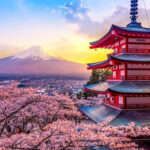
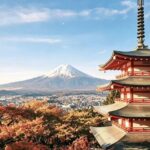
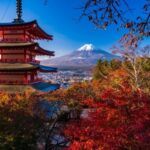
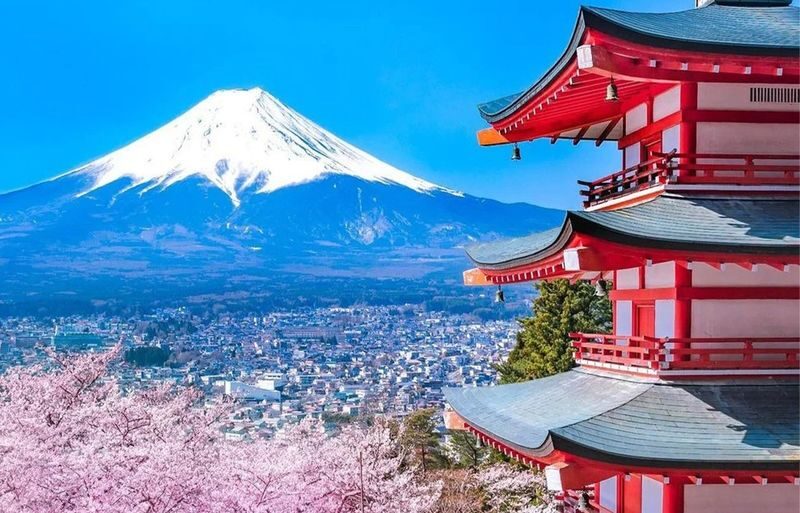
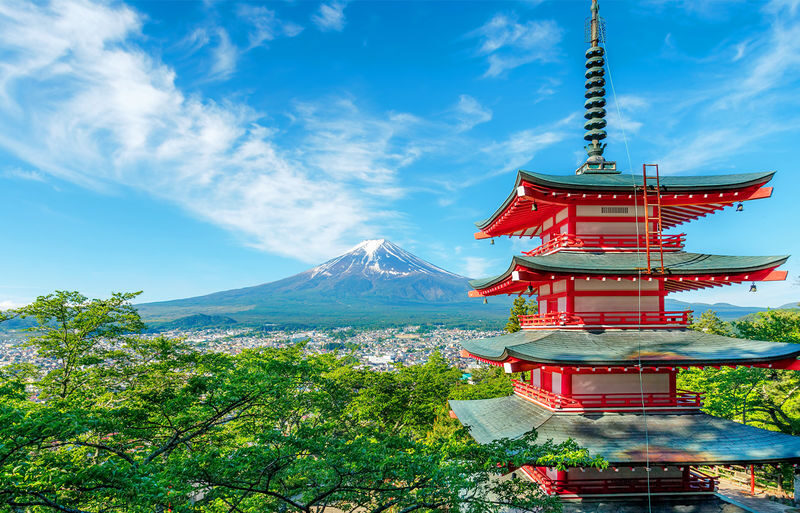
Mount Fuji’s snow-capped peak, a red pagoda, and a town spread below it make a striking frame from Arakurayama Sengen Park. This full-day trip from Tokyo links that classic view with street scenes, clear spring ponds, and a lakeside park, so you get more than one Fuji postcard in a day.
I like that the route mixes famous photo spots with the quieter water and village scenery at Oshino Hakkai. I also like the seasonal stop at Lake Kawaguchiko, which can mean cherry blossoms, lavender, autumn leaves, or snow. The tradeoff is a long day with several brief stops, plus a steep climb of 397 steps if you want the pagoda viewpoint.
- Key points to know before you go
- Five Fuji photo stops, one long day
- Arakurayama’s 397 steps lead to the signature view
- Hikawa Clock Shop frames the town toward Fuji
- Oshino Hakkai gives the itinerary room to slow down
- The Lawson stop pairs a familiar shop with a Fuji view
- Oishi Park brings the season into the frame
- Guides and traffic can shape the day
- Price, pace, and who will get the most from it
- FAQ
- How long is the tour?
- Is round-trip transport included?
- What languages are available?
- How many steps are there at Arakurayama Sengen Park?
- How much time is set aside for each stop?
- Are meals and drinks included?
- Which seasonal places may be included?
- Is there an age limit?
- How much luggage can I bring?
- Can the tour schedule change?
- The Best Of Fujiyoshida!
- More Shopping Tours in Fujiyoshida
- More Tours in Fujiyoshida
- More Tour Reviews in Fujiyoshida
- Not for you? Here's more nearby things to do in Fujiyoshida we have reviewed
Key points to know before you go
- The Arakurayama view takes effort: Reach the popular Fuji-and-pagoda viewpoint by climbing 397 steps. The park stop lasts about an hour.
- Oshino Hakkai offers a change of pace: Give yourself 90 minutes to see its eight clear springs and sample the water.
- The route includes modern street scenes: At Hikawa Clock Shop and a Lawson convenience store, Mount Fuji shares the frame with everyday town life.
- The lakeside stop changes with the season: Cherry blossoms, lavender, autumn leaves, or winter scenery may shape your Kawaguchiko visit.
- You travel by shared carpool: Round-trip transfers from Tokyo make the route manageable, but punctuality matters and traffic can shift the schedule.

👉 See our pick of the 3 Best Tours In Fujiyoshida
Five Fuji photo stops, one long day
This is a photography-focused day trip from Tokyo into Yamanashi Prefecture, with stops in and around Fujiyoshida and Lake Kawaguchiko. The advertised price starts at $50.45, while the designated meet-and-board package is listed from $72.05. Check the price for your chosen package and date before booking, since those figures are not the same.
Round-trip transport is included, and staff are listed as speaking English, Chinese, Japanese, Korean, and Hindi. The trip runs as a carpool rather than a private tour, so you share the vehicle and need to be ready at the assigned meeting point. The day begins at either 8:00 or 8:30, depending on the departure arrangement, and the return to Tokyo is scheduled for around 18:50.
I see the main value here in convenience. Reaching several Fuji-area stops from Tokyo on your own would mean arranging transport between locations and watching the clock. A carpool tour handles the transfers and packs five different settings into one day. The cost is easier to justify if you want the classic views without building the route yourself.
The itinerary is self-guided at each stop, so do not expect a guide to lead you through every viewpoint or spring. Staff support and chauffeured transport are part of the offering, but you set your own pace during the allocated time. That freedom can suit photographers who like to choose their own angles. It also means you should keep an eye on the return time.
You can also read our reviews of more tours and experiences in Fujiyoshida.


Arakurayama’s 397 steps lead to the signature view
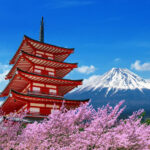
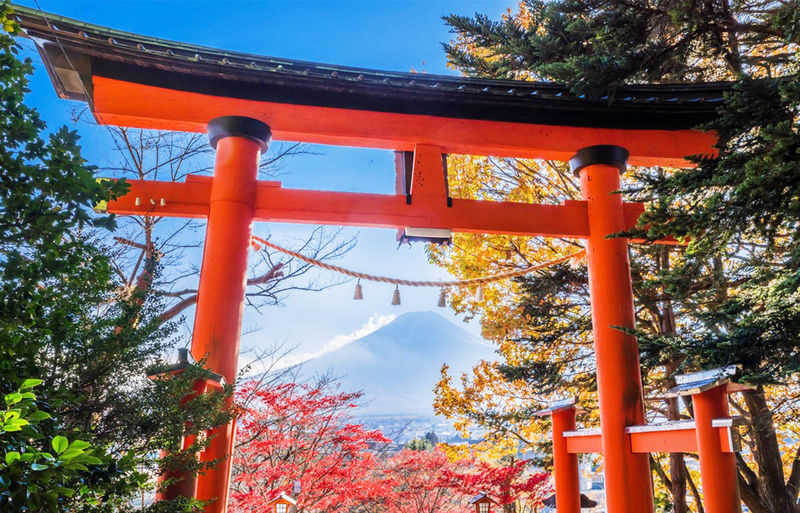
The day’s first major stop is Arakurayama Sengen Park, reached at about 10:30 and allotted one hour. The familiar view brings together Mount Fuji, the town below, and the vermilion five-storied pagoda. It is the image many people have in mind when they picture Fuji from Fujiyoshida.
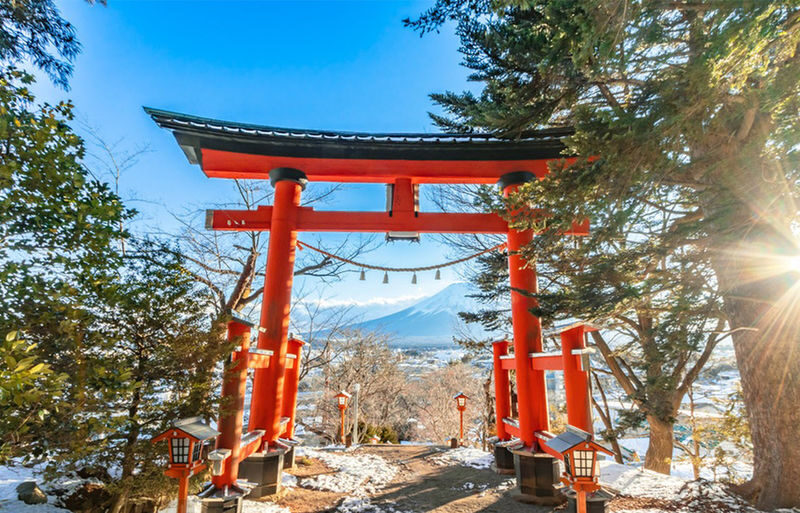
The viewpoint involves 397 steps. That climb is the day’s clearest physical demand, and the time at the park includes both the ascent and the chance to take in the view. If stairs are not for you, the tour information notes that you can make a wish at the shrine instead. The pagoda view is a major draw, but it is not the only way to spend the stop.
I would treat this as a place to take a breath and look around, not simply race to the top, shoot one photo, and rush down. The townscape gives the mountain a sense of scale, while the pagoda adds a vivid foreground. Weather matters: the mountain view depends on conditions, so a clear day can change the whole feel of this stop.
Hikawa Clock Shop frames the town toward Fuji
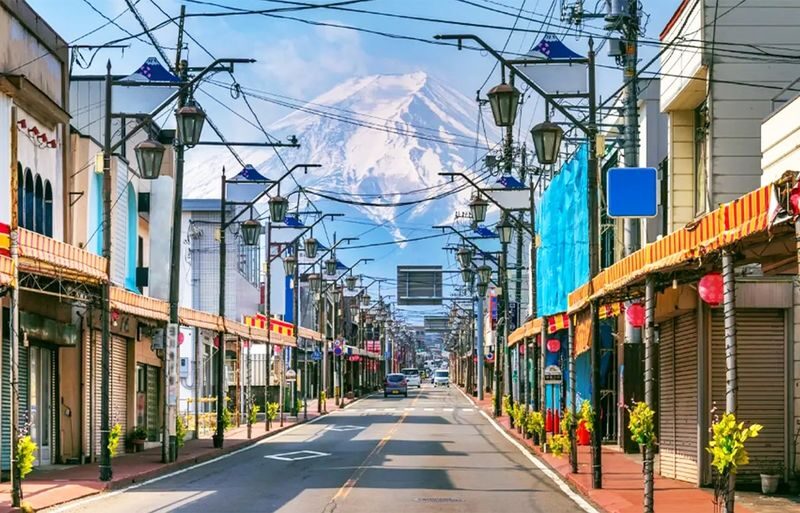
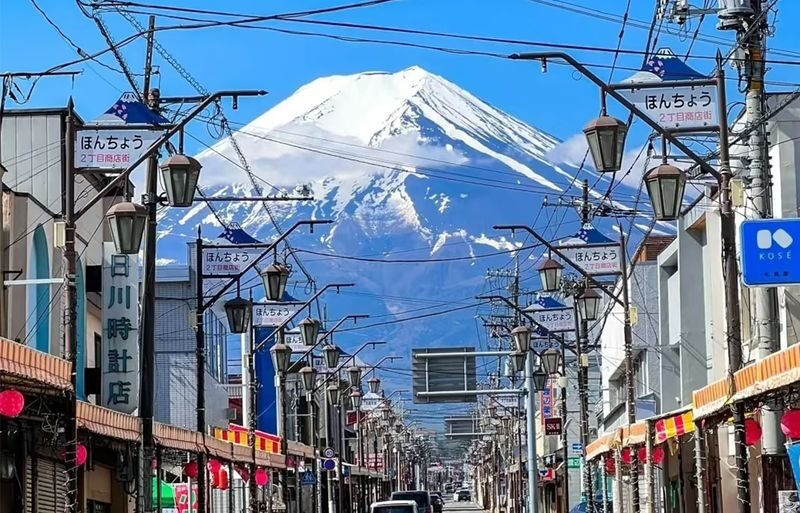
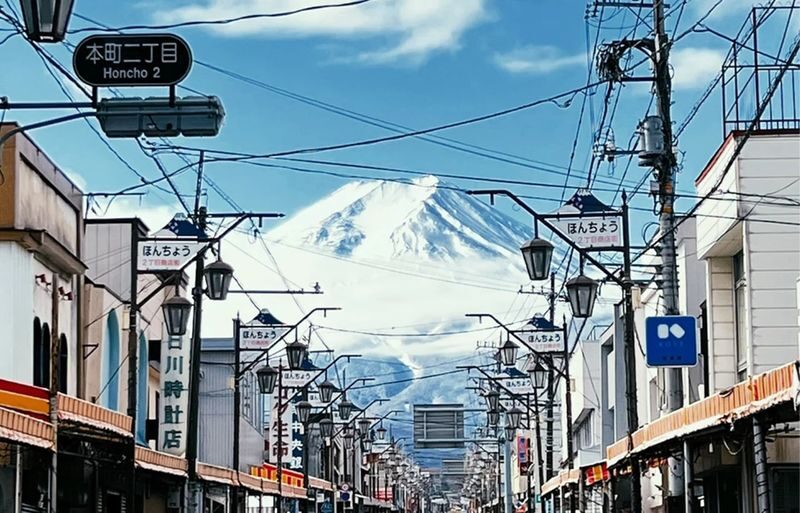
At about 11:45, the tour allows 20 minutes at Hikawa Clock Shop, a popular photo stop in Fujiyoshida. The appeal is the straight street that appears to lead toward Mount Fuji, creating a strong visual line between the town and the mountain.
This is a quick stop, not a long visit to a major attraction. Its value is in the composition: you get a street-level view that contrasts with the elevated panorama at Arakurayama. Keep expectations practical. The view depends on visibility, and 20 minutes leaves limited time to wait around for changing light or explore nearby streets.
The stop also gives the day a little texture. Fuji is not only a distant natural icon here; it forms a backdrop to an ordinary town street. That everyday setting is part of what makes the photo distinctive.
Oshino Hakkai gives the itinerary room to slow down
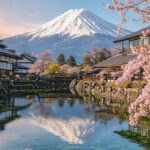
The longest stop is Oshino Hakkai, scheduled for about 12:30 with 90 minutes to explore. The village is known for eight clear springs, naturally filtered through Mount Fuji’s snowmelt, and the water reflects the mountain when conditions allow. The springs are designated a natural monument.
Here, the day shifts from photographing roads and rooftops to looking closely at water. You can taste the spring water and enjoy a slower stroll among the ponds. The allotted time is useful because it is longer than the brief street-photo stops, though it still has to cover the whole visit. Meals and drinks are not included, so plan to pay for food and beverages yourself.
A tour participant described finding an appealing lunch option here, including wagyu beef. That is a useful reminder that Oshino Hakkai can serve as more than a photo stop, but the tour does not include a meal or promise a particular restaurant. If lunch matters to you, allow time for it within the 90-minute window rather than assuming you can linger.
The Lawson stop pairs a familiar shop with a Fuji view
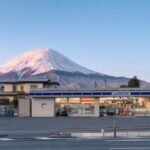
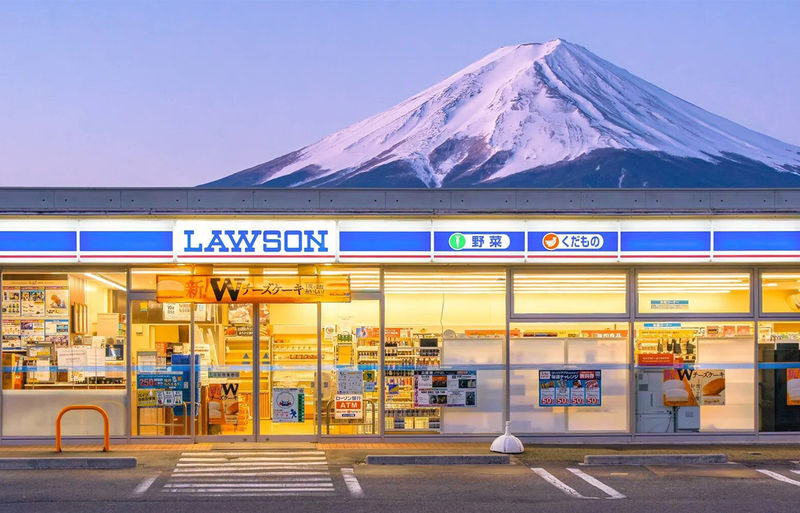
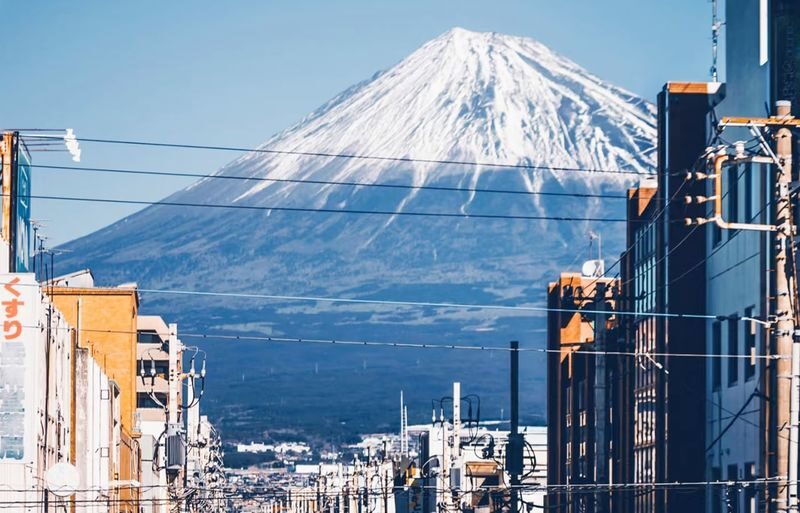
At about 14:30, the group spends 20 minutes at a Lawson convenience store for a photo of the shop and Mount Fuji together. It is an unusual travel image because the familiar convenience-store setting sits in contrast with the mountain. The composition is simple, modern, and distinctly Japanese in its mix of daily routine and grand scenery.
This is a short stop, so think of it as a quick photo opportunity rather than a shopping break. The tour description places the store on the shore of Lake Kawaguchi and suggests photographing from across the street. Keep your attention on the surroundings while taking pictures, and follow any directions from staff at the stop.
The photo depends on Mount Fuji being visible. If clouds cover the peak, the convenience store remains, but the main contrast is less striking. That is a limitation of any Fuji itinerary, not a flaw unique to this tour.
You can also read our reviews of more photography tours in Fujiyoshida


Oishi Park brings the season into the frame
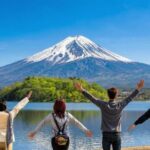
The last scenic stop is around 15:20, with 50 minutes set aside for the Lake Kawaguchiko area. Oishi Park is the usual choice, but the route can change according to the season. From April 1 to 13, the plan is to visit the Kawaguchiko Cherry Blossom Festival. In November, the Maple Leaf Corridor is scheduled. During other months, the itinerary returns to Oishi Park for whatever seasonal scenery is available.
Summer, from June through September, is highlighted for lavender and kochia flowers at Oishi Park. Winter, from December through February, brings the possibility of snow scenery. The timing matters: the listed cherry blossom and maple-leaf dates are specific windows, while the park’s flowers and winter conditions depend on the season.
I like this seasonal flexibility because it gives the final stop a different character over the year. But it is not a guarantee of peak bloom, fall color, or snow on a particular date. Nature does not work to the tour schedule. The stop is also only 50 minutes, which is enough for a walk and photos, not a deep exploration of the lakeshore.
Guides and traffic can shape the day
The schedule is ambitious, and road conditions can affect it. The tour notes that the order and timing may change because of traffic or weather. One tour guide, Liu, was specifically noted for rearranging the route after a traffic accident disrupted the day. That is the sort of flexibility you want when a full itinerary meets real roads.
Guide Sia was also singled out for attentive support, and one tour participant appreciated having a shrine option instead of climbing the steps. These details suggest that staff can make a difference when the day needs adjustment or a stop presents a choice. Still, the tour is not a private, custom-paced outing, and you should expect to follow the group’s timing.
The return time is listed as about 18:50, with drop-off options including the Marunouchi Police Department Tokyo Station Police Box and Tokyo Mode Gakuen. The actual arrival can vary with traffic and the day’s progress. Leave your evening open rather than booking something that depends on a precise return.
Price, pace, and who will get the most from it
At a starting price of $50.45, this trip can offer good value if your priority is seeing several well-known Fuji-area photo locations in one day without arranging the transport yourself. The designated meet-and-board option is listed from $72.05, so compare the price shown for your date and package rather than relying on the lowest advertised figure.
The value rests on transport and range, not on long guided visits or included meals. You get a full day of transfers, five stops, and a route that adjusts its final scenic stop by season. You pay separately for food, drinks, and personal purchases. If you prefer slow travel, long lunches, or time to wait for ideal light, the fast pace may feel restrictive.
I would recommend it to you if you want a practical first look at Fuji’s most photographed angles, enjoy taking pictures, and are comfortable with a shared vehicle and a full day away from Tokyo. It is also a sensible option if you want a guide and transport in several languages. The steep steps at Arakurayama deserve consideration, although the shrine offers an alternative use of that stop.
You may prefer a different plan if you want a private schedule, extensive time at one location, or a meal included in the price. The most useful booking decision is to match the trip to your priorities: broad coverage and easy transfers, yes; a leisurely, in-depth visit, not quite.
Fuji Photography Tour: Arakurayama Sengen Park, Hikawa Clock Shop, Oshino Hakkai, the most beautiful Lawson convenience store, and Lake Kawaguchiko Oishi Park (Departure from Tokyo).
“Tour guide Liu was very dedicated and considerate of all passengers. When we encountered a traffic accident today, he did an excellent job of rearr…”
FAQ
How long is the tour?
It starts in Tokyo at either 8:00 or 8:30 and is expected to return around 18:50. Traffic and weather can change the schedule.
Is round-trip transport included?
Yes. Round-trip transfers from the designated meeting point are included. The tour operates as a carpool trip.
What languages are available?
Staff are listed as speaking English, Chinese, Japanese, Korean, and Hindi.
How many steps are there at Arakurayama Sengen Park?
The viewpoint is reached by climbing 397 steps. The tour information also notes that you can make a wish at the shrine if you do not want to climb.
How much time is set aside for each stop?
The schedule allows one hour at Arakurayama Sengen Park, 20 minutes at Hikawa Clock Shop, 90 minutes at Oshino Hakkai, 20 minutes at Lawson, and 50 minutes at the seasonal Lake Kawaguchiko stop.
Are meals and drinks included?
No. Meals and beverages are not included, so bring money for food and drinks.
Which seasonal places may be included?
From April 1 to 13, the route may visit the Kawaguchiko Cherry Blossom Festival. In November, it may visit the Maple Leaf Corridor. Other months use Oishi Park, with summer flowers and possible winter snow scenery.
Is there an age limit?
No age limit is listed. Children aged 0 to 2 can join for free if they do not need a separate seat.
How much luggage can I bring?
The listed allowance is one standard-sized piece of luggage.
Can the tour schedule change?
Yes. Traffic and weather may affect the schedule, order of stops, and actual return time.