Japan’s autumn color is the star of this 15-day journey. You move from Tokyo’s city shrines to maple-framed Kyoto temples, Lake Kawaguchi’s Fuji views, and the memorial sites of Hiroshima, with castles and gardens along the way.
I like two things in particular: the route gives Kyoto several days rather than squeezing it into a quick stop, and the mix of bullet trains, local guides, and included hotels takes much of the planning burden off your shoulders.
One important consideration: the tour is called a castles expedition, but the listed route does not include Himeji or Okayama castles, despite their mention in the overview. Autumn foliage is also seasonal, while departures are offered year-round, so confirm your dates and the castle stops before paying.
At a glance
- Kyoto gets four nights: That gives you time for temples, gardens, Arashiyama, Uji, and a Nara excursion.
- The train route reaches Hiroshima and Miyajima: Bullet trains cover major legs, with a return to Osaka after the island visit.
- Autumn is the organizing idea: Rikugien’s maple colors are typically best from late November to early December; other foliage windows differ.
- Guiding is partial, not constant: English-speaking local guides lead selected days, while some travel time and Osaka’s free day are independent.
- Price needs a fresh quote: The stated starting price is $7,390, while an operator response gives $7,490 per person.
- The castle promise deserves checking: Nijo, Hiroshima, and Osaka castles appear in the daily plan, but Himeji and Okayama do not.

👉 See our pick of the 25 Best Guided Tours In Tokyo
- At a glance
- A 15-day route with autumn at its center
- Tokyo’s shrines, gardens, and city contrasts
- Nikko, Fuji country, and Hakone’s volcanic edge
- Four Kyoto days, not just a temple checklist
- Hiroshima and Miyajima, with a meaningful change of pace
- Osaka’s food streets and the tour’s loose ends
- What the price covers, and what it does not
- Who will get the most from this trip
- Should you book it?
- FAQ
- How long is the tour, and where does it start and end?
- What is the listed starting price?
- Are international flights included?
- What accommodation is provided?
- Are meals included?
- Is the tour guided every day?
- How many people are in the group?
- Does the itinerary include Himeji and Okayama castles?
- Does the tour run only during autumn?
- What transport is included?
- The Best Of Tokyo!
- More Tours in Tokyo
- More Tour Reviews in Tokyo
- Not for you? Here's more nearby things to do in Tokyo we have reviewed
A 15-day route with autumn at its center
 1 / 7
 2 / 7
 3 / 7
 4 / 7
 5 / 7
 6 / 7
 7 / 7
This tour moves from Tokyo through Hakone and Kyoto, then onward to Hiroshima, Miyajima, and Osaka. It is a full itinerary, but its best quality is the variety: city neighborhoods, mountain scenery, major shrines, gardens, castles, and a serious visit to Hiroshima’s Peace Memorial Park.
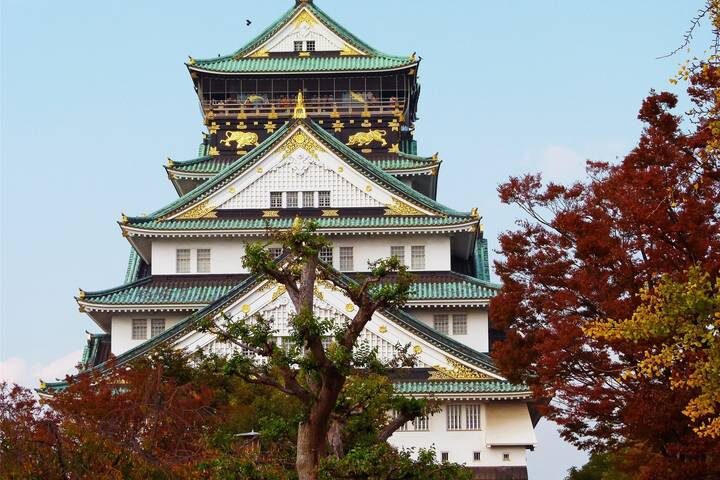
The title may lead you to expect a castle-by-castle tour. In practice, temples and seasonal gardens take up more of the schedule. You do visit Nijo Castle in Kyoto, Hiroshima Castle, and Osaka Castle, but Himeji Castle and Okayama Castle, both named in the overview, are absent from the day-by-day plan. Ask UME Travel to confirm whether those stops can be added or whether the description needs correction.
The tour is listed as a group of two to ten, with private guides and drivers noted in its tour name and description. It is also described as partially guided. Those details can fit together, but they leave room for questions about which days are private, which are shared, and when you will travel independently. Get the exact arrangements in writing.
You can also read our reviews of more tours and experiences in Tokyo.

Tokyo’s shrines, gardens, and city contrasts
You begin with an airport pickup and a stay at Mitsui Garden Hotel Shiodome Italia-gai, or a similar four-star hotel. The first full day balances sacred spaces and autumn gardens. Meiji Jingu sits in a large wooded area near Harajuku, a welcome pause from the surrounding city. The nearby avenue at Meiji Jingu Gaien is lined with 146 ginkgo trees, whose leaves turn gold in autumn.
Senso-ji, Tokyo’s oldest Buddhist temple, brings a different mood. It is a busy, long-established center of worship in Asakusa, and the tour pairs it with Rikugien, a traditional garden known for its maples. Rikugien’s peak color is generally expected from late November to early December, so ask how the date of your trip lines up. The tour can visit the garden outside its best foliage window, but the seasonal display is a central reason to go.
Day three jumps from Shibuya Crossing to Odaiba’s waterfront and Rainbow Bridge, then to the Imperial Palace gardens, Tokyo Tower, and Akihabara. A traditional Japanese lunch is included. It is a broad sweep of the capital, not a slow neighborhood study. You will see how dramatically Tokyo changes from one district to the next, though the day’s many stops mean limited time at each.
Nikko, Fuji country, and Hakone’s volcanic edge
Nikko adds a strong historical and natural contrast. Toshogu Shrine honors Tokugawa Ieyasu, founder of the Tokugawa shogunate, and its intricate decoration is a different kind of spectacle from Kyoto’s simpler temple grounds. You also visit Kegon Falls, then choose between Lake Chuzenji, with views of Mount Nantai, or a hot spring.
The choice is useful, but it means the day’s ending depends on your preference and the final transport plan. If you have your heart set on both options, ask whether the schedule allows it.
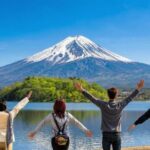
The next day is built around Mount Fuji and Lake Kawaguchi. Momiji Corridor is a short stretch of maple trees whose color frames the lake and, when conditions cooperate, Fuji. Arakurayama Sengen Park offers views over Fujiyoshida and the mountain. West Lake Village, with its thatched-roof cottages, provides a quieter finish. Fuji views are weather-dependent, so treat them as a possibility rather than a promise.
You spend the night at Laforet Club Hakone Gora Yunosumika, or a similar hotel. On day six, the Hakone Pirate Ship crosses Lake Ashi, followed by the ropeway to Owakudani, an active volcanic area known for sulfur vents and white steam. The route then connects through Odawara to Kyoto by Shinkansen. It is an appealing day, but also a transfer day with several moving parts, so keep your essentials easy to reach.
Four Kyoto days, not just a temple checklist
Kyoto is the longest stop, with four nights at Daiwa Roynet Hotel Kyoto-ekimae or a similar property. The first day combines Eikando, Kitano Tenmangu, and Sanzenin in rural Ohara. Eikando’s pond and maple trees are especially atmospheric in autumn, and evening illumination is mentioned for mid-November. Kitano Tenmangu also lights its maple garden during the fall season. Sanzenin offers mossy grounds and stone figures, with an early color season around mid-November.
That timing is worth discussing before you book. Kyoto’s foliage does not reach its best color on one fixed date, and the tour operates year-round. The stated seasonal windows are useful guides, not guarantees.
Arashiyama gets a half-day walking tour. Tenryuji’s garden, the Sagano Bamboo Forest, Togetsukyo Bridge, and Okochi-Sanso Villa make a satisfying cluster. The villa’s traditional buildings and garden offer a calmer counterpoint to the bamboo grove, and admission includes matcha at its teahouse. Arashiyama is a popular area, so a half-day gives you a taste rather than a leisurely exploration of every lane and temple.
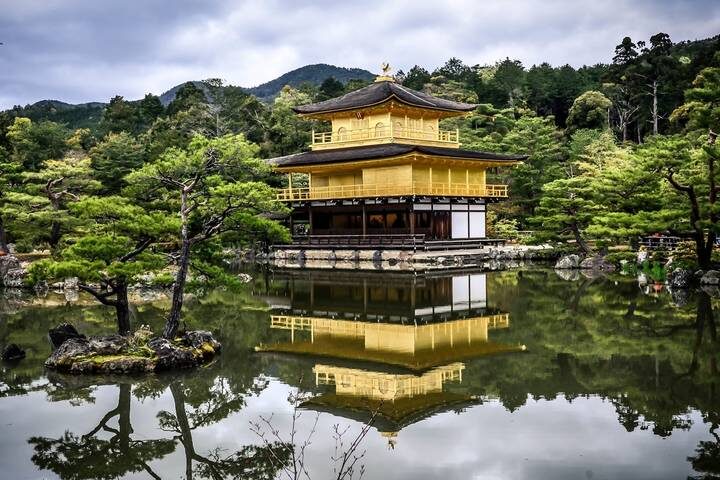
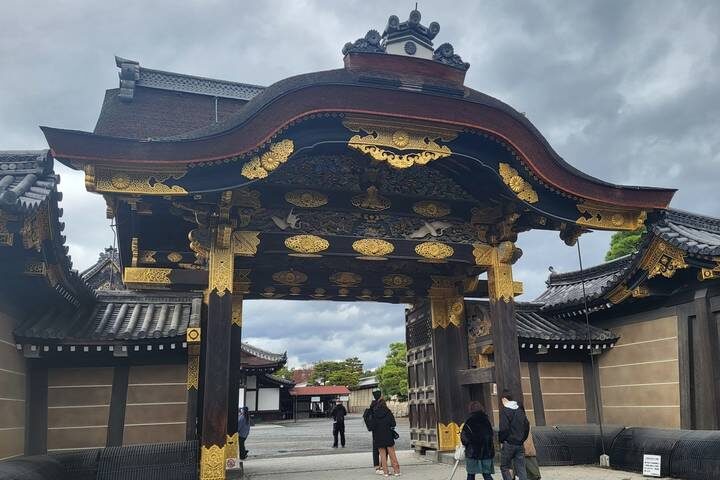
The next day brings Kiyomizu-dera, Kinkaku-ji, and Nijo Castle. Kiyomizu-dera’s broad wooden stage looks over the surrounding trees; Kinkaku-ji’s gold-covered pavilion reflects in its pond; Nijo Castle gives you a more direct connection to shogun-era Kyoto. These are major sights, and three in one day make for a full schedule. The castle stop is particularly relevant to the tour’s title, but it does not replace the missing Himeji and Okayama visits.
Day ten takes you through Fushimi Inari’s red torii gates, tea-centered Uji, and Nara Park, where more than 1,200 deer roam. Todai-ji Temple is the day’s major cultural stop. This is a long geographic sweep beyond central Kyoto, but the variety is excellent: shrine paths, tea culture, deer, and one of Japan’s best-known temple complexes. Your overnight changes to Osaka, so pack with that move in mind.
Hiroshima and Miyajima, with a meaningful change of pace
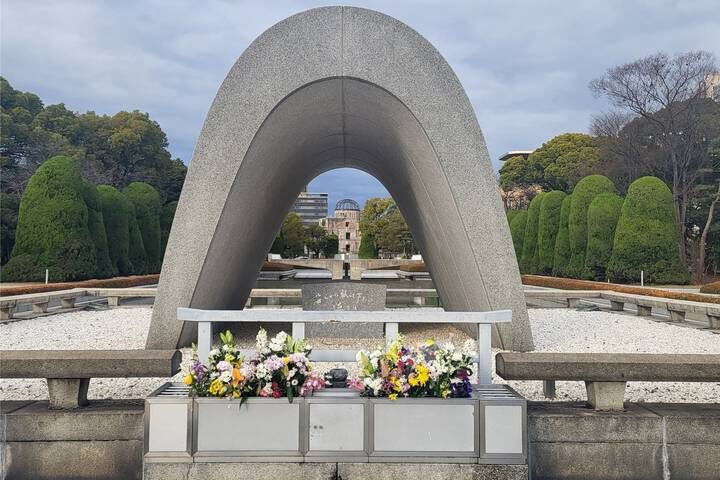
A bullet train carries you from Osaka to Hiroshima, where an English-speaking guide accompanies the visit. The Atomic Bomb Dome and Peace Memorial Park call for a slower pace than the sightseeing days. The park covers more than 120,000 square meters, with lawns, paths, and trees around sites that commemorate the bombing and its victims. Hiroshima Castle, rebuilt in 1958 after its destruction, now houses a museum about the city before World War II.
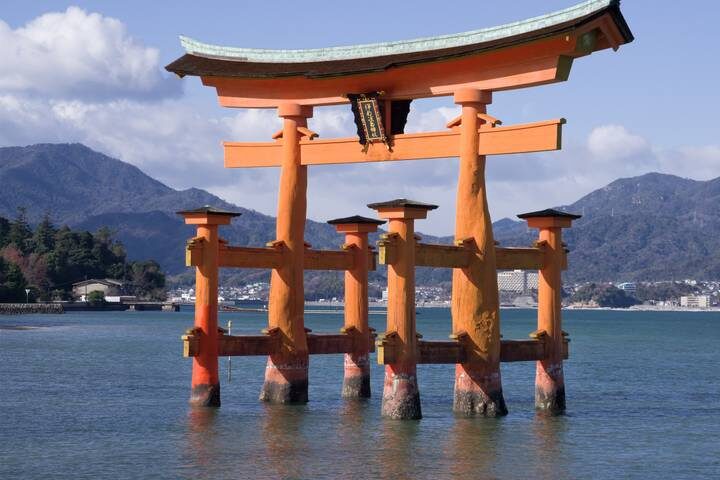
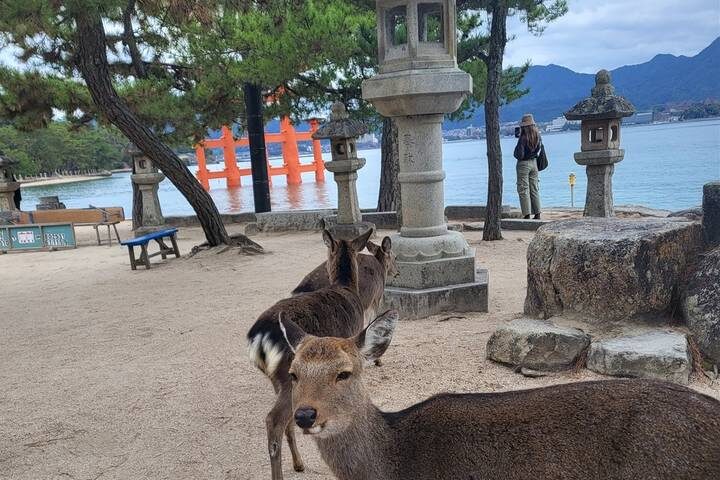
The itinerary then takes you to Miyajima, also known as Itsukushima. Its shrine and torii gate are the main draw; at high tide, the gate appears to float on the water. Deer also wander around the island, but they are not to be fed. After the visit, you return to Osaka by train.
The supplied transport description mentions bullet trains and public transport, but does not spell out every connection between Hiroshima, Miyajima, and Osaka. Ask which train, ferry, and local transfers are included, and whether your guide stays with you throughout the day. The island visit and long return make this one of the more demanding days.






Osaka’s food streets and the tour’s loose ends
Osaka gives you one free day before a guided day focused on the castle and entertainment district. The free day is a real advantage after a packed schedule. You can rest, explore on your own, or arrange an activity that suits your interests.
The guided day includes Osaka Castle Park and Dotonbori, where the neon signs and food stalls make a lively evening. The tour names dishes such as takoyaki, okonomiyaki, yakitori, and taiyaki, but the listed meals include breakfast only on this day. Budget separately for food, drinks, and any shopping.
There is a location mismatch in the activity details: the ninja-themed shuriken lesson is described as taking place in Asakusa, which is in Tokyo, while the day is based in Osaka. The Donki Ferris wheel is also listed, but the exact sequence and location of these activities are unclear. Confirm where the ninja activity happens and how it fits into the Osaka day before you book.
Your final morning includes an escort to Kansai International Airport. International flights are not included. That makes the end convenient, but check the departure transfer timing against your flight schedule.
What the price covers, and what it does not
The starting price is listed as $7,390 per person, based on the cheapest room. A separate operator response gives $7,490 per person, so ask for a current, itemized quote. The price is not a small outlay, but it covers 14 nights of accommodation, breakfast, selected additional meals, admission fees, guides, internal trains and cruises, and private air-conditioned transport where specified. International flights are extra.
The hotel plan is a practical part of the value. The named properties are four-star or similar, with breakfast and locations described as convenient for transport and nearby restaurants. Rooms are based on two people sharing; a single supplement applies if you want a room alone.
Breakfast is included each day, while the only specifically named included lunch is on Tokyo day three. Vegetarian, vegan, and halal meals are available on request. Tell the operator about your requirements before confirming, and ask which other meals, if any, are included.
At this price, the key question is not simply whether the hotels are comfortable. It is whether the level of guiding and private transport matches what you want. The trip is called partially guided, and one response describes a mix of public-transport guide days and private-car guide days. Request a day-by-day breakdown of transport, guide coverage, group size, and included admissions. The more clearly those points are stated, the easier it is to judge the cost.
Who will get the most from this trip
I would consider this tour if you want a broad introduction to Japan without arranging each hotel, rail leg, and major visit yourself. It suits first-time visitors who value English-speaking guidance and want a planned route through Tokyo, Kyoto, Hiroshima, and Osaka. Families may appreciate the mix of gardens, city sights, deer, and a ninja activity, though the long day to Miyajima and repeated temple visits call for patience.
It is less suited to someone who wants a dedicated castle tour, a fully escorted group experience every day, or a slow pace with plenty of unscheduled time. The schedule includes one free day in Osaka, but most days are programmed. The three highly positive tour ratings praise the autumn routing, careful pacing, guides, transport, and hotels. Those are encouraging signals, though the small rating sample is not enough to settle the questions about the castle route and daily arrangements.
Should you book it?
Book this tour if the broad route, seasonal gardens, and included transport matter more to you than a castle-focused itinerary. Before paying, get written confirmation of the current price, foliage dates, Himeji and Okayama stops, the Asakusa activity, and exactly which days use private vehicles or public transport. If those details match your expectations, this is a convenient way to see several sides of Japan in 15 days. If you mainly want castles, ask for a revised route before committing.
15 Days Japan Autumn Castles Expedition by UME Travel – Tokyo to Osaka
“I've attempted to explain my 15 Days Japan Autumn trip to people who weren't there and it's always been difficult. These fifteen days spent moving…”
FAQ
How long is the tour, and where does it start and end?
It lasts 15 days, starts in Tokyo, and ends in Osaka.
What is the listed starting price?
The stated starting price is $7,390 per person. An operator response gives $7,490 per person, so confirm the current price before booking.
Are international flights included?
No. International flights are not included.
What accommodation is provided?
The tour uses named four-star hotels or similar properties, with accommodation based on two people sharing. A single supplement applies for a room on your own.
Are meals included?
Breakfast is included as stated throughout the itinerary, and day three includes a traditional Japanese lunch. Vegetarian, vegan, and halal meal options can be requested.
Is the tour guided every day?
No. It is described as partially guided, with English-speaking local guides on selected days. Ask for a day-by-day guide and transport plan.
How many people are in the group?
The stated group size is two to ten people.
Does the itinerary include Himeji and Okayama castles?
They are named in the overview, but they do not appear in the day-by-day itinerary. Confirm with UME Travel whether either stop is included in your departure.
Does the tour run only during autumn?
Departures are listed year-round, although the itinerary is designed around autumn foliage. Ask how your travel dates align with the stated color periods.
What transport is included?
The tour includes the internal trains and cruises named in the itinerary, plus private air-conditioned vehicle transport where specified. Confirm the exact arrangements for each day, including the Hiroshima and Miyajima connections.























