Split’s best surprise is how quickly the city changes once you leave the Old Town. In a quiet electric cart, you can trade crowded lanes for sea views, forest edges, beaches and landmarks that are awkward to reach on foot.
I like two things in particular: the route gives you a broader sense of Split, and the small group makes it easy to ask questions and pause for photos. Guides such as Toni, Dino, Jakov and Sime bring local stories into the ride, from Hajduk Split football to everyday life by the coast.
One consideration: this is a tour of greater Split, not a guided visit inside Diocletian’s Palace. If the Old Town is your main priority, explore it separately. The cart tour is most useful as a complement, or as a comfortable way to see parts of the city you might otherwise skip.
- Small group, open-air ride: The cart holds up to five visitors plus the guide, with a breeze instead of a bus window between you and the coast.
- Viewpoint stop: Teraca Vidilica offers a broad look over Split and makes a natural place to take photos.
- Beaches and forest: The route reaches Kašjuni Beach and the entrance to Marjan Forest Park.
- More than scenery: Tito’s former villa, Karepića Tower, Poljud Stadium and the city’s longest tunnel add local context.
- A take-home photo: A Polaroid is included, a simple souvenir that is more personal than another phone picture.
- Flexible timing: The tour is listed as two hours, with an actual duration of about 1.5 to 2 hours.
- Why leave the Old Town for a while
- Teraca Vidilica puts the city in perspective
- Kašjuni Beach and Marjan’s green edge
- Tito’s villa and Karepića Tower add local texture
- St. Stephen’s Park and the coast
- A tunnel ride, Poljud Stadium and Hajduk Split
- What the cart and small group mean in practice
- Is a fair price?
- Who should book the ride
- FAQ
- How long does the tour last?
- How many people can join?
- What languages are available?
- Which places does the route include?
- Is a photo included?
- Is the tour wheelchair accessible?
- Can I cancel without a fee?
- The Best Of Split!
- More City Tours in Split
- More Tours in Split
- More Tour Reviews in Split
- Not for you? Here's more nearby things to do in Split we have reviewed
Why leave the Old Town for a while
 1 / 8
 2 / 8
 3 / 8
 4 / 8
 5 / 8
 6 / 8
 7 / 8
 8 / 8
Split’s historic center is the city’s headline act, but it is only one part of local life. The electric cart takes you beyond the familiar lanes to the western waterfront, Marjan’s wooded edge, beaches and residential parts of town. That wider view helps you understand how the city sits between its historic core and the Adriatic.
This is not a substitute for walking through the Old Town. You will not spend the ride exploring its narrow streets or visiting the interior of Diocletian’s Palace. Instead, the tour works well before or after a self-guided wander: first get a feel for the city’s shape, then return to the places that interest you most.
The open-air cart is part of the appeal, not just a way to cover distance. It is quiet and comfortable, and the sea air can feel especially welcome on a hot day. The trade-off is that you are exposed to the weather, so bring sun protection and dress for the conditions.

👉 See our pick of the 25 Best Guided Tours In Split
Teraca Vidilica puts the city in perspective
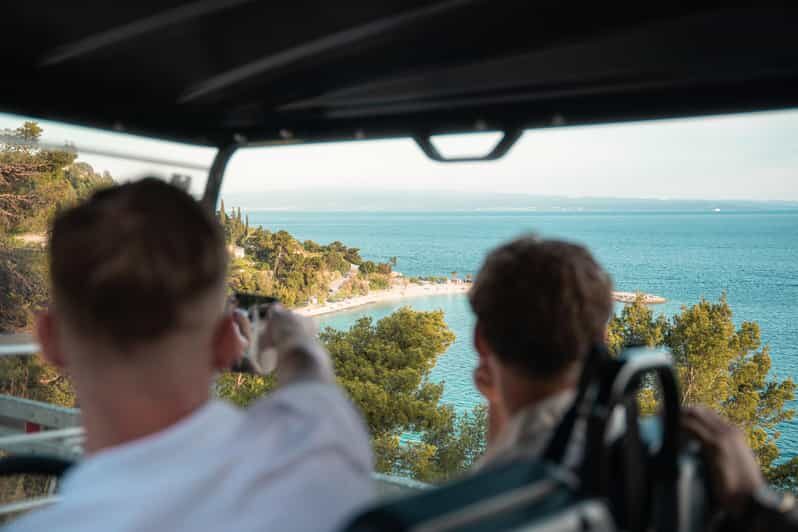
The route includes Teraca Vidilica, Split’s best-known viewpoint. From here, you can take in the city from above and see how the Old Town, coastline and surrounding neighborhoods fit together. It is a useful stop early in a visit, when you are still building a mental map.
Photo stops are built into the experience, and the guide leaves time for you to look around rather than simply snap a picture and climb back in. The included Polaroid adds a small, tangible memento. It is a modest extra, but one that suits the relaxed, personal feel of a small-group ride.
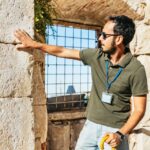
The viewpoint is also a good moment to ask your guide about what you can see. Toni, Dino, Jakov and Sime have each led tours, and the guide you meet may vary. The strongest part of the experience is the chance to hear local stories and ask about the places that catch your eye, rather than relying on a set of landmarks with no explanation.
You can also read our reviews of more city tours in Split


Kašjuni Beach and Marjan’s green edge
Kašjuni is presented as Split’s most beautiful beach, and the stop gives you a look at the coast beyond the city center. You can enjoy the view, take photos and get a sense of where you might return for a longer beach visit. The tour is not described as a swimming outing, so don’t plan on a full beach afternoon during the ride.
The route also reaches the entrance to Marjan Forest Park. That shift from waterfront to forest is one of the tour’s most appealing contrasts. It shows how quickly you can move from city streets to a more natural setting without leaving Split.
If you are hoping for a long walk among the trees, keep your expectations in check. The experience is a guided ride with selected stops, not a hiking tour. Its value is in seeing the forest area and coast efficiently, then deciding whether you want to come back under your own steam.
Tito’s villa and Karepića Tower add local texture
Villa Dalmacija, known as Tito’s Villa, was the former residence of Yugoslav leader Josip Broz Tito. Its place on the route brings a layer of modern political history to a tour that also includes beaches and viewpoints. The information provided describes a stop at the villa, not an interior visit, so treat it as an exterior landmark and a chance to hear its story.
Karepića Tower offers a different kind of history: a fortress set among the cliffs. Its position makes it a striking contrast with Split’s grand public landmarks. A local guide can help make sense of what you are seeing and why it matters, especially if you would otherwise pass by without knowing the name or background.
These stops are part of what makes the ride more than a scenic loop. Split’s appeal is not limited to ancient stonework. The city’s more recent past, local geography and daily routines all come into view when someone who knows the area connects the dots.
St. Stephen’s Park and the coast
St. Stephen’s Park is described as a popular wedding spot, with a small local beach and places where people cliff-jump. It offers a glimpse of how Split’s residents use the shoreline, beyond the main sights and visitor areas. The stop may appeal most if you enjoy seeing the city as a lived-in place, not only as a collection of monuments.
The route also follows the West Coast promenade and passes Split Marina. Together, they show the city’s relationship with the sea from two angles: a public waterfront for walking and views, and a working marina setting. These are good stretches for taking in the air and watching the shape of the harbor.
The exact order of stops is not specified, and the tour is not a hop-on, hop-off service. Think of it as a guided route with planned pauses, rather than a day pass that lets you set your own schedule.
A tunnel ride, Poljud Stadium and Hajduk Split
One unusual part of the route is a drive through Split’s longest tunnel. It adds a small change of pace to the ride and offers a look at the city’s infrastructure, rather than another scenic stop. If you are traveling with children or anyone who enjoys an unexpected detour, it may be a fun detail to remember.
Poljud Stadium is home to Hajduk Split, one of the city’s central sporting institutions. Football is a strong part of local identity, and the stadium gives your guide an opening to talk about the club and its place in town. Several guides are noted for sharing sports knowledge and local stories, so ask if you want more on the team.
The cart makes this mix of sights possible without asking you to cover the same ground on foot. That matters if you have limited time, are visiting in the heat, or simply want an overview before choosing where to spend more time.



What the cart and small group mean in practice
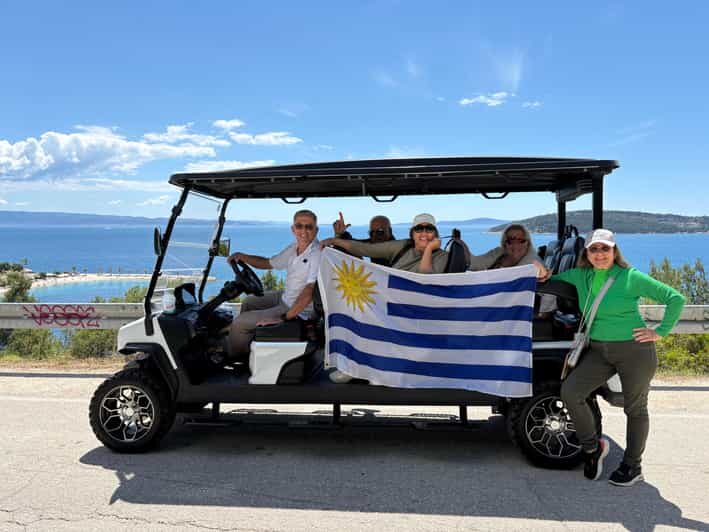
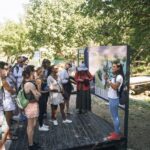
The maximum group size is five visitors plus the guide. That is a real advantage over a large coach: conversation is easier, photo stops feel less rushed, and the guide can respond to your questions. It also means availability may be more limited than for a bigger tour, particularly if you want a specific time.
The cart is fully electric and open-air. It is described as comfortable, with padded seating and seatbelts noted by people who have taken the ride. The breeze helps on hot days, though it is not the same as a fully enclosed, air-conditioned vehicle. If you are sensitive to sun or wind, plan accordingly.
The activity is marked wheelchair accessible, but the details of boarding and equipment are not provided. If you have specific mobility needs, confirm that the cart and stops will work for you before booking. One person with mobility issues found the ride a useful way to see the city, but individual needs can differ.
The tour lasts around 1.5 to 2 hours. That is long enough to cover a broad stretch of Split, but short enough to fit into a day that includes the Old Town, a meal or another activity. The pace includes stops, though this is still a guided circuit rather than a leisurely day spent at each beach and landmark.
Is $55 a fair price?
At $55 per person, this tour costs more than simply taking a local walk, but you are paying for transport, a licensed local guide, a small group, planned photo stops and access to sights spread around the city. The electric cart also saves you from working out how to connect the beaches, forest edge, stadium and viewpoints on your own.
The value depends on what you want. If you are happy to stay in the Old Town, the cart may not be essential. If you want to see a wider slice of Split in a short window, or would rather avoid a long walk between scattered places, the price is easier to justify. The included Polaroid is a pleasant extra, but the route and guiding are the main reasons to book.
You can reserve now and pay later, and cancellation is free up to 24 hours in advance. Those terms help if your plans are still taking shape, though it is still wise to check available start times before building the rest of your day around the ride.
Who should book the ride
I would put this tour near the top of the list for first-time visitors who have already planned time in the Old Town and want a broader view. It is also a good fit for families, small groups and anyone who likes local conversation as much as sightseeing. Several guides, including Toni, Dino, Jakov and Sime, are known for mixing history with personal stories and humor.
The cart can also make sense if you have limited mobility or want to see more without walking the entire route. The tour is marked wheelchair accessible, but confirm the practical details for your needs. On a hot day, the open-air ride can be a welcome alternative to walking between distant stops.
Skip it if your only goal is a deep architectural tour of Diocletian’s Palace, or if you want to spend hours swimming and walking in Marjan Forest Park. This is a sampler of greater Split, not a full day at any one place.
Split: City Tour by Electric Golf Cart
FAQ
How long does the tour last?
The tour is listed as two hours. Its stated duration is about 1.5 to 2 hours.
How many people can join?
The maximum group size is five visitors plus the guide.
What languages are available?
The live guide speaks English or Croatian.
Which places does the route include?
Stops and sights include Teraca Vidilica, Kašjuni Beach, the entrance to Marjan Forest Park, Villa Dalmacija, Karepića Tower, St. Stephen’s Park, Poljud Stadium, the West Coast promenade and Split Marina. The route also goes through the city’s longest tunnel.
Is a photo included?
Yes. Free Polaroid photos are included, along with photo stops during the tour.
Is the tour wheelchair accessible?
The activity is listed as wheelchair accessible. Specific details about boarding and the accessibility of each stop are not provided, so check with the provider if you have particular needs.
Can I cancel without a fee?
Yes. You can cancel up to 24 hours in advance for a full refund.
You can check availability for your dates here: