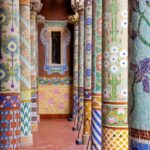
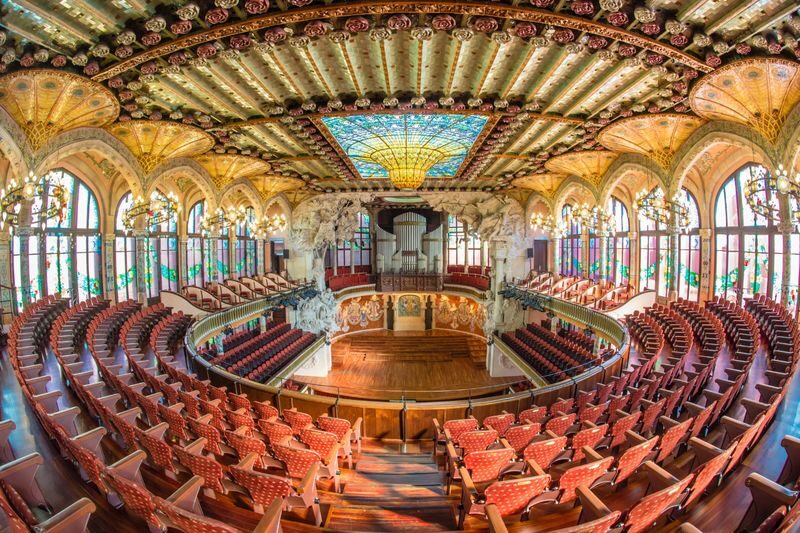
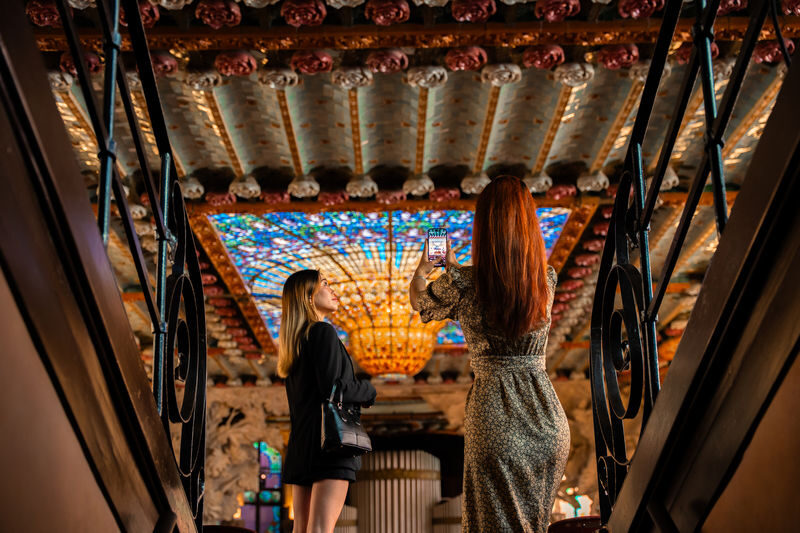
The Palau de la Música Catalana is a concert hall that asks you to look up. Its great stained-glass skylight hangs over the main auditorium like a glowing drop of color, while mosaics, sculptures, and floral details fill the walls around it. This is not just a pretty room: it is a working music venue, designed by Lluís Domènech i Montaner and opened in 1908.
I like two things about this visit: the chance to sit in the concert hall and take in its detail at your own pace, and the choice of a simple brochure, audio guide, or guided tour. The organ may also be heard during a visit, though no performance is promised with admission.
One consideration: guided-tour language and session details need careful checking. Some bookings have been issued for a different language than expected, and the brochure option may be digital rather than a paper handout. The venue is worth seeing, but the ticket details deserve a close read.
- At a glance
- Why this concert hall deserves a visit
- Entering with a Klook ticket
- Looking up in the main auditorium
- Choosing a brochure, audio guide, or tour
- How much time and money to allow
- Opening hours and practical notes
- Who should book this visit?
- Should you book?
- FAQ
- How long does a visit take?
- Does the admission ticket include a concert?
- What is included with the basic ticket?
- Where is the Palau de la Música Catalana?
- How do I get there by metro?
- Can children enter for free?
- Is the venue wheelchair-accessible?
- Can I cancel for a refund?
- The Best Of Barcelona!
- More Tickets in Barcelona
- More Tours in Barcelona
- More Tour Reviews in Barcelona
- Not for you? Here's more nearby things to do in Barcelona we have reviewed
At a glance
 1 / 9
 2 / 9
 3 / 9
 4 / 9
 5 / 9
 6 / 9
 7 / 9
 8 / 9
 9 / 9
- The main hall is the star: Look up at the stained-glass skylight, then take time with the surrounding mosaics and sculpture.
- A visit takes about 50 minutes: The stated self-guided visit is around 50 minutes, though you may want longer to pause and look around.
- Choose your level of explanation: Tickets are offered with a brochure, audio guide, or guided tour in English, alongside other package options.
- No concert is included: Admission is for the building, not a performance. Any organ sound or rehearsal you encounter is an extra, not a guarantee.
- The ticket starts at $24.69: It is a worthwhile spend for architecture lovers, especially if you give the interior time rather than treating it as a quick photo stop.
👉 See our pick of the Best Guided Tours In Montserrat
Why this concert hall deserves a visit
Barcelona’s Modernisme is often introduced through Antoni Gaudí, but the Palau offers a different and equally rewarding lesson in the city’s architecture. Domènech i Montaner used color, natural light, sculpture, and plant-like forms to make the concert hall itself part of the performance.
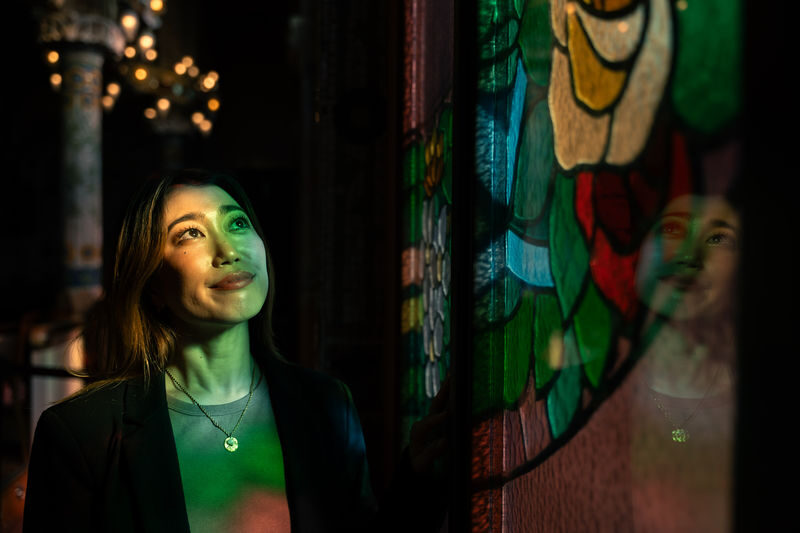
The building’s appeal is not limited to the famous ceiling. The main auditorium is full of details that are easy to miss if you walk in, take one photograph, and head out. Give your eyes a moment to adjust, then look from the stained glass to the tiled surfaces, carved forms, and decorative touches around the room.
That sense of a living venue matters, too. The Palau has hosted concerts and events since 1908 and still serves as a concert hall. You are visiting a place built for music, not a room preserved only for display. Even without a concert ticket, sitting quietly in the auditorium can give you a feel for its purpose.
You can also read our reviews of more tours and experiences in Barcelona


Entering with a Klook ticket
The ticket is issued for a selected date and, where applicable, time. You present the mobile voucher at the venue and enter with it. The ticket is described as offering fast-track access, which can make the arrival simpler than sorting out admission at the door, though it is still wise to arrive 15 minutes before a scheduled activity.
The meeting address is C/ Palau de la Música, 4-6, 08003 Barcelona. From the Urquinaona metro stop on L1 or L4, the walk is about two minutes. That makes the Palau easy to fit into a day in central Barcelona without planning a separate transport outing.
Download or save your voucher before you arrive. One visitor had trouble accessing it inside the hall because mobile network service was poor. A QR code saved to your phone, or an offline copy, is a small bit of preparation that can spare you an awkward pause at the entrance.
Re-entry is not allowed once you leave, so take care of the bathroom or other practical needs before you start. Large items such as suitcases, musical instruments, scooters, and large backpacks are not allowed inside. Outside food and drink are also prohibited.
Looking up in the main auditorium
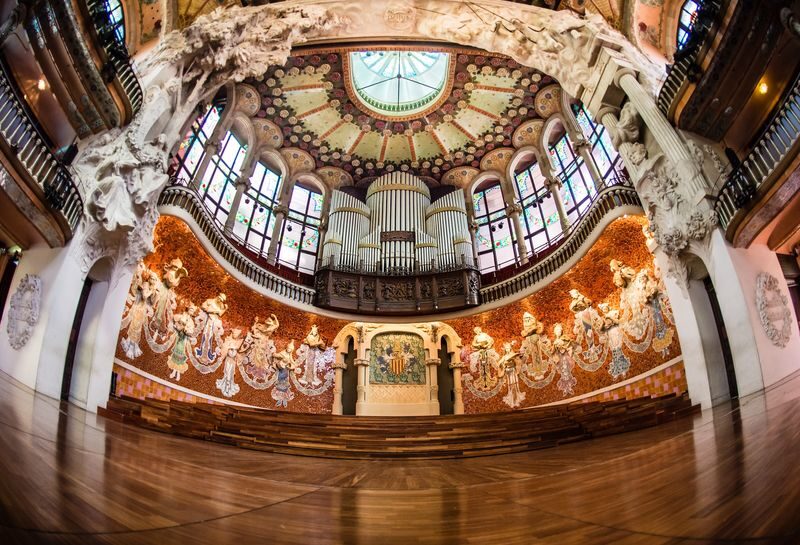
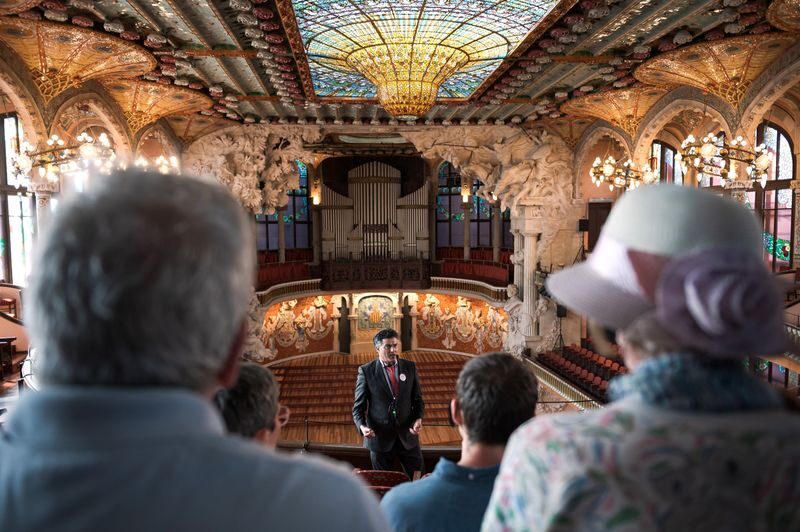
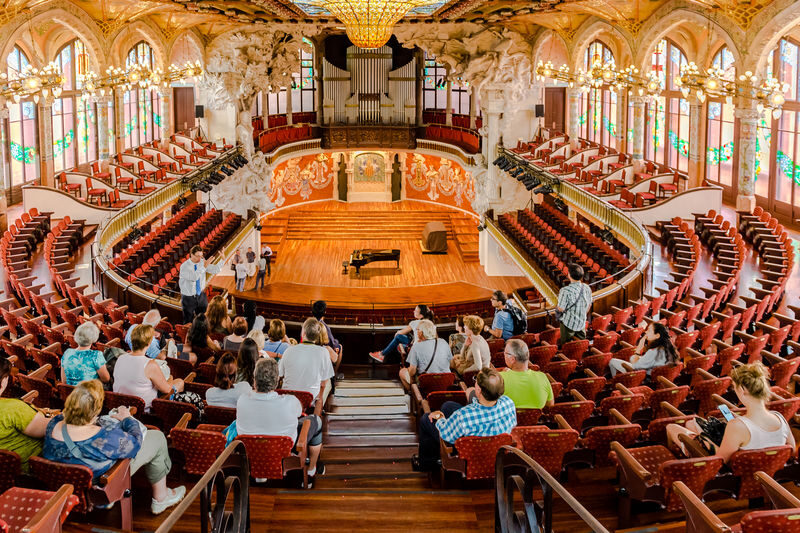
The main concert hall is the heart of the visit. The stained-glass skylight, often described as a teardrop of sunlight, is the feature most likely to stop you in your tracks. Its position above the audience makes the ceiling feel less like a flat roof and more like part of the room’s theatre.
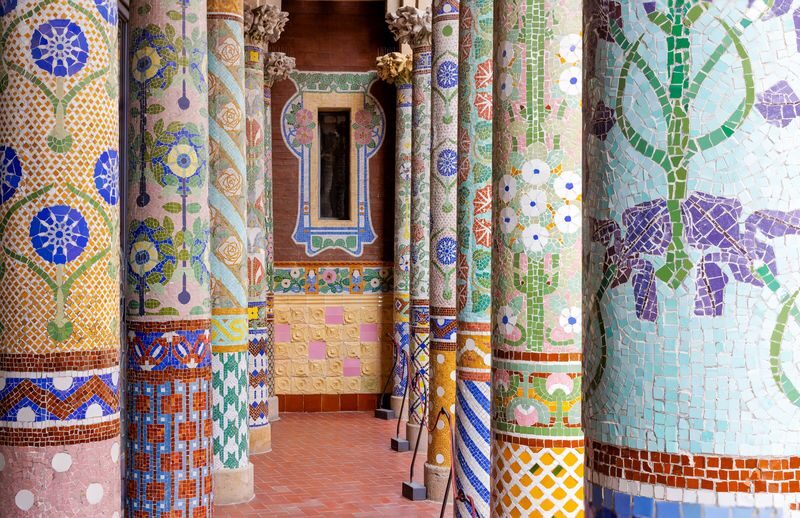
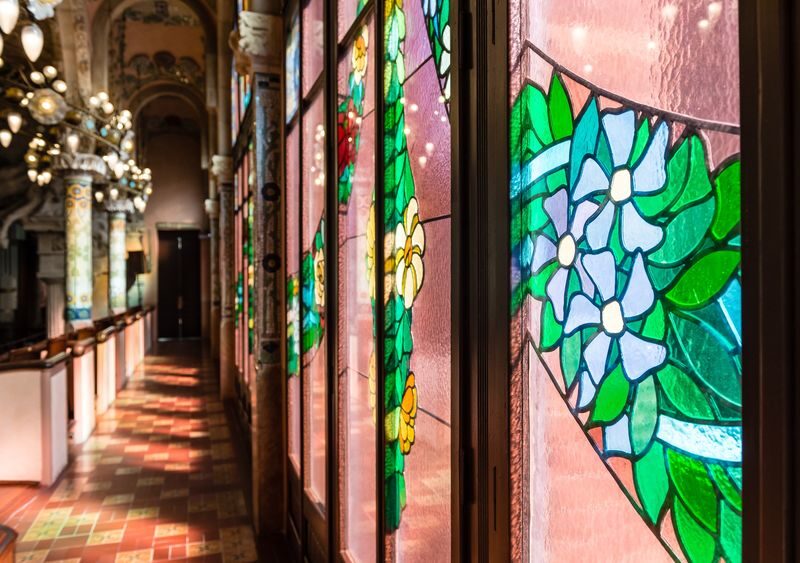
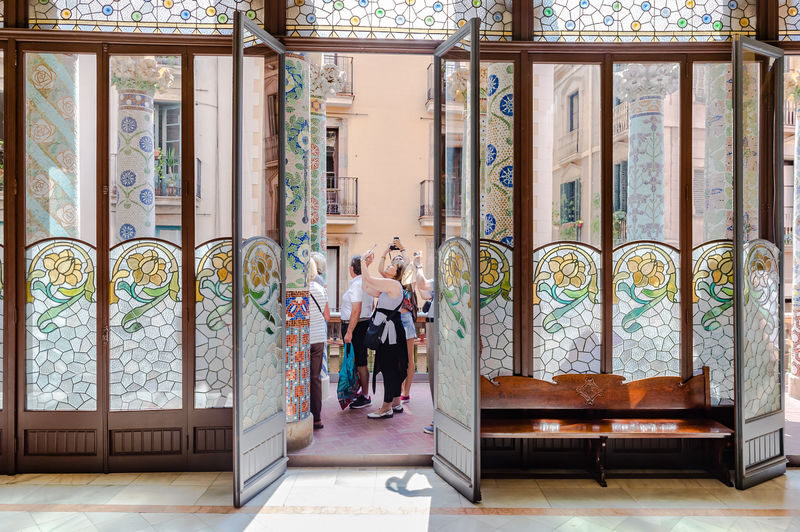
Do not let the skylight steal all your attention. The walls and surrounding decoration carry a lot of the building’s character: mosaic surfaces, sculptural details, and floral forms create a dense setting that rewards a slow circuit of the room. You can sit in a chair for a while and look, rather than trying to take in every detail while moving.
The hall is not enormous, which is part of its appeal. It feels intimate enough to imagine the audience gathered for a performance, while the ornament gives the room a ceremonial scale. The velvet seating and historic pipe organ add to that sense of a place meant for listening as much as looking.
At times, music may be played through the hall or you may catch a rehearsal. Some visitors have encountered organ music, and one account describes a chance to hear singers rehearsing. These moments can make the architecture feel especially alive, but they are not part of the ticket promise. If hearing a concert is essential to your visit, book a concert ticket separately.
Photography is permitted subject to the venue’s rules, but flash is prohibited. Recording or photographing a show is strictly forbidden. If a performance or rehearsal is underway, put the phone away and let the music have the room.
Choosing a brochure, audio guide, or tour
The brochure ticket is the simplest option. It includes admission and information material, with brochure languages listed in Chinese, English, Spanish, Arabic, Russian, Portuguese, Japanese, German, Korean, French, Italian, Polish, Catalan, Hebrew, Basque, and Galician. The self-guided brochure visit is stated to take about 50 minutes.
Do not assume the brochure will be a take-home paper booklet. The format may be a QR code or digital material, and some visitors have arrived expecting a printed pamphlet. If you want a paper copy, confirm that before booking rather than counting on one.
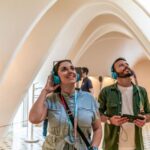
The audio-guide option suits you if you like to set your own pace while hearing more context. The audio-guide visit is stated to take around 50 minutes, and the guide is accessed digitally. Bring headphones or earbuds, and download what you need in advance; relying on a phone connection inside can be inconvenient. The audio guide is not included with the basic brochure ticket.
A guided tour can add useful context and may provide access to areas beyond the main auditorium. An English tour has included the main lobby and a choir rehearsal venue, as well as a recording of the pipe organ. That is a good reason to choose a guide if you want more than a visual visit.
But language selection is the option that needs the most care. Several visitors have arrived expecting an English or Chinese tour and found a voucher assigned to Catalan, or a session in a different language. Some were able to switch to another slot at the venue, but that can cost time and may not be possible on a tight schedule. Check the language printed on the final voucher, not just the selection you remember making during checkout. If it is wrong, contact the booking service before the visit.
How much time and money to allow
The ticket starts at $24.69, with the exact price depending on the package. For a building of this artistic and architectural importance, admission offers fair value if you enjoy design, music, or Barcelona’s Modernisme. It is less compelling if you are rushing through the city and only want a quick look at one famous ceiling.
Plan on at least the stated 50-minute visit for the brochure or audio-guide options. The overall activity is described as taking one to two hours, which gives you room to pause in the hall, read or listen to the interpretation, and avoid turning the visit into a dash. A guided tour may shape the timing, so follow the time on your voucher.
A combined ticket for the Palau and the Sant Pau Art Nouveau Site is also available. It can make sense if you want to compare two works by Domènech i Montaner in one day. Sant Pau is a separate site, so consider the extra time and travel involved rather than treating the bundle as a quick add-on.
The basic ticket does not include transport, meals, drinks, personal expenses, or a concert ticket. That is clear enough, but it is worth remembering that admission to the hall is not the same as attending a performance. If live music is your main goal, the building ticket alone will not deliver it.



Opening hours and practical notes
Opening times vary by season and by visit type. The stated regular hours are 09:30 to 17:00, with last entry at 16:00. In August, the venue is listed as open daily from 09:00 to 18:00. The brochure visit is listed for 09:00 to 17:00, while the audio-guide visit is listed for 09:00 to 18:00. Because the supplied time information is not entirely consistent, check the hours and entry time attached to your selected date before setting out.
Children aged 0 to 9 can enter free, and children aged 0 to 10 must be accompanied by a paying adult. Children aged 10 and older pay the adult rate. The venue is listed as stroller- and wheelchair-accessible.
The Palau expects quiet and considerate behavior, particularly during classical concerts. Children who disrupt an event may be asked to leave the auditorium. Smoking and drinking are not allowed inside, and staff may require anyone who breaks those rules to leave.
Who should book this visit?
I would put this near the top of the list for anyone who enjoys architecture, decorative arts, or music venues. It is also a strong choice if you have already seen Barcelona’s better-known Modernista landmarks and want to understand how another major architect shaped the city.
The self-guided ticket is a sensible fit if you mainly want to see the room and work at your own pace. Choose the audio guide or a guided tour if stories and context matter as much as the view. For a combined architecture day, the Palau and Sant Pau package may be useful, provided you have time for both sites.
I would hesitate only if you expect a concert as part of admission, need a particular tour language but cannot verify it, or have very little time to spare. The building is the attraction, and it deserves more than a hurried walk-through.
Should you book?
Yes, if the Palau’s architecture is on your Barcelona list. The stained-glass ceiling, mosaic work, sculpture, and working concert-hall atmosphere make this a memorable visit, and the starting price is reasonable for a major cultural site. Pick the ticket type that suits how much explanation you want, save your voucher offline, and double-check tour language and hours. Book a separate concert ticket if you want a guaranteed musical performance.
Palau de la Musica Catalana Entry Ticket in Barcelona
“It was a wonderful building. Please come and see it for yourself.”
FAQ
How long does a visit take?
The self-guided brochure and audio-guide visits are each stated to take about 50 minutes. The overall activity is described as taking one to two hours, depending on how long you spend looking around.
Does the admission ticket include a concert?
No. A concert ticket is not included. Admission lets you visit the Palau, but any organ music, rehearsal, or other music you hear during the visit is not guaranteed.
What is included with the basic ticket?
The basic ticket includes admission to the Palau de la Música Catalana and an information brochure. An audio guide, transport, food, drinks, and personal expenses are not included.
Where is the Palau de la Música Catalana?
It is at C/ Palau de la Música, 4-6, 08003 Barcelona, Spain.
How do I get there by metro?
Take Metro L1 or L4 to Urquinaona. The walk from the stop to the venue is about two minutes.
Can children enter for free?
Children aged 0 to 9 can enter free of charge. Children aged 0 to 10 must be accompanied by a paying adult, and children aged 10 or older pay the adult rate.
Is the venue wheelchair-accessible?
Yes. The activity information lists the venue as wheelchair-accessible and stroller-accessible.
Can I cancel for a refund?
Free cancellation is available if you cancel at least 24 hours before the activity date, using destination local time. If you cannot cancel the booking yourself, contact Klook customer service.