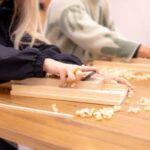
The satisfying part of this Osaka workshop is turning a piece of wood into something you’ll actually use. You choose the wood, shape the chopsticks by hand, sand them smooth, and finish them with oil. Then you can watch your name being engraved in Kanji.
I like the choice of more than 10 woods, which lets you pick for color, grain, and weight, and I like that the finished pair is ready to take home the same day. One thing to budget for: premium wood and engraving are optional extras, so the advertised $6 price may not cover the upgrades you want.
- At a glance
- Choosing wood is the first craft decision
- Shaping, sanding, and oiling your pair
- Instructors make the process approachable
- Kanji engraving adds a personal finish
- A useful souvenir, not just a workshop memento
- A compact break in central Namba
- Is the price good value?
- Who should book the Namba chopstick workshop?
- FAQ
- How long does the workshop take?
- What is included in the price?
- Are premium woods included?
- Is name engraving included?
- Can I choose the wood?
- What steps do I do myself?
- What languages are available?
- Can children take part?
- Is the workshop wheelchair accessible?
- The Best Of Osaka!
- More Workshops & Classes in Osaka
- More Tours in Osaka
- More Tour Reviews in Osaka
- Not for you? Here's more nearby things to do in Osaka we have reviewed
At a glance
- Choose your wood: Compare more than 10 types, each with its own color, grain, weight, and character.
- Make them by hand: Shape, sand, smooth, and oil your chopsticks with staff guidance.
- Add a personal touch: Optional custom Kanji engraving turns a useful object into a keepsake.
- Finish in about an hour: The workshop is a compact activity for a free afternoon or a rainy-day plan.
- Get help in English or Japanese: Instructors such as Mao, Aimi, Sam, and Ryoga have guided participants through the process.
- Take home what you make: Your finished chopsticks are yours to keep, with no wait for later collection.
👉 See our pick of the 24 Best Workshops And Classes In Osaka
Choosing wood is the first craft decision
The workshop begins with a choice that is more interesting than it sounds: what kind of wood should your chopsticks be? You can select from more than 10 types, with differences in color, grain, weight, and character. That variety makes the first part of the activity a small lesson in noticing wood, not just picking the prettiest piece.
Think about how you want the finished chopsticks to feel in your hand. A lighter wood may suit you if you prefer a delicate feel, while a heavier option may feel more substantial. The instructors can explain the choices and help you match a wood to your preference.
Standard wood is included in the $6 price, while premium woods cost extra. If you have a particular wood in mind, ask what is covered by your chosen plan before you begin. Purpleheart is one example of a premium option, and one participant found it harder to work than other woods. That can add a little challenge, so it may not be the best pick if you want the easiest route through the shaping stage.
The wood itself becomes part of the souvenir’s meaning. A pair made for a birthday, anniversary, or family trip can carry a personal touch even before you add a name. If you are making chopsticks with a partner or child, choosing different woods gives each pair its own look.
You can also read our reviews of more tours and experiences in Osaka



Shaping, sanding, and oiling your pair
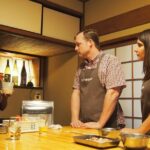
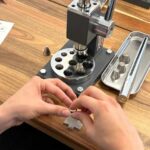
Once you have chosen your wood, the hands-on work begins. Staff show you how to shape the chopsticks with a plane, then refine their form with sandpaper. You smooth the surface and apply oil to finish the wood.
This is guided craft, not a test of woodworking skill. The instructors explain each step and check your progress, offering help when you need it. That support matters if you have never used the tools before, and it lets you focus on the shape and feel of your pair rather than worry about getting every move right.
You should still expect to use your hands and pay attention to the work. Shaping and sanding take time, and your pair will reflect your own choices. That is part of the appeal: the result is not just a shop-bought souvenir with your name added, but something you have worked on yourself.
The pace sounds relaxed rather than hurried. Some participants finish in about an hour, while one account put the full session at just over an hour. If you have a tight connection or a dinner booking, leave a little breathing room instead of planning the next activity down to the minute.
Instructors make the process approachable
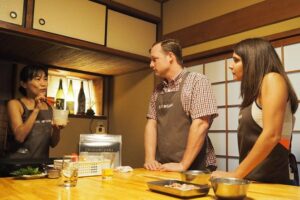
The staff are central to the experience. English and Japanese instruction is available, and the instructors explain the process step by step. Names you may encounter include Mao, Aimi, Sam, Ryoga, Megumi, and Ho Chen, among others.
The teaching style described across the experience is patient and encouraging. That is useful for first-time makers, children, and anyone who is unsure about handling the tools. The instructors can help with wood selection as well as the making itself, so you do not need to arrive knowing the difference between the available options.
The workshop also leaves room for questions and conversation. One instructor, Robert, has been noted for his enthusiasm for German, and staff have shared suggestions for local places to explore. These small exchanges can make a short craft session feel connected to the neighborhood, though the main attraction remains making the chopsticks.
Families can consider this activity, too. Children aged 6 and 7 have taken part, and a 7-year-old was able to enjoy the process with staff guidance. That does not guarantee every child will find the tools or the full session a fit, so consider your child’s patience and comfort with a hands-on activity.
Kanji engraving adds a personal finish
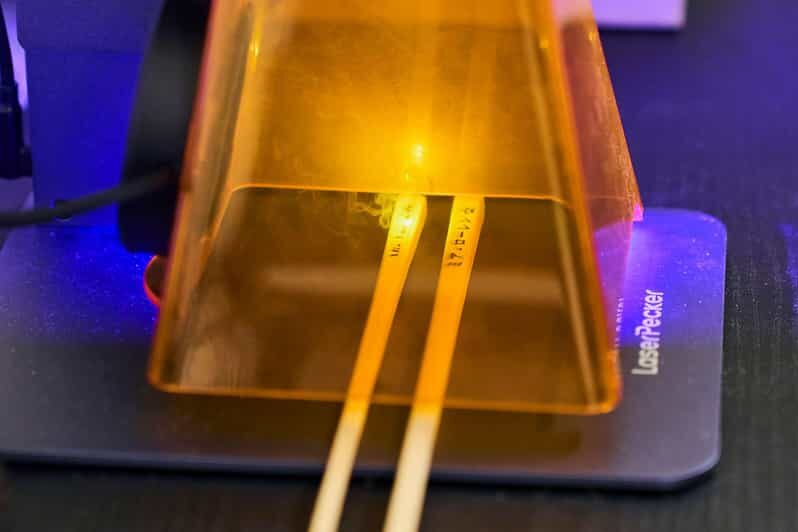
After you make the chopsticks, you can add custom name engraving. The workshop uses an original Kanji dictionary to help turn a name into Japanese Kanji, and the engraving is done in front of you. Watching the characters appear on the finished pair makes this final step part of the experience, not just a service behind the counter.
The translation is a creative interpretation, not a direct letter-for-letter spelling. If the meaning matters to you, take time to ask how your name is represented and what the chosen characters mean. One participant received several Japanese forms of a name and an explanation of its meaning, which can make the decision more personal.
Engraving is optional and is not included in the standard price. The Premium Plan is the option to select if you want premium wood and personalized engraving, but check the current plan details and add-on costs before booking. If engraving is important to you, it is sensible to compare the upgrade options in advance rather than assume the base price includes it.
More Great Tours NearbyA useful souvenir, not just a workshop memento
Many craft activities leave you with something decorative. Here, you leave with chopsticks you can use at home, along with the memory of making them. That blend of practical and personal is the workshop’s strongest value.
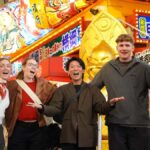
The pair is also easy to connect to a particular trip or occasion. You might choose a wood for its color, make matching pairs with a partner, or add Kanji to mark a family visit. One couple chose purpleheart for a wedding anniversary, while parents and children have made different pairs together.
There is a useful distinction between a standard and a premium souvenir. The included standard wood keeps the entry price low, while premium woods and engraving let you make the result more distinctive at extra cost. If you are watching your budget, the basic workshop still gives you the making process and a finished pair to take home. If the name engraving or a rare wood is what makes the souvenir special for you, factor that into the total.



A compact break in central Namba
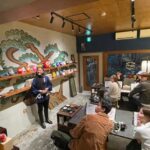
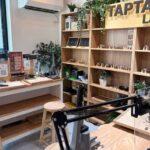
The workshop is in Osaka’s Namba district, and it is described as close to Namba Station. That central location makes it a practical activity to fit into a day of exploring the area. The studio has also been described as spacious and easy to find, though check your booking details for the exact address and directions.
At about an hour, this is a manageable change of pace from sightseeing. It works well if you want to make something without giving up half a day, and it can be a sensible backup for rain or heat. The activity takes place indoors, so you can get out of the weather while still doing more than sitting in a café.
Wheelchair access is listed, and the workshop offers instruction in English and Japanese. If you have a specific access need, confirm that the setup suits you before booking, since the available information does not describe the work surfaces or any additional access features.
Is the $6 price good value?
At $6 per person, the basic workshop is inexpensive for a guided activity that includes standard wood, tools, materials, staff instruction, and your handmade chopsticks. The value is especially clear if you want a short, hands-on activity and a souvenir that is both personal and usable.
The price needs context, though. Premium wood upgrades and engraving are not included in the standard plan. The total can rise if you choose both, so compare the available plans and make your choice based on what you want from the finished pair. The cheapest option is still a complete activity, but it may not include the exact wood or personalization you have in mind.
Booking is flexible: you can reserve without paying immediately, and cancellation up to 24 hours in advance is listed for a full refund. Starting times depend on availability. Those terms are handy if your Osaka plans are still taking shape, but check the current booking details before you commit.
Who should book the Namba chopstick workshop?
I’d put this on your list if you want to make something with your hands, prefer a small-scale cultural activity to another shopping stop, or need a short indoor plan. It suits couples, solo visitors, and families with children who can stay engaged through a guided, tool-based project.
It is less compelling if you only want the lowest-cost souvenir and have no interest in making it yourself. The standard price is low, but the real point is the process: choosing wood, shaping and sanding it, then deciding whether to add Kanji. If that sounds satisfying, book the workshop and treat any upgrades as a separate choice. If the wood selection or engraving is central to your plan, confirm the premium options and total price first.
Osaka Namba Chopstick Making Workshop
FAQ
How long does the workshop take?
The activity is scheduled for about one hour. Allow a little extra time, since a session may run just over an hour.
What is included in the $6 price?
The standard price includes the chopstick-making workshop, standard wood, use of tools and materials, guidance from staff, and the handmade chopsticks to take home.
Are premium woods included?
No. Premium wood upgrades are optional and cost extra.
Is name engraving included?
No. Engraving is optional. The Premium Plan is the option to choose for premium wood and personalized engraving.
Can I choose the wood?
Yes. You can choose from more than 10 types of wood, with different colors, grains, weights, and characteristics.
What steps do I do myself?
You shape the chopsticks, sand and smooth them, and apply oil, with guidance from the workshop staff.
What languages are available?
Instruction is available in English and Japanese.
Can children take part?
Children have enjoyed the workshop, including children aged 6 and 7. The information provided does not specify a minimum age.
Is the workshop wheelchair accessible?
Yes. The activity is listed as wheelchair accessible.
You can check availability for your dates here: