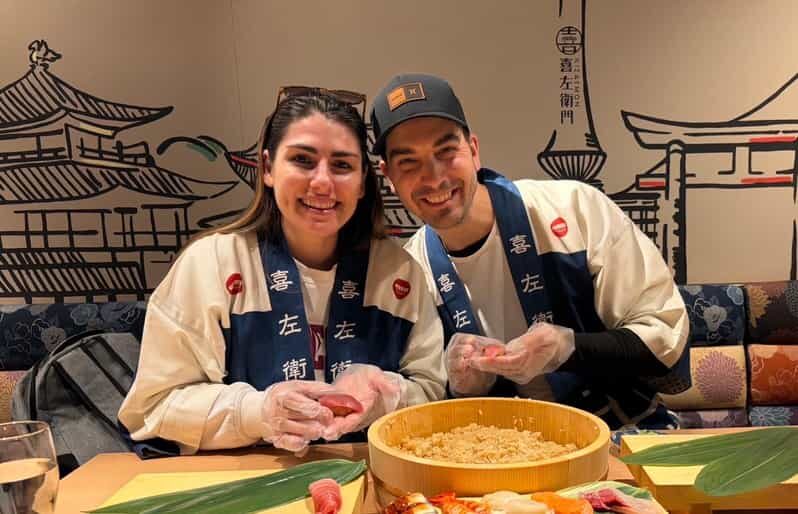
At Sushi Kizaemon, you make sushi inside a working restaurant before its evening service, with professional chefs showing you how rice, fish, and careful hand movements come together in nigiri. You learn by doing, then eat the pieces you have made.
I like the focus on sushi rice, including the red vinegar that gives it a distinctive flavor, and the chance to work with the same quality seafood served at dinner. I also like that the chefs welcome questions and explain the reasoning behind their techniques. One consideration: this is chiefly a nigiri class, not a broad survey of sushi styles.
- What Makes This Class Worth Your Time
- A Restaurant Before Its Dinner Service
- Start With Rice, Not the Fish
- Fresh Fish and the Craft of Nigiri
- A Demonstration, Then Your Turn
- Eat the Sushi You Made
- Is Good Value?
- Who Will Enjoy This Most?
- Should You Book the Sushi Kizaemon Class?
- FAQ
- How long does the sushi-making class last?
- How much does the experience cost?
- Is the class suitable for beginners?
- What kinds of sushi will I learn to make?
- What seafood may be included?
- Is the instruction in English?
- The Best Of Kyoto!
- More Dining Experiences in Kyoto
- More Tours in Kyoto
- More Tour Reviews in Kyoto
- Not for you? Here's more nearby things to do in Kyoto we have reviewed
What Makes This Class Worth Your Time
 1 / 8
 2 / 8
 3 / 8
 4 / 8
 5 / 8
 6 / 8
 7 / 8
 8 / 8
- A real restaurant kitchen: You learn at Sushi Kizaemon before its evening service, rather than in a purpose-built tourist classroom.
- Rice is part of the lesson: The chefs explain how to prepare and handle sushi rice, with red vinegar a memorable detail.
- Hands-on nigiri practice: You work with fresh fish and learn how to cut and shape classic nigiri.
- Seafood varies with availability: Selections may include salmon, tuna, eel, shrimp, and other seasonal fish.
- You eat what you make: The class ends with a meal of your own sushi, making the lesson tasty as well as practical.
- A short, good-value activity: At about $31 per person for 1.5 hours, it fits neatly into a Kyoto day.
👉 See our pick of the 25 Best Workshops And Classes In Kyoto
A Restaurant Before Its Dinner Service
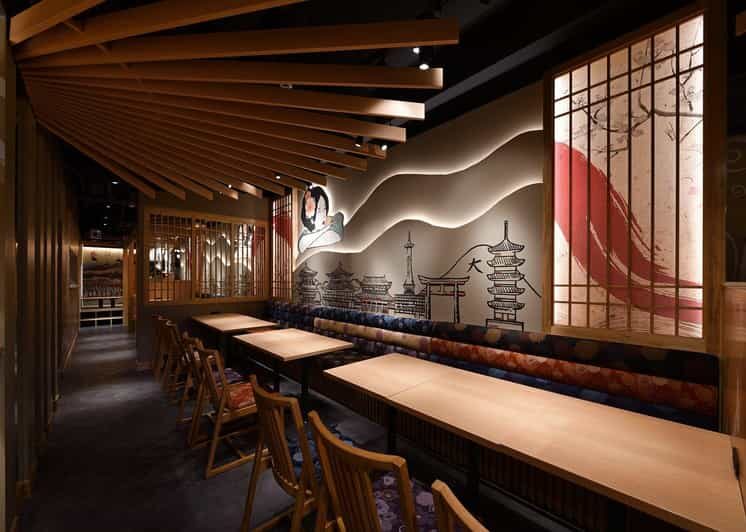
The setting is a big part of the appeal. Sushi Kizaemon is a working sushi restaurant, and this class takes place before the evening service. That gives the lesson a direct connection to the restaurant’s craft: the fish and techniques are part of the same world as the sushi prepared for dinner.
The class is described as taking place around noon, though starting times depend on availability. If you like seeing how a restaurant works before it opens, this is a useful way to spend a short stretch of the day. It is not a full restaurant shift or a behind-the-scenes tour, though. The main event is learning and making sushi at your own station.
The atmosphere is meant to be relaxed, and the teaching is designed for beginners as well as people who already know their way around sushi. That matters. Sushi can look simple on the plate, but making a neat piece takes more attention than you might expect. Here, you are encouraged to ask questions instead of being left to copy a quick demonstration.
The class is offered in English. Some sessions use on-screen English instructions alongside demonstrations, which can help make each step clear. Hosts and instructors named in participant accounts include Mio and Shiho. The specific teaching team may vary, so treat those names as examples rather than a guarantee of who will lead your session.
You can also read our reviews of more tours and experiences in Kyoto
Start With Rice, Not the Fish
A useful sushi lesson begins with rice. It is easy to focus on the fish because it is the part you see, but rice brings its own flavor, texture, and handling challenges. At Sushi Kizaemon, the chefs introduce rice preparation and the care needed to work with it before you move on to shaping nigiri.
The red vinegar used in the rice is one detail worth paying attention to. Several people particularly enjoyed its flavor, and one described it as a special feature of the rice. You may recognize sushi rice as lightly seasoned, but learning how a particular vinegar changes its taste gives you something concrete to notice the next time you order sushi.
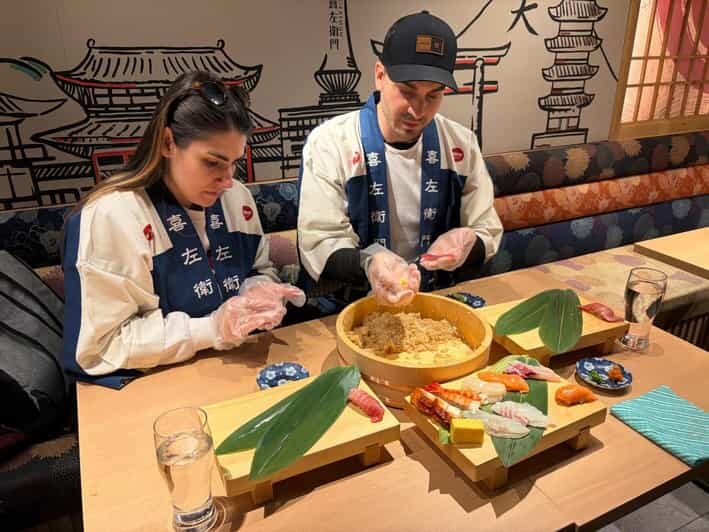
The class also covers how to handle the rice. That is more useful than simply watching a chef make a piece at speed: you get to try the technique yourself and see how much care it takes to form a piece that holds together without becoming dense. The information provided does not specify a full recipe or exact quantities, so think of this as an introduction to the craft rather than a take-home formula for reproducing the restaurant’s rice exactly.
This early part of the class helps set expectations. You are not just assembling ingredients. The chef’s explanations connect the small steps to the finished bite, and you begin to understand why sushi preparation calls for precision.
Fresh Fish and the Craft of Nigiri
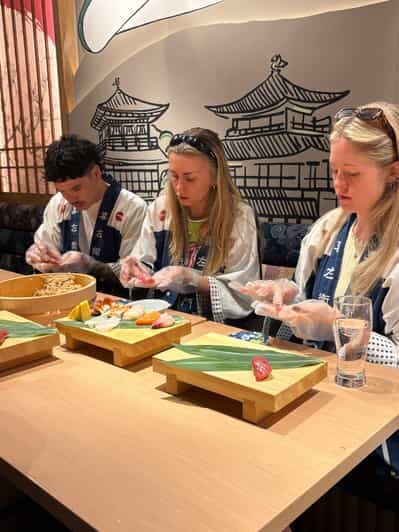
Once you have covered the rice, the attention turns to fresh fish and the making of nigiri. The chefs demonstrate how to cut and shape it, then guide you as you practice. You get to see the process clearly before trying it yourself, which is a real help if this is your first time handling sushi ingredients.
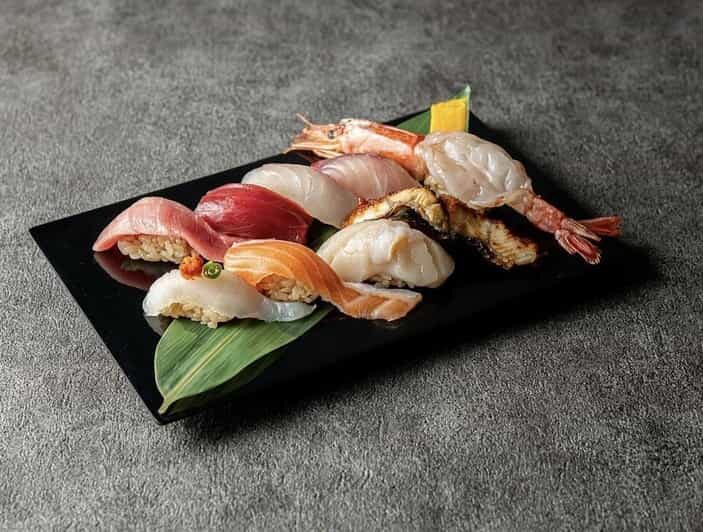
The seafood may include salmon, tuna, eel, shrimp, and seasonal selections. Availability can change, so do not count on a particular fish being served. The point is partly to work with high-quality seafood and partly to try different kinds of sushi in one sitting. Eel and tuna have been particular favorites, while some classes offer types participants might not otherwise choose at a restaurant.
The class stays focused. One useful expectation to set is that the main technique is nigiri, rather than a long menu of sushi forms such as rolls. That narrower scope is not a flaw if you want to understand the basics of shaping rice and pairing it with fish. It does mean this is not the class for someone whose main goal is to learn several kinds of maki or a full range of Japanese dishes.
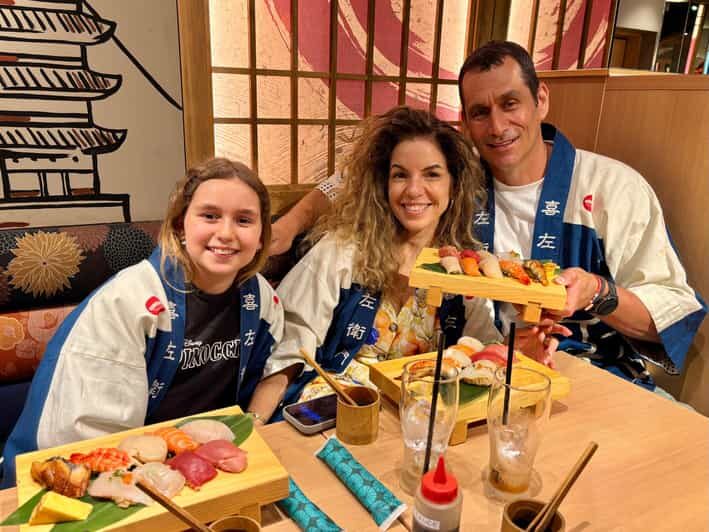
Some participants have made roughly nine or ten pieces, and one small group worked through nine varieties of nigiri. Your exact number and selection may vary. What matters is that you have time to practice, not merely watch a chef make sushi while you stand at a distance.
A Demonstration, Then Your Turn
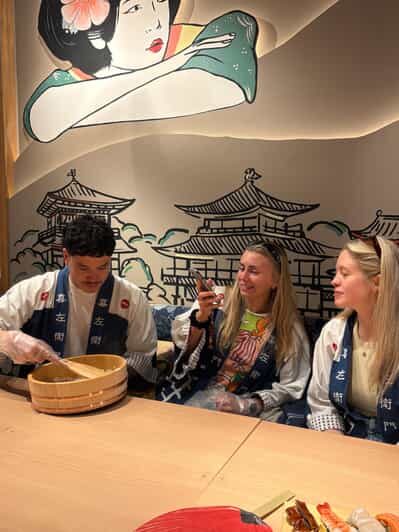
The session follows a sensible learning rhythm: the chef demonstrates, explains the steps, and gives you a chance to try. English guidance and visual examples help keep the process accessible, while questions are welcome throughout. If you are unsure how much pressure to use or how to shape a piece, this is the time to ask.
The teaching appears to be one of the strongest parts of the experience. Participants describe the instructors as patient, friendly, and clear. Mio is named often, while Shiho is also mentioned as a warm and informed host. The key practical point is not the name alone, but the mix of a host who helps the class along and a sushi chef who demonstrates the technique.
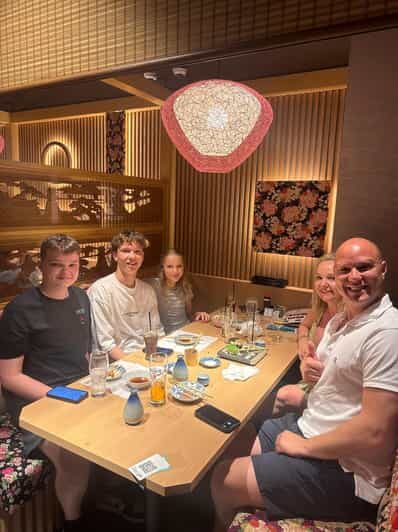
No prior cooking experience is required. Families have taken part together, including teenagers, and first-time sushi makers have been able to follow the steps. If you are already an enthusiastic sushi eater, you will still get something from seeing how much handwork goes into a piece that arrives at the table in seconds.
The pace is welcoming rather than intimidating. You should expect to practice, make imperfect pieces, and learn from the demonstration. That is part of the fun. The aim is not to leave as a trained sushi chef after 90 minutes; it is to understand a few of the choices and skills behind the food.
Eat the Sushi You Made
The best finish is also the most direct: you sit down and eat your own sushi. This makes the class feel complete. You have handled the rice, tried shaping nigiri, and worked with fresh seafood, then get to taste the result while the lesson is still fresh in your mind.
The food is often praised for its quality and freshness, and portions have been described as generous. Some sessions include a range of fish, so you can compare flavors rather than leaving with only one kind of sushi in mind. The experience also gives you a reason to notice details such as the rice seasoning and the balance between rice and topping.
There is a modest pleasure in eating something you made yourself, even if your pieces are not as tidy as the chef’s. More important, you leave with a sharper eye for the skill involved. The next time you eat nigiri, you may pay closer attention to the rice, the cut of fish, and the way the two are shaped together.
You can also read our reviews of more tours and experiences in Kyoto



Is $31 Good Value?
At about $31 per person for 1.5 hours, this is an unusually approachable way to learn from professional chefs in a real sushi restaurant. The price includes hands-on instruction, use of quality seafood, cultural and ingredient explanations, and the sushi you make. You are paying for both a meal and a guided activity.
The value is strongest if you are curious about the process, not just hungry for a sushi lunch. You get to practice a craft that is hard to understand from a menu, and the lesson gives context to the food you will continue eating around Japan. If you only want a large sushi meal, a restaurant visit may suit you better. If you want to learn and eat, this class makes good use of a short window in your day.
The 90-minute length is another plus. It is long enough for a demonstration and repeated practice, but short enough to fit between other Kyoto plans. It is still worth checking the available start time when you book, since schedules depend on availability.
The booking terms add flexibility: you can reserve now and pay later, and cancel up to 24 hours ahead for a full refund. The activity is wheelchair accessible. These details are useful if you are fitting the class into a changing itinerary, though they do not replace checking any specific access needs with the provider.
Who Will Enjoy This Most?
I would recommend the class to sushi fans who want to understand how nigiri is made, first-time visitors looking for a hands-on food activity, and families who enjoy learning together. It also suits anyone who wants a more active meal than simply choosing from a menu.
You do not need cooking experience, and the tone is friendly enough for beginners. You should be comfortable following a demonstration and trying the technique yourself. If you are hoping for a detailed course in sushi history, a professional qualification, or instruction in many different sushi styles, this short class may feel limited.
For a focused introduction, though, the format makes sense. You learn about rice, handle fish, shape nigiri, and eat the result. The restaurant setting lends the lesson a practical connection to Japanese food culture without making the experience formal or daunting.
Should You Book the Sushi Kizaemon Class?
Book it if you like sushi and want more than a tasting. The class gives you time with professional chefs, a hands-on introduction to nigiri, and a meal made from your own work, all for a reasonable price. The red-vinegar rice and the chance to try several seafood options add useful details to the experience.
Skip it if your priority is learning rolls or a wide range of Japanese cooking techniques. This is a focused sushi lesson, not an all-purpose cooking class. But if you are happy to spend 90 minutes on the craft behind nigiri, it is a practical, enjoyable way to make a Kyoto meal more memorable.
Kyoto: Sushi Making Class at Sushi Restaurant Before Opening
FAQ
How long does the sushi-making class last?
The class lasts 1.5 hours.
How much does the experience cost?
The listed price is $31 per person.
Is the class suitable for beginners?
Yes. It is designed for all skill levels, and no previous sushi-making experience is required.
What kinds of sushi will I learn to make?
The class focuses on nigiri, including how to handle the rice and shape it with fish.
What seafood may be included?
Selections may include salmon, tuna, eel, shrimp, and other seasonal fish. The exact options depend on availability.
Is the instruction in English?
Yes. English instruction is provided.
You can check availability for your dates here: