Wall Street is more than a row of imposing buildings: it is where New York’s story of trade, immigration, ambition, and financial risk comes into view on a few compact blocks. I like that this walk pairs firsthand stories from finance professionals with the older history beneath the modern money talk. I also like that it connects landmarks such as Federal Hall and the NYSE to the people and events that shaped them.
The main drawback is that this is an outdoor-only tour. You will see the buildings from the street, not go inside them, and the subject may feel dry if you are not curious about finance or history.
- At a glance
- A short walk through four centuries of finance
- Starting at Broad Street
- Federal Hall and the making of a nation
- The NYSE, Wall Street, and the business of money
- Stone Street and the district’s older character
- Charging Bull, Trinity Church, and the Federal Reserve
- What the 75-minute format means for you
- Is the price worth it?
- Who should book this walk?
- Should you book it?
- FAQ
- Where does the tour meet?
- What time does the tour run?
- How long is the walk?
- Does the tour go inside the New York Stock Exchange?
- What landmarks are included?
- Is the tour suitable for children?
- Is the walk wheelchair- and stroller-accessible?
- What happens if I need to cancel?
- The Best Of New York!
- More Tours in New York
- More Tour Reviews in New York
- Not for you? Here's more nearby things to do in New York we have reviewed
At a glance
 1 / 4
 2 / 4
 3 / 4
 4 / 4
- A Wall Street veteran leads the walk: Guides have worked as traders, bankers, brokers, or in other finance roles, bringing professional experience to the stories.
- The route covers key Financial District landmarks: Expect the NYSE, Federal Hall, Wall Street, Stone Street, Charging Bull, Trinity Church, and the Federal Reserve.
- The tour lasts 75 minutes: It runs from 1:30 to 2:45 p.m. on Monday, Wednesday, Friday, and Sunday.
- The focus is history, not building access: The walk stays outdoors, and admission to the NYSE is not included.
- The guide helps make a tricky area easier to read: The streets can be hard to navigate if you are trying to find particular buildings on your own.
- Plan for the weather and arrive early: Tours run rain or shine. Meet 15 minutes before departure, wearing walking shoes and clothes suited to the forecast.

👉 See our pick of the 6 Best Tours In New York
A short walk through four centuries of finance
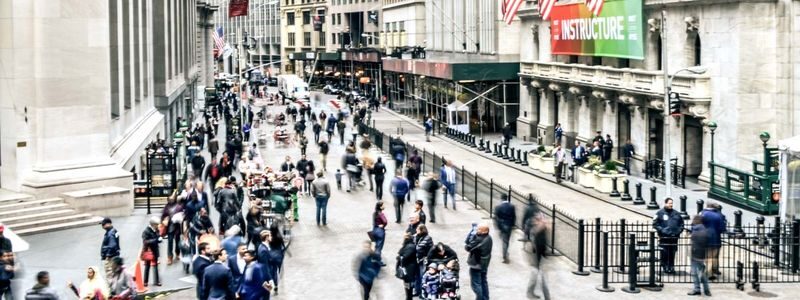
The Financial District has a knack for putting very old and very new New York in the same view. A modern bank facade may sit near a church or a street whose name recalls the city’s earlier life as a Dutch trading post. This tour uses that contrast to tell a larger story: how a small colonial port grew into a center of American commerce and global finance.
The guide is not simply pointing out buildings. The tour is led by a former trader, banker, broker, or another Wall Street professional, so you can expect stories shaped by work in the financial world as well as by the district’s history. The format suits visitors who want some context for the people, institutions, and decisions associated with these streets.
The strongest praise for the experience centers on its informative presentation. That matters here. Wall Street can look like a collection of grand facades and narrow streets if you do not know what happened on them; a good explanation gives you a reason to notice the details and understand how the area fits together.
At the same time, this is a general-audience version of the operator’s more intensive Financial Crisis Tour. Expect a broad historical walk rather than a detailed examination of market collapses or technical finance. If you want a focused lesson on the financial crisis, look for that separate tour instead.
You can also read our reviews of more tours and experiences in New York.



Starting at Broad Street
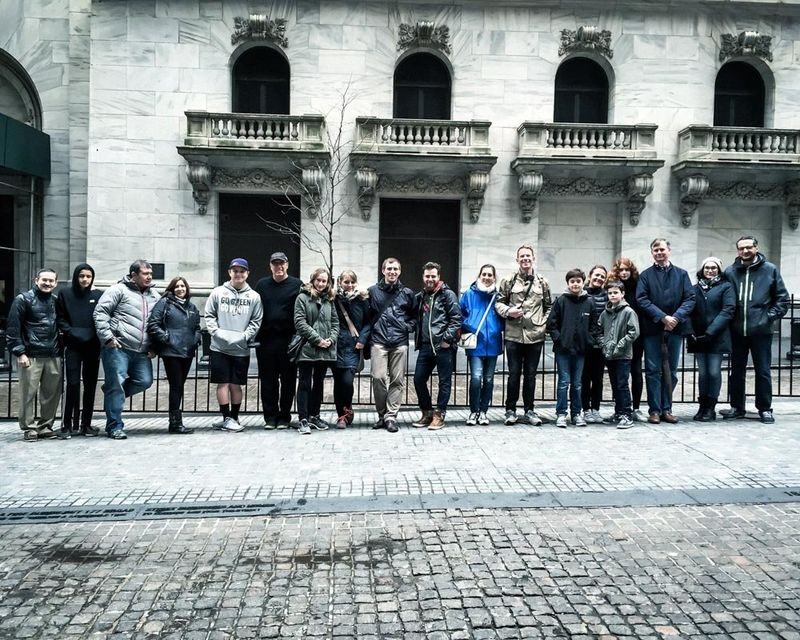
The scheduled meeting point is outside the Blue Bottle Coffee at 22 Broad Street, with departure at 1:30 p.m. The tour information also gives 15 Broad Street as the location, so use the more specific meeting instructions on your voucher and look for a guide wearing an orange hat and holding an orange ExperienceFirst sign. Give the guide your name when you arrive.
Get there 15 minutes early. Late arrivals and no-shows are not refundable, and this is a compact tour with little spare time to catch up once the group has left.
Several subway stations put you within walking distance. The 2, 3, 4, or 5 train to Wall Street is about one block from Broad Street. The A, C, J, or Z train to Fulton Street involves a longer walk, about six blocks south, while the R train to Rector Street is about three blocks east.
The route and order of stops may change with weather or local conditions. The tour runs rain or shine, so check the forecast and bring layers in cold months. Sunscreen and a camera are recommended, and comfortable walking shoes are a sensible choice for the cobbled and paved streets of the district.
Federal Hall and the making of a nation
Federal Hall is one of the tour’s most meaningful stops because its significance reaches beyond banking. The building is tied to George Washington’s inauguration as the first president of the United States. Standing here gives you a direct link between the country’s early political story and the financial institutions that later took root nearby.
The stop also helps make clear why Wall Street became so important. The district’s financial role did not develop in isolation from the new nation’s government. Hearing that history on the same streets where it unfolded can make the relationship between civic power and money easier to grasp than a quick glance at a plaque would.
The tour is outside, so do not expect to enter Federal Hall. If you want to explore an interior or spend time with exhibits, plan separately. The value here is the guide’s account and the chance to place the building in its street-level setting.
The NYSE, Wall Street, and the business of money
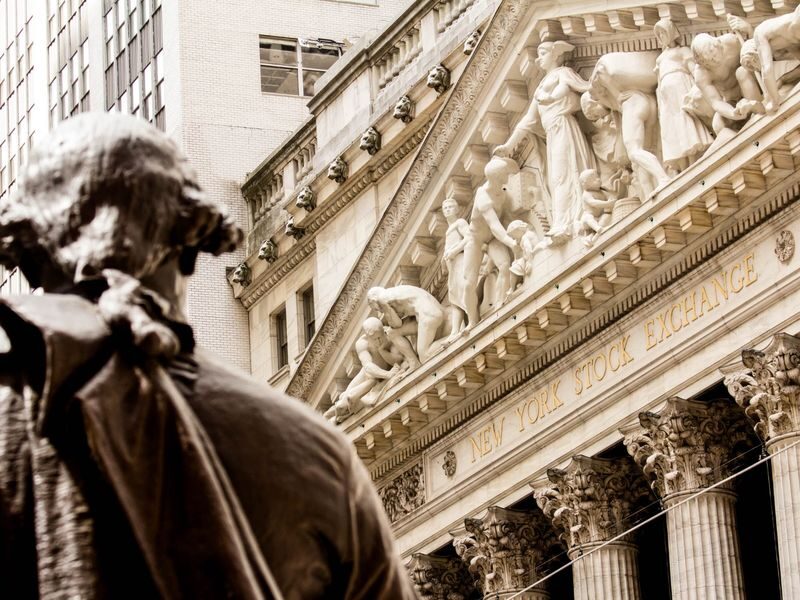
The New York Stock Exchange is an essential landmark on the walk, but the experience is about seeing it from the outside. Admission to the NYSE is not included, and the tour does not go into the buildings listed along the route. That is an important distinction if you are picturing a behind-the-scenes visit.
Instead, the guide helps you interpret the building and the street around it. You will hear about Wall Street’s role in the American economy and visit sites connected with former investment banks and mercantile exchanges. These details give the street a longer timeline than its current image as a place of fast-moving markets.
I find this outside perspective useful for first-time visitors. The Financial District is compact, but its streets and buildings can be difficult to sort out when you are searching for specific landmarks without context. A guide can connect the stops and explain why they matter, rather than leaving you to piece the story together from architecture alone.
There is a limit to what a 75-minute walk can cover. You will get an introduction, not a full course in financial history, and anyone looking for market mechanics or a detailed crisis analysis may want a more specialized experience. For a general overview, though, the blend of institutional history and personal finance-industry stories is the point.
Stone Street and the district’s older character
Stone Street adds a different texture to the route. Its place among the tour’s stops helps shift the focus from monumental financial institutions to the older street pattern and commercial life of Lower Manhattan. The Financial District’s history is not only about stock prices and major buildings; it is also about how trade and daily business shaped the city.
This is where the broader story of New York’s beginnings becomes especially useful. The tour traces the area from its origins as a Dutch trading outpost to its later role as an international financial center. You can hear how immigrants helped shape the institutions and commercial culture that grew here, a human-scale thread that keeps the story from becoming a parade of banks and dates.
Do not expect a long stop at every site. The tour is short, and the route includes several landmarks, so the guide will keep things moving. If a particular street or building catches your interest, note it for a return visit after the walk.



Charging Bull, Trinity Church, and the Federal Reserve
Charging Bull is one of the district’s most recognizable sights and an easy point of reference on the route. It offers a familiar symbol of financial ambition, though the tour’s wider story gives you more to think about than a photo opportunity. Expect to hear how the bull fits into the district’s public image and how Wall Street’s identity has grown around commerce and markets.
Trinity Church provides another contrast. Its presence among financial institutions and busy streets shows how different periods of New York history share a small patch of land. The walk does not enter the buildings, but seeing the church in context helps you notice how much the district’s character changes from one block to the next.
The Federal Reserve is also on the route. Its inclusion rounds out the institutional picture, alongside the stock exchange and historic sites tied to the nation’s early years. The guide can explain the role these institutions play in the financial system, though the tour is designed for a general audience rather than as a technical seminar.
One of the promised surprises concerns a well-intended cleanup that allowed criminals to evade detection for more than a century. It is a reminder that the district’s past includes odd turns and unintended consequences, not just grand plans and market milestones. The exact story is best left to the guide, who can place it among the streets and institutions it concerns.
What the 75-minute format means for you
A 75-minute walk is a useful length if you want a focused introduction without giving up half a day. The scheduled slot is 1:30 to 2:45 p.m., with tours offered Monday, Wednesday, Friday, and Sunday. It can fit neatly into a day that also includes other Lower Manhattan sights.
The trade-off is pace. There are several stops, and the guide must keep the group moving to cover them all. You will get an overview and selected stories, not time for an extended visit at each landmark. This works well if you want orientation and context; it may feel brisk if you like to linger or take lots of photographs.
The route is described as stroller- and wheelchair-accessible, which is helpful for planning. Since it is an outdoor walking tour, weather still matters. Winter layers are recommended, and rain does not automatically cancel the walk.
Is the price worth it?
The listed starting prices are not entirely consistent: the experience is advertised from US$44.85, while the package option is shown from US$39. Treat those as starting figures, not a guaranteed final price, and check the date and checkout total before booking.
For the cost of a short guided walk, the value comes from interpretation rather than access. You are paying for a finance professional’s perspective, a route through several major sites, and help understanding an area that can be confusing to navigate on your own. You are not paying for entry to the NYSE, meals, drinks, or other services.
If you are keen to learn how New York’s financial history developed, the price can make sense. If you mainly want a photo in front of the bull or a quick look at the exchange, you can see those exterior sights without a tour. The guided version earns its keep when you want the stories to connect the landmarks.
Who should book this walk?
I would choose this tour if you are curious about New York history, financial institutions, or the people who built the city’s commercial life. It also makes sense if you are new to the Financial District and want a guide to help you locate and understand its landmarks.
It is less suited to anyone hoping to enter the NYSE or another building, since the tour remains outdoors. And if finance holds no interest for you, the subject could feel slow. The guide’s historical stories and unusual details broaden the appeal, but Wall Street is still the main theme.
The booking includes an English-speaking guide and the 75-minute walk. Children aged 0 to 3 are free but must be with a paying adult; those aged 13 and older pay the adult rate. You receive a mobile voucher, valid only for the date and time booked. Cancellations made at least 24 hours before the activity date qualify for a full refund; in extreme weather or other unforeseen circumstances, the operator may cancel and offer a reschedule or full refund.
Should you book it?
Book the Wall Street Insider Tour if you want more than a quick look at the district’s famous facades. Its best feature is the combination of local history and firsthand finance-industry stories, delivered across a compact route that includes Federal Hall, the NYSE, Stone Street, Charging Bull, Trinity Church, and the Federal Reserve.
Skip it if you expect access inside financial buildings or want a deep technical account of markets. For a concise, guided introduction to how Wall Street became part of New York’s story, the 75-minute walk is a practical way to get your bearings.
Wall Street Insider Tour with a Finance Professional
FAQ
Where does the tour meet?
Meet outside the Blue Bottle Coffee at 22 Broad Street. Look for a guide wearing an orange hat and holding an orange ExperienceFirst sign.
What time does the tour run?
The tour runs from 1:30 to 2:45 p.m. on Monday, Wednesday, Friday, and Sunday.
How long is the walk?
The tour lasts 75 minutes.
Does the tour go inside the New York Stock Exchange?
No. The tour is outdoors and does not enter the NYSE or the other buildings on the route. NYSE admission is not included.
What landmarks are included?
Stops and highlights include the New York Stock Exchange, Wall Street, Federal Hall, former investment bank and mercantile exchange sites, Stone Street, Charging Bull, Trinity Church, and the Federal Reserve.
Is the tour suitable for children?
Children aged 0 to 3 can join for free when accompanied by a paying adult. Children aged 13 and older are charged the adult rate.
Is the walk wheelchair- and stroller-accessible?
Yes. The activity is listed as stroller- and wheelchair-accessible.
What happens if I need to cancel?
You can receive a full refund if you cancel at least 24 hours before the activity date, using destination local time. If extreme weather or another unforeseen event leads the operator to cancel, you can reschedule or request a full refund.