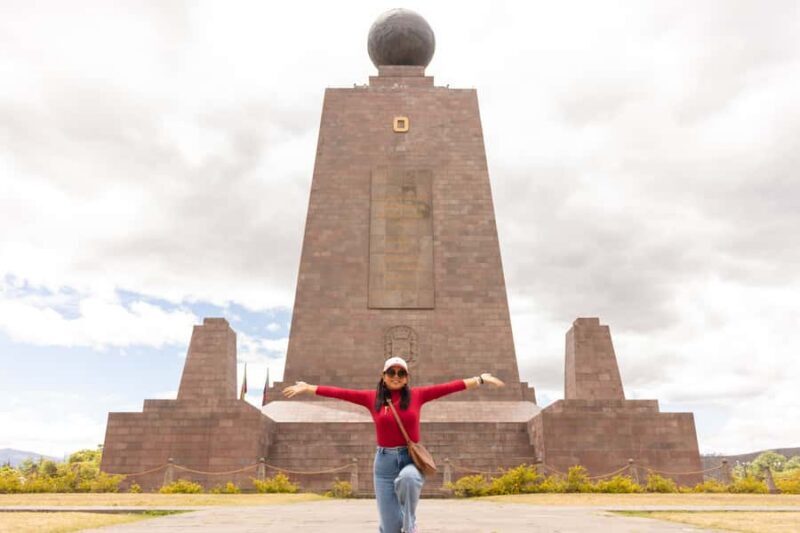
At Intiñán, the equator is more than a line painted across the ground: you can test your balance, watch a water-spin demonstration, and try to stand an egg on a nail. Then you get the classic one-foot-in-each-hemisphere photo at Mitad del Mundo, where the monument marks the spot early explorers thought was the equator.
I like the mix of hands-on science and cultural exhibits at Intiñán, and the sharp change of scene at Pululahua’s crater viewpoint, where cloud and green slopes replace city streets. A small group of up to eight and transport from Quito make these three stops easy to combine.
The trade-off is time. Pululahua gets about 30 minutes, while the two equator attractions each get around 80, so this is a sampler rather than a leisurely visit. Pickup timing and vehicle condition can also vary, so confirm the details with the operator before setting out.
- What to know before you book
- From Quito to Pululahua’s cloud-covered crater
- Intiñán’s equator experiments and cultural displays
- Mitad del Mundo: the famous monument and the earlier equator line
- The guide, vehicle, and small-group feel
- Is good value for this half-day?
- Who should take this trip?
- FAQ
- How long is the tour?
- What stops are included?
- Is the equator line at the monument?
- What is included in the price?
- What languages are available?
- What should I bring?
- The Best Of Quito!
- More Museum Experiences in Quito
- More Tours in Quito
- More Tour Reviews in Quito
- Not for you? Here's more nearby things to do in Quito we have reviewed
What to know before you book
 1 / 7
 2 / 7
 3 / 7
 4 / 7
 5 / 7
 6 / 7
 7 / 7
- Pululahua is a viewpoint stop, not a long hike. You’ll head toward the crater rim, but the schedule allows about 30 minutes there.
- Intiñán is the hands-on stop. Try the egg-balancing challenge, watch the water demonstration, and see exhibits on Indigenous homes and Shuar culture.
- The two equator sites are different. Intiñán presents a GPS-verified equator line; Mitad del Mundo is the famous monument associated with the earlier French Geodesic Mission.
- Your six hours include driving. The trip starts and ends in Quito, with roughly 50 minutes on the road each way.
- The small group can make the guide a big part of the day. Past guides named by participants include Paul, Rubén, Andrew (Chino), Jonathan, Francis, Henry, Andre, and German. Your assigned guide may differ.
- The $50 price covers the basics. Transport, entry tickets, and a small sandwich-and-drink snack are included.
👉 See our pick of the 9 Best Guided Tours In Quito
From Quito to Pululahua’s cloud-covered crater
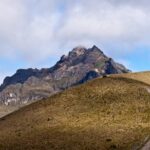
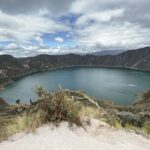
The first drive takes about 50 minutes, carrying you out of Quito toward Pululahua Geobotanical Reserve. The crater formed more than 2,500 years ago, and its Kichwa name means cloud of water. The valley is known for its fertile ground and high plant and animal diversity, with more than 2,000 plant species.
The tour’s stop is brief: expect a guided visit and a walk toward the crater rim, with time for photos and the view. Pululahua is described as one of the world’s few inhabited volcanic craters, but the main draw on this half-day trip is the sense of scale from above. Look into the broad, green basin and you’ll understand why it feels so different from the urban setting you left behind.
I like that this stop gives the day a nature break before the equator attractions. It also adds context to Ecuador beyond the famous latitude line: the country’s highland terrain and fertile volcanic soil are part of what makes the area distinctive. If you want a substantial hike or time to explore the reserve at your own pace, though, 30 minutes is not much. Think of it as a scenic pause, not a full nature outing.
The view can depend on the weather. Pululahua is described as mist-covered, so cloud may soften or partly obscure the crater. Bring a camera, but don’t make a perfect panorama the only measure of the stop. The short visit still lets you take in the setting and stretch your legs.
You can also read our reviews of more museum experiences in Quito
Intiñán’s equator experiments and cultural displays
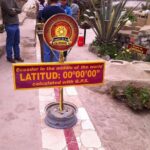
A roughly 15-minute drive takes you from Pululahua to Intiñán Solar Museum. This is where the tour turns playful. A local museum guide leads you through demonstrations tied to the equator, including balancing an egg on a nail, observing water-spin demonstrations, and trying to walk along the zero-latitude line while keeping your balance.
The activities make the idea of the equator easier to picture than a map or sign alone. They also give you a reason to take part rather than simply pose for a photo. Keep an open mind and enjoy the demonstrations as part of the museum visit; the point is to get involved and ask questions, not to treat every trick as a full lesson in physics.
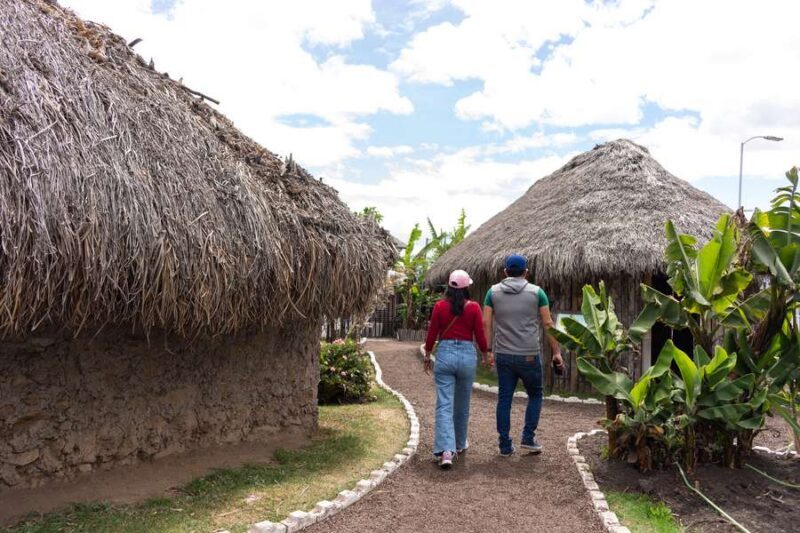
Intiñán also covers more than equator experiments. You’ll see traditional Indigenous homes and exhibits about Amazonian peoples, including the Shuar, with displays on ancestral rituals and ways of life. The contrast between the outdoor activities and the cultural exhibits keeps the 80-minute stop varied. It’s a good fit if you enjoy learning in small, tangible steps rather than listening to a long talk.
The museum stop has earned particular praise for its engaging local guide, and past participants have singled out the explanations and anecdotes as a highlight. Your tour guide from Quito may accompany you, but the museum also has its own guided experience. That distinction matters: the driver-guide handles the overall outing, while the museum visit gives you focused interpretation at the site.
INTI the llama is another point of interest listed for this experience. If you’re traveling with children, that detail may help hold their attention between experiments. Just remember that the stop is shared with the museum’s exhibits and activities, not set aside as a separate animal encounter.
Mitad del Mundo: the famous monument and the earlier equator line
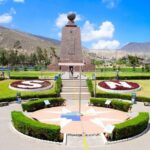
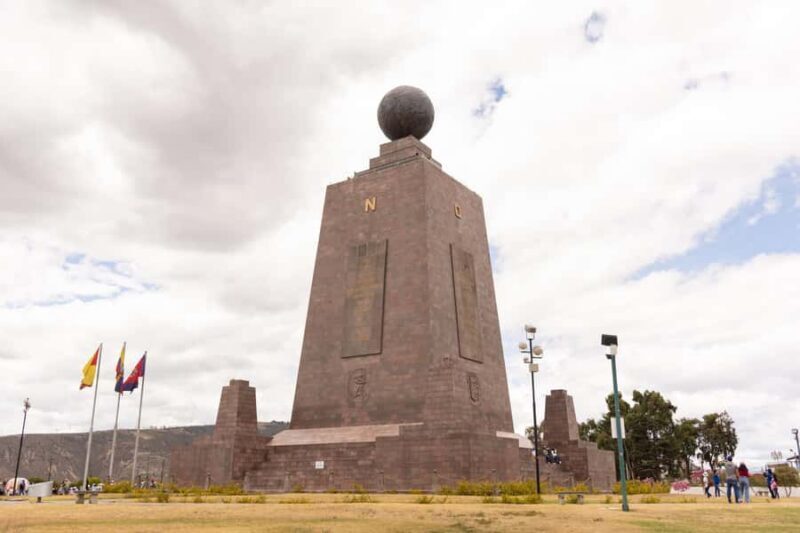
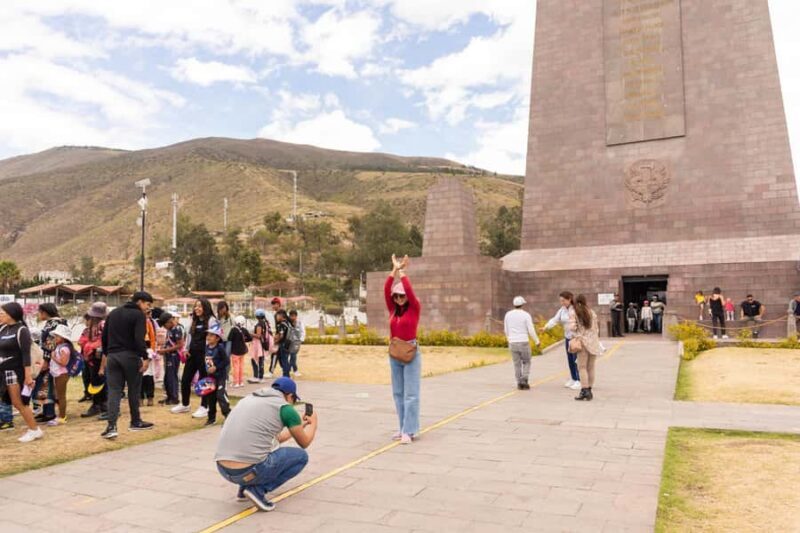
The final major stop is Mitad del Mundo, about 80 minutes on site. Its 30-meter monument celebrates the 18th-century French Geodesic Mission, whose work helped establish the equator’s location. Early explorers believed the line crossed here; the GPS-verified line used for the hands-on equator demonstrations is at Intiñán.
That difference is useful to know before you arrive. Mitad del Mundo is the grand, photogenic landmark, while Intiñán is the stop built around the modern equator line and experiments. They complement each other, but they are not the same site or the same kind of visit.
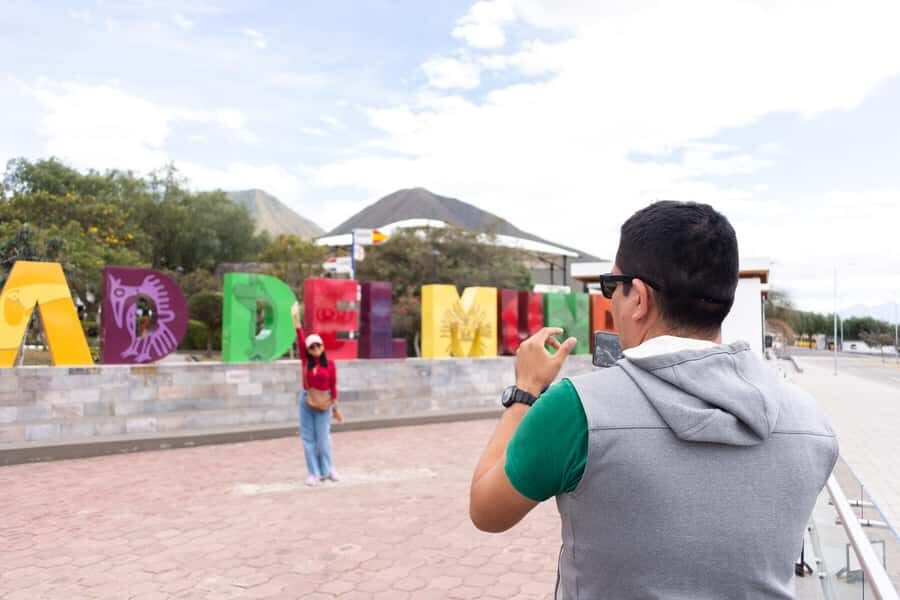
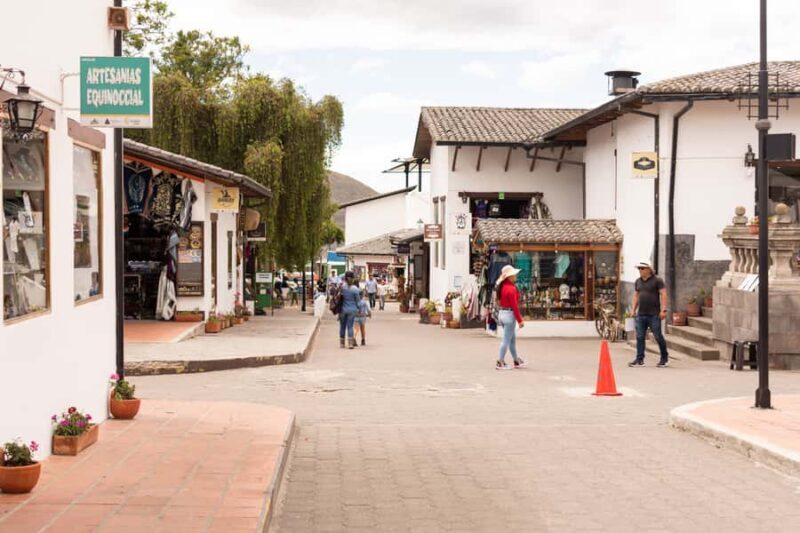
At the monument, you’ll have time to walk around, take photos, browse shops, and visit the cultural museum inside. You can also climb to the top for wide views of the valley and surrounding Andes. The familiar pose with one foot in each hemisphere is part of the fun, even if the monument is not where the modern GPS line sits. It’s a satisfying place to finish because the scale of the structure and its broad setting make the equator story feel public and ceremonial.
The main caution is the clock. Some people would rather have more than 80 minutes here, especially if they want to climb, visit the museum, shop, and take a relaxed meal. This tour includes a small snack, not a full lunch, so don’t expect a long stop for food. If the monument is your chief reason for booking, consider whether you’d prefer to visit independently and set your own pace.
The guide, vehicle, and small-group feel
The trip is offered in English or Spanish, with a maximum group size of eight. A small group can make it easier to ask questions and coordinate stops, and several past participants have praised guides for being friendly, attentive, and helpful with photos. Names mentioned in connection with the tour include Paul, Rubén, Andrew, Jonathan, Francis, Henry, Andre, and German. These are examples, not a promise of who will lead your departure.
The guide can shape how much you get from the driving time. Some participants appreciated learning about Quito and Ecuador along the way, while others would have liked more historical commentary. If you’re keen on extra context, ask questions as you go. One useful detail from a past trip: Paul helped an English-speaking participant follow a Spanish-language tour by explaining parts in English. The experience may be flexible, but the tour’s stated languages are English and Spanish, so it’s wise to confirm your preferred language.
Transport is by Jeep or SUV, with an advertised green or brown Ford Expedition. Several accounts describe comfortable, clean vehicles, while one reported a crowded SUV with broken air conditioning. Vehicle condition can vary, so bring water and dress for the day’s weather rather than assuming the ride will be cool. Pickup is included within Quito’s urban area, but the stated radius varies between five kilometers from the city center and up to seven kilometers. Confirm that your address qualifies.
The company plans to confirm an estimated pickup time by WhatsApp the day before. Install the app and check your messages; one participant nearly missed updates because WhatsApp was not installed. Pickup can be affected by traffic, and a past trip ran about 40 minutes late with notice. Keep your morning flexible and make sure the operator has a working phone number.
More Great Tours NearbyIs $50 good value for this half-day?
At $50 per person, the price includes private transport, a bilingual guide, tickets for Mitad del Mundo, Intiñán, and Pululahua, plus a sandwich and drink. That package saves you from arranging transport between sites and buying entry separately. The group cap of eight also gives the day a more personal feel than a large coach trip.
Value depends on what you want. If you’d otherwise pay for a car or taxi and prefer having someone coordinate the route, the combined visits make practical sense. One past participant found the price a little high for the amount of time spent at the sights. That’s a fair point: the sites are not far from one another once you reach the area, and you could arrange your own transport for less, though you would need to manage the connections and admission details yourself.
The tour is best understood as a convenient overview, not a deep visit to each place. The 50-minute drive out and 50-minute return take a meaningful share of the six hours. In exchange, you get three very different stops without having to plan the sequence, find the entrances, or drive back to Quito.
A small snack is included to keep you going, but plan around it. The stated food is a sandwich and drink. A past participant described receiving an empanada, but that should not be treated as the standard offering. If you need a full meal, eat beforehand or make plans for after the tour.


Who should take this trip?
I’d recommend it to first-time visitors who want the headline equator experience and a taste of the surrounding countryside in one manageable outing. Families may appreciate the egg challenge and water demonstrations, while couples and curious adults can enjoy the mix of landmark photos, cultural exhibits, and mountain views.
It also suits anyone with limited time in Quito who wants a guided introduction rather than a day spent arranging transport. The small group, included admissions, and pickup are useful conveniences, especially if you prefer not to navigate the route yourself.
I’d hesitate if you want a long hike at Pululahua, a slow visit to the monument, or an in-depth museum day. The schedule gives each stop a clear limit, and delays or traffic can make an already compact outing feel tighter. If you book, bring comfortable shoes, sunglasses, sunscreen, a camera, outdoor clothing, and a charged phone. Keep your ID or a copy with you, and confirm the pickup point and time through WhatsApp.
Quito: Middle of the World, Intiñán Museum & Pululahua
FAQ
How long is the tour?
The tour lasts about six hours, including the drive from Quito and back. The journey is listed as roughly 50 minutes each way.
What stops are included?
The trip visits Pululahua Geobotanical Reserve, Intiñán Solar Museum, and the Mitad del Mundo monument and city.
Is the equator line at the monument?
The tour describes Intiñán as the GPS-verified equator line. Mitad del Mundo is the iconic monument built where early explorers believed the equator crossed.
What is included in the $50 price?
The price includes pickup and drop-off within the stated Quito urban area, entry tickets for the three sites, and a small snack consisting of a sandwich and drink.
What languages are available?
The live guide is offered in English and Spanish. Confirm your preferred language when arranging the tour.
What should I bring?
Bring comfortable shoes, sunglasses, a camera, sunscreen, comfortable outdoor clothing, a charged smartphone, and your passport or ID card. A copy of your ID is accepted.
You can check availability for your dates here: