Washington’s monuments and museums are spread across a city that can wear out your feet before lunchtime. This one-day trolley pass gives you a simple way to move among 15 stops while conductors add historical context, trivia, and humor along the route.
I like two things here: the freedom to get off when a memorial or museum catches your eye, and the live commentary that turns a ride between sights into part of the visit. One consideration: trolleys come about every 30 minutes, so a missed ride can eat into a tightly planned day.
- At a glance
- A moving introduction to Washington
- Following the 15-stop route
- Making a one-day pass pay
- Boarding, tickets, and useful details
- Who will get the most from the trolley
- Should you book it?
- FAQ
- How much does the Washington DC trolley tour cost?
- How many trolley stops are included?
- How often does a trolley arrive?
- What time does the first trolley leave?
- Can I board at a stop other than Union Station?
- What languages are available for the audio guide?
- Is the trolley wheelchair-accessible?
- Are children charged for the tour?
- Can I bring luggage or a large bag?
- When is the tour closed?
- The Best Of Washington DC!
- More Tours in Washington DC
- More Tour Reviews in Washington DC
- Not for you? Here's more nearby things to do in Washington DC we have reviewed
At a glance
 1 / 7
 2 / 7
 3 / 7
 4 / 7
 5 / 7
 6 / 7
 7 / 7
- Fifteen stops connect major sights: The route includes Union Station, the US Capitol, the White House, the Lincoln Memorial, and several Smithsonian museums.
- Live stories come with the ride: English-speaking conductors share D.C. history, trivia, and light-hearted anecdotes.
- You can set your own pace: Get off to explore, then board again at a marked stop.
- Expect a half-hour wait between trolleys: Service is listed every 30 minutes, with the first trolley leaving Stops 1 and 6 at 9:00.
- The pass costs from $54.95: It covers one day, so its value depends on how many stops you use.
- A phone audio guide adds language options: Downloads are available in Chinese, Spanish, Portuguese, Japanese, German, French, and Italian.
👉 See our pick of the 25 Best Guided Tours In Washington DC
A moving introduction to Washington
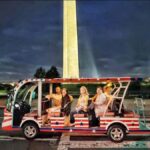
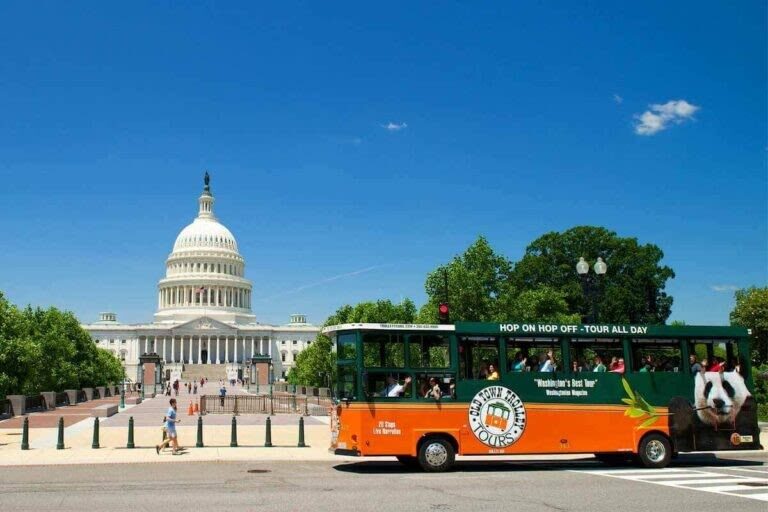
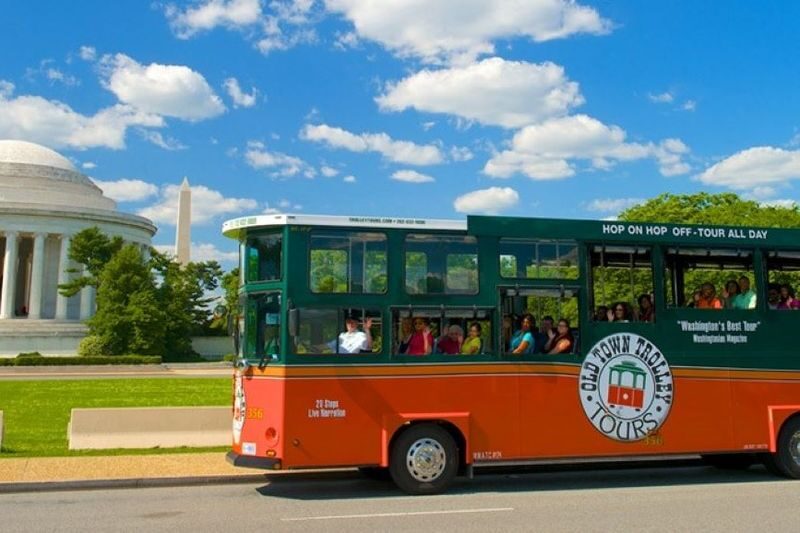
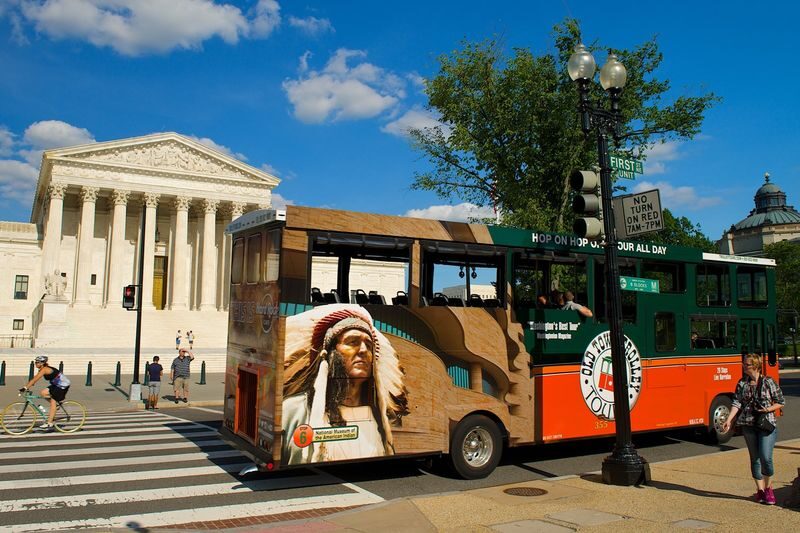
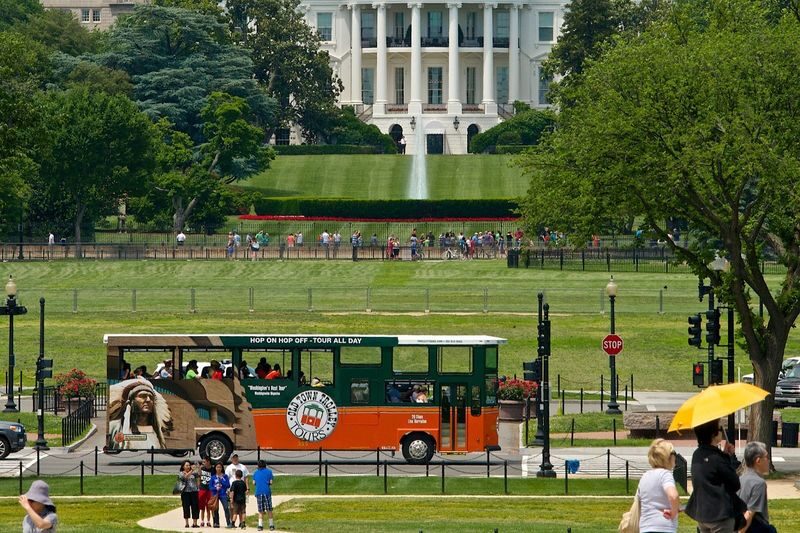
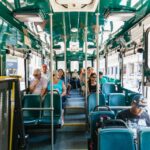
The trolley is best thought of as both transport and orientation. The orange-and-green vehicles link a wide spread of Washington’s best-known sights, while conductors fill the ride with stories and facts. That combination can be especially useful at the start of a visit, when you want to understand where the landmarks sit before deciding which ones deserve a longer stop.
The tour is not a guided walking visit to each monument. You ride between stops, choose where to get off, and explore on your own before catching another trolley. That makes the experience flexible, but it also means you should plan your priorities rather than assume you can thoroughly see every museum and memorial in one day.
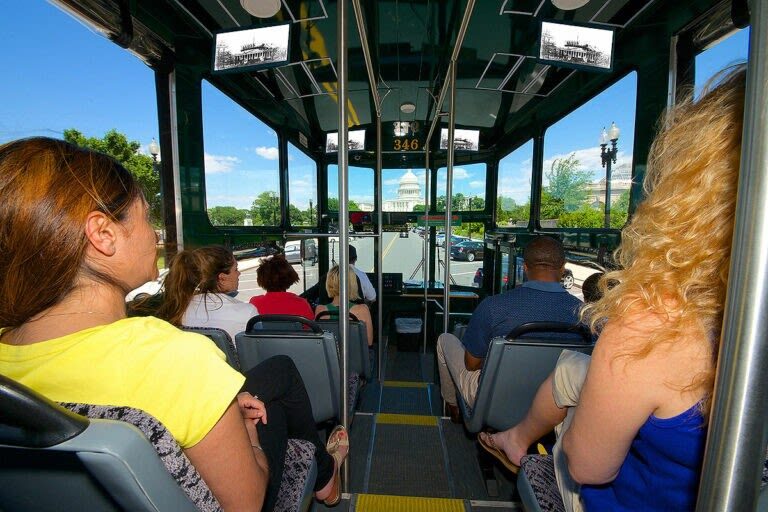
The live commentary is a central part of the appeal. The conductors are described as warm and good at sharing information, and the tour is designed to mix history with humor. If you prefer a quiet ride, you can use the digital audio guide on your phone instead, though it is worth checking your battery and data arrangements before setting off.
You can also read our reviews of more tours and experiences in Washington DC.


Following the 15-stop route
The route starts at Union Station and runs through a cluster of national institutions, memorials, museums, and visitor stops. You can board at any stop, rather than needing to begin at the first one. Stop markers are small signs on poles by the roadside, so keep an eye out as you approach your chosen boarding point.
Union Station is one of the two stops where the first trolley departs at 9:00. It is also a practical starting point if you are arriving by train or want to begin near the Capitol end of the route. From here, the trolley heads toward the National Japanese American Memorial and the US Capitol. The Capitol stop puts you near one of the most recognizable symbols of the federal government, while the memorial offers a quieter, more reflective pause.
Next comes the Smithsonian Air and Space Museum. This is a useful stop if that museum is high on your list, though a visit inside will take time beyond the ride itself. The route also serves The Wharf, where boarding for a water taxi boat cruise is available. The trolley pass itself does not include that cruise, so treat it as a separate option rather than part of the included ride.
The International Spy Museum and Washington Monument are further stops. The Spy Museum adds a different subject to a day otherwise heavy on national monuments and government history. At the Washington Monument, you can take in one of the capital’s defining landmarks and use the stop as a central point for choosing what to see next.
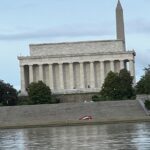
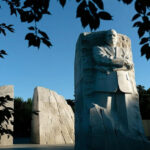
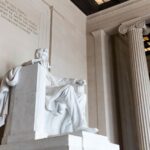
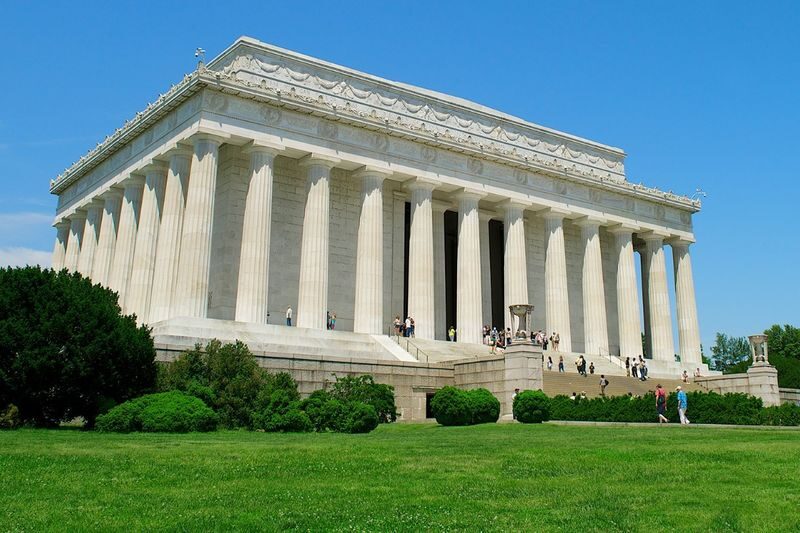
The Jefferson Memorial is followed by the FDR Memorial and MLK Jr. Memorial stops. These memorials give the route a more contemplative stretch, with space to focus on the people and periods they honor. The Lincoln Memorial is another major stop and one of the tour’s headline sights. It is a natural place to spend time on foot rather than simply taking a quick look from the trolley.
The next listed stop is the National Museum of American History. Later, the trolley serves the National Portrait Gallery and African Art Museum, then the Washington Welcome Center. The White House and National Archives are also on the route. Together, these stops give you a good spread of museums, monuments, and civic landmarks, though you will need to choose carefully if you want time inside several institutions.
The stop list is not a promise of how long you will spend at each place. A museum visit, memorial walk, or meal will take you off the trolley for a while. With service every 30 minutes, it helps to keep the next departure in mind and leave a little slack in your schedule.
Making a one-day pass pay
At $54.95 and up, this is not simply a cheap ride across town. You are paying for a day of hop-on hop-off transport plus live commentary, Wi-Fi on board, and access to a route that links 15 important stops. Its value improves if you use the trolley several times and would otherwise need to organize transport between distant sights.
The pass is less compelling if you plan to visit only one or two nearby places, or if you are happy to walk and use other transport. Washington’s attractions are spread out, and a trolley can save effort, but waiting for the next vehicle is part of the arrangement. With a 30-minute frequency, plan around the timetable rather than treating the trolley like a vehicle that will appear as soon as you reach the curb.
A practical approach is to choose a few must-see stops before boarding. You might use the trolley first to get a broad sense of the city, then spend the rest of the day at the places that matter most to you. Or, if you already know your priorities, use it as a link between those locations and enjoy the commentary along the way.
The first trolley leaves Stops 1 and 6 at 9:00, and the listed operating hours are 9:00 to 16:00, Monday through Sunday. That gives you a defined daytime window. The information provided does not specify the final departure time from each stop, so do not assume you can stay out until closing time and still catch a trolley back.
Boarding, tickets, and useful details
You can present your mobile voucher when boarding. A helpful routine is to keep the QR code ready on your phone. After the ticket is checked, you may receive a sticker to wear; once you have it, you should not need to show the ticket again during the ride.
Look for the numbered stop sign on a pole at the roadside. Physical maps are available at some stops, which can be handy if you prefer a paper overview to a phone screen. Free Wi-Fi is included on board, and the digital audio guide can be downloaded to your phone in seven languages: Chinese, Spanish, Portuguese, Japanese, German, French, and Italian. The live guide is in English.
Two listed trolley booth locations are Stop 1 at Union Station, 50 Massachusetts Ave NE, and Stop 13 at the Washington Welcome Center, 1001 E St NW. Bus route D6 serves the stop near the Welcome Center, at E St NW and 11th St NW, a two-minute walk away. You can also board elsewhere along the route.
The trolley is wheelchair-accessible. Infants and children must be included in the passenger headcount. Children aged 0 to 3 ride free, children aged 4 to 12 pay a child rate, and those aged 13 or older pay the adult rate. There is no space for luggage or large bags, so leave them at your accommodation or in your vehicle.
The service closes on Thanksgiving, Christmas Day, July 4, and during the Army Ten Miler. Weather or other unforeseen events can also lead the operator to cancel. If you cancel at least 24 hours before the activity date, you can receive a full refund; after you have used any part of the activity or visited an attraction with a ticket, refunds are not available.
Who will get the most from the trolley
This works well for first-time visitors who want a broad introduction without planning every connection themselves. Families may appreciate being able to break up the day with stops, while history fans can use the commentary to add context between monuments and museums. It also suits anyone who wants to reduce the amount of walking between far-flung sights.
The main tradeoff is time. A hop-on route gives you choice, not unlimited access to every attraction at your preferred moment. If you intend to spend several hours inside museums, the number of trolley rides you take may be limited. If your priority is a compact, focused tour of the National Mall, a guided walking or small-group option may suit you better. If you want the freedom to pause at different sites, the trolley is a more flexible fit.
The two most praised qualities are the conductors’ warmth and their ability to make the ride informative. That matters because the route covers more than a string of photo stops: the narration gives you a thread connecting landmarks as you move across the city. Just keep expectations grounded. The trolley gets you to the sights; your own time on foot is what lets you explore them.





Should you book it?
Book the Washington DC Hop-On Hop-Off Trolley Tour if you want an easy, narrated way to connect major landmarks and museums, and you are happy to work around a 30-minute service interval. It is strongest as a first-day orientation or as transport for a handful of chosen stops.
Skip it if you want a tightly timed visit with no waiting, plan to see only one small area, or expect a guide to accompany you inside each attraction. For the best value, start early, pick your priorities, and treat the conductors’ stories as an added part of the ride, not a substitute for time at the monuments.
Washington DC Hop-On Hop-Off Trolley Tour
“Buy your ticket in advance. You can wait for and board the bus at any stop (look for the small sign with the stop number on a pole by the roadside)…”
FAQ
How much does the Washington DC trolley tour cost?
The one-day pass starts at US$54.95. The price may vary, so check the amount shown for your selected date and package.
How many trolley stops are included?
The one-day pass includes 15 stops, including Union Station, the US Capitol, the White House, the Lincoln Memorial, and several museums and memorials.
How often does a trolley arrive?
Trolleys are listed as running every 30 minutes at each stop.
What time does the first trolley leave?
The first trolley departs from Stops 1 and 6 at 9:00. Listed operating hours are 9:00 to 16:00.
Can I board at a stop other than Union Station?
Yes. You can wait for and board at any stop on the route. Look for the small sign showing the stop number.
What languages are available for the audio guide?
The digital audio guide is available in Chinese, Spanish, Portuguese, Japanese, German, French, and Italian. The live guide speaks English.
Is the trolley wheelchair-accessible?
Yes, the activity is listed as wheelchair-accessible.
Are children charged for the tour?
Children aged 0 to 3 ride free, children aged 4 to 12 pay a child rate, and children aged 13 or older are charged the adult rate. Infants and children must be included in the passenger headcount.
Can I bring luggage or a large bag?
No. There is no room to store luggage or large bags on the tour, so leave them at your accommodation or in your vehicle.
When is the tour closed?
The tour is closed on Thanksgiving, Christmas Day, July 4, and during the Army Ten Miler.