A kitchen knife is an everyday object, but in Japan its edge and balance are treated with care. In this small-group workshop, you sharpen and finish a Japanese knife with help from an instructor, then take the finished piece home. It is a hands-on way to meet Kyoto’s culture of making, not just look at it from behind glass.
I like that you leave with a useful souvenir and learn a skill you can keep using: how to sharpen a knife with whetstones. I also like the close instruction. Past sessions have been led by friendly English-speaking staff such as Lucas, Lu, Ryu, and Yuzu, and beginners are welcome.
The main caveat is scope. This is a one-hour finishing workshop, not a full blacksmithing course: you sharpen and finish a prepared blade rather than forge a knife from raw steel. Some options, such as engraving or a different knife, may cost extra, so check prices before adding them.
- At a glance: the details that matter
- One hour, from blade edge to finished handle
- What you do with the whetstones
- Choosing a knife and adding a personal touch
- A small class with room to ask questions
- What the room feels like
- Is .89 good value?
- Fitting the workshop into a Kyoto day
- Who will get the most from it
- Should you book it?
- FAQ
- How long does the knife workshop last?
- Do I need experience to take part?
- What will I do during the workshop?
- Can I take the knife home?
- Is engraving included in the price?
- Where is the workshop, and when should I arrive?
- The Best Of Kyoto!
- More Tours in Kyoto
- More Tour Reviews in Kyoto
- Not for you? Here's more nearby things to do in Kyoto we have reviewed
At a glance: the details that matter
 1 / 5
 2 / 5
 3 / 5
 4 / 5
 5 / 5
- You sharpen and finish a prepared blade, rather than making one from raw steel.
- The workshop lasts one hour and runs in a small group, with no prior knife skills needed.
- Whetstone practice is central, so you leave with more than a keepsake: you learn a basic maintenance skill.
- You take your finished knife home, and engraving may be available for an extra charge.
- The workshop is at Nippo Kyoto No. 2 Building, at 302 Nippo Kyoto 2nd Building, Senshojicho, Shimogyo Ward.
- The base price starts at $67.89, with possible additional charges for upgrades such as engraving or a different knife choice.

👉 See our pick of the 25 Best Workshops And Classes In Kyoto
One hour, from blade edge to finished handle
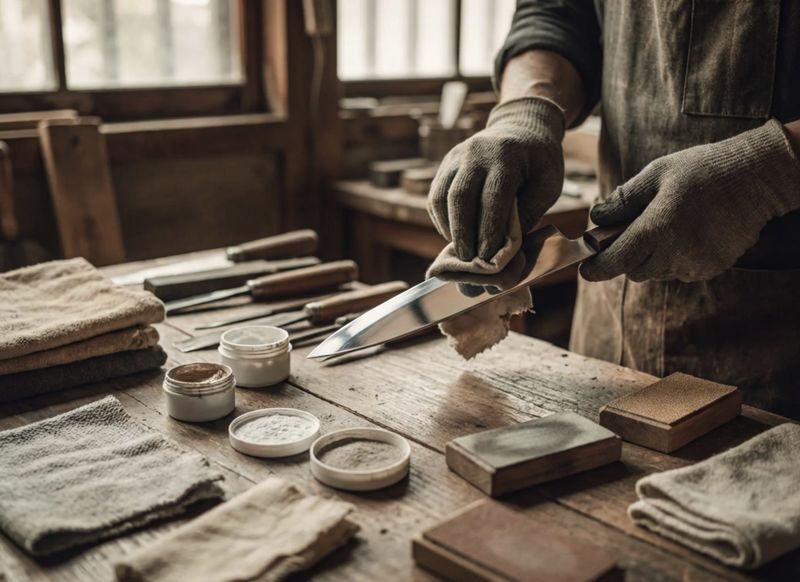
The experience is compact and hands-on. You meet at Nippo Kyoto No. 2 Building, where the instructor explains the materials, tools, and steps involved in finishing a Japanese kitchen knife. Then you work through the process with guidance, sharpening and polishing the blade before fitting its handle.
That distinction matters. The name may suggest a complete blacksmithing session, but the activity focuses on the finishing stage. You are not shown forging a blade from raw metal. Instead, you get to handle the tools and take an active role in bringing a prepared knife to its finished state. For a one-hour activity, that keeps the session practical and achievable.
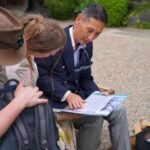
Instructors mentioned by name include Lucas, also called Lu, along with Ryu, Yuzu, Cody, Jessie, and others. The instructor can vary by session. The strongest reason this format works for beginners is the close support: the staff explain each step and help you use the sharpening stones, so you do not need previous experience or specialist knowledge.
You can also read our reviews of more tours and experiences in Kyoto.



What you do with the whetstones
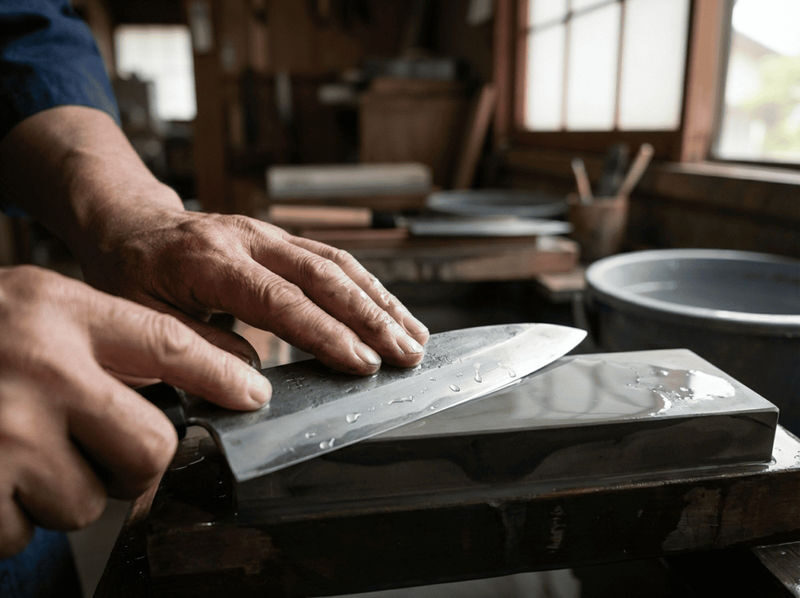
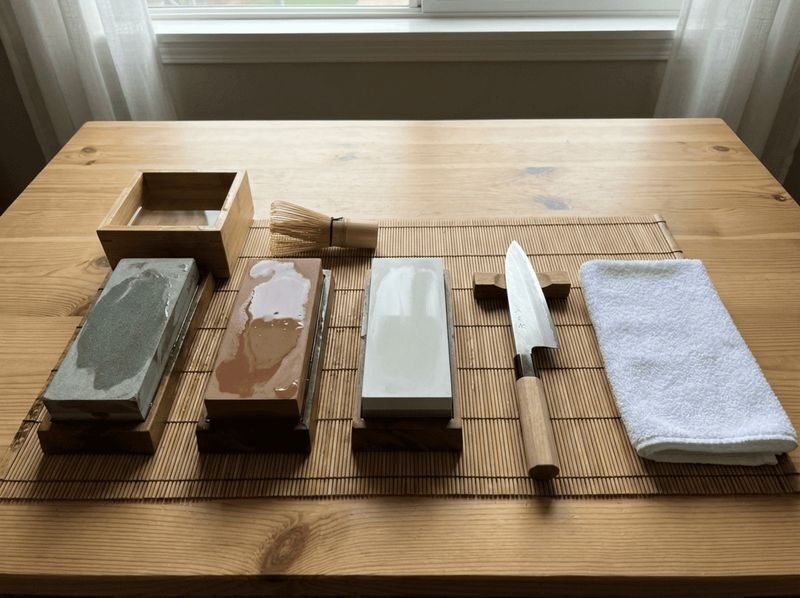
The central skill is sharpening. Your instructor shows you how to work the blade against whetstones, moving through the process of honing and polishing an edge. It is a small task with a satisfying result: you can see and feel the difference between a rough edge and one that has been carefully finished.
The lesson also gives you a useful starting point for maintaining a knife at home. You will not leave as a master sharpener after an hour, but you can learn the basic method and ask questions while you practice. That makes the class more valuable than a quick demonstration where you only watch someone else work.
The pace is guided, not entirely independent. You do the sharpening yourself, but an instructor stays nearby to explain and correct your technique. Several participants have found the process easier than they expected. If you are nervous about handling a sharp blade, the instructor’s support is especially useful.
Choosing a knife and adding a personal touch
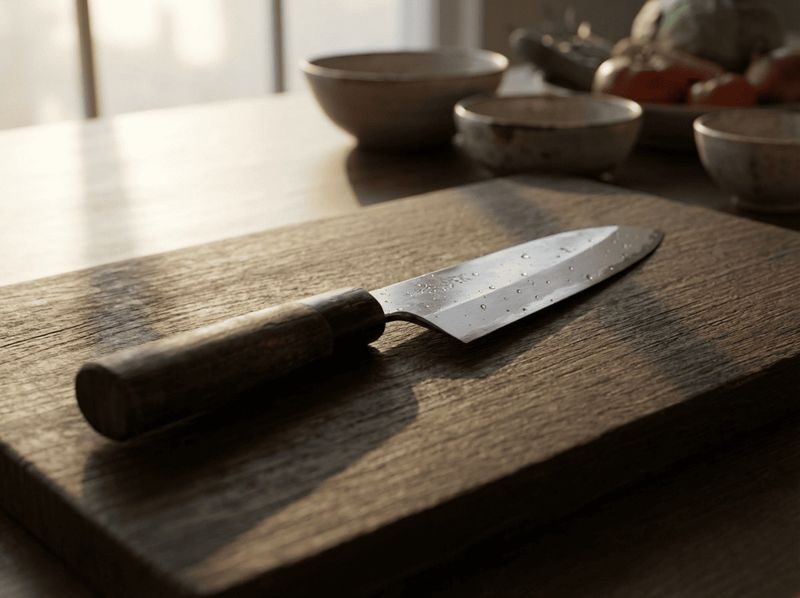
The knife is the lasting part of the experience. At the end, you fit the handle and take your completed knife home. Some sessions offer a choice between blade styles, with one participant noting an additional charge for a vegetable knife. Another option, engraving a name or inscription on the handle, may also cost extra.
Because choices and prices can affect the final bill, ask what is included in the base package before you begin. The advertised price starts at $67.89, but that is not necessarily the total if you choose an upgrade or engraving. If you are happy with the standard knife, you can keep the cost closer to the starting price and still leave with a useful memento.
Engraving can make the knife feel more personal, particularly if you are making one with a family member or friend. But it is optional, not a required part of the workshop. Decide based on whether you want a custom keepsake, rather than feeling that you need to add extras for the experience to feel complete.
A small class with room to ask questions
This is designed for a small group, which suits a skill-based activity. You have time to follow the instructor’s demonstration and ask for help as you go. No prior experience is needed, and the activity has no stated age limit. Families, couples, and solo participants can all take part.
The instruction is in English, and the focus is on explaining tools, materials, and process in an accessible way. Instructors such as Lucas, Lu, Ryu, and Yuzu are praised for being patient and encouraging. The individual guide changes, so you cannot count on a particular person, but the format gives you direct support whichever instructor leads your session.
One practical point: the workshop is on the third floor of the building, according to people who have attended. The staff may come down to meet you, but do not assume the workshop is at street level. Use the Japanese address on your voucher if it differs from the English address in your confirmation, and arrive five minutes before your booked time. A late arrival can cut into an already short session.
What the room feels like
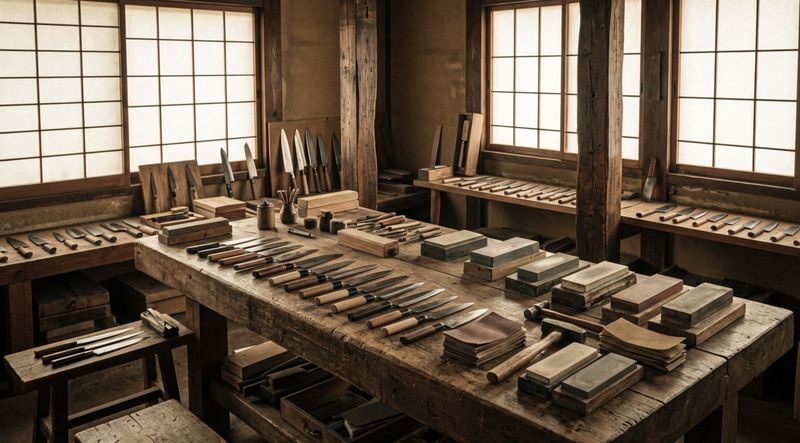
This is a workshop setting, not a quiet museum room. Other activities may take place in the same space, including chopstick making and kintsugi. That can make the room busy or noisy at times. If you are hoping for a private, hushed lesson, this may not be the right fit.
The shared space has a practical upside: you are in a working activity environment, surrounded by people making things. Still, the noise and bustle can make it harder to focus on conversation. The instructor’s hands-on help is the main event, so the setting is less important if you are happy to concentrate on the blade and stones.
There is also a question of how much cultural history you want. The session explains the tools and process, and some instructors add context about Japanese knives and sharpening. But the experience is chiefly about doing the work. If you want a long account of Kyoto’s craft traditions or the history of blades, this one-hour class may leave you wanting more.



Is $67.89 good value?
The starting price buys a guided, hands-on activity and a knife you can take home. That combination gives the session more lasting value than an attraction you simply pass through. You also learn a practical sharpening technique, which can help you care for the knife after the trip.
The value depends on your expectations. If you want to forge a blade from the beginning, this will feel like a different, smaller experience. If you want to learn how a knife is sharpened and finished, work with an instructor, and leave with a functional souvenir, the price is easier to justify.
Plan for possible add-ons. Engraving and certain knife choices may carry extra fees, and a second knife may also be available at an additional cost. Ask for the full price before agreeing to anything beyond the standard workshop. The activity is not a bargain if you are counting on a custom knife at no extra charge, but it can be a fair purchase if you value the lesson as well as the object.
Fitting the workshop into a Kyoto day
The class lasts one hour and takes place at Nippo Kyoto No. 2 Building in Shimogyo Ward. Available departure times are 10:00, 12:00, 14:00, 16:00, and 18:00, though the options depend on the session you select. The return time is one hour later.
That short schedule makes the workshop easy to fit between other plans, but do not cut your arrival close. You are asked to arrive five minutes early, and late arrivals or no-shows are not refundable. Check the address carefully before setting out, especially if your booking details show both English and Japanese address text.
The voucher is valid only for the selected date and time. Changes are allowed up to 24 hours before the activity starts, subject to the stated booking restrictions. If your plans are uncertain, check the terms attached to your particular booking before paying.
Who will get the most from it
I would choose this workshop if I enjoy learning by doing and want a souvenir I can actually use. It suits couples and friends looking for a shared activity, as well as families with children who can follow instructions. A 14-year-old has taken part successfully, and the activity lists no age limit, though younger participants will need to follow the instructor’s guidance closely around sharp tools.
It also works well as a rainy-day plan. The activity is indoors and brief, and it gives you a break from temple visits and walking. If you cook at home, the sharpening lesson may be as memorable as the knife itself.
I would look elsewhere if your main aim is to watch a blacksmith forge a blade, study craft history in depth, or spend several hours learning advanced techniques. This is a focused finishing class. Its strengths are personal instruction, an approachable process, and a knife to carry home.
Should you book it?
Book this if you want a straightforward, hands-on Kyoto activity with a useful result at the end. The best parts are the chance to sharpen the knife yourself, the support from English-speaking instructors, and the fact that you take the finished knife home. Keep expectations clear: you are finishing a prepared blade, not forging one from raw steel.
Before booking, decide how much you are willing to spend on optional engraving or a different knife, and make sure you have the correct address. If those details suit you, this is a good way to trade an hour of sightseeing for a practical skill and a personal reminder of Kyoto.
Experience traditional knife making in Kyoto
“Super enjoyable experience with my 14 year old Son who was way better than myself at it. Lucas was a legend at helping and supporting us talking us…”
FAQ
How long does the knife workshop last?
The workshop lasts one hour. Your selected departure time determines the session, with available starts listed at 10:00, 12:00, 14:00, 16:00, and 18:00, depending on the booking option.
Do I need experience to take part?
No. The workshop is suitable for beginners, and an instructor guides you through the process. No specialist knowledge is required.
What will I do during the workshop?
You learn about the tools, materials, and process, then sharpen and finish a Japanese kitchen knife with an instructor’s support. The activity focuses on finishing a prepared blade, not forging a knife from raw steel.
Can I take the knife home?
Yes. You can take the completed knife home with you.
Is engraving included in the price?
Engraving may be available for an extra charge. Some knife choices may also cost extra, so ask about the price before selecting an upgrade.
Where is the workshop, and when should I arrive?
It is at 302 Nippo Kyoto 2nd Building, Senshojicho, Shimogyo Ward, Kyoto. Arrive five minutes before your booked start time, and use the Japanese address on your voucher if it differs from the English address shown in your confirmation.