Kyoto’s sushi-making class starts before the fish meets the rice: you learn to wash and cook the rice, prepare dashi, and build a meal around the small details that shape Japanese home cooking. I like that the class teaches useful basics beyond sushi, and that you finish by eating a spread that includes two sushi types, three side dishes, soup, and dessert.
The English-speaking instruction and take-home recipes make this a practical choice if you want to keep cooking after your trip. One thing to plan around: the class lasts 2.5 hours, and the doors open only 10 minutes before it begins, so you can’t arrive early and wait inside.
- What to know before you book
- A cooking class built around everyday skills
- Rice first, then the sushi
- Dashi and the meal around it
- A shared meal, not just a demonstration
- What the price includes
- Timing, dietary needs, and a few practical details
- Should you book the Kyoto sushi class?
- FAQ
- How long is the Kyoto sushi-making class?
- Where does the class meet?
- Is transportation included?
- What food is included?
- Does the class include recipes?
- Is the class taught in English?
- What is the minimum age to participate?
- Can the class accommodate dietary restrictions?
- The Best Of Kyoto!
- More Workshops & Classes in Kyoto
- More Tours in Kyoto
- More Tour Reviews in Kyoto
- Not for you? Here's more nearby things to do in Kyoto we have reviewed
What to know before you book
 1 / 5
 2 / 5
 3 / 5
 4 / 5
 5 / 5
- Start with the basics: You’ll learn rice washing and cooking, then use rice in your sushi.
- Make more than sushi: The class also covers dashi, three side dishes, and soup.
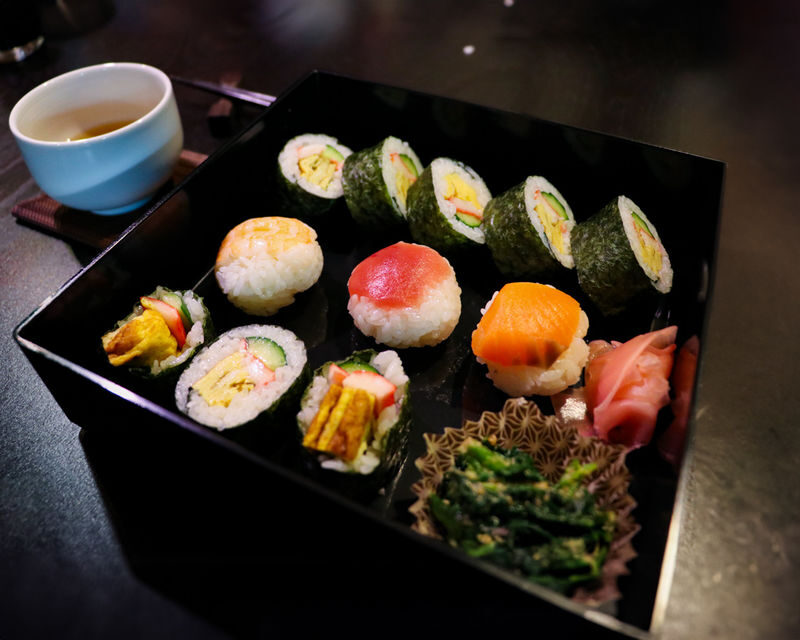
- Sit down to eat: The included meal has an aperitif, rice, two types of sushi, three side dishes, soup, and dessert.
- Leave with recipes: You can take the recipes home and use the techniques in other Japanese meals.
- Expect group sizes to vary: Past classes have ranged from a private-feeling pair to a group of 13.
- Allow for a short walk: The venue is a six-minute walk from Nijo Station, and transport to and from the class isn’t included.

👉 See our pick of the 25 Best Workshops And Classes In Kyoto
A cooking class built around everyday skills
This 2.5-hour class at Japanese Cooking Class Roujiya is more than a quick lesson in shaping sushi. It introduces the building blocks of a Japanese meal, starting with rice and dashi, then putting those ingredients to work in sushi, soup, and side dishes.
That wider focus matters if you want to cook Japanese food at home. Sushi can be the fun part, but rice and dashi appear in many dishes, so learning how to prepare them gives you skills you can use again. You won’t leave with just a single recipe or a few snapshots of a finished plate.
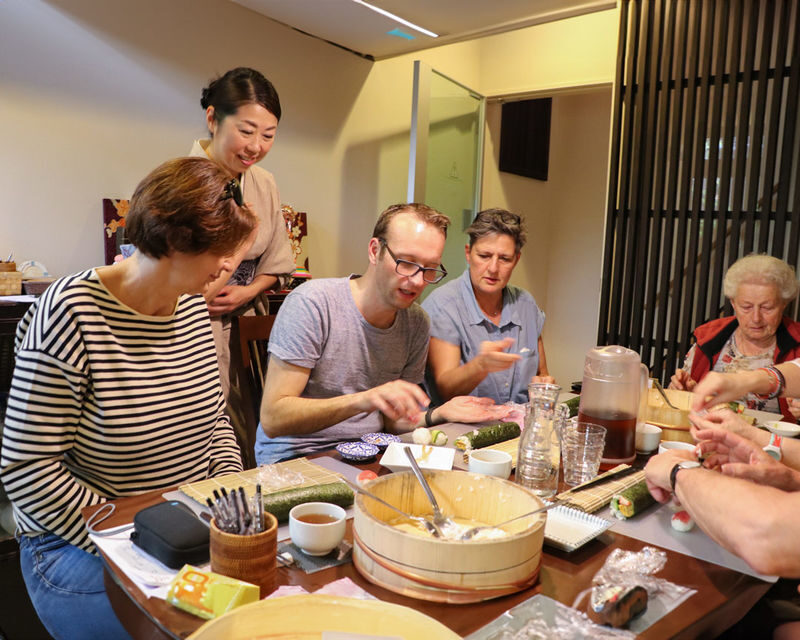
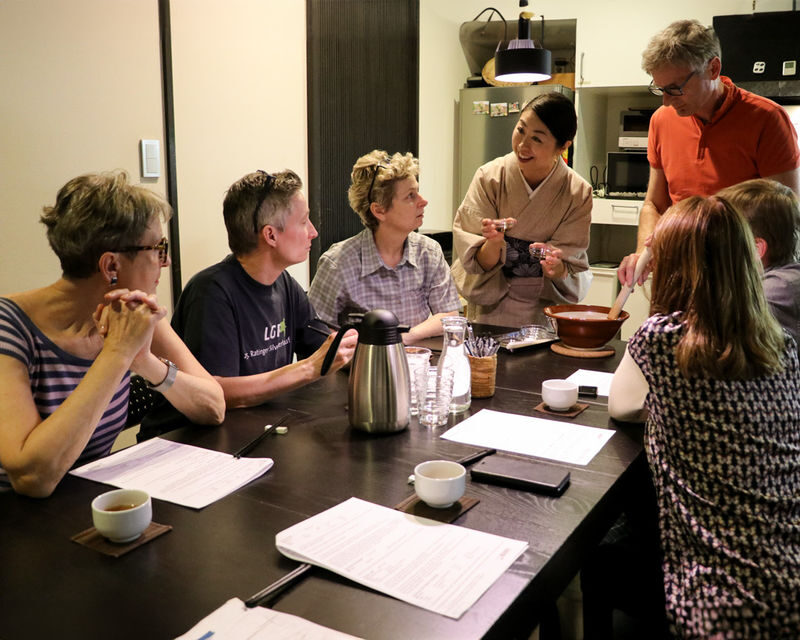
The class is led in English, which helps you follow the steps and ask questions as you go. In past classes, instructors have been praised for clear explanations, thoughtful preparation, and a welcoming manner. One participant named Coudi as an excellent teacher, though you shouldn’t assume you’ll have the same instructor on your date.
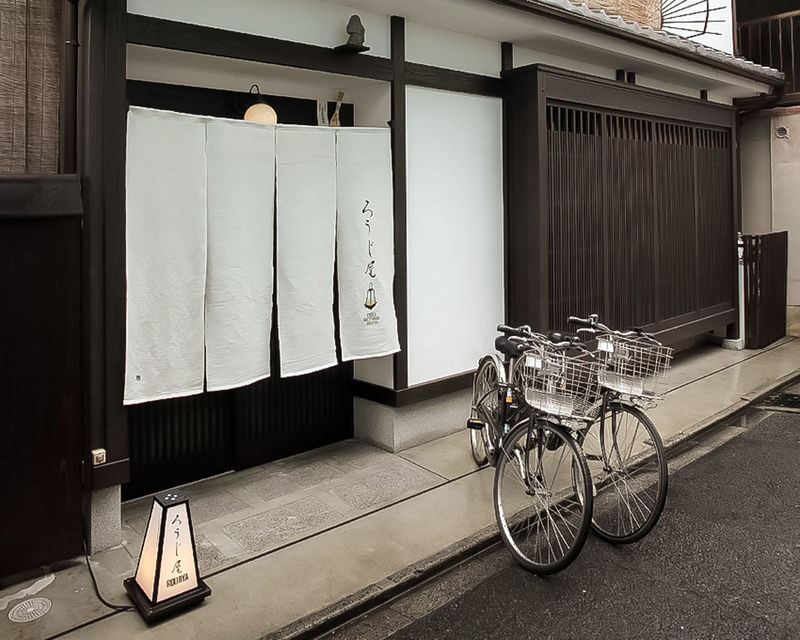
The setting is described as a guesthouse, and the address provided is Japanese Cooking Class Roujiya. That gives the experience a home-cooking feel rather than the formality of a restaurant demonstration. Still, the class is structured: you’ll work through techniques with an instructor, prepare a full meal, and eat what you’ve made.
You can also read our reviews of more tours and experiences in Kyoto


Rice first, then the sushi
The lesson begins with rice, an essential part of sushi that’s easy to overlook when you’re focused on the toppings. You’ll learn how to wash and cook it, with guidance on the steps that come before it reaches the table.
That’s a sensible way to teach sushi. Rice needs care before you shape it, and the class gives you a chance to learn the process rather than simply being handed a bowl of prepared rice. You can ask questions as you work, then connect the technique to the meal you’ll make.
From there, you’ll prepare two types of sushi. The specific styles aren’t named in the class details, so don’t book expecting one particular regional form or a specific fish. What is promised is hands-on practice, with instruction from an English-speaking guide and time to make sushi yourself.
The value is partly in the repetition. Making sushi with someone nearby to explain the steps can help you understand what to do at home, where a written recipe may not answer every question. You’ll also get recipes to take away, a useful reminder once you’re back in your own kitchen.
Dashi and the meal around it
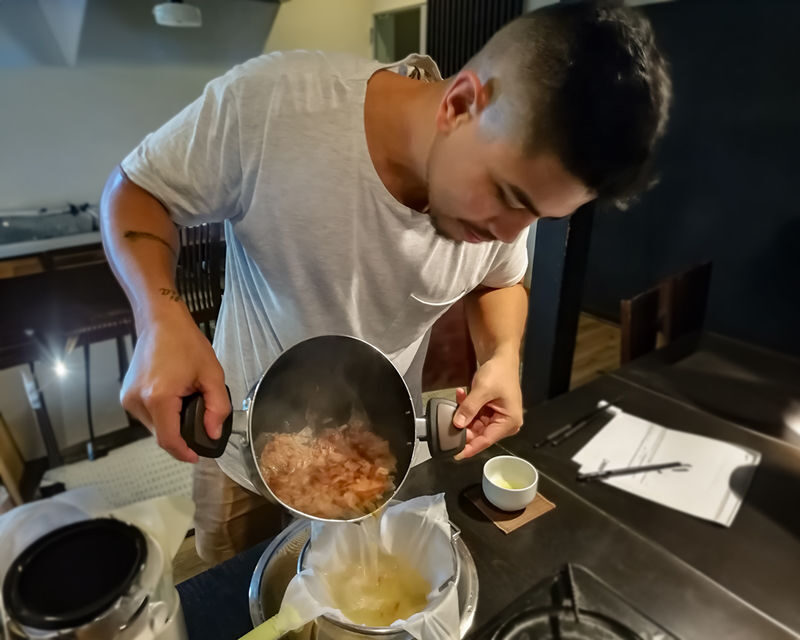
Dashi is the other key lesson. This umami-rich stock is a foundation for many Japanese dishes, and the class introduces you to how it is prepared. If you’ve tasted Japanese soup and wondered what gives it its savory depth, this is a chance to learn about the stock behind that flavor.
The experience pairs dashi with a broader meal rather than treating it as an isolated demonstration. You’ll make three side dishes and soup as well as sushi, rice, and dessert. The class details don’t name the side dishes or promise particular ingredients, so the exact menu may vary.
That variety is one of the class’s best features. It helps you see how Japanese ingredients and seasonings work together across a meal, instead of reducing the cuisine to sushi alone. You get a more useful introduction to home cooking, and there’s more to eat at the end.
An aperitif is also included. The exact drink isn’t specified, so think of it as part of the meal rather than a reason to book. The central appeal is the cooking, the instructor’s guidance, and the chance to sit down with the food you prepared.
A shared meal, not just a demonstration
Once the dishes are ready, you sit down to eat them. That meal gives the class a natural finish: you can taste the results of your work and connect the cooking steps to what’s on the table.
The included food is substantial for a short class: an aperitif, three side dishes, rice, soup, two types of sushi, and dessert. It’s not simply a sushi lesson followed by a small sample. If you’re choosing between a hands-on class and a restaurant meal, this combines a meal with instruction and practical skills.
Group size can change. One couple described having the class to themselves, while another noted that a group the previous day had 13 people. That means you may get a small-group feel, but you shouldn’t count on a private lesson or a fixed class size.
A larger group may mean less individual attention at certain moments, while a smaller one can make it easier to ask questions. The instructor’s clear, supportive style is a recurring strength, but the number of participants on your date is not specified. If you need a private class, confirm that directly before booking.
What the price includes
The class starts at US$70.35 per person for 2.5 hours. That price covers the English-speaking guide, ingredients, tools, the full meal, and recipes to take home. Viewed as a cooking lesson plus lunch or dinner, it offers more than a brief demonstration or tasting.
The value depends on what you want from your Kyoto day. If your goal is to learn practical techniques and enjoy a meal you helped make, the price is easier to justify. If you only want to eat sushi, a restaurant is a simpler option and won’t take up half a day.
Transportation is not included. The venue is a six-minute walk from Nijo Station, so you’ll need to arrange your own way there and back. Detailed directions and a Google Maps link are provided after booking confirmation.
The listed rate applies to children aged six and older as well as adults. Children must be included in the passenger headcount, and participants must be at least six. For a family, that makes the class a shared activity, but it also means the cost is the same per person for children and adults.




Timing, dietary needs, and a few practical details
Don’t arrive too early. The doors open only 10 minutes before the start, and there is no waiting room. The venue asks participants not to wait on private property before then, so plan your route to arrive close to the permitted entry time rather than leaving a long gap.
The class can accommodate several dietary needs, including kosher, pescetarian, halal-certified, gluten intolerance, vegetarian, and vegan diets. Tell the provider about your restrictions in advance. If you have a serious allergy or a specific ingredient concern, contact the provider before booking to confirm what can be accommodated.
You should receive booking confirmation within 48 hours. The voucher is valid only for the date and time specified, so check those details before setting your Kyoto plans around the class. Cancellations made at least 72 hours before the activity date qualify for a full refund.
The class is a good fit for curious cooks, sushi fans who want to understand the process, and visitors looking for an indoor activity with a meal at the end. It may be less appealing if you have a packed schedule, don’t want to spend 2.5 hours cooking, or are mainly after a restaurant-style sushi tasting.
Should you book the Kyoto sushi class?
I’d book this class if you want to learn more than how to assemble sushi. Rice preparation, dashi, side dishes, and recipes to take home give the lesson a practical reach, while the meal makes the time feel well spent. The consistently warm accounts of the instructors’ clear teaching also suggest a comfortable setting for beginners.
Go in with reasonable expectations about the details that aren’t fixed. You won’t know the exact menu or group size in advance, and the two sushi types aren’t identified. If those specifics matter, ask before booking. Otherwise, this is a strong choice for a hands-on food experience that connects one of Japan’s best-known dishes to everyday cooking.
Kyoto Style Sushi Making Class
“A lovely informative experience! pit instructor was very knowledgeable and gave us excellent instructions that were easy to follow. she was well pr…”
FAQ
How long is the Kyoto sushi-making class?
The class lasts 2.5 hours.
Where does the class meet?
It meets at Japanese Cooking Class Roujiya, described as a guesthouse a six-minute walk from Nijo Station.
Is transportation included?
No. You need to arrange your own transport to and from the venue.
What food is included?
The class includes an aperitif, three side dishes, rice, soup, two types of sushi, and dessert.
Does the class include recipes?
Yes. You receive recipes to take home.
Is the class taught in English?
Yes. An English-speaking guide is included.
What is the minimum age to participate?
Participants must be at least six years old. Children aged six and older are charged the same rate as adults and must be included in the headcount.
Can the class accommodate dietary restrictions?
The activity lists kosher, pescetarian, halal-certified, gluten-intolerant, vegetarian, and vegan diets as dietary requirements it can accommodate. Inform the provider in advance.