
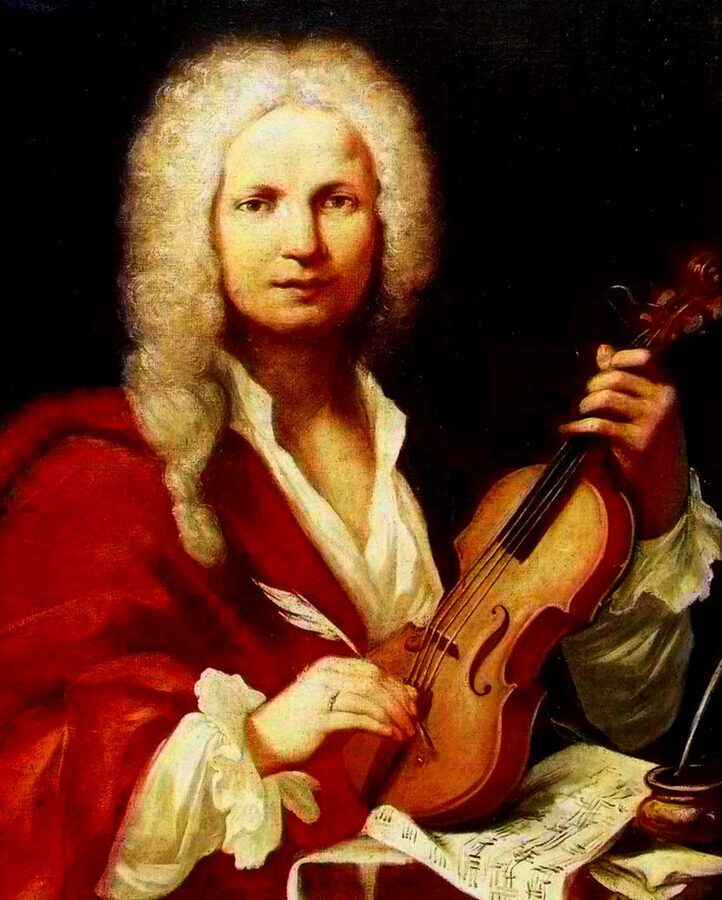
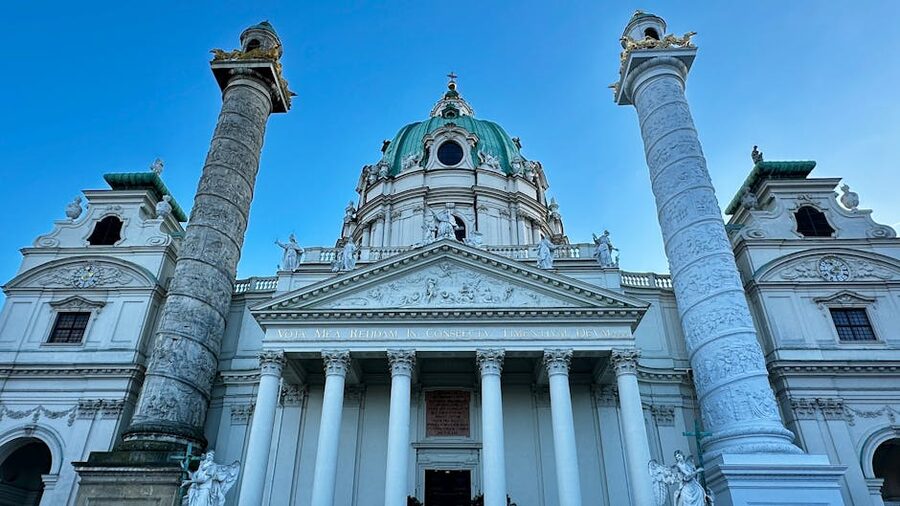
Antonio Vivaldi died in Vienna in 1741, broke and forgotten, and was buried in a pauper’s grave near where the Karlskirche had just been finished. Almost three centuries later, his Four Seasons is the most-booked classical experience in the city, played in that same baroque church to about 15,000 people a year.
The Vienna concert market for visitors splits into a few clear venues, each with a different vibe and a different price. This guide is for the non-Mozart, non-themed end of the market: classical concerts where Vivaldi, Haydn, and Bach do most of the heavy lifting. If you want a Mozart-and-Strauss-in-period-costume evening instead, that’s a separate beast and we cover it in our guide to Mozart concerts in Vienna.
- In a Hurry?
- Three Venues, Three Different Evenings
- Karlskirche: Vivaldi the Way It Was Meant to Sound
- Musikverein: How to See the Golden Hall on a Budget
- St Peter’s: One Hour, Central, Quartet Format
- Which Concert to Book
- 1. Vivaldi’s Four Seasons at Karlskirche:
- 2. Vivaldi + Mozart at the Musikverein:
- 3. Classic Ensemble at St Peter’s Church:
- What to Wear (Yes, It Matters Less Than You Think)
- How Booking Works in Practice
- When to Book
- The Logistics
- If You’re Doing Vienna and the Wider Region
- Finding the Right Concert for Your Evening
In a Hurry?
- Vivaldi’s Four Seasons at Karlskirche, around $40. The headline experience and the most-booked classical concert in Vienna. Period-instrument orchestra, 75 minutes, soaring baroque dome above your head. Check availability.
- Vivaldi + Mozart at the Musikverein, around $17. The Golden Hall is the most prestigious classical venue in the world, and this is the cheapest legitimate way to get inside it. Two hours, big orchestra. Check availability.
- Classic Ensemble Vienna at St Peter’s Church, around $45. One hour, central location, intimate string quartet in one of Vienna’s most ornate baroque interiors. Check availability.
Three Venues, Three Different Evenings
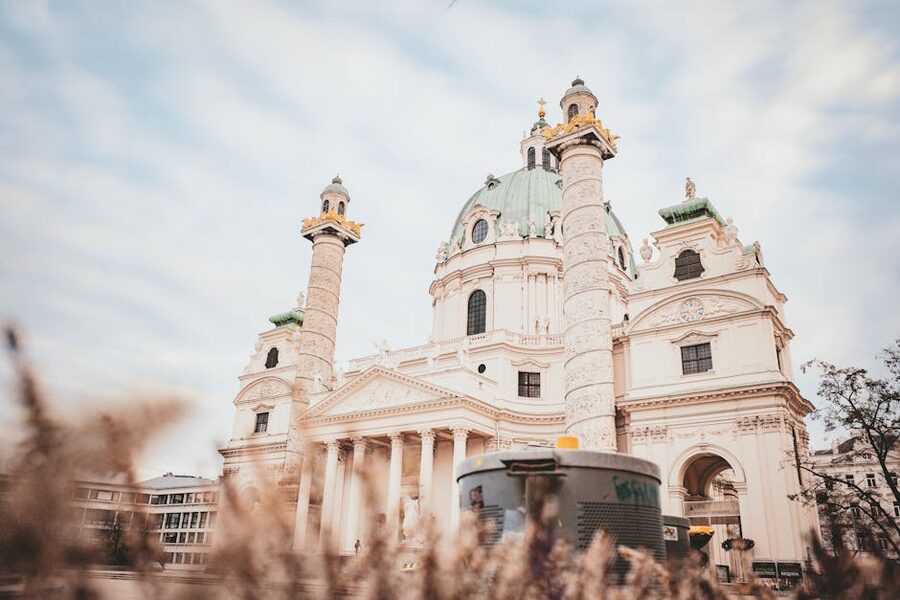
The decision in this article is not really “which tour” but “which venue”. Once you pick the venue you basically pick the program too. Karlskirche is a Vivaldi room. Musikverein is bigger, longer, more orchestral. St Peter’s is intimate and short.
Here is the way I think about it. If you have one evening and you want something that feels distinctly Viennese without going full Mozart-in-a-wig, book Karlskirche. If you want to see the inside of the Golden Hall on a budget and you have two hours, book the Musikverein. If you want a one-hour starter concert that still leaves time for dinner, book St Peter’s.
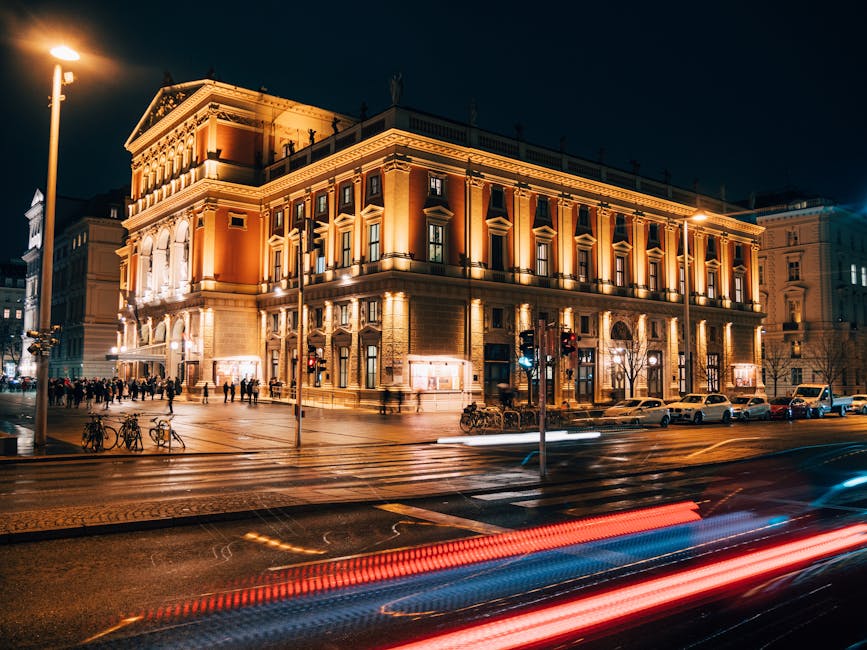
Prices below are what I have been seeing on GetYourGuide in 2026, and they shift by season. Summer evenings cost more than rainy Tuesdays in February. Christmas concerts in any of these venues run a premium and sell out weeks ahead.
Karlskirche: Vivaldi the Way It Was Meant to Sound
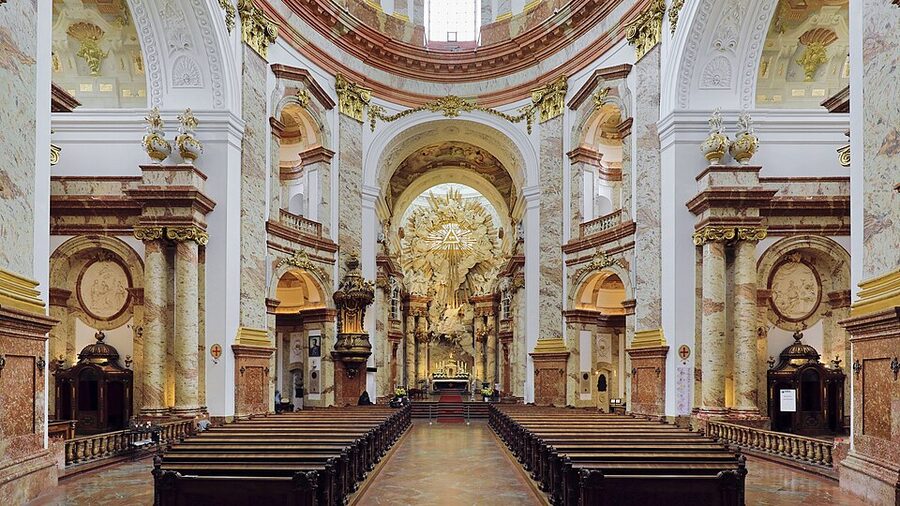
Karlskirche is the venue people remember. It is a 1737 baroque church on Karlsplatz, two minutes from the U1 metro, and Orchestra 1756 plays Vivaldi’s Four Seasons there roughly every other evening. They use period instruments tuned to historical pitch, which sounds slightly different to a modern recording. Less polished, more raw.
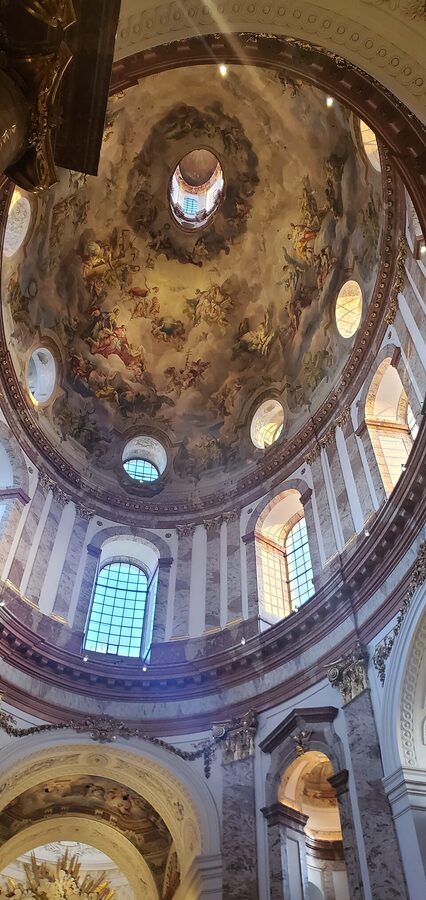
The room itself does most of the work. The ceiling is 70 metres high, the acoustics make the violins sound like they are in three places at once, and the dome fresco is lit during the concert. People do not stop looking up for the full 75 minutes.
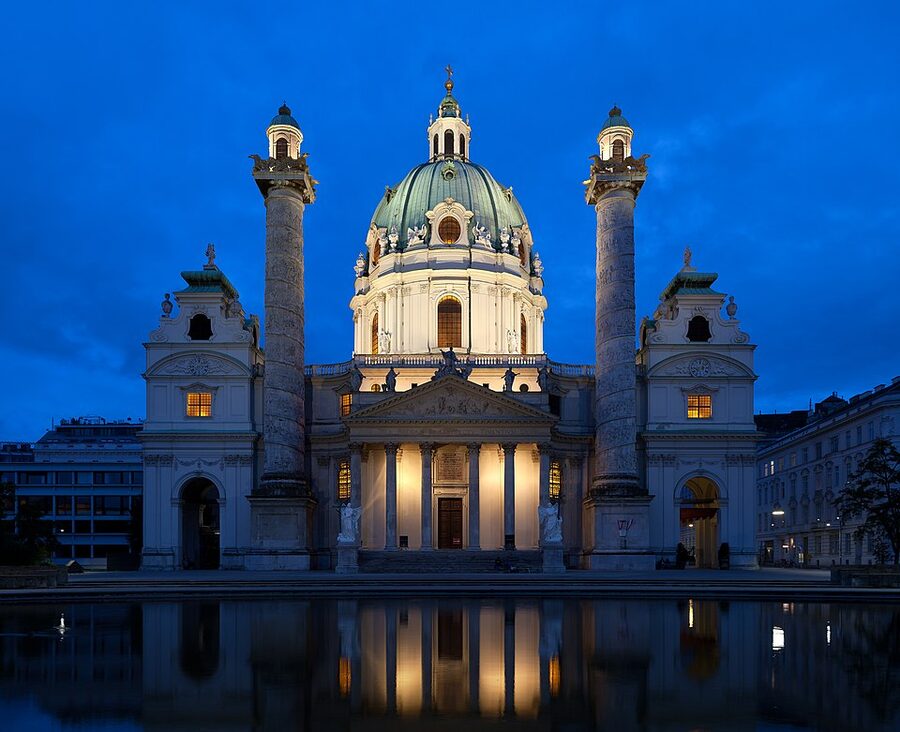
One thing nobody warns you about: it gets cold. The church is not heated above what’s needed to protect the building, and on a March or November evening it dips into the low teens Celsius inside. The orchestra hands out blankets at the door, but bring a coat and hold onto it. Several recent reviewers mentioned the same thing, so it is a consistent feature, not a one-off.
Seat categories matter more here than at the other venues. Category 1 sits you front and centre with a clear sight line to the strings. Category 2 is to the side or further back and you sometimes have a column partly in front of you. Category 3 is the cheap seats and you mostly hear the room rather than see the players. For a Vivaldi concert in a church, category 2 is the value pick. Category 1 is worth it if you specifically want to watch the soloist’s bowing.
Musikverein: How to See the Golden Hall on a Budget
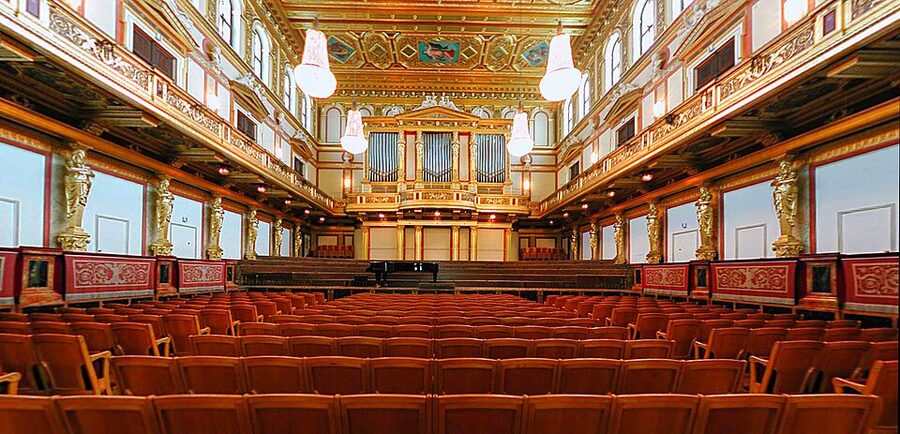
The Musikverein is a strange case. It is the most prestigious concert venue in the world. The Vienna Philharmonic plays here. The New Year’s Concert that gets televised globally is broadcast from this room. And yet you can sit in it for $17.
The catch, if you want to call it that, is that the budget tickets are for visitor-friendly programs by groups like Classic Exclusive, not for the Vienna Philharmonic itself. Those start around $60 and run into hundreds of euros depending on the night. But the building is the same. The acoustics are the same. The Goldener Saal looks the same whether the Vienna Phil or a touring tourist orchestra is on stage.
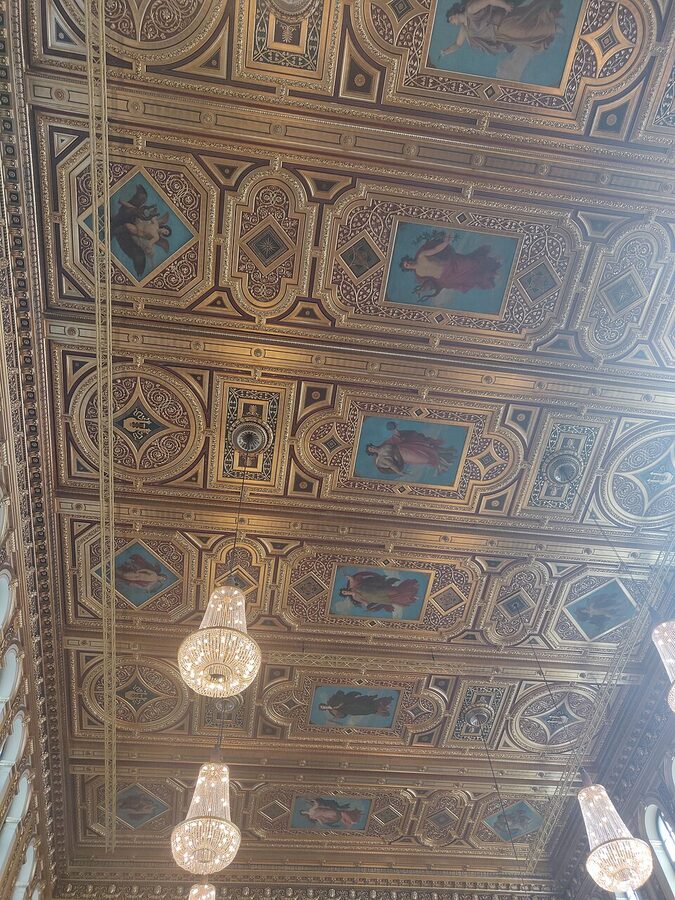
Budget concerts at the Musikverein typically include Vivaldi’s Four Seasons and a Mozart concerto, sometimes with Haydn or Bach added in. Two hours, intermission included. The orchestra is usually around 10-14 players. It is not the 80-piece symphony you’d hear from the Vienna Phil, and the program is built around audience-pleasers rather than challenging repertoire. None of that matters once the room starts ringing.
Practical tip: the Musikverein has multiple halls. The Goldener Saal is the famous one. The Brahms-Saal is smaller and beautiful in its own right but is not the same room you have seen on television. Before you book, check the listing for “Goldener Saal” specifically. Most tourist concerts use it, but a few use the smaller halls.
St Peter’s: One Hour, Central, Quartet Format
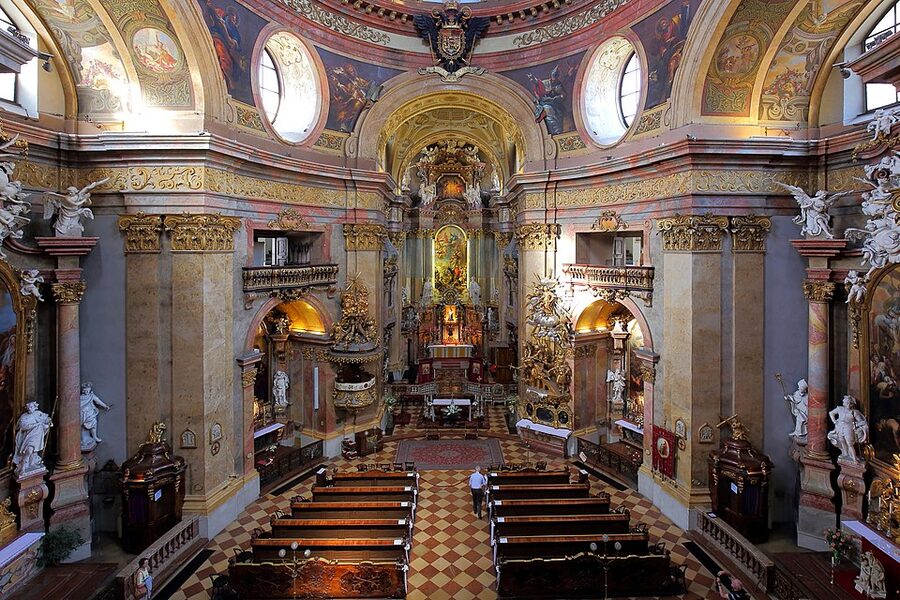
St Peter’s, or Peterskirche, is the wildcard. It is in the absolute centre, 30 seconds walk from Graben. Concerts there run an hour, not 75 minutes or two hours, and the format is a string quartet rather than an orchestra. That length matters more than people realise. You can book it for 7 pm and still make a 9 pm dinner reservation.
The performing group is Classic Ensemble Vienna, four musicians playing Pachelbel, Vivaldi, Bach, Mozart, sometimes a piece by Albinoni or Boccherini. The repertoire shifts seasonally. It is shorter and more compact than the other two options and the price is the highest of the three at around $45, but for the time-to-quality ratio it punches above its weight.
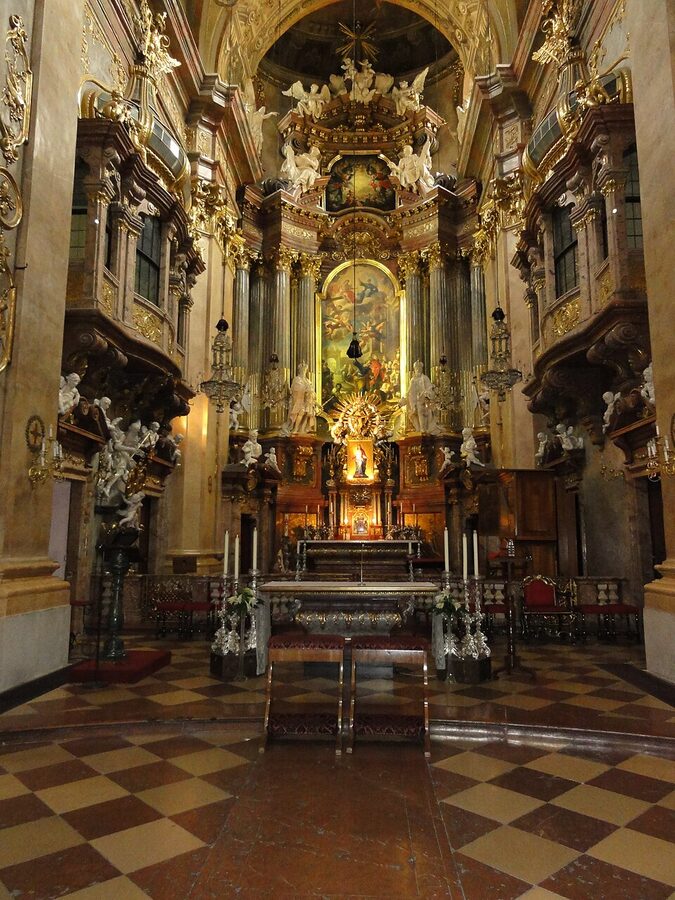
The seating is unreserved within ticket category, which is unusual for Vienna. If you arrive 20 minutes early you can almost always get a centre-aisle pew with a clear view down to the players. Fifteen minutes after that, it fills up and you end up behind a column. Worth getting there early.
Which Concert to Book
Here are the ones I keep coming back to when friends ask. Listed in the order I think most people should book them: best fit first.
1. Vivaldi’s Four Seasons at Karlskirche: $40
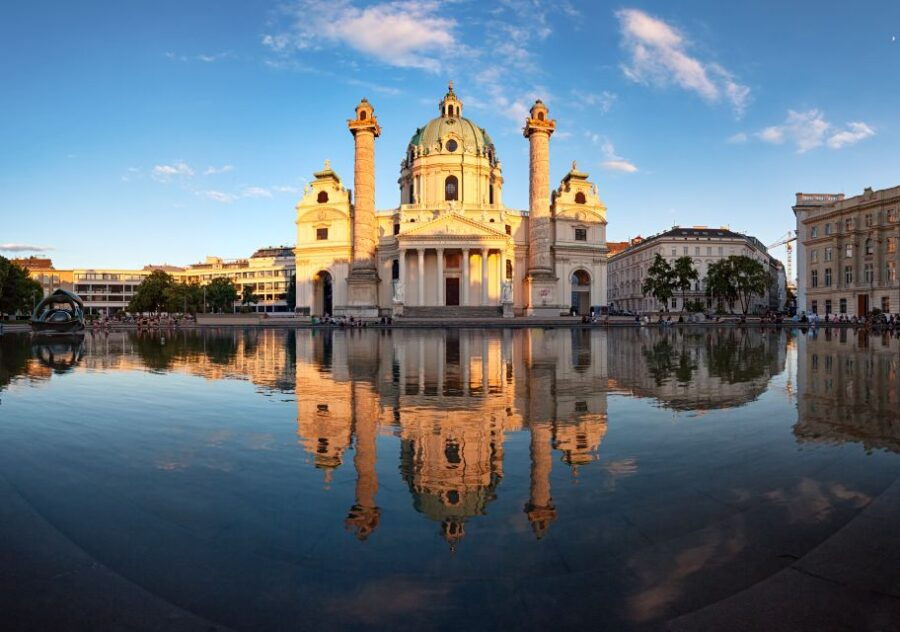
Almost 15,000 reviews on GetYourGuide and a 4.7 average is a strong signal that the experience holds up across very different audiences. Our full review goes deeper on seat categories and what to expect on a winter evening, but for most travellers the only decision here is which seat tier to pick. Bring layers and arrive 30 minutes early.
2. Vivaldi + Mozart at the Musikverein: $17
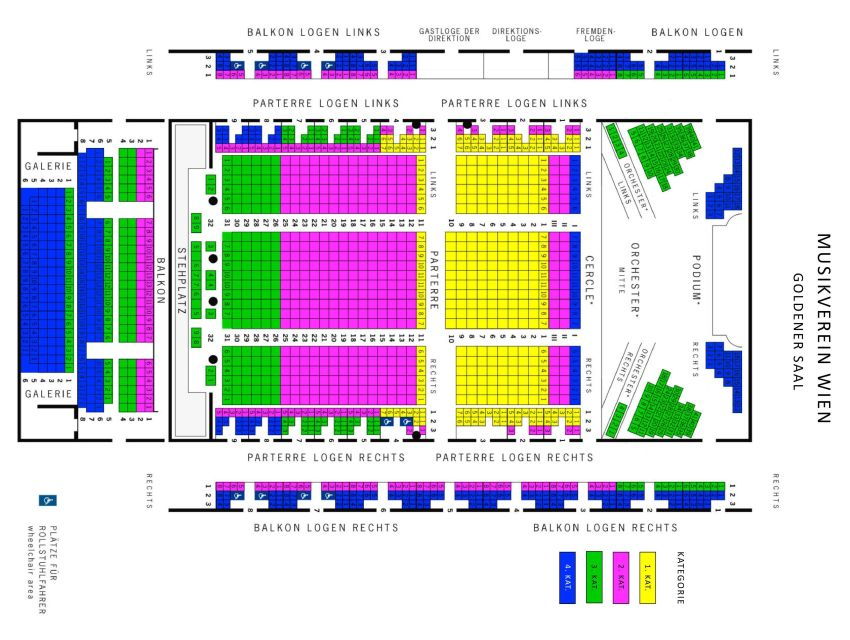
The price is the headline. There is no other legitimate way to sit inside the Goldener Saal for under $20. The orchestra is Classic Exclusive, the program is approachable, and the building does the rest. Our review covers which hall the budget concerts actually use and how the seat categories work in a venue this large.
3. Classic Ensemble at St Peter’s Church: $45
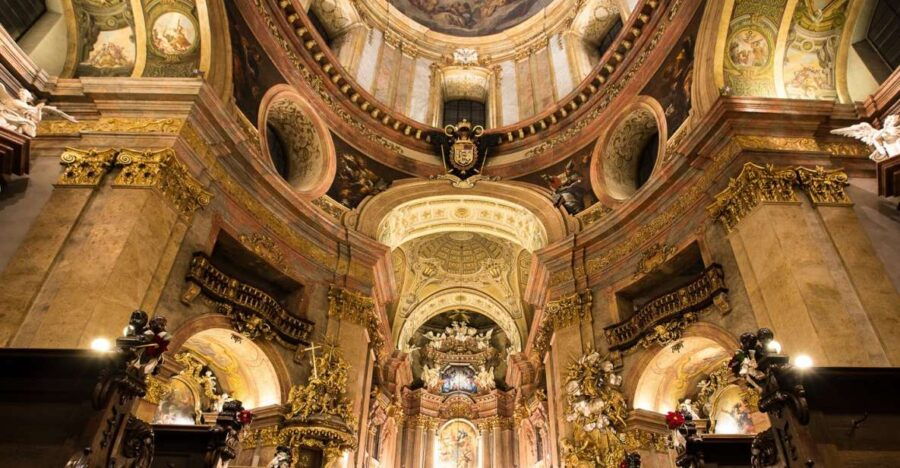
Quartet format, baroque-and-classical mix, Pachelbel’s Canon usually opens the evening. Our full review details which seat tier gives the best line of sight in the unreserved seating zone. Get there at least 20 minutes before the start.
What to Wear (Yes, It Matters Less Than You Think)
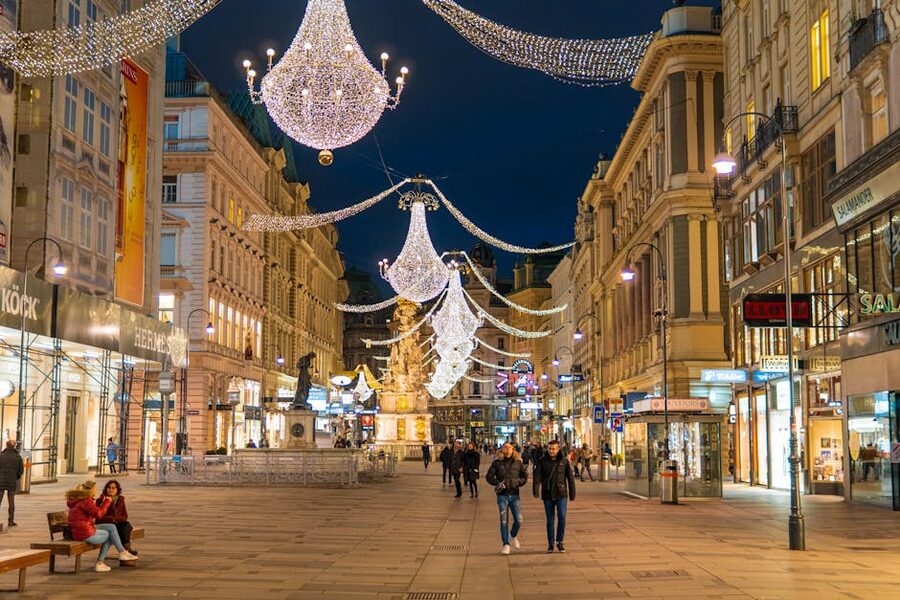
You will read articles that imply you need formal attire. You don’t. The dress code at all three venues for visitor-targeted concerts is what Austrians call smart casual. A nice shirt and trousers, or a dress, is more than enough. I’ve seen people in jeans and clean trainers and nobody flinched. The exception is full-price Vienna Philharmonic performances at the Musikverein, which are stricter, but tourist concerts at the same venue are not.
One real practical thing: bring a layer. Karlskirche is cold. The Musikverein is warm in winter and warm in summer. St Peter’s is somewhere in between but tilts cool. A light jacket is the safe call across all three.
How Booking Works in Practice
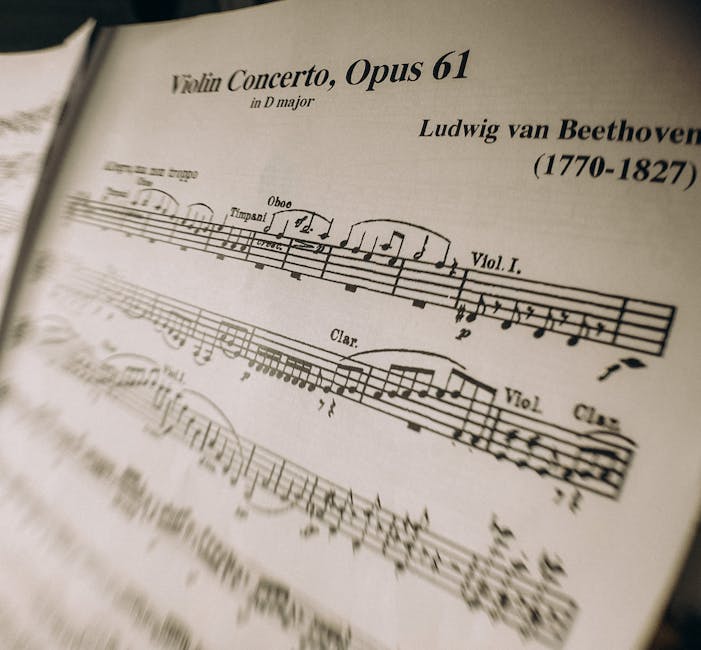
All three of the headline concerts are bookable on GetYourGuide and Viator with mobile tickets. You arrive at the venue, scan the QR code at the door, and walk in. No printing, no will-call, no queueing for paper tickets at a separate office.
Free cancellation up to 24 hours before is standard at all three venues. That is the single most useful detail to know if you are still planning your itinerary. Book the slot you want now, and if your day shifts you can cancel the night before with no penalty.
The aggregator sites resell from the same pool the venues use directly, so you are not getting a different ticket by booking through GetYourGuide. The price is sometimes a euro or two cheaper on the venue’s own website but the cancellation policy and the customer-service path are usually better via the platforms.
When to Book
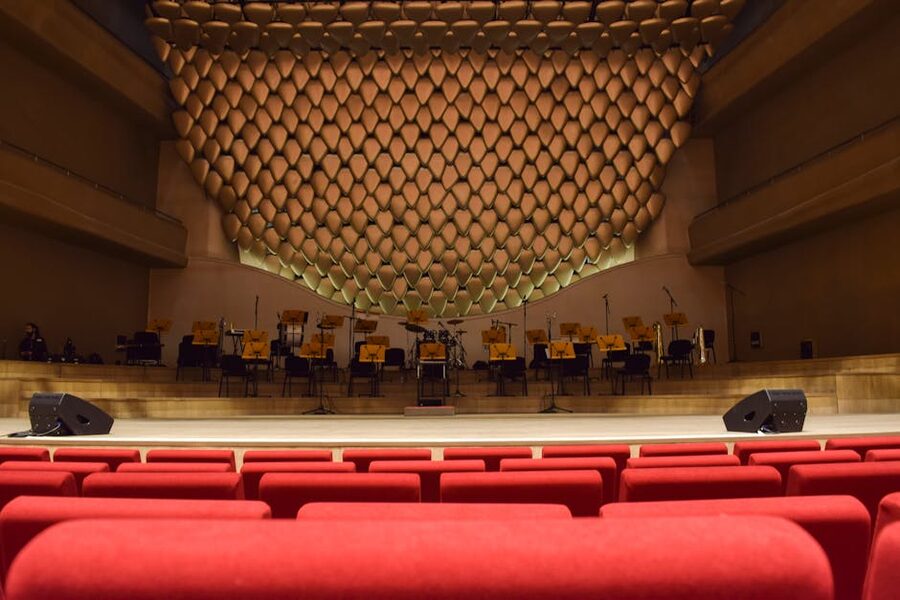
Karlskirche and St Peter’s run concerts most evenings in season. The Musikverein budget concerts run two or three nights a week, less frequent than the church venues. If you have a specific date in mind, book at least a week ahead in summer and at least three weeks ahead for any week between mid-November and Christmas.
December is its own beast. The Christmas concert program in Vienna is denser than the regular calendar; specific Advent concerts at all three venues sell out a month or more in advance. If you are visiting in the second half of December, book the moment your travel dates are firm.
The Logistics
Karlskirche is right at Karlsplatz on the U1, U2, and U4. Musikverein is two minutes from Karlsplatz on foot, and three minutes from Stadtpark. St Peter’s Church is a 90-second walk from Stephansplatz on the U1 and U3. None of the three venues are more than a 15-minute U-Bahn ride from any decent central hotel.
If you are doing the Vienna palace cluster the same day, the easiest pairing is one of the morning palaces with a 7 or 8 pm concert. Schönbrunn fits poorly because the round trip eats most of the afternoon, but the Hofburg and Sisi Museum closes at 5:30 and is a 10-minute walk from Peterskirche, and the Belvedere is a 15-minute U-Bahn ride from Karlsplatz with an easy reset for an evening concert.
If You’re Doing Vienna and the Wider Region
Vienna is the obvious classical capital but it is not the only one in the region. Prague has its own dense concert market, mostly in churches and palaces with similar pricing to St Peter’s, and the bachtrack-listed venues there overlap heavily in repertoire. If you are doing the Central European triangle of Vienna, Prague, and Budapest, I would book the Vienna concert for the Vienna leg specifically and not try to repeat the format in the other cities.
In Budapest the equivalent evening experience is a Danube cruise with onboard music, which trades architectural prestige for a city-on-the-water view. Different vibe, similar price band. If your Vienna trip is part of a longer Central European loop, see also St Stephen’s Basilica in Budapest for organ-concert evenings, which scratch a similar itch in a Hungarian-baroque setting.
Salzburg, three hours west by train, has its own classical scene anchored by Mozart. If you are pairing Vienna with a Salzburg day from Munich, the cathedral organ concert at Salzburg cathedral is a 30-minute lunchtime option that complements rather than competes with a Vienna evening.
Finding the Right Concert for Your Evening
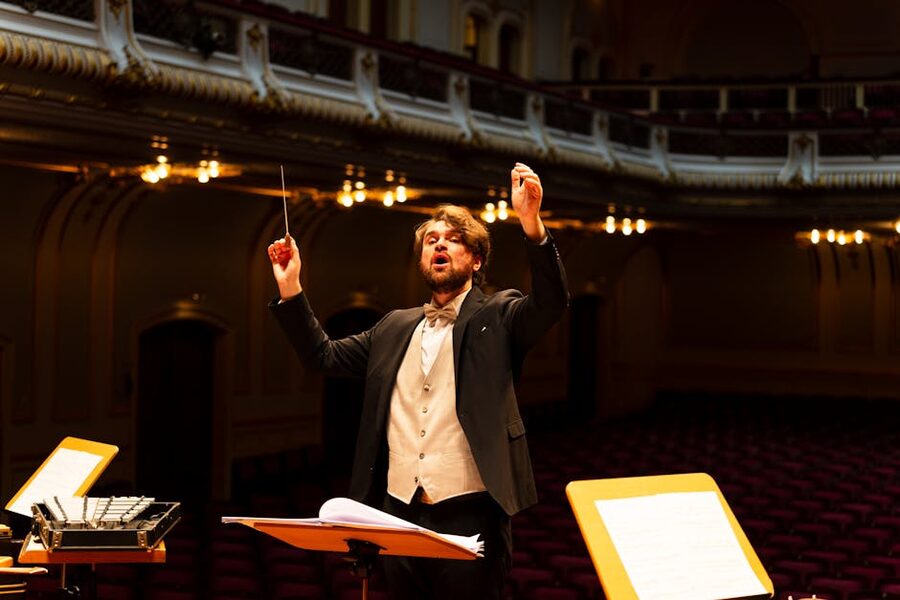
The honest answer to “which one should I book” depends on what else your day in Vienna looks like. If you’ve already done two palaces and a long walking tour, book St Peter’s, eat dinner late, and call it a night. If your day was lighter and you want the headline experience, book Karlskirche and pay for a centre seat. If you are travelling on a budget and the building matters more to you than the program, book the Musikverein and accept that the orchestra is small.
If you have time for two evening concerts on a longer Vienna trip, pair the Karlskirche Vivaldi with a Mozart-themed concert in a different room. We’ve broken those down separately in the Mozart concerts guide, and the two formats together give you both ends of the Vienna classical spectrum without hearing the same orchestra twice. Round it out with a daytime walking tour through the old centre, Schönbrunn Palace earlier in the trip, and a day trip to Hallstatt for the Alps reset, and you have a full week sketched out.