
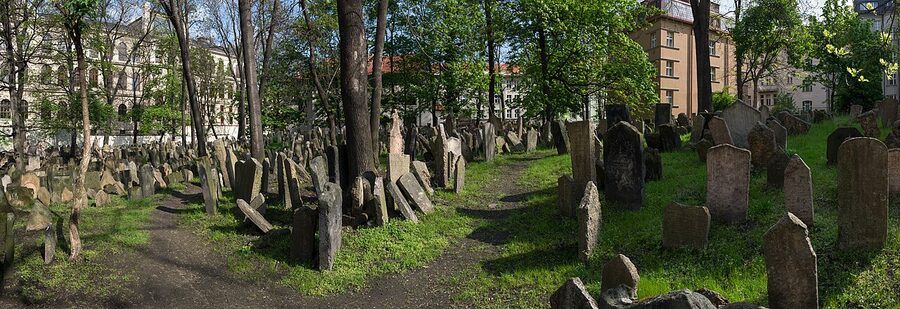
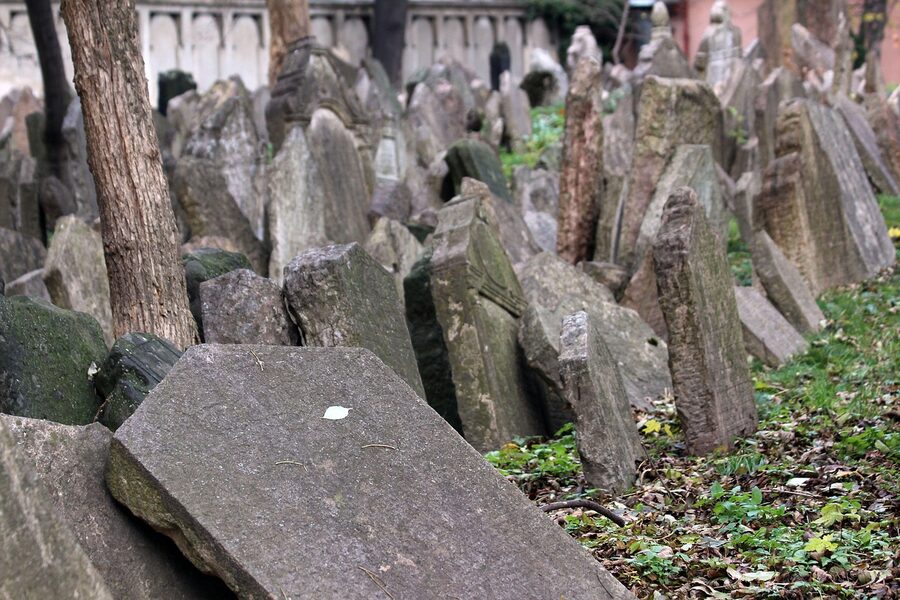
Prague’s Old Jewish Cemetery has roughly 12,000 visible tombstones. The actual number of people buried beneath them is closer to 100,000, stacked up to twelve layers deep. The Jewish community wasn’t allowed to expand the cemetery walls, so when the ground filled, they brought in more earth and buried the next generation on top.
That single fact tells you most of what you need to know about Josefov, Prague’s old Jewish Quarter. It is not a museum district. It is the surviving record of the oldest Jewish community in Europe, and the synagogues that ring the cemetery are still here because people kept rebuilding them through every century that tried to erase them.
The Quarter packs six synagogues, the Ceremonial Hall, and that cemetery into about ten walkable streets. You can do it as a focused half-day visit on the standard combined ticket, or you can book a guided tour that pulls together the historical thread for you. Below is how each option actually works, what the three best-reviewed walking tours include, and which one to pick depending on which one fits: pure Josefov, or Old Town and Josefov bundled together.
- In a Hurry?
- What Counts as the Jewish Quarter
- How the Combined Ticket Works
- The Surprising Thing About the Old Jewish Cemetery
- Pinkas Synagogue: The Memorial Wall
- The Spanish Synagogue Will Surprise You
- The Old-New Synagogue: 750 Years and Counting
- The Klausen and the Ceremonial Hall
- Should You Book a Guide or Go on Your Own
- The Three Walking Tours Worth Your Money
- 1. Prague: Jewish Quarter Walking Tour With Admission Tickets:
- 2. Prague: Old Town and Jewish Quarter Guided Walking Tour:
- 3. Prague: Old Town and Jewish Quarter Guided Tour in German:
- How to Pick Between the Three
- Practical Visiting Tips
- What to Pair the Visit With
- Where to Read More
In a Hurry?
- Jewish Quarter Walking Tour With Admission Tickets ($76): the only one of the three that includes the synagogue tickets. Pick this if Josefov is your main goal.
- Old Town and Jewish Quarter Walking Tour ($22): a 90-minute combo for the budget. Tickets to the synagogues are not included.
- Old Town and Jewish Quarter Tour in German ($29): same combo route, German-speaking guide, slightly longer at 2h15.
What Counts as the Jewish Quarter
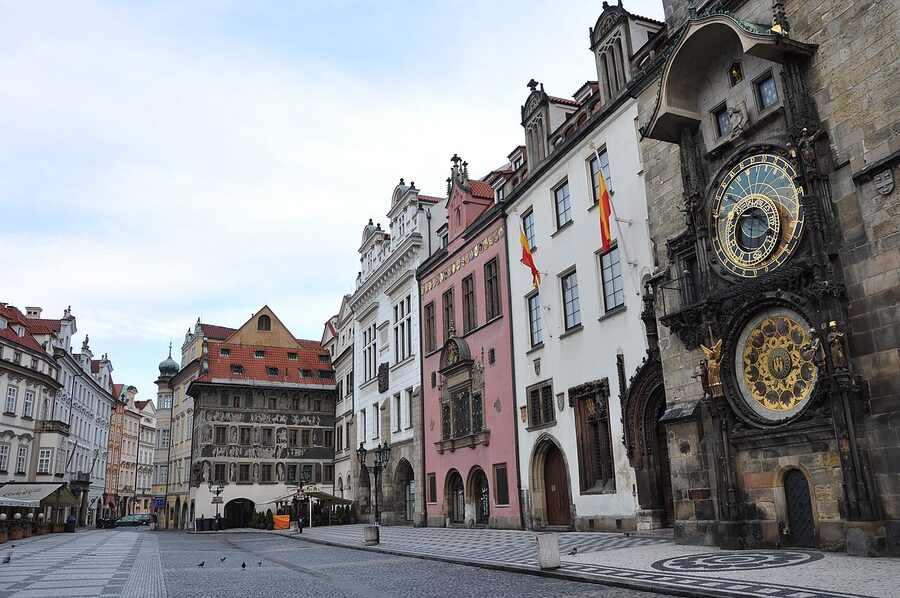
Josefov is wedged between the Vltava river and Old Town Square. The whole district is maybe five blocks across. From the Astronomical Clock to the Spanish Synagogue is a six-minute walk. That tightness is why the cemetery had to grow upwards instead of outwards.
Six synagogues survive: the Old-New, Maisel, Pinkas, Klausen, Spanish, and the Jerusalem Synagogue (which is technically outside Josefov, on Jeruzalémská street). Four of those plus the cemetery and the Ceremonial Hall sit inside a five-minute walk of each other. The Jerusalem one is fifteen minutes east, near the main train station.
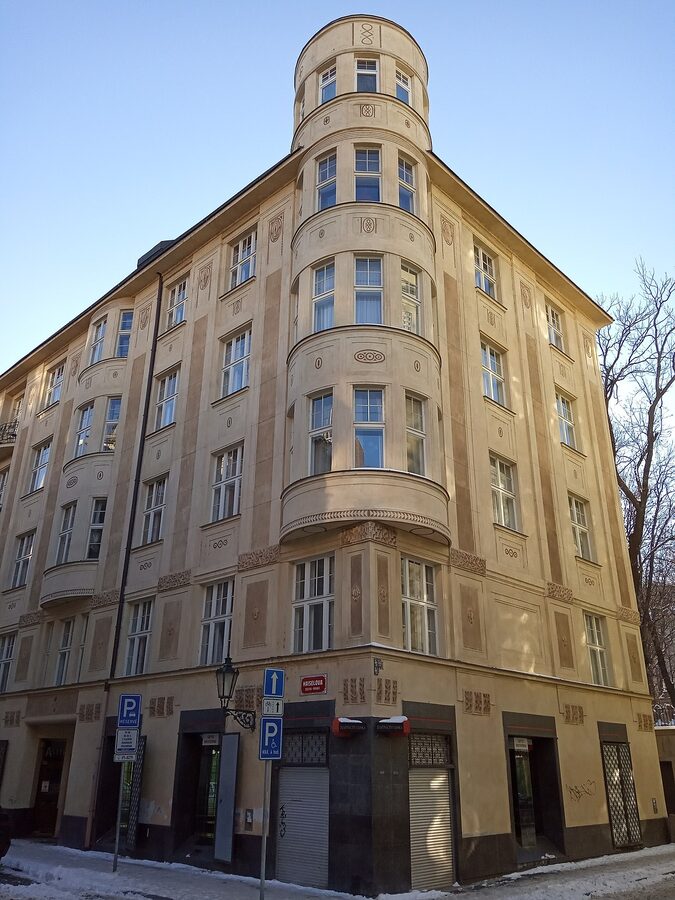
The Quarter you walk through today isn’t medieval. Most of it was demolished and rebuilt in the 1890s during a “sanitation” project that flattened the original ghetto streets. The synagogues and the cemetery survived because they were religious buildings or burial ground. Almost everything between them is late-19th-century apartment blocks dressed up to look older.
How the Combined Ticket Works
The Jewish Museum in Prague runs five of the six synagogues plus the cemetery as one bundled visit. The combined adult ticket is CZK 500 (about $22), with a student/child rate around CZK 370. It covers Maisel, Pinkas, Klausen, Spanish, and the Old-New Synagogue, plus the Old Jewish Cemetery, the Ceremonial Hall, and the Robert Guttmann Gallery.
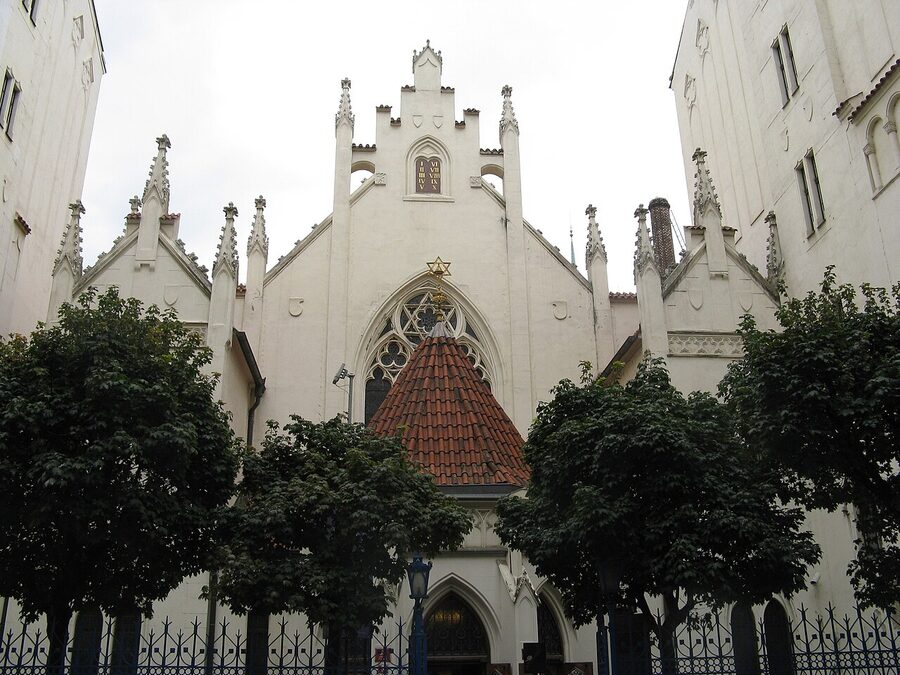
The Old-New Synagogue is the awkward one. It’s the oldest active synagogue in Europe (built around 1270, in continuous use ever since), and it’s not actually run by the museum. You can buy a Jewish Quarter ticket that excludes the Old-New for about CZK 350, or pay extra to add it. Most people get the full combined ticket. Skipping the Old-New means missing the building that the entire Quarter is arranged around.
The Jerusalem Synagogue is separate again. It’s CZK 150 on its own and worth the walk if Moorish-Art Nouveau interiors are your thing. If you only have a few hours, skip it and use the time inside Pinkas instead.
Opening hours: 9 a.m. to 6 p.m. April through October, 9 a.m. to 4:30 p.m. November through March. Closed Saturdays and on Jewish holidays, which catches a lot of visitors out. Check the calendar before booking. Yom Kippur, Passover, and Rosh Hashanah all close the Quarter for at least a day.
The Surprising Thing About the Old Jewish Cemetery
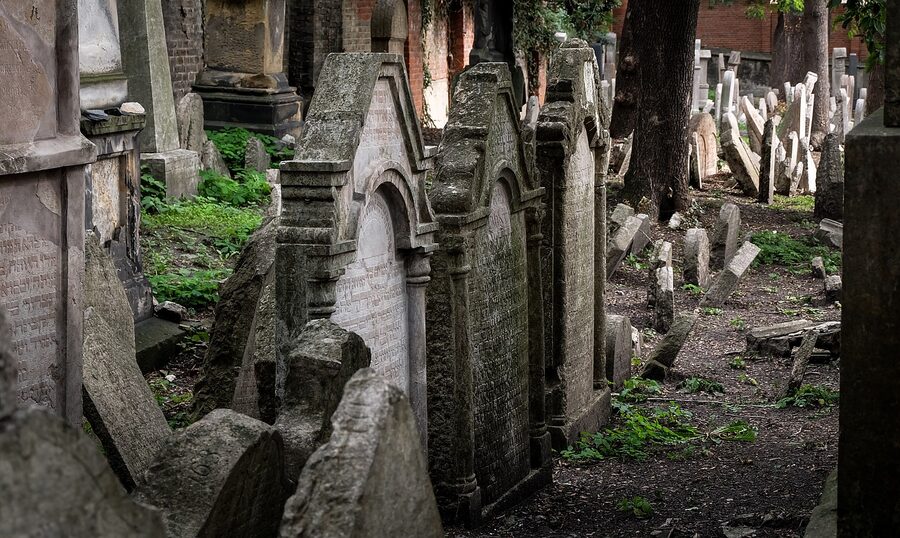
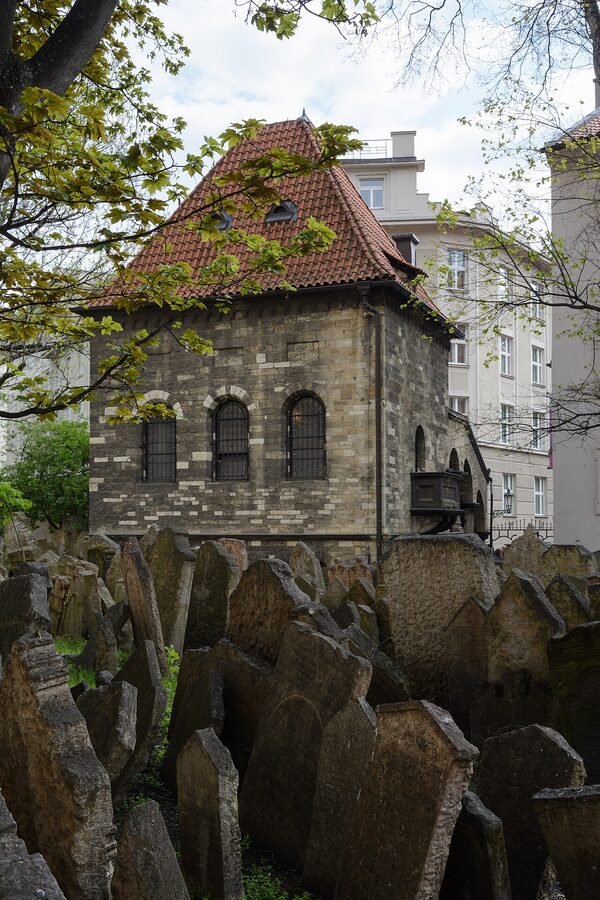
The cemetery was in active use from 1439 to 1787. For most of that period, the city would not let the Jewish community buy more land. Jewish religious law also forbids exhuming the dead. The compromise was vertical: a layer of earth was added on top, and the next generation was buried above the previous one. In some sections of the cemetery, archaeological surveys have counted twelve burial layers stacked on each other.
That’s why the ground level inside the cemetery is noticeably higher than the streets around it. You walk in and the path is at your ankles, then your shins, then up to your knees as you cross the older sections. Once you understand what you’re standing on, the strangeness of the place sharpens.
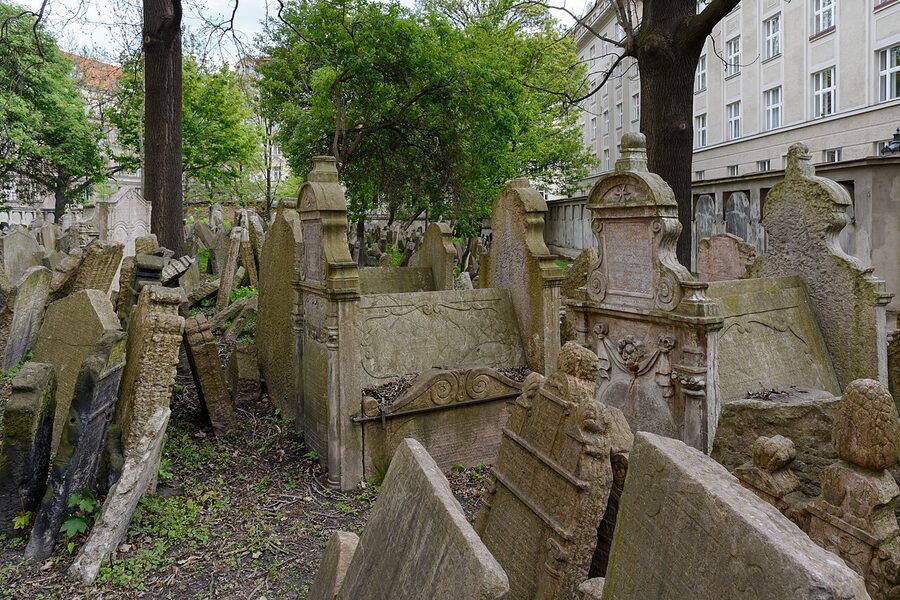
The most-visited grave belongs to Rabbi Judah Loew ben Bezalel, the 16th-century Maharal of Prague. He’s the rabbi at the centre of the golem legend: the clay figure he is said to have created and brought to life to protect the Jewish community. The grave is marked by a tombstone with a dragon carved on it, near the centre of the cemetery. People wedge handwritten wishes into the cracks of the wall behind it. The custom comes straight out of the legend, where notes were placed in the golem’s mouth to wake it.
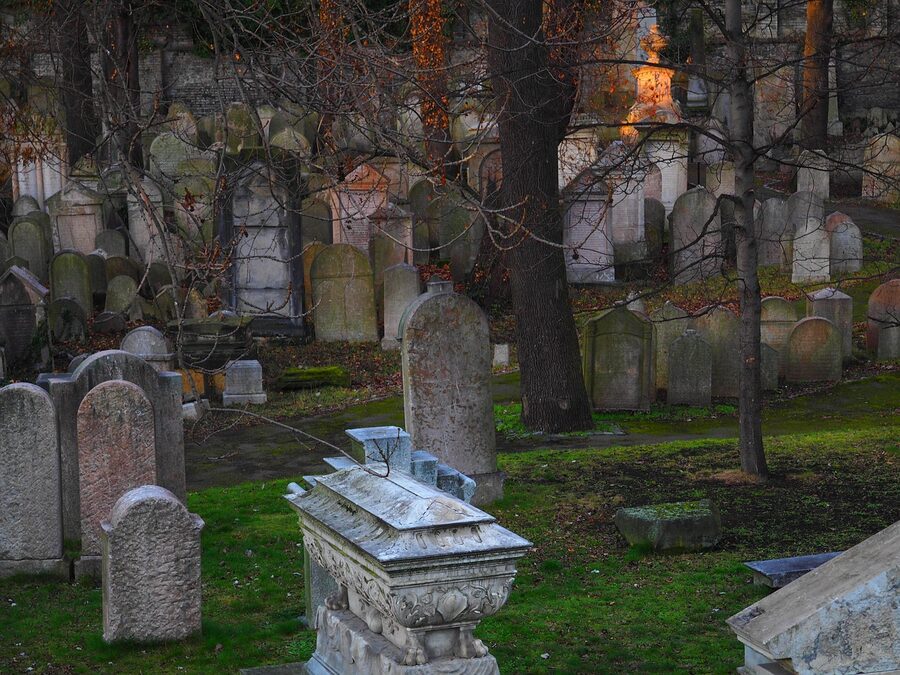
You enter the cemetery through the Pinkas Synagogue and exit past the Ceremonial Hall. There’s no other way around. Plan on at least twenty minutes inside, and don’t treat it as a photo backdrop. It’s still consecrated ground.
Pinkas Synagogue: The Memorial Wall
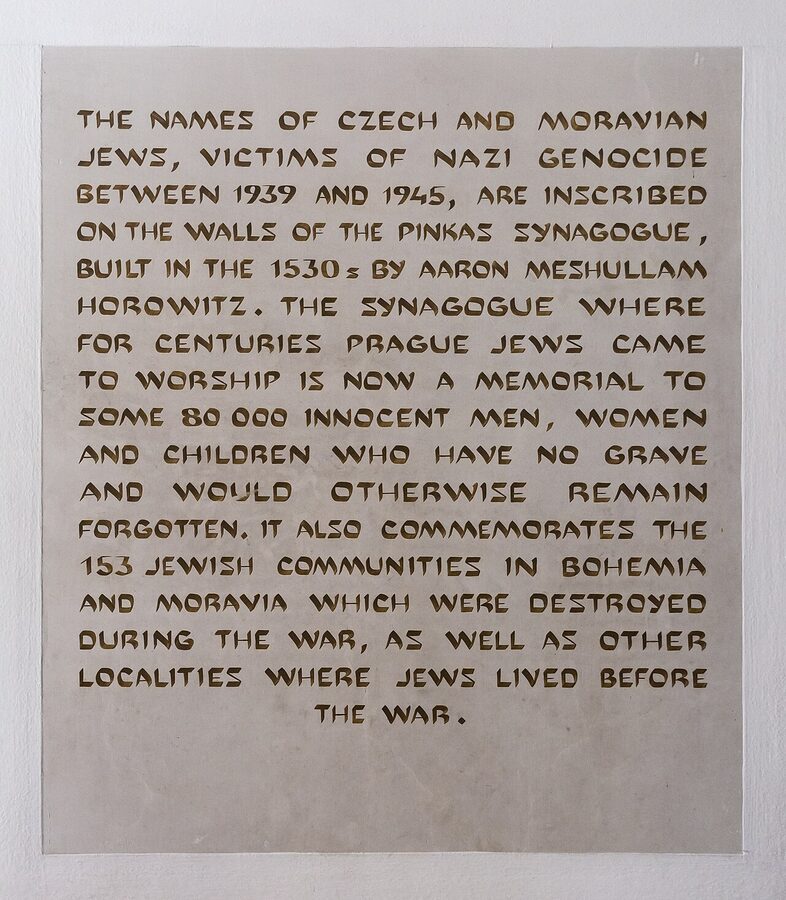
Pinkas is the second-oldest synagogue in the Quarter (1535), and since 1960 it has functioned as Czechoslovakia’s national Holocaust memorial. The interior walls are inscribed, by hand, with the names, dates of birth, and dates of disappearance of around 78,000 Czech Jews murdered in the Holocaust. Beside each name is the camp they were sent to: Terezín, Auschwitz, Treblinka, Sachsenhausen, Dachau.
The names go from floor to ceiling, room after room. There is no museum framing. You walk in and you’re standing inside it. The first time I went, I was inside for a full hour without realising. It’s the most affecting room in Prague, and I would put it ahead of every other Holocaust memorial I’ve visited in Central Europe.
Upstairs are drawings made by Jewish children held at the Terezín ghetto before they were sent east. Most of them did not survive. The drawings are dated and signed in the children’s own handwriting. Allow time for the upstairs gallery. People rush past it because the ground floor takes the emotional hit, but the upstairs is where the loss becomes specific.
The Spanish Synagogue Will Surprise You
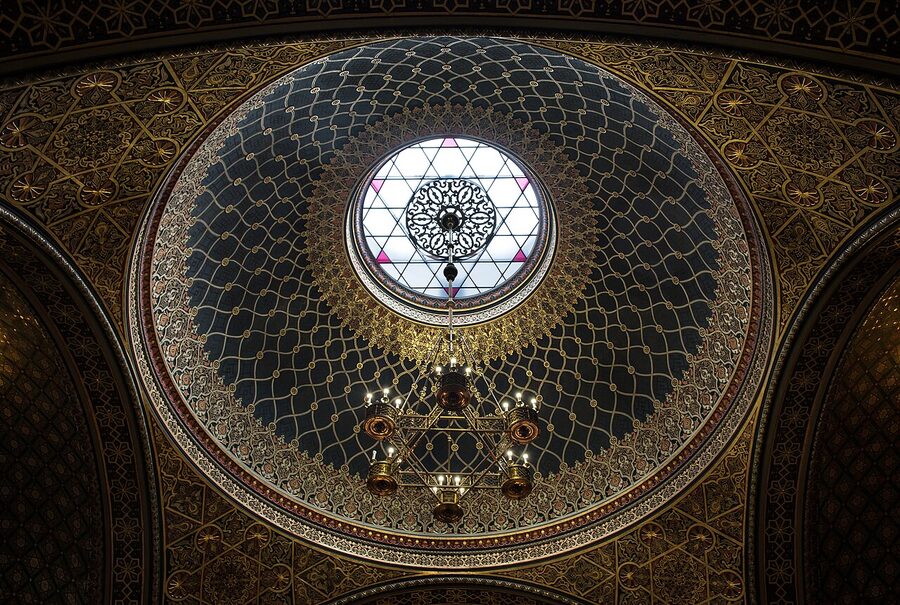
If Pinkas is the emotional weight of the visit, the Spanish Synagogue is the visual one. It was built in 1868 in a Moorish revival style that owes more to the Alhambra in Granada than anything Czech. Every interior surface is covered in arabesque patterns, gold leaf, geometric stucco work, and stained glass. It is by some distance the most ornate building in Prague that isn’t a Catholic cathedral.
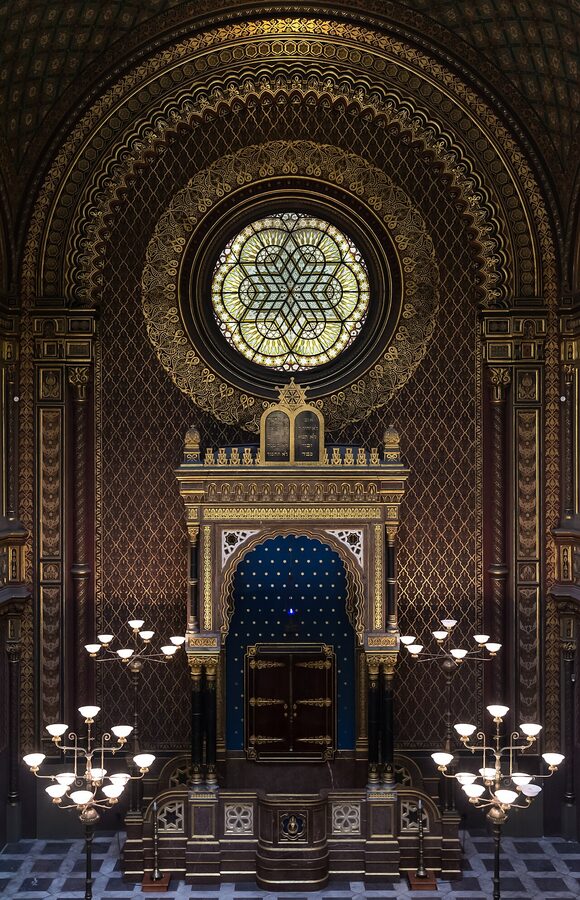
The “Spanish” name is a stylistic reference, not a community one. The building stands on the site of the oldest Jewish house of worship in Prague, an early-medieval structure called the Old Shul. The current building was designed by Vojtěch Ignác Ullmann and Josef Niklas. Inside it now houses an exhibition on Jews in the Bohemian and Moravian lands from emancipation to the present, plus a small section on the Jewish community of Shanghai (where Czech Jews fled in the 1930s).
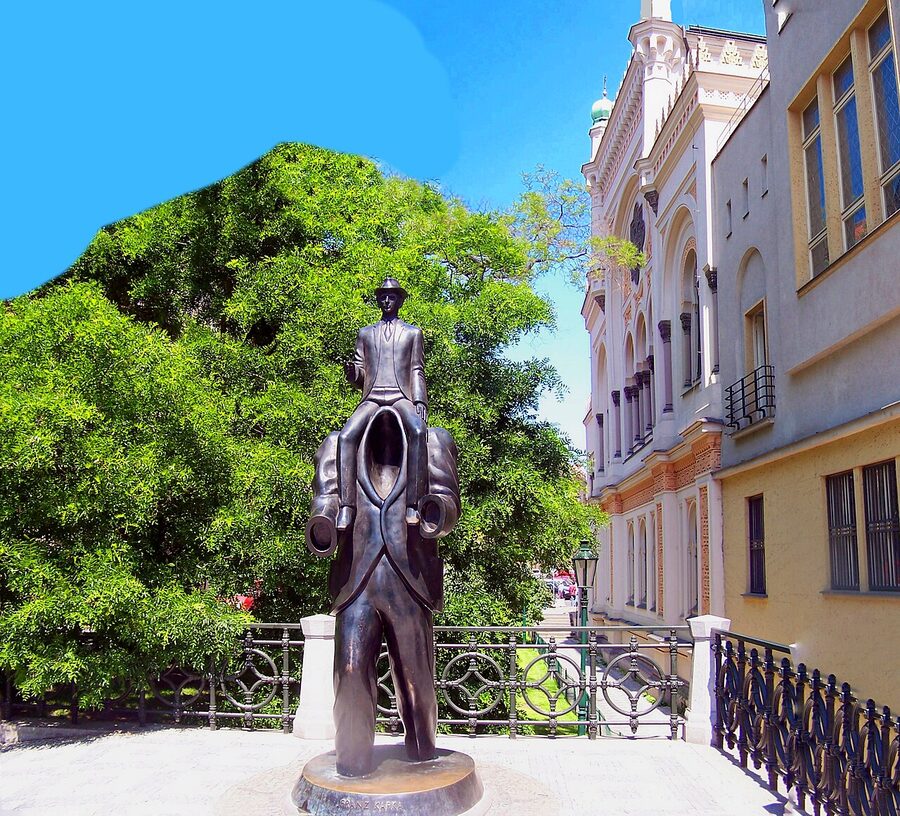
Out front is the Franz Kafka Monument, a bronze figure of Kafka riding the shoulders of an empty headless suit. It’s a four-metre statue by Jaroslav Róna, inspired by Kafka’s short story Description of a Struggle. Stand here for two minutes before going in. The contrast between the suited Kafka outside and the gilded interior inside is half the experience.
The Old-New Synagogue: 750 Years and Counting
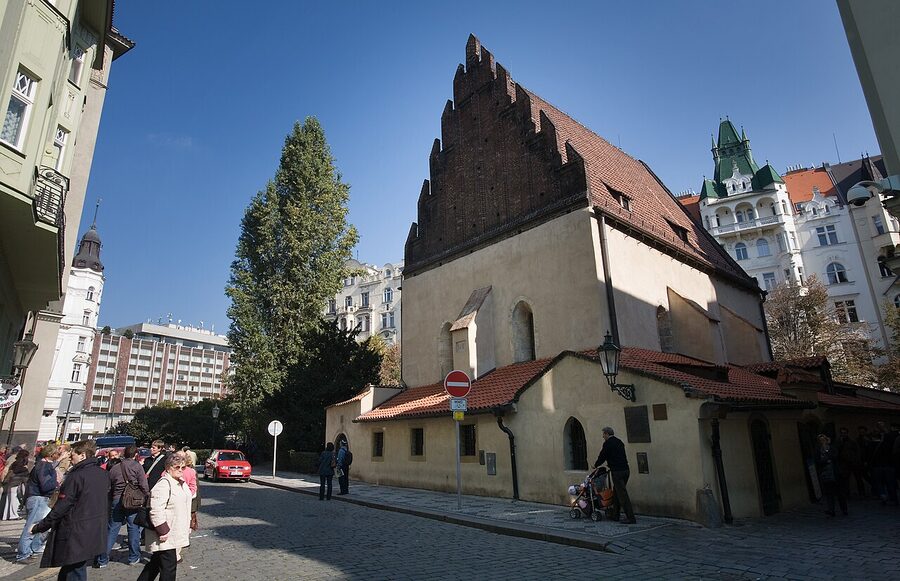
Built around 1270, the Old-New Synagogue has been in continuous use as a place of worship for over 750 years. That’s longer than any other synagogue in Europe. Longer than Westminster Abbey has been a Westminster Abbey. It survived the 1389 pogrom, three centuries of expulsions, the Habsburg ghetto laws, the 1890s demolitions, and the Nazi occupation.
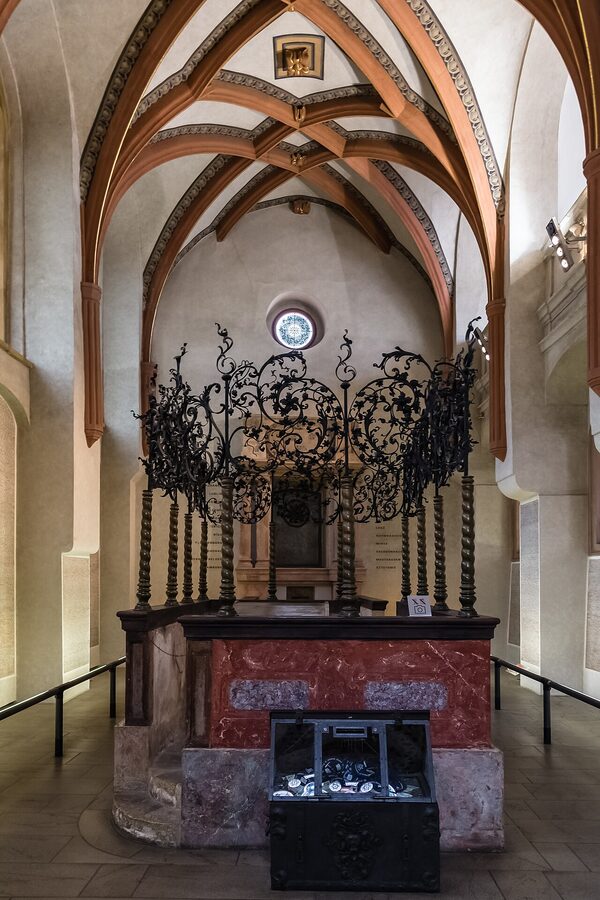
The interior is austere on purpose. Two naves, twelve narrow Gothic windows (one for each tribe of Israel), heavy stone walls, a raised bimah surrounded by an iron grille. There is no painted ornament. The whole building is about light and stone and the absence of decoration. After the maximalism of the Spanish Synagogue, it feels almost like a different religion.
Local legend has it that Rabbi Loew’s golem, when no longer needed, was stored in the attic. The attic is closed to the public. I’ve heard the building is structurally unsafe up there, which is the prosaic version of the same story.
The Klausen and the Ceremonial Hall
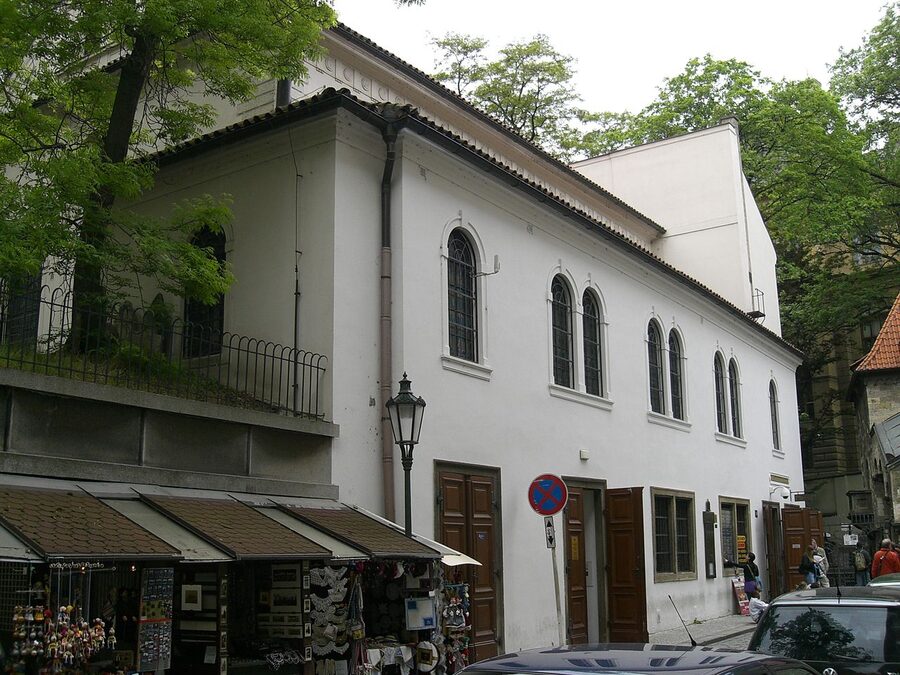
The Klausen is the largest synagogue in Josefov, built in 1694 in a Baroque style. Its name comes from the three smaller buildings (“Klausen”) that originally stood on the site, including a Talmudic school where Rabbi Loew once taught. Inside today, the exhibition covers Jewish life cycles, the Sabbath, holidays, and Bohemian Ashkenazi traditions. There are Torah pointers (small ornamental hands used to track the text without touching the scroll), Hanukkah lamps, and ceremonial objects from communities across Bohemia and Moravia.
Next to the Klausen, between the cemetery and Pinkas, sits the Ceremonial Hall. It looks medieval but was built in 1908 in a neo-Romanesque style. The original building on the site served as the mortuary and ritual washing space for Prague’s Jewish Burial Society. Inside today, the exhibition covers Jewish funerary rites and burial traditions, with fifteen paintings showing the customs in detail. It’s a small space and only takes ten or fifteen minutes.
Should You Book a Guide or Go on Your Own
The combined ticket is well-organised and has clear signage in English at every stop. You can do the whole circuit on your own in three to four hours. If you’ve read a bit of Czech-Jewish history beforehand, that’s plenty.
The case for a guide is harder to argue against than I expected. The first time I did the Quarter on my own, I missed half of what was in front of me. I didn’t know which gravestone was Rabbi Loew’s. I didn’t know the Pinkas memorial walls had been painted over by Communist authorities and then repainted in the 1990s. I didn’t know that the apartment buildings between the synagogues sit on top of the demolished medieval streets. A good guide hands you all of that in two hours, and you walk away seeing the place differently.
The other practical case is queue management. The Pinkas Synagogue and the cemetery both bottleneck in summer afternoons. Tour groups are routed through faster than walk-ins, and you start at a less crowded entry point.
If you only book one Prague tour and you’ve already locked in a Prague Castle visit for elsewhere in your trip, the Jewish Quarter is the second one I’d add. It’s the Prague experience that’s hardest to do justice to without context.
The Three Walking Tours Worth Your Money
These are the three tours that consistently fill up months ahead. They cover the full range of what the Quarter offers, at three price points and with different scopes. Pick based on what you want most: focused Josefov, a combo with Old Town, or a German-speaking guide.
1. Prague: Jewish Quarter Walking Tour With Admission Tickets: $76
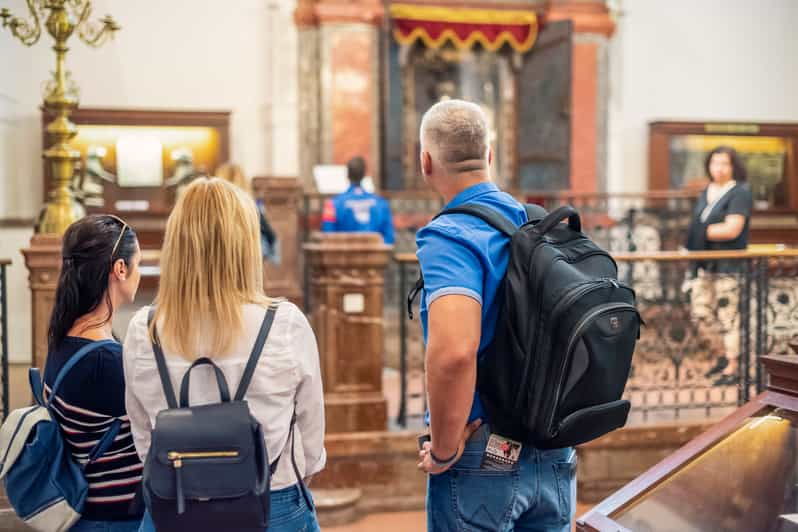
This is the focused Josefov tour, and the only one of the three that includes the museum admission. You start near the GET PRAGUE GUIDE office, work through the Maisel, Pinkas, and Old-New synagogues with the cemetery in between, and finish at the Spanish Synagogue. Two and a half hours of walking with a guide who knows the material. Our full review goes into the per-stop pacing and what the ticket-included version saves you in time.
2. Prague: Old Town and Jewish Quarter Guided Walking Tour: $22
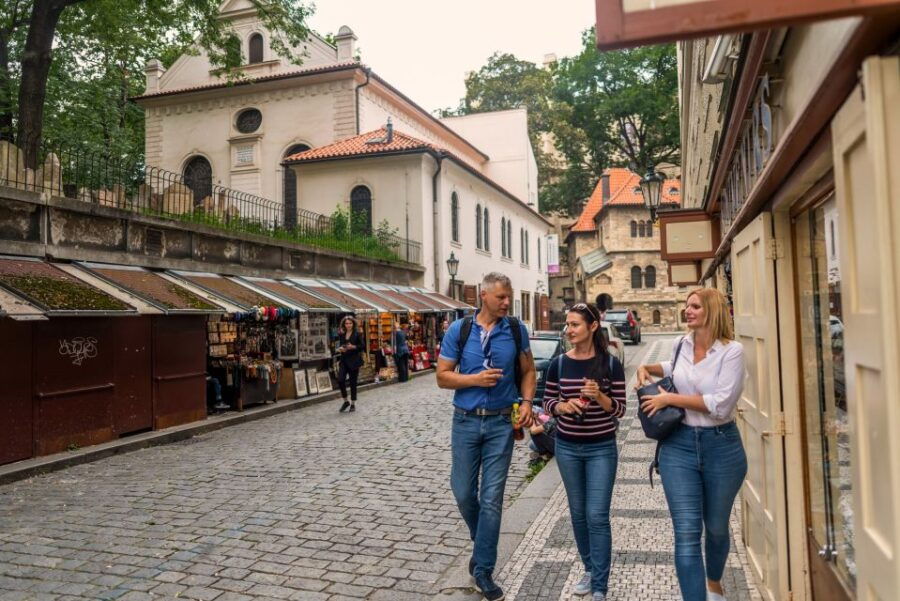
A 90-minute combo that walks Old Town Square, the Astronomical Clock area, and the streets of Josefov in one loop. This is the right pick if you want context for the whole city, not just Josefov. Our full review notes that the price excludes synagogue admission, so you’ll add CZK 500 if you want to go inside.
3. Prague: Old Town and Jewish Quarter Guided Tour in German: $29
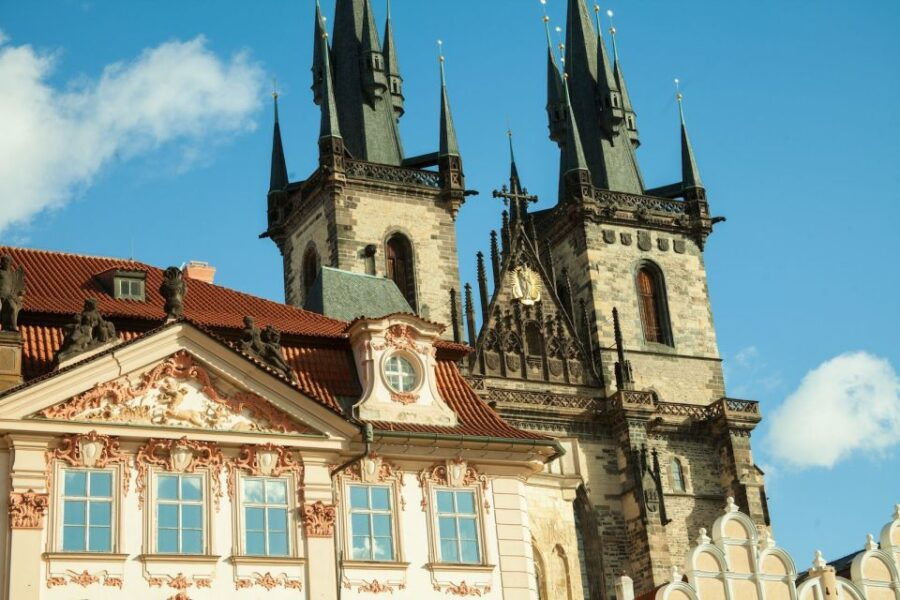
The same Old Town plus Josefov route, run in German for German-speaking visitors. Two hours fifteen, slightly longer than the English combo. Our full review covers what the German edition does differently and why it tends to attract older history-minded travellers from Bavaria and Austria. Like the English combo, synagogue tickets are not included.
How to Pick Between the Three
If you want pure Josefov and you want all the synagogue admissions handled in one click, book the first one. The $76 looks high until you do the maths. Strip out the CZK 500 ticket (about $22) and you’re paying $54 for two and a half hours of expert guiding through five synagogues and a cemetery. That’s the same per-hour rate as the cheaper combo.
If your time in Prague is short and you want one tour to cover both Old Town and Josefov, book the second. The $22 price is genuinely the floor for guided walking tours in this part of Europe. The trade-off is the synagogue interiors aren’t included, so you’re walking past them rather than into them. Plenty of visitors are happy with that.
If you’re a German speaker, book the third. The pacing is slightly more relaxed than the English combo, and the guides skew older and more historically engaged. Mid-range price for what is in fact a slightly longer tour.
Practical Visiting Tips
Cover your shoulders and head. Men receive a paper kippah at each entrance and are expected to wear it inside. Women aren’t required to cover their heads in the synagogues, but bare shoulders are a no for everyone. Bring a light scarf if you’re visiting in summer.
Don’t take photos in Pinkas. The ground-floor memorial wall has a photography ban, and the upstairs Terezín gallery is uncomfortable to photograph for obvious reasons. The cemetery has been overdone on Instagram, which has tipped staff into actively asking visitors to put phones away. Read the room.
Plan around Saturdays and Jewish holidays. The whole Quarter is closed on Shabbat and on the major Jewish festivals. If your Prague trip includes a Saturday, do the Jewish Quarter on a different day and use Saturday for Prague Castle or the river instead.
Buy a ticket at Maisel, not the cemetery entrance. The Maisel ticket office has the shortest queue and you start your visit at one of the smaller, smaller-scale exhibitions. The cemetery entrance via Pinkas tends to back up between 11 a.m. and 2 p.m.
Skip the audio guide your first time. The exhibitions have decent English captions, and the audio adds a layer of detail that’s useful only if you already have the basics. If you’re going on one of the guided tours, you obviously don’t need it. The tour-included ticket version of the first walking tour is the cleanest path.
Allow half a day, minimum. Most online guides say two hours. Two hours gets you through the buildings if you don’t read anything and don’t pause in the cemetery. Half a day gets you through them properly. A guided tour is two and a half hours, after which you can return to the synagogues you most want to spend more time in (your ticket is valid all day).
What to Pair the Visit With
Josefov is two minutes’ walk from the Old Town Square, so it pairs naturally with anything in Old Town walking. Most visitors do the Quarter in the morning, lunch in Old Town, then the Astronomical Clock and the Charles Bridge in the afternoon. If you’ve already booked one of the combo tours, half of that itinerary is built in.
For an evening that contrasts the heaviness of the Pinkas wall, a Vltava river cruise works well. The boats leave from quays a five-minute walk from the Spanish Synagogue, and an hour on the water reframes the city after a heavy morning. If you want to keep the historical thread going, the medieval underground tour covers the same era as the Old-New Synagogue, just from below the modern street level. A Prague food tour the next day is the lighter counterweight Josefov calls for; sweet trdelnik and a hot mulled wine on Old Town Square close the loop on the heavy morning. And if the trip is more than two days, our Prague Pilsner experience guide covers the brewing-tradition angle that complements the cultural-tradition focus of Josefov.
Travellers building a longer Prague-and-beyond itinerary often pair Josefov with Berlin’s Jewish Museum. The two tell complementary stories: Prague is what survived, Berlin is the architectural reckoning with what didn’t. If you’re heading north out of Prague, that pairing makes a strong four or five-day arc. Sachsenhausen from Berlin and the Pinkas memorial together are unsparing, but they belong on the same trip if you’re trying to understand the period.
Where to Read More
If you came to Prague mainly for the dark history threads, the medieval underground tour picks up the centuries before the synagogues were built, and the ghost walking tour covers the legends side, including the golem. For travellers stitching together a wider Central European history trip, the Dresden Frauenkirche guide and the Munich Third Reich walking tour sit on the same arc as Pinkas. They are different countries but the same century, and visiting them in sequence makes the period more legible than any of them does alone. The Berlin Third Reich tour is the heaviest of the lot and best done after, not before, you’ve sat in the Pinkas memorial.