
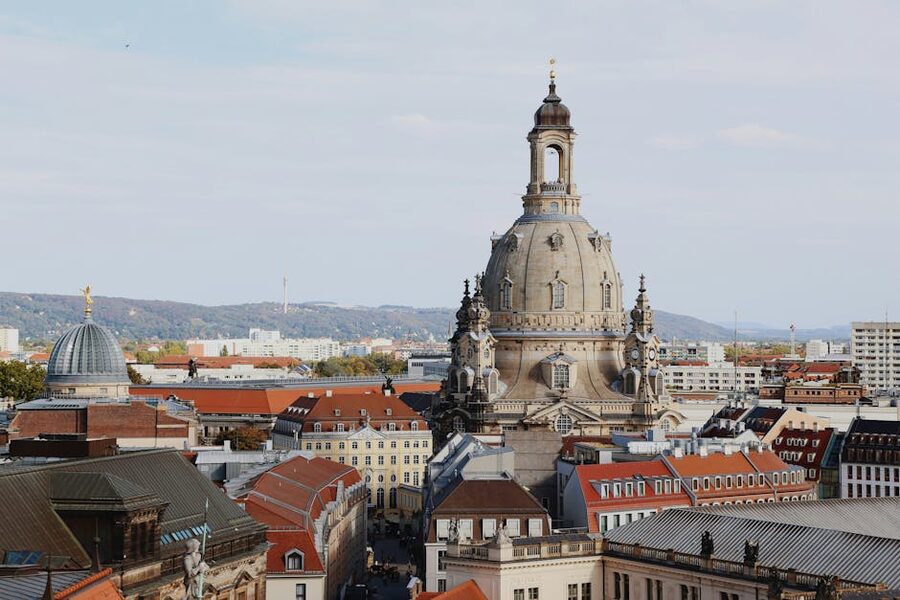
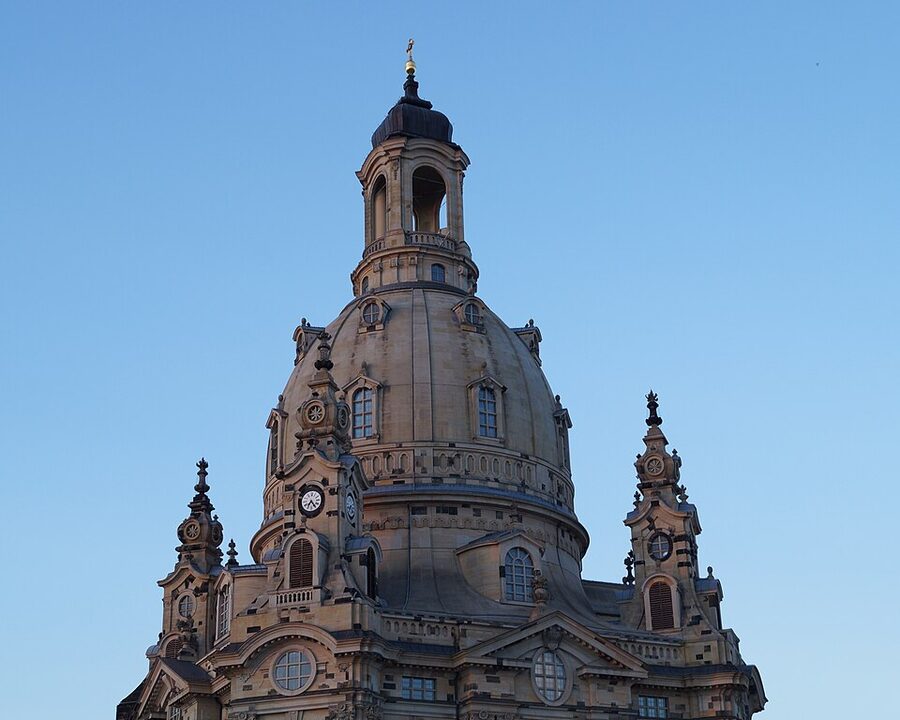
How does a church that sat as a pile of rubble for nearly five decades become one of the most-photographed buildings in Germany? The Dresden Frauenkirche is the answer, and it is the strangest, most moving sight in the Altstadt. The bell-shaped dome you see today was rebuilt from over 8,400 numbered fragments salvaged from the 1945 bombing, and visiting it is one of those rare travel moments where the building’s story matters as much as the architecture.
- In a Hurry?
- Do You Even Need A Ticket?
- The Three Tours Worth Booking
- 1. Frauenkirche Gallery Guided Tour:
- 2. Florence on the Elbe Historic Walking Tour:
- 3. Complete Walking Tour With Frauenkirche Visit:
- Climbing The Dome
- What You Are Actually Looking At Inside
- The Story That Makes The Building
- Where The Church Sits And How To Get There
- What To Pair It With
- When To Go
- Practical Things Worth Knowing
- One Last Thing
In a Hurry?
- Gallery Tour ($15): The most-booked Frauenkirche tour, gets you inside with a church guide. Check availability
- Florence on the Elbe Walking Tour ($15): Two hours, covers Frauenkirche plus Castle, Zwinger, Semperoper. Check availability
- Complete Walking Tour with Frauenkirche Visit ($16): Two hours and you actually go inside the church. Check availability
Do You Even Need A Ticket?
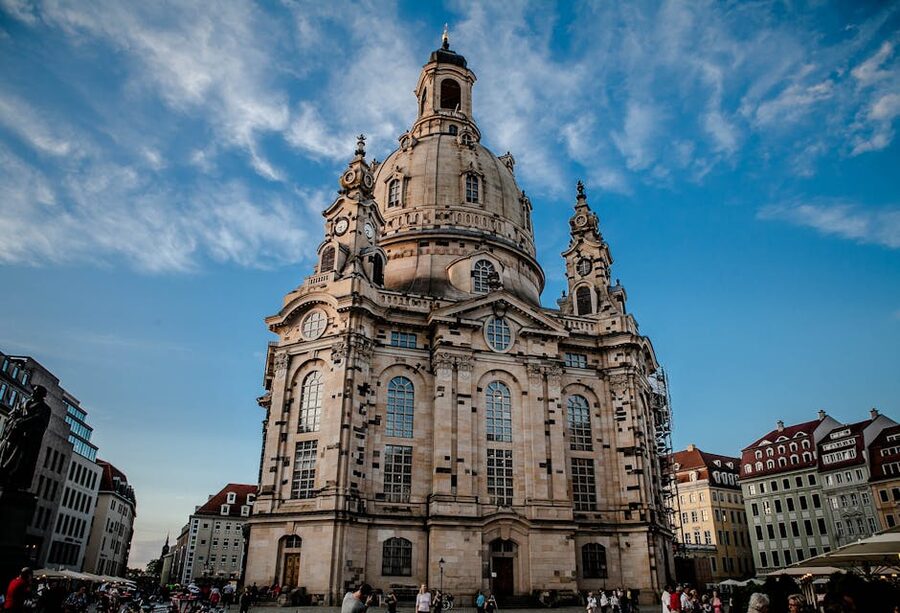
Here is the thing nobody tells you in advance. Walking into the Frauenkirche is free. The main church is open to anyone during visiting hours, and you do not need to book anything to sit in the nave and look up at the dome paintings.
The visiting hours are the catch. Most days the church opens for two windows: roughly 10:00 to 11:30 in the morning and 1:00 to 5:30 in the afternoon. Sundays are shorter, usually 12:30 to 4:30. The church closes mid-morning for prayer services and concert rehearsals, and it closes properly for evening events. If you turn up at noon expecting to walk in, the door will be locked. Check the official calendar before you make the trip.
Where you do need a ticket is the dome ascent and any of the guided gallery tours. Those are the two paid experiences worth thinking about, and I will get to both in a moment.
The Three Tours Worth Booking
Most visitors to Dresden combine the Frauenkirche with a wider Altstadt walk, because the church sits five minutes from the Castle, the Zwinger, and the Semperoper. The tours below all do that, but each one has a slightly different angle. I have ranked them by how many travellers have actually booked them, since that is the cleanest signal of which one consistently delivers.
1. Frauenkirche Gallery Guided Tour: $15
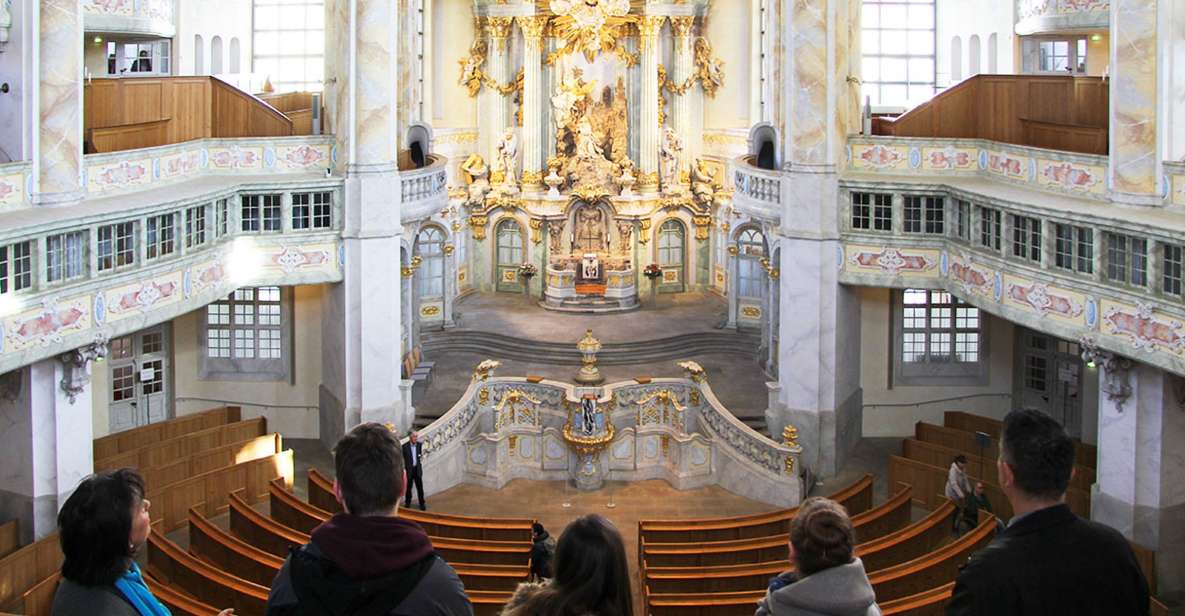
This is the single most popular Frauenkirche tour on the market and it is easy to see why. You get a one-hour walk through the church with a guide who works for the church itself, and the gallery access alone is worth the fifteen dollars. Our full review covers the schedule and what the gallery actually looks like compared to the floor.
2. Florence on the Elbe Historic Walking Tour: $15
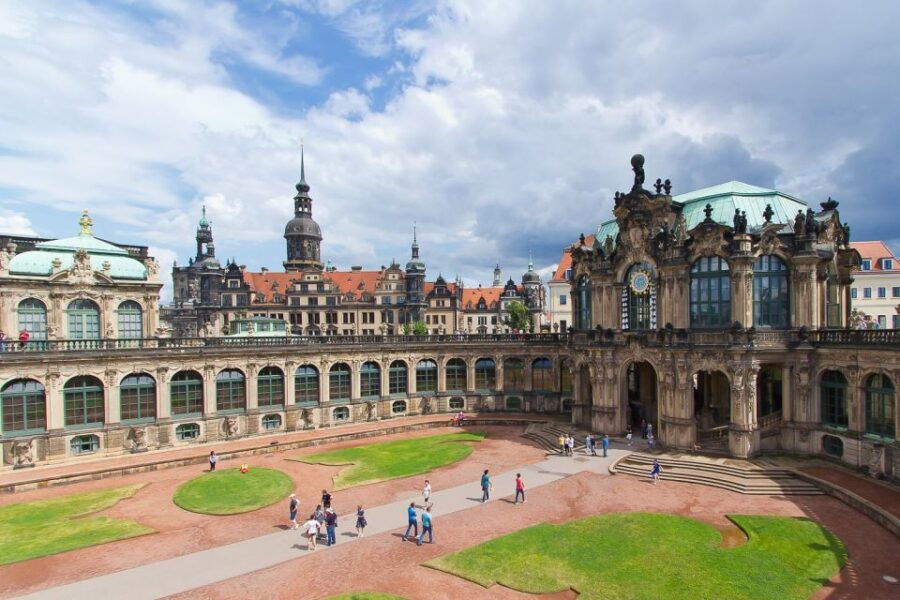
Two hours on foot following the path of Augustus the Strong, with the Frauenkirche, Castle, Zwinger, Semperoper, and Cathedral all woven in. Our take on this one is that it works best as your first half-day in Dresden, before you go inside any of the buildings on your own. The guide gives you the context that turns a stone facade into something you actually understand.
3. Complete Walking Tour With Frauenkirche Visit: $16

This one stitches together the Florence on the Elbe route with an interior visit to the Frauenkirche, and the headset audio is the detail that makes it work. The guide can keep talking while you crane your neck at the dome paintings, instead of you trying to whisper-shout under a 91-metre ceiling. Our review goes into more detail on what the headsets cover and where the tour ends.
Climbing The Dome
The dome ascent is the only paid part of a self-guided visit, and it is worth the climb. The viewing gallery sits at 67 metres and runs around the outside of the dome, so you get a 360-degree view of the Altstadt: Castle and Zwinger to the west, Elbe and the Brühl Terrace to the north, and the rebuilt Neumarkt right beneath you.
Tickets cost €10 for adults, €5 for children and seniors, and €22 for a family. You buy them at a separate entrance on the back of the church, on the northeast side, across the street from the Coselpalais. This catches plenty of visitors out. The main door does not sell ascent tickets and the staff at the front will just point you around the building.
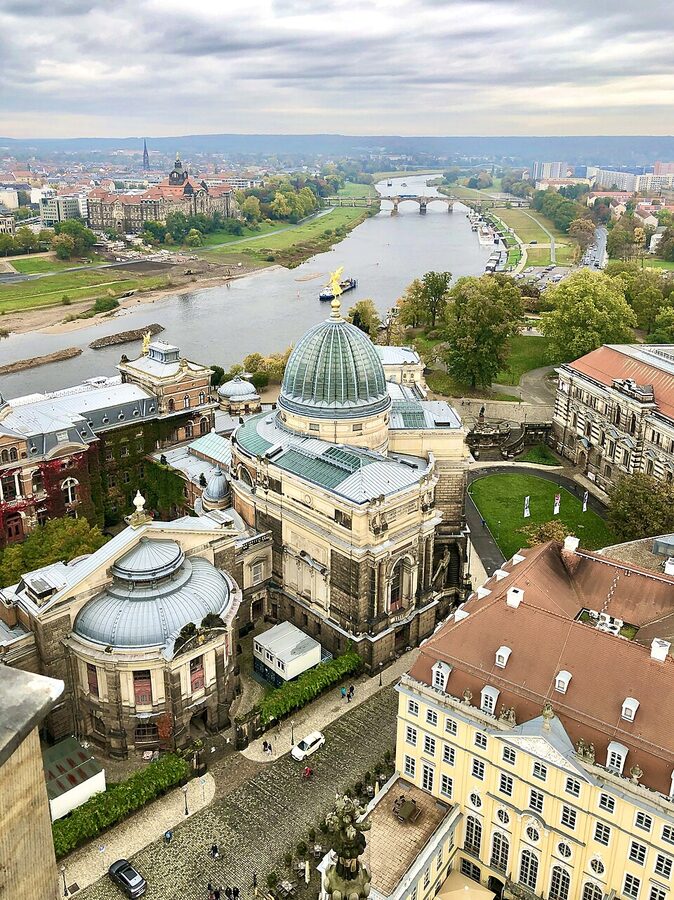 Photo by Oliver Kloss / Wikimedia Commons (CC BY-SA 4.0)
One quirk worth knowing: the gallery only opens when the weather cooperates and when the church is not in mid-service. If there is a storm warning or a major concert, the dome shuts. Check on the morning of your visit if the forecast looks rough.
What You Are Actually Looking At Inside
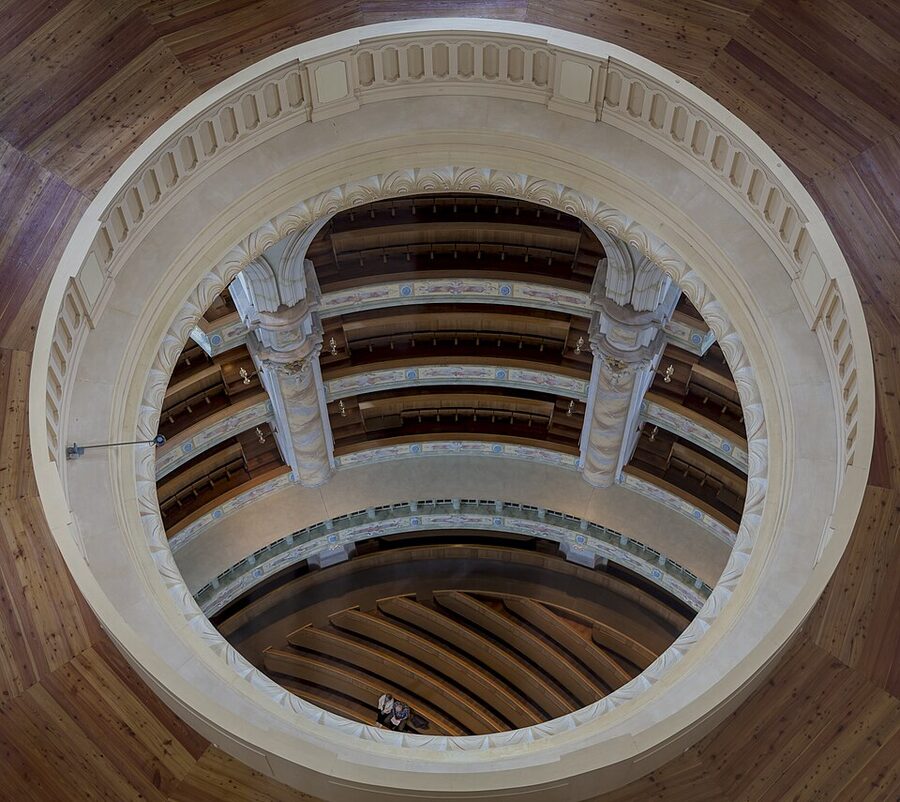 Photo by CEphoto, Uwe Aranas / Wikimedia Commons (CC BY-SA 3.0)
The Frauenkirche is a Protestant church, which matters for what you see. There is no nave-and-aisle layout like in a Catholic cathedral. The altar, the pulpit and the font are all visible from every seat, because the whole point of Protestant Baroque is that everyone in the congregation should be able to see the service from where they sit. The galleries that run around the inside are working seating, not decoration.
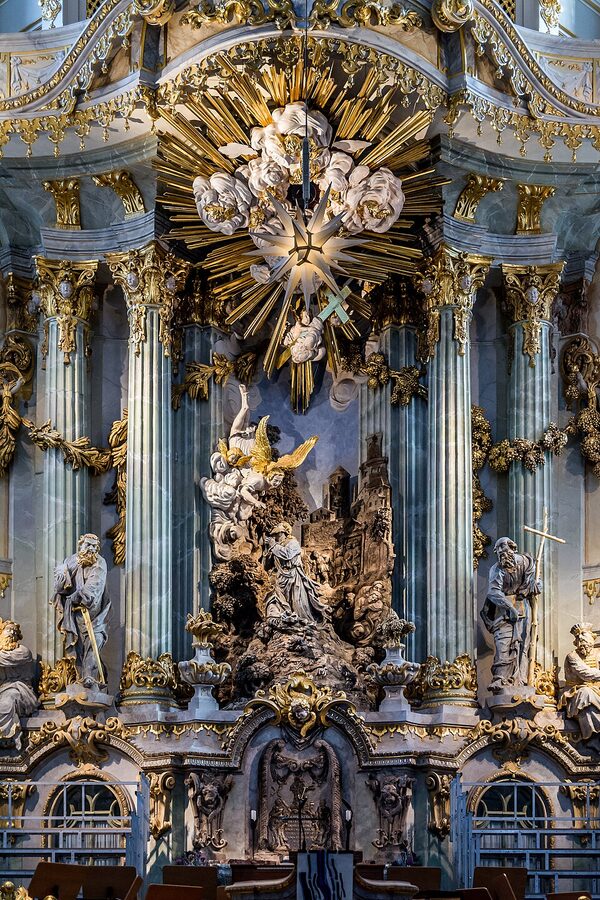 Photo by Raycer / Wikimedia Commons (CC BY-SA 4.0)
The altar is a piece you should spend more than thirty seconds on. It shows the moment Christ is captured at the Garden of Gethsemane while his disciples sleep, and most of the stone you are looking at is the actual 18th-century original, dug out of the rubble pile and re-set. The gilded sections are reconstructions because the gold did not survive the fire.
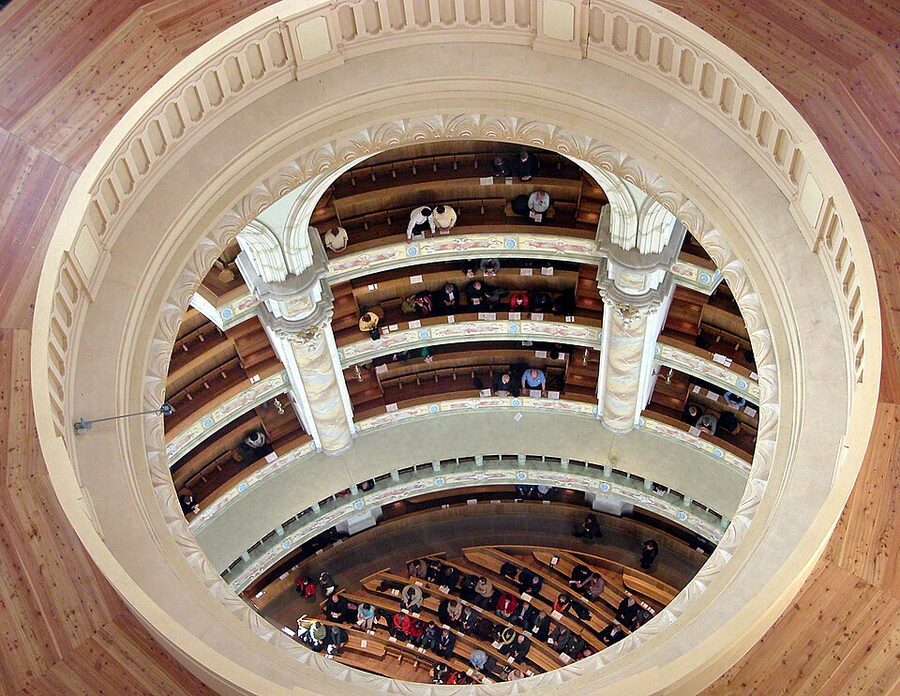 Photo by Joerg Blobelt / Wikimedia Commons (CC BY-SA 4.0)
Look up. The dome paintings are not the originals. The Grone paintings from the 18th century burned with the rest of the church in 1945 and what you see today is by Christoph Wetzel, finished in 2005. The four big figures are the Evangelists, paired with the four virtues. If you take the gallery tour you get a much closer view of these from the upper level, which is the main reason the gallery ticket is worth it.
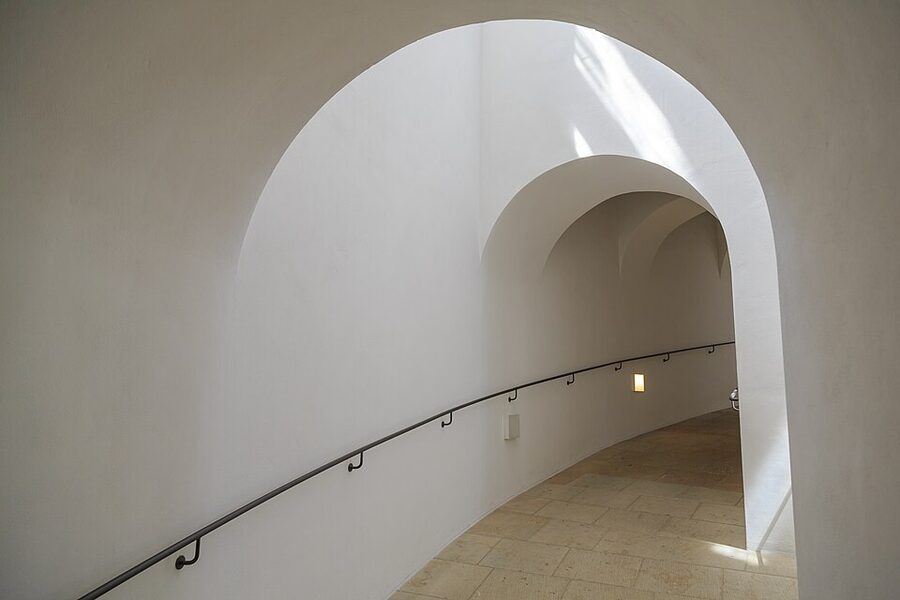 Photo by CEphoto, Uwe Aranas / Wikimedia Commons (CC BY-SA 3.0)
Down in the lower church, or crypt, there is a contemporary altar by Anish Kapoor. This space is reserved for private prayer and you are asked not to take photos. It is one of the few moments in the building where the modern reconstruction takes precedence over the historical recreation, and it is worth the brief detour even if you are not religious.
The Story That Makes The Building
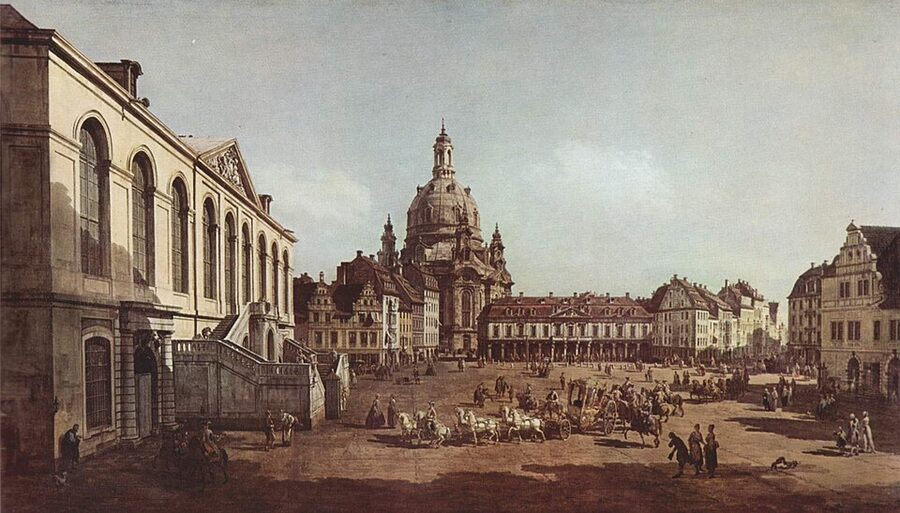
The original Frauenkirche was built between 1726 and 1743 by George Bähr, who died before his masterpiece was finished. Bach gave a concert on the Silbermann organ in 1736, before the church was even fully completed, which is the kind of detail that gives the building its weight. By the mid-18th century the dome had become the defining shape of the Dresden skyline, and Bellotto immortalised it in paintings that ended up doing the rebuilders a favour two centuries later.
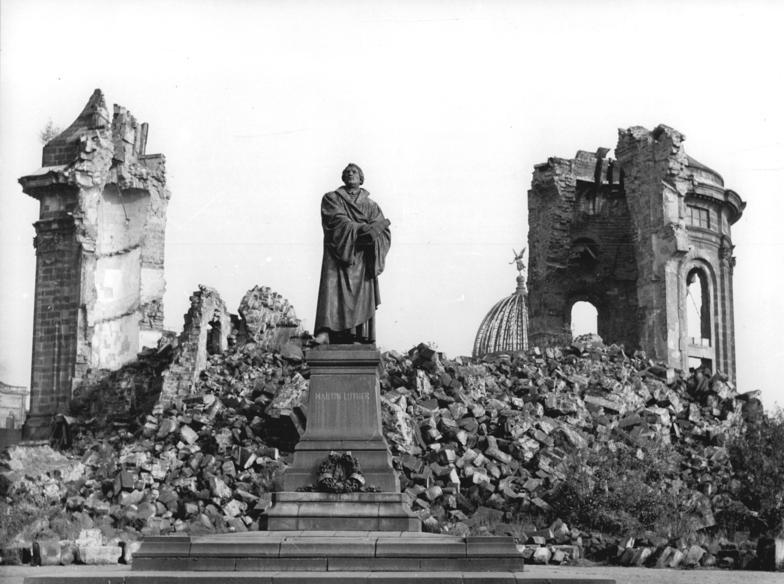 Photo by Loewe Giso / Bundesarchiv / Wikimedia Commons (CC BY-SA 3.0 de)
The bombing of Dresden on the 13th of February 1945 destroyed most of the city. The Frauenkirche shell actually survived the bombs themselves but collapsed two days later when the sandstone, weakened by fire, failed under the dome’s weight. The rubble pile became one of the most photographed war memorials in Europe and stayed where it was until 1993. The reconstruction took twelve years and used over 8,400 numbered fragments from the original church, fitted back into the new structure where they belonged.
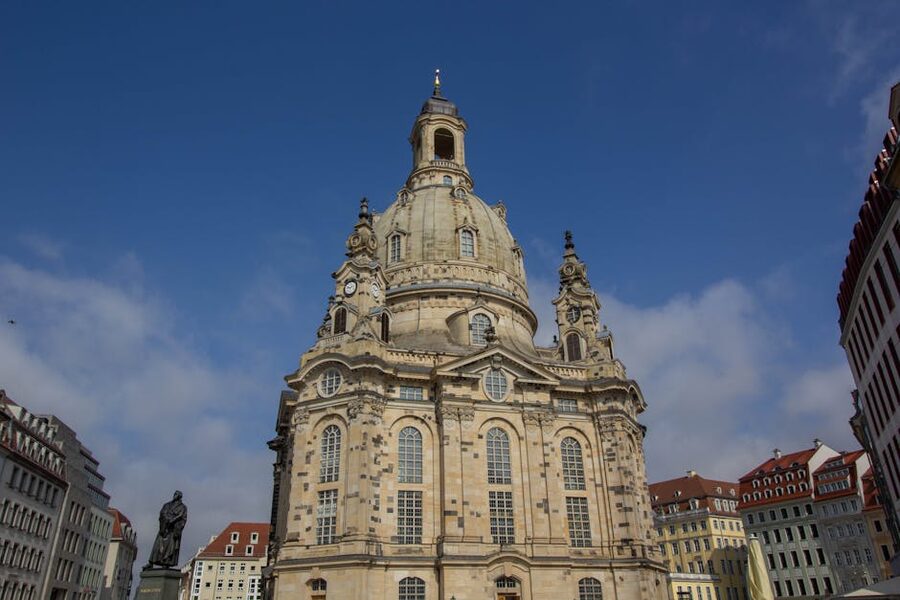
This is the detail that gets me every time. Walk around the outside of the church and the surface is mottled, dark patches against pale gold sandstone. Every dark stone is an original, soot-stained, that was hauled out of the rubble and put back roughly where the church’s pre-bombing photographs showed it had stood. The whole exterior is a three-dimensional jigsaw of the church as it stood before the war.
The cross at the very top of the dome was made by a Coventry silversmith whose father had been one of the British bomber pilots who flew over Dresden in 1945. It was donated by Coventry, the English city whose own cathedral had been destroyed by German bombing in 1940. That is the kind of symbolism that puts a lump in your throat if you let it.
Where The Church Sits And How To Get There
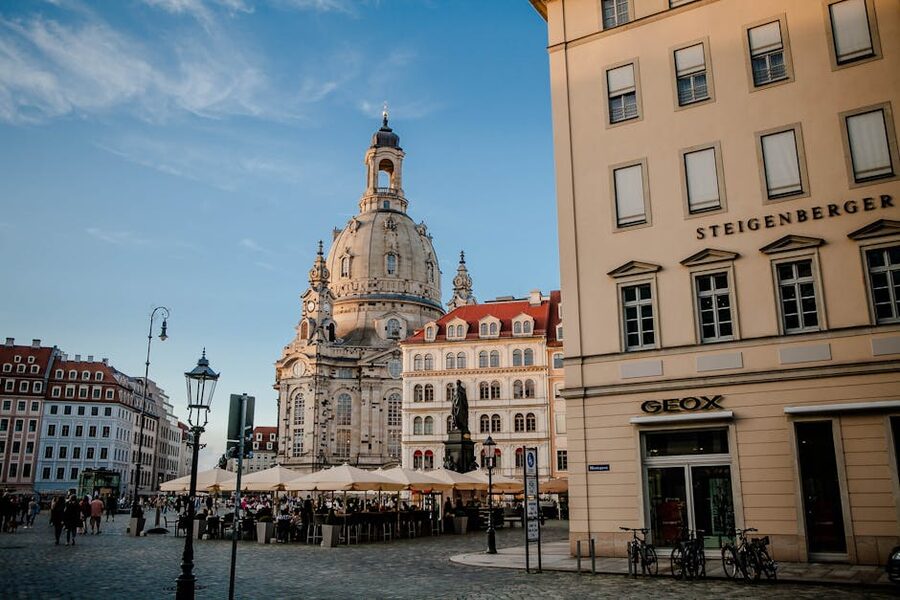
The Frauenkirche is on the Neumarkt, the main square in the Altstadt. It is a five-minute walk from the Elbe, the Castle, the Zwinger, the Semperoper, and the Brühl Terrace. If you are doing Dresden in a day, the church will sit naturally in the middle of your route, not at one end.
The closest tram stop is Altmarkt, three minutes’ walk from Neumarkt, served by tram lines 1, 2 and 4. From Dresden Hauptbahnhof there is no direct tram to Altmarkt, but you can take the 3, 7 or 12 to Pirnaischer Platz and walk the last 300 metres. If you are coming from anywhere central, walking is usually faster than figuring out the tram routing.
If you are arriving by car, do not try to park near the Neumarkt. The Altstadt is mostly pedestrianised and the parking garages near it are expensive. Park further out, in the Neustadt across the river, and walk over the Augustus Bridge.
What To Pair It With
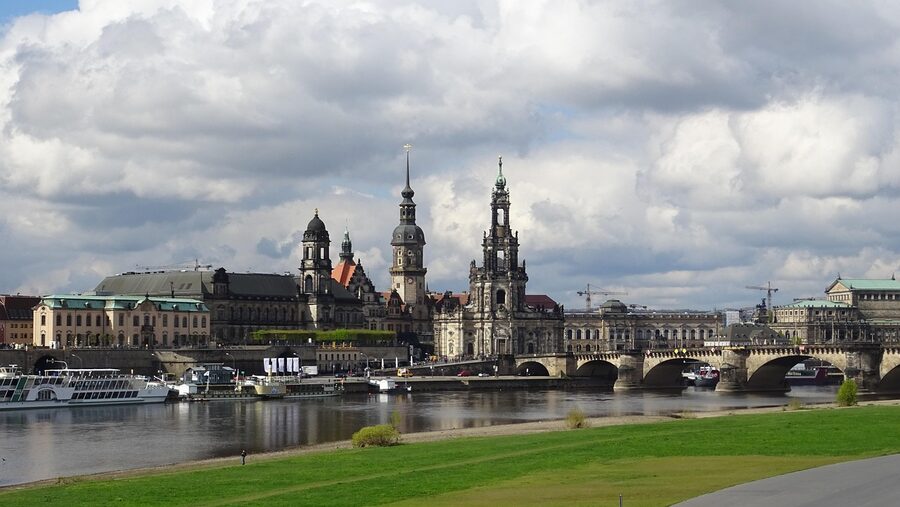
The Frauenkirche is a forty-minute visit if you are just going inside the main church for free. With the dome ascent it is closer to ninety minutes. Either way you will have time for more in the same trip. The natural pairings are:
The Brühl Terrace is the easiest. Walk out the back of the church and you are on it within two minutes. From the terrace you get the postcard view of the Elbe, plus a good angle on the Catholic Hofkirche. It costs nothing.
The Zwinger Palace and Old Masters Gallery are five minutes away in the other direction, past the Castle. The Zwinger is the Baroque counterpart to the Frauenkirche on the city’s skyline, and the painting collection inside it includes Raphael’s Sistine Madonna. If you are doing one ticketed museum in Dresden, this is the one. The standalone Zwinger entry ticket is the cheapest way in if you do not want a guided tour, and a Dresden Castle ticket covers the Green Vault next door.
The Semperoper is right next to the Zwinger. You can do a guided backstage tour during the day if there is no rehearsal in progress. We have a separate guide to booking the Semperoper that goes into the timing in detail.
If you have an evening free, the Night Watchman tour through the Altstadt is the most atmospheric way to see the same buildings after dark. The guide carries a lantern and a halberd, and the route loops past the Frauenkirche when it is illuminated. Our guide to the night watchman tours covers which one to pick, since there are a few different versions on the market.
For a different angle, the Elbe river cruises show you the Altstadt skyline from the water. The Frauenkirche dome is one of the four landmarks that defines the riverside view, along with the Castle, the Hofkirche and the Brühl Terrace. Our river cruise guide walks through the routes, since some go upstream to Pillnitz Castle and some downstream to Meissen.
When To Go
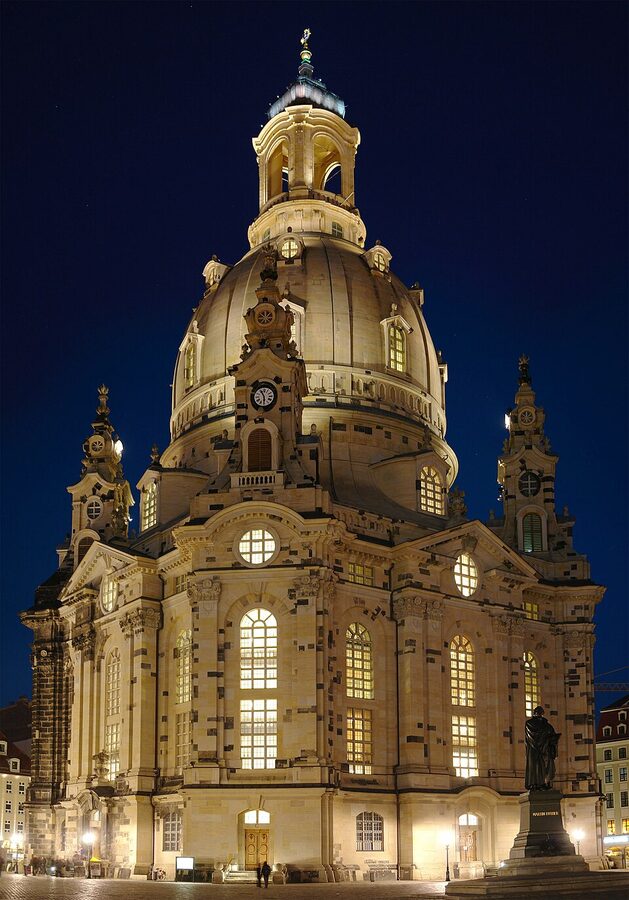 Photo by Kolossos / Wikimedia Commons (CC BY-SA 3.0)
The church is busiest in the morning between 10:30 and 11:00, when day-trippers from Prague and Berlin arrive on the first wave. If you can get there at the 10:00 opening or after the lunch break around 1:00, the queues for the dome ascent are noticeably shorter.
December is the most atmospheric time to visit. The Striezelmarkt, the oldest Christmas market in Germany, sets up on the Altmarkt and a smaller market spreads out around the Frauenkirche on the Neumarkt itself. The downside is that the dome ascent often closes for weather and the church gets standing-room-only for concerts.
Summer is the easiest practical time. Long daylight, the dome gallery is open every day weather permitting, and the cafes around the Neumarkt let you sit outside with the dome in front of you. The only catch is that summer is also when the major coach tours arrive, so book the gallery tour in advance.
Practical Things Worth Knowing
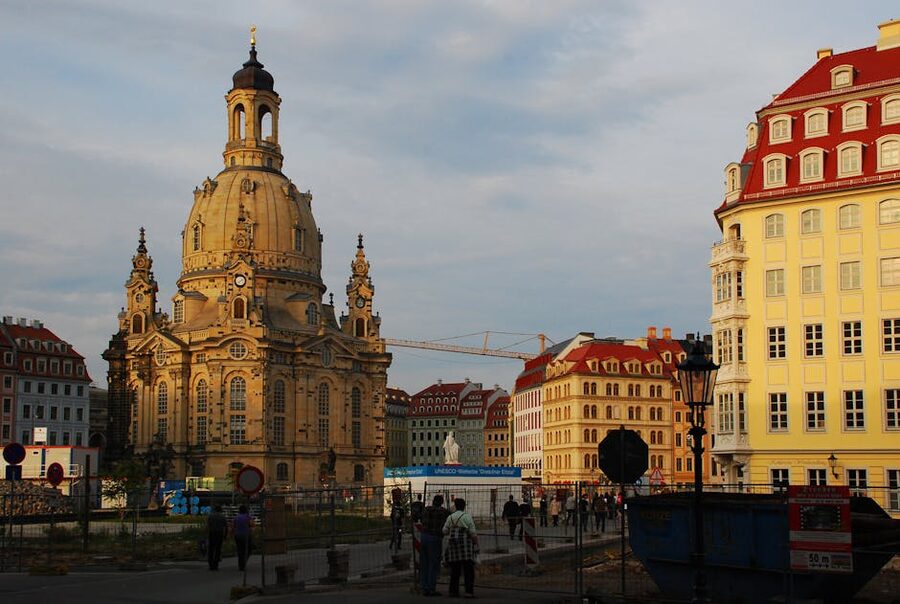
Photography: Allowed in the main church and on the gallery tour, not in the lower crypt. No flash, and you are asked not to take pictures during prayer services even if the church is technically open.
Concerts: The church hosts evening concerts most weeks, often featuring the Silbermann organ. Tickets sell through the church’s own ticket office on Georg-Treu-Platz, not through the tour platforms. If you are interested, check the calendar before you book any guided tour, since the church closes early on concert days.
Free guided tours: The church offers free 50-minute tours during certain windows, mostly in German. They are good if you happen to be there at the right time, but do not plan around them. The paid English-language tours run on a much more reliable schedule.
Audio guide: Free, available through the official Frauenkirche app on your phone. Bring earphones. The audio is the best free option if you are visiting outside guided-tour hours.
Accessibility: The main church is accessible. The dome ascent is not, since it involves a long climb of stairs and ramps. If you cannot do stairs, skip the dome and spend the time on the gallery tour instead.
One Last Thing
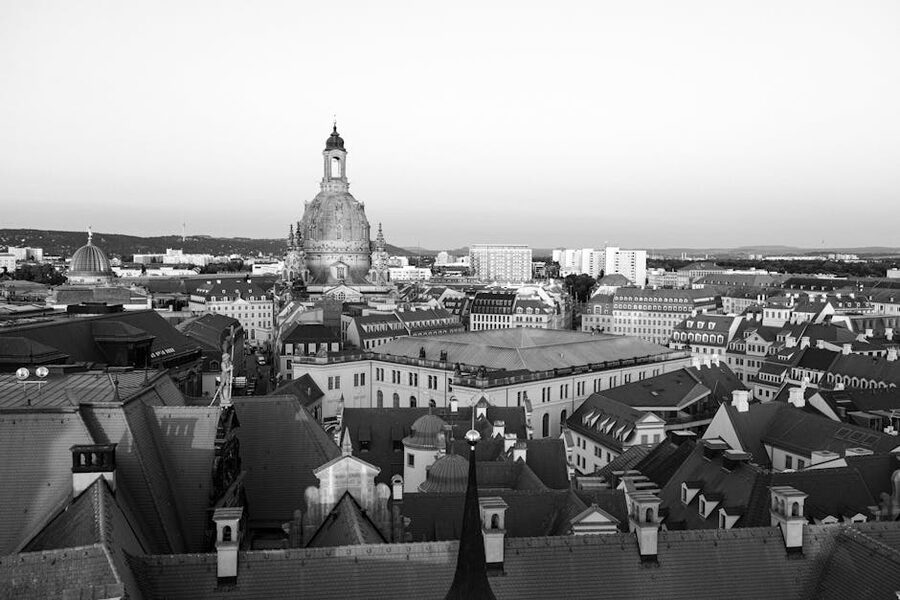
If you only have time for one thing inside, take the gallery tour rather than the dome ascent. The dome view is great, but you can get something similar from the Brühl Terrace or the Castle. The gallery tour gets you to angles inside the church that no other ticket gets you, and the church-employed guides know the rebuilding story in detail. That detail is what you came for.
If you are spending the whole day in Dresden and want to do the church properly, my order would be: Florence on the Elbe walking tour at 10am, lunch on the Neumarkt, gallery tour or dome ascent in the afternoon, and the night watchman tour after dark. It costs about €40 in tickets and gets you the best version of every angle the city has on this church.