
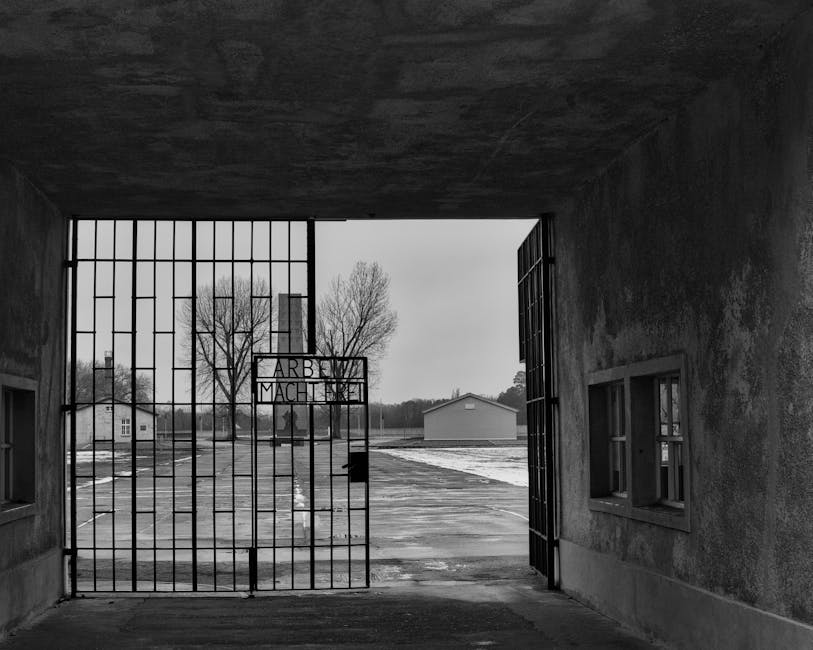
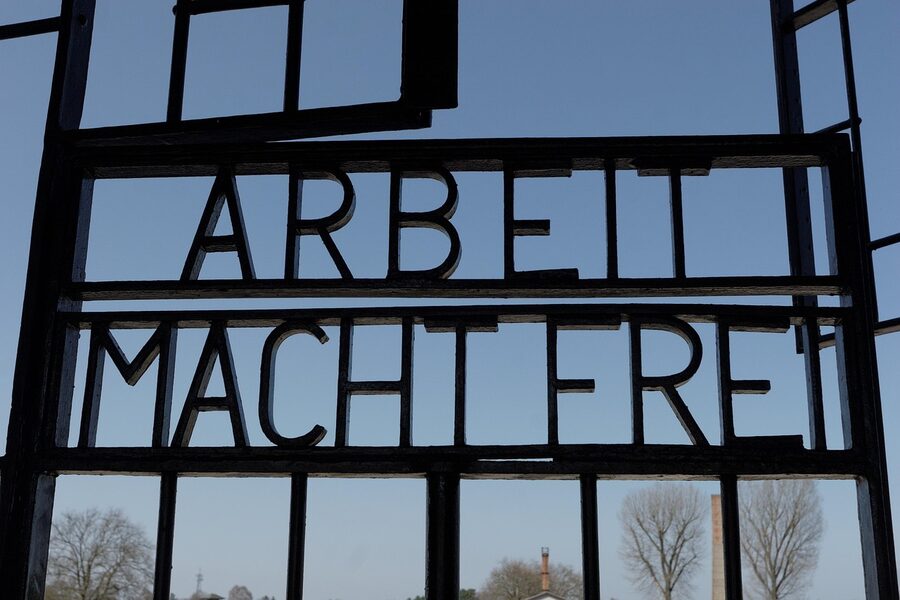
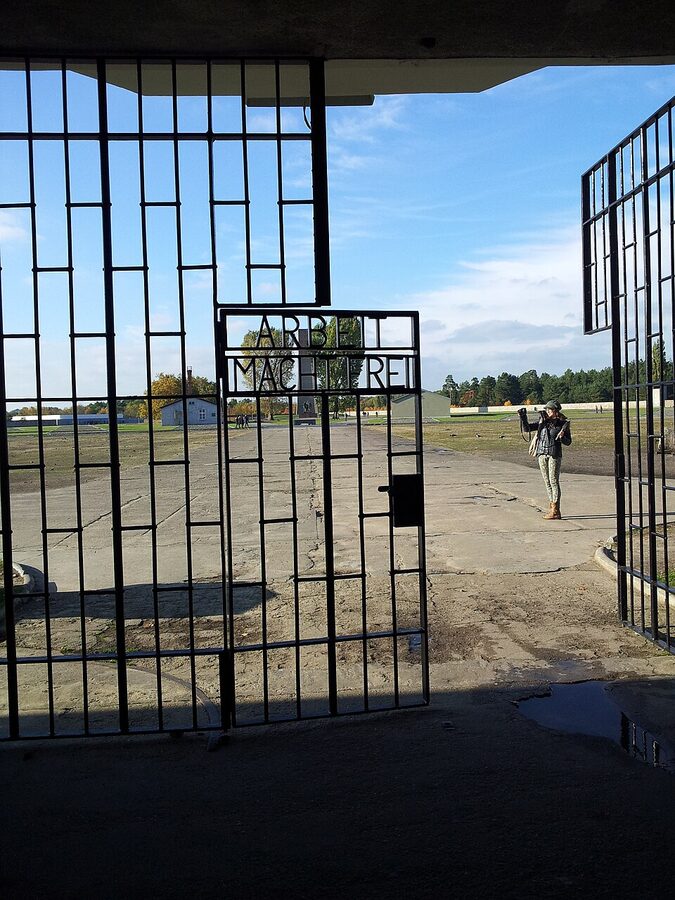
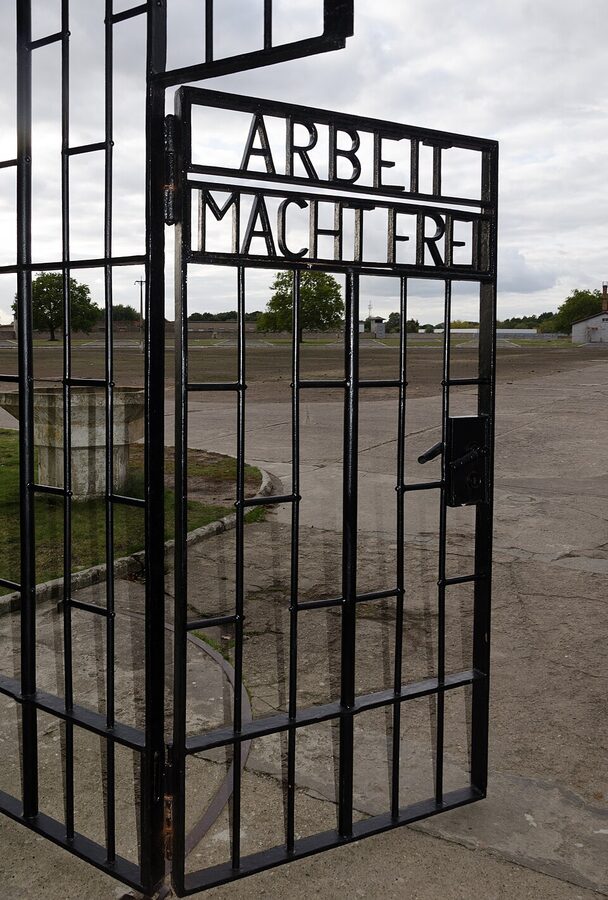
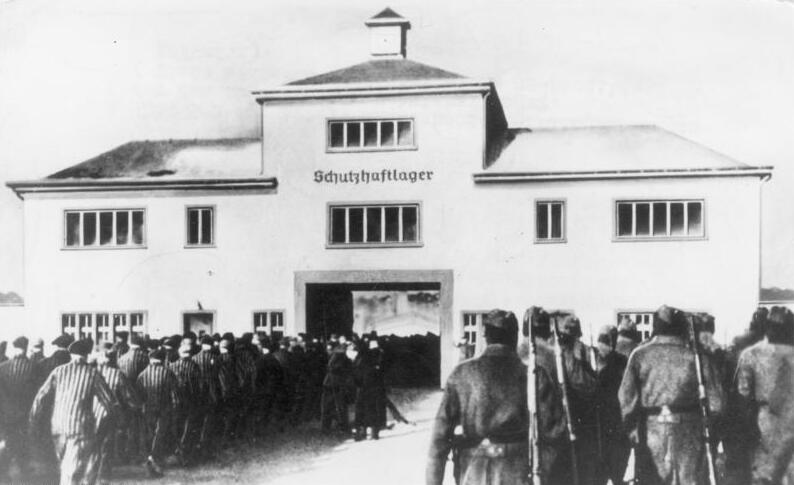
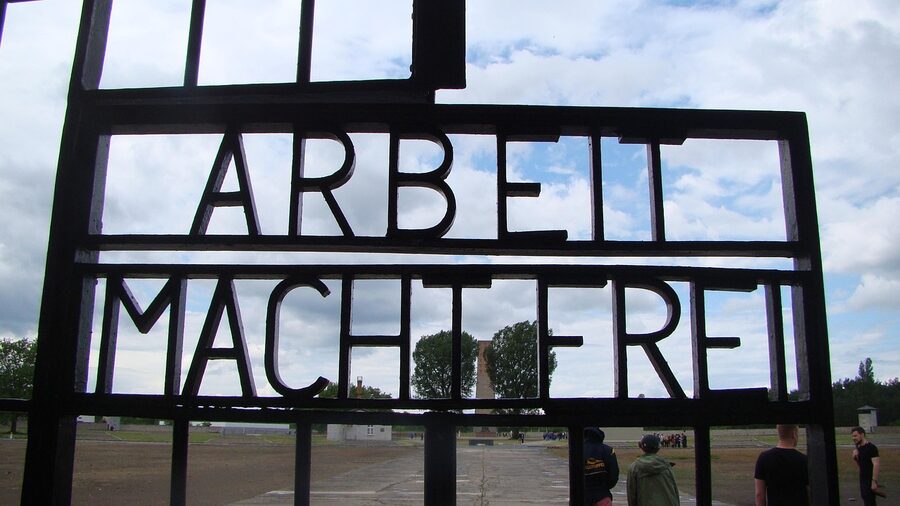
A friend of mine went to Sachsenhausen on a freezing November day, on her own, with a borrowed audio guide and a thermos of coffee. She told me later she had walked under the gate, looked at the words Arbeit macht frei, and stood there for ten minutes before she could move. She said the cold helped. She said she was glad she had not gone alone after a long lunch and a beer.
That story has shaped how I send people to Sachsenhausen. This is not a stop you tack onto a city break. It is a half-day trip that asks something of you, and the people who get the most from it tend to plan it like a small expedition.
In a Hurry?
- Sachsenhausen Memorial Tour from Berlin (Viator), from $36: the most reviewed Sachsenhausen tour on the market by a wide margin. Check availability.
- Berlin: Sachsenhausen Memorial Tour (GetYourGuide), from $21: the cheapest serious option, licensed historian guides, four to five hours. Check availability.
- Sachsenhausen Bus Tour from Berlin, from $69: the door-to-door coach option for anyone who does not want to deal with the S1 with the rest of the city. Check availability.
- In a Hurry?
- What Sachsenhausen actually is
- Getting there from Berlin (the practical bit)
- Option 1: S-Bahn line S1
- Option 2: Regional train RE5 (faster)
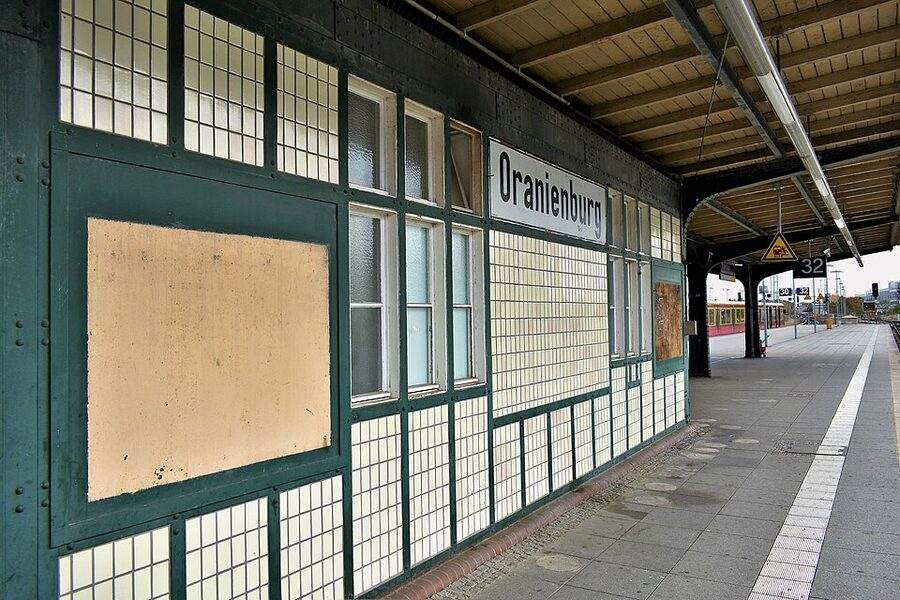
- From Oranienburg station to the Memorial
- Option 3: Drive
- Opening hours, audio guides, what to expect at the gate
- Should you go independently or take a tour from Berlin?
- Tours from Berlin
- 1. Sachsenhausen Concentration Camp Memorial Tour from Berlin:
- 2. Berlin: Sachsenhausen Concentration Camp Memorial Tour:
- 3. Sachsenhausen Memorial: Bus Tour from Berlin:
- What you actually see on site
- Tower A and the roll-call ground
- Barracks 38 and 39
- Station Z
- The execution trench and the central monument
- The Soviet Special Camp section
- How long does the visit take?
- The history in one breath
- Practical things people get wrong
- Can you visit with children?
- Is there food on site?
- Photography?
- Toilets?
- Accessibility?
- What if I cry?
- The best time of year to go
- What to do with the rest of your day
- How Sachsenhausen fits into a Berlin trip
- One last thing
What Sachsenhausen actually is
Sachsenhausen is a former Nazi concentration camp, built in 1936 in the town of Oranienburg, about 35 km north of central Berlin. The SS used it as a model camp and as the administrative headquarters for the entire camp system. More than 200,000 people were imprisoned here between 1936 and 1945. Tens of thousands were murdered.
From 1945 to 1950 the Soviets ran a special internment camp on the same grounds. From 1961 the East German state turned it into a National Memorial with a heavy ideological framing, and since 1993 the site has been managed as the Stiftung Brandenburgische Gedenkstätten. That layering matters, because what you see today is not a frozen 1945 camp. It is a memorial site that has been read, rewritten, and read again.
Admission to the Memorial and to the museums on site is free. You pay only if you book a guided tour, hire an audio guide, or take a tour from Berlin that includes transport.
Getting there from Berlin (the practical bit)
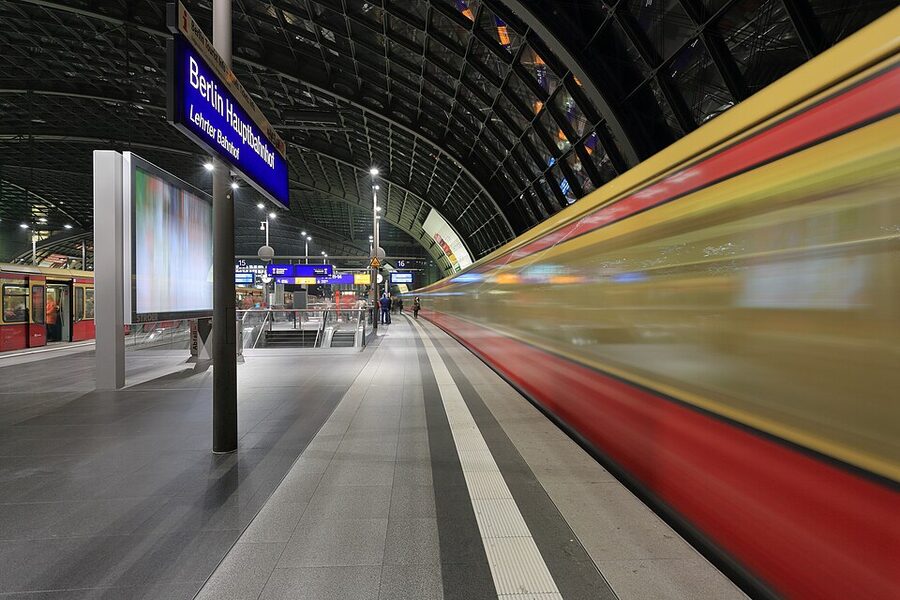
The Memorial sits at the northern edge of Oranienburg. Two trains and a short bus or walk get you there.
Option 1: S-Bahn line S1
Take the S1 all the way to its northern terminus, S Oranienburg Bhf. The S1 runs roughly every 20 minutes and the journey takes about 50 minutes from Friedrichstraße or 55 from Brandenburger Tor. It stops at every little suburban station in between, which is fine if you want time to read.
You need an ABC zone ticket. As of 2026 a single is around €4.40 and a day ticket around €11. Buy from any BVG machine on the platform. Validate before you board.
Option 2: Regional train RE5 (faster)
The RE5 to Stralsund, Rostock or Neustrelitz stops at Oranienburg in about 25 minutes from Berlin Hauptbahnhof or Gesundbrunnen. It runs less often than the S1, roughly hourly, but it is the option I take when I am running late. The same ABC ticket covers you.
From Oranienburg station to the Memorial
Two ways to cover the last 2 km. Bus 804 (direction Malz) or bus 821 (direction Tiergarten) leaves from outside the station and stops at Sachsenhausen Gedenkstätte. Five stops, six or seven minutes. The same ABC ticket is valid.
If you are already at the station and the next bus is 18 minutes away, just walk. It is a flat, signposted 25 to 30 minute stroll through a quiet residential area. Oranienburg was heavily bombed in 1945 so the streetscape is mostly post-war, but the route is easy to follow and you arrive a little more grounded than you would by bus.
Option 3: Drive
About 45 minutes from Mitte if traffic is kind, longer in rush hour. There is a free visitor car park 200 m from the entrance. I never recommend driving for a Sachsenhausen visit unless you are already on a road trip and your hotel is outside the centre. Berlin’s traffic and parking will tax you, and you do not need that on this kind of day.
Opening hours, audio guides, what to expect at the gate
The Visitor Information Centre runs daily from 8:30 to 17:00. The outdoor areas and exhibitions follow a seasonal split: 8:30 to 18:00 from 31 March to 26 October, then 8:30 to 16:30 from 27 October to 30 March. The site is open every day, including weekends and most public holidays. It does close on 24 December.
Audio guides are available at the Visitor Centre for €3.50 per device, or €2.50 if you take ten or more. They run in German, English, Spanish, French, Italian, Dutch, Portuguese and Russian. There is no booking system; you just pay at the desk and pick one up. I’d budget at least two and a half hours with the audio guide and three to four if you want to read every panel.
Should you go independently or take a tour from Berlin?
This is the question I get asked every week, so I want to be honest about it.
The Memorial is free and the audio guide is excellent. If you are a confident solo traveller and you have read even one good book about the camps, going independently is genuinely fine. You take the S1, you buy the audio guide, you walk it at your own pace. You can sit on a bench for 20 minutes if you need to.
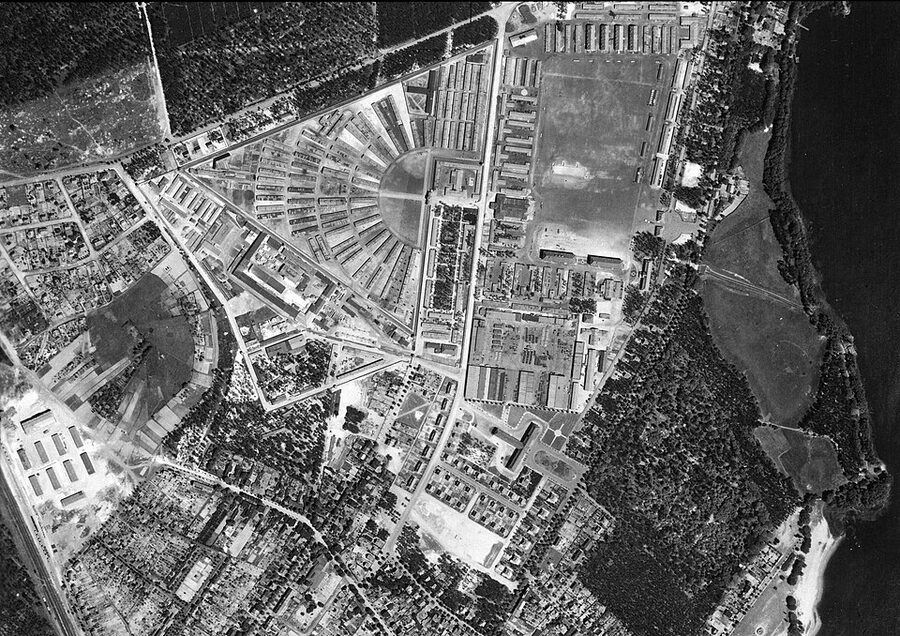
The reason I still book a guided tour about half the time is the guide. A licensed historian who has worked the site for years will pull your eye to things the audio guide skims. The shape of the wall behind Barracks 38, the reason the roll-call ground is shaped like a fan, the layered politics of the Soviet special camp era, the specific stories of named prisoners. Twenty minutes with a real expert in front of Barracks 38 is worth an hour with the audio.
A few quick rules I use to decide:
- If it is your first visit to a Holocaust memorial, take a tour. The framing matters.
- If you have limited German and want to ask questions, take a tour.
- If you are short on time in Berlin and you do not want to think about transport, take a tour.
- If you have visited Auschwitz or Dachau before and you want a slow, contemplative day, go on your own.
Tours from Berlin
There are dozens of operators selling Sachsenhausen day trips. The names are easy to confuse. I have run our review database against review counts, recent feedback, and pickup logistics, and three rise above the rest. They are the three I would actually book for a friend.
1. Sachsenhausen Concentration Camp Memorial Tour from Berlin: $36
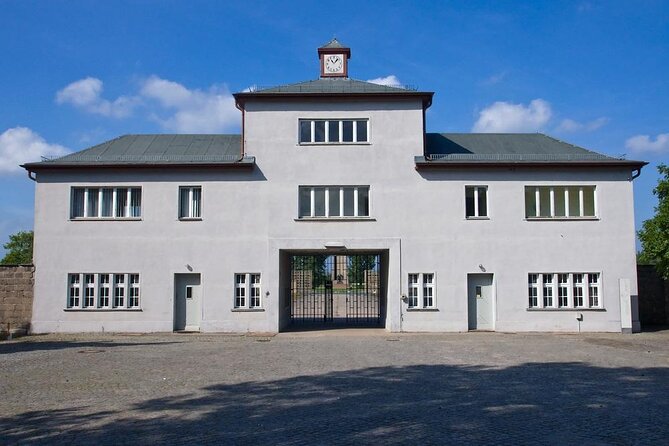
This is the one I send the most readers to. Five thousand seven hundred reviews and an aggregate rating that has barely moved in two years. Our full review covers the meeting point at Hackescher Markt and what to expect from the train leg. Pace is calm, not rushed.
2. Berlin: Sachsenhausen Concentration Camp Memorial Tour: $21
Twenty-one dollars puts a guided Sachsenhausen day inside almost any traveller’s budget. The guide is the entire reason this tour rates above 4.7 with 3,700+ reviews. Our review goes into the route they take through Tower A, Barracks 38 and 39, and Station Z.
3. Sachsenhausen Memorial: Bus Tour from Berlin: $69
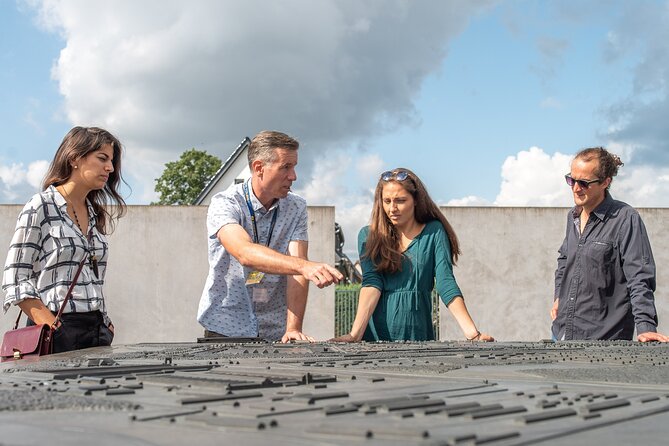
The bus tour is the right pick if you do not want to figure out Berlin’s transit on a heavy day. Pickup near Berlin Zoo, single coach there and back, same calibre of guide as the others. Our review notes the ratio of guided time on site versus travel time, which is the right thing to compare.
What you actually see on site
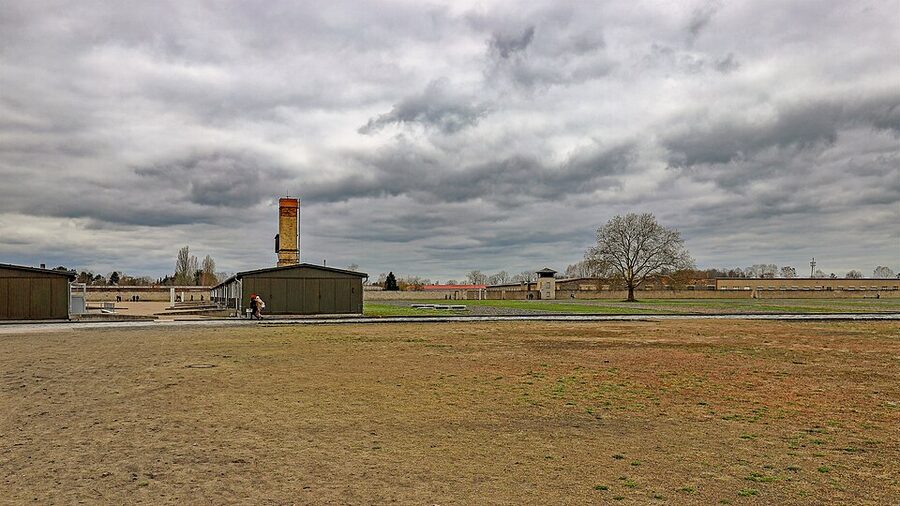
The site is large. Plan to walk between three and four kilometres on uneven gravel and grass. Comfortable shoes are not optional, but I will not pad this article with that kind of obvious advice. What follows is the route I usually walk.
Tower A and the roll-call ground
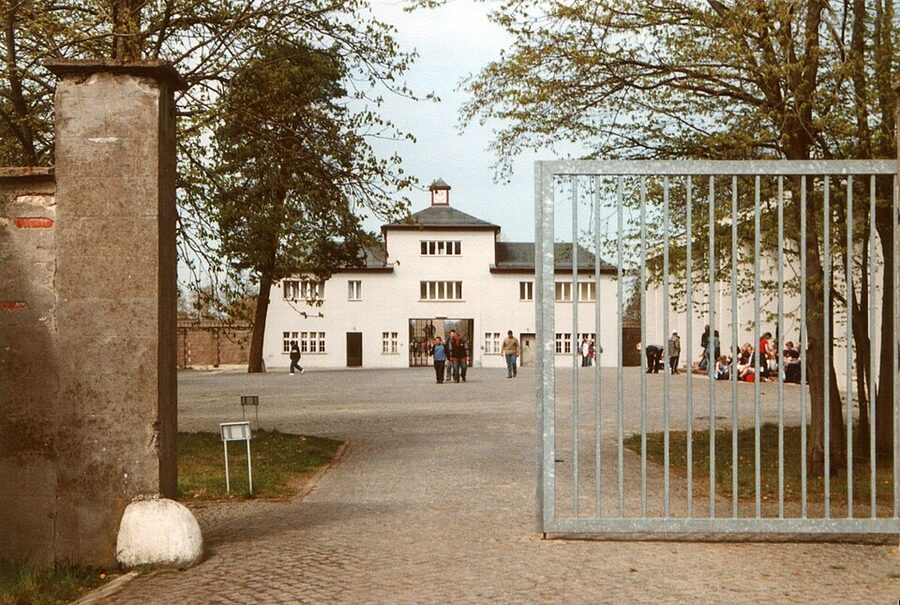
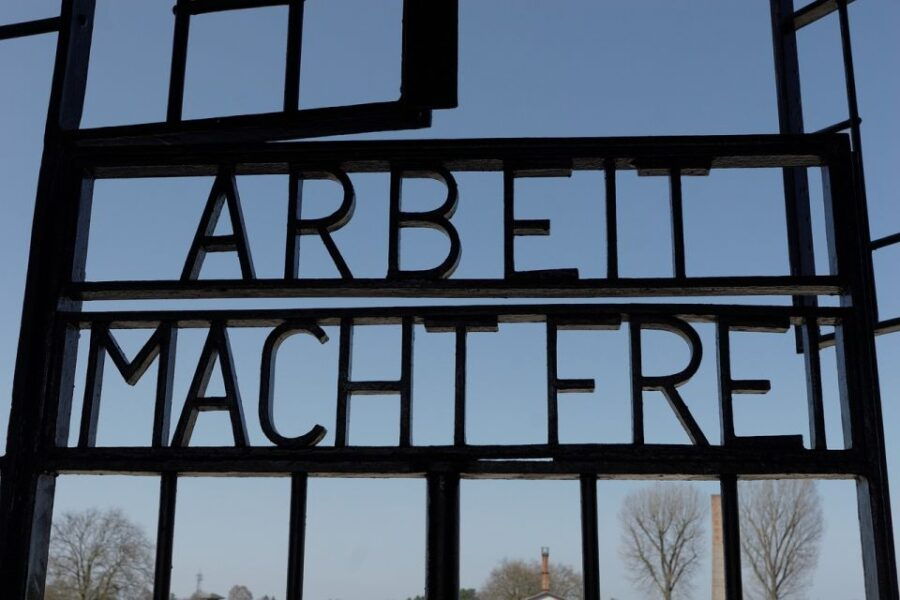
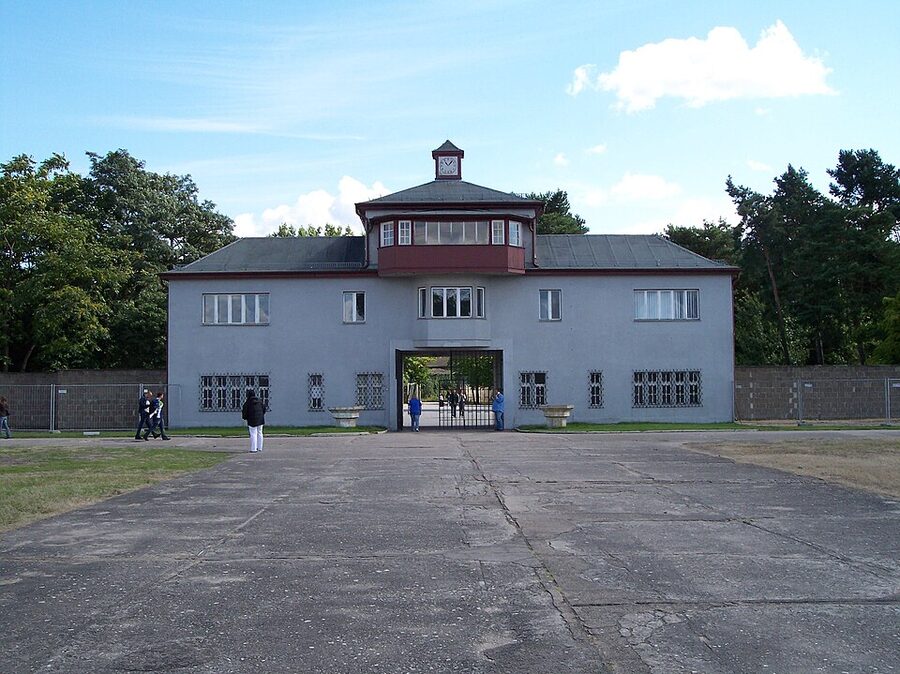
You enter through Tower A, the gatehouse with the iron lettering. It opens onto the Appellplatz, the semicircular roll-call ground where prisoners were forced to stand for hours, sometimes whole nights. The fan shape was a deliberate piece of engineering. A single machine gun in Tower A could cover everything.
Barracks 38 and 39
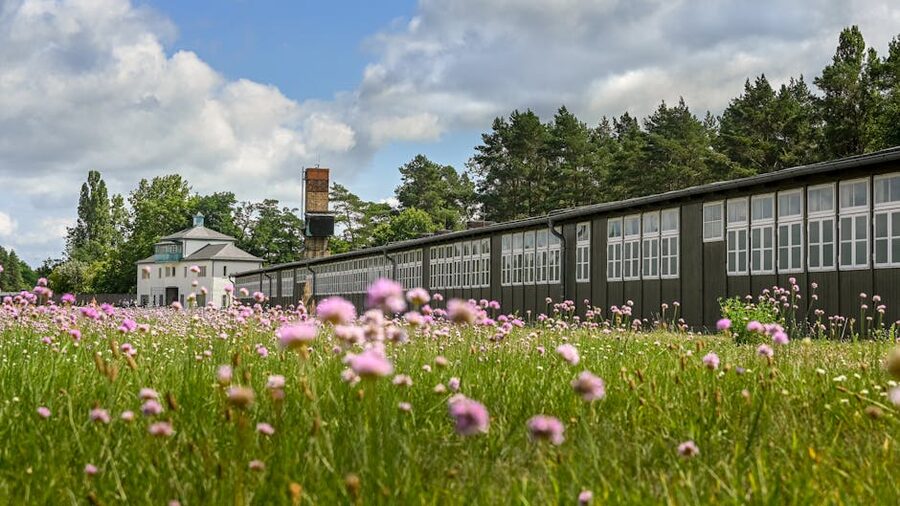
The only barracks still standing. They were rebuilt after a 1992 arson attack and now hold two of the most affecting exhibitions on site. Barracks 38 covers Jewish prisoners. Barracks 39 covers daily prisoner life across all groups. Allow 40 minutes minimum.
Station Z
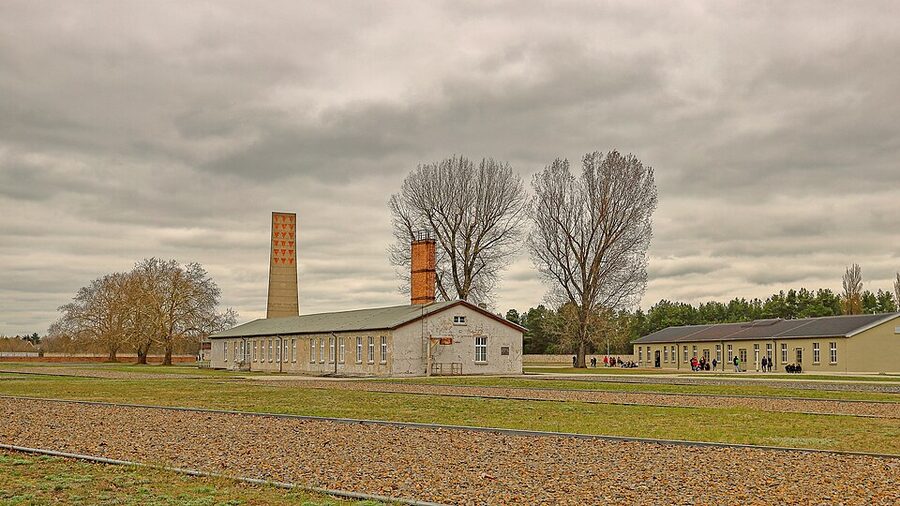
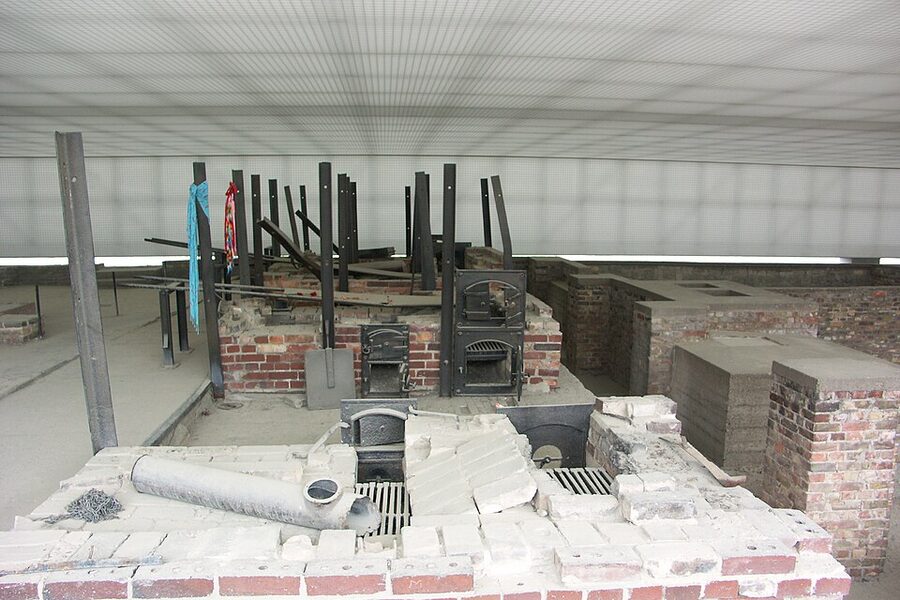
The execution and crematorium area, sited deliberately at the back of the camp. Station Z is hard. There is no other word for it. A protective roof was built over the foundations in 2004 to slow the weathering, and the design is intentionally cold. Spend as long here as you need. Sit if you have to.
The execution trench and the central monument
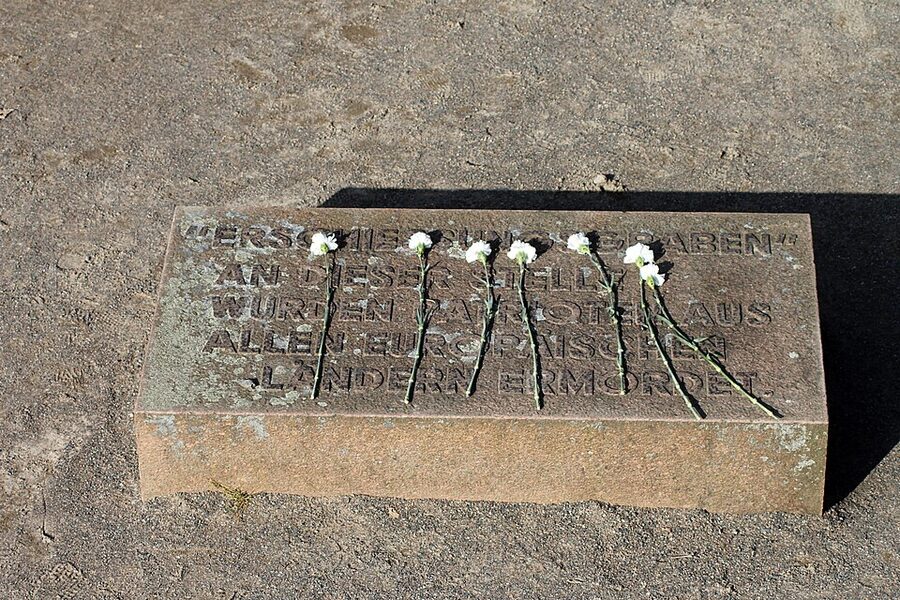
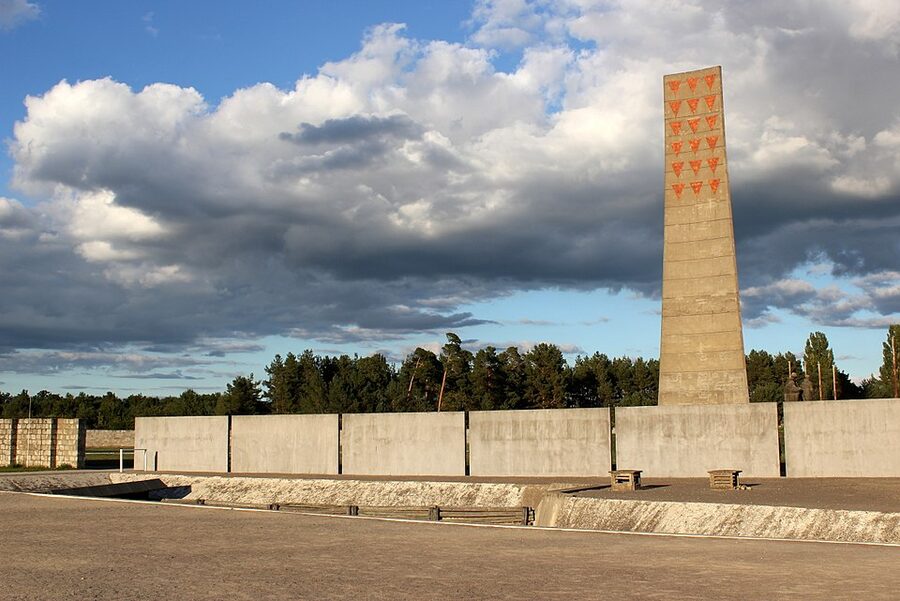
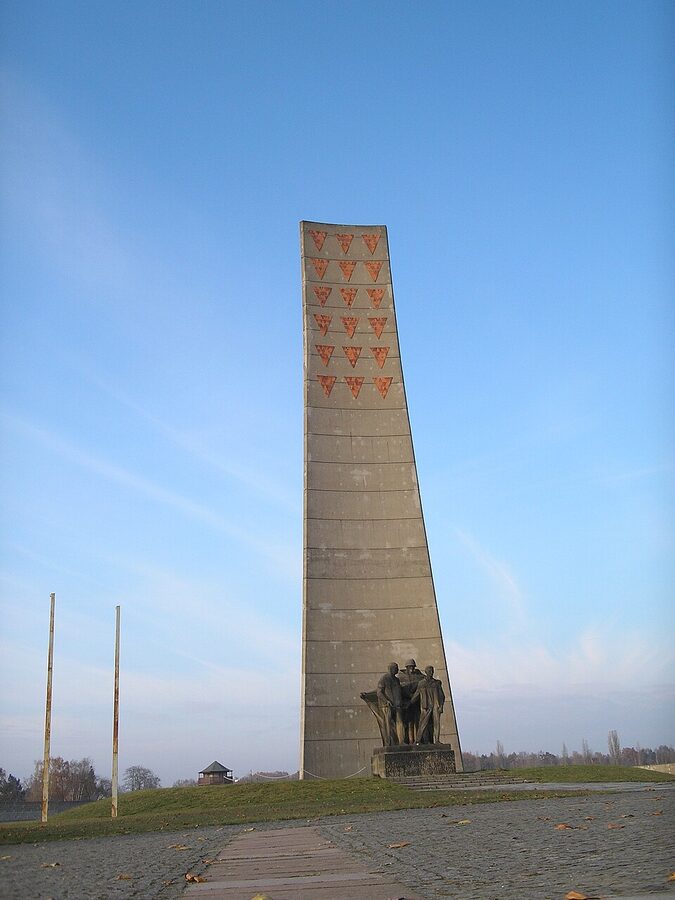
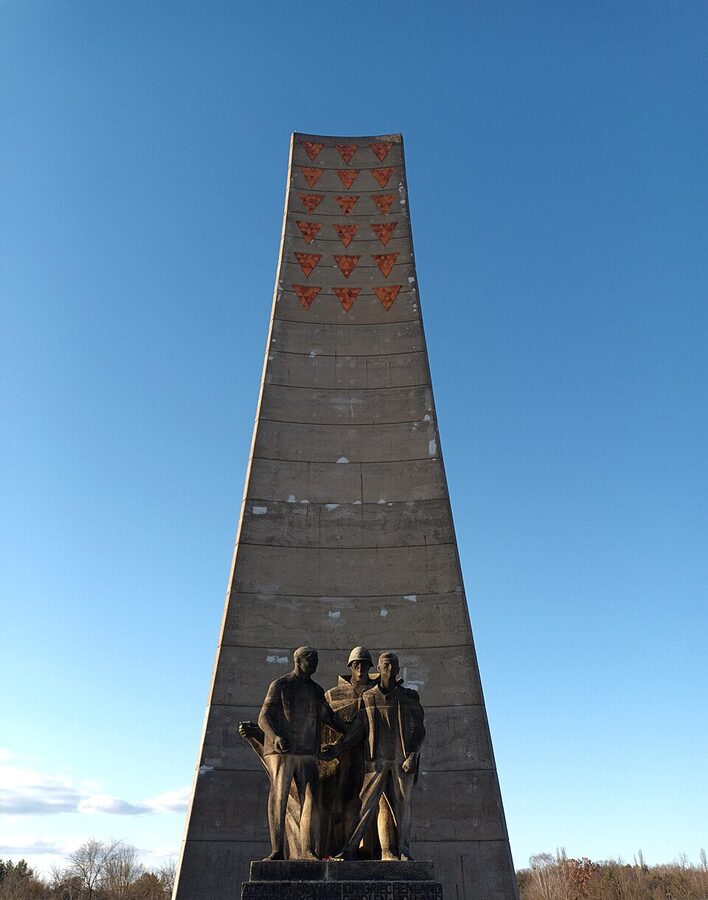
Beyond Station Z, the Erschießungsgraben (execution trench) is preserved. Tens of thousands of Soviet prisoners of war were killed here, often by the day. The reconstructed wooden frame in the trench is a memorial, not a relic. Above it stands the GDR-era central monument, an obelisk topped with eighteen red triangles for the eighteen national groups imprisoned at the camp.
The Soviet Special Camp section
An often-overlooked corner near the rear of the site. From 1945 to 1950 the Soviets used the same buildings to detain around 60,000 people, mostly Germans, in conditions that killed roughly 12,000 of them. The mass graves discovered in 1990 are now marked. Visiting this section is what stops Sachsenhausen from feeling like a single, simple story. It is a reminder that the camp’s history did not end on the day it was liberated.
How long does the visit take?
Honest answer:
- Bare minimum: two hours on site. Tower A, Barracks 38/39, the central monument, Station Z. Skip the Soviet Special Camp section and the secondary museums.
- What I’d recommend: three to three and a half hours on site. Audio guide on, sit-down breaks where you need them, time for the Soviet camp section, time at Station Z without rushing.
- Slow visit: four to five hours. Includes the New Museum, the bookshop, and a pause at the cafe.
Round-trip travel time from central Berlin is roughly two hours. So a guided day from Berlin runs four to seven hours total, and an independent day on the S1 should be planned at five hours minimum.
The history in one breath
Sachsenhausen was conceived in 1936 by the SS architect Bernhard Kuiper as the first purpose-built modern concentration camp. Earlier camps in Nazi Germany, including the original Oranienburg camp from 1933, had used existing buildings. Sachsenhausen was designed from the ground up to be a model. From 1938 onwards it housed the Inspektion der Konzentrationslager, the central administrative authority for every SS-run camp in the system.
By the war years, prisoners included political opponents, Jews, Sinti and Roma, Jehovah’s Witnesses, gay men under Paragraph 175, Soviet prisoners of war, and resistance fighters from across occupied Europe. More than 200,000 people were imprisoned over nine years. At least 30,000 were murdered, most by execution, exhaustion, or as part of medical experiments.
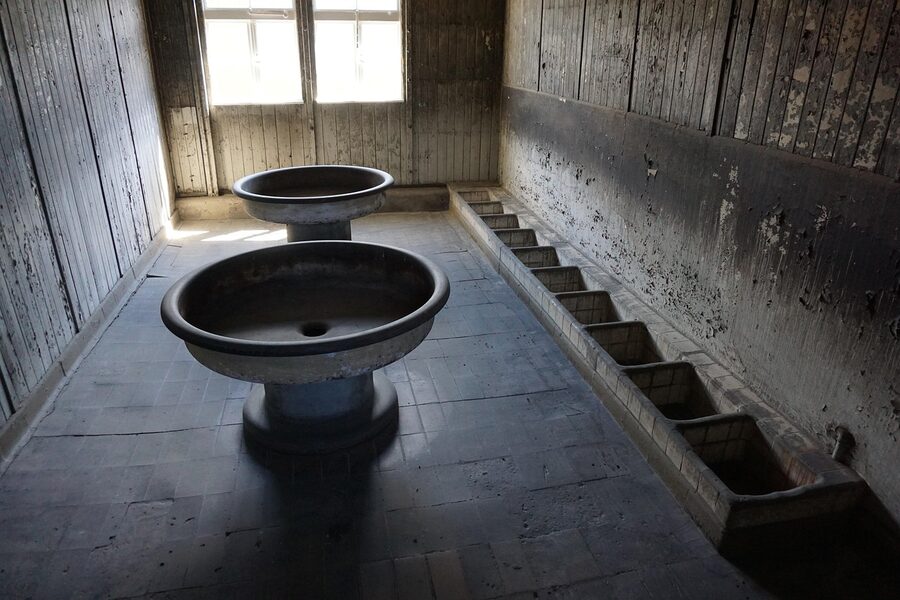
The camp was liberated on 22 April 1945 by Polish and Soviet forces. They found roughly 3,000 surviving prisoners, mostly too ill to march; the SS had forced about 33,000 others on a death march westward eight days earlier. From August 1945, the Soviet authorities reopened the site as Special Camp No. 7 (later No. 1), part of the Soviet camp system in occupied Germany. It functioned until 1950. From 1961 the GDR turned the site into a National Memorial.
Practical things people get wrong
I get the same questions every time, so here are the answers in one place.
Can you visit with children?
Officially the site says it is suitable from 14 upwards. I would push that up to 16 for any unaccompanied teen and to 18 for the Station Z section. I have seen 12-year-olds visit on school trips with extensive preparation, and that works. I have also seen children turned around at the gate by their own parents.
Is there food on site?
Yes, the cafe in the New Museum sells sandwiches, cake and coffee. It is fine. I usually do not eat on site for reasons that will be obvious when you visit. Eat at Oranienburg station before or after.
Photography?
Allowed throughout. There is no flash photography rule but you should think hard before you photograph the indoor exhibitions or the Station Z foundations. If you would not photograph it at a friend’s funeral, do not photograph it here.
Toilets?
At the Visitor Centre and at the New Museum. None at Station Z. Plan accordingly, especially in winter.
Accessibility?
Most paths are gravel and broadly wheelchair-accessible, though loose in places. The barracks and some of the museum buildings have step access. The Memorial publishes a detailed accessibility guide on its website. The bus from Oranienburg station is low-floor.
What if I cry?
You will not be the only one. There are benches throughout the site for exactly that reason. The staff are kind. So is everyone else who is there.
The best time of year to go
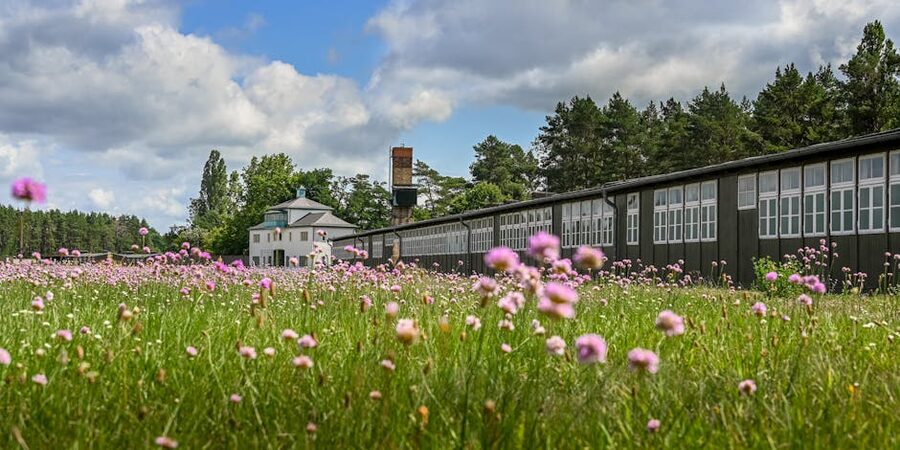
Late autumn and winter are when the site reads most starkly. Cold air, low light, fewer crowds. My friend who set the tone of this article went in early November and would not have wanted a sunny day. Spring and summer have their own register: the wildflowers grow in places where there used to be dust, and the contrast lands hard. April through October the outdoor areas stay open until 18:00, which is useful if you arrive late from Berlin.
Avoid 27 January (International Holocaust Remembrance Day) and 22 April (Liberation anniversary) if you want a quiet personal visit. Those days draw large groups, ceremonies, and media. They are extraordinary if you want to participate, but not the right days for a contemplative first visit.
What to do with the rest of your day
Most people return to Berlin and rest. The visit is more emotionally tiring than people expect. If you want to keep moving, central Oranienburg has a baroque palace (Schloss Oranienburg) and a small but pleasant park, both walking distance from the station. Or spend half an hour in a cafe near the station before getting on the train. The slow re-entry helps.
How Sachsenhausen fits into a Berlin trip
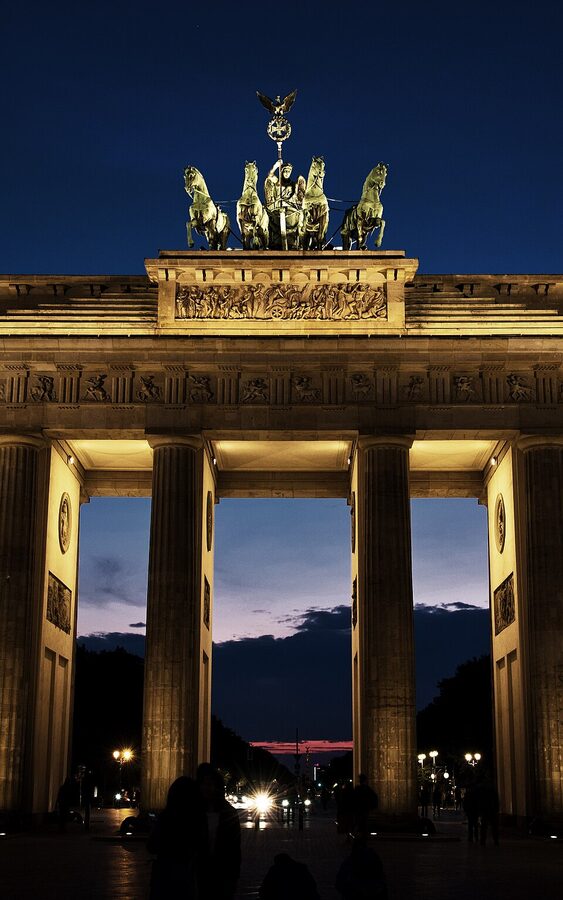
If you only have three full days in Berlin, I would not push Sachsenhausen onto the itinerary. It deserves a slow half-day on the second or third day, and only if you are emotionally ready for it. On a four-day trip it works well as the morning of day three, paired with a quiet evening at your hotel rather than a packed dinner plan.
For a tighter Cold War and Third Reich theme, I’d combine your Sachsenhausen day with a separate day for our Berlin Third Reich tour guide, the Jewish Museum, and a quiet hour or two at the Reichstag dome. Anyone interested in the cold war underneath should also read our piece on the Berlin Story Bunker for context on how the city talks about its own bunkers and air-raid history. Stretch your trip a day longer and tack on a relaxed final day with a Spree boat tour or a guided city walk, both of which let you process what you saw at Sachsenhausen without piling another heavy site on top.
For something completely different in tone after a Sachsenhausen morning, our review of Madame Tussauds Berlin is on this same site, and yes, that is a real recommendation: a deliberately light afternoon helps people sleep that night. If you are travelling with the kind of friend who insists on seeing everything, the hop-on hop-off bus and the TV Tower viewing deck are the right tools to keep them busy on a separate day. The Berlin WelcomeCard covers the ABC zone, which means it pays for the Sachsenhausen S-Bahn leg on top of all your other transport.
One last thing
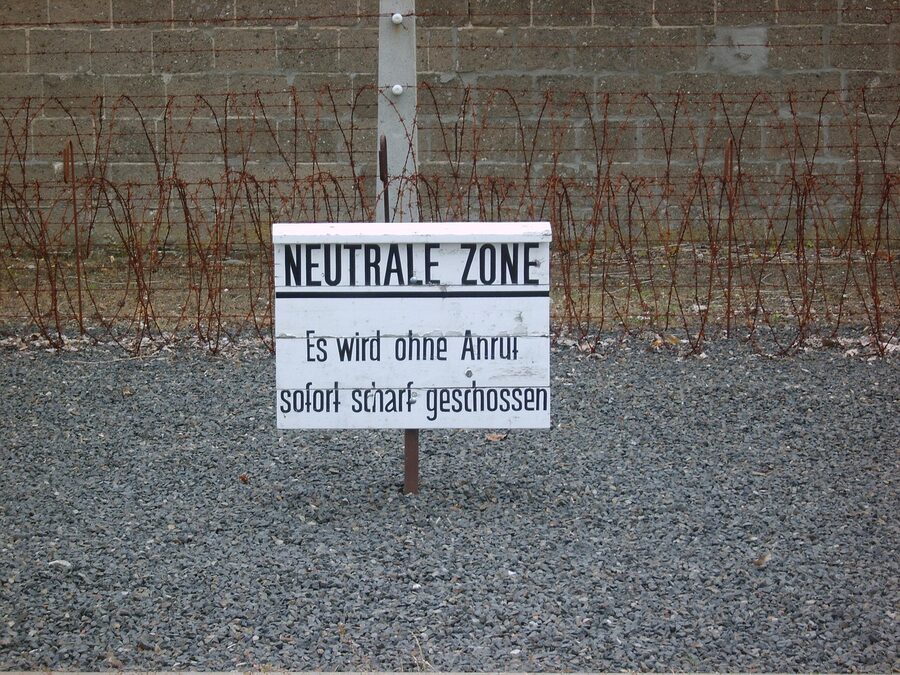
You will not enjoy Sachsenhausen. That is not the goal, and a tour operator who promises you will is selling something else. What you will get is a clearer view of how the system worked, how the people who survived it have been remembered, and how a country that built it has tried to keep its memory alive. That is worth a half-day of your Berlin trip. Be kind to yourself before you go and after you come back.