
Which version of the Northern Ireland day trip is right for you? It comes down to one question. Do you want pure scenery, do you want history, or do you want the Titanic and the kids happy?
The 13-hour coach loop from Dublin is the same backbone for almost every operator. Pickup near O’Connell Street around 7am, three hours up to Belfast, then the Antrim coast, then back. Where they differ is the stop before the Causeway. That choice changes the whole day.
This guide breaks the three add-on options down, says which I’d book and why, and covers the practical bits everyone forgets. Currency switches the moment you cross into the North. There is no border control. The accent gets harder.
- In a Hurry? Three Picks
- The three add-on options, plainly
- How the day actually runs
- The currency switch and the small Brexit stuff
- Dunluce Castle and the Game of Thrones thing
- Dark Hedges, and why the photo is harder than the Instagram suggests
- The three tours I’d actually book
- 1. Dublin: Giants Causeway, Dark Hedges, Dunluce and Belfast Tour: 2
- 2. Dublin: Giant’s Causeway, Dark Hedges and Titanic Guided Tour: 4
- 3. Giants Causeway Day Tour From Dublin:
- Black Taxi or Titanic, if you’re undecided
- The Causeway: 90 minutes versus three hours
- What’s worth adding if you have an extra day
- Practical bits people forget
- The full-Ireland trade-off
- More Ireland and Britain reading
In a Hurry? Three Picks
Best all-round (most-booked NI day from Dublin): Dublin: Giants Causeway, Dark Hedges, Dunluce and Belfast Tour from $112. Twelve hours, Wild Rover coach, choice of Black Taxi political tour or Titanic in Belfast. The default everyone should book first.
Best for families and Titanic obsessives: Dublin: Giant’s Causeway, Dark Hedges and Titanic Guided Tour from $124. Same loop, Titanic Museum locked in. Skip the political-history option, no choice to make.
Best for pure scenery, no Belfast: Giants Causeway Day Tour from Dublin from $96. Skips Belfast city entirely, more time at the Causeway, longer at Dunluce. Pick this if cities aren’t the point.
The three add-on options, plainly
Every full-day NI tour from Dublin hits the same four headline stops. Giant’s Causeway. Dark Hedges. Dunluce Castle. Belfast. The variable is what you do in Belfast and how the timing tilts.
Option A: pure Causeway and Dark Hedges, minimal Belfast. The bus passes through Belfast for a quick photo stop or skips it entirely. You get longer at the Causeway, longer at Dunluce, and the day feels less rushed. The trade-off is you miss the political history, the Titanic, and the city itself. Pick this if you’ve already seen Belfast on a different trip, or if a 13-hour day with a city tour bolted on sounds like too much.
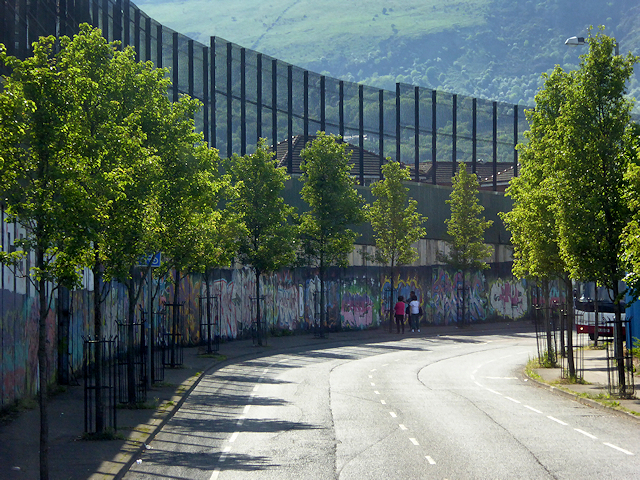
Option B: Causeway plus Belfast city, with Black Taxi. The most historically serious version. You get a 90-minute political taxi tour through West Belfast, mostly along the Falls Road and Shankill Road, with a guide who lived through The Troubles. The murals, the Peace Walls, Bobby Sands, the Sinn Fein office on the Falls. It is sober. It is sometimes biased. It is the part of the day you’ll remember in five years. The trade-off is the Causeway gets less time, sometimes only 90 minutes including the walk down.
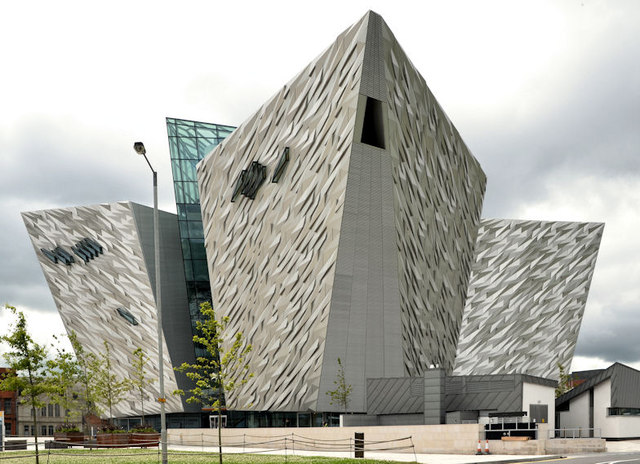
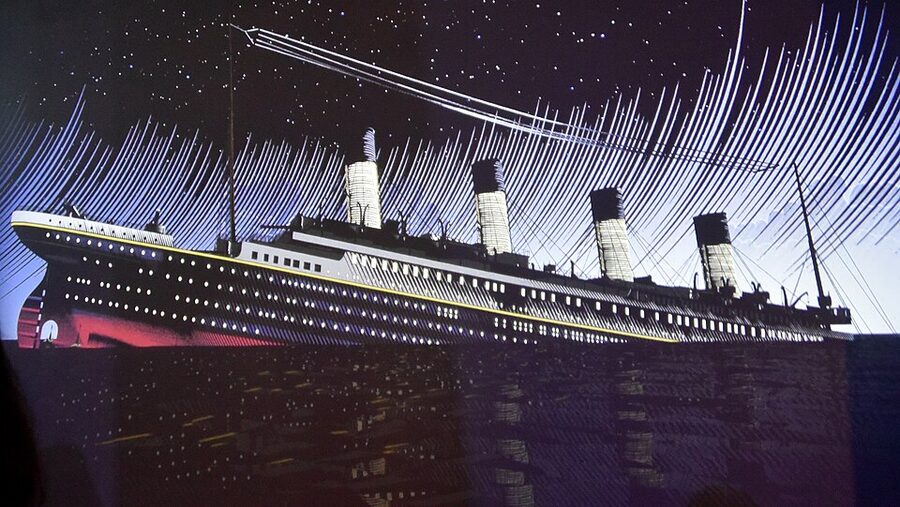
Option C: Causeway plus Titanic Museum. The family-friendly version. The Titanic Belfast museum is genuinely good, properly designed, six floors of well-paced exhibits about the Harland and Wolff shipyard, the build, the fitting-out, the maiden voyage, and the wreck. About 90 minutes inside is right. Kids love it. Engineering nerds love it. People who want a heavier political angle will leave a bit unsatisfied. Some tours like our Causeway, Dark Hedges and Titanic combo lock you into the Titanic option from the booking page.
How the day actually runs
Pickup is between 6:45am and 7:30am depending on operator. Wild Rover, Paddywagon, and Finn McCool’s all leave from O’Connell Street. The first leg to Belfast is about three hours with one rest stop. Your guide does the history of partition and The Troubles in roughly the same 30 minutes everyone uses. It’s a primer, not a degree, and it works.
You cross the border somewhere on the M1 motorway. There is no checkpoint. There are no signs. You can sometimes spot the change because the road markings shift from yellow to white and the speed-limit signs change from kilometres to miles per hour. That’s it. Most people miss it.
Belfast happens around 10am. If you booked the Black Taxi option, you split off at the Park Centre Mall on the Falls Road and pile into small cabs in groups of four. If you booked Titanic, the bus drops you at the museum in the Titanic Quarter. If you’re on a Causeway-only tour, you might just stop at the Albert Clock for ten minutes of legs-stretching and a coffee. By 12:30 the bus is rolling north along the Antrim Coast.
Lunch is at the Causeway itself, around 2pm. Most groups eat at The Nook pub right at the entrance or the restaurant in the Causeway Hotel. Food is not included on any of the main tours. Budget about £15 for lunch. The Nook does a properly hearty lamb stew with brown bread for around £14 and it’s the right move on a cold day.
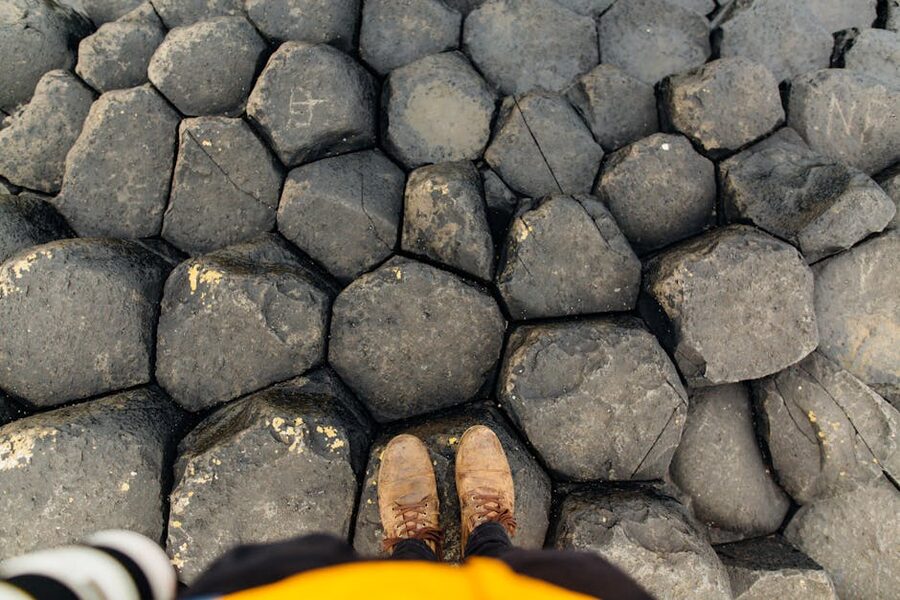
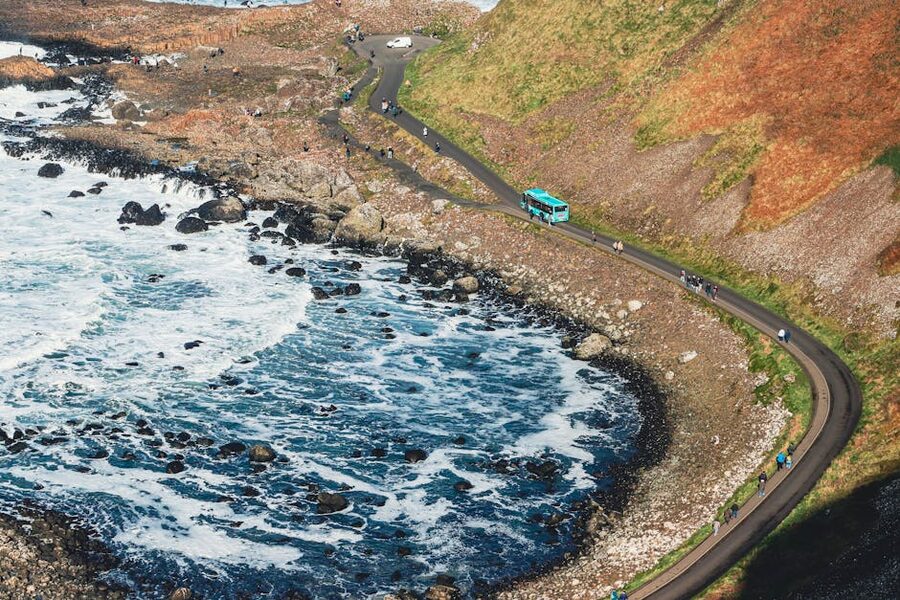
You get about 90 minutes to two hours at the Causeway depending on operator. There’s a £1 shuttle bus that runs between the visitor centre and the columns themselves, which I’d take in either direction if you’ve got any joint issues. The walk down is fine; the walk back up is a sustained ten-minute climb on a single-track road.
Dark Hedges is the last stop before the long drive back. About 30 minutes there, almost all of it photography. Dunluce Castle is between the Causeway and the Hedges, and you get a short photo stop, sometimes a 15-minute walk through, sometimes just from the bus. The bus rolls back into Dublin around 8:30pm to 9pm.
The currency switch and the small Brexit stuff
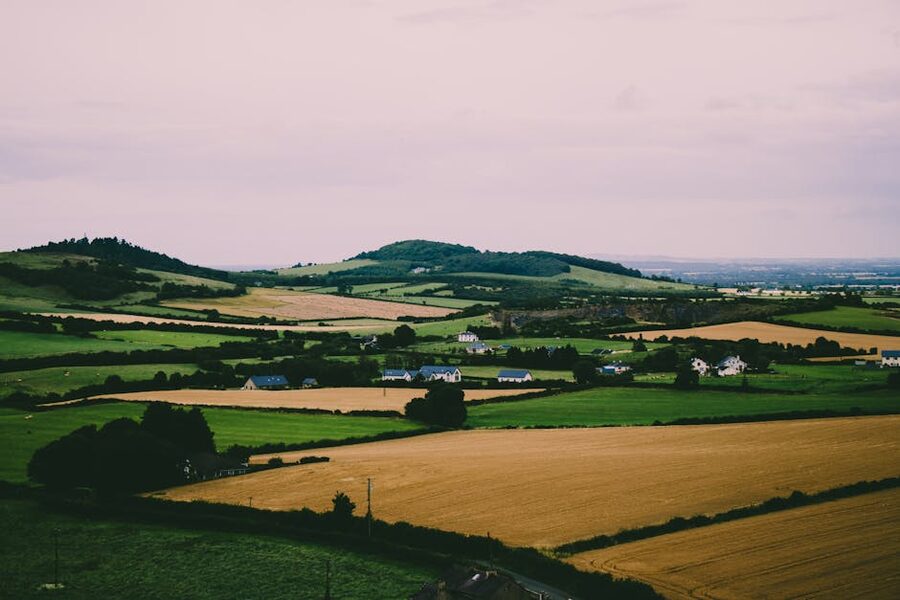
This is the bit nobody flags before booking. Northern Ireland is part of the UK. The Republic uses the euro. The North uses the pound sterling. Most cafes at tourist stops will take euros in cash but you’ll lose 10 to 15 percent on the conversion at the till. Card is fine and contactless works on UK terminals exactly like Irish ones.
Bring £30 in cash if you can. The £1 Causeway shuttle is the obvious one. Black Taxi tip if you want to leave one. Coffee at the Belfast rest stop. The Nook accepts both currencies but it’s cleaner to pay in pounds.
Brexit didn’t add a hard border between the Republic and the North. There is no checkpoint, no passport, no customs. EU citizens, UK citizens, and most other tourists pass freely on the day. If you’re worried about your travel insurance covering the UK leg, check before you book; some policies treat the North as a separate destination.
Dunluce Castle and the Game of Thrones thing
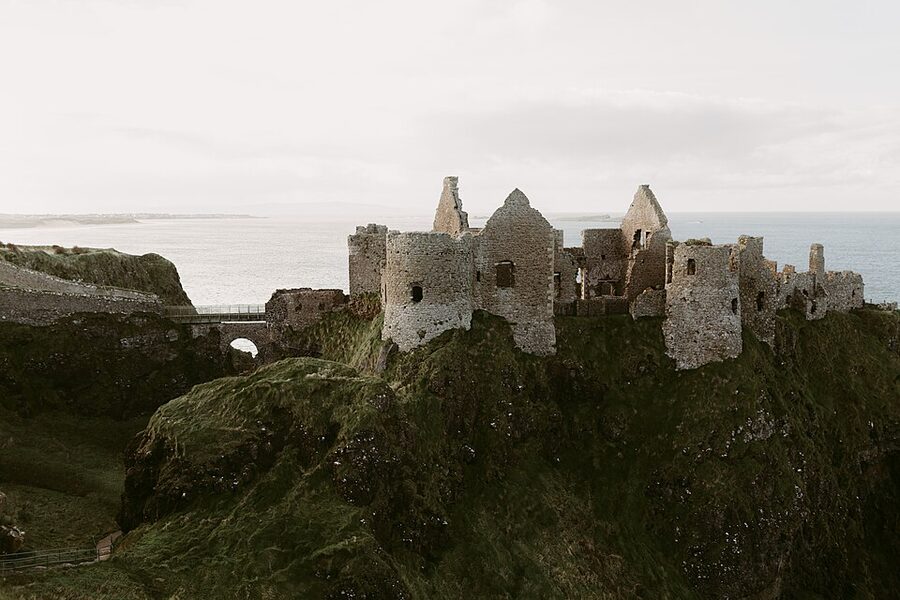
Dunluce is the medieval cliff-edge ruin that gets less time than it deserves. Built in the 13th century by the MacQuillan clan, taken by the MacDonnells in 1584, abandoned around 1690 after the family went broke. It sits on a basalt outcrop with a sea cave directly underneath called the Mermaid’s Cave that you can sometimes hear waves boom in.
For Game of Thrones fans, this is the visual model for Pyke and the Iron Islands seat of House Greyjoy. The actual show used a lot of CGI on top, but the silhouette is recognisably this castle. The Dark Hedges 30 minutes up the road is the more famous GoT spot, used as the Kingsroad in the King’s Landing-to-Winterfell journey.
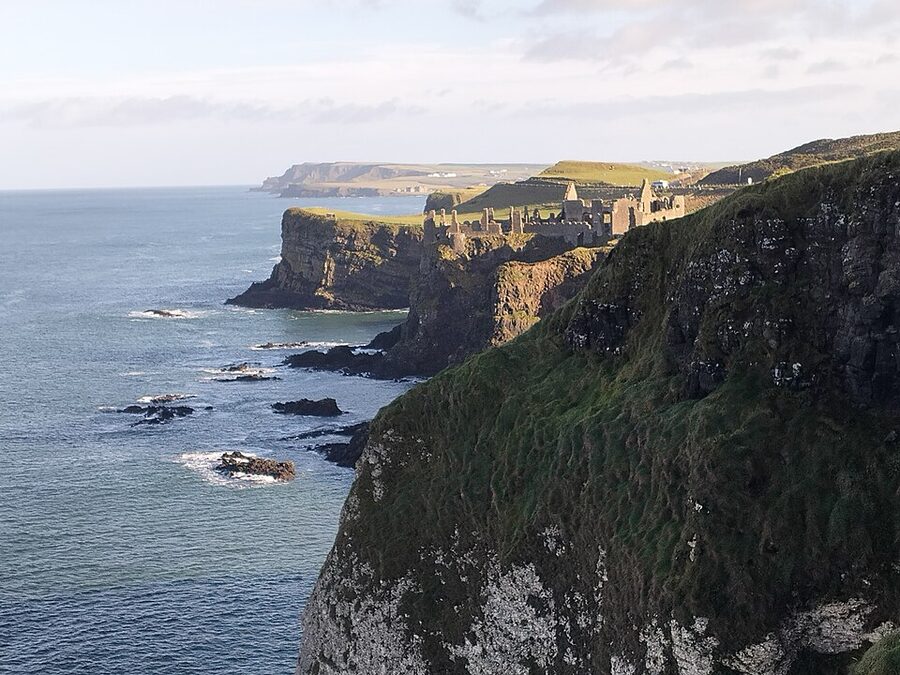
You usually get 20 to 30 minutes at Dunluce. Some tours include the entry ticket and walk you through the ruins. Some only stop at the Magheracross viewpoint up the road for photos. Check before you book if interior access matters to you. Worth doing the inside on a clear day if you have the time.
Dark Hedges, and why the photo is harder than the Instagram suggests
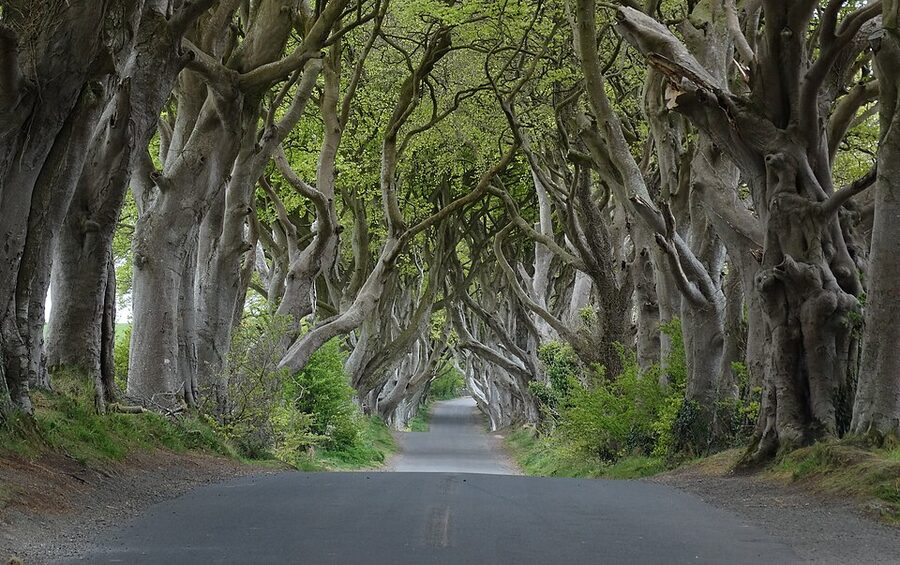
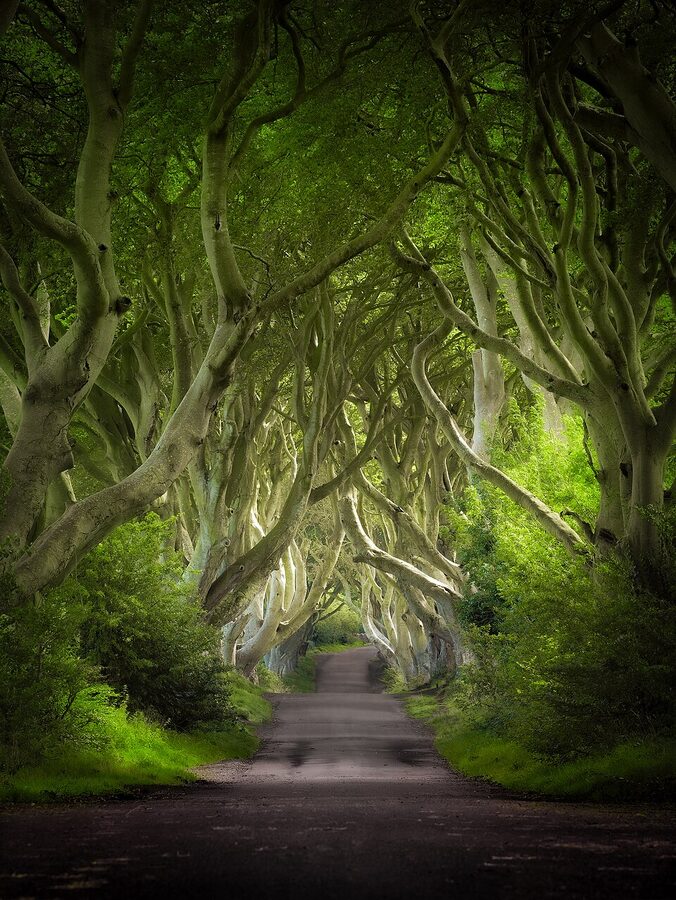
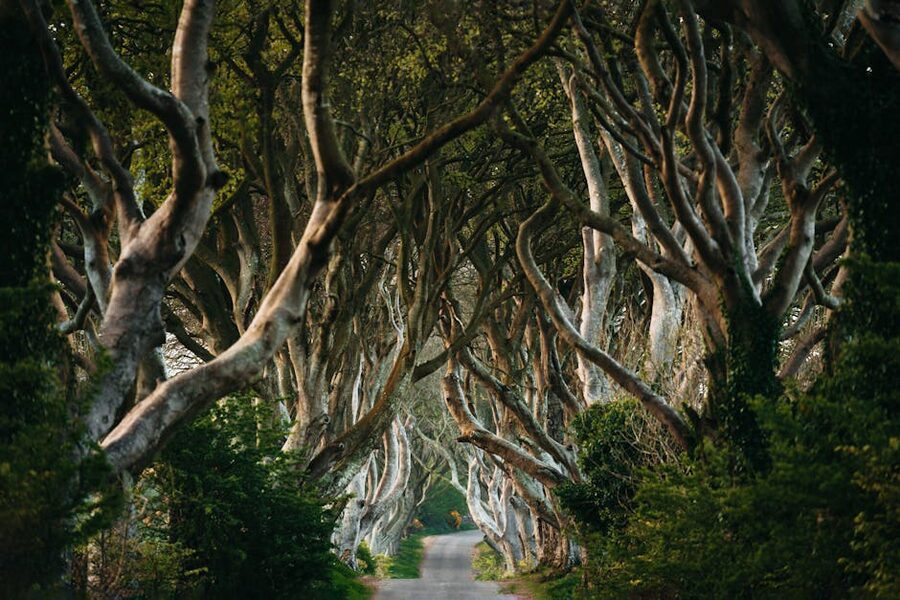
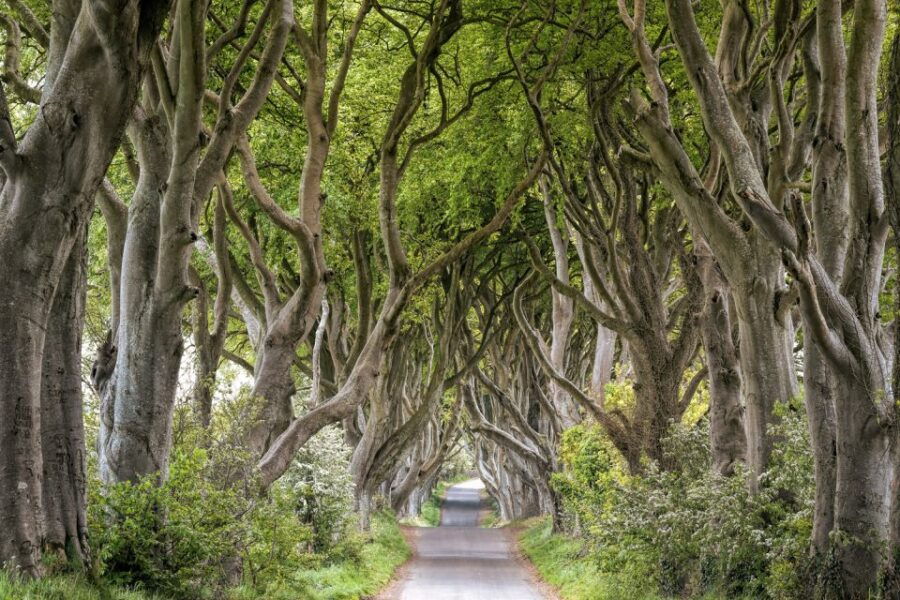
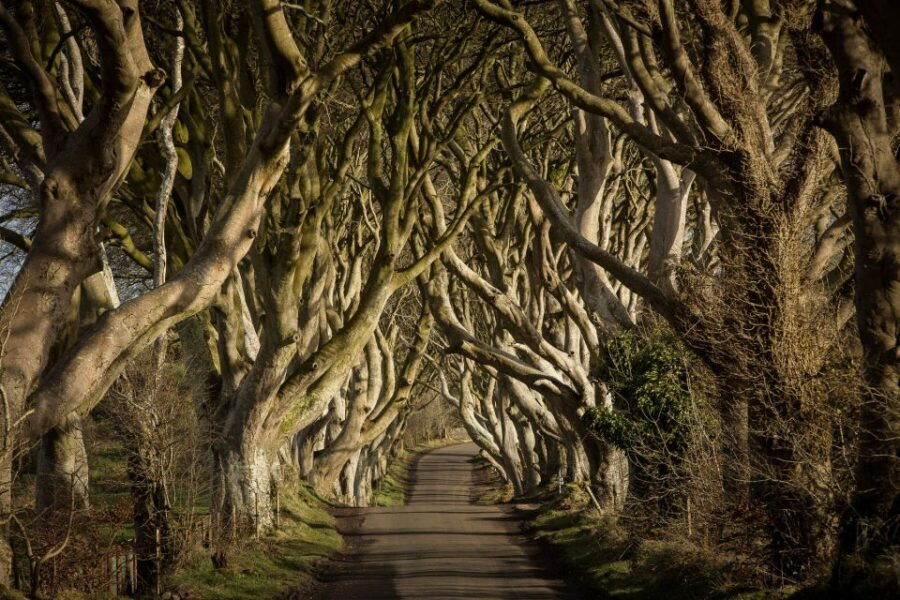
The Dark Hedges is a 200-metre stretch of beech tunnel on the Bregagh Road near Armoy. Planted in the late 1700s by James Stuart to impress visitors approaching his Gracehill House. Game of Thrones used it as the Kingsroad in season two and the place was effectively a tourist site overnight.
The road was closed to cars in 2017 to protect the tree roots, which is the only reason your photo will work. Otherwise you’d have a Hyundai parked across the frame. Coach tours arrive between 4 and 6pm, by which time the light is dropping and there are usually 50 other people there with the same idea.
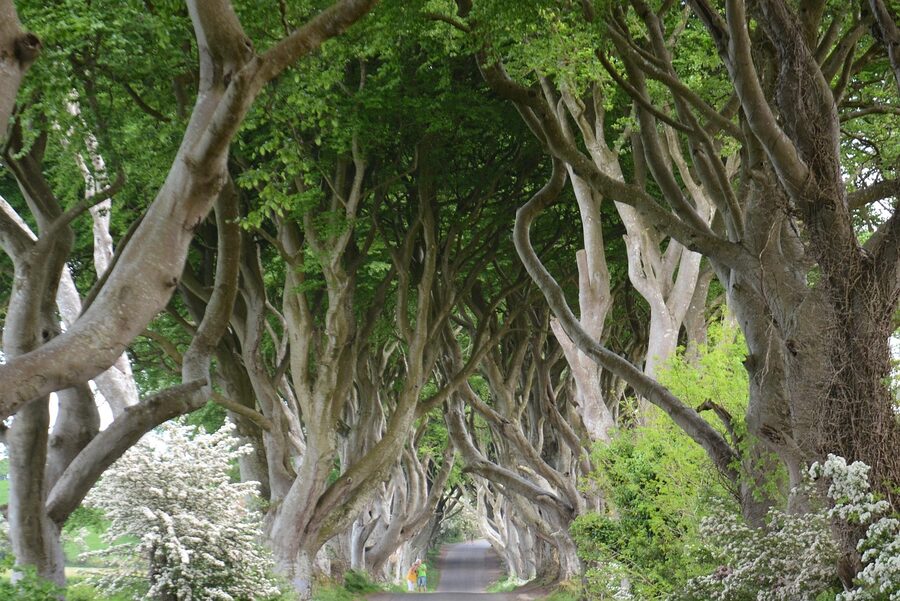
The real take: the Dark Hedges is more atmospheric than spectacular. It’s a road with trees over it. It’s been photographed perfectly maybe a hundred times. Your shot will probably look like one of those hundred. That’s fine. The walk under the trees on a windy October afternoon is genuinely a thing. Just don’t expect it to feel rare.
The three tours I’d actually book
There are about a dozen operators running the Dublin-to-Northern-Ireland day. The pool below is the three I’d book on a first visit, in order. Each is sorted by what it does best. Read the linked review before you commit; the difference between Wild Rover, Paddywagon, and Finn McCool’s is mostly guide quality, and that’s harder to gauge from the booking page.
1. Dublin: Giants Causeway, Dark Hedges, Dunluce and Belfast Tour: $112
This is the Wild Rover flagship and the version most people end up on. Our full review of the Wild Rover Causeway and Belfast tour covers the choice between the Black Taxi and Titanic options in detail. Coach is comfortable, guides know their material, the Belfast handover is well-organised. If you can’t decide, this is the tour I’d book and then pick Black Taxi on the day.
2. Dublin: Giant’s Causeway, Dark Hedges and Titanic Guided Tour: $124
This is the version where Titanic Belfast is built into the booking, no choice required. The 12 dollars over the flagship Wild Rover price covers the museum entry. Our Causeway, Dark Hedges and Titanic tour review walks through the Belfast portion in detail. The museum is properly designed and 90 minutes inside is genuinely the right amount.
3. Giants Causeway Day Tour From Dublin: $96
This is the right pick if you’ve already done Belfast or you don’t want a city stop on a long day. Our Giant’s Causeway day tour review covers the Peter-led smaller-bus version that runs more days a week than the headline operators. You get a longer Causeway window and Dunluce time, which is what most people regret skipping when they pick the city option.
Black Taxi or Titanic, if you’re undecided
The Wild Rover flagship lets you pick between the Black Taxi political tour and the Titanic Museum on the day, at the Belfast handover. If you’re undecided, here’s how to think about it.
Pick Black Taxi if: you want to understand The Troubles in a way that books and documentaries don’t quite manage. The taxi guides are men who lived through the conflict in their twenties and thirties. The Falls and the Shankill are 200 metres apart and feel like different countries. The murals are propaganda from both sides, deliberately, and the guides explain which is which. Bobby Sands. The hunger strikes. The Belfast Agreement. You will leave shaken in a way the Titanic doesn’t manage.
Pick Titanic if: you’ve got kids, you’re with a family group, or shipyard history pulls you. The museum is brilliantly designed. The exhibits are physical, not just panels. There’s a kid-level audio guide. Ninety minutes inside, including the cable-car ride through the build slipway, lands well across ages. The Titanic was built in Belfast and the city wears that fact in a way you don’t expect. There’s also a ticket-bundled version that pre-locks the Titanic museum entry if you want it locked in at booking.
If you can come back twice, do Black Taxi the first time and Titanic the second. Most people only get one shot. Book the version that matches what you’re already curious about. If you don’t have an opinion, my own bias is the Black Taxi side because the political history is the one piece you can only get in person on the day.
The Causeway: 90 minutes versus three hours
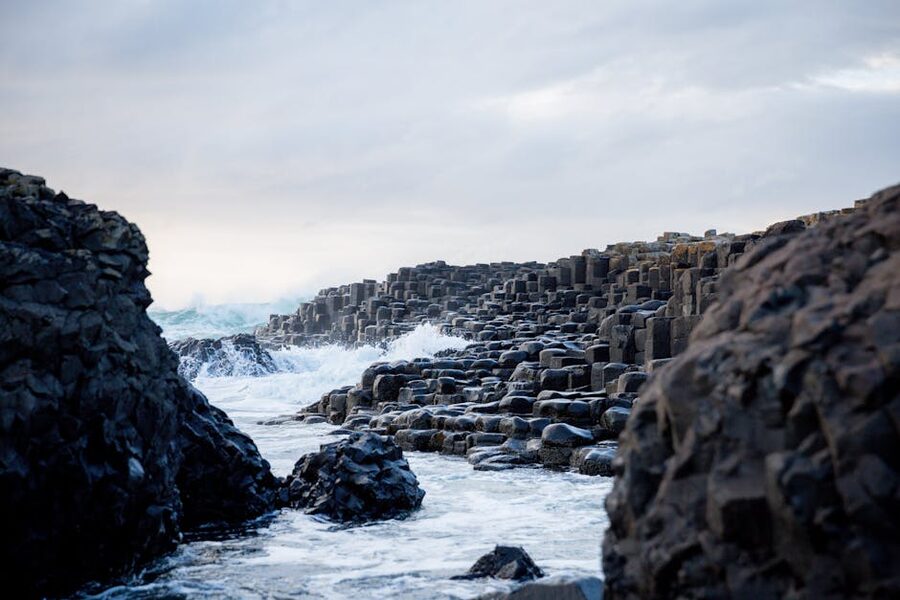
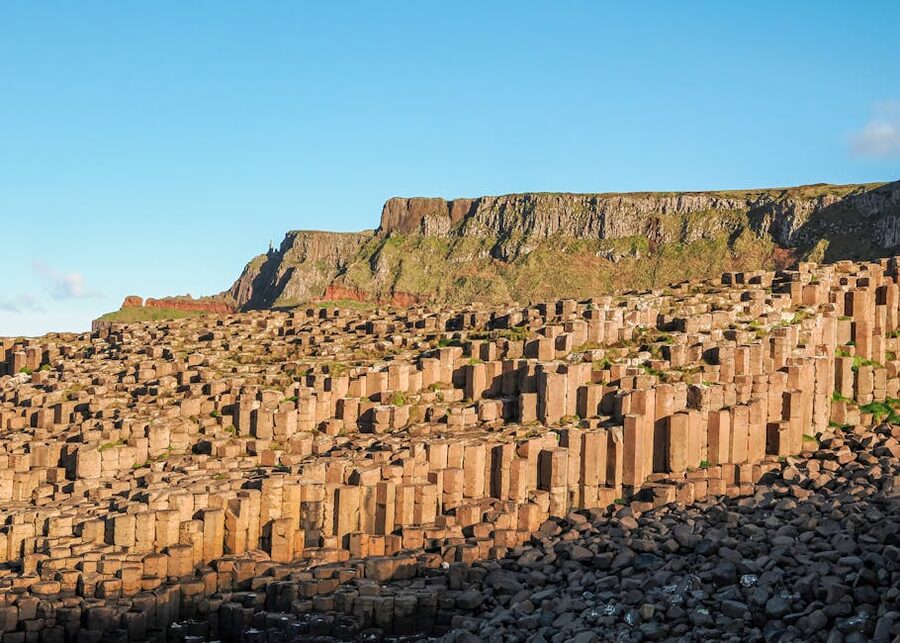
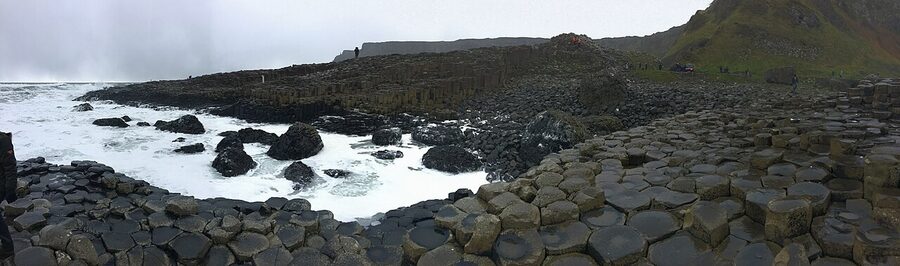
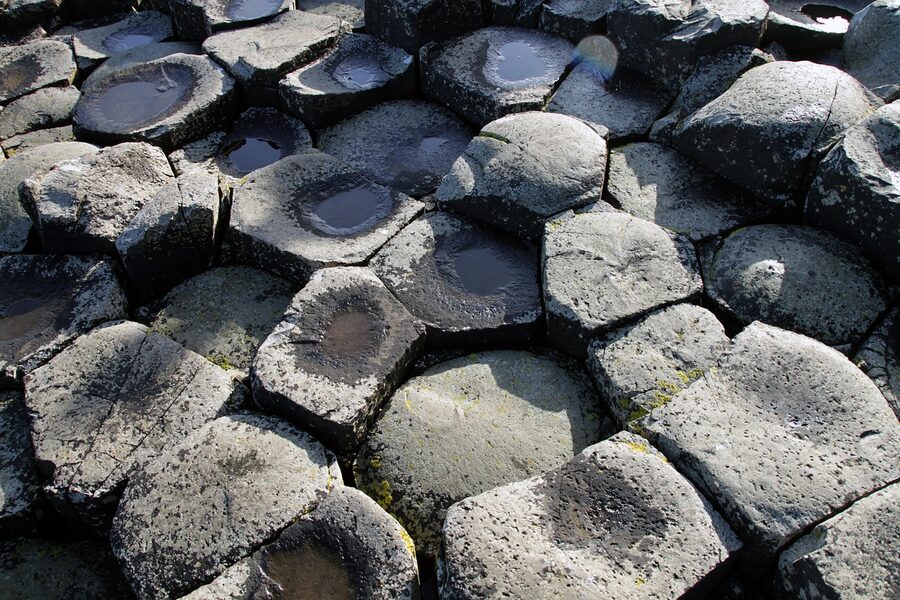
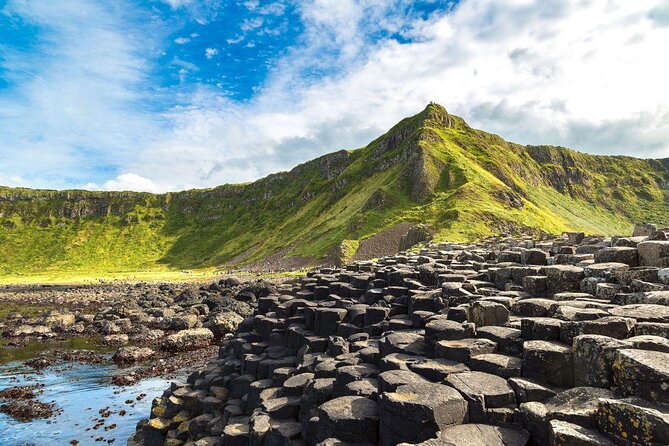
The Causeway is the headline stop and getting enough time there is the most-cited regret on shorter tours. The site is a UNESCO World Heritage area covering about half a kilometre of basalt columns, formed when a 60-million-year-old lava flow cooled in seawater and cracked into roughly 40,000 hexagonal pillars.
You can walk on them. There’s no rope, no sign saying don’t. The columns are flat-topped and stable. The wet ones near the surf line are slippery. Take it slow on the lower shelf if there’s spray.
The trail down from the visitor centre is about a kilometre and slopes down sharply. Most coach groups take a £1 shuttle in one direction, usually back up. There’s a higher cliff path that loops above the columns, which most groups skip but which gives the panoramic view you get on the postcards. If you have two hours at the site, do the lower shore for 45 minutes, then the upper path back. If you have 90 minutes, just do the shore.
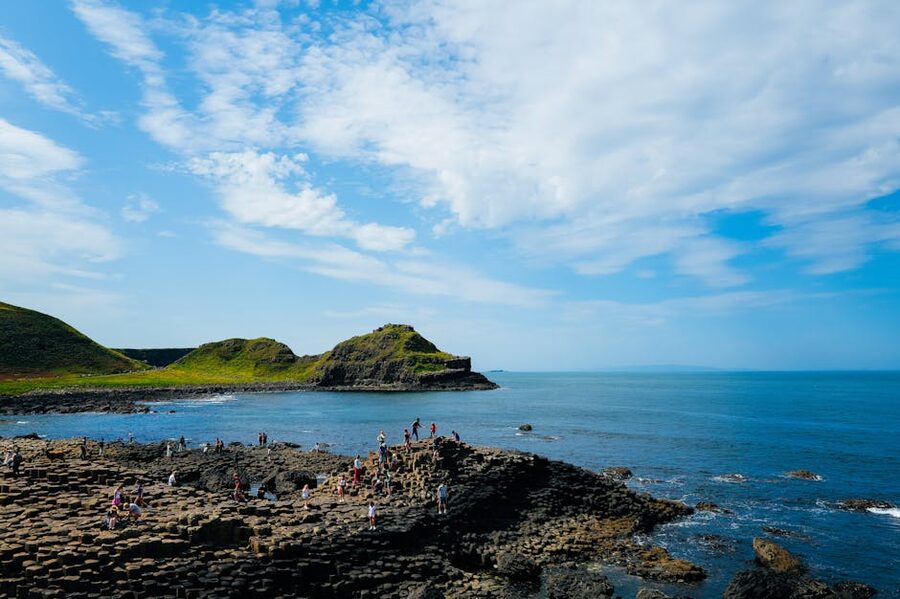
Two hours is enough. Three would be better. Some private tours give you longer, but on the standard coach day you’ve got 90 minutes to two hours and that’s the constraint. Don’t waste it queuing for the visitor centre exhibits; the National Trust building is fine but it’s not why you came.
What’s worth adding if you have an extra day
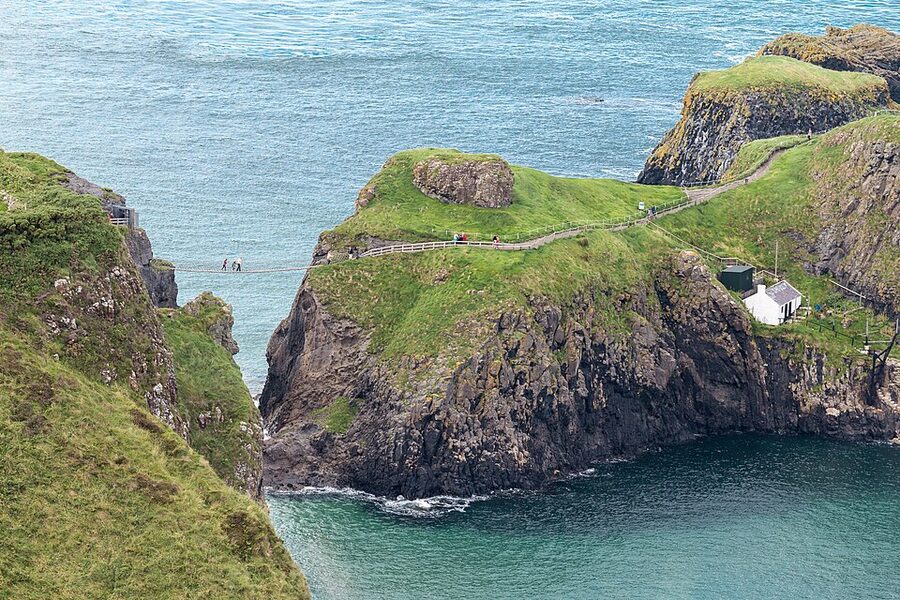
If you can spend a night in the North, the day-trip math changes. With a Belfast overnight you can do the political history one day and the Causeway the next, plus add Carrick-a-Rede, the Bushmills distillery, and a few of the smaller Game of Thrones filming locations like Ballintoy Harbour and the caves near Cushendun.
The future Belfast-base cluster on this site will cover those days in detail. A Titanic Belfast guide, a Belfast-base Causeway day, the Game of Thrones filming-locations day, and a long-form Black Taxi piece will go up later. For now, if you have the extra day, take it.
Practical bits people forget
Layers, every season. The Antrim coast in July is colder than Dublin and wetter than the forecast says. October the temperature drop between Dublin and the Causeway is real; pack a fleece even if Dublin is mild that morning. Rain happens. Bring the jacket.
Grippy shoes for the Causeway. Trainers with worn-down soles will slide on the wet basalt. Hiking shoes are overkill but boots with proper tread work.
Power bank. You’ll be on the bus a lot, you’ll be taking photos at four different stops, and the bus charging ports vary by operator. A 10,000mAh brick will get you through.
Snacks. Lunch is at 2pm. The Belfast rest stop sells coffee and pastries but the queue at 10am is brutal. Grab something at a Dublin SuperValu before pickup.
Toilet timing. The bus does a 20-minute stop somewhere south of the border on the way up and again on the way back. Use them both.
Booking lead time. The flagship Wild Rover tour books up two to three weeks ahead in summer. Off season you can usually get on with a few days’ notice. Free cancellation is standard with both GetYourGuide and Viator versions, so book early and cancel if your plans shift.
The full-Ireland trade-off
One question that comes up a lot: should I do Northern Ireland or the Cliffs of Moher? Both are 13-hour coach days from Dublin. Both eat one of your Ireland days. Neither leaves you with much energy that evening.
If you have one day for an out-of-Dublin trip, my answer is usually Northern Ireland. The Cliffs are spectacular but they’re one stop. The NI day gives you four headline stops, a different jurisdiction, and a layer of political and cultural history you can’t get on the Atlantic coast. Our Dublin-side Cliffs of Moher guide covers the western alternative if scenery is the main pull.
If you have two days, do Wicklow plus one of the long days. The Wicklow Mountains and Glendalough day is a much shorter trip, about 8 hours, and lets you save energy for one of the bigger ones the next day.
More Ireland and Britain reading
Once you’ve done the Causeway day, the obvious next moves on this site are the rest of the Dublin cluster: the Guinness Storehouse for the lighter afternoon, the Jameson distillery for the food-and-whiskey side, and a city walking tour as the right way to spend a free morning. For the Game of Thrones angle, our London magical-walking guides cover the British screen-tourism cousin and the Edinburgh-side Highland day at Glenfinnan and Glencoe is the closest Scottish equivalent to this Antrim coast loop.