
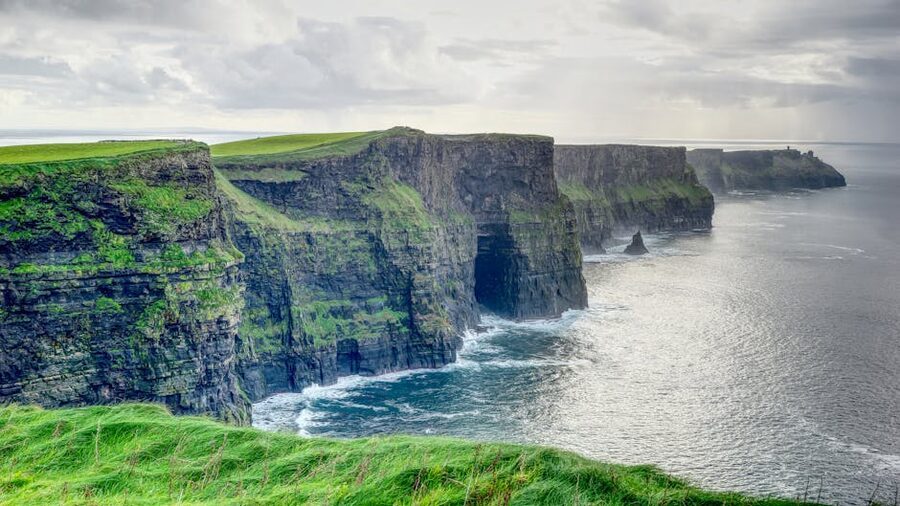
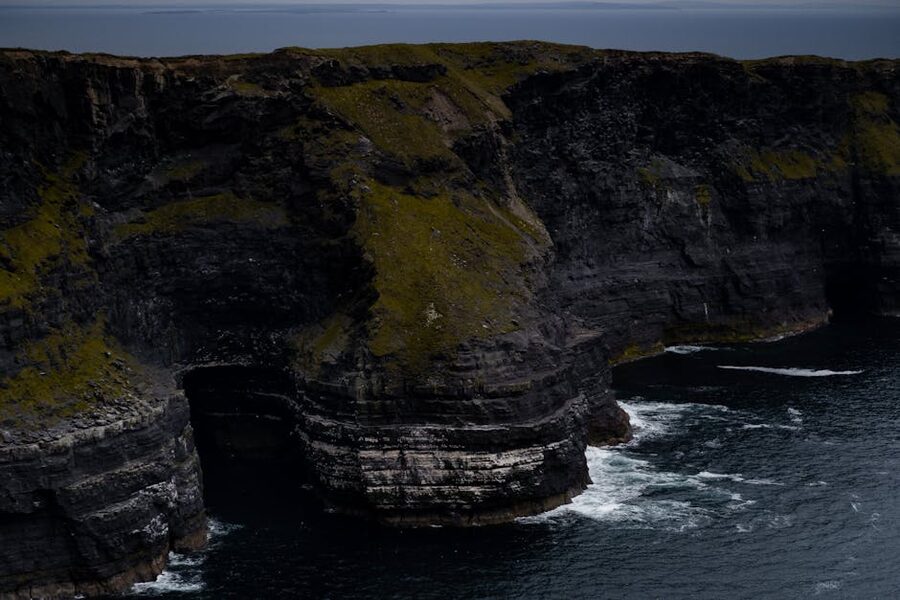
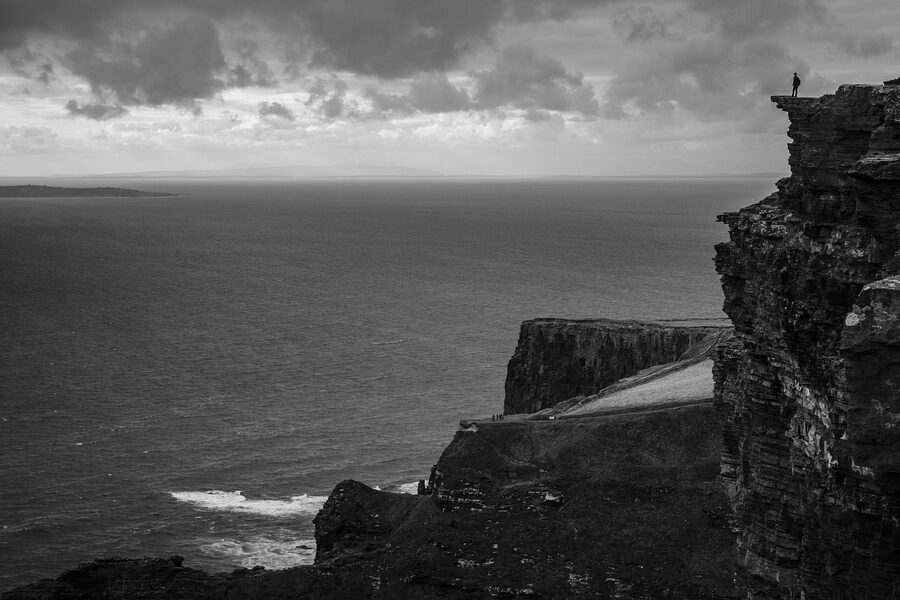
The wind off the Atlantic hits you so hard at O’Brien’s Tower that you brace one foot back and lean into it like you’re starting a sprint. Two hundred metres straight down, the swell is folding into white seams against the rock, and the wall of cliff curves north for fourteen kilometres in an unbroken green wave. You came on a coach from Dublin three and a half hours ago and you’ll spend three and a half more on the way back. Right now, none of that matters.
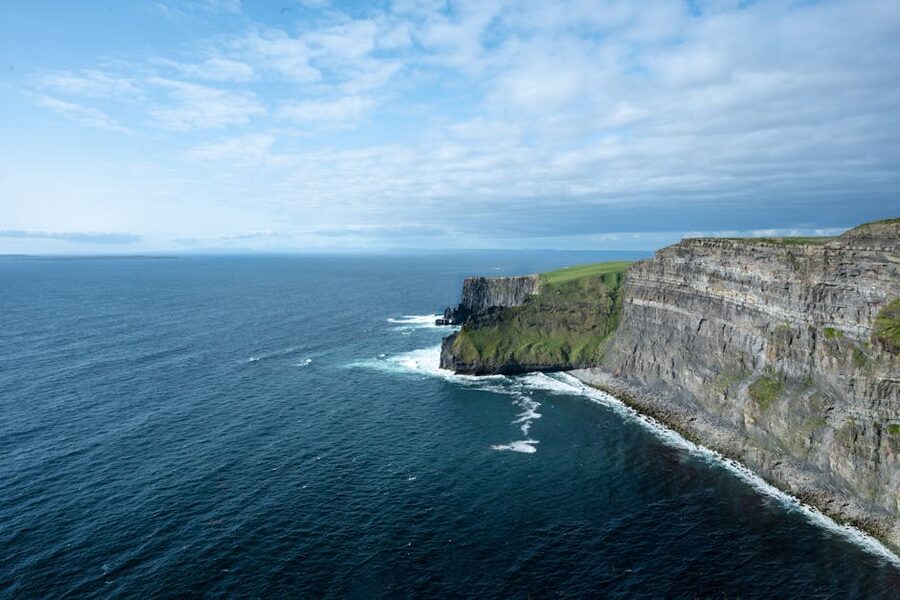
This is the Cliffs of Moher day trip from Dublin. It’s the single most-booked Irish tour I can think of, the one almost every first-time Ireland visitor signs up for, and the logistics around it are messier than the marketing photos suggest. I’ll walk you through every option I’d actually use, what to skip, and which tour gives you the most cliff time for the money.
- In a Hurry? My Three Picks
- The Cliffs of Moher in Plain Numbers
- What a Standard Coach Day Looks Like
- Why I’d Take a Tour Over Driving Yourself
- Which Day Tour Should You Book?
- 1. From Dublin: Cliffs of Moher, Burren and Galway City Day Tour:
- 2. Dublin: Cliffs of Moher, Atlantic Edge and Galway City:
- 3. From Dublin: Cliffs of Moher and Galway City Full-Day Trip:
- The Two Hours at the Cliffs: How to Spend Them
- O’Brien’s Tower
- The Visitor Centre and Atlantic Edge
- The Wind
- The Burren and the Wild Atlantic Way
- Doolin and the Aran Islands Detour
- Galway in an Hour
- Where to Eat in 60 Minutes
- What to Pack for the Cliffs
- Cliffs of Moher in Pop Culture
- A Bit of Cliffs History
- When to Go
- Cost Breakdown
- Common Questions
- Can I do the Cliffs without a tour?
- Is the cliff path safe?
- Are the cliffs accessible for reduced mobility?
- How does this compare to a Stonehenge or Cotswolds day from London?
- Last Word on the Cliffs
In a Hurry? My Three Picks
Cliffs of Moher, Burren and Galway full-day coach from $89. The most-booked option on the market, the one with the strongest pacing and a guide who covers the Burren properly. Check availability on GetYourGuide
Cliffs of Moher, Atlantic Edge and Galway from $85. Skips the Burren stops to give you longer at the cliffs and entry to the indoor Atlantic Edge exhibit. Check availability on GetYourGuide
Cliffs of Moher and Galway full-day from $85. Same Galway anchor with a leaner itinerary, often the cheapest available date. Check availability on GetYourGuide
The Cliffs of Moher in Plain Numbers
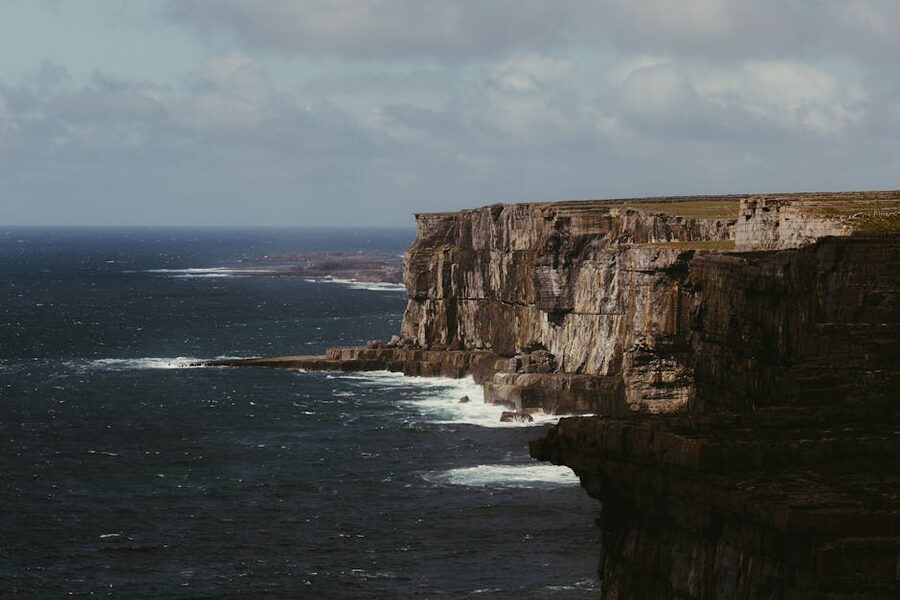
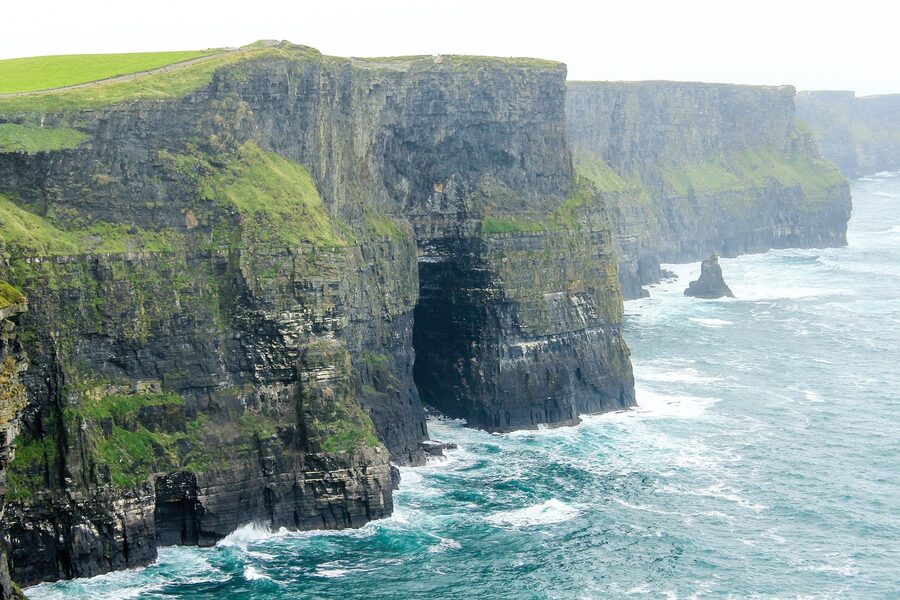
The Cliffs sit on the western edge of County Clare, about 270 km from Dublin by road. They top out at 214 metres above the Atlantic at Knockardakin and run for fourteen kilometres along the coast. They’re the most-visited natural attraction in Ireland and the second-most-visited paid attraction overall, only behind the Guinness Storehouse. About 1.5 million people pass through the visitor centre every year.
You can get there four ways from Dublin: rent a car, take a public coach to Doolin and walk in, take a train-and-bus combo, or book a coach day tour. The day tour is what 90% of first-timers do, and unless you’re staying out west or really want to drive yourself, it’s the right call. The drive is long, the parking at peak times is grim, and the road westward is narrow in places where two coaches can barely pass each other.
What a Standard Coach Day Looks Like
A typical day runs about 13 hours door to door. Pickup in central Dublin between 6:45 and 7:30 a.m. Drive west for roughly three and a half to four hours with one toilet stop along the M7. Most coaches break at the Barack Obama Plaza in Moneygall, a service station built around the fact that Obama’s third great-grandfather was born in the village. It’s tacky and useful in equal measure. Restrooms, coffee, and the only chance for a snack before the cliffs.
From Moneygall the coach pushes through Limerick, then turns north up the coast road. You’ll get the Burren limestone in the morning light if your tour includes it, then the cliffs themselves around midday. Two hours at the cliffs is the standard window. Then up the Wild Atlantic Way to Galway by mid-afternoon, an hour or so of free time in Galway, and back to Dublin by 9 p.m.
Why I’d Take a Tour Over Driving Yourself
I drove it once. Wouldn’t again from Dublin. The N18 narrows in the Burren and the cliff visitor centre car park fills before noon in summer. You arrive frazzled, you have to pay the visitor parking, and you’re already worn out before you start the cliff walk. Coach drivers know the timing and they do this drive twice a week. They get you in and out clean, they pull over at the photo stops, and they tell you Irish folklore for four hours straight if your guide is any good.
The one case for driving: if you’re already staying overnight in Galway or Doolin, skip the coach. From Galway it’s a 90-minute drive to the cliffs and a tour like the Galway-side Cliffs of Moher and Burren full-day shortens the day to seven hours. The Galway angle works particularly well if you’ve got more than three nights in Ireland and want to base yourself out west.
Which Day Tour Should You Book?
I picked three. They’re sorted by how often they’re booked, which is also a fair proxy for how reliable the operator is on this route.
1. From Dublin: Cliffs of Moher, Burren and Galway City Day Tour: $89
This is the one I’d put almost everyone on for their first time out west. The pacing is the most settled of the three, you get a real Burren stop with a chance to walk the karst pavement, and the guide narration is consistently strong. Our full review of this tour goes deeper on the Galway walking add-on and the seating tactics that get you the front of the coach.
2. Dublin: Cliffs of Moher, Atlantic Edge and Galway City: $85
I’d take this one if rain is in the forecast. The Atlantic Edge centre is a four-storey indoor exhibit at the cliff visitor centre with a virtual cliff-edge experience and a really good geology room. It buys you something useful when the weather closes in. The full review covers the Atlantic Edge admission and how to time your indoor versus outdoor minutes at the cliffs.
3. From Dublin: Cliffs of Moher and Galway City Full-Day Trip: $85

This is the one I’d book if I’d already done a Burren road trip on a previous visit, or if I’m short on sleep and want a tighter itinerary. The trade-off: less context on the limestone country between Limerick and the cliffs. Our review of the Galway combo compares it head-to-head with the Burren version on a budget basis.
The Two Hours at the Cliffs: How to Spend Them
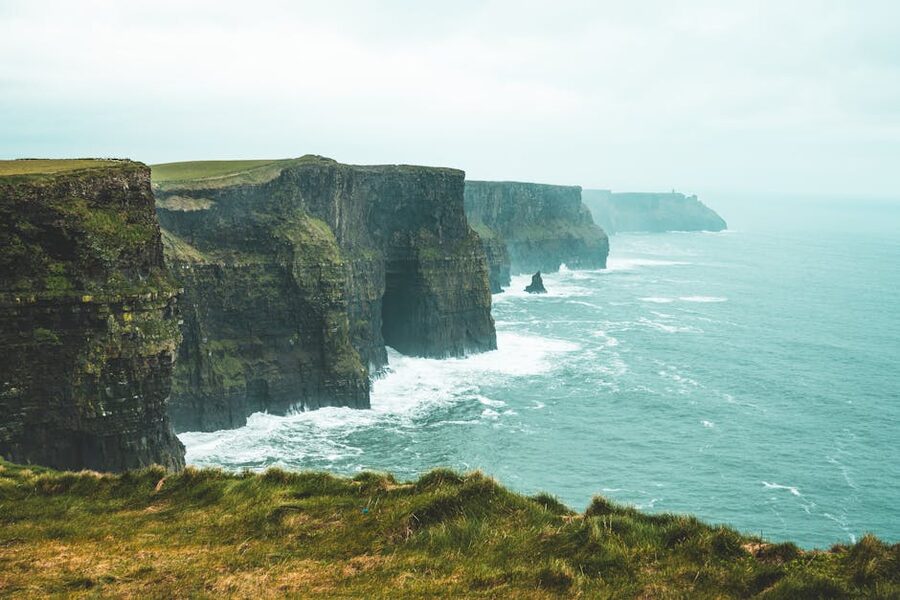
You will get two hours. That’s the standard coach window across every operator I’ve seen. It feels short until you realise the wind makes long walking exhausting and the tea room queue at the visitor centre eats fifteen minutes if you don’t time it.
Here’s how I’d carve up the two hours. Five minutes off the bus to the first viewpoint, the one immediately south of the visitor centre. Twenty minutes walking north on the main path toward O’Brien’s Tower, with stops to look down whenever the wall opens up. Fifteen minutes at the tower, more if it’s calm enough to climb. Then back south past the visitor centre to the southern path for another twenty, where most of the coach crowds don’t bother going. Forty minutes left for the visitor centre, the cafe, and the toilets before the bus.
O’Brien’s Tower
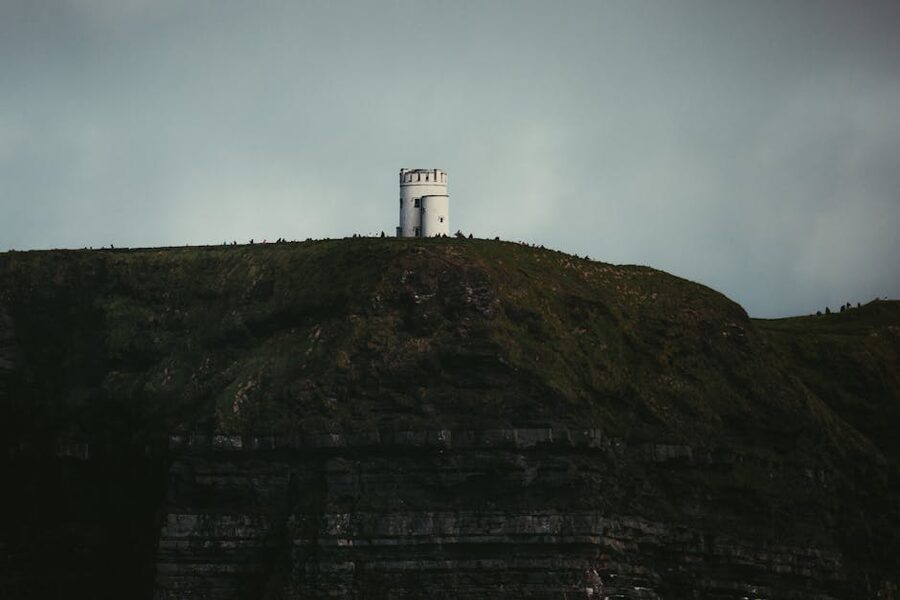
Cornelius O’Brien built the tower in 1835. He was the local landlord and a member of the Westminster parliament, and he built it both as a viewing platform and as a way to give work to local people during a hard year. There’s a plaque inside that he supposedly funded the construction by raising rents, which is its own kind of Irish punchline. The climb to the top is small, the spiral stair is tight, and the view from the roof on a clear day reaches the Aran Islands across Galway Bay and the Twelve Bens of Connemara to the north.
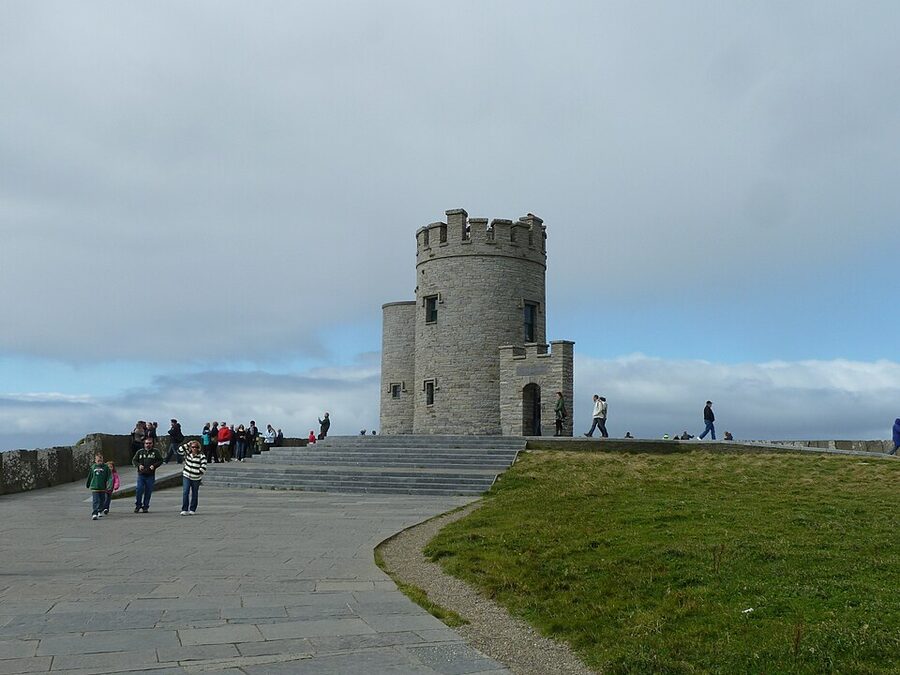
If the tower is closed for weather, don’t sweat it. The view from the path next to the tower is roughly as good. The roof gives you maybe ten extra metres of elevation and a 360 sweep, but the cliff edge from the path is what people actually photograph.
The Visitor Centre and Atlantic Edge
The visitor centre is built into the hillside so it doesn’t ruin the cliff line. Most of it is underground. The Atlantic Edge exhibit on the lower level is a paid extra on most tours unless your day trip already includes it (the Atlantic Edge route does). Inside there’s a big wall projection of the cliffs as seen from the sea, a geology room with the actual layered shale and sandstone laid out in cross-section, and a kids’ interactive area that adults will quietly enjoy too.
The cafe does a hot seafood chowder for around 8.50 euro and a Guinness stew that’s better than it has any right to be at a tourist site. Skip both at peak coach times (12:30 to 1:30) when every coach in Ireland seems to be queueing for the same chowder. Eat in Galway later or grab a takeaway sandwich on arrival.
The Wind
I keep coming back to this. The wind on the cliffs is louder and more constant than you’ll be ready for. It picks up dust off the path. It will rip an umbrella inside out in seconds. It can shove you sideways near the edge if you’re caught off guard, which is why the modern path has a low stone wall along the worst sections. There are stories of unprotected sections further along where people have been blown over the edge in storms. None of this is meant to scare you. Just dress for it.
The Burren and the Wild Atlantic Way
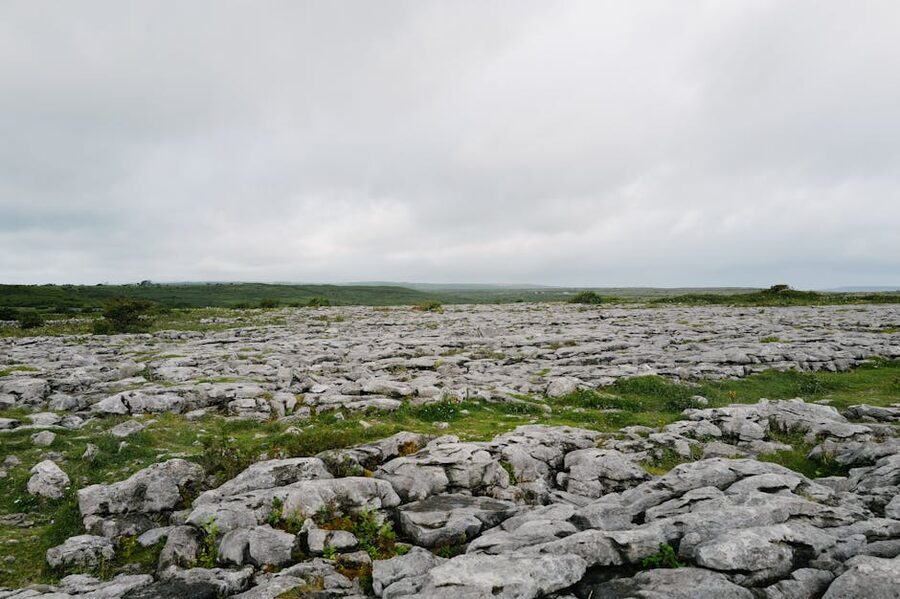
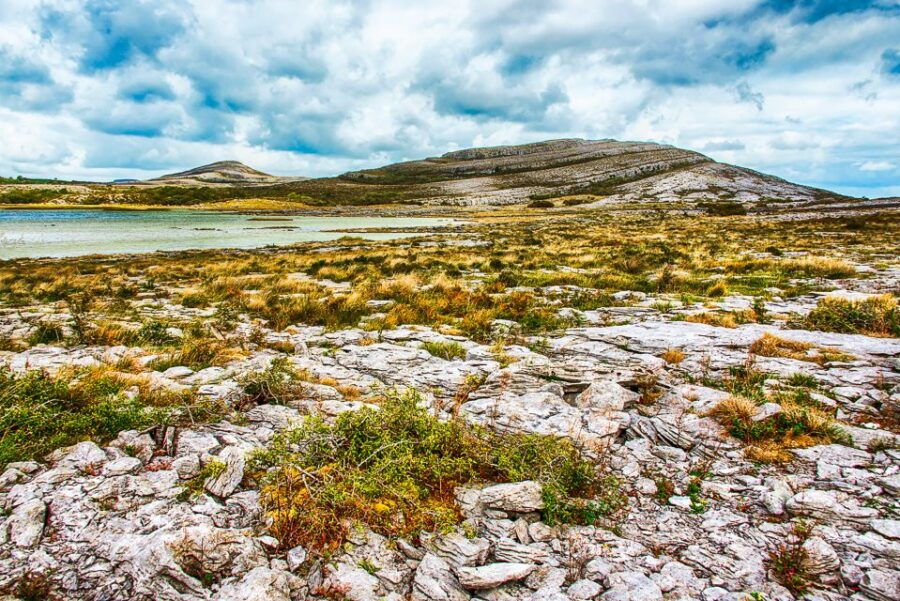
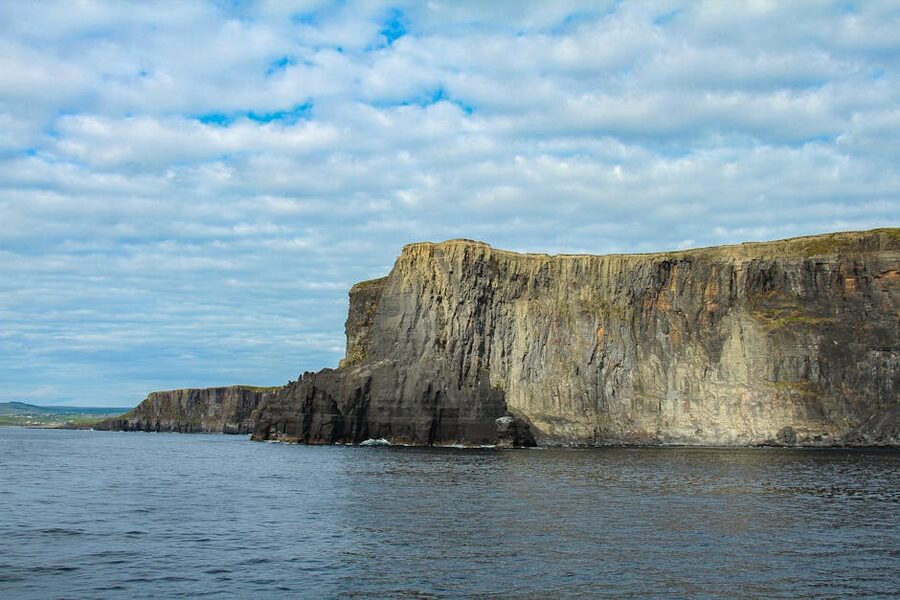
If your tour includes the Burren, this is the part that surprises people. It’s a 250 square kilometre limestone plateau, scraped flat by glaciers, that looks like nowhere else in Western Europe. The name comes from Boireann, Irish for stony place. From the air it looks like a paved area; up close, it’s a maze of grikes (the deep cracks between slabs) where rare flowers grow, including alpine and Mediterranean species sitting next to each other.
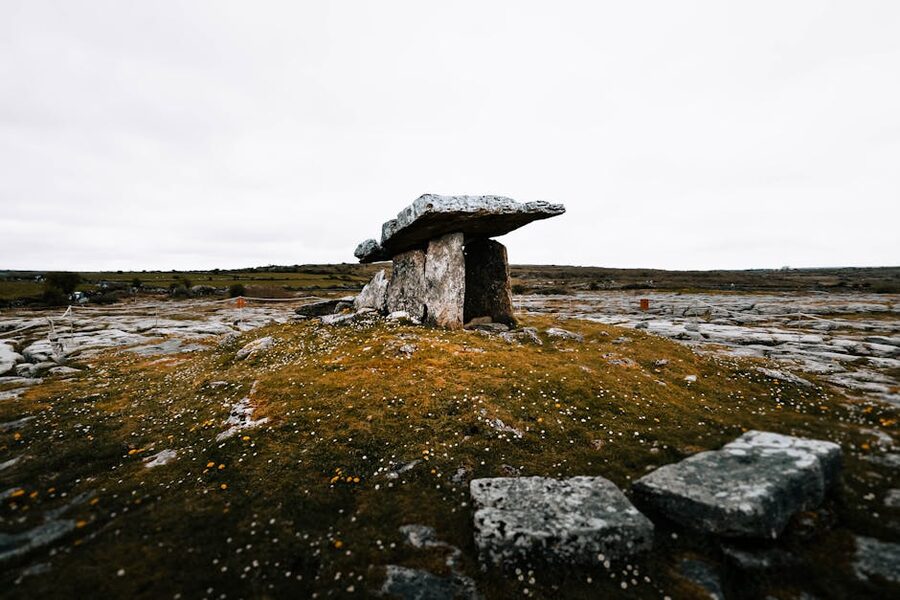
The standard Burren stop on the Cliffs day tour is short, often just twenty minutes at a viewpoint. Some operators add a Poulnabrone Dolmen stop, which is a 5,800-year-old portal tomb in the middle of the limestone pavement. If your guide pulls over here, get out. It’s free, it’s right next to the road, and standing next to it puts something prehistoric into your trip that you’ll remember when the cliffs blur into other coastal photos.
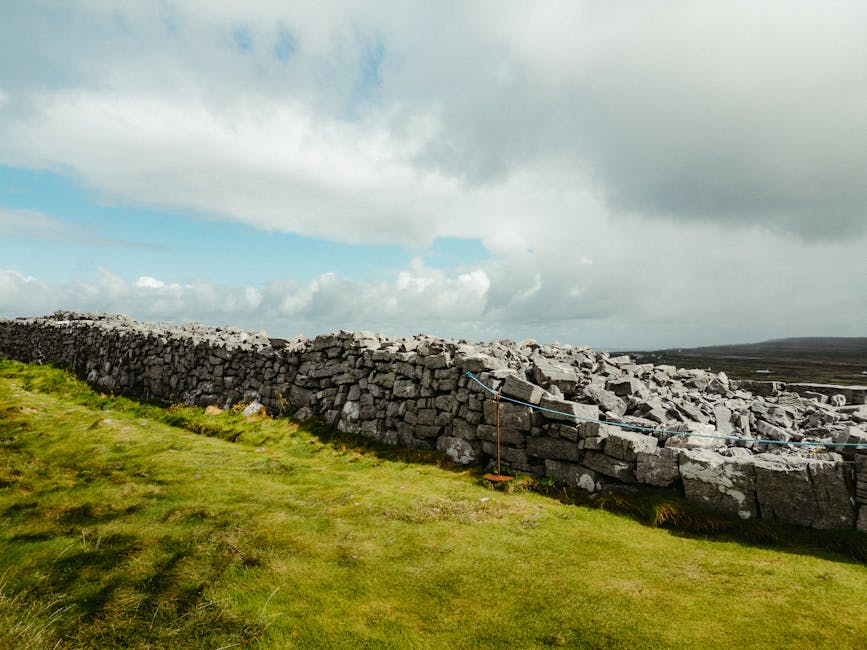
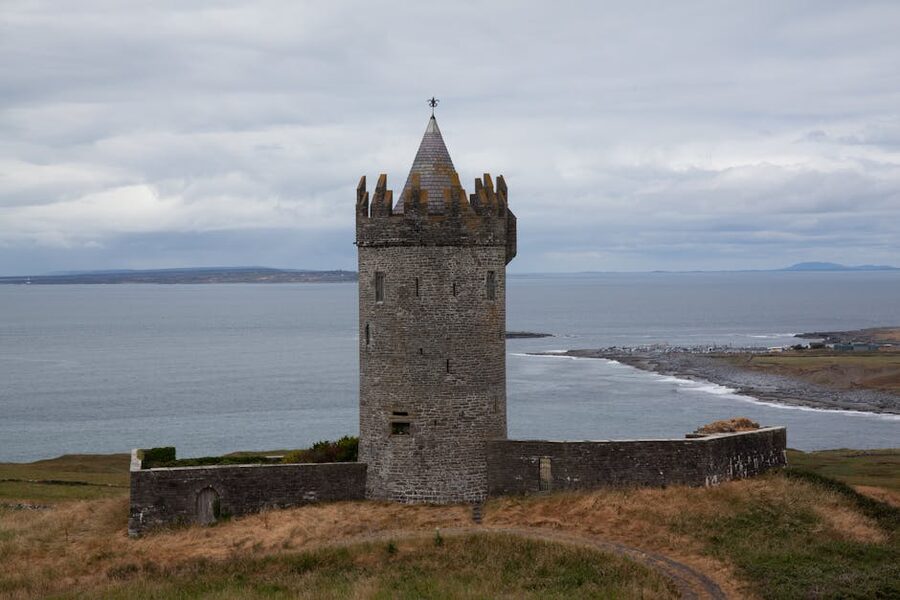
From the cliffs north to Galway you’ll be on the Wild Atlantic Way, the marketing name Tourism Ireland gave the western coastal road in 2014. It’s just a road, but the section between Doolin and Galway threads past Doonagore Castle, the small ports of Ballyvaughan and Kinvara, and the salt marshes of Galway Bay. Watch the right side of the bus. Most photos people send me from this drive are taken without stopping.
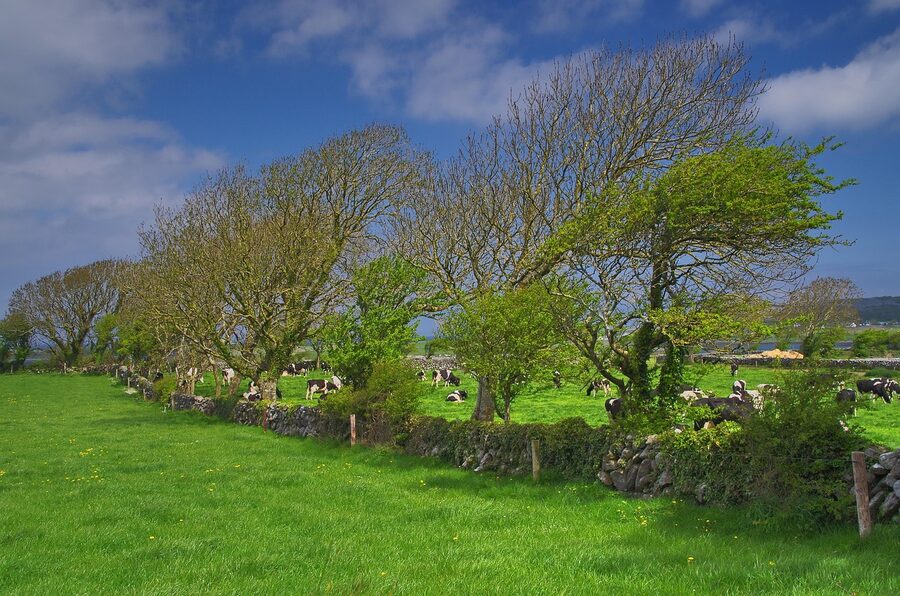
Doolin and the Aran Islands Detour
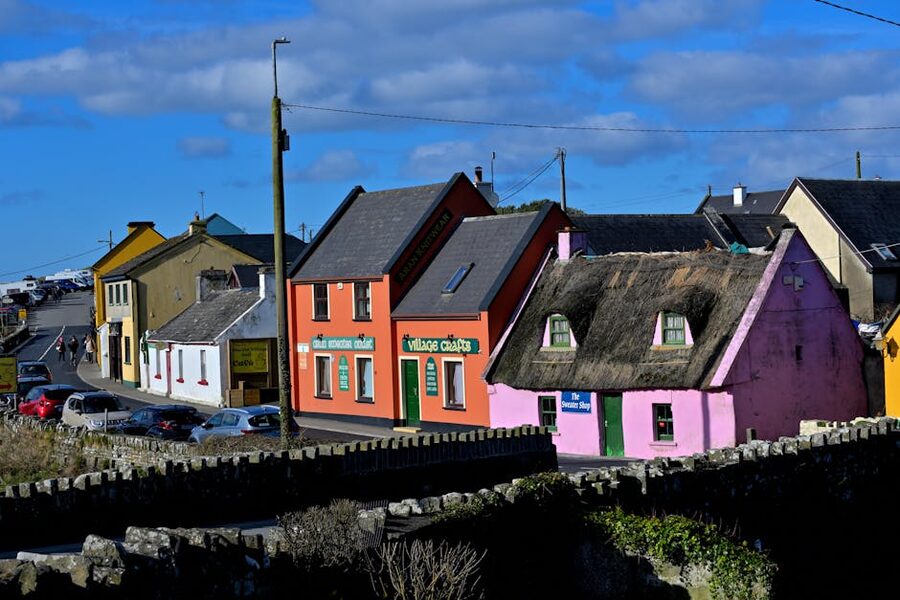
Doolin is the closest village to the cliffs and the launch point for ferries to the Aran Islands. Some Cliffs day tours route through Doolin and tack on a one-hour cruise underneath the cliffs from sea level. If you’re a strong sailor, take it. Looking up at 200 metres of rock from a small boat is a different experience entirely from the path above. If you’re prone to seasickness, skip it. The Atlantic doesn’t do calm.
The Aran Islands themselves (Inis Mór, Inis Meáin, Inis Oírr) are too far to do as a single-day add-on out of Dublin. If you want them, do a separate two-day trip with an overnight in Galway or Doolin.
Galway in an Hour
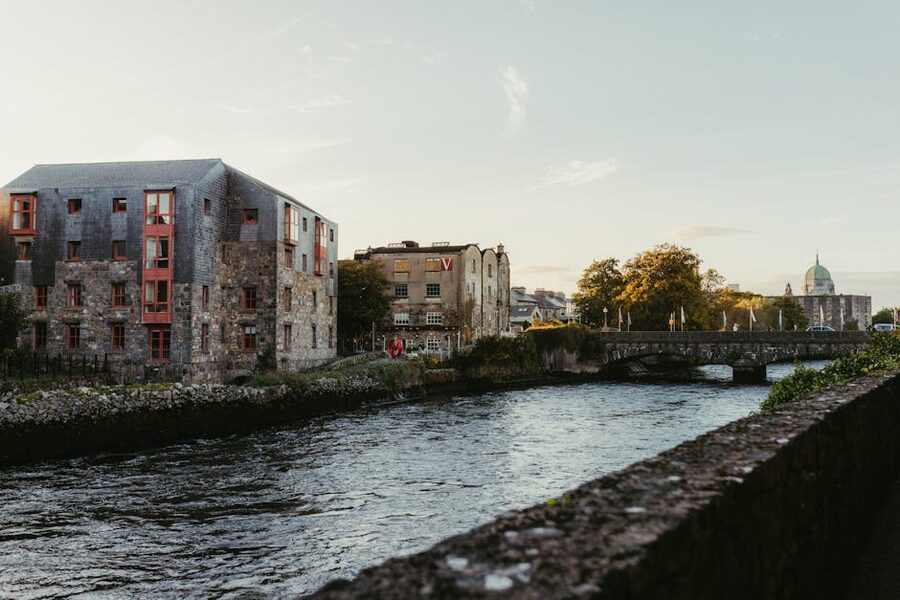
You’ll arrive in Galway between 3 and 3:30 p.m., and you’ll have somewhere between 60 and 90 minutes before the coach leaves for Dublin. That sounds short. It is short. But Galway old town is small enough that you can do a useful loop in an hour if you don’t waste it.
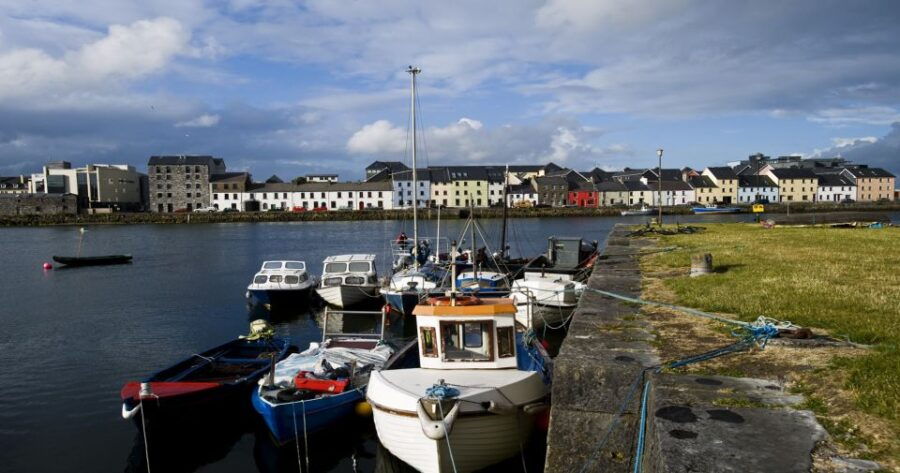
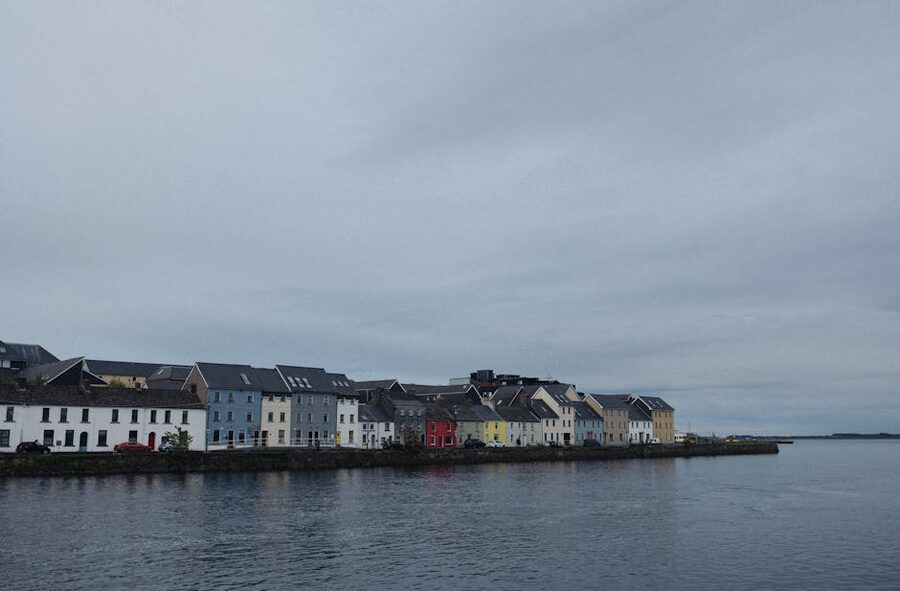
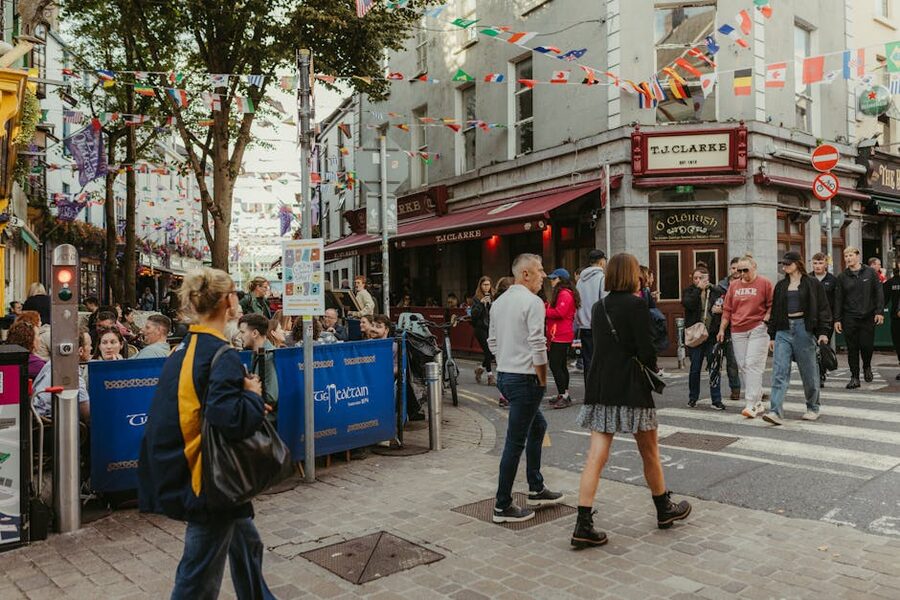
Walk Quay Street and Shop Street, which are the same pedestrianised line under different names. There are buskers most afternoons in summer. Stop at the Latin Quarter for the Spanish Arch, a small piece of the 16th-century city wall on the river. Eyre Square is at the top of the line; it’s modern and not great, skip it if time is short.
Where to Eat in 60 Minutes
Two solid options. McDonagh’s on Quay Street is the fish-and-chips standard. Get the cod or hake, sit at the counter, and you’ll be in and out in 30 minutes. Quay Street Kitchen across the road does a seafood chowder and a Guinness lamb stew that beat the cliff cafe versions by a wide margin. Sit-down service runs about 45 to 60 minutes; tell them when you order that you’re on a coach, they’ll move you up.
If you only want a pint and a quick photo, head to Tig Coili off Mainguard Street. It’s not the prettiest pub in Galway, but it has live trad music most afternoons starting around 4 p.m. Pop in for one, then walk straight back to the coach.
What to Pack for the Cliffs
Layers, always. The temperature at the cliff edge is usually three to five degrees colder than Dublin. Wind chill on top of that. A waterproof shell with a tightening hood is the single most useful piece of kit you can bring; do not pack an umbrella, it will die in the first ten minutes.
Footwear: any closed shoe with grip. The main path is paved but the side trails turn slippery in rain. Trainers are fine for two hours; hiking boots are overkill unless you’re planning to walk the longer Doolin-to-Hags-Head section.
Bring a water bottle. There’s a free refilling station at the visitor centre. Bring snacks if you don’t want to queue at the cafe. Phone in a waterproof pocket or a zip bag, because horizontal rain finds every uncovered seam. A power bank for your phone if you’re shooting a lot of photo and video; the cold drains batteries faster than you’d expect.
Cliffs of Moher in Pop Culture
If you’ve ever felt like you’ve seen the cliffs before, you have. Harry Potter and the Half-Blood Prince used them as the cave where Dumbledore takes Harry to find a Horcrux. The crossing scene was filmed at Hag’s Head, the southernmost cliff. The Princess Bride used them as the Cliffs of Insanity, the ones Vizzini sails to with Buttercup. Father Ted shot the holiday scene by the cliffs. They’ve also turned up in The Mackintosh Man and Leap Year.
The cliff fauna is the other reason cinematographers love this coast. Puffins nest on the lower ledges between April and August, you’re unlikely to see them from the path but you can sometimes spot the white-bibbed razorbills and the black-and-white guillemots from O’Brien’s Tower. Peregrine falcons hunt the cliff face. If you bring binoculars, point them at the seabird stack just south of the tower.
A Bit of Cliffs History
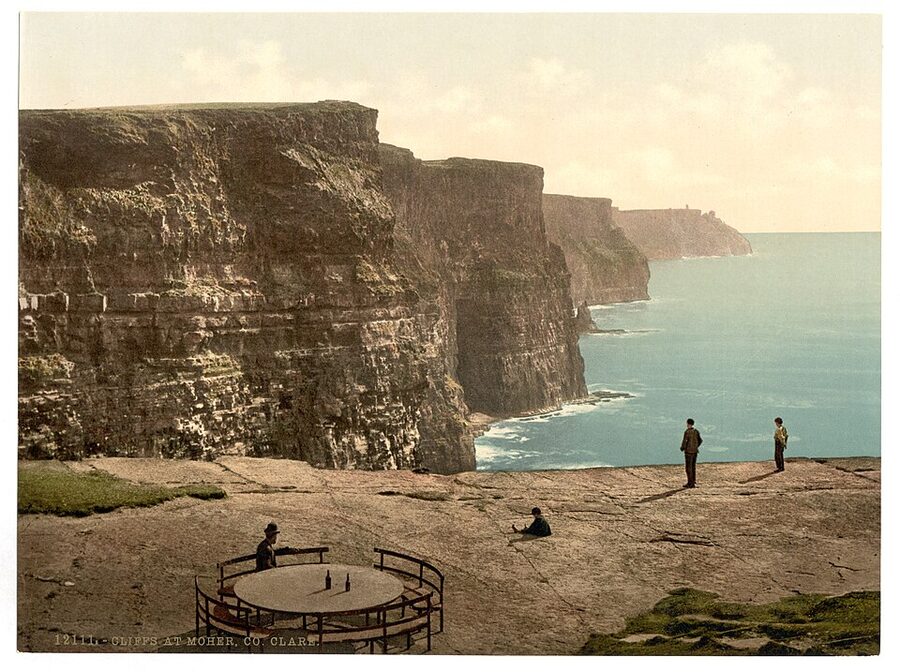
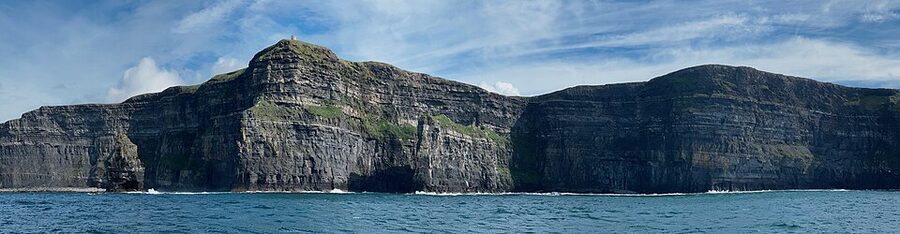
The cliff face is roughly 320 million years old. Carboniferous shale and sandstone, laid down when this part of Ireland sat near the equator under a shallow river delta. You can see the layered bedding from the sea-level boat tour. The name Moher comes from Mothar, an old fort that stood at Hag’s Head, the southern end. The fort was knocked down in 1808 to build a Napoleonic-era signal tower, which is still there.
The visitor centre opened in 2007 and was deliberately built underground to preserve the skyline from the sea side. Before that there was a small car park, a kiosk, and not much else; older Irish people still talk about the cliffs the way they were in the 1980s, when you could walk right up to the unfenced edge with a pint in your hand. The barrier system you see today was added gradually after a number of fatal falls in the 2000s.
When to Go
May, June, and September are the best months. Long days, lower rain odds than the autumn months, fewer school-holiday coaches than July and August. Late June around the solstice is my favourite if I had to pick one week; you get sunset around 9:50 p.m. on the Galway leg, and the light on the water as you head back through the Burren is something I still remember.
July and August are busy. Coaches arrive on top of each other at the visitor centre between 11:30 and 1:30. Tour numbers double, the cafe queue grows by 20 minutes, and the path clogs near the tower. If you’re stuck with summer dates, push for an early-departure tour (6:45 a.m. pickup) so you arrive before the wave.
October to March, the day trims short and rain stops becoming an inconvenience and starts being weather. Tours still run year-round. I’ve done it in February with horizontal sleet and the cliffs were genuinely spectacular in that hostile, washed-out, low-saturation way you only get in winter. Just dress as if you mean it.
Cost Breakdown
The coach tour itself runs $85 to $95 USD, or about 80 to 85 euro. That includes the visitor centre admission (8 euro otherwise), pickup and dropoff in central Dublin, and a guide for 13 hours. Compared to renting a car for a day (60 to 80 euro plus 70 euro of fuel plus 6 euro parking) it lands in the same ballpark, with none of the driving cost in your shoulders.
What’s not included: meals, the Atlantic Edge upgrade if your tour doesn’t bundle it (about 5 euro), and the 4 euro to climb O’Brien’s Tower. Budget another 25 to 30 euro for food across the day if you eat well in Galway, less if you stick to a cliff-cafe sandwich and a Galway pint.
Tip the guide if they were good. Five euro per person at the end of the day is normal. They drove you 540 km and talked the whole way.
Common Questions
Can I do the Cliffs without a tour?
Yes, but it’s a long day. Bus Éireann runs a public service to Doolin via Limerick that takes about four and a half hours each way and runs less frequently than you’d want. The Galway-Cliffs route on Bus Éireann 350 is more useful if you’re already west. There’s also a train from Heuston to Ennis (about 2.5 hours) and a bus connection from Ennis to the cliffs.
Is the cliff path safe?
The official paved path is fine. The unofficial extension south past the southern lookout, toward Hag’s Head, runs unfenced along the actual cliff edge. It’s a stunning walk in good weather and a death trap in wind. People have been blown over here. Don’t take it on a coach day with limited time anyway.
Are the cliffs accessible for reduced mobility?
The visitor centre is fully accessible. The first 200 metres of path north and south of the visitor centre are paved and gentle enough for a manual wheelchair, though there’s a slope to manage. Beyond that, the path turns rough.
How does this compare to a Stonehenge or Cotswolds day from London?
Roughly the same length and the same coach format, with one major difference: the cliffs are the unambiguous main event, where a Stonehenge day from London usually pairs with Bath or Windsor and a Cotswolds day from London spreads across multiple villages. If you want one big visual moment, the Cliffs trip delivers harder per hour. The closer cousin in spirit is probably the Loch Ness day from Edinburgh: same long coach day, same big-landscape payoff, same need to dress for genuine weather.
Last Word on the Cliffs
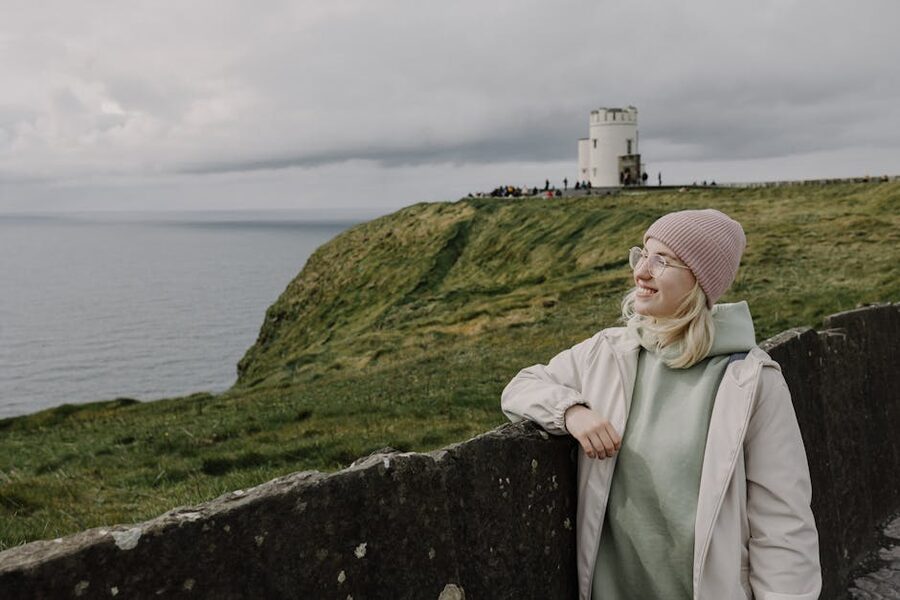
If you only have one day outside Dublin, this is the one I’d take. The drive is long, the weather is unreliable, and the cliffs themselves only deliver about two hours of actual viewing. None of which seems to matter once you’re standing there. The combination of distance, wind, and the sheer drop puts the whole day in a different category from anything you’ll do inside the city.
Once you’re back in Dublin, the rest of the city tour stack falls into place. A morning at the Guinness Storehouse covers the brewery and the Gravity Bar view across the rooftops. Whisky travellers should put a Jameson Bow Street tour on the schedule too. A good Dublin walking tour ties the city’s history together in a couple of hours. The Cliffs were the day you came for. The rest of Dublin is where you actually stay.