
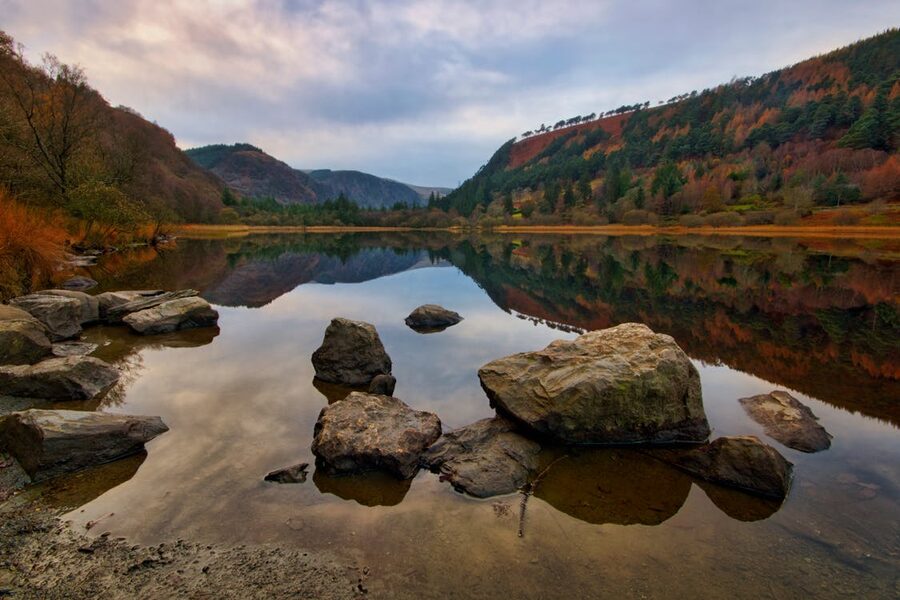
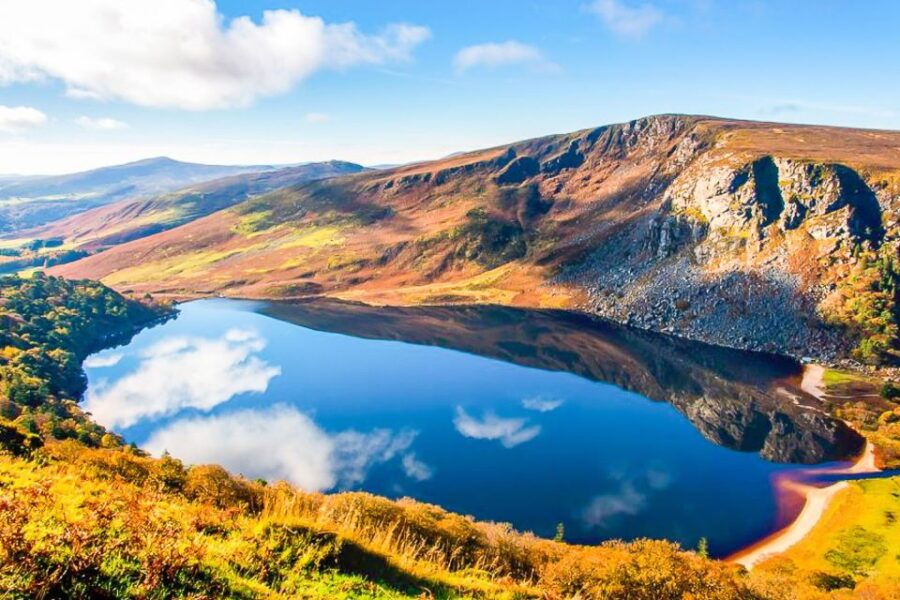
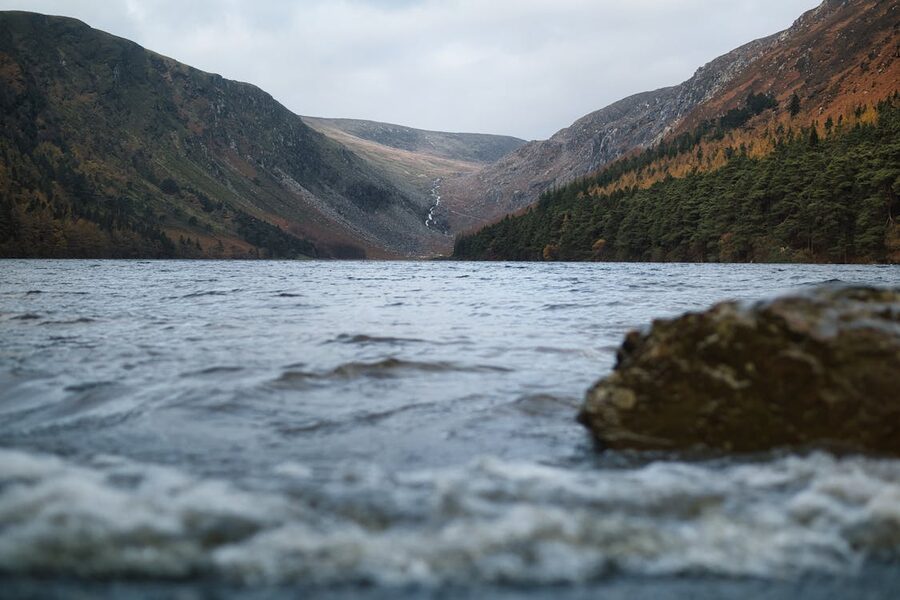
The Upper Lake at Glendalough has a kind of silence that takes a second to register. The water sits clear enough that you can see your own reflection in it, no birdsong, just wind moving through the heather on the slopes above. That’s the moment most day-trippers stop talking, and it’s the moment I knew I’d be back.
This guide walks you through how to actually book a Wicklow Mountains and Glendalough day trip from Dublin. Which tour to pick, what you’ll see, what people get wrong, and where to spend your time once you’re out of the coach.
In a Hurry? My Top 3 Picks
- Best overall (and the one most people book): Wicklow, Glendalough & Kilkenny full-day tour, around $45. Three stops, ~10 hours, the standard combo.
- Best for families: Wicklow + Glendalough + sheepdog farm demo, around $34. Adds a working sheepdog show that kids love.
- Best for limited time: Glendalough & Wicklow Mountains morning tour, around $37. Half-day, back to Dublin by lunch, no Kilkenny.
- In a Hurry? My Top 3 Picks
- What you’re actually going to see
- How to actually book
- The 3 tours I’d actually recommend
- 1. From Dublin: Wicklow Mountains, Glendalough & Kilkenny Tour:
- 2. Dublin: Kilkenny, Wicklow & Glendalough Tour with Sheepdog Show:
- 3. From Dublin: Glendalough & Wicklow Mountains Morning Tour:
- Glendalough: a 1,400-year-old monastery you can walk around
- The Wicklow Mountains themselves
- Lough Tay and the Guinness story
- Kilkenny: the medieval town stop
- Half-day vs full-day: which one to book
- What to pack for a Wicklow day
- Getting to Wicklow without a tour
- How Wicklow stacks up against other day trips
- Powerscourt, the gardens add-on
- The “wild” Wicklow option
- One more thing nobody tells you
- Other Ireland trips worth a look
What you’re actually going to see
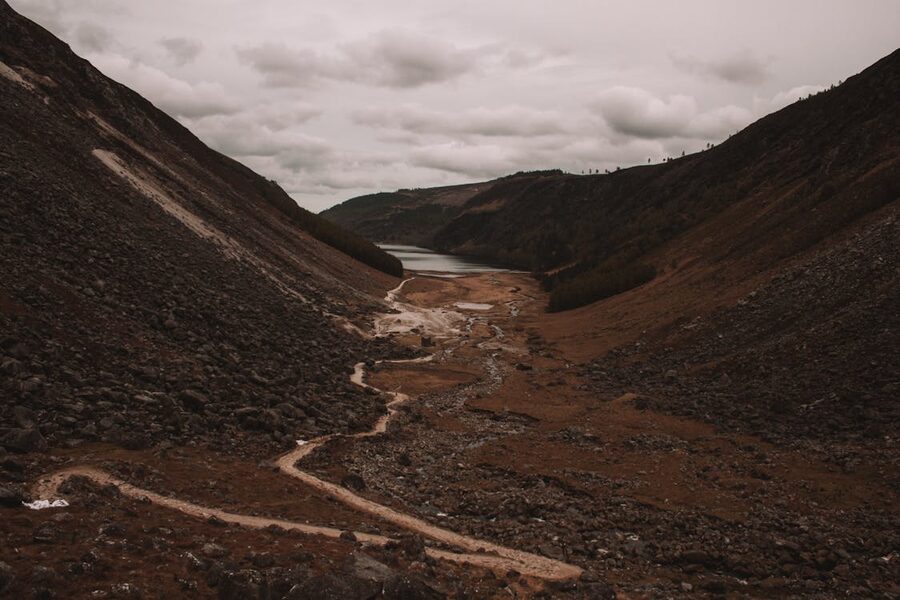
Day trips from Dublin to Wicklow follow a fairly consistent loop. You leave the city around 9am, head south through the Dublin mountains, and within 40 minutes you’re crossing into Wicklow Mountains National Park. Ireland’s biggest national park, and the closest proper wilderness to the capital.
The big hits are these:
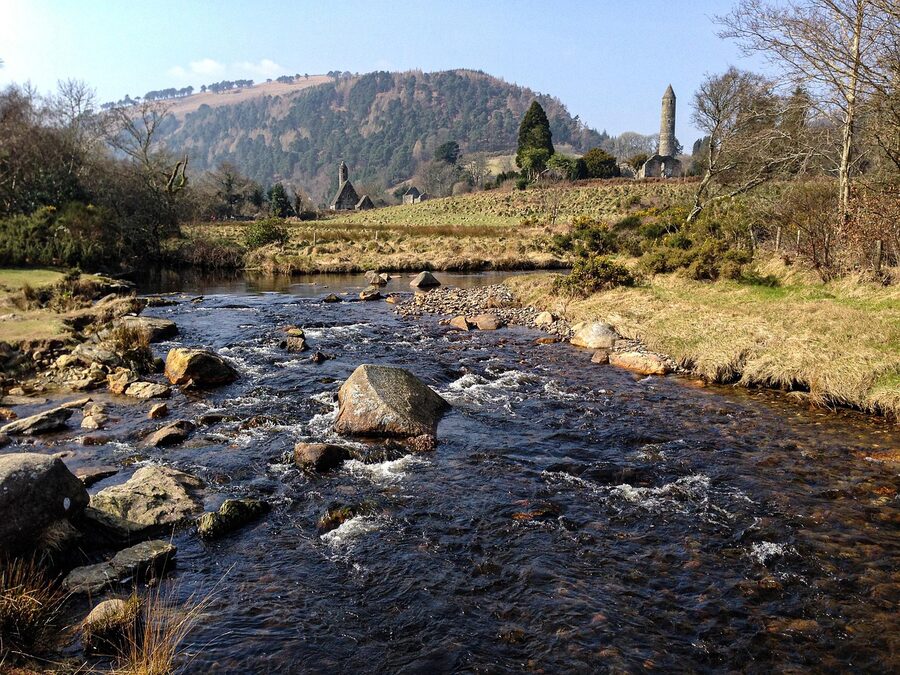
- Glendalough. The “Glen of Two Lakes.” A 6th-century monastic settlement founded by St Kevin, with a round tower, early Christian high crosses, and the Upper Lake reflection that I keep banging on about.
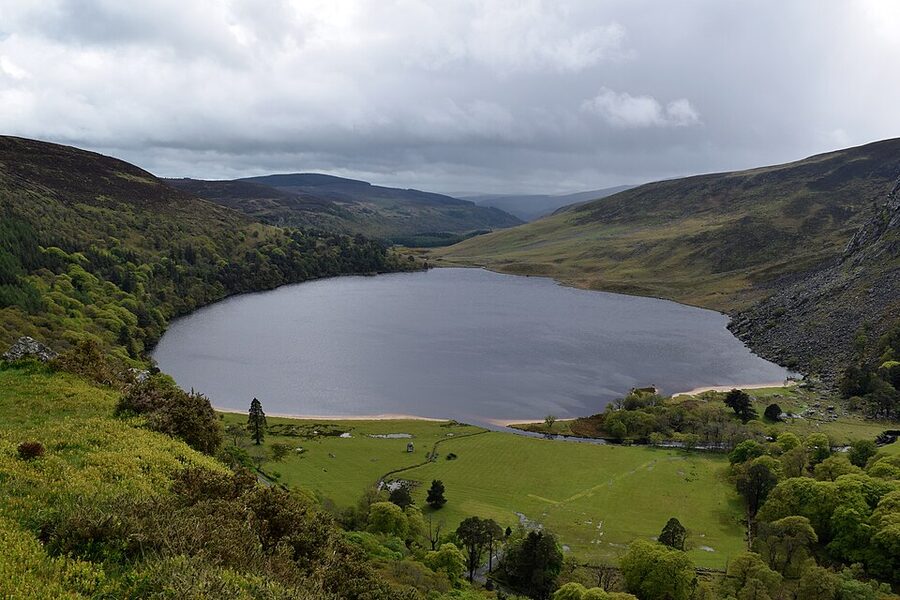
- Lough Tay. Better known as the Guinness Lake. From the viewing platform on the road above it, the dark water and pale crescent of beach really do look like a pint of stout. The Guinness family owns the surrounding estate, hence the name.
- Sally Gap. A high mountain pass with peat bogs on either side. Often the windiest stop of the day. Bring a layer.
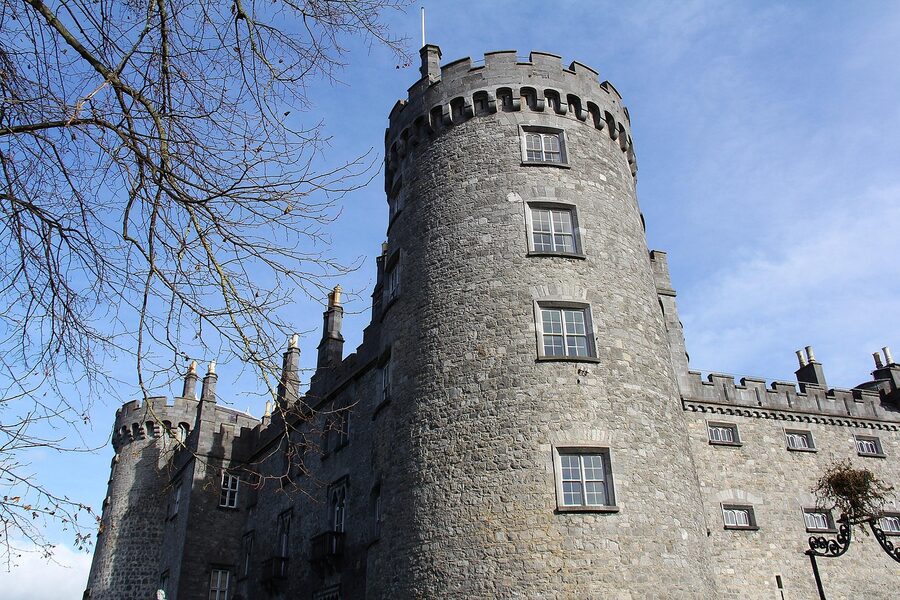
- Kilkenny. A medieval town about 90 minutes south, with a 12th-century castle, the Black Abbey, and the Smithwick’s brewery. Most full-day tours give you around two hours of free time here.
How to actually book
Most people book through GetYourGuide or Viator. Both list the same handful of operators (Wild Wicklow Tours, DoDublin, Finn McCools, Wicklow Tours), so the choice usually comes down to which itinerary fits your day, not which platform.
A few things that aren’t obvious from the listing pages:
- Pickup point matters. Most tours leave from O’Connell Street or Suffolk Street. If you’re staying in Temple Bar or Trinity, both are walkable. From the Docklands or Phibsborough, factor a 20-minute walk or a Luas ride.
- Cash for entry isn’t usually needed. The Wicklow Mountains National Park is free to walk into, and the Glendalough monastic site itself is free. The Visitor Centre charges a few euro. Some tours include the Centre, some skip it. Check the inclusions before you assume.
- Lunch is on you. No tour I’ve seen includes food. Most stop in Glendalough village (Wicklow Heather pub, Glendalough Hotel) or Kilkenny (loads of options around the castle). Budget around €15-20.
- Cancellation cushion. GetYourGuide tours in this region are mostly free-cancel up to 24 hours before. Worth booking early and locking in the price even if your dates aren’t 100% confirmed.
If you only have one full day outside Dublin, this is the trip I’d put it on. The Cliffs of Moher day trip from Dublin is the obvious alternative, but it’s a 13-hour coach marathon with five hours of driving. Wicklow gives you the same amount of “in nature” time with half the bus.
The 3 tours I’d actually recommend
I’ve sorted these by which itinerary I think gives the best return on a day. Not by what’s cheapest. Cheapest doesn’t matter if the tour skips the bit you came for.
1. From Dublin: Wicklow Mountains, Glendalough & Kilkenny Tour: $45
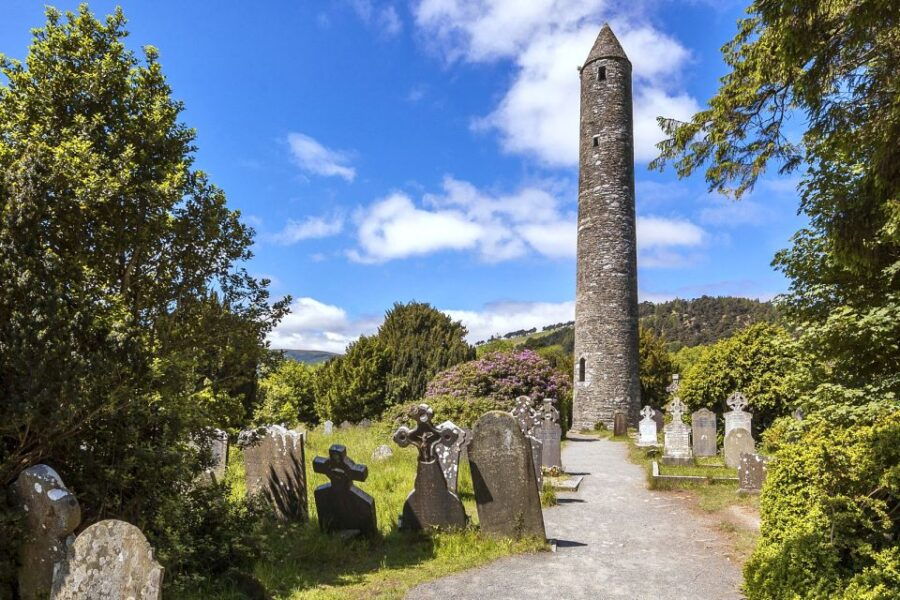
This is the workhorse Wicklow trip and it’s earned its spot. Our review of this tour covers exactly which stops the driver makes between Dublin and Glendalough so you know where to grab a window seat. Kilkenny adds proper medieval scenery to a day that would otherwise be all bog and lake. Worth the longer hours if you want a full Ireland-in-a-day.
2. Dublin: Kilkenny, Wicklow & Glendalough Tour with Sheepdog Show: $34
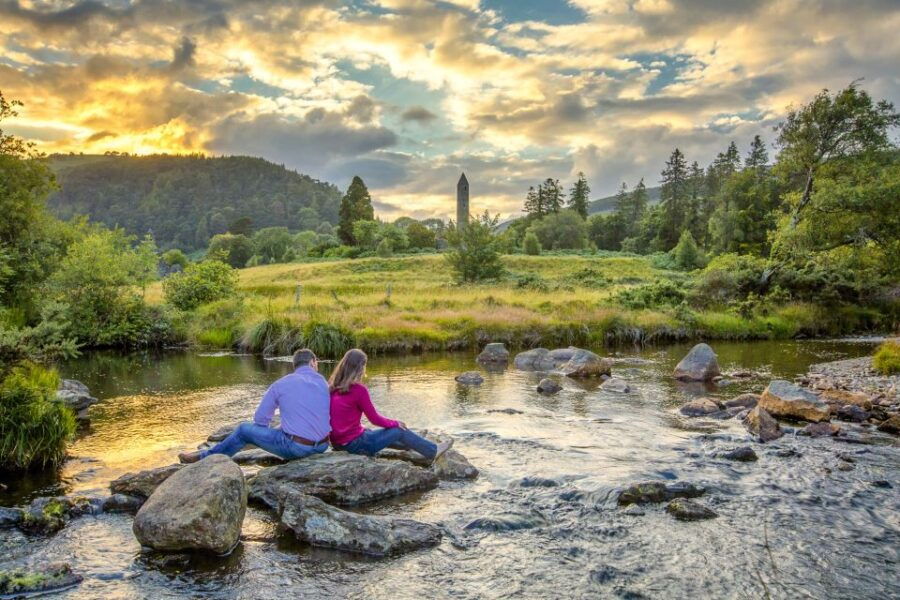
Cheaper than the standard combo and adds a sheepdog farm visit that genuinely changes the day. Read our full review of the sheepdog version for the bit where the guide explains how the whistle commands work. Pick this one if you’ve got younger travellers, or if the bog scenery alone feels light on entertainment.
3. From Dublin: Glendalough & Wicklow Mountains Morning Tour: $37
Pick this one if you’re tight on time or you don’t want to spend ten hours on a coach. Our half-day morning tour review walks through the actual hike option at Glendalough that the longer tours skip. Honestly, this is what I’d book if it was my second day in Dublin and I wanted the afternoon free for the Guinness Storehouse or a Trinity College tour.
Glendalough: a 1,400-year-old monastery you can walk around
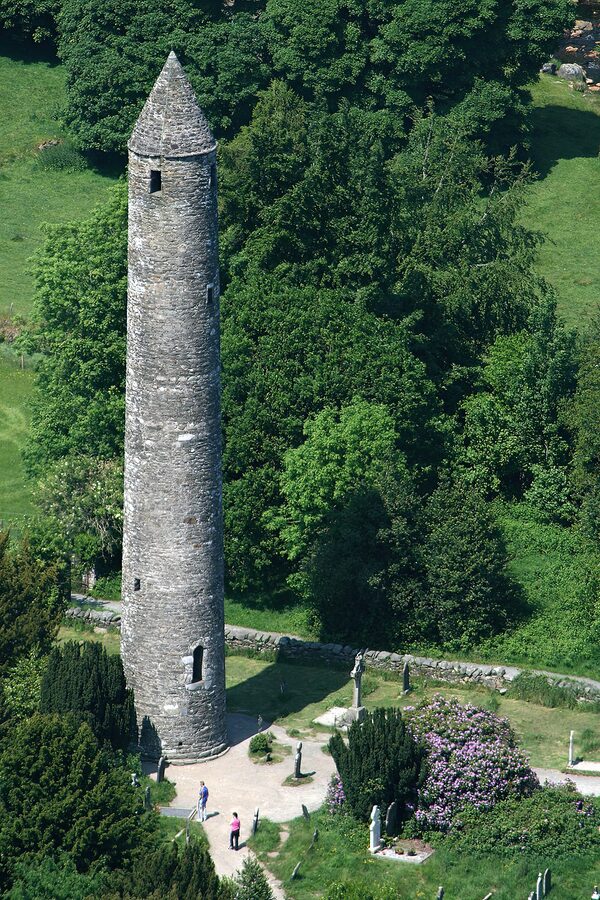
St Kevin set up here in the 6th century looking for solitude. He failed at that. By the 9th century Glendalough was one of the most important monastic schools in Europe. What’s left today is a tight little site you can walk in 30-40 minutes if you’re moving, or two hours if you actually read the panels.
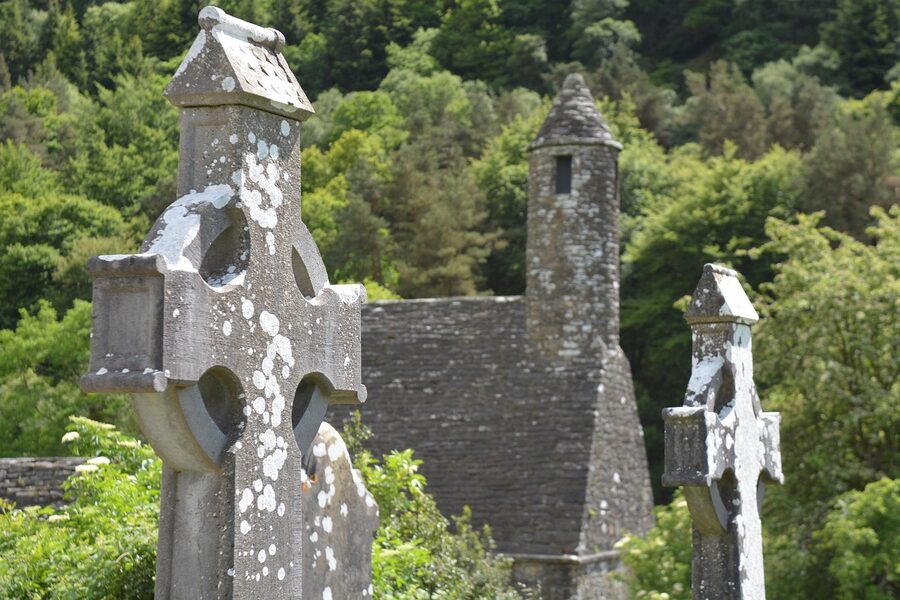
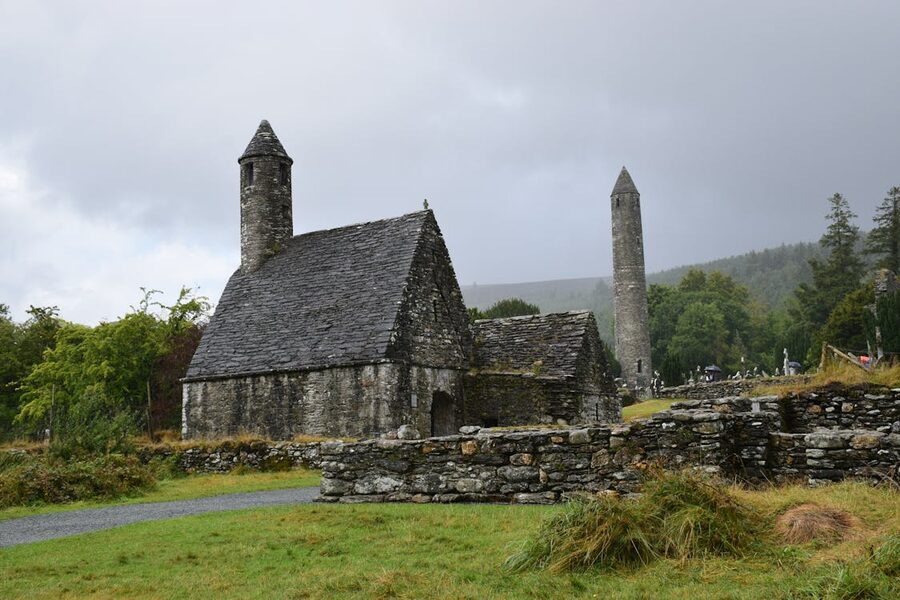
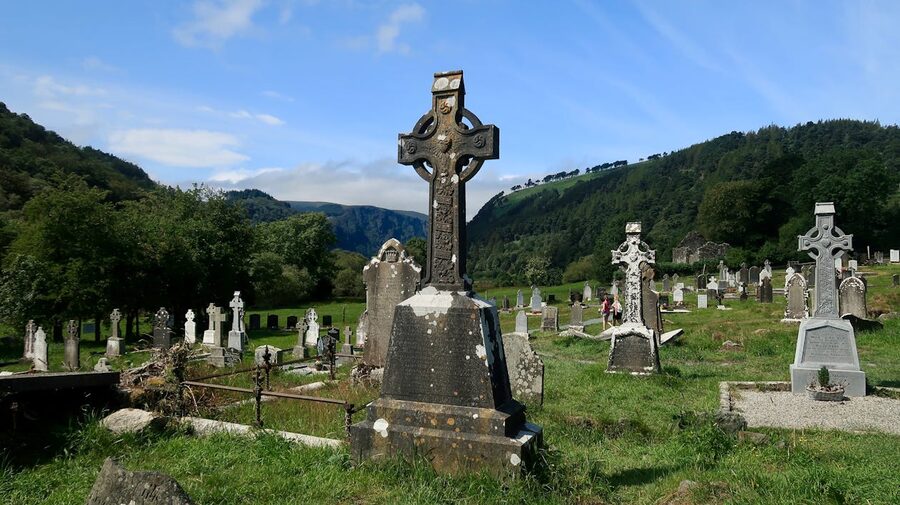
The round tower is the headline. So is the Cathedral, the Priest’s House, and the small church usually called St Kevin’s Kitchen because the bell tower looks like a chimney. The Celtic high crosses in the cemetery date from the 8th-12th centuries, and a few are still upright after a thousand years of Wicklow weather.
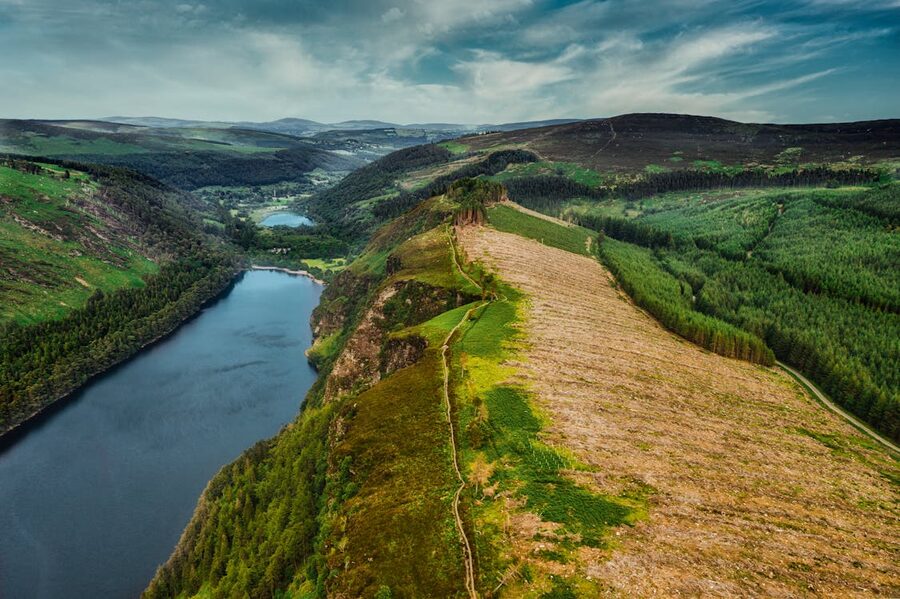
The trick most tours don’t tell you: if you have time, walk past the Lower Lake to the Upper Lake. About 25 minutes one-way on the boardwalk path, mostly flat. The Lower Lake gets the bus crowds. The Upper Lake is where the silence I mentioned at the top of this guide actually happens. It’s also where the monks built St Kevin’s Bed, a tiny cave high on the cliff face that you can see but not reach.
The Wicklow Mountains themselves
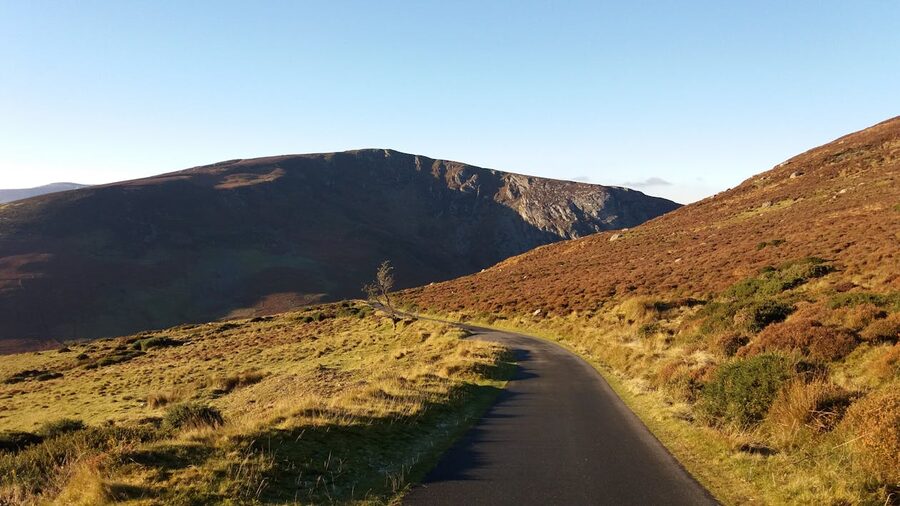
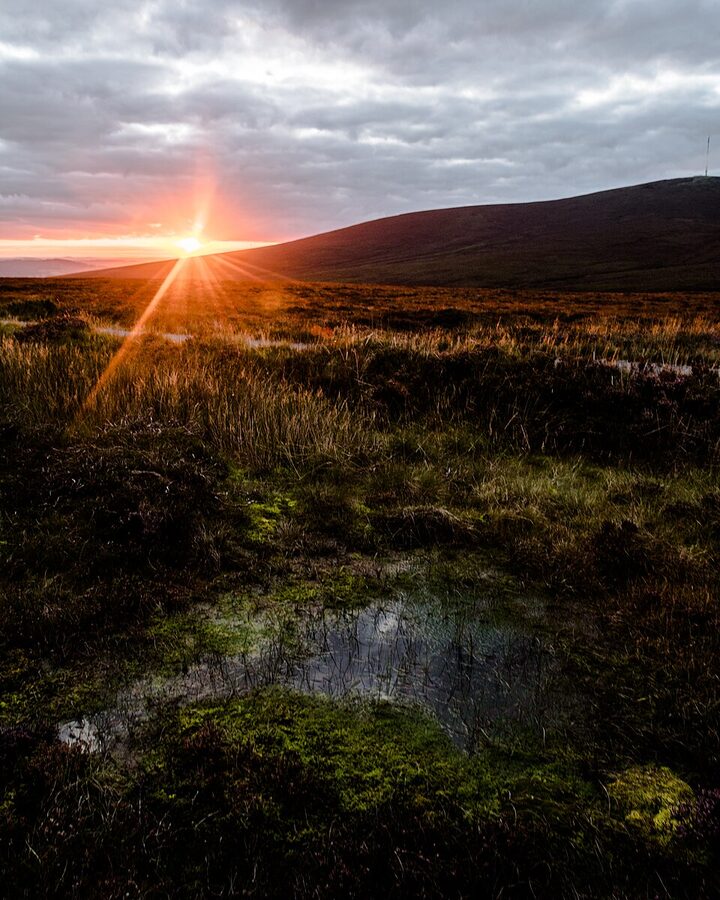
The mountains aren’t tall by Alpine standards. Lugnaquilla, the highest, is 925m. But the openness is the thing. You go from suburban Dublin to a rolling sea of brown peat bog in under an hour. No fences, no farms, just sheep, heather, and weather rolling in from the Irish Sea.
Two stops worth knowing about, in case your tour does or doesn’t include them:
- Sally Gap. The high pass at 503m. Marked by a single signpost in the middle of nowhere. Tour coaches often pull in for a 5-minute photo stop. Bring a windproof.
- Wicklow Gap. The lower pass on the other side of the park. Less famous, less photographed. If you ever come back with a car, drive this one too.
Movie sets get filmed here all the time. Braveheart did the Battle of Stirling on the slopes near Sally Gap. P.S. I Love You used the Lough Tay viewpoint. Vikings filmed at the lake itself for years, and the wooden longships you see in old behind-the-scenes shots were assembled on that crescent of beach. Most guides will mention it. A few won’t. If yours doesn’t and you care, ask.
Lough Tay and the Guinness story
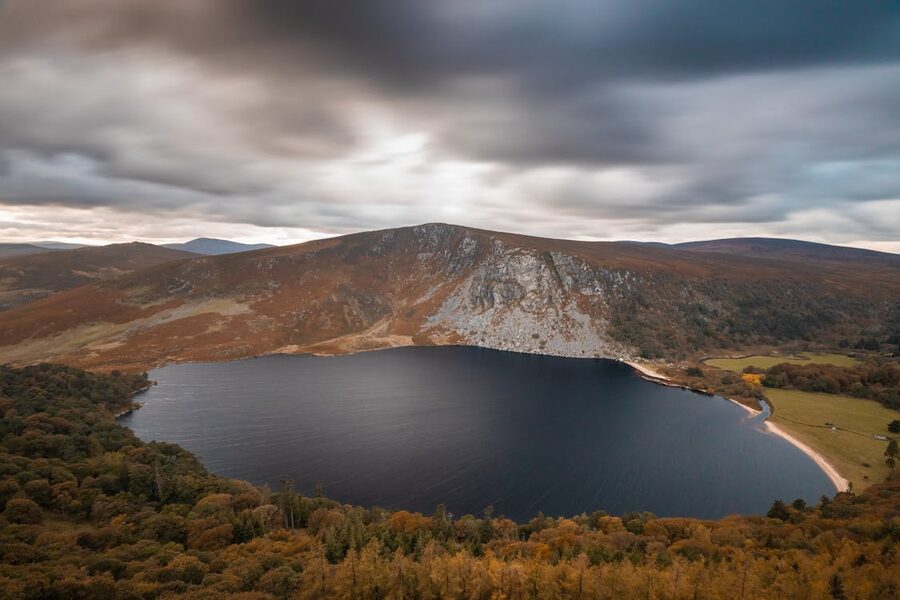
Lough Tay sits below Luggala mountain, on the Guinness family estate. The Luggala house and grounds aren’t open to the public, but the viewpoint from the R759 is. Most tours stop here for ten or fifteen minutes. That’s plenty for photos. The pull-in can fit two coaches and gets crowded fast in summer.
If you want to visit the actual Guinness Storehouse later in your trip, our guide to booking Guinness Storehouse tickets covers timing and the Gravity Bar trick. Pair them: the lake one day, the brewery the next, and you’ll have the full Guinness arc.
Kilkenny: the medieval town stop
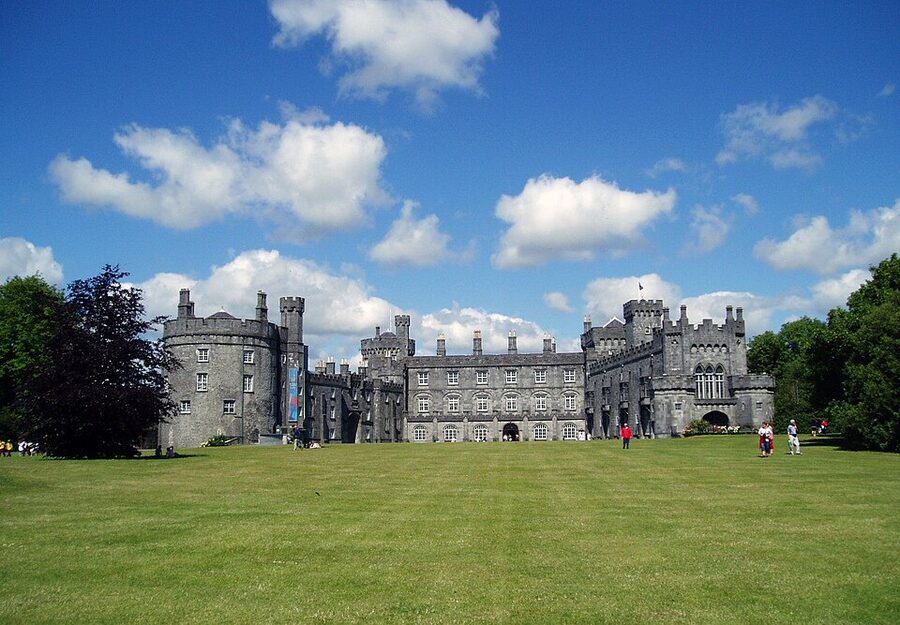
Kilkenny is the bit that surprises most people on this day trip. You spend the morning in mountains and bogs, and then the coach drops you in a tight little medieval town with cobbled lanes, the cathedral spire poking up at one end, and the castle at the other. It’s barely an hour to walk the main spine.
What I’d do with the 90-120 minutes most tours give you here:
- Walk the Medieval Mile. From St Canice’s Cathedral down to Kilkenny Castle. Twenty minutes if you don’t stop, an hour if you do.
- Castle grounds. The interior tour takes 45 minutes and you usually don’t have time. The grounds are free to walk and worth ten minutes.
- Lunch. Anywhere on Kieran Street or High Street is fine. Kyteler’s Inn does a decent sandwich and has the historical witch-trial story to read off the wall while you eat.
Smithwick’s brewery experience is here too, but the standard tour is 90 minutes by itself, so you can’t fit it into a day-trip stop. Save it for a separate Kilkenny overnight.
Half-day vs full-day: which one to book
The full-day version (Wicklow + Glendalough + Kilkenny) takes about 10 hours and gets you a proper medieval town stop. The morning half-day cuts Kilkenny out, gets you back to Dublin by lunchtime, and runs about 5 hours.
Pick the half-day if:
- You’ve already got plans for Dublin in the afternoon (Guinness, a Jameson distillery tour, a walking tour you booked for 3pm)
- Long coach days drain you
- You’re more interested in the natural scenery than the medieval-town vibe
Pick the full-day if:
- You want one day to do “Ireland’s countryside” and aren’t coming back
- You like the rhythm of a long road trip with multiple stops
- Kilkenny is on your list anyway and you don’t want to do it as a separate day
For Dublin afternoon plans, our guide on how to book a Dublin walking tour pairs well with the half-day version: finish Glendalough by 1.30pm, grab lunch, take a 3pm walking tour. Or use the time for the Jameson Distillery tour in Smithfield, which is a 75-minute slot you can drop into.
What to pack for a Wicklow day
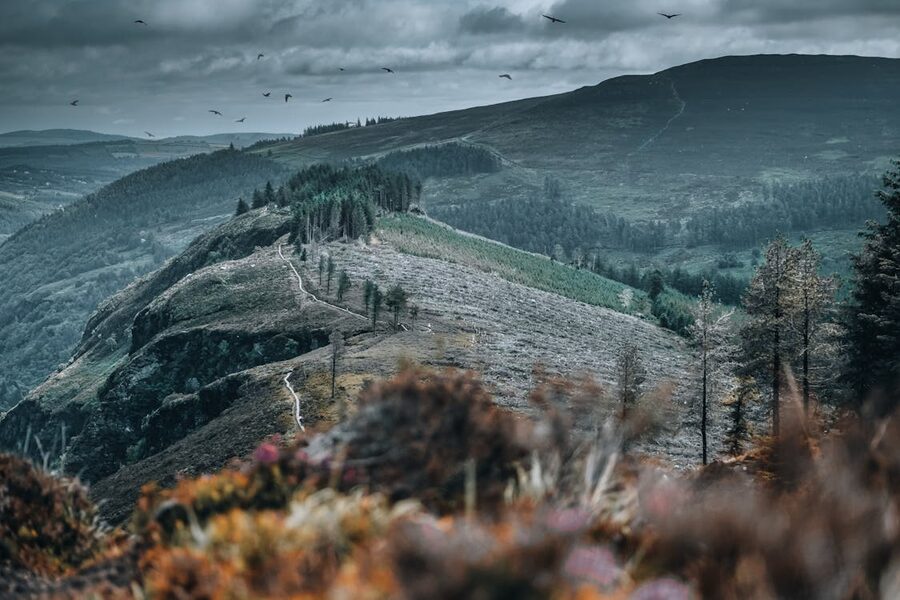
Wicklow weather is its own thing. The mountains catch every Atlantic system that misses England, and the boggy ground means even a “dry” day has wet patches.
- Waterproof jacket. Non-negotiable from October through April. Optional in summer, but I’d still bring it.
- Proper shoes. The Glendalough boardwalk is fine in trainers. The hike up to the Spinc viewpoint isn’t. If your tour offers a hike option, bring grippier footwear.
- A layer. Sally Gap is genuinely cold even in July. Sea-level Dublin gives no clue.
- Cash for the lunch stop. Most pubs in the area take card now, but a few smaller cafes are still cash-preferred.
- A water bottle. No outdoor shops between Glendalough and Kilkenny.
Getting to Wicklow without a tour
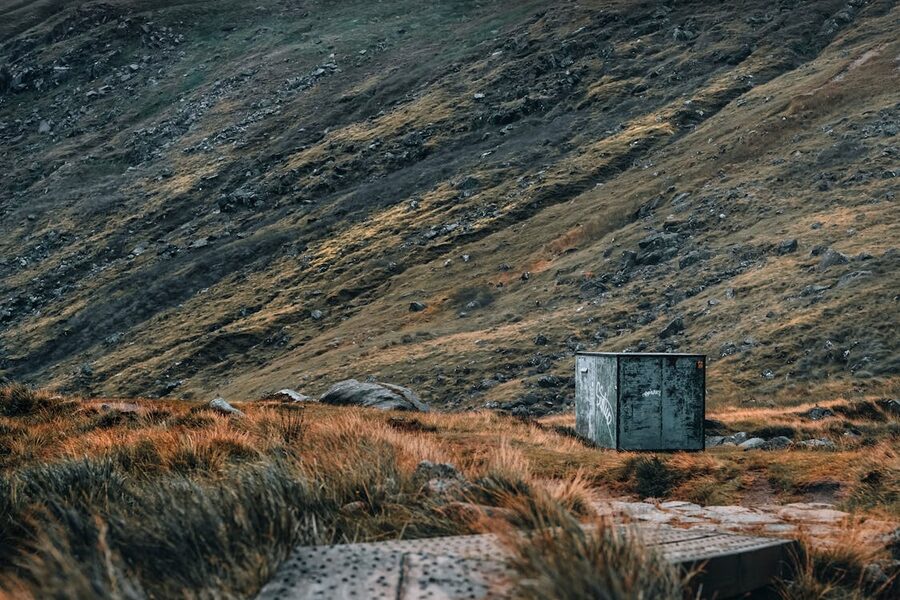
If a coach tour isn’t your thing, here’s the honest comparison:
- Hire car from Dublin. About €60-90 a day plus fuel. You can do the same loop in 6-7 hours and stop wherever you like. The driving is easy except in heavy rain. Park at the Glendalough Visitor Centre car park (€4 daily as of last check).
- Public bus + walking. The St Kevin’s Bus runs Dublin → Glendalough twice a day, takes about 90 minutes, costs around €20 return. Drops you at the monastic site. You won’t get Lough Tay or Sally Gap this way, but you can spend a proper full day at Glendalough itself, which the coach tours don’t allow.
- Private driver tour. €300-400 for a small group of up to 4. Worth it if you’re three or four people splitting the cost and want a custom itinerary.
The small-group half-day option is a middle ground: smaller coach, fewer stops, but still hand-held logistics. Useful if you don’t want to drive but also don’t want a 50-person bus.
How Wicklow stacks up against other day trips
If you’ve already done a few day trips out of British capitals, Wicklow lands somewhere on this scale:
- Closer in feel to the Loch Ness day trip from Edinburgh than to anywhere in southern England. Big skies, peat, water, monastic ruins instead of Highland clans.
- Less driving than the Glenfinnan and Glencoe trip from Edinburgh. Wicklow gives you the same “wild Celtic mountain” hit with three hours less coach time.
- More dramatic scenery than the Cotswolds day trip from London, but less polished tourism. Wicklow has fewer tea rooms and gift shops.
- Different category to Stonehenge from London. That’s a single-monument visit; this is a whole region of mountains, lakes, and ruins.
Powerscourt, the gardens add-on
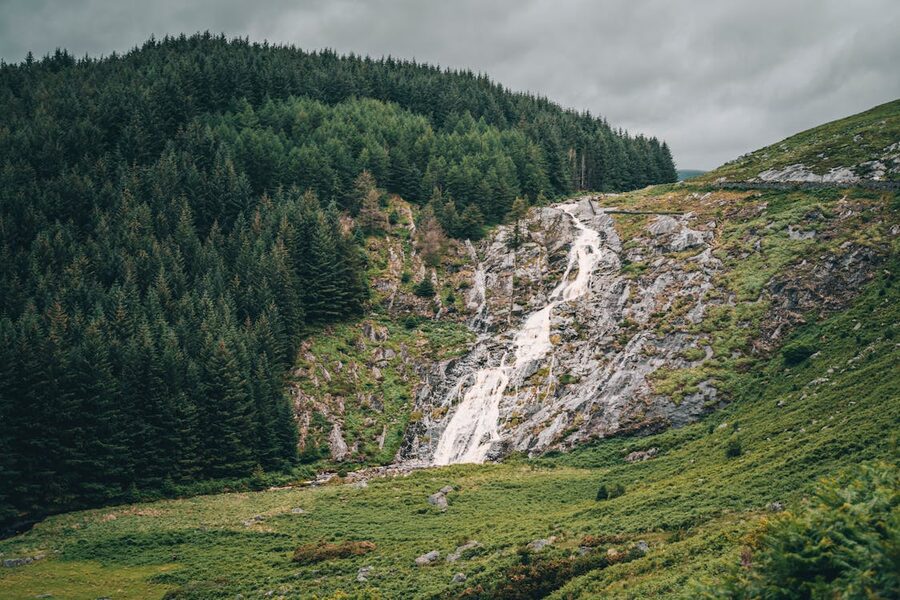
A few small-group tours run a Wicklow + Powerscourt combo instead of the standard Wicklow + Kilkenny. Powerscourt is a Palladian estate with terraced Italian gardens, a pet cemetery (genuinely), and the Triton Lake fountain. Less wild than Glendalough, more Downton Abbey.
The small-group Powerscourt option is the one to look at if you’d rather see formal gardens than a medieval town. Around €70 versus €45 for the standard combo, and the coach is a 16-seater instead of a 50.
The “wild” Wicklow option
If the standard combo feels too herded, the Wild Wicklow tour is run by a long-running operator who built the route in the 90s. Same core stops, but with a few off-coach detours that 50-seat tours can’t access. Costs more (around $62) and the bus is 25-seat. The reviews are consistently strong, and the guide patter is part of the experience.
I’d pick this one if it’s your second day trip from Dublin and you’ve already seen the standard sights from a previous visit. If it’s your first crack at Wicklow, the basic Wicklow + Glendalough + Kilkenny is still where I’d start.
One more thing nobody tells you
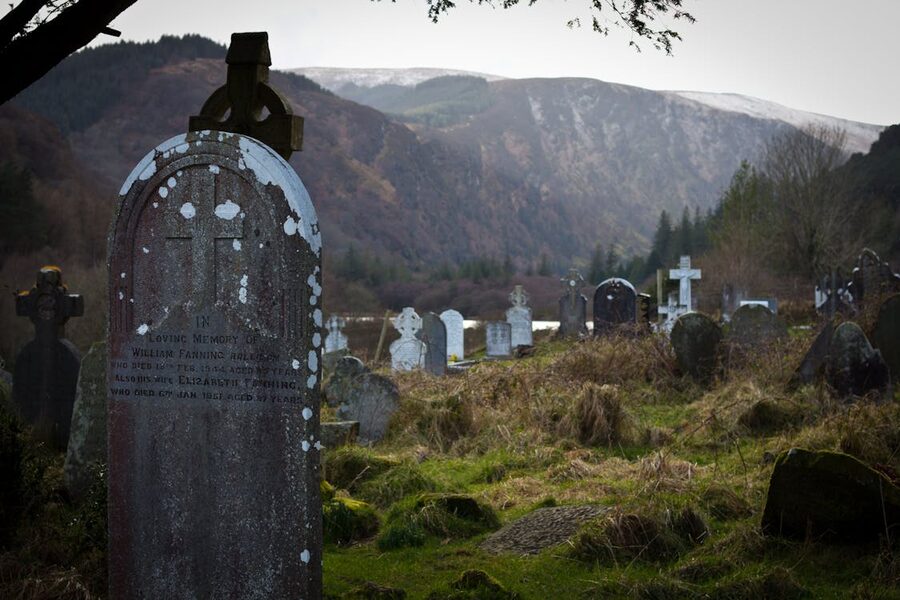
The peak coach window at Glendalough is roughly 11am to 1pm. Three or four buses turn up within an hour of each other and the round tower gets a permanent ring of phone cameras around it. If your tour gets you there before 10.30 or after 1.30, you’ve lucked out.
The morning half-day tour usually arrives first. The full-day combos hit it a couple of hours later because they’ve stopped at Lough Tay and Sally Gap on the way down. That alone is a reason to book the half-day if photos matter to you.
Other Ireland trips worth a look
Wicklow is the easy first day-trip out of Dublin, but it’s not the only option. The Cliffs of Moher day trip from Dublin is the long-haul classic if you’ve got the stamina for 13 hours on a coach. For history nerds, the Dublin walking tour threads together the city’s medieval and revolutionary stories in three hours. And if you’ve already done Wicklow on a previous trip, the Jameson Distillery tour is a clever afternoon use of the time you’d otherwise spend on a coach.