
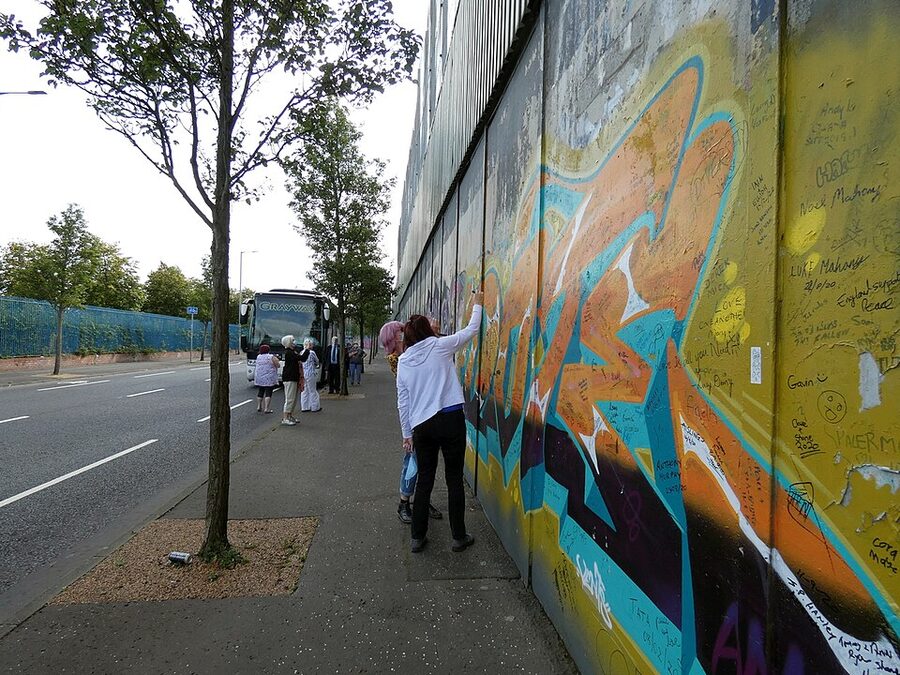
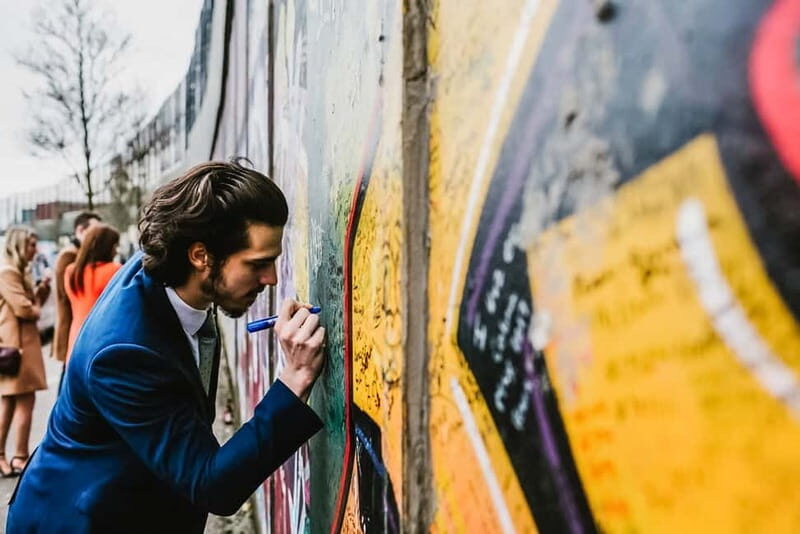
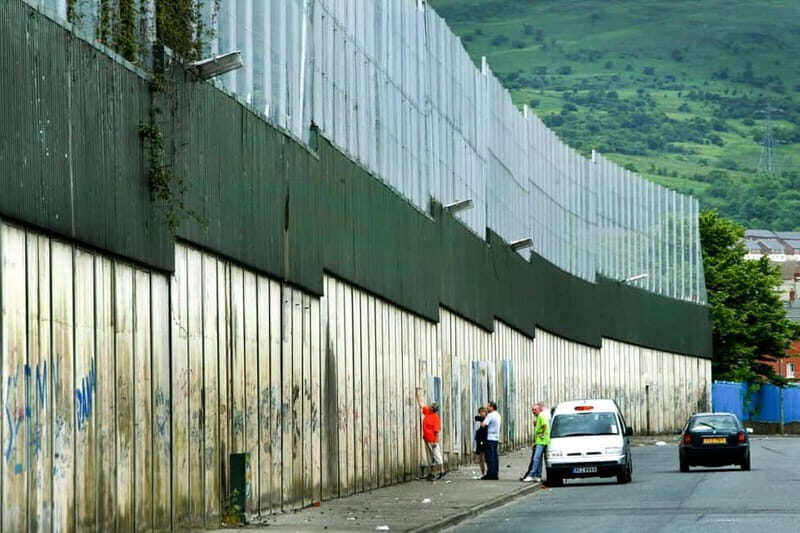
The marker is uncapped before the cab even stops. Eight metres of concrete and corrugated steel rises in front of you on Cupar Way, slick with West Belfast rain, and your driver hands you a black Sharpie with a nod toward a clear patch above the layered names. He has done this thousands of times. You have done it once.
A Belfast Political Taxi Tour is the city’s signature way to understand The Troubles. The driver lived through them. Ninety minutes, one black cab, two roads that stayed at war for thirty years.
- In a hurry? My top three picks
- Belfast Political Taxi Tour
- Belfast Murals Taxi Tour (private, 1.5 hours)
- Political Conflict 3-Hour Walking Tour
- What a Belfast Political Taxi Tour actually is
- The two roads
- The Falls (Catholic, Republican)
- The Shankill (Protestant, Loyalist)
- The Peace Wall
- Yes, you can write on it
- The gates close at night
- The International Wall and the murals
- Bobby Sands and the Hunger Strikes
- Solidarity murals
- The driver is the tour
- Bombay Street and Clonard
- Three taxi tours worth booking
- 1. Belfast Political Taxi Tour: from 1 per group
- 2. Belfast Murals Taxi Tour (private, 1.5 hours): from per person
- 3. Belfast Political Conflict 3-Hour Walking Tour: from per person
- Walking-tour variants worth knowing
- Practical booking notes
- How to book
- How long the tours run
- Where the tours start
- Weather
- Tipping
- Children and sensitive subjects
- Photography
- What to do after the tour
- Is the political tour worth it
- Belfast in the wider Ireland trip
- One last thing about the wall
In a hurry? My top three picks
Belfast Political Taxi Tour
The flagship hour-long black cab run through Falls, Shankill, Peace Wall and the murals. Driver-led, personal, the most-booked option in the city.
Belfast Murals Taxi Tour (private, 1.5 hours)
The slower version with proper time at the International Wall and the Bombay Street memorial. Better if you want to actually take photos.
Political Conflict 3-Hour Walking Tour
If you’d rather walk than ride. Led by ex-political prisoners, both sides represented, deeper time on every stop.
What a Belfast Political Taxi Tour actually is
The black cab is the format. A licensed Belfast taxi driver picks you up from your hotel or a meeting point on Donegall Square, runs you through the same loop most drivers have run a few thousand times, and narrates from the front seat. The route is fixed in spirit but flexible in detail. Stops are decided by the driver based on weather, who else is on the road, and what you ask about.
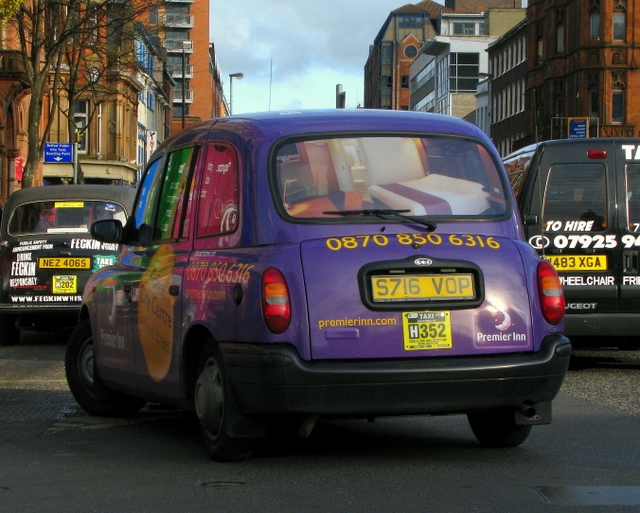
The standard run takes you across the Falls Road on the Catholic and Republican side of the wall, then through one of the gates at Lanark Way or Cupar Way, then up the Shankill Road on the Protestant and Loyalist side. Most tours finish at the wall itself with markers handed out the cab window. Some drivers loop back via the Bombay Street memorial. A few include the International Wall murals if you ask about Bobby Sands or the Hunger Strikes.
One thing worth knowing before you book. The driver is the tour. The vehicle, the route, the photos you’ll take, none of it matters as much as the person at the wheel. Most drivers in this work were teenagers or young adults during the worst years of The Troubles between 1968 and 1998. A lot have family on one side. Some have family on both. You’re paying to sit two feet from a person who watched it happen and is willing to talk about it.
The two roads
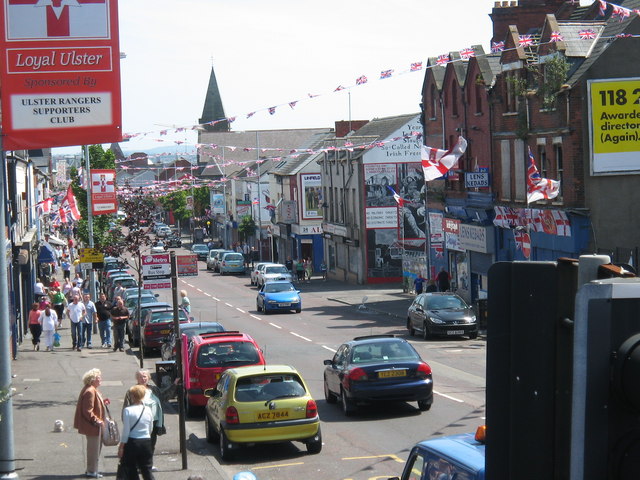
Falls Road and Shankill Road run almost parallel, separated for most of their length by the Peace Wall and a strip of dead ground. Same city. Same accent. Different flags above every lamppost. The cab usually starts on whichever side suits the pickup, then crosses through a gate that closes at night.
The Falls (Catholic, Republican)
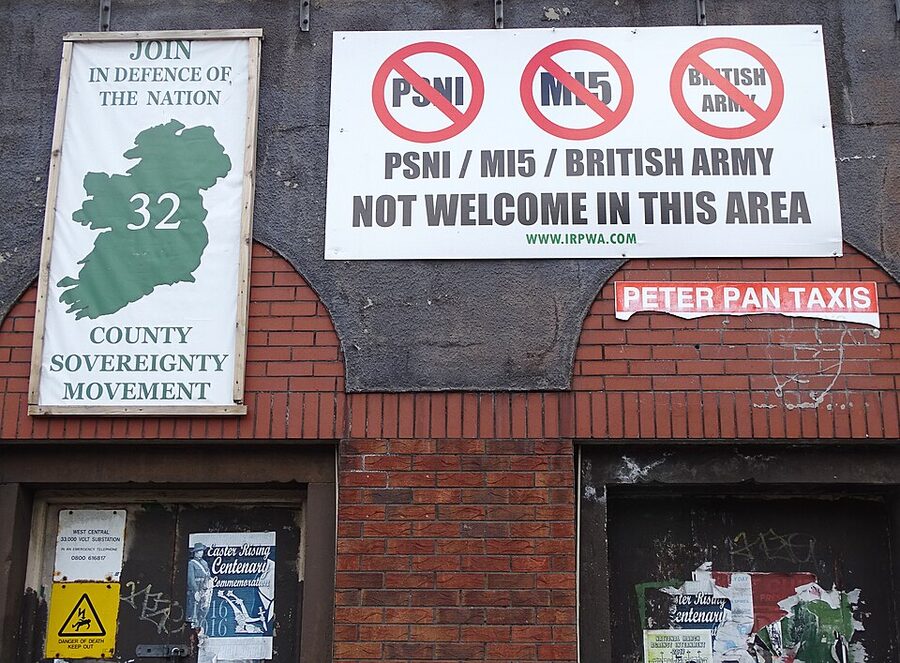
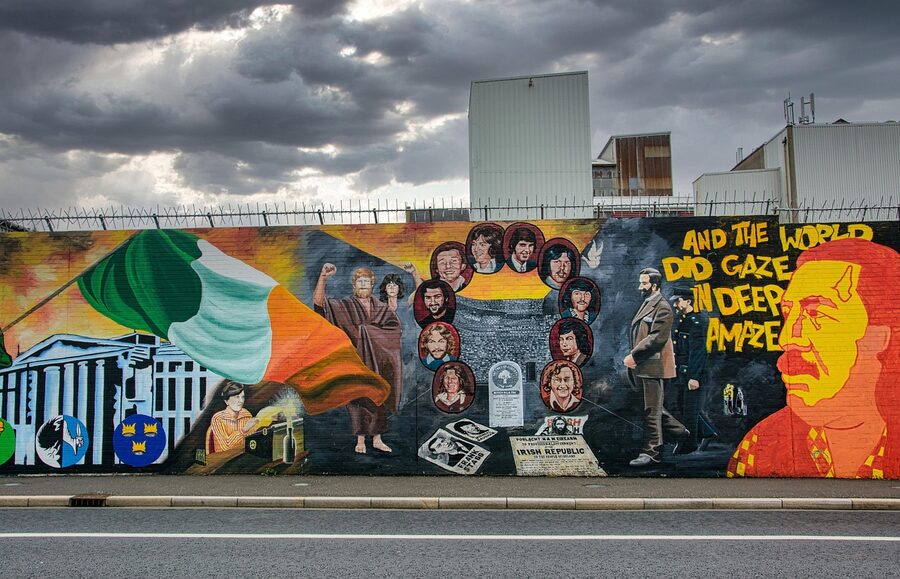
You’ll start at Divis Tower or the corner where the International Wall begins. Republican imagery is dense here. Tricolours, Irish-language street signs, hunger striker portraits, banners of solidarity with Palestine and the Basque Country. The Falls feels lived-in. Kids on bikes. Old men outside the bookmakers. It is not a museum, even though every gable wall reads like one.
The Shankill (Protestant, Loyalist)
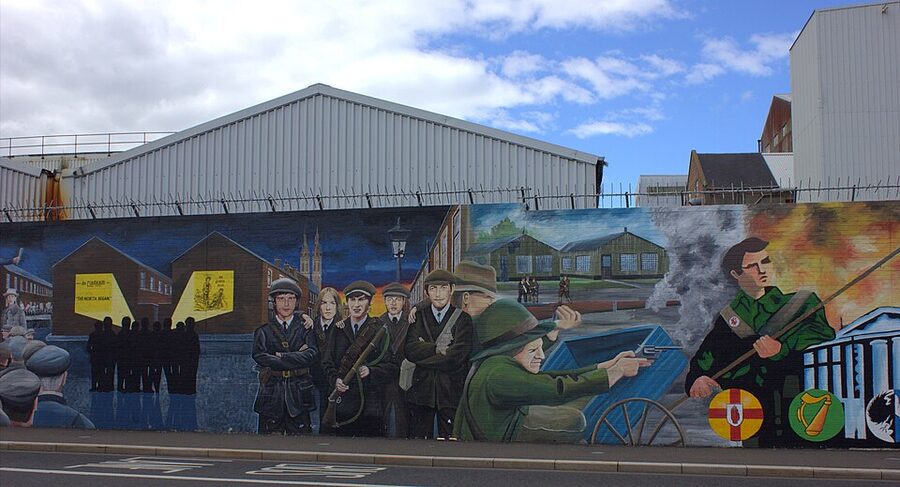
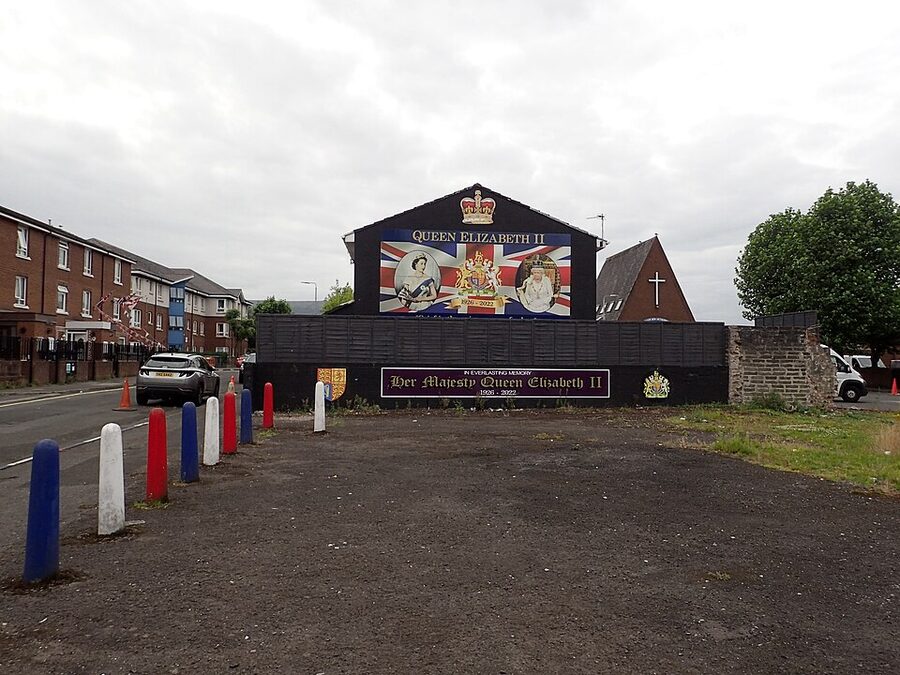
Cross the gate. Same weather, different planet. Union Jacks, Ulster flags, kerbs painted red-white-blue, UVF and UDA memorials, paintings of King Billy on a white horse. The Shankill is quieter than the Falls. Fewer people on the street. More working men’s clubs. The murals are blockier, more military in style, less metaphor and more uniforms.
The Peace Wall
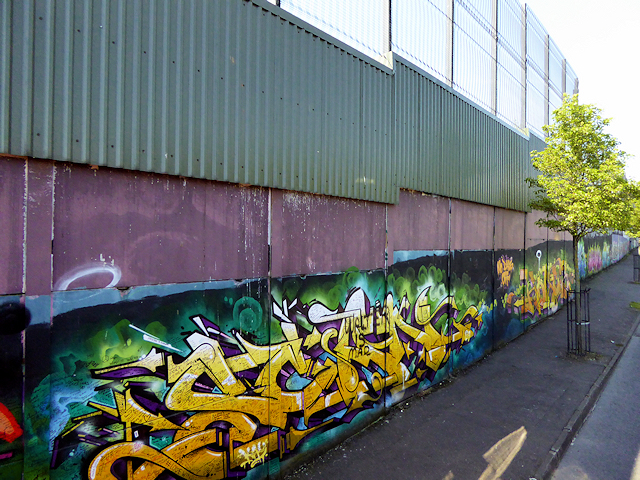
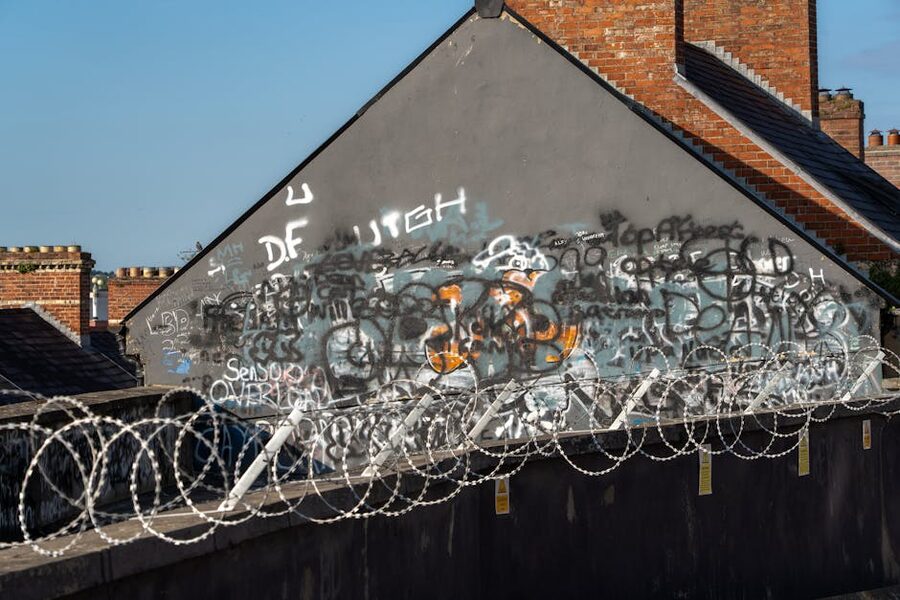
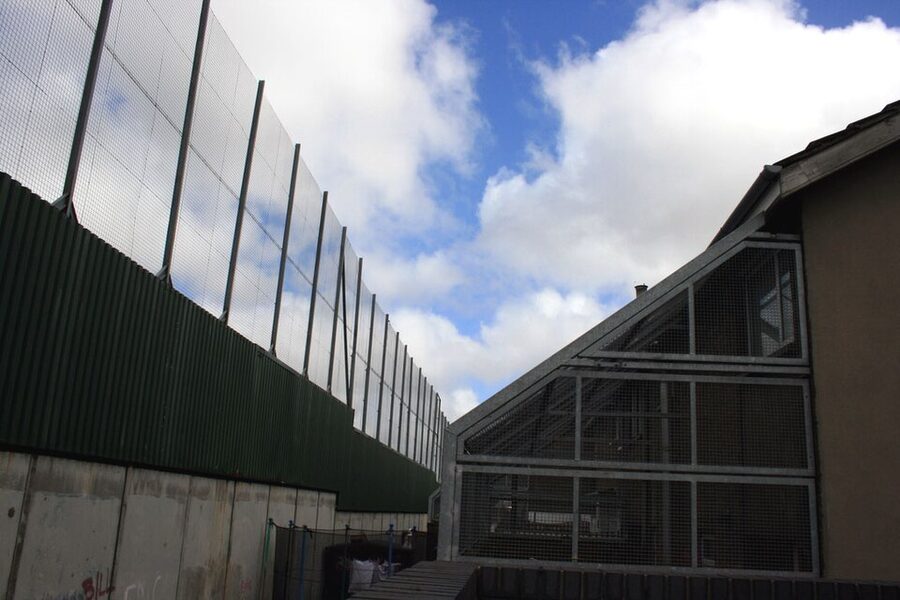
The number that gets repeated is eight metres tall and four kilometres long, but you don’t feel that until you stand at it. The Cupar Way section is the photogenic one. The bit you’ll be handed a marker on. Concrete bottom, corrugated steel middle, mesh fence on top to catch what was thrown across in the 1970s and 80s. The wall went up in 1969 as a temporary measure. It is still there, and three new sections have been added since the 1998 Good Friday Agreement.
Yes, you can write on it
Drivers carry markers. Some pull a Sharpie out of the glove box, some keep a tin of pens taped under the dash. You get out, find a clear patch, write what you want. Names are most common. People also leave dates, hometowns, hopes, the occasional bit of poetry. Bill Clinton signed it in 1995. The Dalai Lama added a peace blessing during a 2017 visit, and that section is now framed informally by everyone who has signed around it.
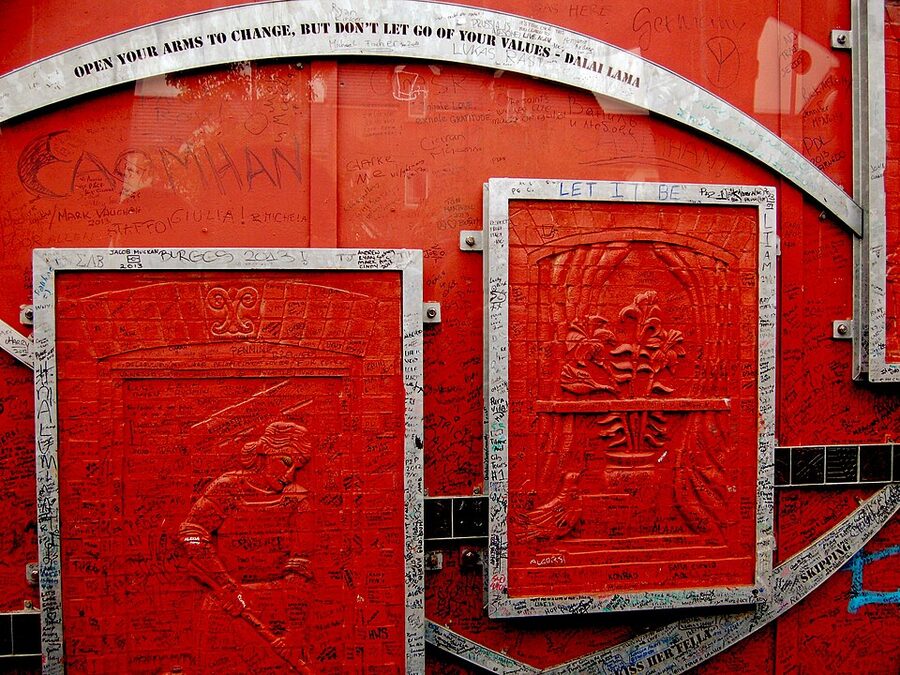
One thing nobody warns you about. The wall has new accents now. There’s a section near Cupar Way covered in Polish names from the recent diaspora into Northern Ireland. Lithuanian and Romanian show up too. The wall is no longer signed only by tourists and dignitaries. It’s signed by people who came to live here after the Troubles ended.
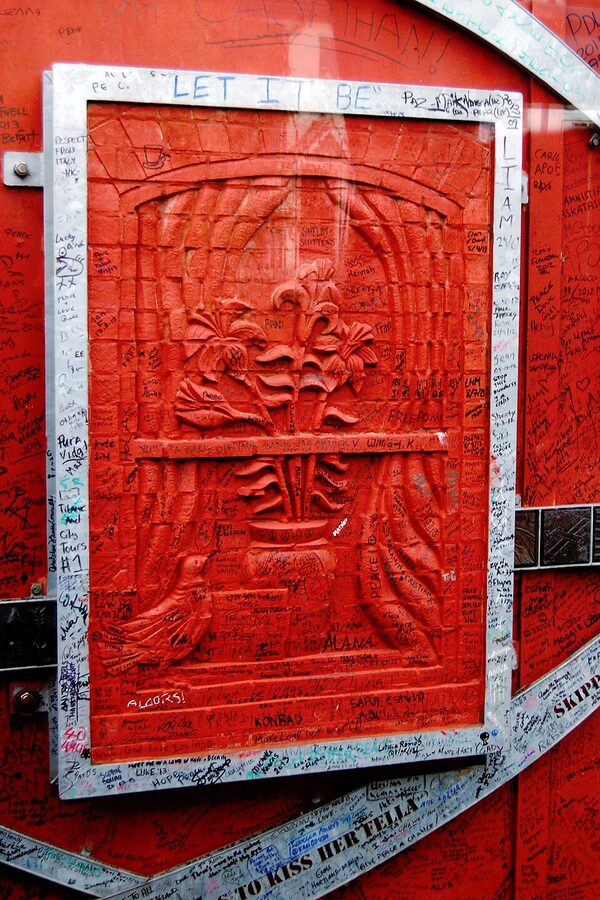
The gates close at night
Several gates pierce the wall, including the main vehicular ones at Lanark Way and Workman Avenue. They are open during the day. They close at night. Most tour drivers consider this the single most surprising fact for visitors. We are in 2026, and parts of West Belfast are still locked away from each other after dark.
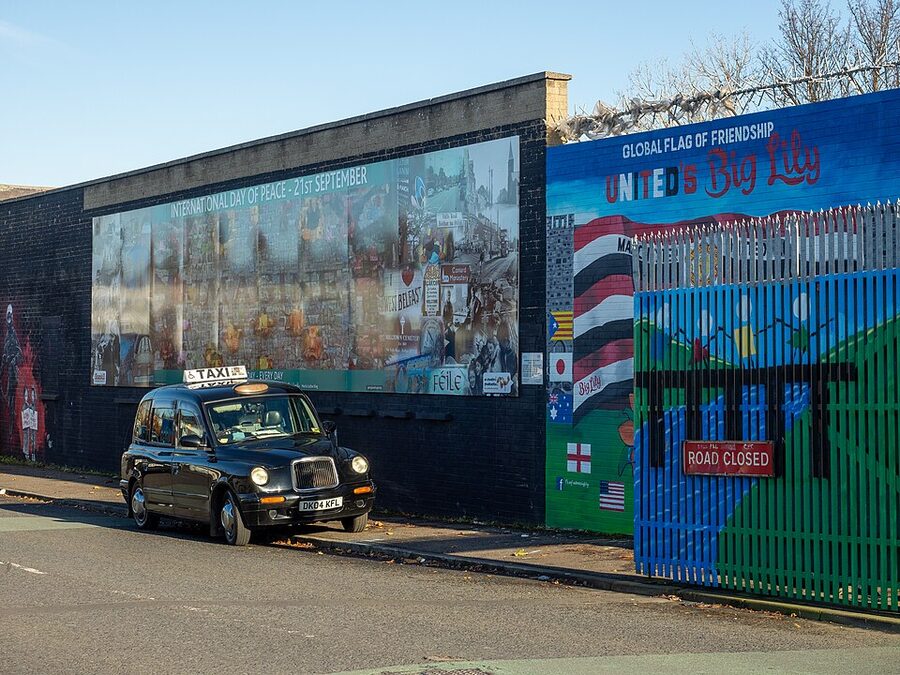
The International Wall and the murals
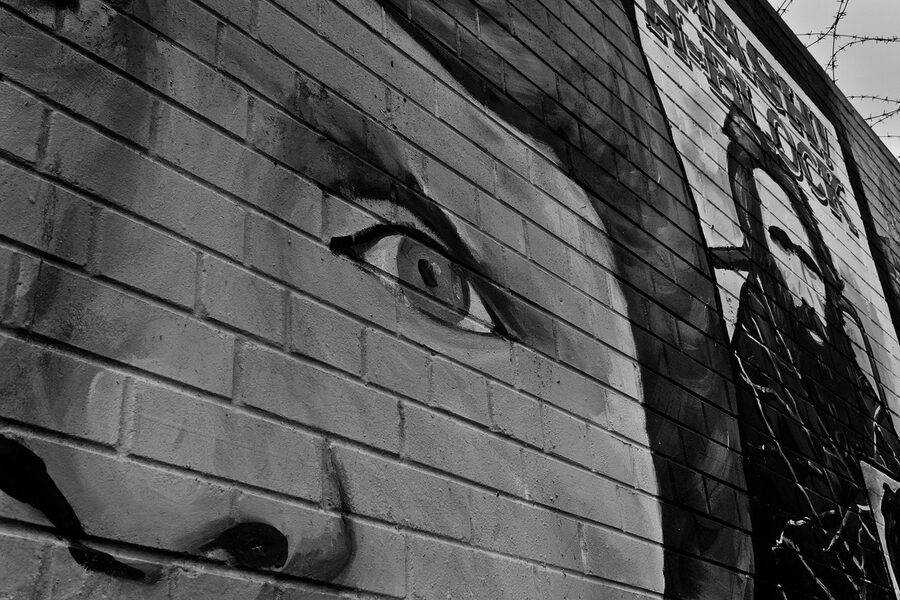
If the Peace Wall is the headline, the International Wall is the chapter you’ll spend longest on. It runs along Northumberland Street and the bottom of the Falls. The murals here are repainted constantly, sometimes annually, so what your driver describes won’t always match what you see. That’s the point. Belfast’s political art is a moving conversation, not a museum exhibit.
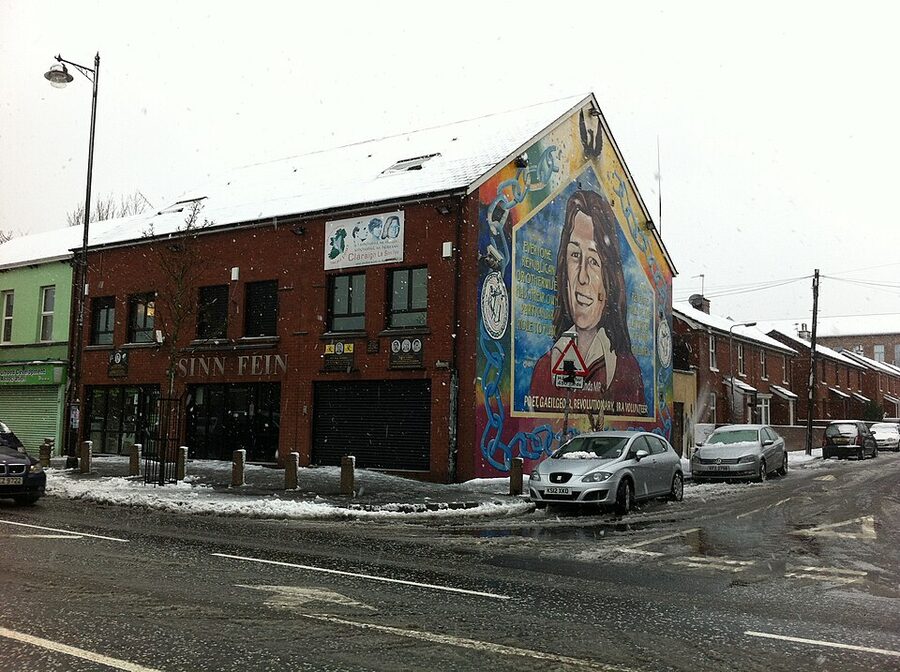
Bobby Sands and the Hunger Strikes
The most photographed mural in the city is the Bobby Sands portrait on the gable of the Sinn Fein offices on Sevastopol Street, just off the Falls. Sands died on hunger strike in the Maze prison on 5 May 1981, day 66 of his strike. He was 27. The mural shows him smiling, with a quote about the truth that “always begins with the testimony of one.” The painting has been touched up several times. The likeness is unchanged.
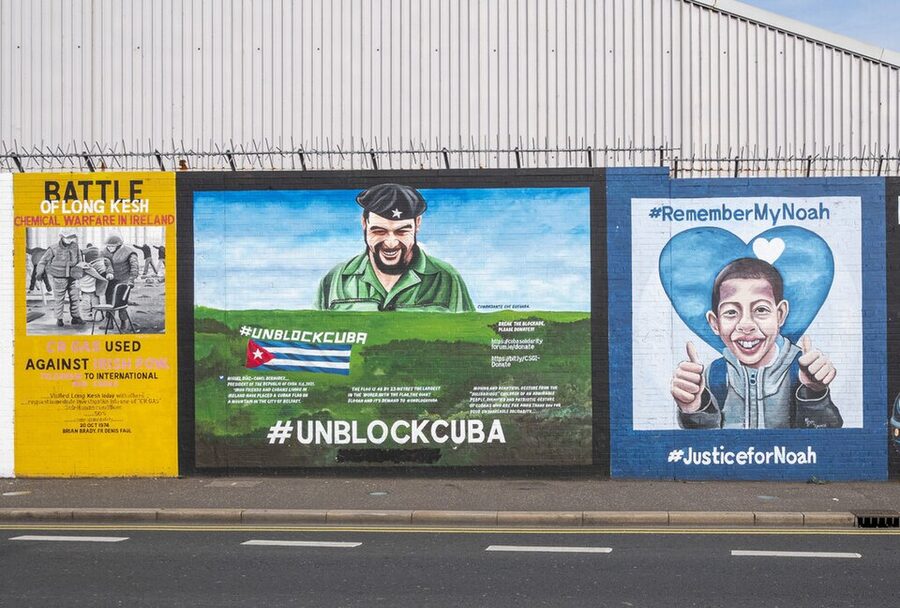
Solidarity murals
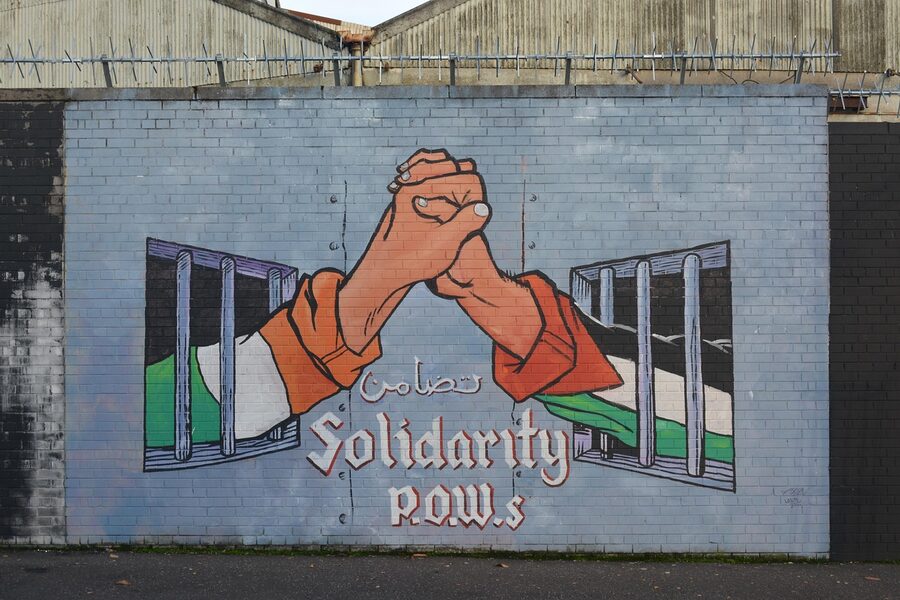
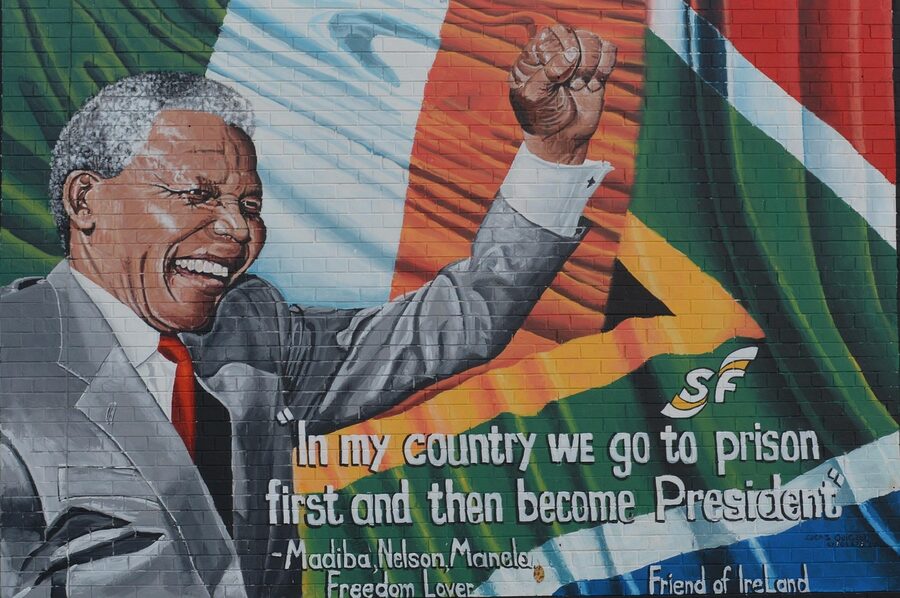
The International Wall lives up to its name. You’ll see Frederick Douglass, Nelson Mandela, the Basque flag, Catalonia, Cuba, the Native American Trail of Tears, Palestine, sometimes Kurdistan. The Belfast Republican community has spent decades drawing parallels between its own struggle and other movements. Whether the parallels hold up is for you to decide. The art exists. Your driver will explain why each one is there.
The driver is the tour
Three things to know about the men and women who drive these cabs.
First, almost all are local. They were born in West Belfast, grew up there, raised kids there. Plenty went to school within sight of the Peace Wall. Some had family killed during the Troubles. A few were involved in the conflict themselves before the 1998 ceasefire. The bias is upfront, declared, and usually balanced by the driver pointing out where the other side has a fair point.
Second, they will answer almost any question. Ask about funerals, ask about hunger strikes, ask about what their school looked like in 1985. The format invites it. Three or four passengers in the back of a cab is roughly the size of a long pub conversation, and that is the tone most drivers default to. The only thing worth not doing is treating the experience as a quiz. The driver isn’t there to be tested. They’re there to share.
Third, no two tours are identical. I’ve taken cab tours of cities all over Europe, including the Mary King’s Close ghost-history experience in Edinburgh and the Jack the Ripper night walks in London. Both are scripted. Belfast is not. Your driver tells the version they tell today, with whatever weight they’re carrying.
Bombay Street and Clonard
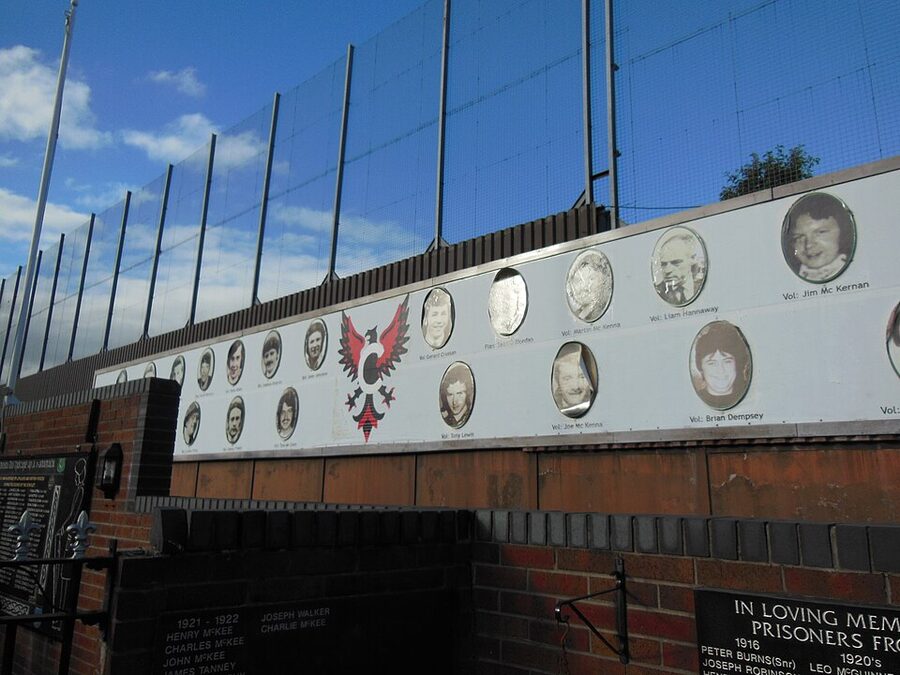
If you book one of the longer tours, ask about Bombay Street. On the night of 14-15 August 1969, Loyalist crowds burned every house on the street, displacing fifty Catholic families. The burning of Bombay Street is the moment most historians point to as the start of the modern Troubles. The street was rebuilt and now backs directly onto the Peace Wall. The Clonard Martyrs Memorial Garden marks the spot.
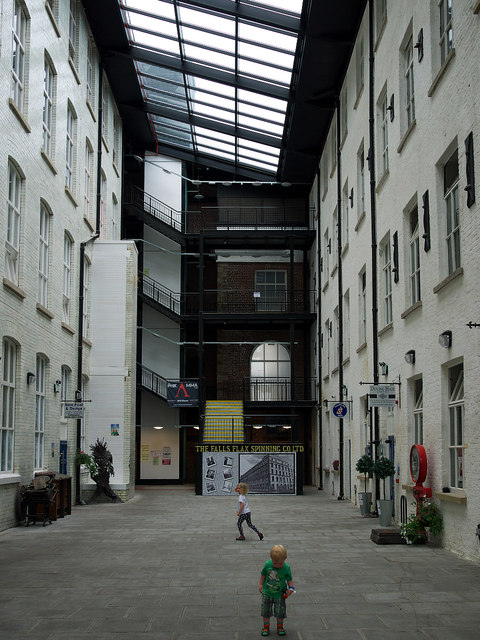
A few minutes’ walk from here is Conway Mill, the old Falls Road linen mill that now houses Republican community history archives, an arts space, and Frankie Quinn’s celebrated photography of West Belfast in the 1980s. Some longer tours end here for a coffee. It’s worth requesting if you have the time.
Three taxi tours worth booking
Three operators dominate this slice of Belfast tourism. They run the same broad loop with different emphases. Pick by length and by what you want to spend longest at.
1. Belfast Political Taxi Tour: from $101 per group
This is the tour I’d point a first-time visitor to. It is the most-booked political taxi product in Belfast, and the tight one-hour run packs in everything that matters without bleeding past attention span. Driver Jackie was warm, balanced, and had us writing on the wall by the 50-minute mark. Read our full review of the Political Taxi Tour for the granular itinerary.
2. Belfast Murals Taxi Tour (private, 1.5 hours): from $51 per person
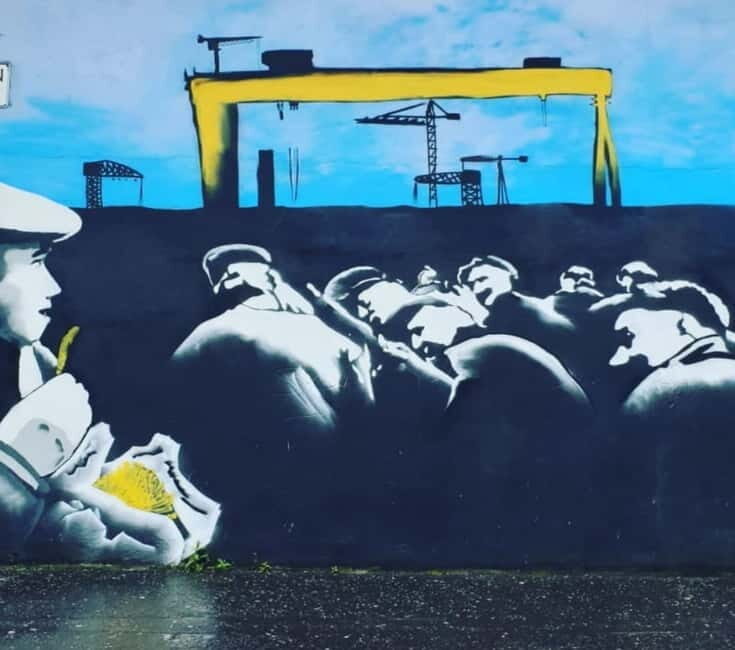
Sean drove us on a wet February afternoon. The hour-long version doesn’t quite leave time at the International Wall, and this 90-minute run is what fixes that. Private booking means it’s your cab, no other passengers, and the driver shapes the loop around what you want to see. Our full Murals Taxi Tour review has the photo plan that worked best for us.
3. Belfast Political Conflict 3-Hour Walking Tour: from $35 per person
If you’d rather walk than ride, this is the deepest version of the experience. The two-guide format is the magic. Same stops, two perspectives, and they hand you off mid-tour at the Peace Wall so the conversation stays balanced. Our walking-tour write-up has the dress-warm and bring-water details that the booking page leaves out.
Walking-tour variants worth knowing
If the political walking tour above is full or sold out, three other walking-tour operators run their own versions. They differ in framing, not in route.
Conflicting Stories is the most-booked walking format after the 3-hour Political Conflict run. Two guides, one from each community, tell deliberately different versions of the same events. Brilliant if you’ve already done a basic political tour and want to feel the disagreement in the room. Our Conflicting Stories walking tour review covers what to expect.
A History of Terror leans harder into the violent specifics. Bombings, attacks, the locations of named incidents. It is not a soft tour. Don’t book it as your first introduction to Belfast. Once you have the basic geography, the History of Terror walk fills in the timeline.
Walls and Bridges is the most reflective of the three. More time at the Peace Wall, more time on what comes after the wall. The Walls and Bridges walking tour is the one I’d give a politically-engaged friend who wants to think rather than be shocked.
Practical booking notes
How to book
Go through GetYourGuide for the cab tours and the main walking tour. The links above all point to live booking pages. Book at least 24 hours ahead in summer and on weekends, when the cab fleet runs out. In winter you can usually walk up to one of the operators on Donegall Place and find a slot inside an hour.
How long the tours run
The classic black cab is one hour. The private murals version is 90 minutes. Walking tours run two and a half to three hours. Add fifteen minutes either side for hotel pickup and signing time at the wall. The Political Conflict walking tour is the only one that needs you to plan a half-day around it.
Where the tours start
Most cab tours pick you up from your hotel anywhere in central Belfast. If you are staying on the Cathedral Quarter or near City Hall, you’ll be at the front door. The walking tours typically meet outside the Crown Liquor Saloon on Great Victoria Street or at City Hall. The booking page tells you which.
Weather
It rains. Plan accordingly. The cab tour is mostly inside the cab, so weather matters less. Walking tours go ahead in light rain, and operators will only cancel for storms. Bring waterproof layers in any season. Belfast’s wettest month is January but October to March all run wet.
Tipping
Tip the driver. Twenty percent is standard. The cab tour is more like guided commentary than a taxi ride, and the driver has prepared his version of three decades of city history for you. A fiver each from a group of four is a baseline. Ten pounds in the hand at the end if the tour was as good as you wanted it to be.
Children and sensitive subjects
The political tours are not aimed at small children. Most operators prefer ages 12 and up, and some say 14 and up. The murals are sometimes graphic. The driver will discuss death, paramilitary activity, and bombings. Talk to your kids beforehand if you’re bringing teenagers. The walking tours sometimes visit specific sites of named killings; the cab tours stay broader and feel less raw.
Photography
Photograph the murals freely. Photograph the wall freely. Photograph the cab. Don’t photograph people who don’t want to be photographed. Belfast is a small city with a long memory, and standing on the Shankill Road photographing a stranger’s front door is bad form anywhere but feels worse here. Drivers will tell you when to put the phone down.
What to do after the tour
Most cab tours wrap by lunchtime. You’ll be back in the city centre by 1pm. A few options.
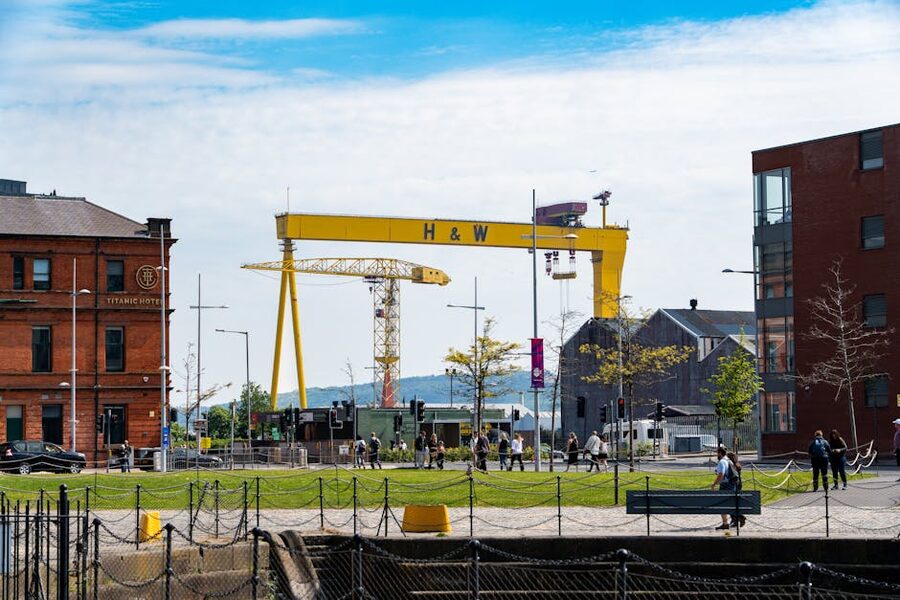
Walk over to the Cathedral Quarter for a pint at The Duke of York or the Crown Liquor Saloon. The Crown is across the road from the Europa Hotel and is the most-photographed Victorian pub interior in the country. Hop on the Belfast hop-on hop-off bus if you want a faster orientation to the rest of the city. Or head straight to the Titanic Quarter to balance the heaviness with something different. Belfast is a city that built the Titanic and lived through the Troubles, and most visitors want both halves of that story by the end of their stay.
Is the political tour worth it
Yes. It is the single best thing you can do in Belfast in 90 minutes. I’d argue you can’t understand the city without it, and the rest of your stay, including the Titanic museum and the Crown Liquor Saloon and the Cathedral Quarter pubs, sits inside a richer frame after you’ve done it. The political tour is also one of the few cases where the cheaper one-hour version is genuinely the right product for most people, and the longer 90-minute private cab is the upgrade rather than the default.
The one caveat. Some drivers are stronger than others. The booking platform doesn’t let you pick. If you get a quiet driver, ask more questions; the answer rate scales with curiosity. If you get a driver who lectures rather than converses, ride it out and book a different operator next visit. Either way you’ll come away with stories you can’t get elsewhere.
Belfast in the wider Ireland trip
If you’re combining Belfast with Dublin, the city is a 90-minute drive or train ride south. The Enterprise rail service from Belfast Lanyon Place to Dublin Connolly costs about £25 one-way, and most travellers I know book Belfast as a one or two-night side trip from a Dublin base. The Dublin Northern Ireland day-tour guide covers the day-trip option for people who don’t have time to overnight, though I’d argue you need at least one night in Belfast to do the political tour and the Titanic in the same trip.
For the rest of your Belfast time, the Titanic Belfast museum on the slipway where the ship was actually built is the natural pairing, and the Game of Thrones day tour from Belfast takes you out to the Causeway Coast and the Dark Hedges if you have a third day. Comparable gritty-history walking tours elsewhere on these islands include the Edinburgh dark-side walking tour and the Whitechapel Ripper walks in London, but none of them put you inside an actual living conflict the way the Belfast cab does.
One last thing about the wall
When you sign it, write something true. Don’t write “love and peace” because you think that’s what the wall wants. Write your name, your hometown, your date. The wall is a record of who came here and stood in the rain and looked at it. Twenty years from now your handwriting will be three layers under somebody else’s. That’s fine. The point isn’t permanence. The point is you were here, on a road that locked itself away from another road for thirty years, and you wanted both sides to know.