A boat ride on Lake Kawaguchiko with Mount Fuji in view is one of the memorable moments on this cross-country trip. You’ll move from Tokyo’s shrines and street markets to mountain villages, Kyoto temples, Hiroshima’s Peace Park and Osaka’s food lanes, without having to plan every transfer yourself.
I like the variety: rural Shirakawa-go and Takayama break up the big-city visits, while the gold leaf and udon workshops add a hands-on note. I also like that daily breakfast, coach transport and listed sightseeing are included, making the $3,299 starting price easier to assess.
The trade-off is pace. You change hotels often, spend long stretches on the road, and may have limited time at some sights. Despite the tour’s name, this is a group tour of 10 to 30 people, not a private trip, and the coach means no bullet train ride.
- Key points to know before you book
- A broad route, with little time to waste
- Narita and Tokyo: a soft landing, then a fast start
- Mount Fuji, Shirakawa-go and Kanazawa
- Kyoto’s temples and Himeji’s white castle
- Hiroshima and the Okayama-area stay
- Ritsurin Garden, Nara and Osaka’s food streets
- What the price covers, and what it doesn’t
- Who should book this Japan tour?
- FAQ
- How long is the tour, and where does it start and end?
- Is this a private tour?
- Does the tour use the bullet train?
- What accommodation is included?
- Are meals included?
- Are flights included?
- What optional excursions are available, and what do they cost?
- Is airport transportation included on the final day?
- Can solo travellers share a room with another solo traveller?
- Is a triple room available?
- The Best Of Narita!
- More Private Tours in Narita
- More Tours in Narita
- More Tour Reviews in Narita
- Not for you? Here's more nearby things to do in Narita we have reviewed
Key points to know before you book
 1 / 6
 2 / 6
 3 / 6
 4 / 6
 5 / 6
 6 / 6
- Fuji without a climb: Visit the mountain’s 5th Station, then take a short cruise on Lake Kawaguchiko.
- Countryside and craft: Walk among Shirakawa-go’s traditional farmhouses, then try a gold leaf workshop in Kanazawa.
- History with different weight: See Kyoto’s temples and Himeji Castle, then spend time at Hiroshima Peace Memorial Park and the Atomic Bomb Dome.
- A coach-led route: Intercity travel is by tour bus, not bullet train. That simplifies transfers but can mean long driving days.
- Three-star basics: Expect clean, practical hotels, but room sizes and locations vary. Some rooms in Japan can feel tight with luggage.
- Free time has a price: Nikko, Naoshima and Ine are optional outings, each with an additional charge.

👉 See our pick of the 15 Best Tours In Narita
A broad route, with little time to waste
This is a big loop from Narita to Osaka, covering Tokyo, mountain country, the Hokuriku region, Kyoto, Okayama, Hiroshima and the Seto Inland Sea area. You get a useful first look at Japan’s variety, but not a slow stay in any one place.
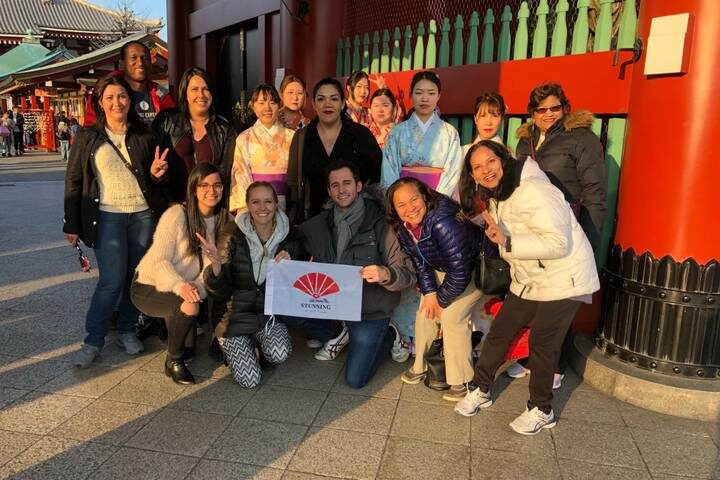
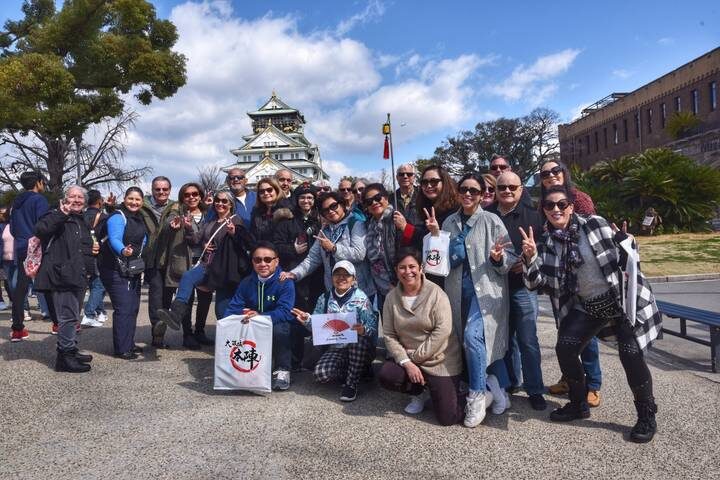
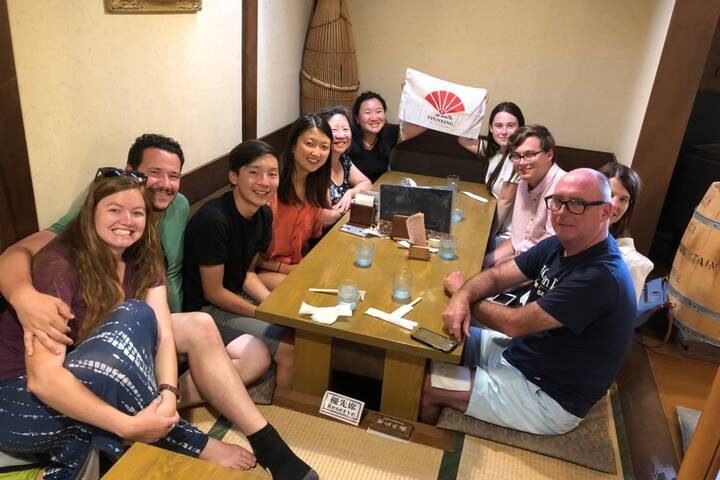
The tour is fully guided in English, and coach transport links the cities and sights. The listed group size is 10 to 30, so the feel can range from a small, sociable group to a full bus. Guides vary by departure. Past groups have been led by guides including Steve, Jason, Yuka and Judy, with particularly warm praise for guides who added context, helped with free-day plans and kept the group organized.
The title includes the words private 3-star hotels, but the tour details describe a shared group departure, not a private itinerary. If you want a private guide or the freedom to choose every stop, this is not the right format. If you want the route, hotels and main logistics arranged for you, it offers a lot of ground in two weeks.
You can also read our reviews of more private tours in Narita


Narita and Tokyo: a soft landing, then a fast start
Day one is deliberately simple. After collecting your luggage at Narita Airport, you take a shuttle to the hotel and settle in. The hotel is listed as a three-star property, with the final choice confirmed before departure. This first night is in Narita, not central Tokyo, so treat it as an arrival night rather than an extra city-sightseeing day.
The next day begins at Meiji Shrine, set among a man-made forest in the middle of the capital. It’s a calm opening to a city that can otherwise feel like several cities stacked together. You then head to Asakusa and Nakamise Street, where craft shops line the approach to the older temple district. Tokyo Tower’s observation deck rounds out the guided day with a broad view over the city. Entry is included.
Day three is free, with an optional Nikko excursion for $110. Nikko is a UNESCO World Heritage site, but the day is yours if you’d rather explore Tokyo independently or take a breather. Ask your guide for ideas, and plan your route before setting off; Tokyo’s scale can make an unplanned day disappear quickly.
Mount Fuji, Shirakawa-go and Kanazawa
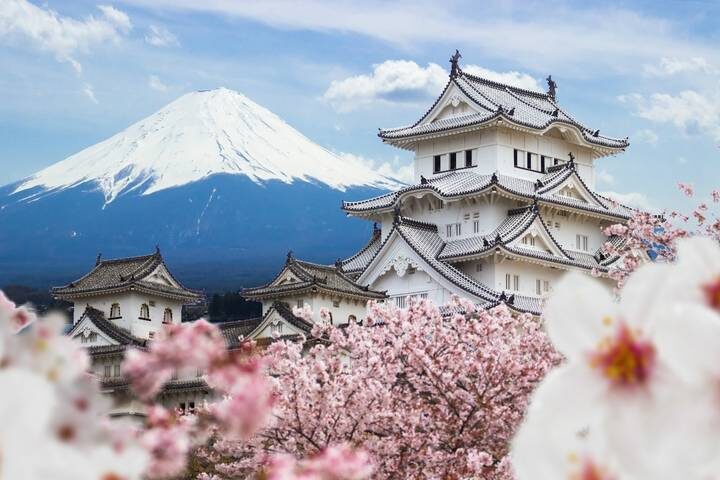
The coach leaves Tokyo for Mount Fuji’s 5th Station, at about 2,300 metres. It’s a popular viewpoint for people who aren’t climbing the mountain, with shrines, torii gates and souvenir shops nearby. Visibility depends on conditions, so don’t build your whole day around a guaranteed clear Fuji view.
Next comes Lake Kawaguchiko, where a short boat cruise gives you a different angle on Fuji and the surrounding mountains. Then you continue to the Nagano region for the night. This is a substantial driving day, but the change from capital city to mountain scenery is part of the appeal.
The following day brings two very different stops. At Shirakawa-go, you walk past gassho-zukuri farmhouses, some more than 250 years old. Their steep thatched roofs are designed for heavy snowfall, and the village offers a glimpse of traditional rural building styles. Later, in Takayama, Sannomachi Street’s old homes, shops and restaurants make for an appealing stroll. The day ends in Kanazawa.
In Kanazawa, you visit Kenrokuen, a garden known for its seasonal trees and carefully arranged ponds, paths and plantings. It opened to the public in 1871, and its character changes through the year. The gold leaf workshop gives you a practical introduction to a local craft: Kanazawa produces most of Japan’s gold leaf, and you decorate an item of your own. Then it’s on to Kyoto. The route is rewarding, but the short stays mean you’ll get an introduction rather than much time to settle into each place.
Kyoto’s temples and Himeji’s white castle
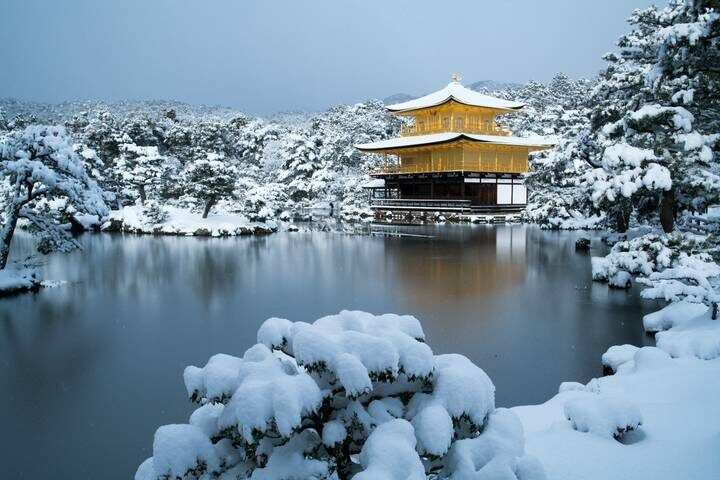
You have two nights in Kyoto, with a guided visit to Kiyomizu-dera and a walk along Ninenzaka. The temple dates to 780 and is known for its wooden stage, which projects above the hillside. Ninenzaka’s traditional-style buildings and shops make a pleasant link between the temple and the old streets nearby. The afternoon is free, or you can pay $250 for an optional Maiko dinner show.
One guided day is not enough to see all of Kyoto. The free afternoon helps, but you’ll need to choose between additional temples, neighbourhood wandering or simply taking a slower pace. If Kyoto is your main reason for visiting Japan, you may prefer a trip with more nights there.
On day eight, the coach stops at Nijo Castle before continuing to Himeji Castle. Nijo is a large castle complex and a UNESCO World Heritage site. Himeji, also called White Heron Castle, is noted for its white exterior and well-preserved grounds. It’s a standout stop for anyone interested in Japanese castles, though visiting both sites and moving onward makes for another full day.
Hiroshima and the Okayama-area stay
The next three nights are described as Okayama or Hiroshima-area stays, with listed hotel examples in Kurashiki. Confirm the final hotel location before departure, as that affects how much independent time you have nearby. The route includes a day in Hiroshima and Miyajima, but you should not assume your hotel is in central Hiroshima.
On Miyajima Island, you take a boat and have about 45 minutes with the guide to visit Itsukushima Shrine. That’s enough for a first look, but not a long island visit. Lunch is at your own cost. You then return to Hiroshima for Peace Memorial Park, exhibitions about the bombing and recovery, and the Atomic Bomb Dome. Allow yourself time to take in the memorial sites; this part of the trip has a very different tone from the gardens and shopping streets elsewhere.
Day ten is free, or you can join the optional Naoshima Art Island trip for $135. The island is known for contemporary art, architecture and sculpture, a sharp contrast with the tour’s castles and shrines. It’s an appealing choice if modern art interests you, but it is not included in the base price.


Ritsurin Garden, Nara and Osaka’s food streets
On the way toward Osaka, you visit Takamatsu Udon School to make Sanuki udon by hand. The workshop gives you a welcome change from sightseeing on foot. Then comes Ritsurin Garden, a large cultural garden maintained for nearly 400 years. Ponds, pavilions, trees and the backdrop of Mount Shiun make this one of the route’s quieter stops.
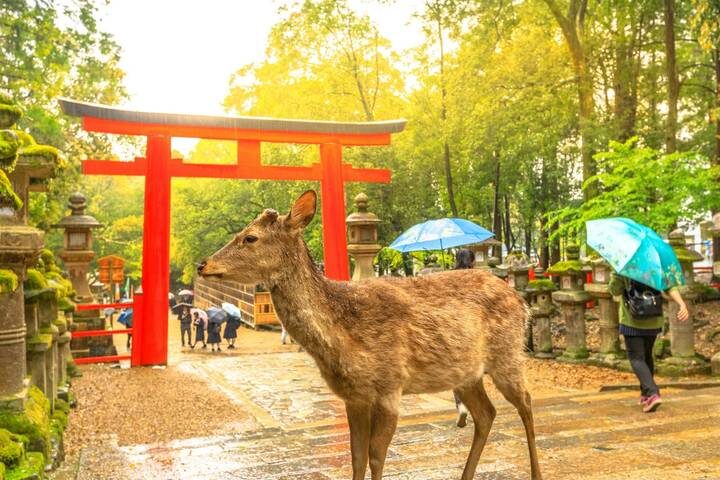
In Osaka, the day trip to Nara Park brings you close to the park’s free-roaming deer. You can buy deer crackers for 200 yen a pack at the stalls. Keep your food tucked away until you’re ready to feed them; the deer are accustomed to visitors and can be keen.
The tour continues to Kuromon Ichiba market, where stalls sell prepared food, seafood, produce and souvenirs. You then walk through Minami and Dotonbori, with restaurants, shops, bars and bright signs along the canal. It’s a lively finish, though the crowds and time on your feet can be tiring. One past participant counted roughly 12,000 to 18,000 steps on some days, so comfortable shoes matter. If you need a rest, ask about the return plan before splitting off from the group.
Day thirteen is free in Osaka, or you can pay $125 for the Ine excursion, which includes the bay, historic funaya boat houses, Amanohashidate and Chionji Temple. It’s a long-distance outing, so weigh the coastal sights against a full day to explore Osaka at your own pace.
What the price covers, and what it doesn’t
At a starting price of $3,299, the tour works out to about $254 per night across 13 nights, before flights and extras. That figure includes three-star hotels, daily breakfast, an English-speaking guide, coach transport between cities and attractions, and the listed included activities. The gold leaf workshop, udon-making session, Tokyo Tower entry and Lake Kawaguchiko cruise are among the built-in experiences.
The price does not include international flights, insurance, lunches or dinners, and optional tours cost extra. The listed suggested tip is $7 to $10 per person per day in total for the guide and driver, but tipping is not required. Budget for meals, personal spending and airport travel at the end. The tour information describes shuttle bus, train and taxi options from the Osaka hotel to either Osaka International Airport or Kansai International Airport, with costs varying by method.
Breakfasts are provided each day, and vegetarian, vegan, halal and kosher food options can be requested. Still, plan ahead for meals outside the hotel, especially if you have dietary needs. In Japan, ingredients can be less obvious than they look, so ask the operator about the best way to communicate your requirements before you travel.
Hotels are practical rather than luxurious, and the exact properties can change. Some rooms may be small, a common issue to prepare for when travelling with more than a carry-on. The operator does not offer hotel upgrades on this tour, and a triple room is not available; three people would be assigned two rooms.
Who should book this Japan tour?
Book it if this is your first visit to Japan and you want a guided overview without arranging each hotel, transfer and major sight on your own. It suits people who value broad coverage, cultural stops and a steady stream of planned activities more than a relaxed pace. Families and solo travellers can join, but solo room sharing is not offered, so expect to pay for your own room unless you book with someone.
Skip it if you want bullet train travel, a private group, larger hotel rooms, long stays in Kyoto or plenty of unstructured time. Also think carefully about the walking and coach hours if you have difficulty moving around. This is a practical, good-value introduction to Japan, provided you’re happy to keep moving and treat the optional excursions as extras, not part of the package.
14 Days Japan Panoramic (Private 3 Star Hotels) by Stunning Tours
“An Unforgettable 14-Day Adventure in Beautiful Japan! My 14-day tour of Japan was an incredible experience from beginning to end! Having traveled t…”
FAQ
How long is the tour, and where does it start and end?
It lasts 14 days, beginning at Narita Airport and ending in Osaka. The listed end airport is Kansai International Airport, though Osaka International Airport is also mentioned as an option for departure.
Is this a private tour?
No. Despite the tour name, it is described as a group tour for 10 to 30 people, with an English-speaking guide.
Does the tour use the bullet train?
No. Transportation between cities and attractions is by tour bus.
What accommodation is included?
The tour includes 13 nights in three-star hotels. Specific hotels may vary, and final hotel details are confirmed before departure.
Are meals included?
Daily breakfast is included. Other meals are not listed as included. Vegetarian, vegan, halal and kosher food options can be requested.
Are flights included?
No. You arrange your own flights. The suggested flight plan is to arrive at Narita and depart from either Kansai International Airport or Osaka International Airport.
What optional excursions are available, and what do they cost?
The listed options are Nikko for $110, Naoshima Art Island for $135, a Maiko dinner show for $250 and the Ine excursion for $125. Optional activities are not included in the tour price.
Is airport transportation included on the final day?
The final-day information describes shuttle bus, train and taxi options from the hotel to Osaka International Airport or Kansai International Airport. Costs vary by transport choice, so confirm the arrangements with the tour leader or hotel.
Can solo travellers share a room with another solo traveller?
No. Roommate matching is not available, so solo travellers should plan for their own room.
Is a triple room available?
No. The operator says it does not provide triple rooms. A group of three would be assigned two rooms.


