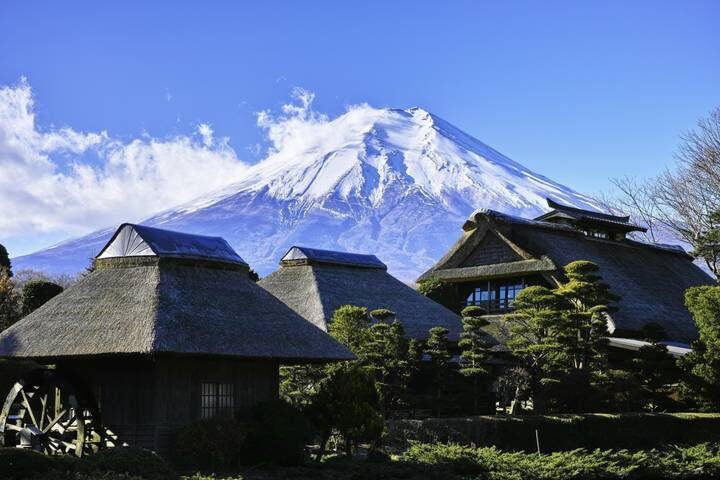
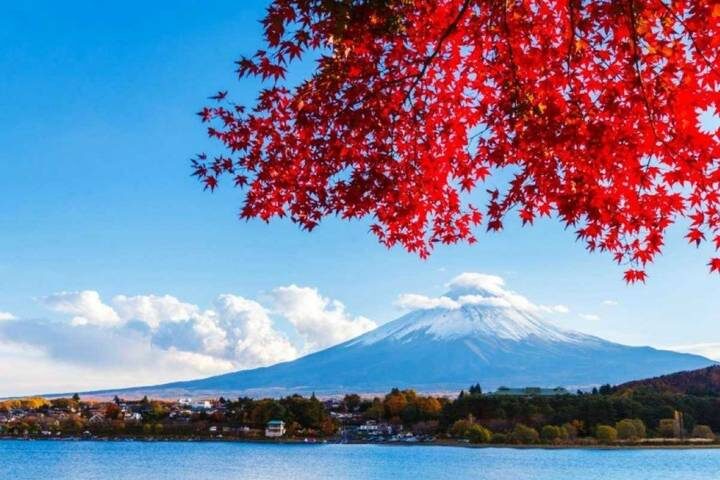
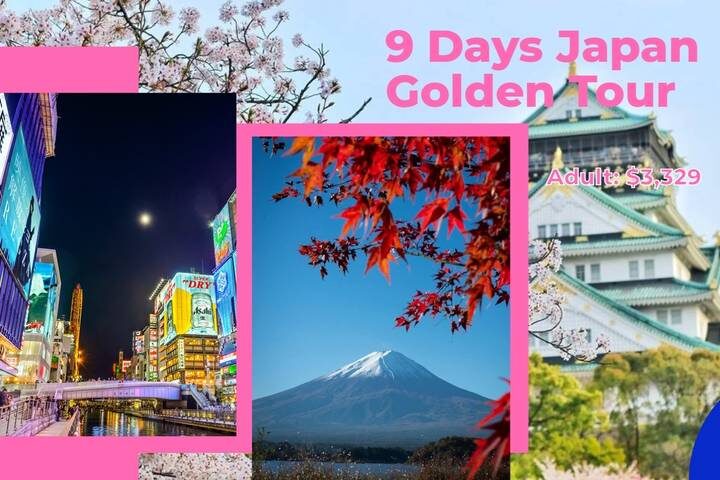
The best moment may be the simplest: standing at Oishi Park, where seasonal flowers frame a view of Mount Fuji across Lake Kawaguchi. This nine-day route links Tokyo, Fuji country, Nagoya, Kyoto, Nara and Osaka, so you see several sides of Japan without arranging every hotel and intercity transfer yourself.
I like two things in particular: the mix of major sights and local street districts, from Senso-ji and Kiyomizu-dera to Osu and Shinsekai, and the two open days in Osaka, which give you breathing room after a busy sightseeing stretch. The hot spring hotel near Fuji adds a welcome change of pace.
One important caution: the package details conflict about flights. One section says return economy airfare is included, while another says flights are not included. The meal count also varies between sections. Confirm both in writing before you pay, and check which hotel and airport transfer apply to your departure.
- Oishi Park puts Fuji in the frame: Seasonal flowers and a Lake Kawaguchi viewpoint make this a scenic stop, though clear views depend on the weather.
- The route covers seven destinations: Tokyo, Mount Fuji, Nagoya, Kyoto, Nara and Osaka are joined by arrival in Narita.
- Kyoto and Nara get a concentrated visit: You’ll see temples, shrine districts and Nara Park, but the schedule leaves limited time for lingering.
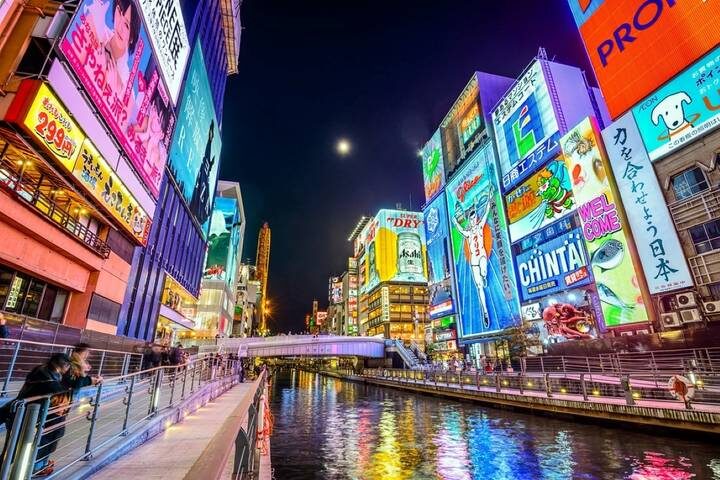
- Osaka has room for your own plans: Two free days follow a guided introduction to areas such as Shinsekai and Dotonbori.
- It is partly guided, not escorted every hour: Expect organized sightseeing and transport, with independent meals and free time built in.
- Check the package details carefully: Flight inclusion, meal counts and the Osaka hotel name do not match across all the supplied information.
- A Golden Route with a Fuji-side pause
- Day 1: Arriving in Narita, sleeping in Tokyo
- Day 2: Tokyo icons, then Oishi Park
- Day 3: Fuji foothills and Nagoya’s Osu district
- Day 4: Nagoya Castle and Kyoto’s old streets
- Day 5: Fushimi Inari, Nara deer and Osaka shopping
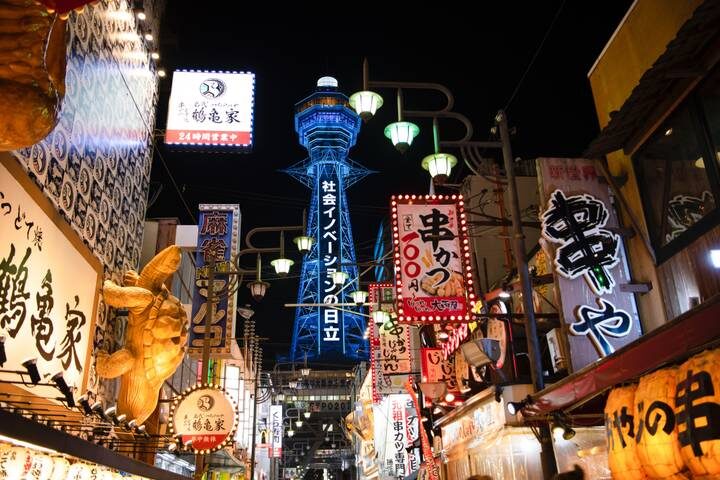
- Day 6: Shinsekai, Tsutenkaku and Osaka food
- Days 7 and 8: Two days to make Osaka your own
- Day 9: Leaving from Osaka
- What the price covers, and what needs checking
- Who will get the most from this tour?
- Should you book it?
- FAQ
- Where does the tour start and end?
- How long is the tour?
- Are flights included in the price?
- How many meals are included?
- Is the tour fully guided?
- How large can the group be?
- Can I request vegetarian meals?
- Is a single-room supplement charged?
- Can I add hotel nights?
- What happens if Mount Fuji weather is poor?
- The Best Of Narita!
- More Tours in Narita
- More Tour Reviews in Narita
- Not for you? Here's more nearby things to do in Narita we have reviewed
A Golden Route with a Fuji-side pause
 1 / 10
 2 / 10
 3 / 10
 4 / 10
 5 / 10
 6 / 10
 7 / 10
 8 / 10
 9 / 10
 10 / 10
This tour follows Japan’s familiar east-to-west route, beginning at Narita Airport and ending in Osaka. It is designed to make a first visit manageable: hotels, many meals, sightseeing transport and selected guide services are arranged, while free time lets you explore on your own.
The pace is brisk. You change cities several times in the first five days, and some days combine multiple major sights with long coach transfers. That trade-off buys you breadth: instead of spending the whole trip in Tokyo or Kyoto, you get a sampler of capital-city landmarks, mountain scenery, temple districts and Osaka food streets.
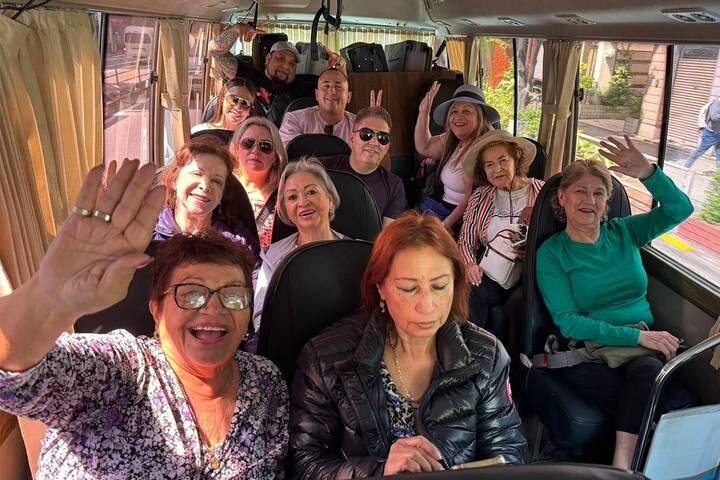
The group size can range from four to 54 people, a wide spread that matters. A smaller departure may feel more personal; a full coach can mean more time gathering everyone and less flexibility at stops. Ask about the expected group size for your dates if that affects your decision.

👉 See our pick of the 15 Best Tours In Narita
Day 1: Arriving in Narita, sleeping in Tokyo
A representative meets you at Narita International Airport and arranges a transfer to your Tokyo hotel, listed as Shinjuku Granbell Hotel or similar. The transfer may be by bus or public transport, and hotel check-in is after 3 pm.
That timing can leave you waiting if your flight lands early, so keep the first day light. You are not scheduled for sightseeing, which is sensible after a long flight. Use the time to settle in, get something to eat and learn the route between your hotel and nearby transport.
You can also read our reviews of more tours and experiences in Narita.

Day 2: Tokyo icons, then Oishi Park
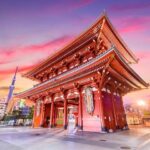
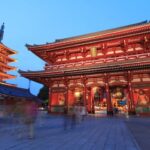
The sightseeing day starts with the Imperial Palace Outer Gardens and a view of Nijubashi Bridge, then moves to Senso-ji in Asakusa. Nakamise-Dori, the approach to the temple, is lined with traditional shop fronts selling snacks and souvenirs. You’ll also see Tokyo Skytree from a distance rather than going up the tower.
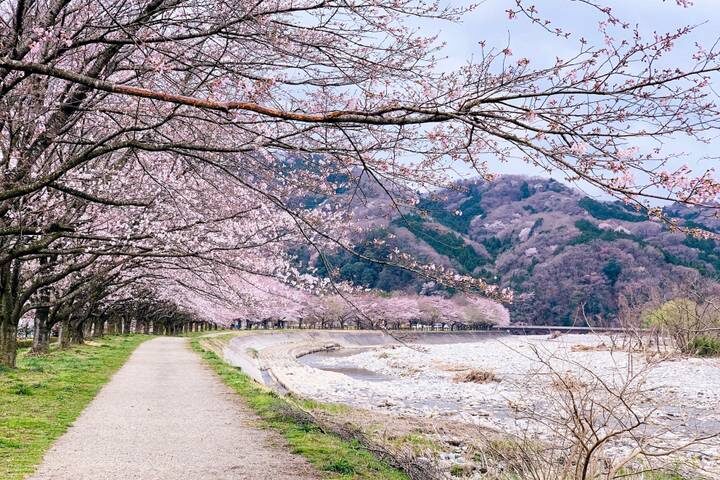
Oishi Park is the day’s scenic counterpoint to the city. The park sits by Lake Kawaguchi and is known for its seasonal flowers and classic Fuji view. Weather is the wild card: Mount Fuji can be obscured, so treat the stop as a good chance for a view, not a guarantee.
You then head to a hot spring hotel near Mount Fuji, listed as Kawaguchiko Hotel or similar. The package describes Japanese-style hot springs and a traditional dinner. If you have not tried an onsen before, follow the hotel’s bathing instructions and check any personal requirements with the property.
Spring departures dated March 18 to April 22 may add Chidorigafuchi Park and Shinjuku Gyoen Garden. Fall departures from October 21 to November 18 may add Yoyogi Park and Rikugien Garden. Confirm which seasonal stops are included on your exact date, since they are described as additions rather than fixed year-round visits.
Day 3: Fuji foothills and Nagoya’s Osu district
After breakfast, the route heads to Mount Fuji’s 5th Station, subject to weather. If conditions are poor, the alternative is the Mount Fuji World Heritage Center. That backup is useful because mountain weather can disrupt views and access.
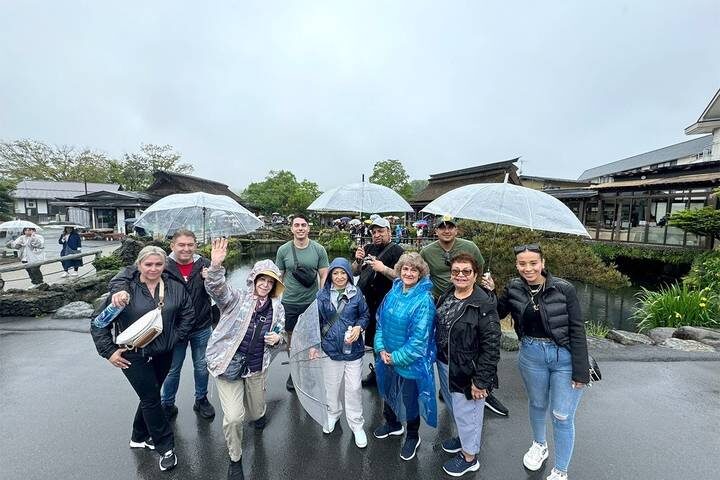
Oshino Hakkai brings a quieter stop: a group of eight historic ponds, remnants of a former lake that dried up centuries ago. The day also includes Bussharito Heiwa Park before the coach continues to Nagoya. In the evening, you can stroll through Osu Shopping District, a chance to browse shops and sample the city’s street life after a day of driving.
Lunch is included, but dinner is on your own. That gives you freedom to choose, though you will want to budget for it. The hotel is listed as Keihan Nagoya or similar.
Day 4: Nagoya Castle and Kyoto’s old streets
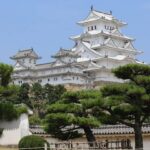
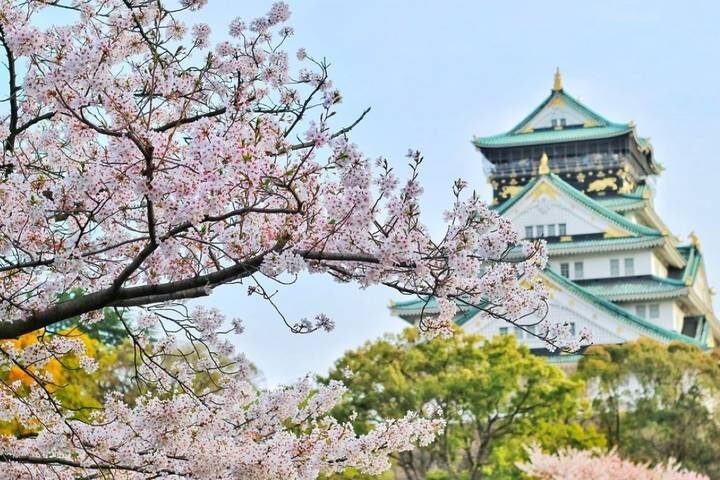
Nagoya Castle opens the day before the drive to Kyoto. The castle was central to the city’s development as a castle town, giving you a different historical setting from the temples and shrines that follow.
In Kyoto, the group visits Kiyomizu-dera, a temple founded in 778 and listed as a UNESCO World Heritage Site. Ninenzaka and Sannezaka, the sloping streets nearby, are a pleasant place to walk, though they can be crowded and are best enjoyed at an unhurried pace if the group schedule allows.
The route continues to Gion, Yasaka Shrine and Hanamachi Street. Gion’s teahouses and shops offer a glimpse of a district associated with geisha culture, while Yasaka Shrine remains an active place of worship. Please treat the neighborhood as a living community, not a stage set. Dinner is independent.
Spring departures from March 18 to April 22 may add the Philosopher’s Path; fall departures from October 21 to November 18 may add Arashiyama and Togetsukyo Bridge. As with the Tokyo seasonal stops, verify the exact plan for your date.
Day 5: Fushimi Inari, Nara deer and Osaka shopping
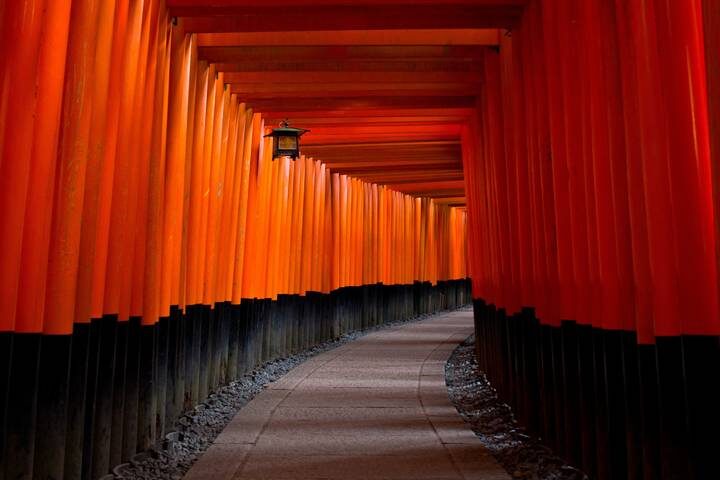
Fushimi-Inari Taisha is the first stop, an important Shinto shrine in southern Kyoto. The schedule promises a visit but does not specify how far you will walk through the shrine grounds, so ask your guide how much time is available if exploring beyond the main area is a priority.
In Nara, you’ll visit Deer Park and Kasuga Taisha Shrine. The deer are a memorable part of the visit, but they are still animals: follow posted instructions and keep food secure. The day ends at Shinsaibashi in Osaka, with Dotonbori close by for an evening meal or a look at its restaurants, bars, cafés and theaters.
This is a full day, and the transition from temples to deer park to shopping can feel quick. Still, it gives you a satisfying range of experiences without requiring another hotel move between Kyoto and Osaka.


Day 6: Shinsekai, Tsutenkaku and Osaka food
The morning is free around Shinsaibashi, an area known for fashion retailers and brand-name shopping. In the afternoon, a representative introduces parts of Osaka, including a Shinto shrine, Shinsekai and the Tsutenkaku Tower area.
Shinsekai has an older commercial feel, and the guide can explain the neighborhood and local customs as you walk. The day includes a chance to try kushikatsu, battered and fried skewers, and other local dishes suggested by the guide. The food is described as an option, so clarify whether the snack listed in the package is served here or elsewhere.
The guide-led Osaka walk is one of the tour’s useful features. Past departures have included guides Scott, Jay and Kit, but the assigned guide can vary. Jay is noted for arranging suitable restaurants for vegetarian participants, and vegetarian meals can be requested. Make that request before departure rather than relying on a last-minute fix.
Days 7 and 8: Two days to make Osaka your own
These are full free days, with breakfast and hotel stays included. You can revisit a favorite neighborhood, seek out attractions not covered by the group, or simply let meals and wandering set the pace.
This extra time is a real strength. The first five days are packed, and two unscheduled days make the trip feel less like a checklist. They also suit families or independent-minded visitors who want some structure without a guide beside them every hour.
The Osaka hotel is listed as Holiday Inn Express Osaka City Centre – Midosuji or similar for these nights, while another part of the plan names Sheraton Miyako Hotel Osaka for the first Osaka night. Confirm the actual hotel arrangements and whether the property changes during the stay.
Day 9: Leaving from Osaka
After breakfast, the plan includes an airport transfer. The stated departure options are Kansai International Airport or Itami Airport, but the named end point is Kansai International Airport. Confirm your airport and pickup details before booking flights, especially if you plan to use Itami.
What the price covers, and what needs checking
The starting price is $2790, but the currency is not specified in the information provided, and the price basis is described as the cheapest room. The value depends heavily on what is actually included: eight hotel nights, breakfasts, sightseeing transport, city-to-city travel, an English-speaking guide for selected excursions and several meals can save considerable planning time.
There is a material conflict on airfare. The overview says return economy airfare is included, but the detailed exclusions say flights before and after the tour are not included. Do not assume either version is correct. Ask the operator to confirm whether international flights are part of your price, which routes they cover and whether airport transfers require you to provide flight details.
Meals also need clarification. One summary says four lunches, while the detailed itinerary and inclusion section say five. The itinerary shows breakfast throughout, lunch on Days 2 to 5, and dinner on Day 2, but the inclusion section lists one dinner and one snack. Ask for a final meal schedule, especially if you have dietary needs.
Travel insurance is not included in the tour price. A single-room supplement applies if you are traveling alone and want your own room. Extra hotel nights can be arranged, with additional Tokyo nights quoted at approximately CAD 240 per room per night depending on room type.
Who will get the most from this tour?
This suits first-time visitors who want a practical introduction to Japan’s main route and prefer not to manage every train, hotel and transfer themselves. Families may appreciate the mix of guided visits and free time, and the tour accepts all ages. The stated physical rating is low intensity, but expect walking at temples, shopping streets and park sites.
It is less suited to someone who wants long, independent stays in each city or a fully guided program from morning to night. The group can be large, the first half is tightly scheduled, and some dinners are left to you. You’ll also need to be comfortable with the possibility that weather affects Fuji views and access.
Should you book it?
Book if you want an organized first look at Tokyo, Fuji, Kyoto, Nara and Osaka, and value transport and hotel planning being handled for you. The Oishi Park stop, hot spring night and two free Osaka days give the route welcome variety.
Before paying, get written confirmation of airfare, meals, the Osaka hotels, your airport transfer and the seasonal stops attached to your departure date. If those details suit your needs, this is a solid way to cover Japan’s Golden Route in nine days without trying to assemble every piece yourself.
9 Days Japan Golden Tour Package WITH OISHI PARK by Delightful Travel
“I really enjoyed our Japan trip. Big thank you to Scott. We know lots of culture and history of Japan. Kinkakuchi temple is beautiful. What a histo…”
FAQ
Where does the tour start and end?
It starts at Narita International Airport and ends in Osaka. The stated departure airport options are Kansai International Airport or Itami Airport, though the named end point is Kansai International Airport.
How long is the tour?
The tour lasts nine days and includes eight hotel nights.
Are flights included in the price?
The supplied details conflict. The overview says return economy airfare is included, while the detailed exclusions say flights are not included. Confirm directly with the operator before booking.
How many meals are included?
The meal totals conflict. One section lists four lunches, while other sections list five. The plan shows daily breakfasts, lunches on Days 2 to 5, one dinner and one snack, so request a confirmed meal schedule.
Is the tour fully guided?
No. It is described as partially guided, with selected guided excursions and independent time. The tour is advertised as guided in English.
How large can the group be?
The stated group size is from four to 54 people.
Can I request vegetarian meals?
Yes. Vegetarian meal options can be requested. It is sensible to make the request in advance.
Is a single-room supplement charged?
Yes. A single supplement applies if you want your own room as a solo traveler.
Can I add hotel nights?
Yes. Additional nights can be arranged in advance. The quoted rate for extra nights in Tokyo is approximately CAD 240 per room per night, depending on room type.
What happens if Mount Fuji weather is poor?
The visit to Mount Fuji’s 5th Station may be replaced by a visit to the Mount Fuji World Heritage Center if the weather is unpleasant.