The Gold State Coach is the Royal Mews’ great showpiece: an ornate, 260-year-old carriage used at major royal occasions, including the coronations of Elizabeth II and Charles III. Here, ceremonial vehicles sit inside a working royal stable, where carriages, horses and cars are prepared for official duties.
I like two things in particular: you can inspect the vehicles and their fittings at close range, then use a free guide or Warden tour to understand how they work. The replica Landau and wooden pony also give children something hands-on to do.
The main drawback is scale. This is a compact visit, not a full day out, and the number of horses on view can be modest. At $26.55 and up, it makes most sense if royal transport interests you or you are pairing it with another Buckingham Palace visit.
- Key points to know before you go
- A working stable beneath Buckingham Palace
- The Gold State Coach, and what it tells you
- Carriages, cars and the work behind a procession
- Choose the Warden tour or the audio guide
- A small hands-on corner for children
- How much time to allow, and how to get there
- Is the ticket worth .55?
- FAQ
- How long does a Royal Mews visit take?
- What is included with admission?
- What languages are available for the multimedia guide?
- Can I see the Gold State Coach?
- How do I get to the Royal Mews?
- Is the Royal Mews suitable for children and wheelchair users?
- Can the Royal Mews close unexpectedly?
- The Best Of London!
- More Tickets in London
- More Tours in London
- More Tour Reviews in London
- Not for you? Here's more nearby things to do in London we have reviewed
Key points to know before you go
 1 / 8
 2 / 8
 3 / 8
 4 / 8
 5 / 8
 6 / 8
 7 / 8
 8 / 8
- The Gold State Coach is the headline exhibit, a grand ceremonial carriage with a long history of use at state occasions.
- It is still a working Mews, not only a museum: royal horses, carriages, cars, livery and harnesses are part of its purpose.
- The visit is short by design, with a 45-minute audio guide and an optional 45-minute Warden tour. Allow one to two hours if you want time to look around.
- You can choose your own pace, using the multimedia guide in nine spoken languages or British Sign Language, with subtitles and audio description available.
- Children get a couple of playful touches, including a replica Landau to climb into and a wooden pony to practise tacking up.
- Check the calendar before setting out, since the Mews can close at short notice and its opening days vary.

👉 See our pick of the 25 Best Workshops And Classes In London
A working stable beneath Buckingham Palace
The Royal Mews looks after road travel for the King and members of the Royal Family. That means the collection is not just a display of old vehicles: it connects the practical work of preparing transport with the ceremony of royal occasions.
You will see historic coaches alongside state cars, with horses, harnesses and livery helping explain how royal processions are put together. The setting is part of the appeal. Rather than viewing carriages as isolated objects in a gallery, you get a sense of the stable environment where ceremonial transport is prepared and maintained.
That working character also sets expectations. This is a focused attraction, not a broad account of the monarchy or a tour through Buckingham Palace’s state rooms. If you come mainly for grand interiors, you may find the Mews modest. If you are curious about how royal ceremonies move from place to place, the collection offers a more specific angle.
You can also read our reviews of more tours and experiences in London


The Gold State Coach, and what it tells you
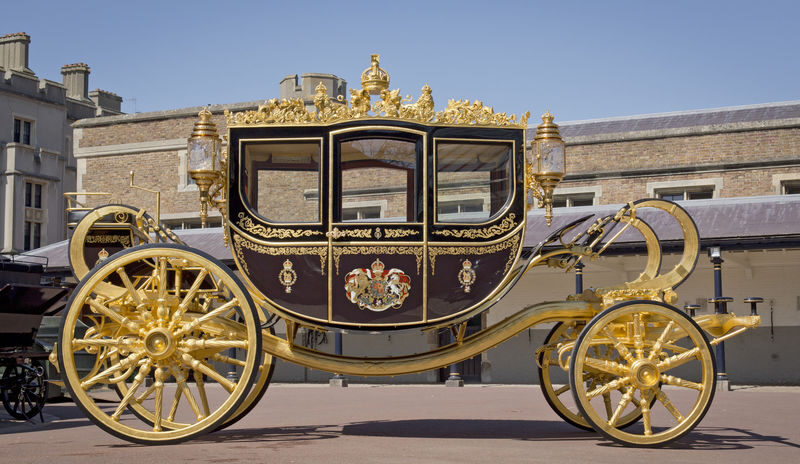
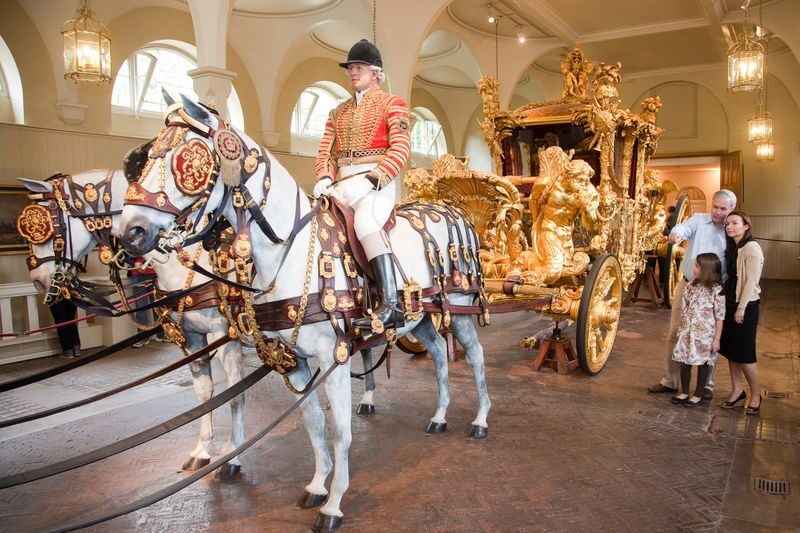
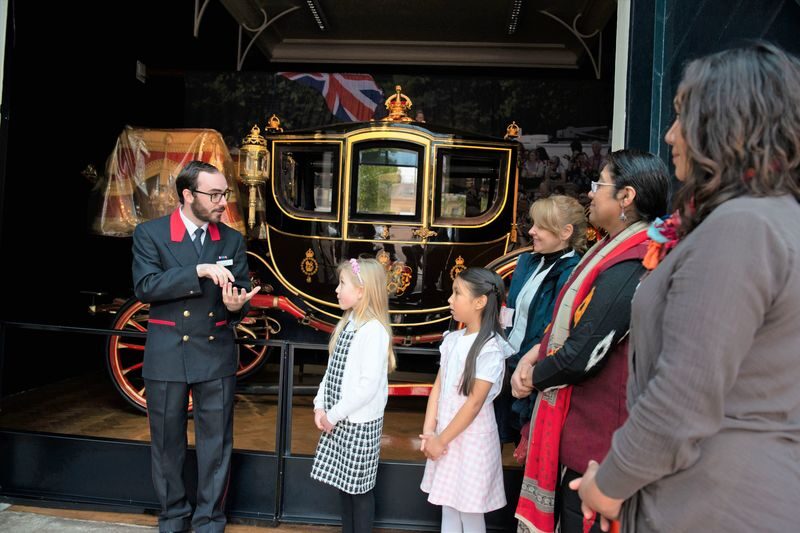
The Gold State Coach is the clear centrepiece. At 260 years old, it has been used at major state events, including the coronation of Queen Elizabeth II in 1953, the Platinum Jubilee in 2022 and the coronation of King Charles III in 2023.
Its size and decoration make it easy to understand why the coach draws attention. But the useful question is not only how impressive it looks. The Mews puts the carriage in the context of royal transport, showing the equipment and supporting work that make ceremonial journeys possible.
Take time to notice the details rather than simply walking past for a photograph. The livery and harnesses help show how horses and carriages are prepared for a procession, while the other vehicles give the coach a wider context. You can compare a long-standing ceremonial tradition with the more modern cars used for royal travel.
The collection is not huge, so you will not need hours to see the main objects. That can be a plus if you want a manageable visit between other London sights. It can also make the admission feel costly if the coach and royal transport are not a particular interest.
Carriages, cars and the work behind a procession
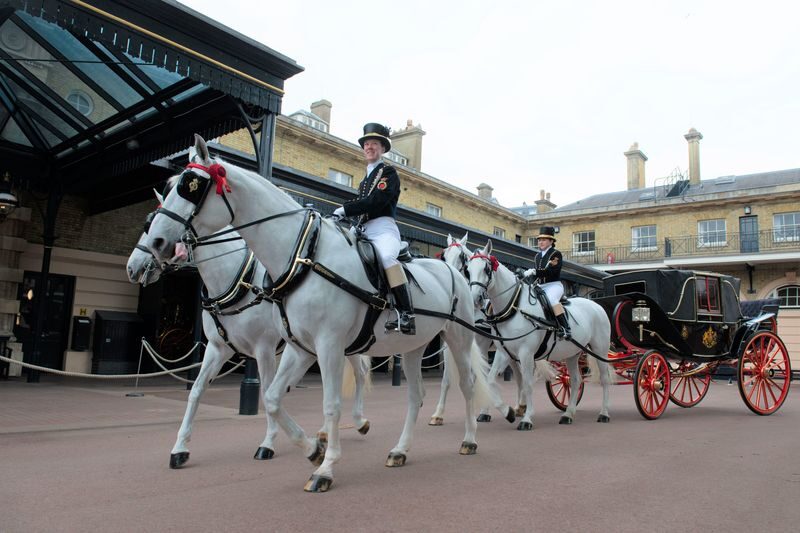
Beyond the Gold State Coach, you can see other historic carriages and state cars. Together, they show that royal transport has never been one vehicle or one style. Horses and carriages remain tied to ceremony, while motor cars serve another part of the royal household’s road travel.
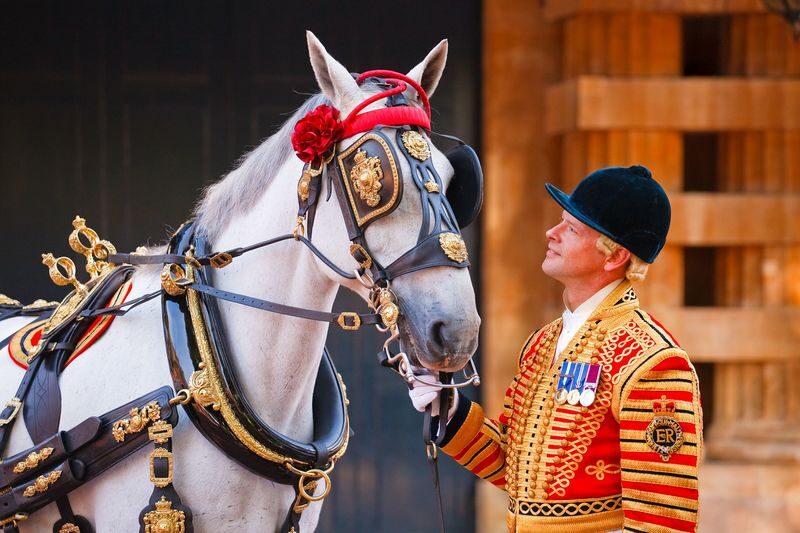
Look at the harnesses and livery as well as the vehicles. They are practical pieces, but they also help explain the precision and visual formality of a royal procession. This is where the Mews offers more than a quick display of polished wheels and gold trim: it links the objects to the people, animals and preparation required to use them.
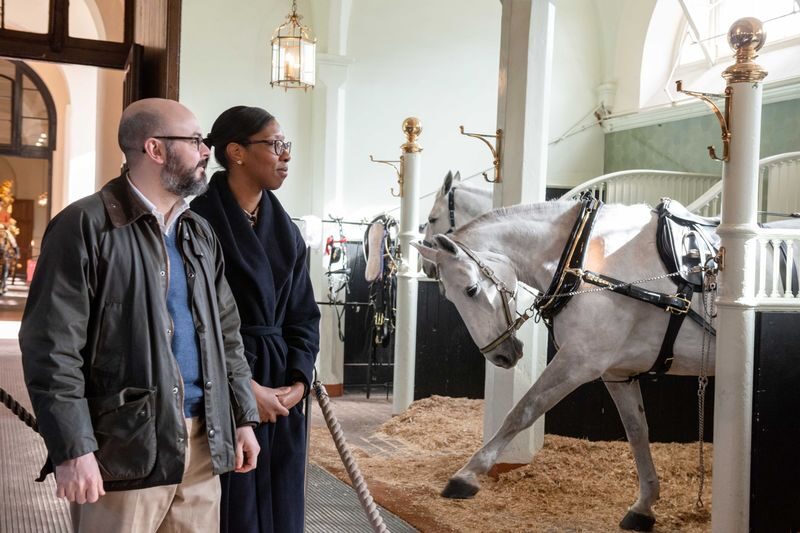
The horses are a smaller part of the experience than some visitors may expect. One account of a visit saw two horses still in service, so you should not plan on a large stable full of animals. The number you see may vary, and the Mews is first and foremost a working place, not an animal attraction built around guaranteed close encounters.
If you are visiting for the horses, keep your expectations measured. If you are interested in the full transport system, their presence adds a useful living element to the carriages, equipment and cars.
Choose the Warden tour or the audio guide
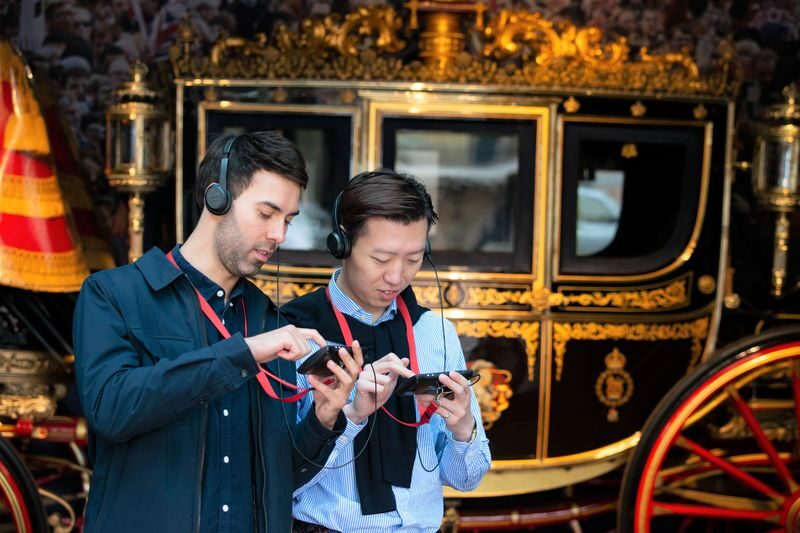
You can explore with a free 45-minute multimedia guide, or join a free English-language tour led by a Royal Mews Warden. The guide is available in English, Chinese, Japanese, French, German, Italian, Spanish, Brazilian Portuguese and Russian, as well as British Sign Language. Subtitles and audio description are also available.
The multimedia guide is a good fit if you prefer to stop where you like, linger over the Gold State Coach or move on quickly. Its 45-minute length gives you a useful framework without requiring you to follow a group. A past visitor found the audio guide helpful, and it is especially useful if you want context beyond the labels.
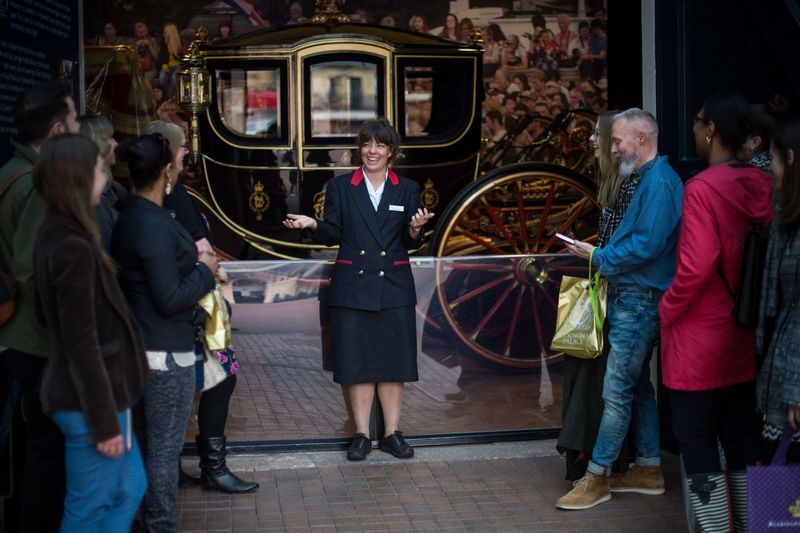
The Warden tours also last about 45 minutes and are listed at 10:15, 11:00, 12:00, 13:00, 14:00, 15:00 and 16:00 daily. The meeting point is directly opposite the stables. That is a handy option if you like a person to connect the coaches, horses and history as you go. The tours are in English, so the multimedia guide is the better choice if you need another language.
The times and opening schedule need a quick check before your visit. The Mews is part of a working royal palace and can close at short notice. Its published schedule may also vary by date, so do not assume a tour time will be available just because it appears on a general schedule.
A small hands-on corner for children
The replica Landau and wooden pony are simple but welcome breaks from looking at display objects. Children can climb into the replica carriage and try tacking up the wooden horse, turning a visit that could otherwise be mostly looking into something more physical.
A small craft room has also been noted as a place where children can spend time. As with any feature in a working venue, do not make it the sole reason for your visit without checking what is open on the day. The main attraction remains the carriages, cars and royal transport.
The Mews is stroller- and wheelchair-accessible, which makes it easier to include in a family or multigenerational day out. Children aged four and under enter free, but infants and children still need to be included in the passenger headcount. Anyone aged 17 or younger must be accompanied by a paying adult.





How much time to allow, and how to get there
The stated visit length is one to two hours. If you follow the 45-minute audio guide or take the Warden tour, you will spend a good part of that time with the main collection. Add time if you want to look carefully at the vehicles, use the children’s activities or visit the gift shop.
Some visitors finish in about 45 minutes, which gives you a realistic sense of the site’s scale. I would allow at least an hour so you are not rushing through the Gold State Coach and the related exhibits. Two hours is a comfortable upper range for most people, particularly if you take a guided tour and browse at your own pace.
The address is Buckingham Palace Road, London SW1W 0QH. Victoria, Green Park, St. James’s Park and Hyde Park Corner stations are each about a 10-minute walk away. Buses 11, 211, C1 and C10 stop on Buckingham Palace Road, about a minute’s walk from the Mews. London Victoria station is around 10 minutes away on foot, while Charing Cross is about 20 minutes away.
Security checks similar to airport screening take place at entry. Large luggage is not allowed, and there is no cloakroom, so leave suitcases elsewhere before you arrive. Photography for personal use is allowed, but commercial photography and video, as well as live broadcasting, are prohibited. Outside food and drink, smoking and drinking are not allowed inside.
Is the ticket worth $26.55?
The advertised price starts at $26.55. For that, you get admission, the 45-minute multimedia guide and the option of a free Warden-led tour. The included guiding makes the price easier to justify than a bare entry ticket, especially if you use it to understand the purpose of the vehicles and equipment rather than treating the visit as a quick photo stop.
Value depends on your interest. If you love royal history, ceremonial carriages or transport design, the Gold State Coach and the working Mews give you a distinctive hour near Buckingham Palace. If you have little interest in the Royal Family, the small size and limited number of horses may leave you feeling that the ticket costs more than the time inside warrants.
This works best as one part of a day around Buckingham Palace, rather than as the only major activity you plan. It is a focused visit with a clear subject, and pairing it with another palace-related sight can make the trip feel more substantial. Do check whether that other attraction is open on your date and leave enough time between timed entries.
Book this ticket if the coach and the mechanics of royal processions genuinely appeal to you, or if you want a short, accessible stop with a strong Buckingham Palace connection. Skip it if you expect a large stable, extensive palace rooms or a long attraction. The Mews rewards curiosity about the details, not a need to fill half a day.
The Royal Mews Ticket at Buckingham Palace
“The staff were enthusiastic and courteous, and the exhibits showcased the elegance of the British Royal Family.”
FAQ
How long does a Royal Mews visit take?
Plan on one to two hours. The multimedia guide and optional Warden tour each last about 45 minutes, and you can spend additional time exploring at your own pace.
What is included with admission?
The ticket includes admission to the Royal Mews and a 45-minute multimedia guide. You can also join a free 45-minute English tour with a Warden, subject to the published tour schedule.
What languages are available for the multimedia guide?
The guide is available in English, Chinese, Japanese, French, German, Italian, Spanish, Brazilian Portuguese and Russian. British Sign Language, subtitles and audio description are also available.
Can I see the Gold State Coach?
Yes. The 260-year-old Gold State Coach is displayed at the Royal Mews. It has been used at major state occasions, including the coronations of Elizabeth II and Charles III.
How do I get to the Royal Mews?
The address is Buckingham Palace Road, London SW1W 0QH. Victoria, Green Park, St. James’s Park and Hyde Park Corner stations are about a 10-minute walk away. Buses 11, 211, C1 and C10 stop about a minute away on foot.
Is the Royal Mews suitable for children and wheelchair users?
The venue is stroller- and wheelchair-accessible. Children aged four and under enter free, while children aged 17 and under must be accompanied by a paying adult. Children can also try a replica Landau and a wooden pony.
Can the Royal Mews close unexpectedly?
Yes. The Mews is part of a working royal palace, so closures can occur at short notice and opening hours may change. Check the official schedule before travelling.