The blue whale skeleton is the sort of museum sight that makes you stop mid-sentence. This guided visit also takes you past dinosaur fossils, human ancestry displays and ornate terracotta arches, giving you a clear route through a very large collection. I like the mix of landmark specimens and the building itself, and the small group size of one to eight can make it easier to ask questions.
The main caution is guide consistency. One account describes a two-hour tour ending after 45 minutes, while another reports incorrect answers. That is a serious gap between the promised visit and what you may receive, so arrive ready to speak up if the pace or explanations fall short.
- At a glance
- The museum’s grand entrance sets the tone
- Dinosaur fossils give the visit its big moment
- Mammals, marine life and the scale of nature
- Human evolution and Earth sciences complete the route
- Two hours can be good value, if the guide delivers
- Who should book this museum tour?
- Should you book?
- FAQ
- Where does the tour meet?
- What time does the tour start and finish?
- How early should I arrive?
- What is included in the tour?
- Is museum admission included?
- How large is the join-in group?
- Is the museum tour wheelchair-accessible?
- What age rules apply?
- Are student and senior tickets available?
- Can I cancel for a refund?
- The Best Of London!
- More Historical Tours in London
- More Tours in London
- More Tour Reviews in London
- Not for you? Here's more nearby things to do in London we have reviewed
At a glance
- Blue whale and dinosaur fossils: Expect major specimens, including the Diplodocus skeleton and a towering blue whale.
- A guided route through several galleries: The visit covers mammals, marine life, human evolution and Earth sciences.
- A small group: Join-in groups are listed at one to eight participants.
- Two hours on the schedule: The tour starts at 11:00 and is due to finish at 13:00.
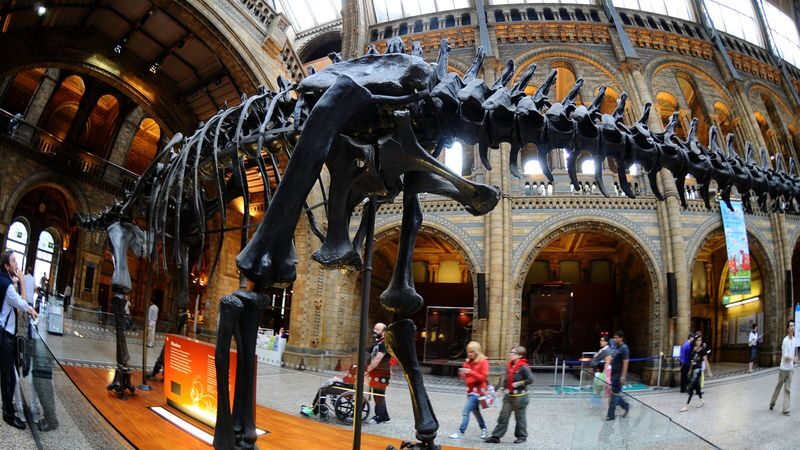
- Meet by the bronze dinosaur: Look for a blue and white umbrella opposite the large bronze long-necked dinosaur skeleton.
- Check the entry details: An English-speaking guide is included, but museum admission is not clearly specified among the included items.

👉 See our pick of the 25 Best Workshops And Classes In London
The museum’s grand entrance sets the tone
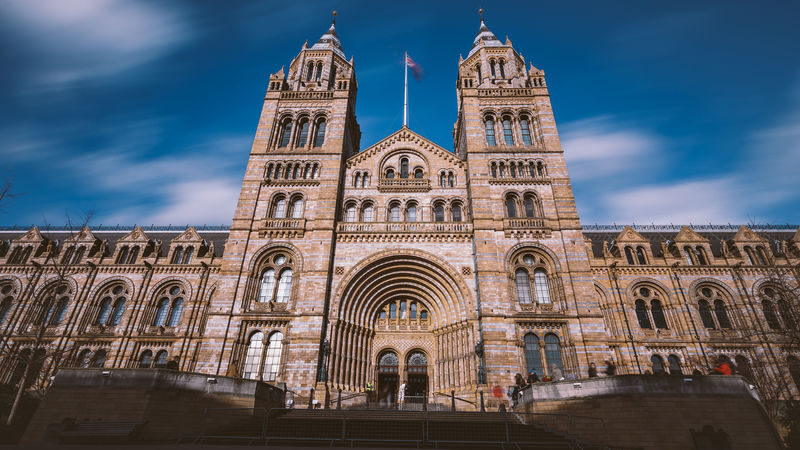
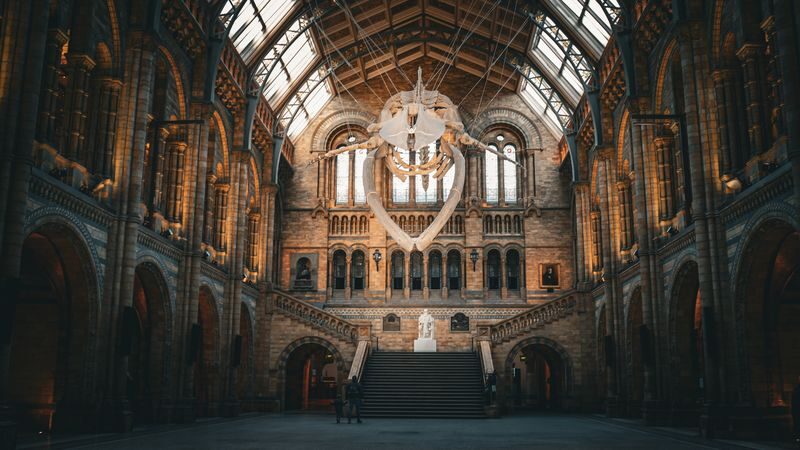
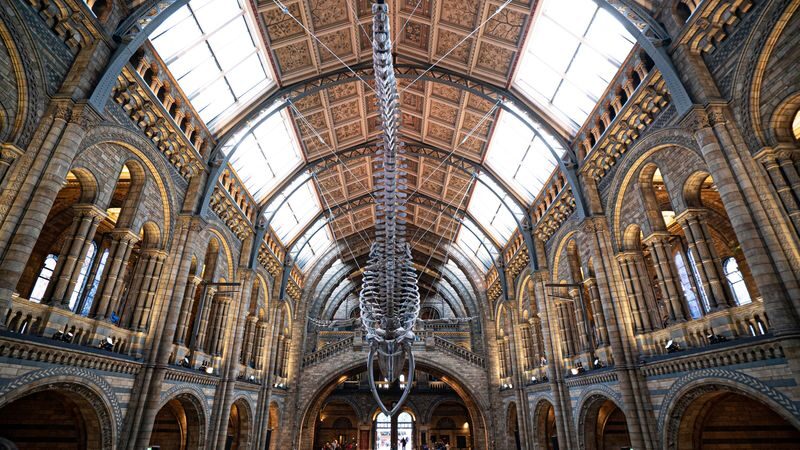
The Natural History Museum is not just a set of display cases. Its architecture is part of the visit, and the tour begins with details that can be easy to miss when you are eager to reach the fossils. In the grand hall, terracotta arches frame the space, while playful monkey carvings add a lighter touch to the decoration.
You are also due to see a giraffe skeleton beside a lifelike taxidermy version. It is a useful first comparison: one specimen shows the animal’s structure, the other its familiar shape. Starting with something recognizable helps set up the bigger question running through the museum: how do living things take their many forms?
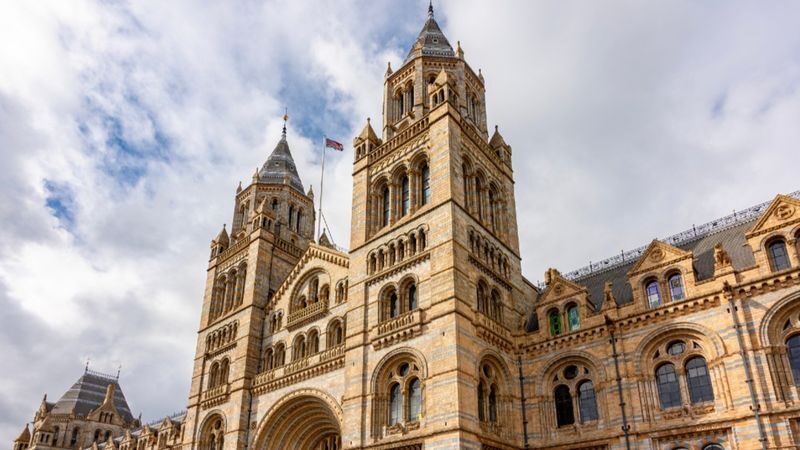
The meeting point is at Cromwell Road, outside the Natural History Museum in South Kensington. Find the guide with a blue and white umbrella opposite the large bronze skeleton statue of a long-necked dinosaur. Arrive 15 minutes early. The stated policy is that late arrivals and no-shows cannot receive a refund, so this is not the moment to test London traffic or your ability to spot a guide in a crowd.
You can also read our reviews of more historical tours in London



Dinosaur fossils give the visit its big moment
The Dinosaur Gallery is a natural highlight, with the iconic Diplodocus skeleton among the specimens. A full-sized fossil skeleton offers a direct sense of scale that illustrations and screens cannot quite match. You can see how the bones fit together and why a long-necked dinosaur seems to occupy the room rather than merely decorate it.
A guide can add context to the objects, which is one of the main reasons to choose a tour instead of walking through alone. The value depends on the quality of that explanation, though. One account reports incorrect answers, so treat the guide as a starting point for questions, not an unquestionable authority. If something sounds uncertain, ask for clarification rather than carrying away a muddled fact.
The tour is scheduled for two hours, so there is time to move among several major galleries, but not necessarily to study every label. If you want a slow, self-directed visit with long stops at particular displays, a guided route may feel brisk. If you want an organized introduction and help deciding what deserves your attention, the structure can be useful.
Mammals, marine life and the scale of nature
The Mammals Gallery brings together specimens from elephants to cheetahs. The contrast is part of the appeal: large bodies, different shapes and varied ways of living sit within one collection. You can compare animals you may know from books or films with the details of their anatomy at close range.
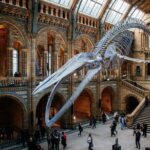
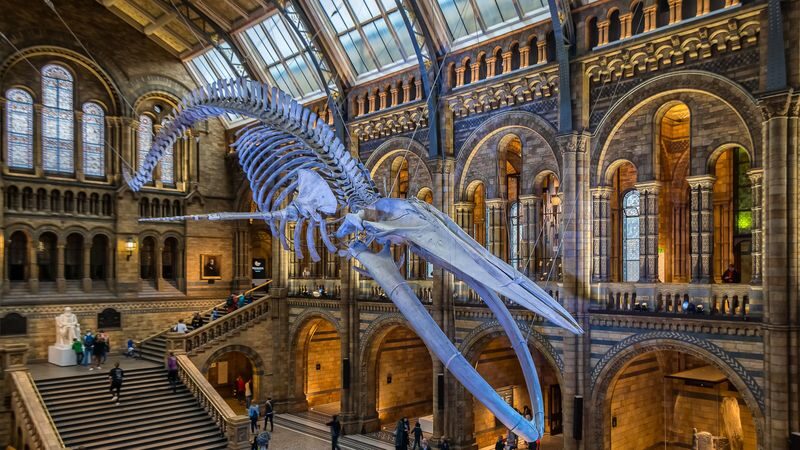
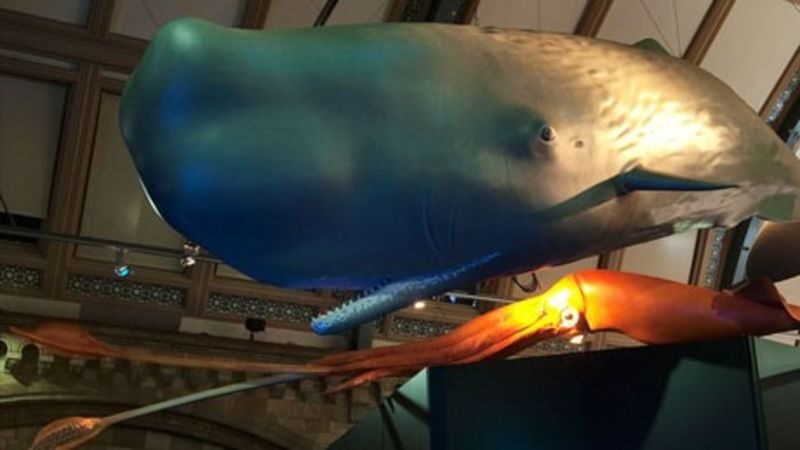
Then comes the blue whale skeleton, one of the visit’s most striking sights. Its size puts the marine world on a different scale from the land animals nearby. If you are visiting with children, it is an easy point of entry into questions about how an animal that large lives and moves. The tour information promises the skeleton and marine-life section, though it does not spell out the guide’s exact explanation or how long the group will spend there.
This is where a small group may help. With a maximum listed size of eight, you have a better chance of hearing the guide and asking a question without needing to compete with a large crowd. The trade-off is that a join-in tour still follows a shared pace. You may have to move on when another person would happily stay longer.
Human evolution and Earth sciences complete the route
The Human Evolution Gallery turns attention from animal life to our own ancestry. It gives the tour a change of scale and subject after the large skeletons. Rather than looking only at the most imposing specimens, you get a chance to think about how life has changed over time and where humans fit within that story.
The route then ends in the Earth Sciences Gallery. Together, these stops broaden the visit beyond dinosaurs and dramatic animal displays. You move from individual creatures toward the history of life and the planet that supports it. That wider frame is useful if you want more than a parade of spectacular bones, though the exact exhibits and time spent at each stop are not specified.
At the end, you can visit the museum cafe or browse the gift shop. These are pleasant ways to round off the outing, but do not assume the tour includes a meal, drink or souvenir. Meals and beverages, personal expenses and tips are not included. With the tour due to end at 13:00, you can decide whether to stay on for lunch or head elsewhere.
Two hours can be good value, if the guide delivers
Prices are shown from US$40.15 for the join-in tour, while the experience summary gives a starting price of US$46.15. The difference means you should check the price shown for your date and package before booking. A private tour is listed from US$466.69, a substantial jump that only makes sense if a private format matters to your group.
For the join-in option, the value comes from having an English-speaking guide shape a visit through a museum with several major departments. You are paying for interpretation and a planned route, not transport, meals or personal purchases. The listed details do not clearly say whether admission to the museum is included. Confirm this before you commit, since the information provided names the guide as included but does not explicitly list an entry ticket.
The scheduled length also matters. Two hours can suit you if you want a focused introduction and still plan to spend more time at the museum afterward. But a report of the guide leaving after 45 minutes raises a practical concern. That is not a minor difference: it cuts the planned visit to well under half its stated duration. If the tour ends early, raise the issue with the operator promptly.
Golden Tours is the named provider, but the supplied details do not give the guide’s name. That makes it hard to judge the tour by a particular guide’s expertise. If accurate explanations and a full two-hour visit are essential to you, weigh the price against that uncertainty.
You can also read our reviews of more museum experiences in London


Who should book this museum tour?
I would consider this tour if you like having a guide set a route through a large museum and you are especially keen on dinosaurs, marine life and human evolution. The range of subjects makes it a reasonable choice for families and first-time museum visitors, while the small group limit may suit anyone who prefers a more personal pace than a large tour.
It is also a practical fit if you have a couple of hours and want to see several headline collections without planning each stop yourself. Children aged 0 to 5 are free, children aged 0 to 15 must be with a paying adult, and visitors aged 16 and older pay the adult rate unless they qualify for a student or senior ticket. Students aged 16 to 27 need a valid student ID, and the senior rate is for people aged 60 and over.
I would think twice if you want a long, unhurried visit to one gallery, or if you need confidence that the guide will use the full scheduled time. The reported early finish and incorrect answers deserve attention. A self-guided visit may suit you better if independent pacing matters most, while the tour can still be worthwhile if you value a guided introduction and are prepared to check the entry arrangements.
The activity is listed as wheelchair-accessible. You receive confirmation within minutes, and the voucher is valid only for the specified date and time. Present it on your mobile. If extreme weather or another unforeseen event leads the operator to cancel, you can reschedule or request a full refund. For your own cancellation, the stated full-refund window is at least 24 hours before the activity, using destination local time.
Should you book?
Book the join-in tour if you want a compact, guided introduction to the museum’s most memorable subjects and are comfortable with some uncertainty about guide quality. Before paying, confirm whether museum entry is covered and check the final price for your chosen date. If a full two-hour tour and reliable explanations are non-negotiable, consider that carefully: the reported early departure is a concrete reason to keep expectations measured.
FAQ
Where does the tour meet?
Meet at the Natural History Museum, Cromwell Road, South Kensington, London SW7 5BD. Look for a guide holding a blue and white umbrella opposite the large bronze skeleton statue of a long-necked dinosaur.
What time does the tour start and finish?
The scheduled start is 11:00, and the return time is 13:00. The schedule may change depending on traffic and weather.
How early should I arrive?
Arrive 15 minutes before the 11:00 departure. Latecomers and no-shows cannot receive a refund.
What is included in the tour?
An English-speaking guide is included. Transport, meals and drinks, other personal expenses, and tips are not included.
Is museum admission included?
The included items specify an English-speaking guide but do not clearly state whether admission is covered. Confirm this with the operator before booking.
How large is the join-in group?
The group size is listed as one to eight participants.
Is the museum tour wheelchair-accessible?
Yes. The activity is listed as wheelchair-accessible.
What age rules apply?
Children aged 0 to 5 are free. Children aged 0 to 15 must be accompanied by a paying adult. Children aged 16 and older are charged the adult rate unless they qualify for a student or senior ticket.
Are student and senior tickets available?
Students aged 16 to 27 can use a student ticket with a valid student ID. Seniors aged 60 and older are eligible for senior tickets.
Can I cancel for a refund?
A full refund is available if you cancel at least 24 hours before the activity date, using London local time. If the operator cancels because of extreme weather or another unforeseen event, you can reschedule or request a full refund.